Choosing Chili Preparations by Seed and Skin Composition
Choose the seed and skin appearance your food needs, then evaluate an actual flake or cut-pod preparation. Start with seeded flakes when visible pale seeds belong in the product, or pod pieces when recognizable sections matter. Define the material parts separately from heat and cut size. Send the desired food appearance and how you will assess it so we can discuss a suitable proposal.
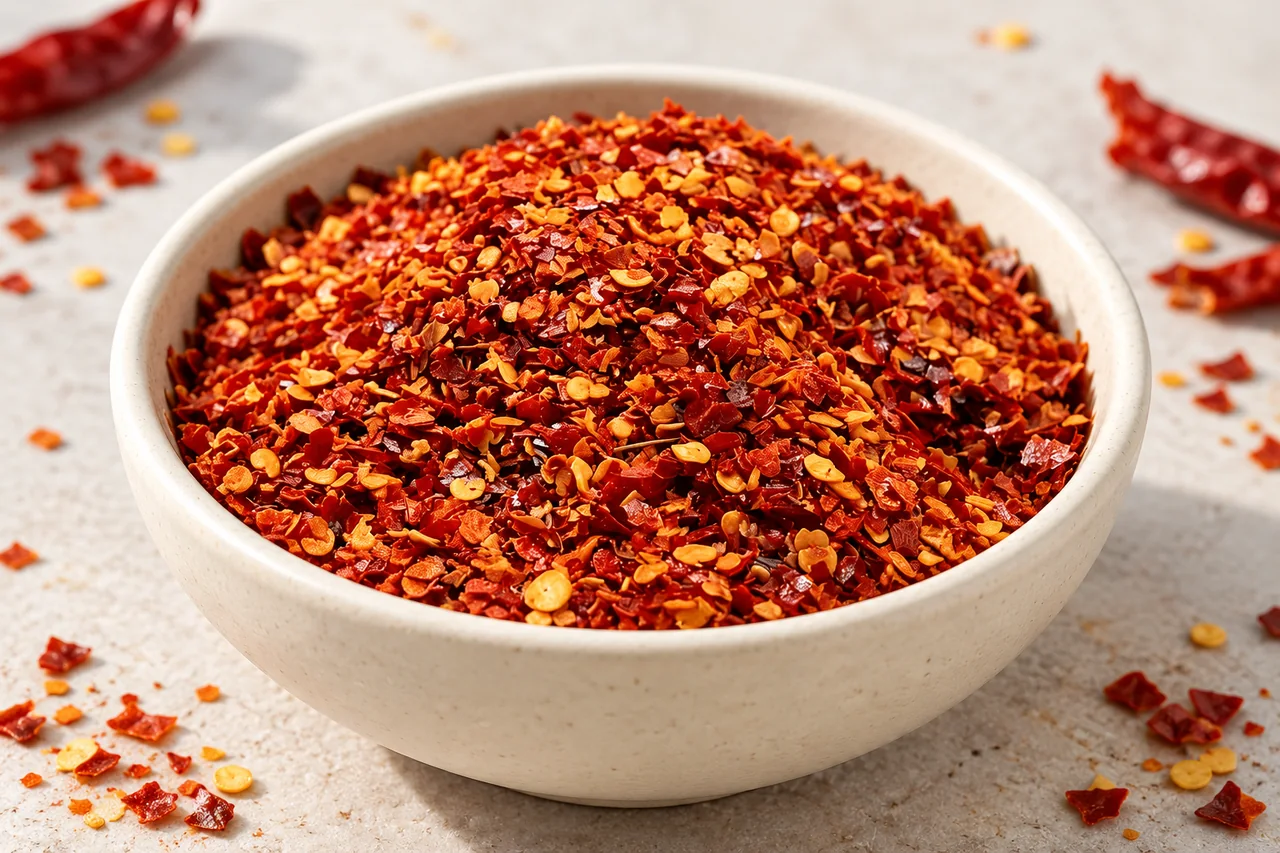
- Visible composition
- Specify whole seeds, fragments and skin using a shared classification.
- Independent heat
- The number of visible seeds is not a pungency measurement.
- Actual preparation
- Destemming capability does not establish a seedless or reduced-seed catalogue grade.
Describe the Desired Fraction Instead of a Loose Label
Describe the desired fraction instead of relying on a loose reduced-seed label.
- 01Seeded preparation
Specify the intended seed presence alongside cut and food use.
- 02Reduced-seed request
Define the desired reduction and the actual proposed material to evaluate.
- 03Skin-dominant request
Describe the accepted fraction rather than assuming a seed-removal service.
RELIA SPICES destems, cuts or crushes and sieves dried chili in-house. These operations support a concrete discussion about seed and skin appearance, while the requested fraction still needs an actual material proposal.
Compare the seeded flakes and cut-pod pieces on their own composition and cut references. We check routine particles and moisture internally and outsource heat analysis. Keep the visible seed condition separate from pungency when choosing the preparation.
Begin with the Two Seeded-Flake Candidates
The two seeded-flake candidates have different heat references, not a measured seed-content comparison.
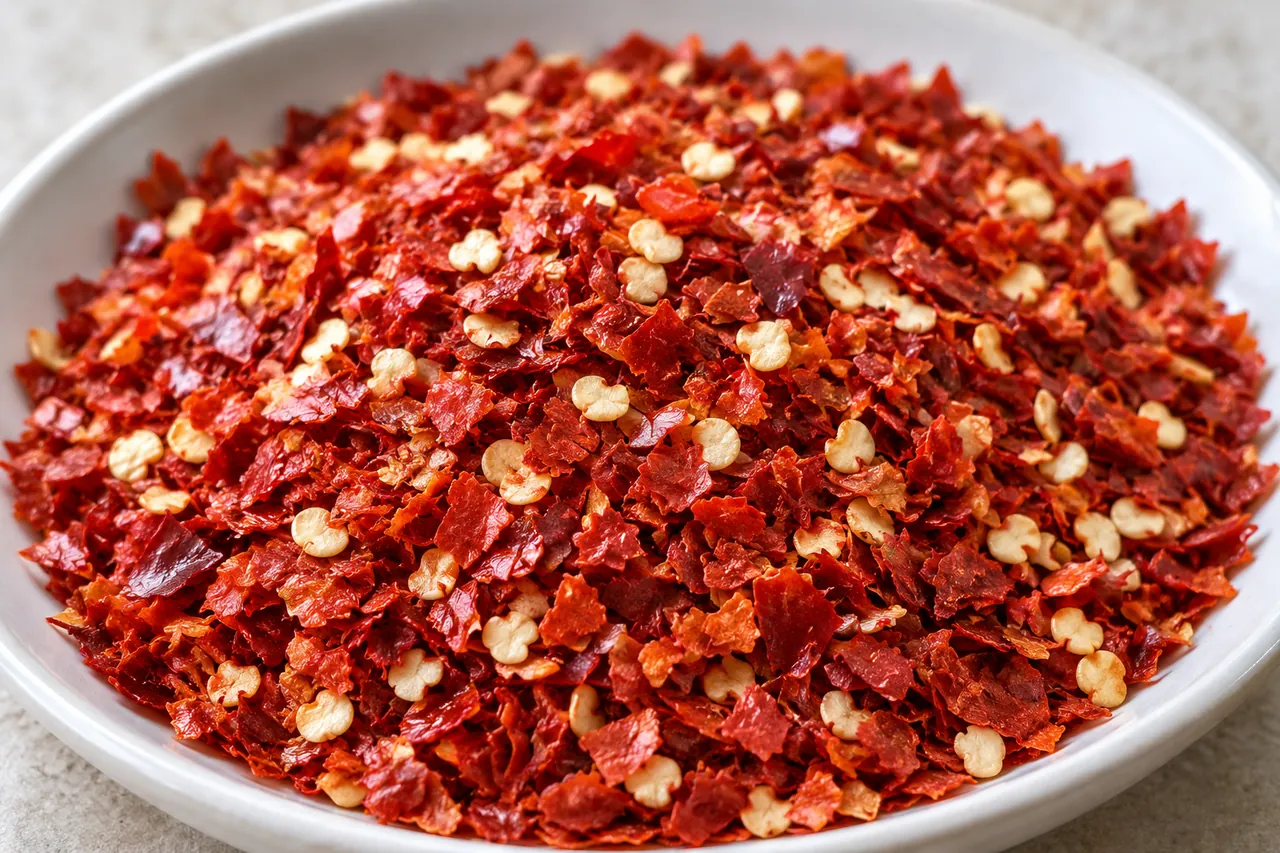
The coarse seeded red flakes carry a 7,000–10,000 SHU reference and a 12-month cool-dry statement. The separate dried raw seeded flakes carry a 20,000 SHU reference and an independent 3×5 mm graininess entry. These facts describe different candidate materials, not a controlled experiment in seed content.
Both present visible pale seeds among red flakes. Use that appearance to identify the preparation, then inspect the actual sample and complete composition. Do not infer a mass ratio or rank the heat from the number of pale pieces visible in a product photo.
Ingredients to compare for this application
Coarse seeded chili flakes
Evaluate when the food should show coarse red pieces with visible seeds.
- Dried red chili flakes with seeds.
- 7,000–10,000 SHU reference.
- 12-month cool, dry storage statement.
Separate seeded flake candidate
Compare independently when its actual cut and 20,000 SHU starting reference suit the food task.
- Dried raw red flakes with seeds.
- 20,000 SHU reference.
- 3×5 mm graininess entry; axes and actual supplied cut require agreement.
Dried chili pod pieces
Use a cut-pod route when recognizable sections rather than irregular flakes are the intended appearance.
- Cut-pod presentation with visible seeds.
- Moisture reference: 8–12%.
- Heat reference: 8,000–12,000 SHU.
These product specifications are a starting point for selecting a grade. Match the proposed material and sample to your food and order requirements.
Keep Cut Pod Pieces Separate from a Seed Ingredient
Cut-pod pieces are not a seed-only ingredient or proof of a seedless grade.
- 01Pod-piece purchase
Evaluate the actual sections, accompanying seeds and visible cut.
- 02Seed-only purchase
Use a separate ingredient brief when seed material itself is the intended input.
The dried chili pieces have a cut-pod presentation with rings or sections and visible seeds. Their written references include moisture 8–12% and heat 8,000–12,000 SHU. They are a useful alternative when the food needs sections rather than irregular flakes.
This is not the same purchase as chili seeds alone. Define the actual pod cut and accompanying seed or skin material before selecting it. A historical name or a picture of a hollow section should not turn the offered pieces into a pure seed ingredient or a verified seedless preparation.
Agree the Fraction Definitions Before a Percentage
Agree whole-seed, fragment and skin definitions before reporting a proportion.
| Fraction | Definition to establish | Comparison risk |
|---|---|---|
| Whole seeds | Material counted as an intact seed | Counting and mass results are not the same |
| Seed fragments | Treatment of broken seed material | Fragments can change apparent proportions |
| Skin and other material | Accepted chili parts and separate exclusions | Do not confuse ingredient fractions with impurities |
For a manual comparison, use a representative identified sample and classify whole seeds, seed fragments, skin material and any other fraction separately. Apply the same definitions to every candidate. If the chosen procedure uses mass, weigh the defined fractions against the same original sample basis.
Keep extraneous material out of an ingredient-composition shortcut. A small chili fragment is not automatically an impurity, and a pale particle is not automatically a whole seed. The classification should be understandable enough that a second trained person can reproduce the intended comparison.
Compare the Actual Preparation in the Food
Judge the actual composition after the food's normal preparation.
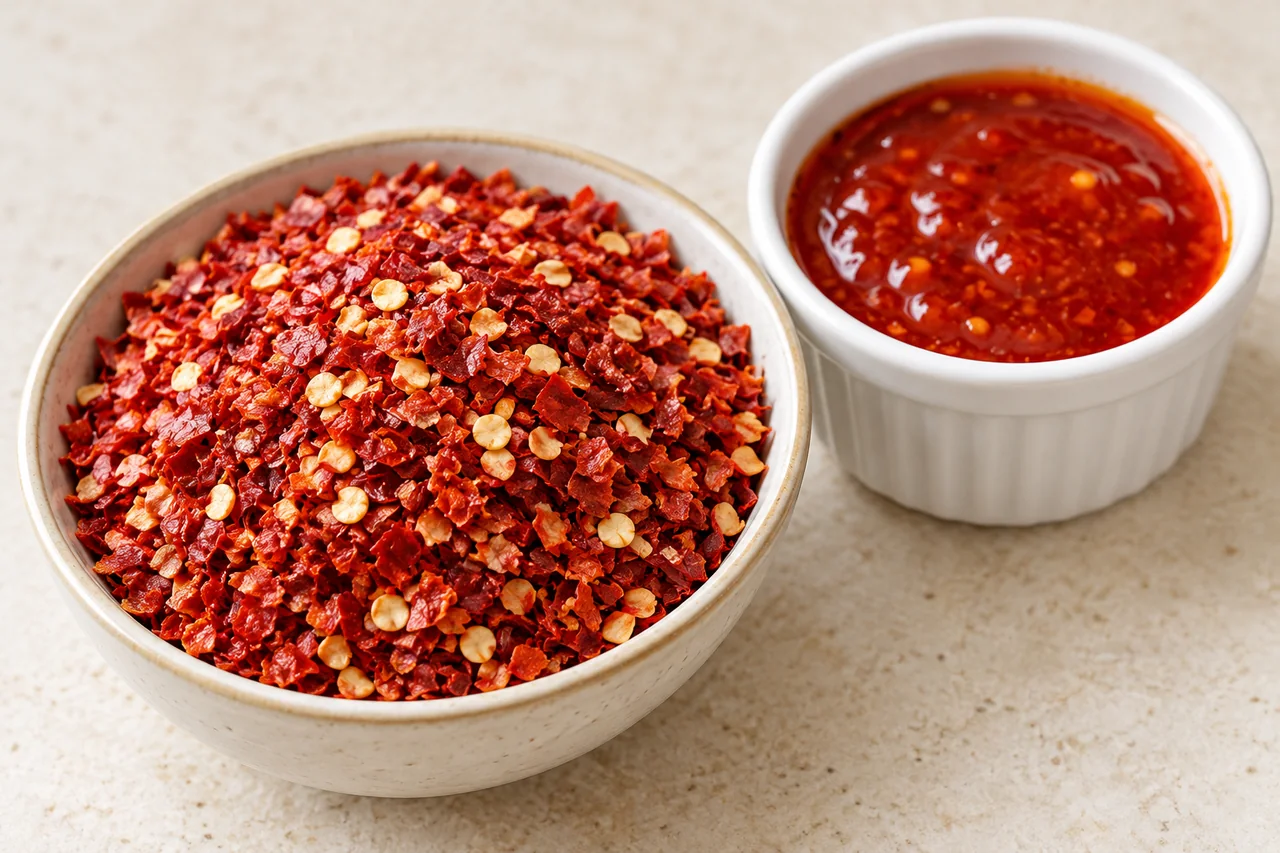
Prepare each candidate in the same food and at the same first-trial addition level. Observe whether the visible seeds and skin pieces deliver the intended appearance after normal cooking, mixing or holding. Assess texture and flavour separately rather than treating fewer visible seeds as inherently better.
Where the food needs a specific appearance, inspect more than a single carefully arranged serving. Transfer and mixing can change the visible distribution in a heterogeneous ingredient. Use the actual serving or application stage to choose the preparation that customers will encounter.
Separate the Preparation Fraction from the Heat Result
Destemming, cutting and sieving do not replace a separate heat assessment.
- 01Define the fraction
State how seeds, fragments and skin will be classified.
- 02Identify the proposal
Evaluate the actual cut or crushed material offered.
- 03Check heat separately
Use the relevant external analysis or agreed application criterion.
- 04Compare the food
Judge appearance and texture after the intended preparation.
Destemming removes stalks, cutting or crushing changes the pieces, and sieving selects a physical fraction. RELIA SPICES performs these operations in-house, but they do not automatically define the seed-to-skin proportion.
Classify whole seeds, broken seeds and skin consistently before comparing portions. A lower visible seed count does not by itself prove a lower seed mass or a seedless ingredient.
Assess heat separately. Pepper capsaicinoids, rather than the count of visible seeds, determine pungency. Our routine physical checks are internal and SHU analysis is outsourced. Connect the proposed fraction to its relevant heat evidence, then judge appearance and texture in the actual food.
Evaluate the Material Proposed for Your Desired Appearance
Evaluate the proposed material whenever a different seed appearance is requested.
- ✓Desired result
Describe the food appearance or texture the composition should support.
- ✓Proposed material
Inspect the actual preparation offered for that request.
- ✓Consequences
Recheck cut, fines and the food heat/flavour after a composition change.
Explain why the composition matters, such as fewer visible pale seeds in a sauce or a particular pod-section appearance. Inspect the actual material proposed for that purpose instead of assuming every seeded-flake listing can supply the same reduced-seed preparation.
Recheck cut, fines, skin fraction, flavour and heat when the preparation changes. The useful result is a specific material your food accepts, without relying on an unmeasured seed percentage or an assumed universal removal service.
Sample the Heterogeneous Material Deliberately
Take representative portions rather than selecting one convenient corner of a pack.
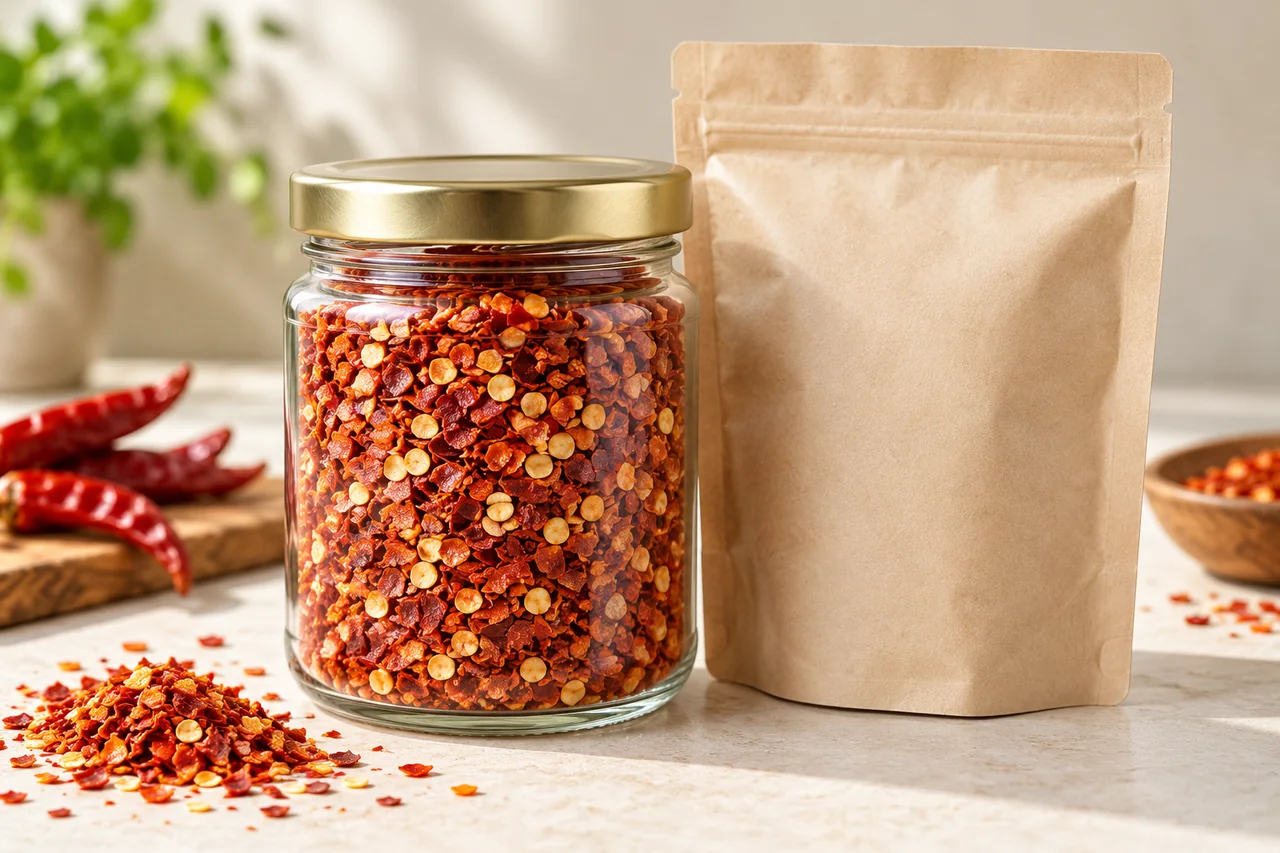
Keep the sample handling consistent before taking a portion for inspection. A handful selected from one corner of a pack may not show the same seed and skin distribution as the material entering the food. The buyer quality team should choose the sampling approach appropriate to the actual lot and acceptance task.
Retain the accepted preparation and the classification notes as a useful reference. A photograph helps explain the target appearance, while the representative material and the agreed procedure give the numerical comparison its meaning. Neither should be stretched into a guarantee of every unsampled portion.
Request the Composition the Food Actually Uses
Combine composition, cut and independent heat needs in one actual material request.
- 01Purpose
Name the food result and actual material form.
- 02Definition
Specify seed/skin classification and the accepted comparison basis.
- 03Complete material
Add independent cut, heat and handling requirements.
Provide the intended food, desired seed and skin condition, actual form and the method your team will use to judge it. Add independent heat and cut requirements and the quantity or receiving pack needed for the purchase. We can discuss the relevant seeded-flake or pod-piece route on that basis.
The right choice may be an existing seeded preparation or a separately defined material proposal. Keep the request centred on the ingredient and the food result, rather than expecting the words reduced seed to answer composition, heat, cut and processing questions at once.
- Food use and desired preparation
- Seeded or reduced-seed objective
- Seed and skin classification
- Measurement and acceptance basis
- Separate heat and cut conditions
- Quantity, pack and sampling needs
Your next purchasing decision
Talk through your seed and skin composition brief
Send the desired appearance and the method your team will use to judge it.
Tell RELIA SPICES what the food should show and how your team will assess the material parts. Add the desired cut, heat criterion and relevant quantity.
We can discuss a seeded-flake or pod-piece candidate and make the actual preparation the object of the comparison, rather than assuming an unverified seedless grade.
The enquiry page keeps this guide with your message. Add your quantity and destination so we can discuss the relevant material.