
Factory-Filled Paprika and Chili Ranges for Importers
Build an own-brand pepper range around distinct customer uses: paprika colour, selected chili heat, visible flakes and whole pods. RELIA SPICES in China supplies the ingredients and fills customer-logo retail packs, assessing your specified packaging or assisting branded-pack production.
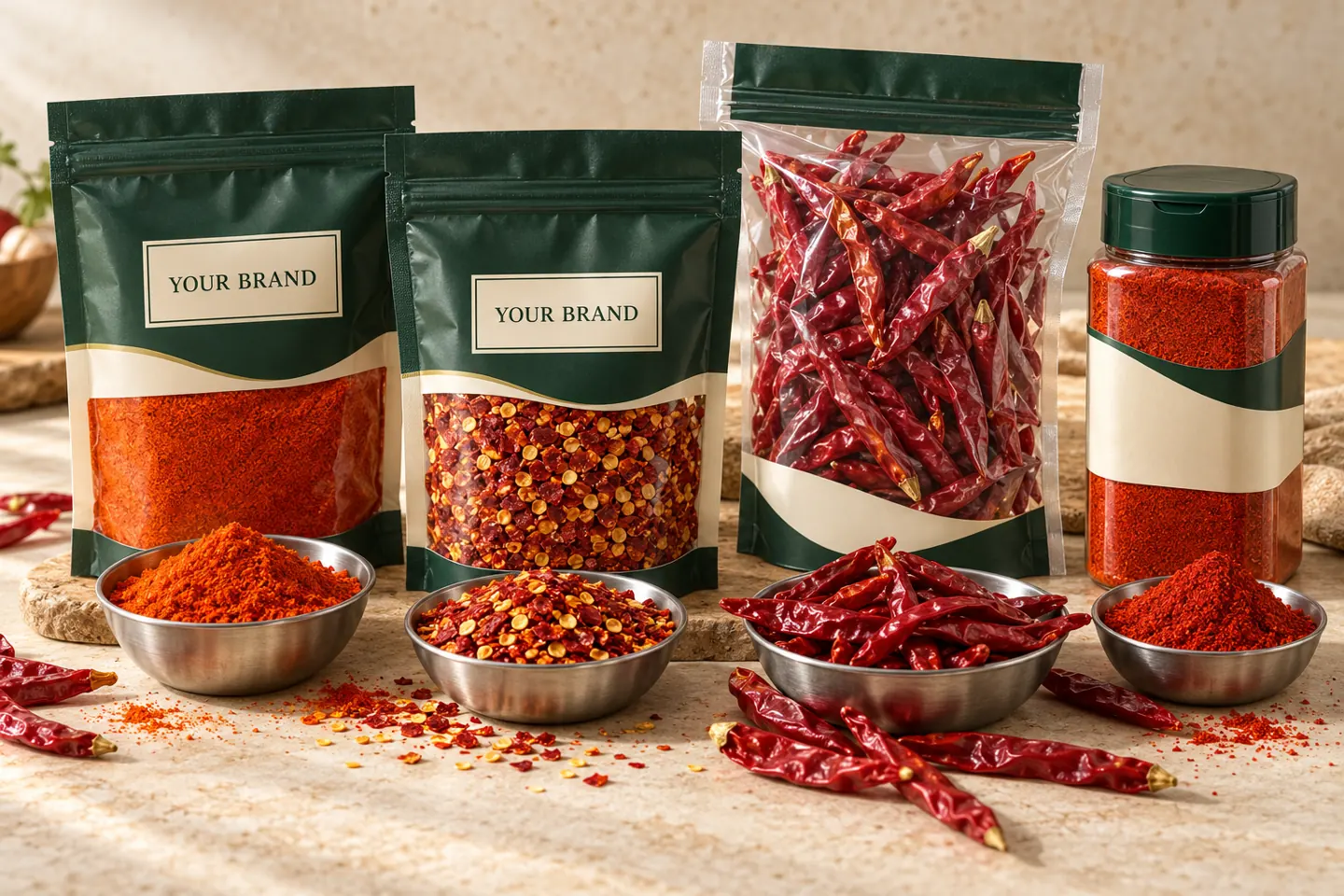
Packaging and project details
Send the destination, retail channel and one product-and-pack brief per SKU so we can discuss material choices, technical requirements and a quotation for the proposed range.
Build the range around different customer needs
- Colour-led cooking
A selected sweet-paprika powder and its colour grade.
- Chosen pungency
A chili powder with the heat profile your customers want.
- Visible pepper use
Flakes for pieces and bite, or whole pods for intact-pepper preparation.
Connect Each SKU to the Manufacturing Work It Needs
A shared factory relationship can support several forms while their specifications stay distinct.
RELIA SPICES purchases dried chilies and performs cleaning, foreign-matter removal, destemming, grinding or cutting/crushing, sieving and packaging. We supply the selected ingredients and fill retail packs under your logo.
Link each SKU to support work
We assess customer-specified packaging, can assist branded-pack production and accept customer-supplied packaging. Order-specific in-house steam is available. Moisture and particle size are checked internally, while ASTA, SHU and microbiology use external laboratories for the agreed scope.
Connect the factory role to each range item
- Ingredient preparation
Cleaning, destemming, grinding or cutting, sieving and packaging.
- Order-specific treatment
Include in-house steam when required by the selected order.
- Relevant checks
Internal moisture and particles; external ASTA, SHU and microbiology.
- Branded retail filling
Assess the pack and component-supply route for the actual ingredient.
Choose Material Candidates with Different Roles
Use product-specific listing references to shape each retail item.
Sweet paprika lists nominal 70 mesh, a separate customizable 60–70 mesh reference, customizable 80–220 ASTA and moisture ≤8%. Cayenne lists nominal 60 mesh, separate 60–70 mesh customization and moisture ≤9%, with mild, medium or hot options rather than a numerical SHU grade. Agree the actual route behind its differing Stir-Fried and AD-related processing descriptions.
Keep flake and pod specifications separate
Seeded coarse flakes list 7,000–10,000 SHU, with independent 1–4 mm and 5 × 7 mm entries requiring an agreed cut and measurement basis. New Generation whole pods list 3–6 cm, 50,000–90,000 SHU and 12–14% moisture. Keep each full range with the selected product rather than combining the catalogue into one factory specification.
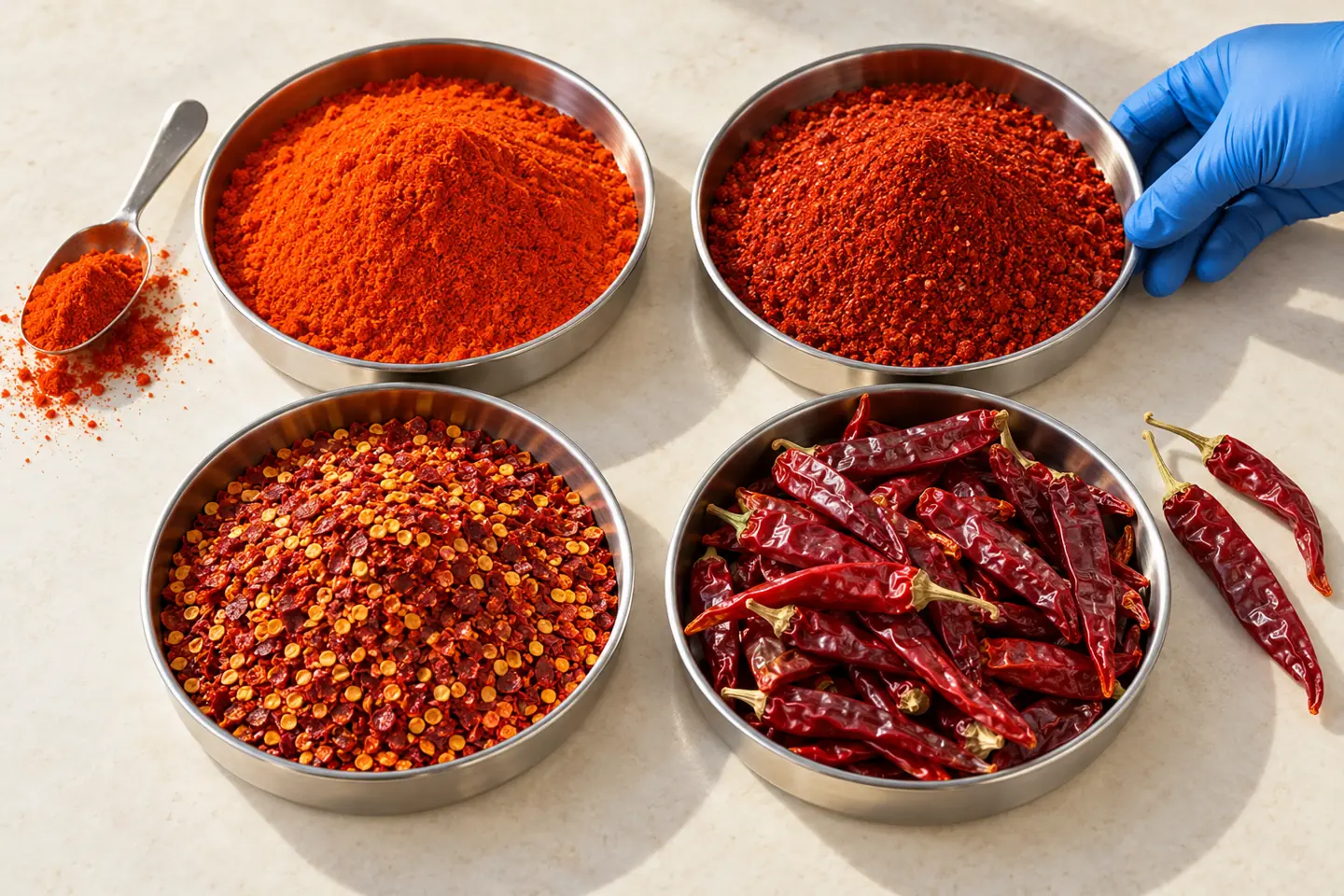
Four candidates, four different buying roles
Sweet paprika for the range's colour role
Use a selected paprika grade for the item whose main customer promise is a colour-led cooking powder.
- Grind
- Nominal 70 mesh; separate customizable 60–70 mesh reference.
- Colour
- Customizable 80–220 ASTA; keep the selected grade with this SKU.
- Moisture
- ≤8% listing limit, distinct from the other range members.
Cayenne powder with a chosen heat profile
Use this powder for a separately defined pungency role, agreeing the actual route behind the Stir-Fried and AD-related descriptions.
- Grind
- Nominal 60 mesh; separate customizable 60–70 mesh reference.
- Pungency
- Mild, medium or hot options; no numerical SHU grade is supplied.
- Moisture
- ≤9% listing limit for the proposed Cayenne material.
Coarse seeded flakes for visible pepper use
Use this candidate when the retail item is chosen for recognizable pieces, seeds and bite.
- Heat reference
- 7,000–10,000 SHU; link the analytical basis to the actual material.
- Cut references
- Independent 1–4 mm and 5 × 7 mm entries; agree the actual cut and measurement basis.
- Form
- Coarse red flakes with visible pale seeds; agree the seed and complete-mixture requirements.
New Generation whole pods for intact-pepper use
Use a whole-pod item when consumer preparation and presentation differ from the powders and flakes.
- Listed size
- 3–6 cm, with measurement basis and actual stem condition agreed.
- Pungency
- 50,000–90,000 SHU; keep the full range with this material.
- Moisture
- 12–14% listing range, not a shared limit for the whole range.
Review the selection criteria
- Sweet paprika powder
- 80–220 ASTA customization Choose the colour grade and grind for a colour-led item.
- Cayenne powder
- Mild / medium / hot Select the described pungency and agree the actual route.
- Coarse seeded flakes
- 7,000–10,000 SHU Define the whole mixture, cut and visible-piece requirement.
- New Generation pods
- 3–6 cm listed size Agree the named preparation and actual stem condition.
Give Every Retail SKU a Complete Identity
Material, artwork, pack and order details should all point to the same item.
Create one row per SKU with the selected ingredient, preparation, product name, target market, packaging specification and requested net content. This distinguishes two powders by the role and specification you are buying, not just by a colour name.
Assign identifiers to the actual variants
GS1 treats products and relevant variations as identification decisions. Assign brand-owner identifier responsibility and review the actual variants with your retail plan. Discuss any requested coding or application work separately from the ingredient and filling proposal.
The four parts of a usable SKU brief
| Selection point | What to consider |
|---|---|
| Material identity | Product link, selected form and agreed grade criteria. |
| Retail identity | Approved product name, artwork version and brand-owner identifier. |
| Pack identity | Requested fill, component specifications and packaging-supply route. |
| Order identity | Destination and intended units for that specific product. |
Keep Powder, Flakes and Pods Distinct Through Preparation
Different preparations change how pepper looks, flows and is used.
Cleaning and destemming prepare the dried input. Grinding creates a powder background; cutting or crushing retains pieces; sieving selects a fraction. The complete mixture still matters: fines, seeds and main pieces affect the appearance and local bite of flakes, while whole pods remain a different consumer preparation.
Link tests and treatment by SKU
Use our internal moisture and particle checks to describe each proposed ingredient. Connect external colour or heat evidence to that same material, then specify any treatment requirement by SKU. Keep the accepted ingredient and its retail-pack version linked in the order brief.
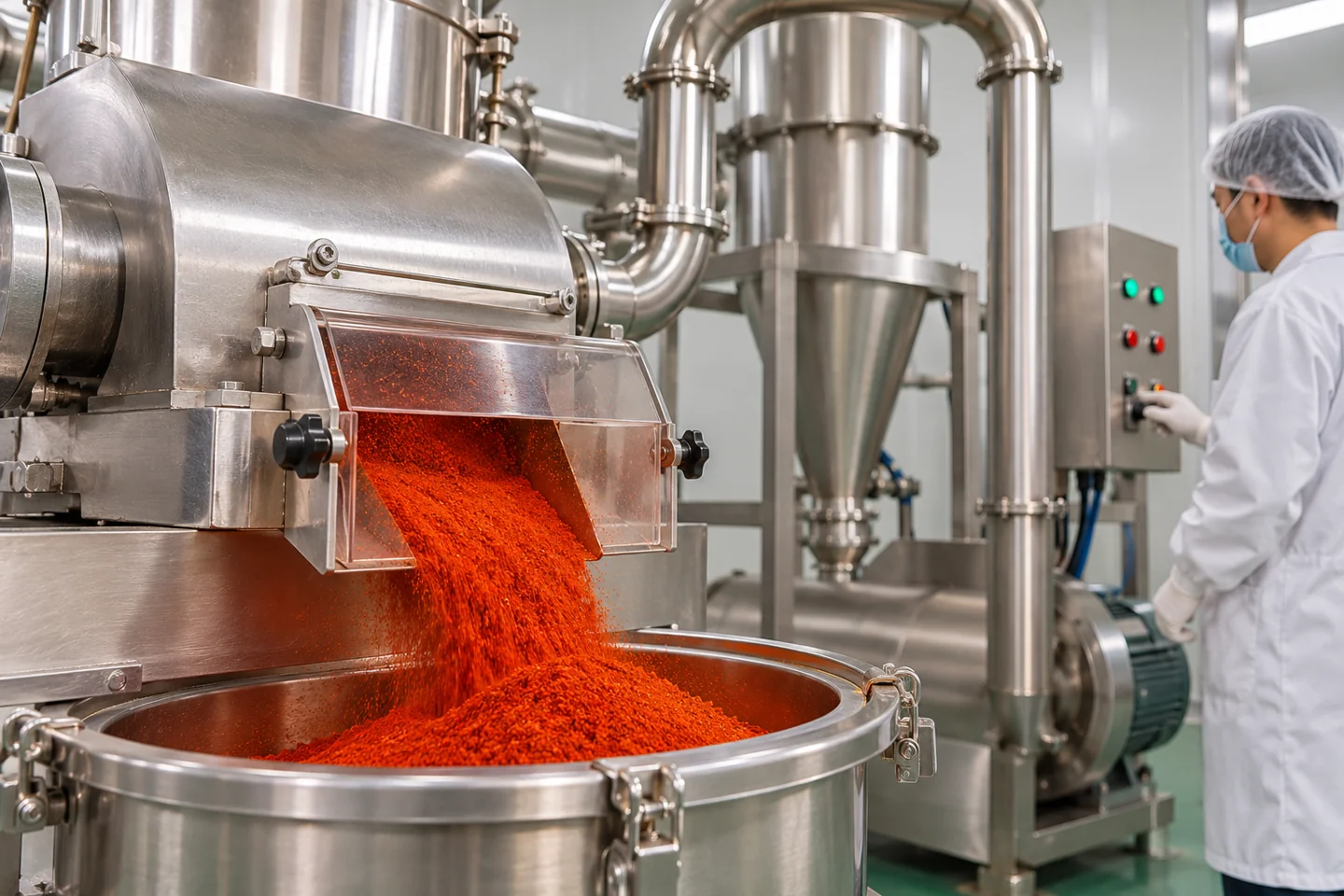
Relate preparation choices to the product you sell
- Clean and destem
Prepare the purchased dried pepper before the selected size-reduction route.
- Grind or retain pieces
Choose the powder background or visible-piece form for the intended use.
- Sieve the fraction
Agree particle criteria and evaluate the complete mixture.
- Describe the selected product
Keep material checks and applicable colour, heat or treatment evidence with that SKU.
Request SKU Terms Within One Range Brief
Shared brand files can support the project while each product has its own quotation basis.
Send intended units and desired timing by SKU. Separate the launch assortment from later forecasts, and show which packaging and artwork components are shared. This makes the order request more useful than a single combined quantity.
Discuss item-specific order and transport terms
MOQ, net content and lead time are quoted according to product, package specification, printing method and quantity. Discuss mixed-SKU scheduling, consolidation and transport terms as specific project requirements before building them into your receiving plan.
Make the range quotation comparable
- Each SKU
Ingredient, requested retail units, fill and technical requirements.
- Shared project inputs
Brand files, destination, channel and desired delivery window.
- Agreed terms
Quantity basis, price, schedule and shipment scope for the proposed items.
Keep Technical Evidence with the Product It Describes
Use a separate evidence brief for each material and intended consumer use.
Assign requested tests, methods and acceptance criteria by SKU. A paprika colour report describes a different requirement from a flake's pungency, and a listing's optional treatment reference does not establish that the supplied item received that treatment.
Review treatment evidence for each product
When steam microbial reduction is selected, discuss the applicable process evidence for that material. Keep composition, consumer preparation and destination requirements in the same SKU brief; treatment alone does not establish ready-to-eat status, certification or acceptance in every market.
Four evidence needs to attach to each SKU
- Physical condition
Moisture, size and the actual preparation being supplied.
- Colour and heat
Applicable external ASTA or SHU evidence for the identified material.
- Microbial requirement
Selected treatment, sampling basis and relevant laboratory or process evidence.
- Use and destination
Complete composition and intended-use acceptance for the proposed product.
Define the Retail Unit Before Outer Distribution Packing
The consumer pack and the receiving arrangement need connected but separate specifications.
Assess the customer-logo retail pack with the selected ingredient, closure and requested net content. State whether you will supply packaging or want assistance producing branded components.
Agree outer packing and receiving requirements
Then discuss outer packing, counts and identification for your receiving operation, including any pallet or container-loading request. Review storage for the actual retail configuration; an ingredient's stated storage period does not establish the shelf life of a new retail pack.
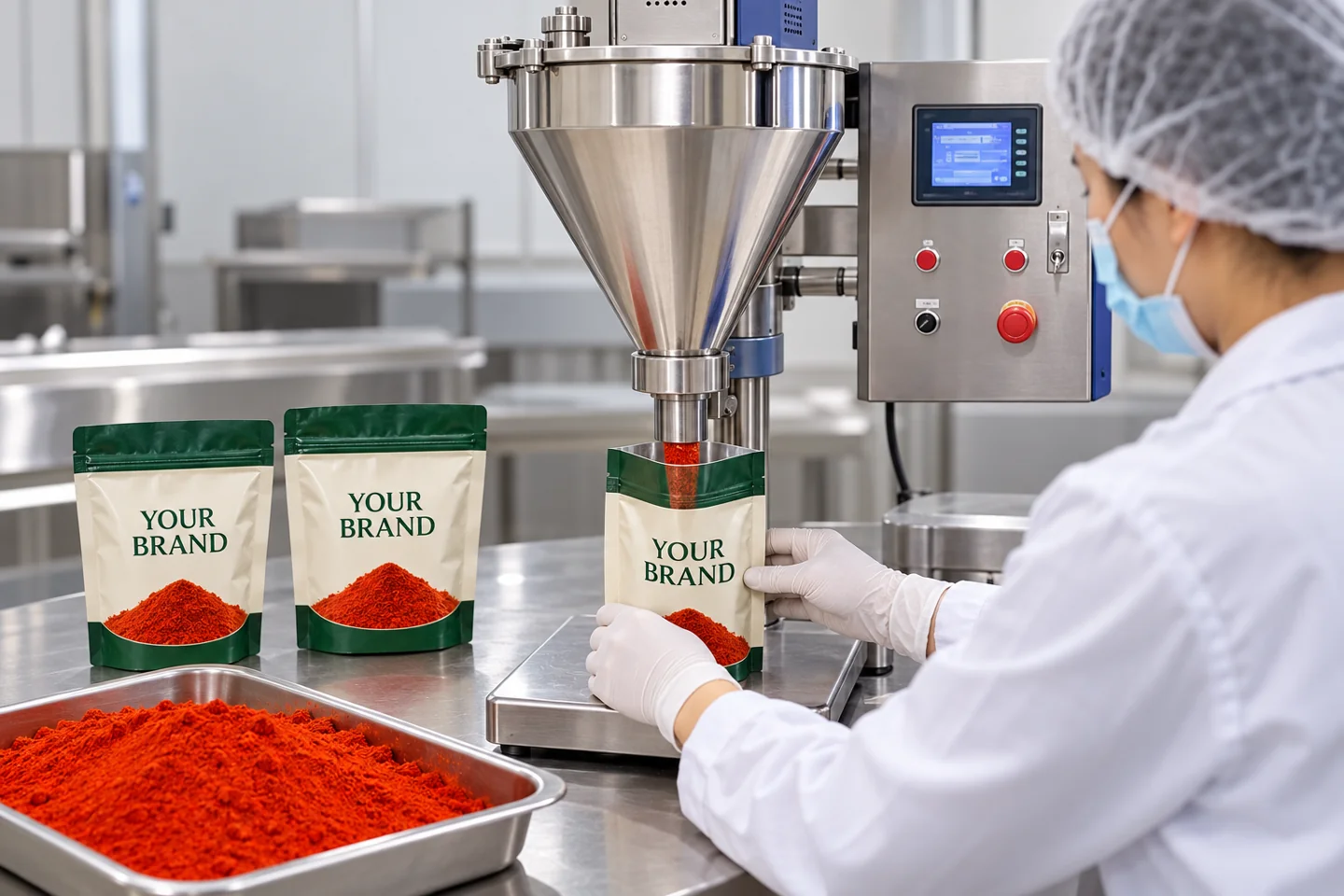
Move from the consumer unit to the receiving brief
- Retail item
Ingredient, requested fill, closure and customer-brand presentation.
- Outer-packing request
Counts, handling and identification needed for your distribution operation.
- Receiving requirements
Agreed package, shipment scope and applicable storage instructions.
Make Receiving and Reordering Specific to Each SKU
An accepted material-and-pack reference gives the next order a clear starting point.
Define the receiving checks you need for product identity, package condition, declared content and relevant evidence. Keep the link between your SKU, the agreed ingredient reference and the accepted pack version visible to your receiving team.
Identify product-specific changes before reordering
For a reorder, identify any requested change in material, treatment, packaging or artwork before repeating the order. A short, product-specific change list helps the factory assess the same specification your team is using.
| Your input | Factory assessment focus | Decision to confirm |
|---|---|---|
| SKU identity Your SKU, ingredient link, complete composition and material specification. | Keep each candidate and selected preparation separate across the proposed range. | One complete ingredient identity per SKU. |
| Pack and receiving brief Requested retail unit, component source, case information and destination. | Assess the proposed pack and identify the receiving information to include in the offer. | Requested pack and receiving information per SKU. |
| Repeat or revised enquiry Previous product/pack reference and any requested change. | Assess each changed ingredient, treatment, pack or artwork line before quoting again. | Unchanged references and changes requiring assessment. |
This is a planning handover for your enquiry. Packaging, MOQ, net content and timing are assessed and quoted for the product, format, printing method and quantity.
Develop the Range Through Focused Next Decisions
Use the manufacturer, retail-range and packaging guides for different project needs.
The manufacturer overview explains the ingredient-and-retail-filling role. The supermarket guide helps separate customer-facing range roles, while the logo guide focuses on artwork, component supply and filling requirements.
Add products with distinct consumer roles
Add a product when it serves a distribution or consumer use. Keep its material selection, technical brief and packing request specific enough to assess alongside the rest of the range.
Choose the guide that advances the range
Review the next-step choices
- Manufacturer scope
- Understand the supplied ingredient and factory-filled retail offer.
- Retail assortment
- Choose distinct customer-facing roles across the proposed products.
- Logo and packaging
- Organize component specifications, artwork and the filling request.
Send Your Importer Range Brief
A product-by-product request helps us discuss the proposed range clearly.
Contact Qingdao Relia Spices Co., Ltd. / RELIA SPICES with the destination, retail channel, proposed product roles and actual ingredient links.
Provide specifications and quantities by SKU
Include the selected specifications, treatment and testing needs, packaging requirements, artwork status, requested net content and quantities by SKU. Add your desired timing and receiving requirements so the proposal can address the range and its individual items together.
Four inputs for a multi-SKU enquiry
- Range purpose
Destination, retail channel and distinct consumer uses.
- Product rows
One ingredient, specification and requested quantity per SKU.
- Branded packs
Requested fill, packaging specifications, artwork and component-supply route.
- Technical and receiving brief
Per-product tests, treatment requirements, timing and handling needs.