
Selecting a Second Paprika Source Against Your Approved Specification
Compare a second paprika source against the food and specification you already approve. Start with one selected grade, use your current recipe dose, and keep mandatory composition or treatment requirements unchanged. The nominal 70-mesh sweet paprika and separate dried sweet paprika are alternative starting points. Send your approved specification and the difference you need to investigate so we can focus the comparison.
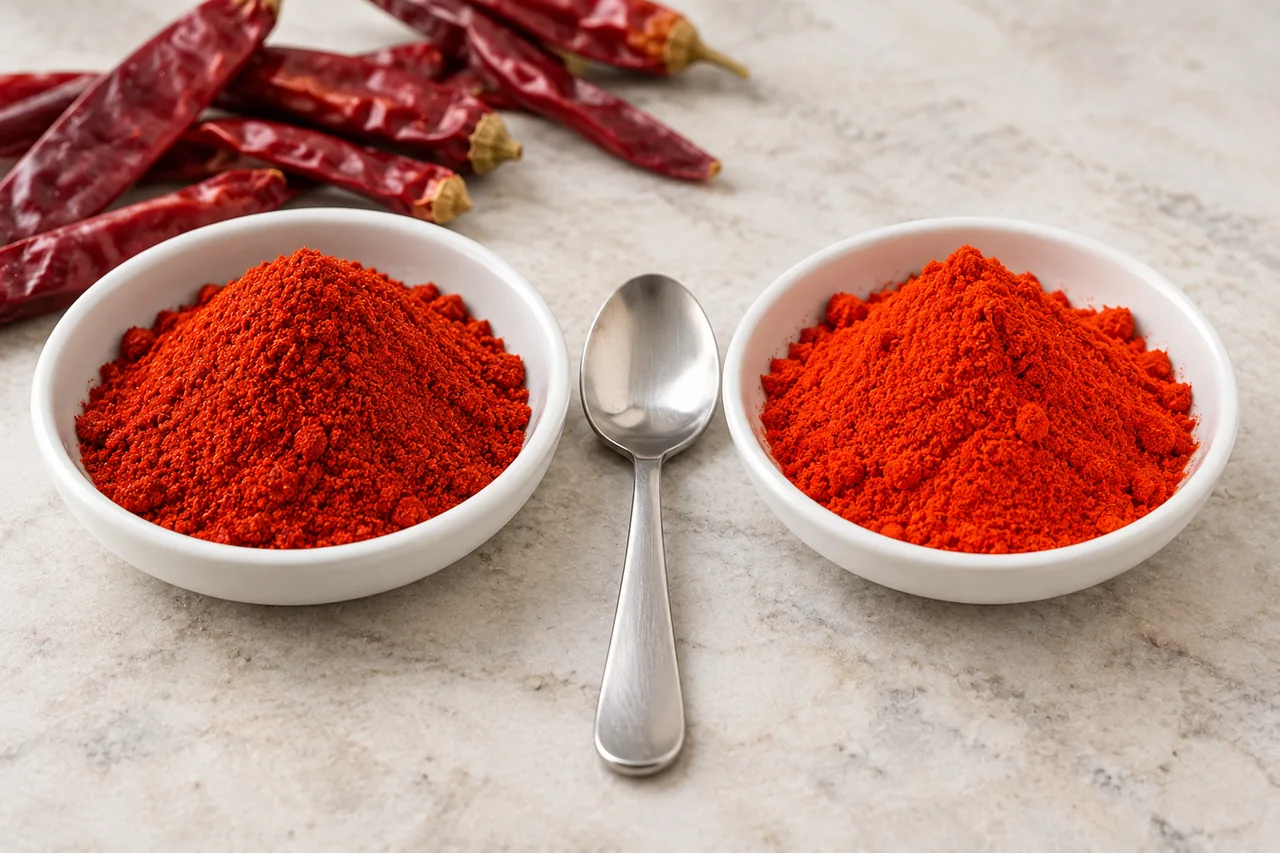
- Keep the benchmark
- Start at the approved recipe dose and normal processing conditions.
- Select an actual grade
- Overlapping ASTA ranges do not establish equivalent paprika materials.
- Decide the change
- Separate direct replacement from an explicitly accepted recipe adjustment.
Separate Hard Requirements from Historical Habits
Separate requirements that cannot change from differences a food trial can resolve.
- ✓Hard condition
Exclude a candidate that conflicts with a mandatory ingredient or process requirement.
- ✓Performance condition
Compare the alternate in the approved food under the relevant process.
- ✓Historical observation
Use the current-material experience as context rather than an unexplained new limit.
RELIA SPICES can discuss an alternate paprika grade around your required particles, composition and food result. We grind and sieve in-house, check routine moisture and particles internally, and outsource ASTA, SHU and microbiological analyses.
Start with the nominal 70-mesh or separate dried sweet paprika candidate. List what cannot change, such as an ingredient exclusion or required treatment. Then identify the colour, flavour or texture differences your controlled food comparison can evaluate.
Select Real Alternate Grades Rather than Range Endpoints
Compare selected samples, not overlapping catalogue range endpoints.
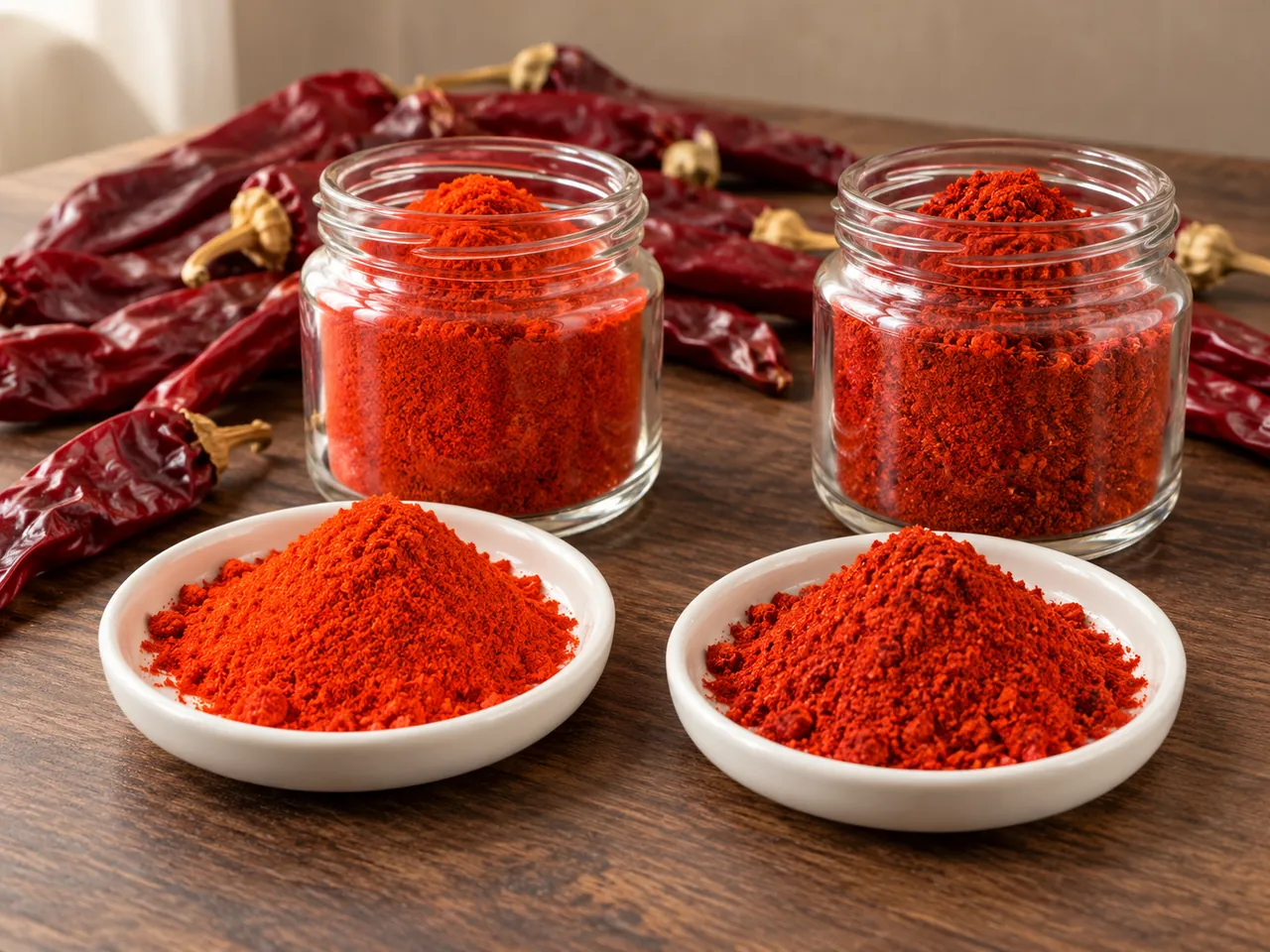
The sweet paprika powder has nominal 70 mesh, a customizable 60–70 mesh reference and an 80–220 ASTA range. The dried red sweet paprika powder has its own 80–280 ASTA declaration. Ask about actual candidate grades within their respective material scope; overlapping ranges do not establish equivalence.
The first listing also gives moisture ≤8% and specific storage limits. The second requires an actual particle criterion rather than an assumed mesh interpretation of its unitless size field. Select the sample and grade before comparing the alternate with the approved material.
Ingredients to compare for this application
Nominal 70-mesh paprika alternative
Start an alternate-source trial when the approved powder has a defined particle and colour requirement.
- Nominal 70 mesh; separate 60–70-mesh customization.
- 80–220 ASTA colour customization.
- Moisture limit: ≤8%; storage ≤25°C and humidity ≤60%.
Separate sweet paprika alternative
Compare as its own selected grade when its material and colour scope warrant an alternate-source trial.
- Sweet paprika powder identity.
- Independent 80–280 ASTA range.
- One-year statement with carton and bag packing described.
These product specifications are a starting point for selecting a grade. Match the proposed material and sample to your food and order requirements.
Map the Production Difference to the Substitution Risk
Match each production difference to a specific food or measurement check.
| Difference | Why it matters | Buyer check |
|---|---|---|
| Particle distribution | Specks, texture or handling can change | Compare physical results and the food |
| Colour grade | Ingredient analysis and food appearance are distinct | Read the actual ASTA result and recipe trial |
| Selected treatment | The accepted preparation may differ | Keep any order-specific steam requirement explicit |
Paprika powders can share a commercial name while differing in colour grade, composition or particle distribution. RELIA SPICES prepares purchased dried chilies and grinds and sieves in-house; compare the proposed output with your approved material.
Milling and screening can change visible specks and powder appearance. Read the actual sieve distribution separately from the external ASTA result, because equal colour analysis does not settle the food result.
Use our routine moisture and particle checks to identify the relevant physical differences. Run the first food trial at your current dose and normal conditions. If a dose or grade adjustment is needed, evaluate it as a controlled reformulation rather than calling it a direct replacement.
Keep Colour Measurement and Visible Appearance Distinct
An equal ASTA number does not establish identical finished-food appearance.
- 01Analytical comparison
Use matching material and method scope for the attribute being compared.
- 02Material comparison
Preserve composition and the actual preparation requirements of the approved food.
ASTA treats extractable colour separately from powder appearance. For a second source, compare the agreed analytical basis without assuming that equal numbers produce identical appearance in the finished food. The food remains the relevant reference for the substitution decision.
RELIA SPICES performs the powder’s physical preparation in-house and has steam microbial-reduction equipment for use according to order requirements. Carry the selected composition and treatment condition into the alternate-source comparison. A capability establishes what can be discussed; the applicable grade, requested evidence and actual food trial establish what your substitution approval covers.
Run the First Trial Without Changing the Recipe
Keep the first alternate trial at the current recipe dose.
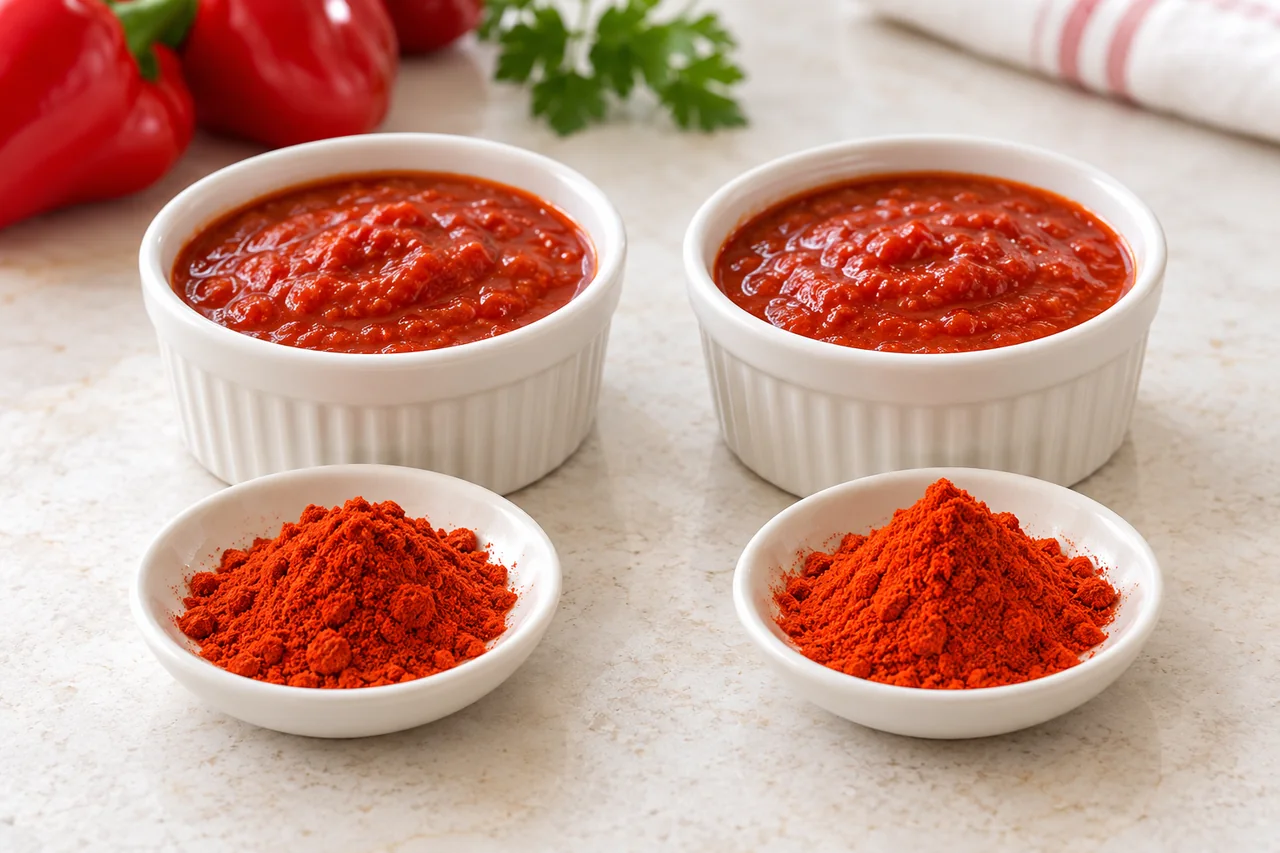
Use the approved recipe dose, ingredient-addition order and operating conditions for the initial comparison. Prepare the current and alternate powders in the same food base. Observe colour after the normal cook, paprika aroma and flavour, unwanted heat and any visible particle difference.
Do not compensate for the alternate immediately. If the recipe is adjusted before the baseline trial, the team loses the ability to identify the cause of a change. Retain the first result, then decide whether an adjustment is justified and which attribute it is intended to correct.
Evaluate a Controlled Adjustment as a Separate Decision
Evaluate a recipe adjustment as a different approval from direct substitution.
- 01Identify the cause
Name the attribute that the first trial showed to be different.
- 02Adjust deliberately
Change one relevant variable while retaining the original comparison.
- 03Decide the scope
Approve a direct replacement or an explicitly revised recipe, rather than blurring them.
A candidate that is not a direct replacement can still be useful if the business accepts a defined recipe adjustment. Run that work separately from the unchanged-recipe comparison. Change one ingredient or process variable at a time and judge the whole food again.
Include the operational consequence in the decision. A higher use level can affect flavour, ingredient consumption or the balance of the seasoning. A different particle character can affect visible texture. Do not treat a better colour result as approval of an otherwise changed formulation.
Check Receiving Fit Before Qualification Closes
Check the receiving pack and warehouse fit before qualification closes.
- 01Pack handling
Inspect the actual pack and the steps needed to feed production.
- 02Storage fit
Match the selected material conditions to the receiving warehouse.
- 03Consumption
Plan the opened quantity around the production use cycle.
An alternate can meet the food requirements yet create a receiving problem. Review the actual pack, opening routine and storage envelope. The nominal 70-mesh paprika lists ≤25°C and humidity ≤60%; compare those conditions with the warehouse and the length of the open-pack use cycle.
Do not transfer those limits to the separate dried sweet powder, whose one-year declaration has its own package and storage basis. Assess the proposed receiving arrangement before price becomes the deciding factor, especially when the production team would need extra handling or a different consumption schedule.
Keep a Useful Reference After the Trial
Retain a protected reference and the scope actually accepted.
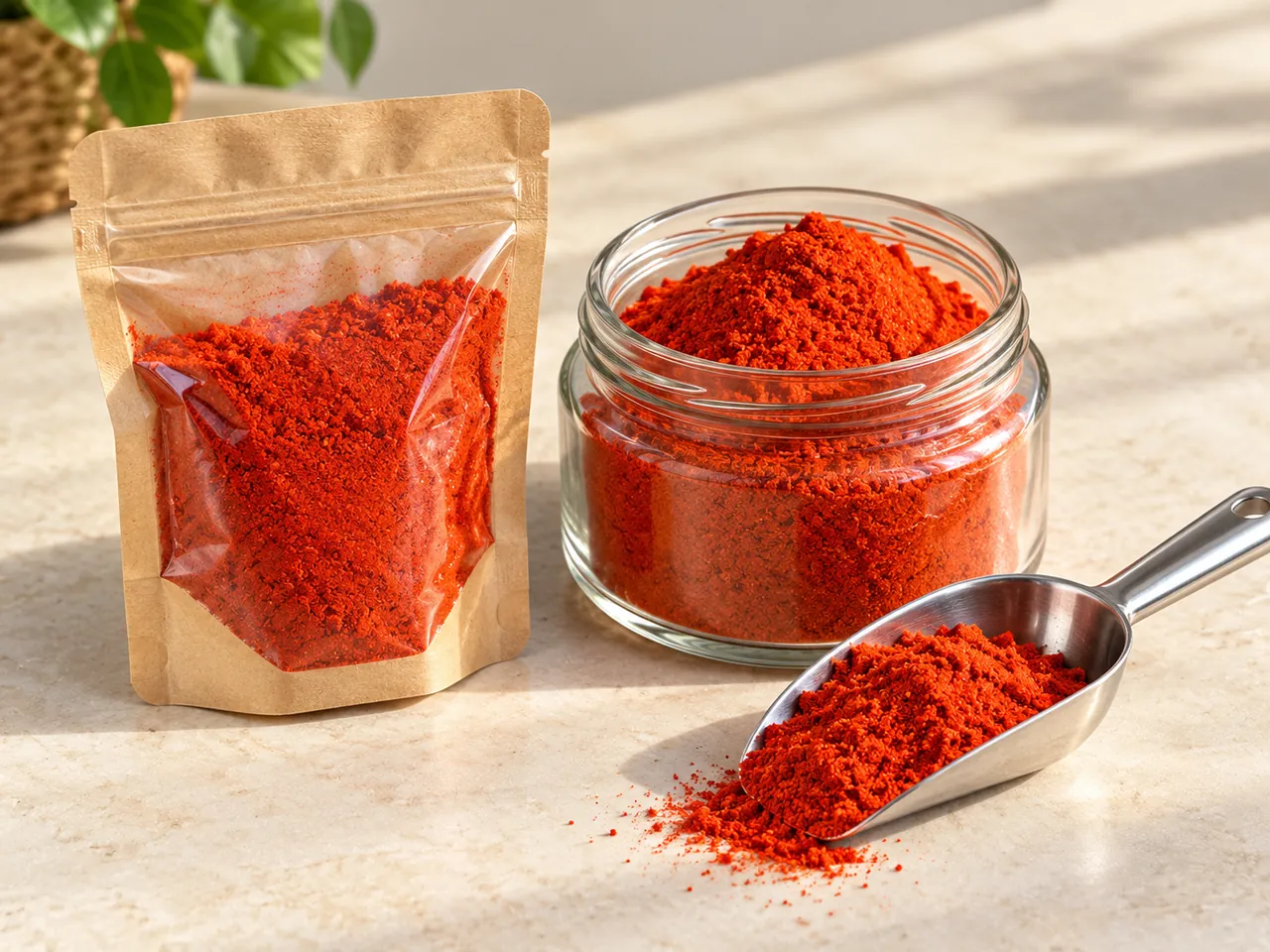
Retain an identified sample of the accepted alternate alongside the current reference and the trial outcome. Protect the samples from avoidable exposure so the next comparison is meaningful. A deteriorated reference can mislead the team about a new material difference.
On later orders, use the selected grade and accepted criteria rather than treating the original trial as a permanent guarantee. If preparation, composition or the receiving package changes, review the affected requirement. This is a practical continuity plan, not a claim that one sample proves every future supply lot.
Send the Benchmark and the Change You Can Accept
State whether your team needs a direct replacement or permits controlled adjustment.
- 01Benchmark
Share the approved material and the food result to preserve.
- 02Comparison
Separate non-negotiables from differences that can be trialled.
- 03Qualification
Choose the alternate only after its food and receiving fit are understood.
Share the current specification, approved food reference and recipe dose. Mark the requirements that must stay unchanged and say whether a controlled recipe adjustment is acceptable. Add the candidate quantity, receiving pack and timing for your comparison.
We can then discuss a relevant paprika grade and the evidence needed to evaluate it. Close qualification with a specific decision about food fit and receiving fit, so production knows which differences have actually been accepted.
- Approved specification version
- Reference sample identity and condition
- Food use and trial conditions
- Allowed and excluded differences
- Expected order and pack pattern
- Required comparison records
Your next purchasing decision
Talk through your alternate paprika source
Send the approved specification, recipe dose and reason for changing sources.
Send RELIA SPICES the approved specification and current food reference, including the recipe dose and the difference that prompted the source search. Add the candidate product and receiving quantity.
We can discuss the actual powder grade, internal physical criteria and relevant external analysis before you choose a direct replacement or a revised formulation.
The enquiry page keeps this guide with your message. Add your quantity and destination so we can discuss the relevant material.