
Dried Chili Pieces for Rehydrated Sauce Inclusions
For a sauce with hydrated chili rings or segments, choose the dry cut by the wet piece you want to serve. RELIA SPICES can discuss the main shape, seeds and fines before you compare soaking and draining. More wet weight is useful only if the pieces still meet your shape and skin-feel target. Send the hydration medium and finished sauce reference to guide the cut selection.
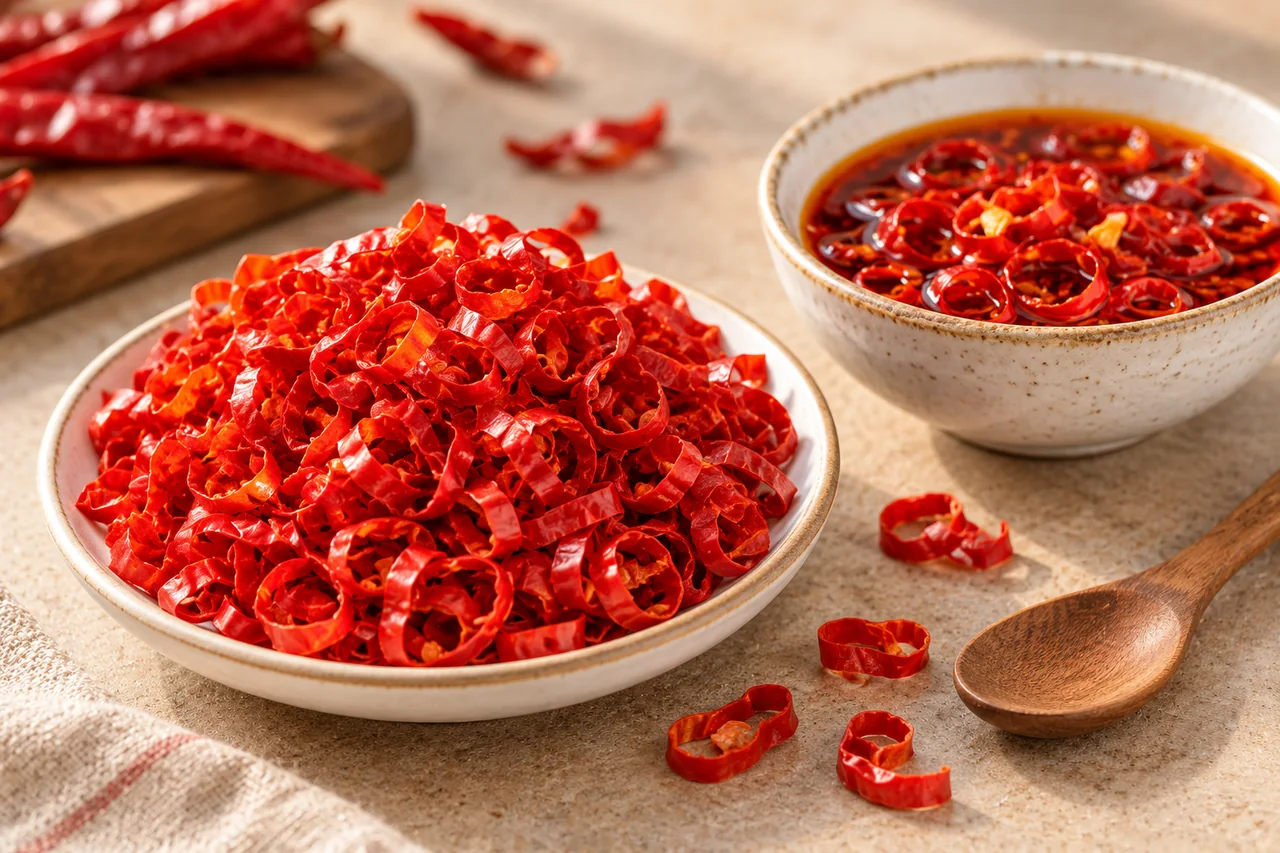
- Cut or ring
- Cut-pod pieces and Tianying rings provide different starting shapes and heat profiles.
- Heat references
- Cut-pod chili lists 8,000–12,000 SHU; Tianying rings list 15,000–20,000 SHU.
- Useful inclusion
- Compare drained mass, accepted wet pieces and finished bite separately.
Start with the dry preparation needed for the wet piece
Agree rings or segments, broken pieces, seeds and fines before hydration.
- 01Dry cut
Agree the main shape and allowable broken pieces.
- 02Hydrated piece
Compare drained mass, wet shape and skin feel.
- 03Finished sauce
Approve the piece after normal mixing, heat and holding.
RELIA SPICES cleans and destems purchased dried chilies, then cuts or crushes, sieves and packs the agreed preparation. For sauce inclusions, define the ring or segment, accepted open pieces and accompanying seeds and fines. Cut-pod chili lists 8–12% moisture and 8,000–12,000 SHU; Tianying rings list 15,000–20,000 SHU.
We check moisture and particle size internally and arrange heat and microbiology through outside laboratories. In-house steam treatment follows order requirements. Select the actual cut and treatment before comparing hydration; separate 1 mm and 2 mm entries do not establish a wet diameter or one combined supplied grade.
Use the actual cut and ring references without inventing axes
Undefined millimetre entries do not establish ring diameter or delivered segment length.
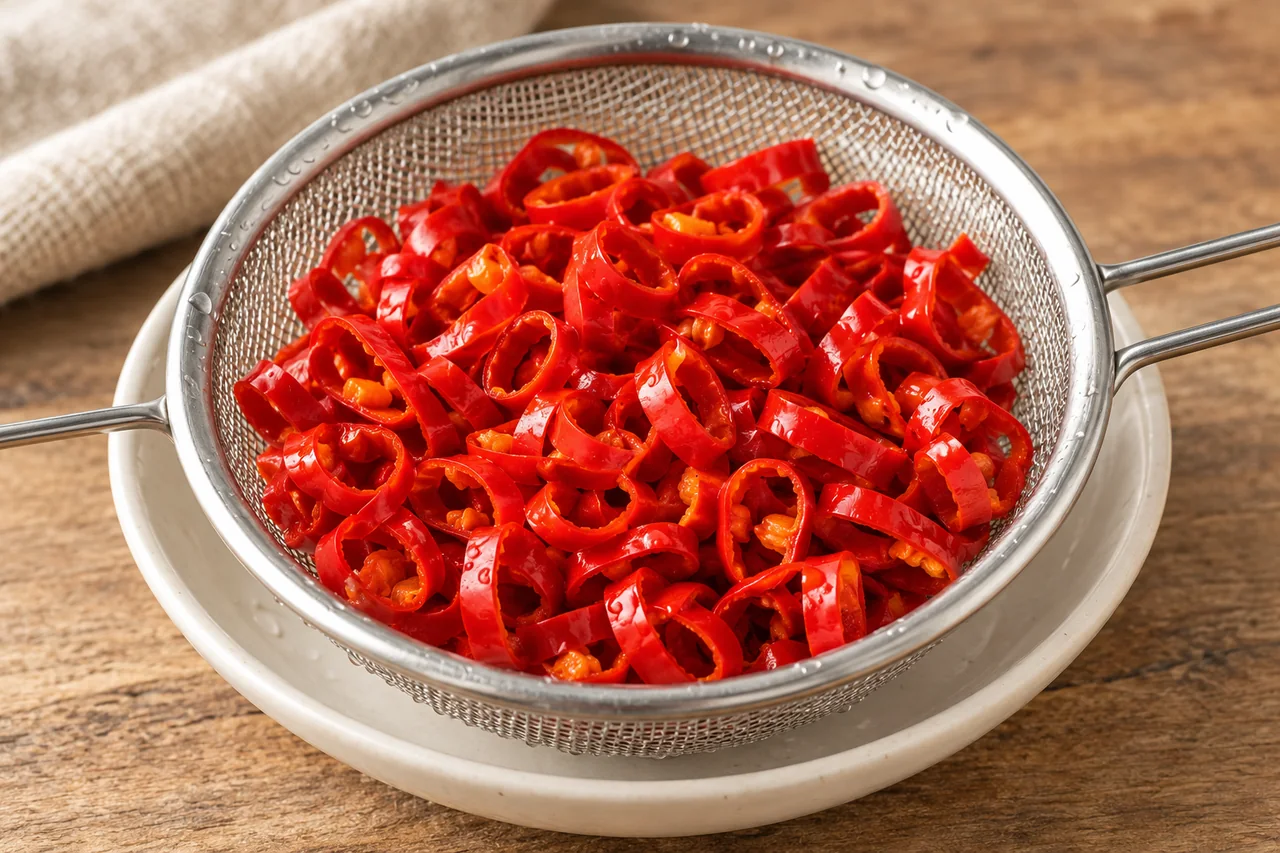
The cut-pod listing carries moisture 8–12% and heat 8,000–12,000 SHU, but its 4–7 cm entry is not a defined supplied segment dimension. The Tianying ring listings carry 15,000–20,000 SHU; one has a 1 mm grain reference and the other separate 1 mm/2 mm notations. None of those numbers establishes ring diameter or a combined 1–2 mm offered grade. Request the actual selected cut and a representative sample for the hydration comparison.
Ingredients to compare for this application
Cut-pod chili pieces
Compare a segment-like preparation against your desired hydrated inclusion.
- Cut-pod presentation
- 8–12% moisture
- 8,000–12,000 SHU
Tianying chili rings
A ring-shaped cooking candidate with its actual cut and seed condition to agree.
- Dried chili-ring form
- 15,000–20,000 SHU
- 1 mm reference; measured axis to agree
Tianying rings with Plant Aroma description
Compare a separate ring preparation when its sensory description is relevant to the sauce.
- Spicy and Plant Aroma descriptions
- 15,000–20,000 SHU
- Independent 1 mm and 2 mm notations
These product specifications are a starting point for selecting a grade. Match the proposed material and sample to your food and order requirements.
Use the medium your sauce will actually provide
Use the sauce's actual water, oil, salt and acidity in the hydration comparison.
| Stage | Hold consistent | Inspect |
|---|---|---|
| Hydration | Actual medium, time and agitation | Wet shape and piece condition |
| Draining | Screen, duration and handling | Comparable drained mass |
| Sauce finishing | Mixing, heating and holding | Final fragments and eating texture |
State whether pieces hydrate separately or directly in the sauce. Keep the actual water–oil composition, salt content, acidity, temperature, time and agitation with the comparison.
A plain-water result may not describe the same piece in a salted or acid sauce. Use the same medium and draining procedure for each candidate, then carry the selected pieces through the real finishing route.
Measure useful pieces rather than maximum wet weight
More carried liquid is not the same as more useful inclusion.
- 01Drained mass
A comparable weight after one defined draining method.
- 02Accepted pieces
Material meeting the wet-shape and fragment requirement.
- 03Finished bite
Skin and seed sensation after the actual sauce process.
Liquid can sit on surfaces or remain trapped between rings and raise the weighed output. That does not show whether you gained more acceptable sauce inclusion.
Weigh identified dry portions and hydrate them in the actual medium. Use the same screen, drain time and handling before weighing each sample. Separately count or weigh pieces meeting your wet-shape criteria, then assess skin feel and seed sensation after the normal sauce route. Keep rejected fragments and extra preparation with the cost comparison. If drained mass rises while usable pieces or bite decline, choose a different cut or process version rather than describing the heavier sample as better yield.
Judge skin feel and shape independently of mass
Assess wet shape and skin feel independently of the scale reading.
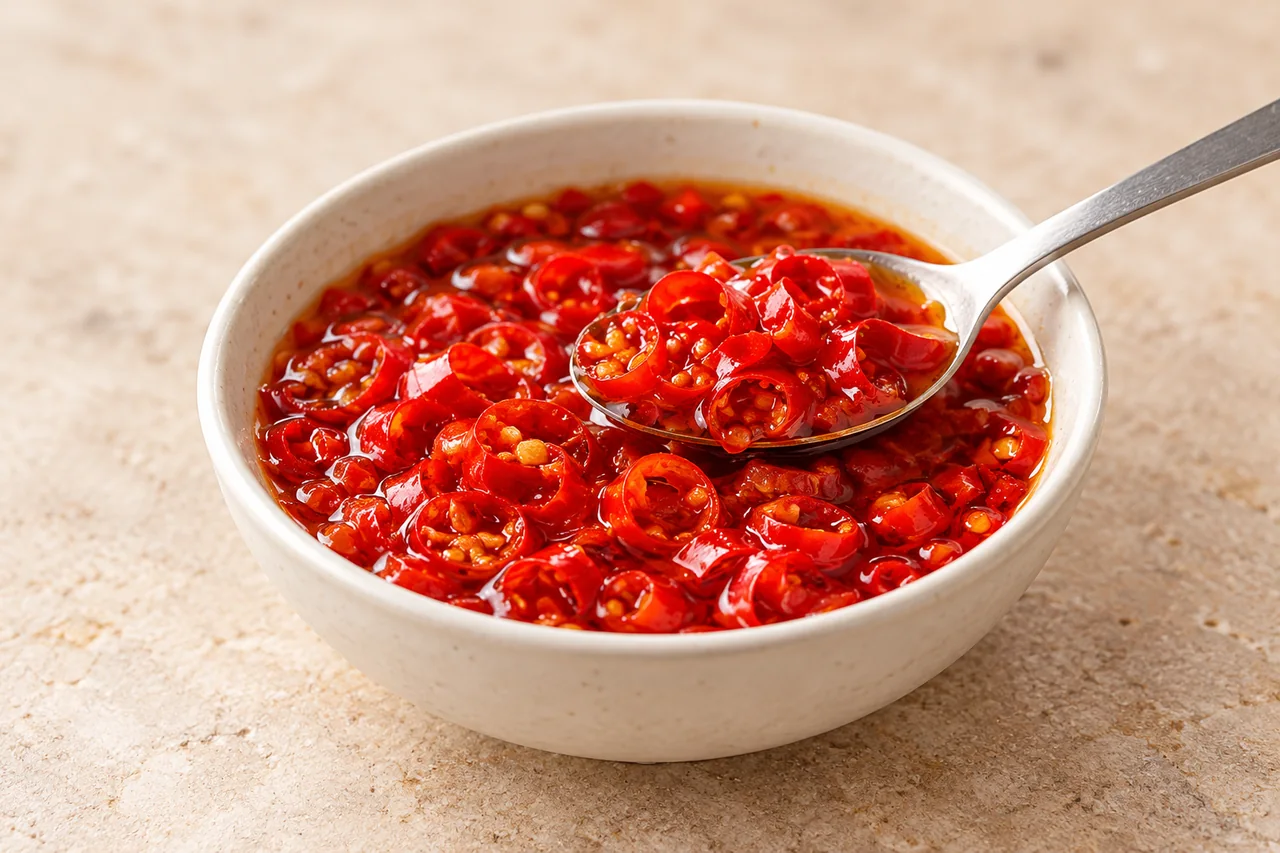
Evaluate the drained pieces at the same sample temperature and elapsed time. Inspect open rings, retained segments, loose skin and seeds, then assess the bite using your chosen method. Original rehydrated pepper research measures ratio, water retention, firmness and microstructure separately. Its results are not a chili-ring specification; the useful lesson is that wet mass alone does not answer every quality question. A sample can gain liquid without meeting your actual inclusion texture.
Follow the hydrated piece into the finished sauce
Find whether breakage begins during hydration or later sauce processing.
- 01Dry input
Retain the received shape and fragment condition.
- 02Hydrated piece
Record drained mass, skin feel and wet shape.
- 03Sauce inclusion
Judge the actual final route and serving condition.
Use the intended inclusion level and actual mixing, heating, cooling and holding route. Compare the hydrated reference with representative pieces in the sauce. Keep new breakage and changed skin sensation separate from differences already present after soaking. If the sauce requires further cutting or mixing, record it as part of the chosen route. Otherwise an acceptable hydration result can be incorrectly blamed for a problem introduced by a later operation.
Compare flavour and material approval for the selected cut
Approve flavour and selected treatment for the same cut used in the trial.
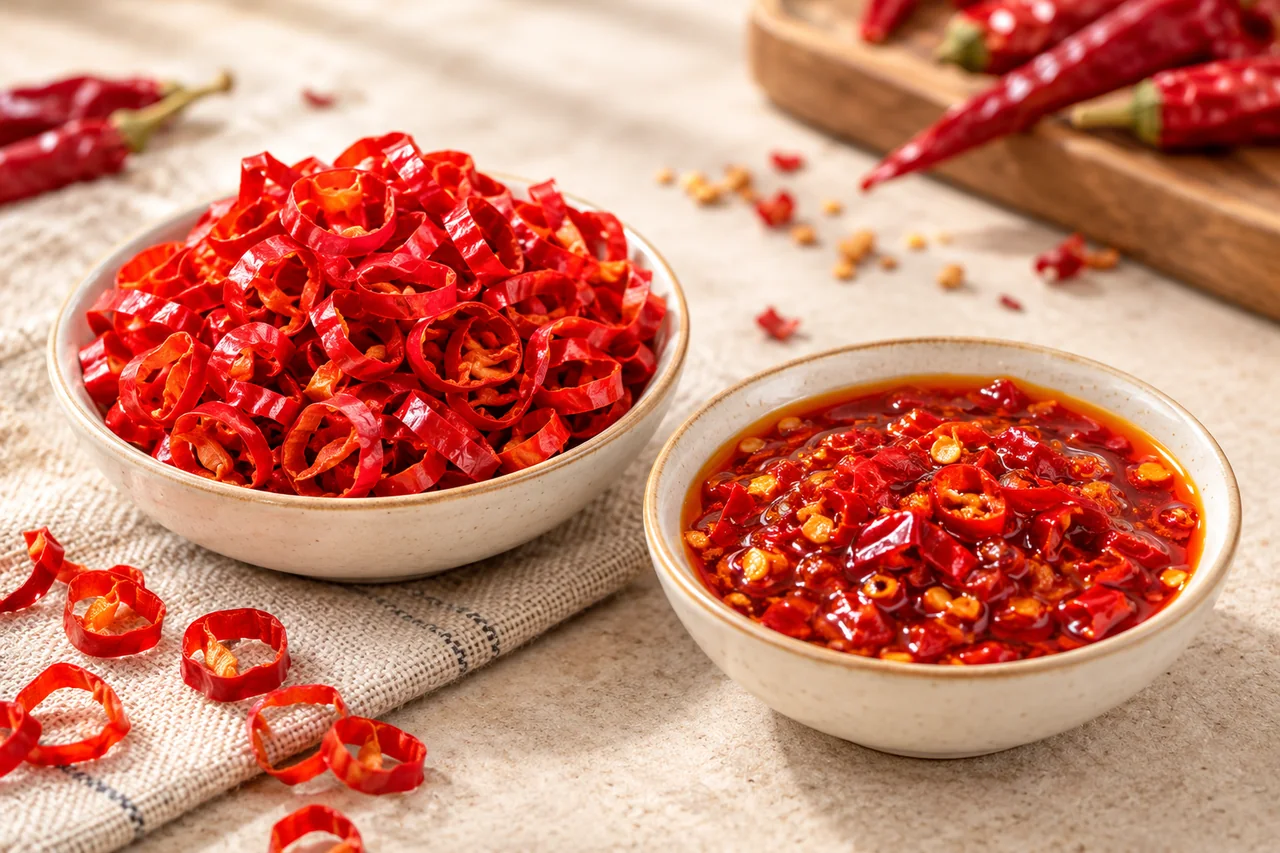
Select the cut for flavour and treatment as well as wet shape. Evaluate the ring and cut-pod candidates at the actual sauce dose, keeping their different heat ranges identifiable.
RELIA's in-house steam microbial reduction is used according to order requirements, with microbiology through outside laboratories. Agree the treatment for the material being sampled and retain it with the hydration comparison; the finished sauce still has its own process and intended-use acceptance.
Compare useful inclusion output rather than maximum wet weight
Compare cost per acceptable wet piece, including preparation and rejected fragments.
- 01Accepted pieces
Meet both the wet-shape and eating-texture requirement.
- 02Measured losses
Keep rejected fragments and processing streams on a clear basis.
- 03Buyer work
Compare actual hydration, draining and finishing requirements.
Count or weigh the accepted wet pieces using your defined inspection method, retaining rejected fragments and process losses separately where relevant. Compare the material cost and buyer preparation needed to obtain that output. Avoid pricing a larger mass of carried liquid as a better ingredient yield. Keep the actual selected pack and opening instructions with the dry material; a listed twenty-four-month ingredient period does not establish the hydrated piece or sauce's storage life.
Send the wet-piece brief with the dry-material request
Send the wet-piece reference and the draining method together.
- 01Wet endpoint
Show accepted appearance, skin sensation and fragment criteria.
- 02Hydration method
Provide actual medium, observation points and draining procedure.
- 03Material response
Connect the dry sample, preparation and offer to the same comparison.
Send the wet-piece and skin-feel reference, hydration medium, drain method and downstream sauce route. We can discuss the dry cut, seed and fragment criteria, internal moisture and particle checks and requested treatment. Keep the accepted useful-piece output with the proposed sample, package and quantity.
- Target hydrated shape and bite
- Actual hydration medium
- Time, temperature and drain method
- Downstream sauce process
- Mass and texture acceptance
- Sample quantity and packaging
Your next purchasing decision
Discuss a dry cut for your hydrated sauce inclusion
Discuss a dry cut that produces useful pieces in your actual sauce.
Bring the wet-piece reference and the actual hydration and draining procedure, including salt content and acidity where relevant.
Add heat, seed and fragment limits and the final sauce process. We can then discuss the selected ring or segment preparation on a useful-output basis.
The enquiry page keeps this guide with your message. Add your quantity and destination so we can discuss the relevant material.