
Fine Gochugaru-Style Chili for High-Solids Pepper Paste
Choose fine chili for a concentrated paste by the texture you can achieve within the liquid your recipe allows. RELIA SPICES can discuss grinding and sieving around the powder's coarse fraction. Start with the 60-mesh Gochugaru-described powder or a separately selected kimchi/sauce profile. Send your fixed formula, mixing method and accepted paste so the comparison addresses wetting, consistency and particle feel together.
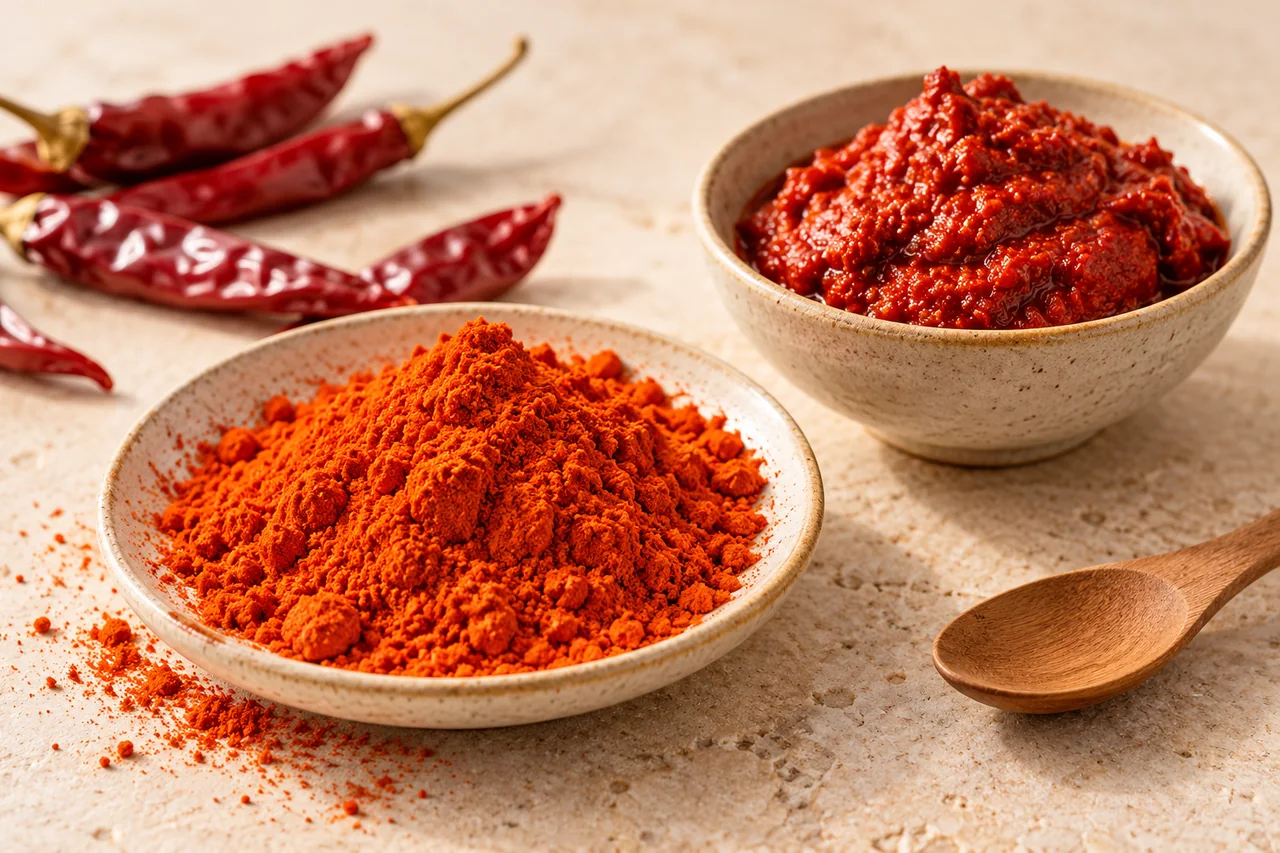
- Powder starting point
- Gochugaru-described powder lists 60 mesh and moisture ≤7%.
- Recipe constraint
- Keep powder dose, available liquid, salt and acidity fixed for the first trial.
- Texture response
- Separate dry-centred clumps, mixing resistance and persistent coarse sensation.
Choose the ground preparation for the paste you can make
Define the actual grind and coarse fraction against your liquid budget.
- 01Selected preparation
Define the actual distribution and coarse fraction.
- 02Fixed formula
Keep powder dose, liquid and flavour target visible.
- 03Usable paste
Approve mixing behaviour and the final particle feel.
RELIA SPICES cleans and destems purchased dried chilies before grinding, sieving and packaging. For high-solids paste, discuss the coarse fraction as well as nominal grind. Gochugaru-described powder lists 60 mesh and moisture ≤7%; the dark-red kimchi/sauce powders list qualitative flavour profiles and independent 10–40 mesh, 10–20 mesh and 60 mesh references.
We check moisture and particle size internally, arrange SHU and microbiology through outside laboratories, and use in-house steam treatment according to order requirements. Select the actual sample and treatment, then compare it at your fixed powder dose and permitted liquid.
Find what limits the concentrated paste
Wetting difficulty and persistent coarse texture need different responses.
| Observation | Check | Useful next comparison |
|---|---|---|
| Dry-centred clusters | Open lumps after normal mixing | Addition order and wetting |
| Dense, resistant paste | Actual formula and mixer behaviour | Permitted liquid or process version |
| Persistent coarse feel | Paste film and coarse fraction | Selected grind and sieve criterion |
A dry-centred cluster needs liquid incorporation; an individual coarse skin or seed fragment needs a different particle decision. A dense paste can also resist mixing even after the powder is wetted. Separate those observations before requesting a finer grind.
Hold powder dose, liquid, salt, acidity and other ingredients fixed. Record addition order and waiting time, open representative lumps and spread a consistent paste film. Use available mixer current or torque only with its actual batch and operating context. Judge at the intended application temperature. If another grind improves particle feel but needs more liquid or work, compare that complete second route before selecting the powder.
Ingredients to compare for this application
Gochugaru-described 60-mesh powder
The direct powder starting point for a fixed-liquid pepper-paste comparison.
- 60-mesh reference
- Moisture ≤7%
- Strong, pungent flavour description
Dark-red kimchi and sauce powder
Compare when a separately selected flavour and particle profile is needed for the paste.
- Dark-red colour description
- Mild, Medium, High or Extra profiles
- Independent 10–40, 10–20 and 60 mesh references
These product specifications are a starting point for selecting a grade. Match the proposed material and sample to your food and order requirements.
Hold the formulation constant for the first comparison
Keep extra liquid or a changed addition sequence as a second recipe version.
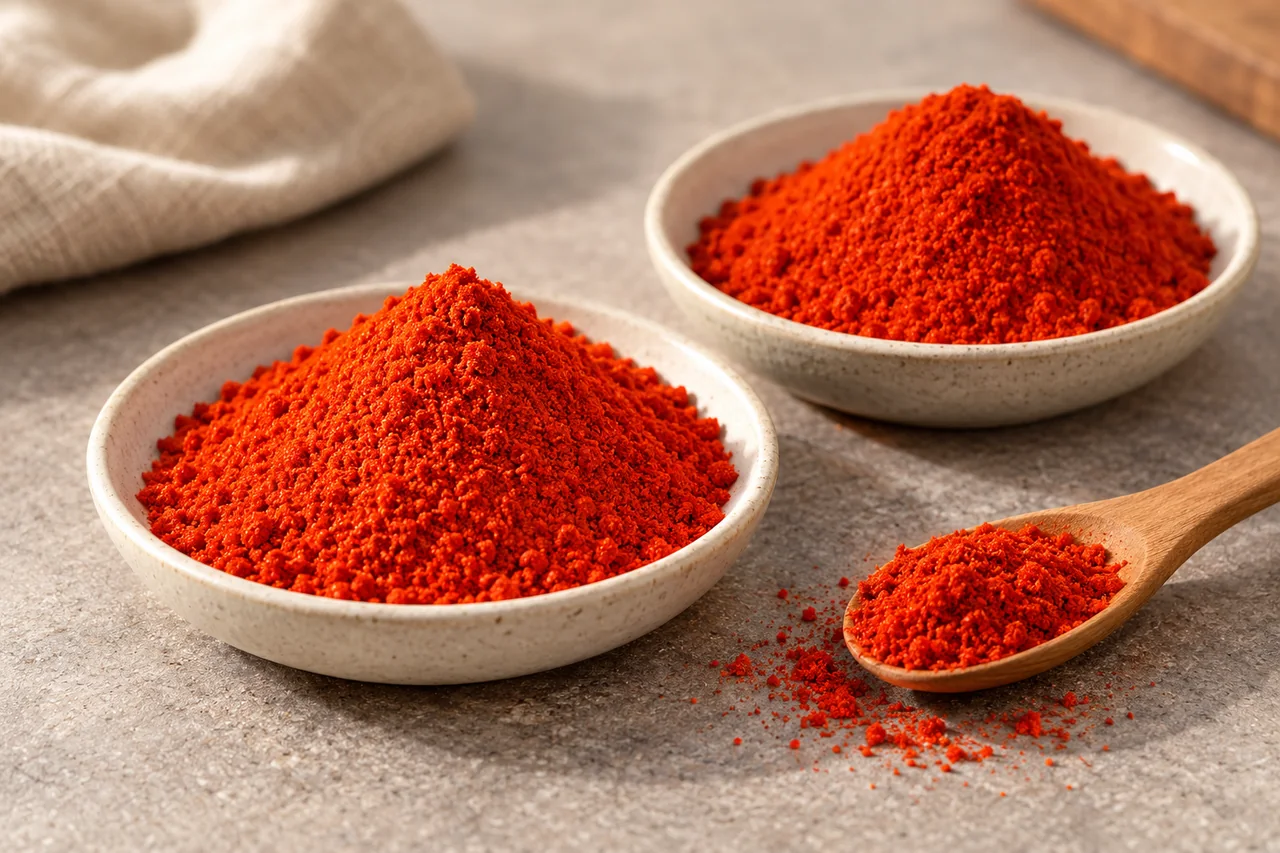
Make the first comparison with the same powder dose, liquid amount, salt content, acidity and other ingredients. Record whether powders enter dry ingredients, liquid or an existing paste. Use the same addition sequence and mixing action for each candidate. If one sample requires extra liquid or a different sequence, keep that as a second, separately identified trial. Otherwise the changed recipe can conceal a material difference, leaving purchasing unable to reproduce the apparent improvement when the original formula returns to production.
Follow wetting through the mixing sequence
Inspect powder pickup, remaining clumps and the paste at its actual use time.
- ✓During addition
Observe powder pickup, dry pockets and material on the vessel wall.
- ✓At mixing end
Inspect uniformity and the condition of any remaining clusters.
- ✓At intended use
Compare consistency and particle feel after the actual waiting period.
Observe the initial powder addition, the end of mixing and the actual waiting interval before use. Break open any visible lump to distinguish a dry centre from an ordinary large particle. Note the mixer behaviour; where equipment already provides a meaningful current or torque reading, record it with the batch size and speed. Do not substitute a laboratory reading for plant operation or infer a universal mixing time. The useful result is the paste your available process can make without an unapproved correction.
Evaluate texture in the intended application
Approve texture in the intended coating or food application.
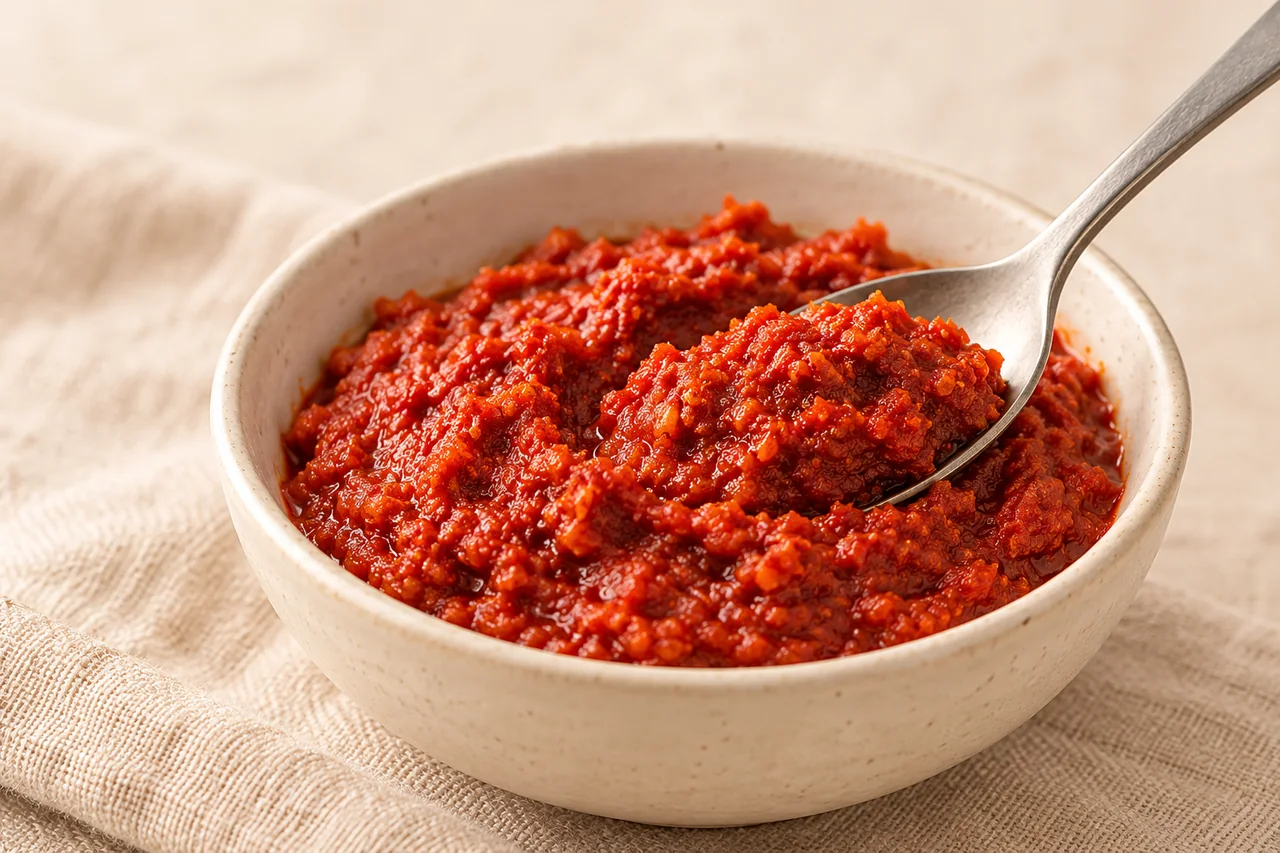
Use the paste on its intended food or in its next processing step. Spread or coat a consistent portion and inspect the surface, graininess and any coarse particles that interrupt the target texture. Keep an accepted reference beside the candidate. A visually smooth spoonful may still produce noticeable fragments in a thin coating, while a paste designed to retain particles should not be rejected for failing a completely smooth standard. Write the texture requirement in terms the development and receiving teams can both recognise.
Approve flavour alongside the paste texture
Culinary style, colour and heat do not replace a selected particle preparation.
- 01Particle feel
The grind meets the coating or eating-texture target.
- 02Flavour and heat
The selected profile works at the tested powder dose.
- 03Recipe fit
The result stays within permitted liquid and processing changes.
Gochugaru-style describes a culinary direction here, not Korean growing origin. Strong pungency and the separate Mild, Medium, High or Extra labels do not establish equivalent heat at an equal dose.
Compare the complete paste with your sensory reference. If the dose changes to reach colour or flavour, recheck paste solids, consistency and coating. This keeps a good texture result from concealing a different recipe.
Test after the actual finishing route
Recheck consistency and flavour after the finishing route the paste will receive.
- 01Fresh mixture
Establish the mixing result and initial particle sensation.
- 02Actual finishing
Apply only the route intended for the product being developed.
- 03Use-stage paste
Inspect later consistency, separation and flavour against the reference.
Assess the paste after the finishing route it will actually receive, including heating, fermentation, chilling or holding where used. Compare later consistency, separation, surface condition and flavour with the fresh-mix reference.
Agree the ingredient's order-selected steam treatment and applicable outside-laboratory microbiology with RELIA, then retain the corresponding preparation in the paste comparison. Ingredient treatment and the finished paste's approved food process remain distinct decisions.
Price the powder together with the permitted adjustment
Include added mixing or permitted formula changes in cost per accepted paste.
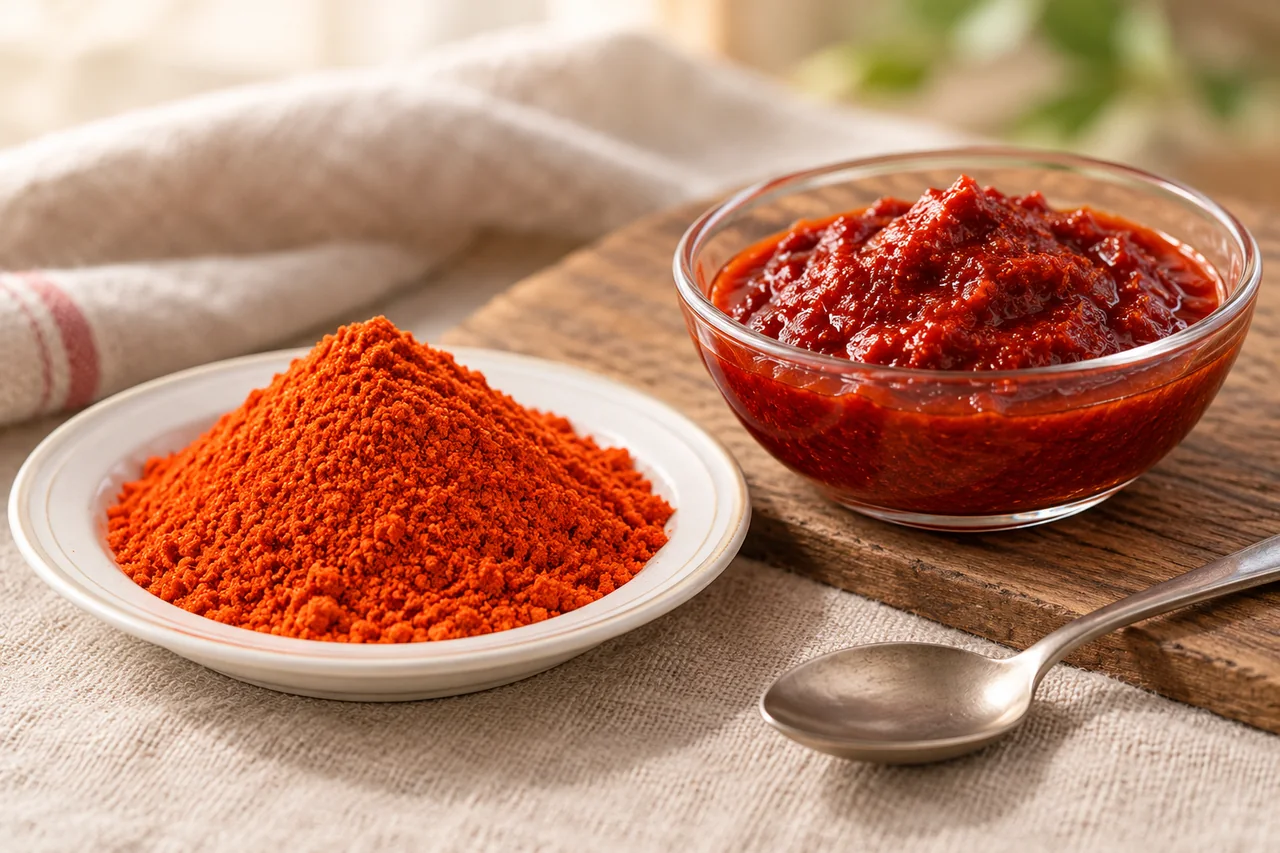
Compare candidates on the same accepted paste output. Include measured screening, extra mixing or any approved recipe adjustment instead of assuming the cheapest kilogram makes the lowest-cost paste. Keep ingredients and added liquid on the same calculation basis. The Gochugaru powder's 24-month cool/dry declaration differs from the dark-red powders' one-year dry/sealed statements; none of these ingredient declarations determines your paste's storage life. Select the actual package and consumption plan rather than extending a longer statement across the shortlist.
Send a concentrated-paste development brief
Send the permitted liquid and actual mixer route with your texture reference.
- 01Paste constraint
Provide the liquid budget, powder loading and accepted texture.
- 02Process
Describe addition, mixing, waiting and finishing conditions.
- 03Offer
Identify the actual preparation, evidence, package and current quantity.
Send the paste's intended use, powder dose, liquid budget and actual mixing route. We can discuss the ground preparation, coarse-fraction criteria, internal moisture and particle checks and requested steam treatment. Return the accepted texture and mixing observations with any permitted formula revision so the proposed material fits the paste you will make.
- Finished paste reference
- Particle and coarse-tail criteria
- Actual liquid budget
- Mixing and finishing route
- Profile, treatment and origin documents
- Sample quantity and package
Your next purchasing decision
Discuss the powder for a concentrated pepper paste
Discuss a powder that works inside your concentrated-paste constraints.
Bring the fixed formulation boundary, mixing observations and accepted coating or eating texture.
State which liquid or process adjustments your team permits, alongside the actual heat profile and ingredient treatment. We can use that brief to discuss the selected powder preparation.
The enquiry page keeps this guide with your message. Add your quantity and destination so we can discuss the relevant material.