
Paprika Colour, Chili Heat and Particle Specifications
Choose paprika and chili by the property your food needs to change: red colour, heat or particle character. RELIA SPICES manufactures ground and crushed preparations, checks moisture and particles internally, and uses outside laboratories for ASTA and SHU. Start with a colour-led paprika, seeded flakes or whole pods for different jobs. Send the accepted food reference and separate targets so one stronger number does not conceal an unwanted change.
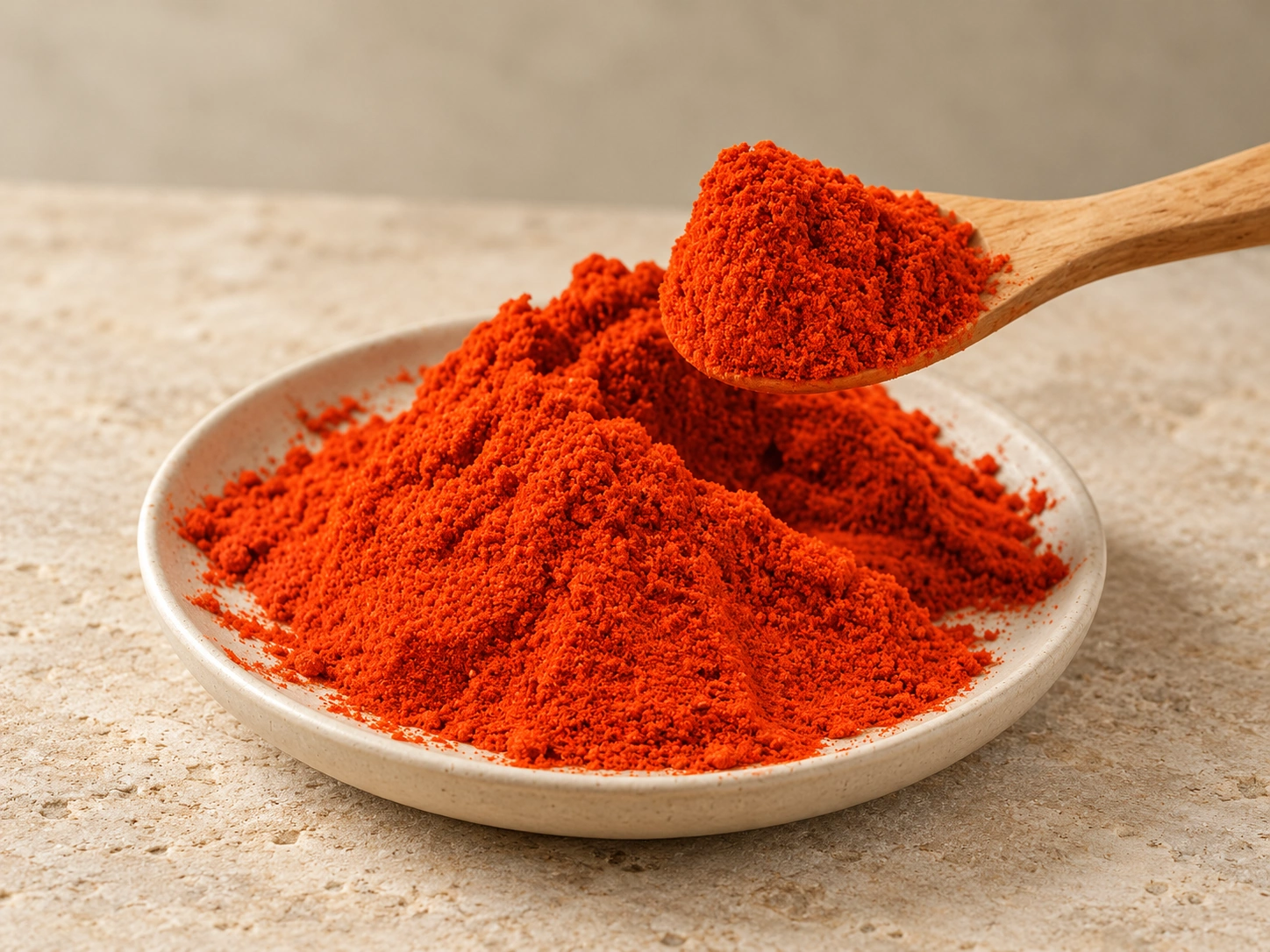
- Colour-led powder
- Sweet paprika lists nominal 70 mesh, moisture ≤8% and an 80–220 ASTA customization scope.
- Heat reference
- Seeded flakes list 20,000 SHU; New Generation whole pods list the full 50,000–90,000 SHU range.
- Particle decision
- Define the sieve fraction or measured dimension separately from analytical colour and heat.
Give each requirement its own material and test basis
Connect physical preparation, analytical properties and food acceptance on separate lines.
| Requirement | Relevant preparation or test | Food acceptance |
|---|---|---|
| Particle character | Grinding or cutting/crushing, sieving and internal particle checks | Visible pieces, specks, texture and the actual process path. |
| Colour and heat | Outside-laboratory ASTA or SHU on the selected material | Appearance and pungency at the actual recipe dose. |
| Moisture and treatment | Internal moisture checks and the ordered steam requirement | Handling and the applicable ingredient/food-process review. |
RELIA SPICES manufactures paprika and chili preparations from purchased dried peppers through in-house cleaning, foreign-matter removal, destemming, grinding or cutting/crushing, sieving and packaging. Sweet paprika powder lists nominal 70 mesh, moisture ≤8% and 80–220 ASTA customization. Seeded flakes list 20,000 SHU, while New Generation whole pods list 50,000–90,000 SHU. The examples serve different food and preparation choices.
We check moisture and particle size internally. ASTA, SHU and microbiology use outside laboratories, and in-house steam microbial reduction is selected according to order requirements. Bring colour, heat, particle character and treatment as separate requirements. We can then discuss the supplied preparation without treating an ASTA value as a heat value or a mesh reference as a flavour guarantee.
Use Catalogue Colour Ranges to Start a Grade Discussion
Select an actual paprika grade before comparing the listed ASTA scopes.
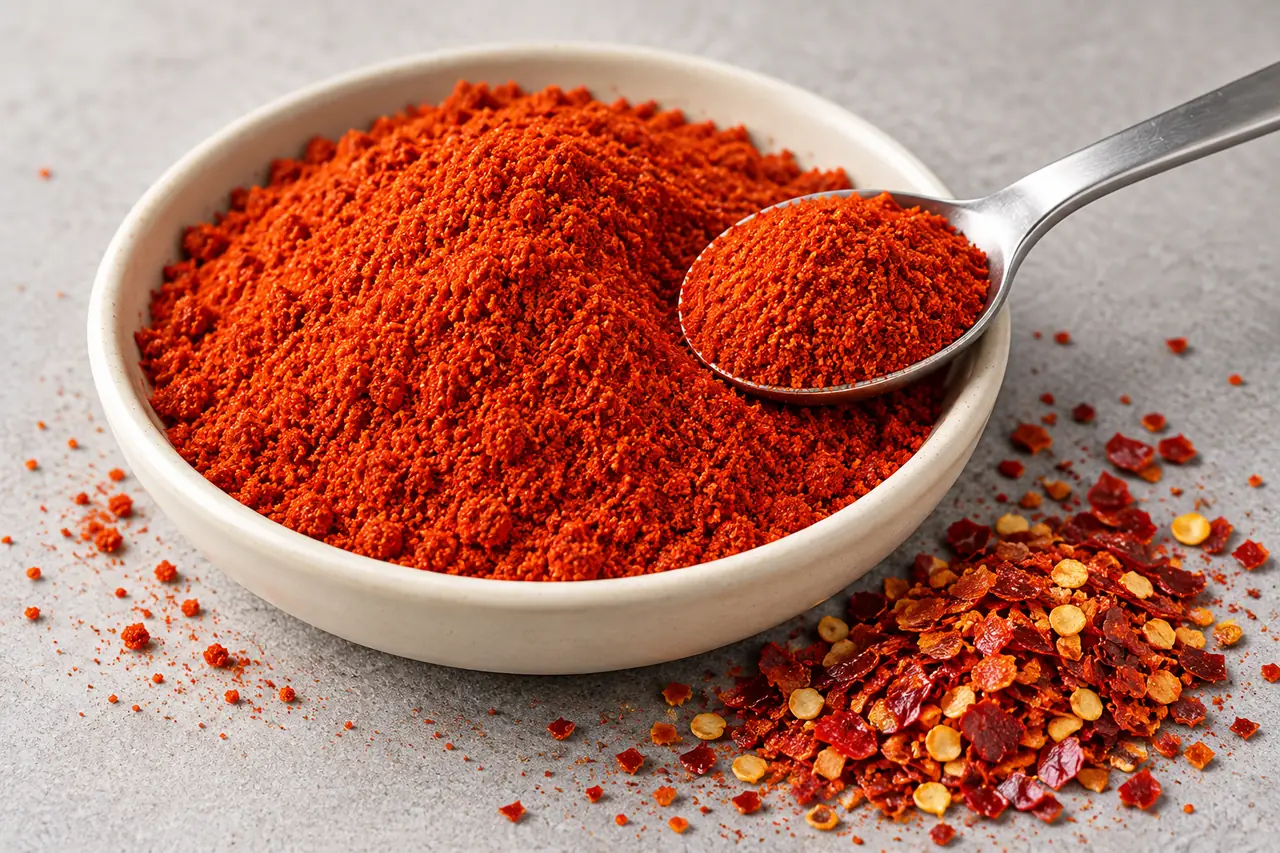
Our nominal 70-mesh sweet paprika powder lists an 80–220 ASTA customizable colour range. A separate dried sweet paprika listing gives 80–280 ASTA. Those are catalogue declarations attached to different materials; they are not measured results for two lots in a side-by-side trial.
Select an actual proposed grade before comparing analytical values. A wider advertised range does not by itself make a powder better, and its highest endpoint should not be borrowed as the result of the material under discussion.
Ingredients to compare for this application
Sweet paprika powder for a colour-led specification
Start here when red appearance is the main target and heat and particle texture must be controlled independently.
- Nominal 70 mesh; moisture ≤8%.
- 80–220 ASTA is a customization scope requiring an actual selected grade.
Seeded red flakes for visible pieces
Compare for a visible inclusion where the cut, seed appearance and pungency each need a clear requirement.
- 20,000 SHU technical reference.
- 3 × 5 mm graininess notation with the measured axes and material part still to define.
New Generation whole pods for further preparation
Consider when the buyer needs a whole-pod handover rather than a finished powder or crushed input.
- 3–6 cm pods with stemless or stem-cut preparation to select.
- 50,000–90,000 SHU range; the declared moisture reference is 12–14%, not a maximum.
These product specifications are a starting point for selecting a grade. Match the proposed material and sample to your food and order requirements.
Extractable Colour and Surface Colour Serve Different Tasks
Extractable colour describes the ingredient; the recipe trial describes food appearance.
- 01Ingredient analysis
Characterize the selected material on its defined analytical basis.
- 02Food appearance
Observe the mixed or processed food under consistent lighting.
- 03Buying decision
Relate the food result to the grade and amount used.
ISO 7541 describes a method for measuring extractable colour in ground paprika. That analytical property is different from the appearance of the dry powder surface or the colour of a finished sauce.
Use a suitable analysis to describe the ingredient grade, then use your food trial to decide whether the grade works in the formulation. The powder, the dose and the food matrix are different parts of the comparison.
Keep Both Ends of a Heat Range
Keep both endpoints of a declared heat range with its named material.
| Catalogue preparation | Declared heat reference | Keep in the enquiry |
|---|---|---|
| Seeded red flakes | 20,000 SHU | The actual flake grade and method basis |
| New Generation whole pods | 50,000–90,000 SHU | Both endpoints and the selected pod preparation |
| Cayenne powder | Hot-spicy sensory description | The required sensory or analytical heat target |
The seeded-flake listing carries a 20,000 SHU reference, while the New Generation whole-pepper listing gives 50,000–90,000 SHU. The latter is a range, not a single fixed number, and it belongs to the named whole-pod preparation.
For a distribution range or a customer-specific powder, state the actual heat requirement separately from words such as mild or hot. A qualitative label and a numeric analytical criterion can both be useful, but they are not automatically the same scale.
Define the particle measurement before selecting the cut
A mesh value and a dimensional cut require different measurement definitions.
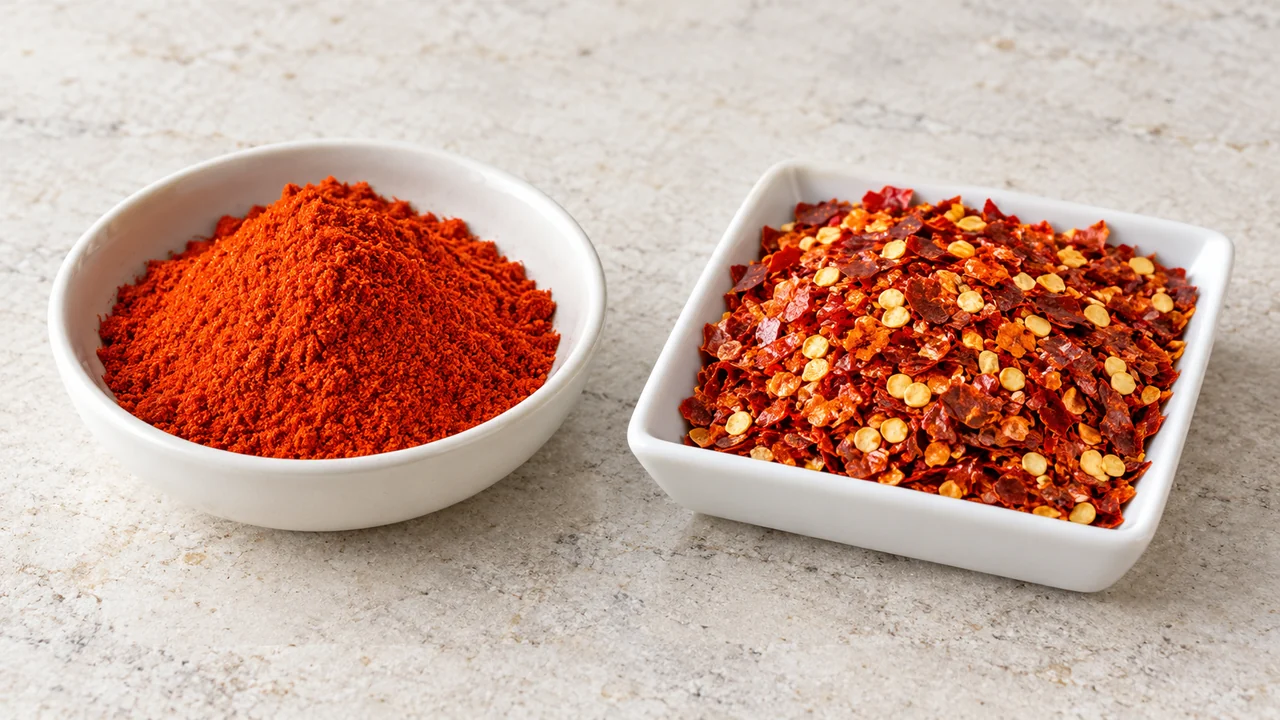
The sweet paprika's nominal 70 mesh describes a different measurement task from the seeded flakes' 3 × 5 mm graininess notation. A useful mesh requirement identifies the sieve system and relevant retained or passing fractions. A dimensional cut identifies the material part and measured axes; the flake notation alone does not establish length and width.
For a smooth sauce, inspect the retained coarse fraction and persistent specks. For a visible inclusion, inspect the main pieces, seeds and fines. Choose the criterion that explains the food result rather than converting unlike references into one apparent fineness scale.
Moisture and Water Activity Are Separate Measurements
Moisture, water activity and storage conditions are separate requirements.
- 01Moisture
The water-content result on the stated method and basis.
- 02Water activity
A separate analytical property with its own method.
- 03Storage instructions
The conditions declared for the selected material and package state.
The paprika listing declares moisture ≤8%, storage temperature ≤25°C and humidity ≤60%. These are product-specific references that can inform a receiving plan; they are not the same measurement as water activity.
ASTA lists moisture and water-activity methods separately. Use the criterion required for the actual ingredient and handling task. Do not convert a moisture percentage into an assumed water-activity value or a microbial-treatment result.
Test one change against the complete food target
Hold recipe and route fixed, then assess colour, heat and particles separately.
- 01Name the change
State the property to improve and the properties to retain.
- 02Compare one basis
Keep sample identity, dose and actual recipe route consistent.
- 03Approve the food
Assess colour, heat and particle sensation as separate outcomes.
- 04Specify the material
Connect the accepted food to the preparation, tests and ordered treatment.
More powder changes pepper solids as well as colour; another cut changes visible pieces and fines; another heat profile changes the equal-weight tasting result. Start with an identified sample, the same recipe dose and one mixing and processing route. Compare colour, heat and particle sensation separately at the actual acceptance stage.
If a dose or cut adjustment is allowed, keep it as a second version and repeat the full food assessment. RELIA SPICES can connect the accepted result to the supplied grind or cut, internal physical checks and relevant outside-laboratory analysis. This keeps a stronger analytical colour value from hiding an unwanted texture, flavour or operating change.
Turn the Trial into a Material-Specific Requirement
Keep the accepted food and ingredient criteria together when a grade changes.
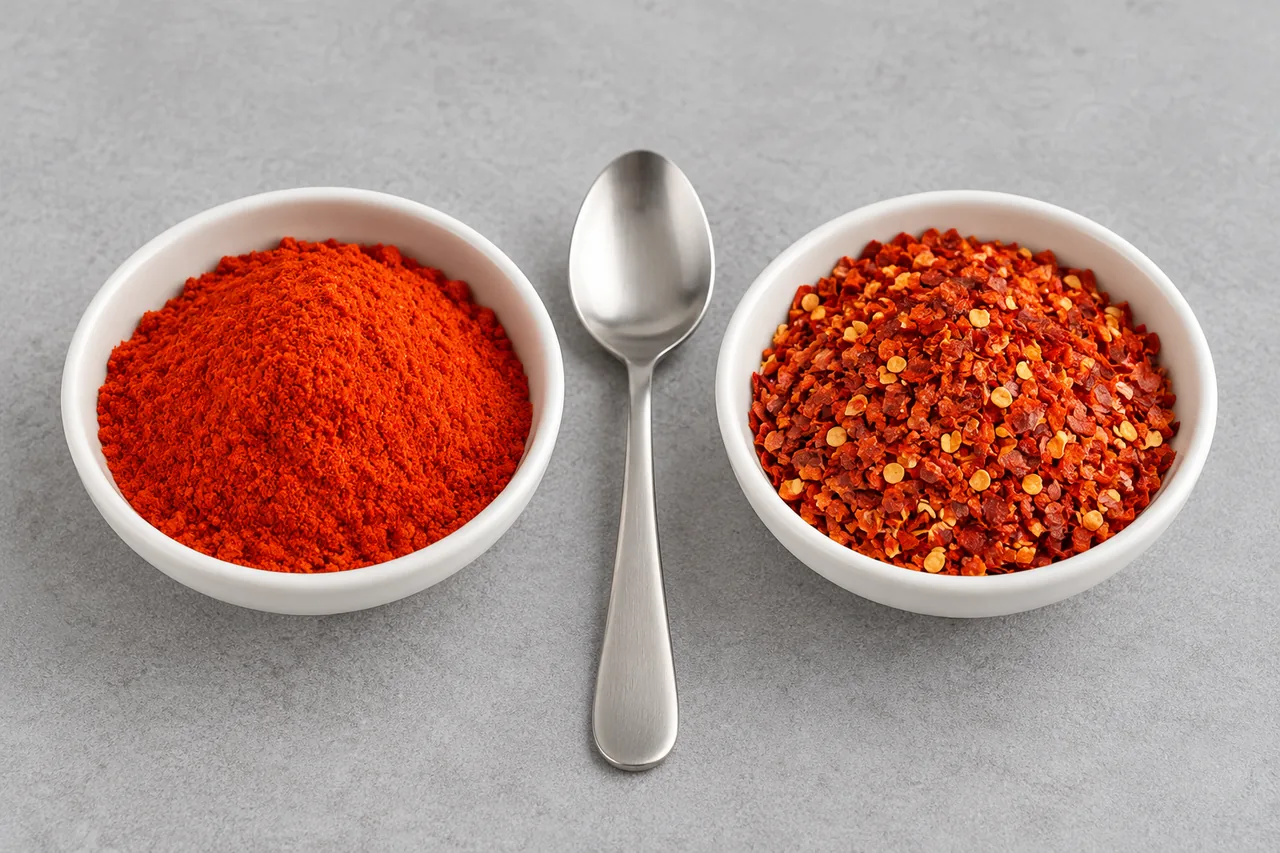
Keep the selected sample and the food observation associated with the ingredient's technical criteria. An analysis describes the material; a food trial shows what happened under your conditions. Together they provide a stronger purchasing basis than a generic premium-grade label.
If the material, heat process or receiving pack changes, make that change visible in the next discussion. The comparison should remain reproducible rather than become a permanent claim that one powder is superior in every food.
Use the Focused Guide for the Parameter That Matters
Use the focused guide for the property driving the purchase.
- ✓Colour-led
Red appearance with a defined heat requirement.
- ✓Heat-led
A specified pungency profile for the food or customer.
- ✓Cost-in-use
The material amount and accepted food result together.
Use the focused colour, heat or cost-in-use guide for the main change you need to make. Send the actual food, selected material, recipe dose and separate analytical and particle requirements. We can discuss the appropriate manufacturing preparation, internal physical checks, outside-laboratory tests and order-selected treatment on that defined basis.
- Material and form
- Food application
- Particle/colour/heat
- Quantity and pack
- Destination
- Trial objective
Your next purchasing decision
Discuss separate colour, heat and particle targets
Send the food reference with separate colour, heat and particle targets.
Bring the accepted food reference and identify which property must change and which must remain.
Include the actual ingredient, process route, test basis, receiving quantity and treatment requirement. We can connect the material discussion to measurable criteria rather than a generic premium-grade label.
The enquiry page keeps this guide with your message. Add your quantity and destination so we can discuss the relevant material.