Customer-Logo Chili Packs from Ingredient to Filling
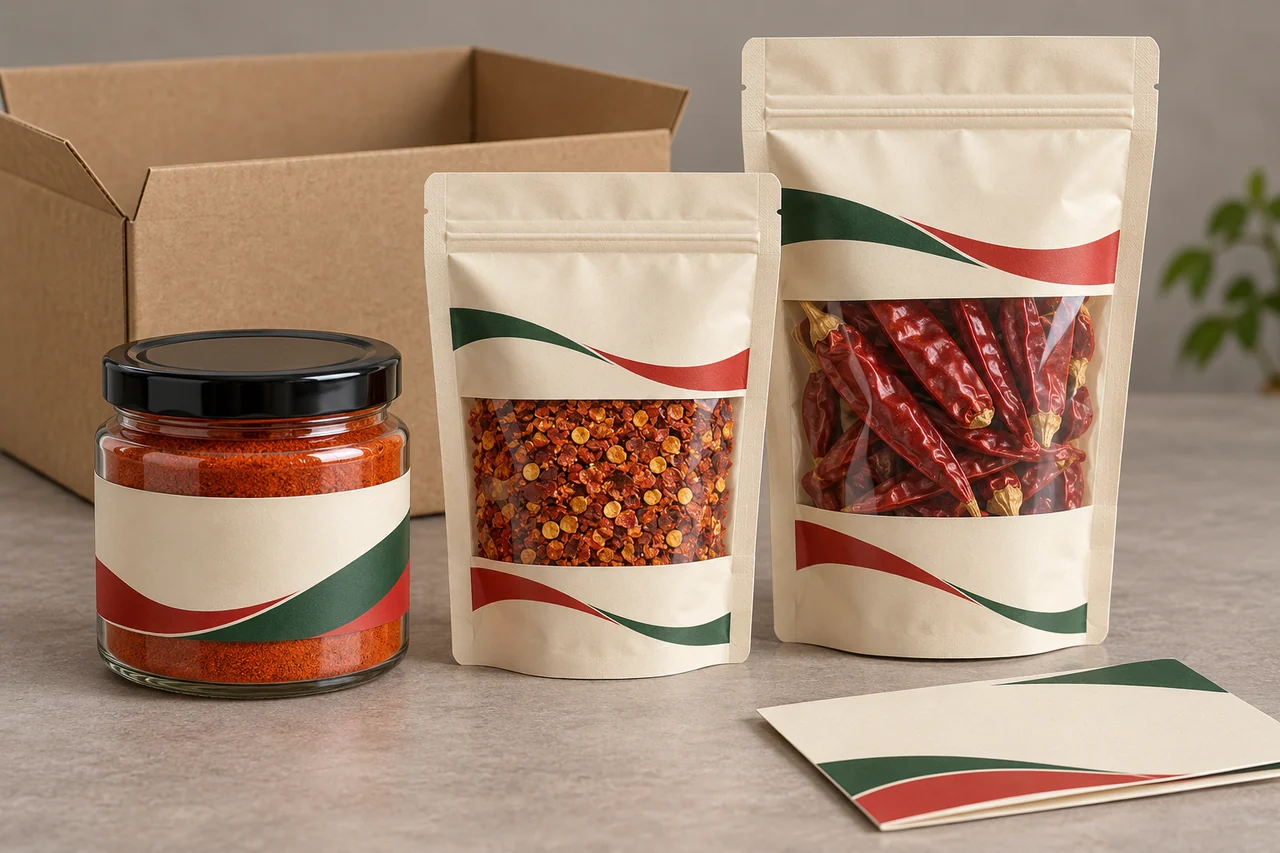
Bring your paprika or chili ingredient and customer-logo packaging into one factory-filled retail project. RELIA SPICES in China supplies the selected powder, flakes or whole pods and fills the agreed packs.
Packaging and project details
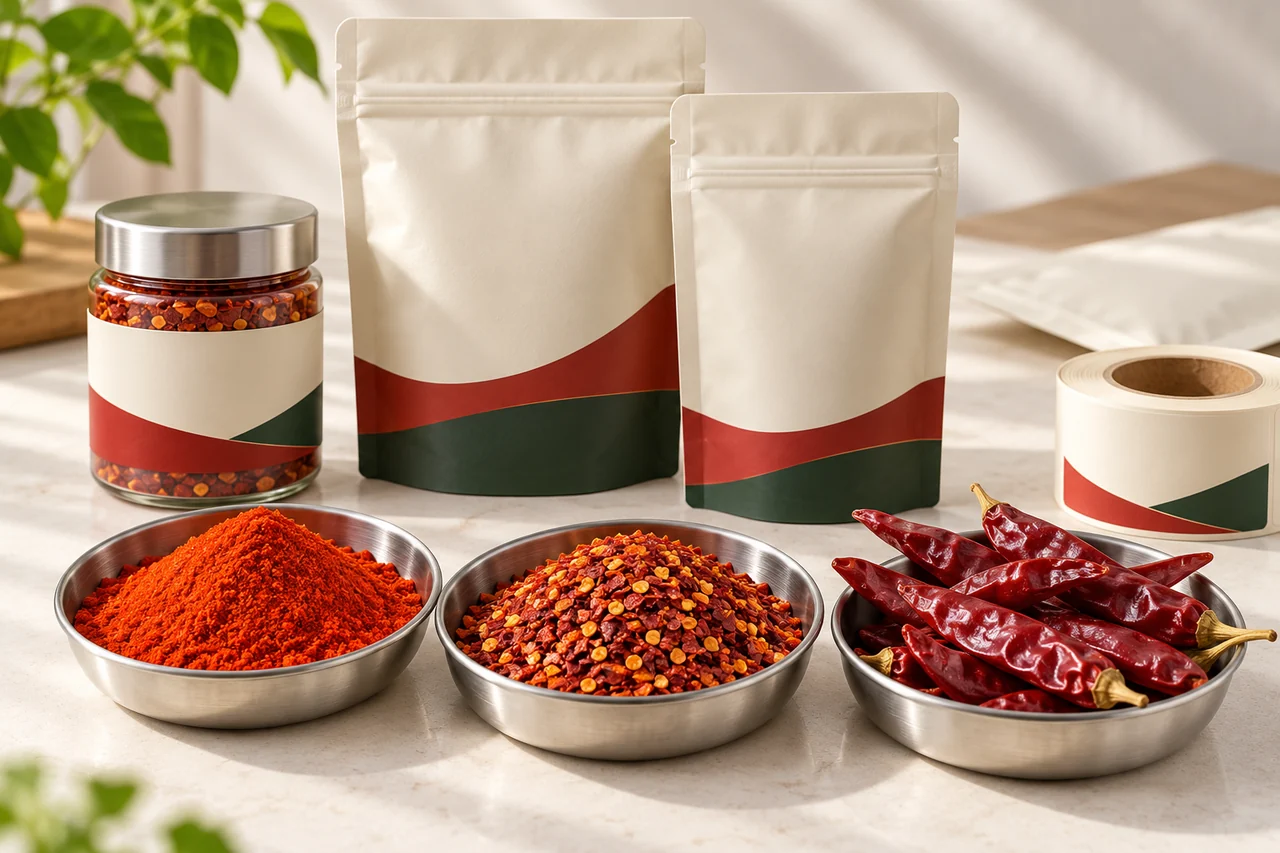
We assess your specified packaging, can assist production of branded packaging and accept customer-supplied components. Send the ingredient choice, requested fill, pack dimensions, material and artwork so we can assess the combination and prepare a product-specific quotation.
Connect the three parts of the retail product
- Your selected pepper
Choose the powder, flake mixture or whole-pod preparation.
- Your brand presentation
Specify the packaging and authorized artwork you want assessed.
- Factory-filled retail item
Agree the material, filling request and branded-pack proposal together.
Coordinate Ingredient Production and Packaging Supply
Choose how packaging will be supplied while keeping one shared product brief.
RELIA SPICES purchases dried chilies and carries out cleaning, foreign-matter removal, destemming, grinding or cutting/crushing, sieving and packaging. We supply the selected preparation and fill customer-logo retail packs.
Coordinate packaging, tests and ordered treatment
We assess customer-specified packaging, can assist production of branded packaging and accept buyer-supplied packaging. Include any order-specific in-house steam requirement in the material brief. Moisture and particle size are checked internally; ASTA, SHU and microbiology use external laboratories.
Two packaging-supply routes to the same filling brief
- Branded packaging assistance
Provide brand files and specifications for a proposed production arrangement.
- Customer-supplied packaging
Provide component specifications, available samples and supply responsibilities for assessment.
Choose the Pepper Form Before the Pack
Opening, fill and consumer use depend on whether the product is powder, flakes or pods.
Sweet paprika offers nominal 70 mesh, a separate customizable 60–70 mesh reference, customizable 80–220 ASTA and moisture ≤8%. Coarse seeded flakes carry 7,000–10,000 SHU, with independent 1–4 mm and 5 × 7 mm entries whose actual cut and measurement basis need agreement.
Define the selected whole-pod preparation
New Generation whole pods list 3–6 cm, 50,000–90,000 SHU and 12–14% moisture. Keep those full ranges with that selected material and agree its stem condition. The listed instruction is to clean before eating, so the retail-use wording needs an appropriate preparation basis.
Let the material guide the pack assessment
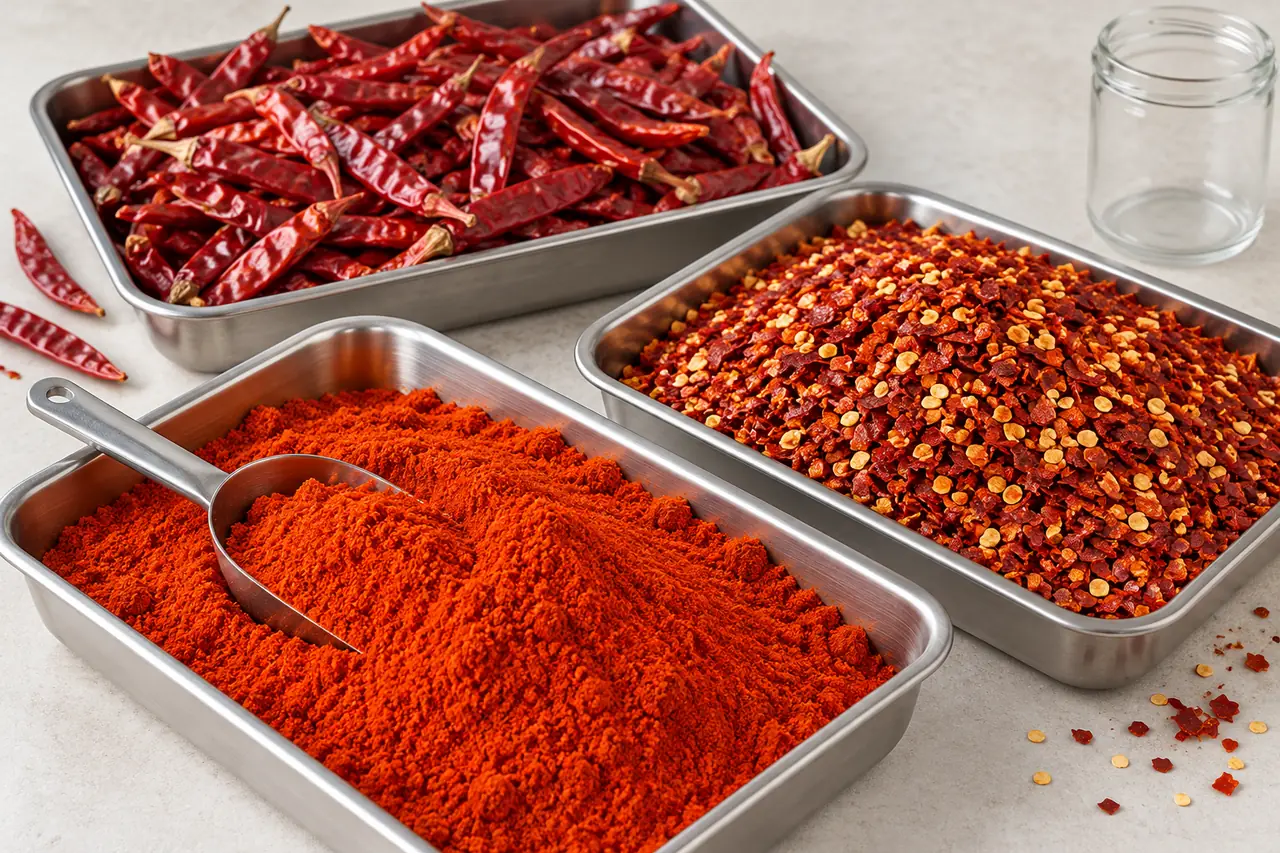
Paprika powder for a colour-led retail pack
Start with a selected powder grade, then assess its requested fill and dispensing requirements.
- Grind
- Nominal 70 mesh; separate customizable 60–70 mesh reference.
- Colour
- Customizable 80–220 ASTA, with the actual grade selected for the order.
- Moisture
- ≤8% listing limit; packaging behaviour still needs material-specific assessment.
Seeded chili flakes for a visible-piece pack
Assess the opening and fill with the complete flake mixture rather than selected large display pieces.
- Heat reference
- 7,000–10,000 SHU, subject to actual material and method applicability.
- Particle references
- Independent 1–4 mm and 5 × 7 mm entries; agree the actual cut and measurement basis.
- Ingredient storage reference
- 12 months in a cool, dry place on the selected-package basis; not a new retail-pack shelf-life claim.
New Generation whole dried chili pods
Choose this whole-pod reference when retail presentation and normal use depend on intact pepper pieces.
- Listed dimensions
- 3–6 cm, with the measurement basis and selected preparation agreed.
- Pungency
- 50,000–90,000 SHU; retain the full range with the actual material.
- Moisture
- 12–14% listing range; do not replace it with a single endpoint.
Review the selection criteria
- Paprika powder
- 70 mesh nominal Assess the selected grind, requested fill and controlled dispensing.
- Seeded chili flakes
- 7,000–10,000 SHU Allow for the complete mixture of pieces, seeds and fines.
- Whole dried pods
- Listed size 3–6 cm Review access through the opening and removal without unwanted crushing.
Send a Pack Specification the Factory Can Assess
Dimensions, materials and responsibilities turn a visual idea into a usable request.
Provide the requested packaging format, dimensions, material information, opening and closure, intended net content and artwork placement. A drawing or photograph can explain the look; physical samples, where available, add information about the proposed components.
Assign packaging component supply responsibilities
State which components you will supply and which you would like assistance producing. Include the food-contact and destination information relevant to those components so packaging feasibility and market review can be handled as distinct parts of the project.
Four inputs that shape the packaging proposal
- Physical specification
Format, dimensions, material, opening and closure.
- Filling request
Selected ingredient and requested net content.
- Brand files
Authorized logo, artwork placement and intended printing approach.
- Supply responsibility
Components provided by you and assistance requested from the factory.
Match the Prepared Material to the Filling Request
The particle mixture you approve also affects settling and dispensing.
Grinding produces powder; cutting and crushing retain pieces; sieving separates fractions. These preparations create different particle mixtures. Powder settling and the spaces between irregular pepper pieces mean that a sieve description alone cannot determine the space occupied by a requested fill.
Assess the actual material-and-pack combination
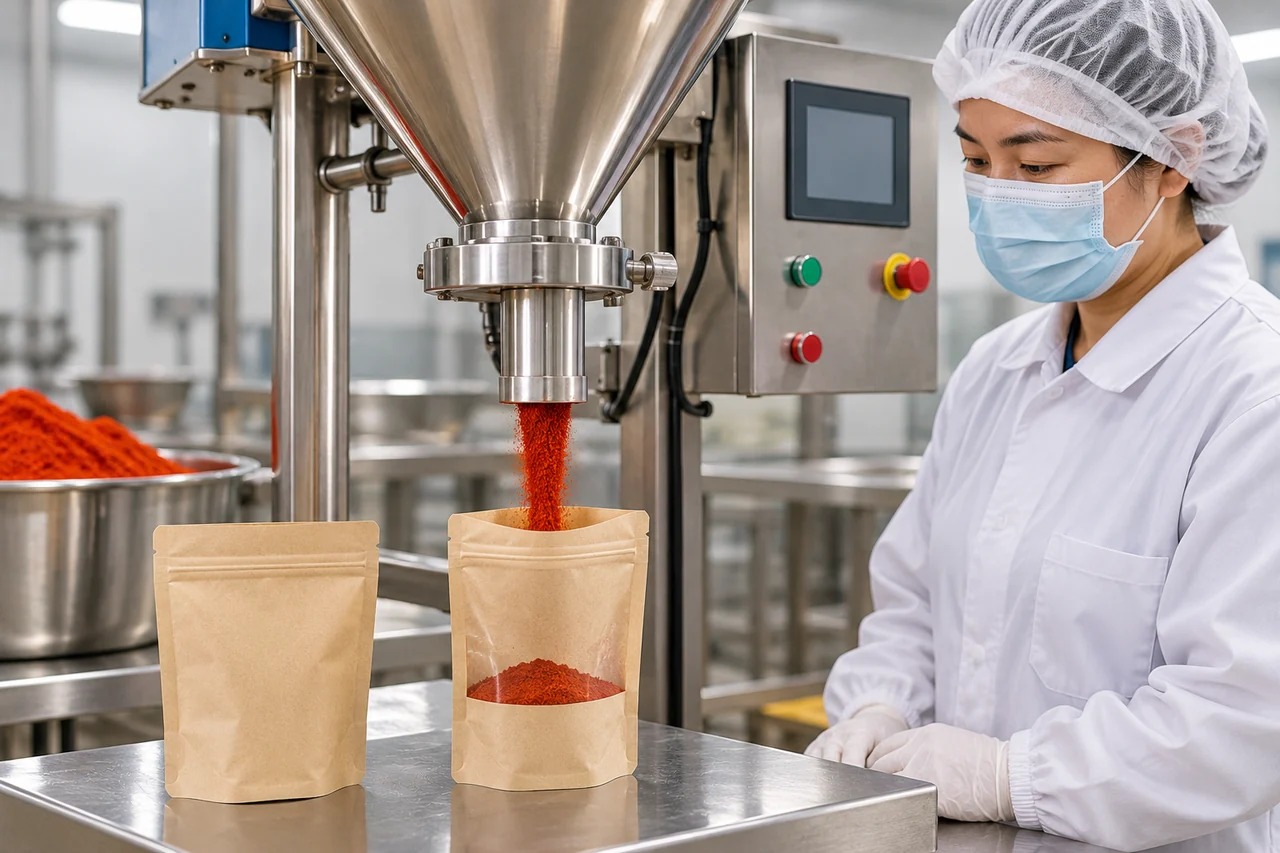
Use the selected material and its moisture and particle checks in the packing assessment. For flakes or pods, consider breakage and loose material alongside appearance. Include any selected steam treatment before agreeing the final material-and-pack combination; filling-machine technology is assessed separately rather than inferred from the illustration.
Move from pepper preparation to a defined pack request
- Define the preparation
Agree the powder or complete piece mixture and relevant particle criteria.
- Consider its behaviour
Review settling, loose material and breakage relevant to that form.
- Assess the requested pack
Connect the actual material to the opening, closure and intended fill.
- Agree the combination
Keep material, treatment requirements and packaging specifications together.
Review Fill, Closure and Everyday Use Together
A container's appearance is only one part of the retail product.
State the net content your retail proposition needs, then assess that request with the actual ingredient. The same-looking pack can hold different quantities of powder, flakes or pods because the preparations settle and occupy space differently.
Match dispensing and closure to use
Include the consumer's normal use in the assessment. Powder calls for controlled dispensing; larger pieces need an opening that lets them be removed without unwanted crushing. Specify the closure and relevant handling requirements with the component proposal.
Three practical checks for the proposed retail pack
| Selection point | What to consider |
|---|---|
| Fill | Requested net content evaluated with the selected ingredient. |
| Closure | Component fit and closure requirements for the proposed pack. |
| Use | An opening and dispensing approach appropriate to powder, flakes or pods. |
Approve Artwork with Accurate Product Information
The brand design and the food-label facts need to describe the same retail item.
Provide the correct product identity, complete ingredient declaration, requested net content and responsible business details for your market. Use the selected material's applicable documentation for any treatment, composition or status wording you propose.
Assign destination-specific label review responsibilities
FDA's label guide illustrates the importance of food identity and quantity in the US context. Arrange destination-specific review of the actual label; artwork coordination is not a universal market-compliance approval. Assign identifiers and any coding or application work explicitly.
Keep four parts of the label brief aligned
- Product identity
Selected pepper preparation and complete ingredient information.
- Authorized artwork
The logo, layout and version approved by your brand.
- Market review
Actual label wording checked for the destination and intended use.
- Identifiers
Ownership and any requested coding or application responsibilities.
Approve the Ingredient and Pack as One Proposal
Use one accepted combination to guide the order and its handling requirements.
Bring the material identity, packaging specification, artwork version and intended fill into the same comparison. Tell us how you want the proposed presentation assessed and which decisions your approval covers.
Set the retail-pack storage basis
Review storage and handling for that retail configuration. An ingredient shelf-life reference belongs to its stated material and package conditions; a new retail pack needs its own applicable basis. A closure image can explain a concept but cannot establish moisture-barrier performance.
The three references behind a complete approval
- Material reference
The selected ingredient, preparation and relevant treatment or test requirements.
- Pack specification
Component material, opening, closure and requested fill.
- Approval version
The agreed artwork and handling basis for that combination.
Keep Pack Revisions Connected to the Product
A clear change reference makes artwork and component updates easier to assess.
Use a project list linking each ingredient to its selected specification, packaging version and approved artwork. Mark the accepted version and the remaining decisions before components are ordered.
Track affected approvals when details change
When the cut, net content, component or label changes, identify the affected approval and quotation. Keeping the physical product change distinct from a price revision helps both sides discuss the correct request.
| Your input | Factory assessment focus | Decision to confirm |
|---|---|---|
| Ingredient brief Selected preparation, intended use and requested fill. | Assess the material-and-pack combination and identify the remaining physical decisions. | Selected ingredient and the comparison or test basis. |
| Component and artwork route Pack specification, authorized artwork and who supplies each component. | Coordinate assisted branded-pack production or assessment of customer-supplied packaging. | Packaging format, component responsibilities and approval references. |
| Version and order scope Accepted references, requested changes, quantity and destination. | Confirm the product, packaging and artwork versions within the project-specific quotation. | Agreed product, packaging and order scope for quotation. |
This is a planning handover for your enquiry. Packaging, MOQ, net content and timing are assessed and quoted for the product, format, printing method and quantity.
Complete the Coordination Step Your Project Needs
A first launch, a treatment-led item and a multi-SKU range need different detail.
MOQ, net content and lead time are quoted for the product, package specification, printing method and quantity. Include that combination in the enquiry so the offer covers both the ingredient and the retail-pack work.
Choose the next project-planning guide
Use the first-launch guide to narrow the product, the treatment guide to define the QA requirement, or the importer guide to separate several SKUs. Each resolves a different input to the same packaging discussion.
Choose the next useful project decision
Review the next-step choices
- First brand launch
- Narrow the initial ingredient and its material comparison.
- Treatment and testing
- Define any selected steam requirement and applicable laboratory evidence.
- Importer range
- Separate material, artwork and order requirements for each SKU.
Send Your Ingredient and Branded-Pack Brief
Bring the product, packaging files and supply route into one practical request.
Contact Qingdao Relia Spices Co., Ltd. / RELIA SPICES with the ingredient link and your specified retail-pack requirements.
Send artwork and packaging handover details
Include the authorized logo, artwork status, requested fill, destination and quantity. Tell us whether you will supply packaging or would like assistance producing branded components, so we can assess the actual handover.
The inputs for a coordinated packaging enquiry
- Ingredient
Product link, selected preparation and intended consumer use.
- Pack and artwork
Dimensions, materials, closure, requested fill and authorized brand files.
- Supply route
Customer-provided components or packaging-production assistance requested.
- Order
Intended quantity, destination, desired timing and technical requirements.