
Mild Paprika Flakes for Visible Seasoning Blends
Choose sweet paprika flakes when your seasoning needs visible red pieces with a mild pepper direction. Start with the listed 3–5 mm size scope, then compare seeds, fines and flavour in your actual dry carrier. RELIA SPICES can discuss the cut and sieved preparation. Send a food photograph and your dispensing method so the next sample targets the appearance customers actually receive.
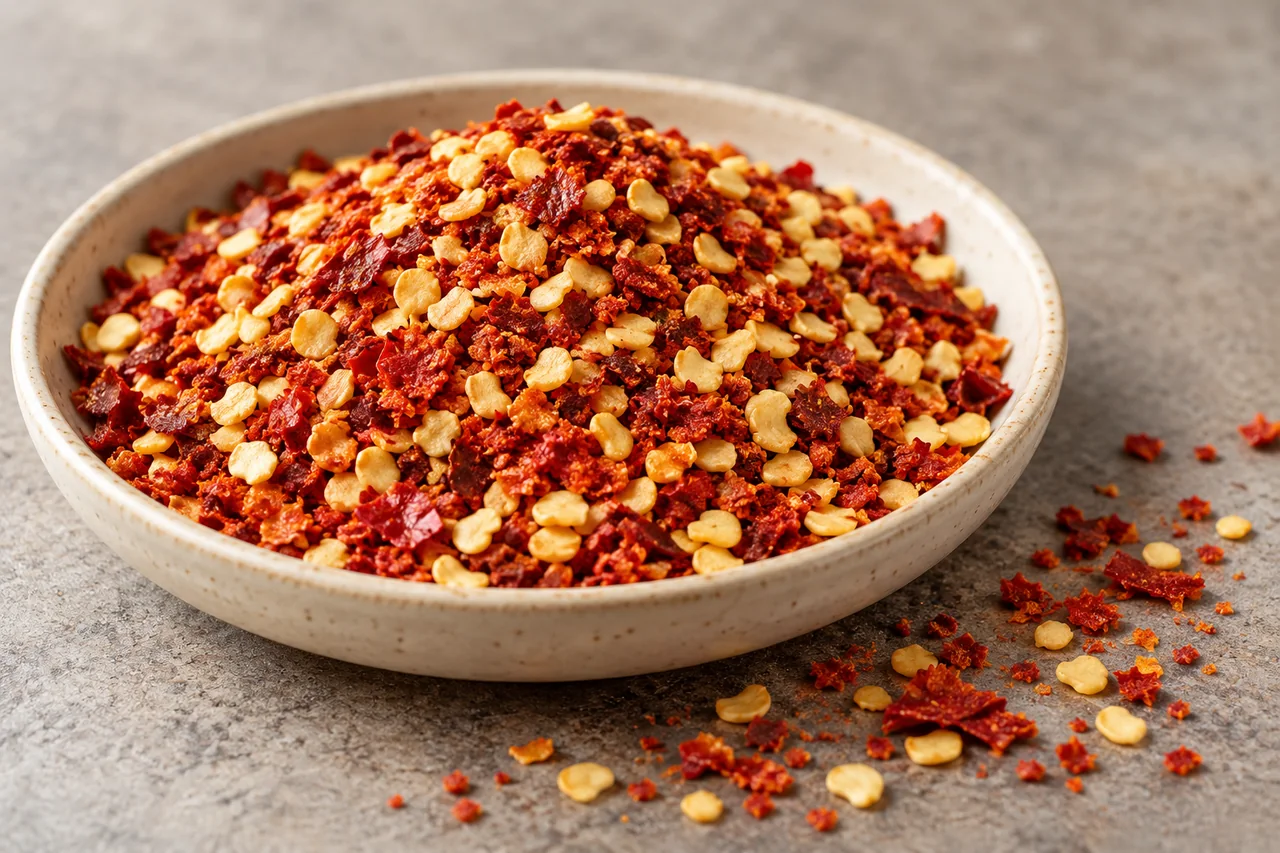
- Mild starting point
- Sweet paprika flakes list mild, slightly sweet flavour and moisture ≤12%.
- Visible cut
- The 3–5 mm scope and separate 5–25 mesh entry need different assessment methods.
- Serving result
- Compare red pieces after mixing, transfer and dispensing onto the food.
Prepare a flake that stays visible in your seasoning
Cutting and sieving shape the supplied flake; the carrier influences the delivered serving.
- 01Crush or cut
Define the red pieces, seed condition and wanted appearance.
- 02Sieve
Agree how much loose fine material can accompany the flakes.
- 03Blend and dispense
Compare coverage on the food after your normal handling.
RELIA SPICES cleans and destems purchased dried chilies, then cuts or crushes, sieves and packs the selected preparation. Sweet paprika flakes are the mild starting point here: the listing describes 3–5 mm or customized size, a mildly sweet taste and moisture ≤12%. Select the actual cut rather than treating every red flake as interchangeable.
We check moisture and particle size internally and arrange numerical heat analysis through outside laboratories. In-house steam treatment is selected according to order requirements. A separate crushed chili listing gives 3,000–5,000 SHU for a different heat comparison; that number does not belong to the sweet paprika.
Use the sweet paprika flake listing as the mild starting point
Use sweet paprika as the mild candidate, not an assumed zero-heat guarantee.
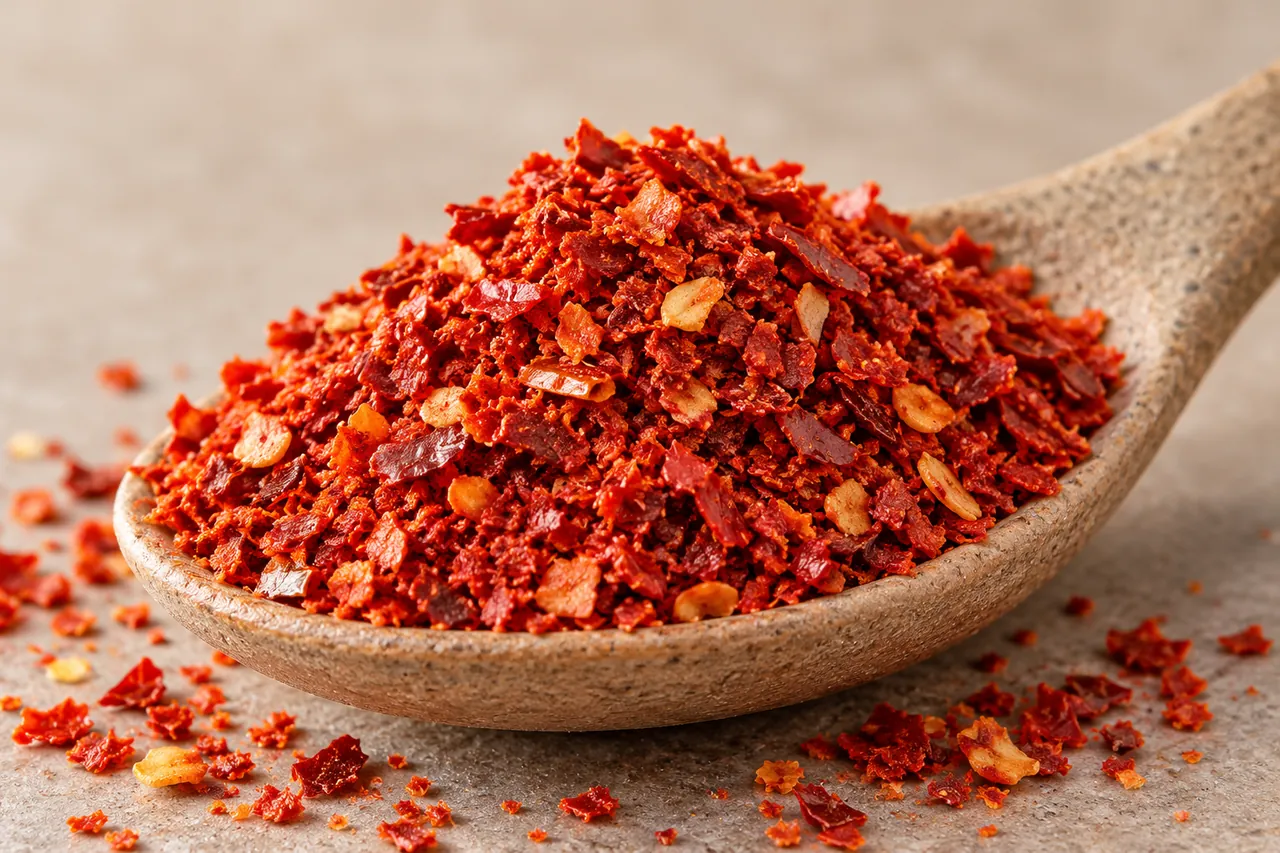
The sweet paprika crushed-flake listing describes flakes/crushed form, a mild and slightly sweet taste, a 3–5 mm or customized size scope and moisture ≤12%. Those are useful starting details for this buying task. Its separate 5–25 mesh table entry should not be converted into the same measurement as the millimetre description. Agree the selected cut and its actual acceptance basis.
The 3,000–5,000 SHU reference on the separate dried crushed red chili listing describes another candidate. It is not a numerical definition of the sweet paprika's mild taste. Keep both samples identifiable if your blend needs a deliberate heat comparison.
Ingredients to compare for this application
Mild sweet paprika flakes
Start here for visible red seasoning pieces with a mild, slightly sweet pepper profile.
- 3–5 mm or customized size scope
- Moisture ≤12%
- Dry, sealed storage; 24-month reference
Crushed chili, 3,000–5,000 SHU
Compare a separate pepper-heat profile when the mild paprika does not meet your flavour brief.
- 3,000–5,000 SHU reference
- Independent 1.5 mm and 1.8 mm references
- Optional steam treatment
These product specifications are a starting point for selecting a grade. Match the proposed material and sample to your food and order requirements.
Specify the pieces your customer should see
Describe main pieces, fines and seeds separately instead of relying on one size number.
| Fraction | Role in the seasoning | Useful comparison |
|---|---|---|
| Main red pieces | Visible pepper pattern | Scaled appearance on the food |
| Fine material | Background coverage and dust | Agreed passing fraction and dispenser output |
| Seeds | Visible contrast and eating texture | Accepted seed condition in a representative sample |
Keep a representative incoming sample and describe three fractions: main red pieces, loose fine material and seeds. Use an agreed sieve method for the distribution and a scaled photograph for the visible shape. This gives receiving and development teams the same target.
Keep the sweet paprika's 3–5 mm scope separate from its 5–25 mesh entry. The seasoning-flake candidate also lists 40–80 mesh and 80/100 mesh independently. None of these entries alone selects the whole delivered flake preparation.
Test the seasoning in the carrier it will actually contain
A uniform mixing bowl can still deliver uneven seasoning through a shaker or scoop.
- 01Mixed blend
Identify sample positions before and after the normal mixing sequence.
- 02Receiving pack
Inspect after the actual transfer and transport simulation you use.
- 03Applied food
Judge the dispenser's output on the intended food surface.
Prepare the candidate flakes in the real salt, sugar, spice or other dry carrier used by your product. Keep the addition basis and mixing order unchanged for the first comparison. Examine the top, centre and lower part of the mixed batch, then dispense it using the actual shaker, sachet or scoop. Different particle populations can separate during handling, so a uniform mixing-bowl appearance is only the first observation.
If a candidate is rejected, identify whether the problem is too few visible red pieces, excessive background powder, pale seeds, heat or dispensing. Each finding leads to a different specification change.
Compare flavour after the food's normal preparation
Taste the seasoning after the food's normal preparation, not only from the dry bag.
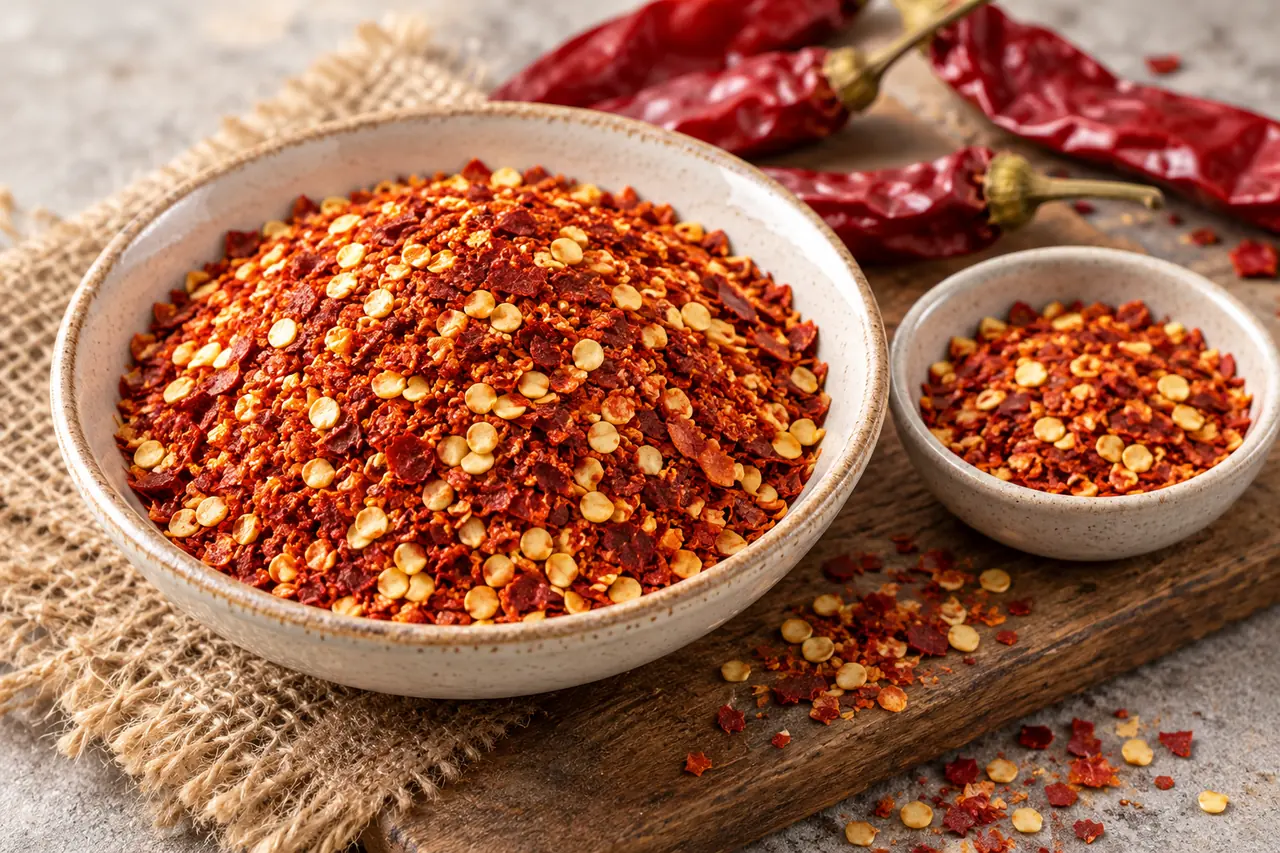
Assess flakes on the food in the condition customers receive it. A seasoning applied before heating and one sprinkled after cooking need separate comparisons. Record pepper character, sweetness, bitterness and heat without assuming that the word sweet means zero pungency. Where a numerical heat limit matters, include the analytical basis for the actual selected material and use a sensory reference for the finished food.
Keep appearance and flavour decisions separate when changing the dose. Increasing flakes to obtain more red pieces also changes the pepper contribution. A revised recipe should be judged as a new candidate rather than called a direct ingredient replacement.
Find whether handling breaks flakes or separates the blend
New fines suggest breakage; changed portion composition suggests separation.
- 01More fines
Investigate breakage through transfer and handling.
- 02Different portions
Investigate separation in the carrier, pack or dispenser.
- 03Changed food coverage
Connect the particle observation to the intended serving.
Flakes can lose their visible pattern because handling creates new fines, or because unchanged pieces separate from the carrier. These need different responses: a more suitable cut may address breakage, while the blend or dispenser may need attention when particles redistribute.
Keep an incoming reference. Compare equal portions after mixing, after transfer and at the beginning, middle and end of dispensing, using the same sieve or scaled-image method. More total fines point towards breakage; similar overall fractions but different portion compositions point towards separation. Apply each to the food at the same dose. Send the observed change to RELIA before choosing a finer or coarser cut.
Keep moisture and package handling attached to the chosen flakes
Ingredient moisture and dry-sealed storage do not predict flow in the complete blend.
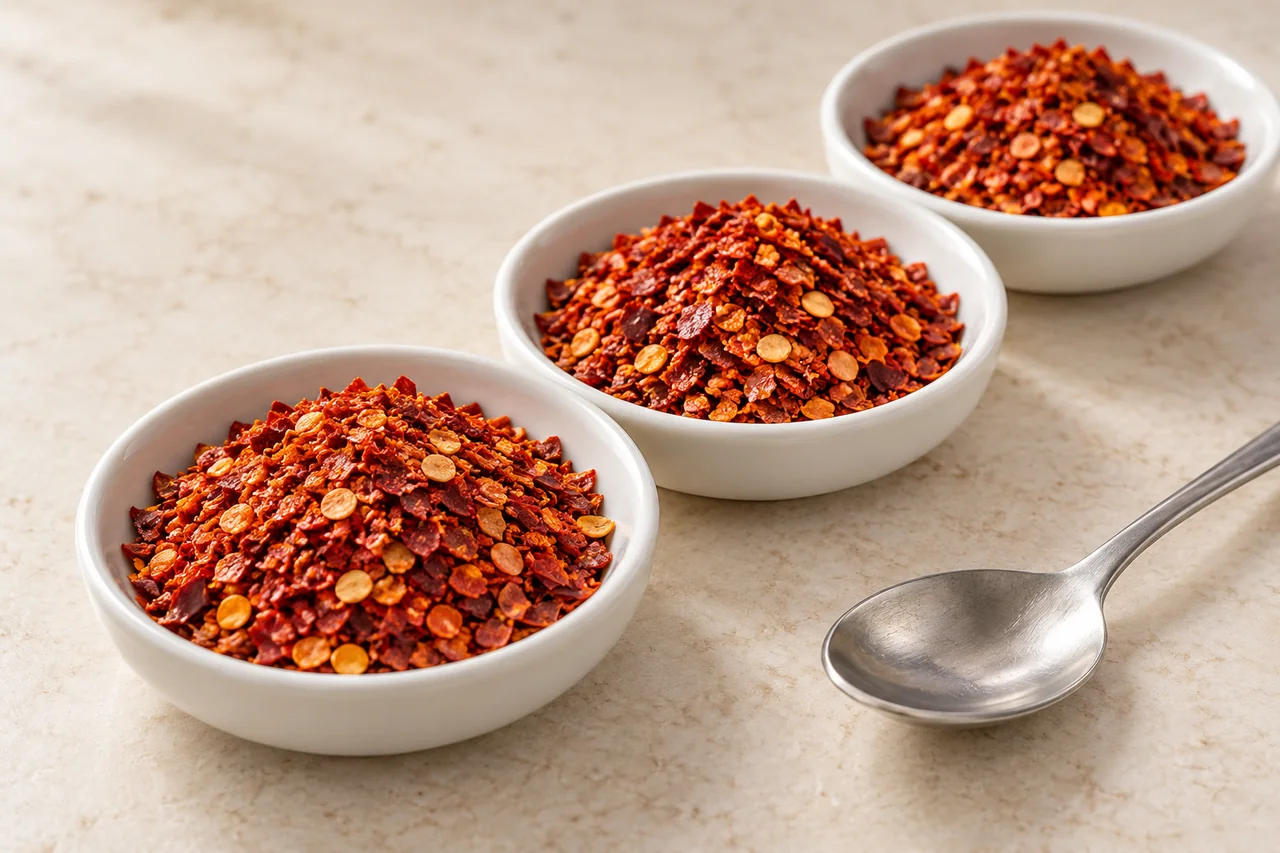
The sweet paprika flakes state dry, sealed storage and a 24-month period; the crushed red chili comparison states two years in a cool, dry place. These are ingredient declarations with different wording, not a shelf-life result for your compound seasoning. Review the actual pack, closure, opening frequency and storage conditions alongside your receiving specification.
Moisture ≤12% on the sweet flakes is a stated ingredient limit, not a promise of free flow in a salt-containing blend. Observe caking, dispensing and aroma in the actual mixture and package if those properties affect the purchase.
Compare cost per accepted seasoning application
Compare the cost of an acceptable application, including screening loss.
- ✓Delivered material
Compare the same actual cut, seed criteria and receiving pack.
- ✓Usable material
Include measured screening loss or extra buyer preparation when relevant.
- ✓Accepted application
Use the tested dose meeting appearance and flavour to compare application cost.
Compare quotations for the same selected cut, composition and package. Then account for the use rate needed to meet visible-piece and flavour targets, rejected fine material and any additional buyer screening. A cheaper delivered kilogram may not be cheaper per acceptable application if more material is discarded or the dose must rise.
Retain the incoming sample together with the applied-food photograph and the agreed receiving method. Codex distinguishes flaked and ground styles; that terminology helps describe the object being bought, but does not certify any offered sample or replace the actual purchase specification.
Send a visible-flake brief that supports a useful response
Send the food appearance and dispensing route with your flake requirements.
- 01Show the result
Attach the accepted food appearance and define the role of visible pieces.
- 02Define the input
State cut, fines, seeds and heat as independent receiving requirements.
- 03Compare an offer
Connect the identified sample and pack to the quantity being quoted.
Send your finished-food reference, dry carrier, application method and target visible cut. We can use that brief to discuss crushing, sieving and the appropriate supplied flake preparation. Include fines, seeds, permitted heat and receiving package so the quotation and trial refer to the same material.
- Intended food and serving level
- Visible cut and fines criteria
- Seed condition
- Heat requirement and method
- Ingredient documents
- Quantity and receiving package
Your next purchasing decision
Discuss a visible-flake seasoning purchase
Ask for the cut, fines and seed balance that fits your seasoning.
Bring the food photograph, carrier and dispensing observations to our ingredient discussion. Identify whether the sweet paprika or a separate red chili heat profile is the starting point.
Include your target cut, fines and seed criteria, quantity and package. We will discuss the preparation and order requirements against that specific brief.
The enquiry page keeps this guide with your message. Add your quantity and destination so we can discuss the relevant material.