Comparing Replacement Chili Powder for a Storage-Flow Problem
Before replacing chili powder for poor flow, locate when the problem starts: at opening, after exposure, or in the stored seasoning. Compare the current ingredient and candidate under the same package and handling conditions, then judge the same food requirements. Send the powder, opening pattern and observed failure so we can discuss whether a grade change is worth testing.
- Locate the problem
- Incoming powder, opened material and stored blend need different comparisons.
- Read moisture correctly
- Paprika ≤8% and Cayenne ≤9% are separate specification limits, not anti-caking results.
- Preserve the food
- Better discharge is useful only if colour, flavour, heat and texture remain acceptable.
Describe the Failure at the Operation Where It Matters
Use routine moisture and particles as inputs, not a promised cure for caking.
- ✓At incoming opening
Inspect whether the ingredient arrives in the condition described by the purchase.
- ✓After buyer exposure
Consider opening, closure and the material’s time in the actual handling area.
- ✓In the stored blend
Examine the full recipe, package and discharge condition rather than one ingredient alone.
RELIA SPICES can start with our internal routine moisture and particle checks and the powder's in-house grinding and sieving preparation. Water activity and specialist flow testing are separate measurement tasks when the problem requires them.
State where the failure appears. If order-specific steam preparation is selected, keep the final proposed material in the comparison. Our outsourced ASTA, SHU and microbiological analyses do not replace a matched storage-flow trial in your own seasoning and package.
Keep a Controlled Baseline Before Ordering a Substitute
Keep a controlled baseline that reproduces the actual handling problem.
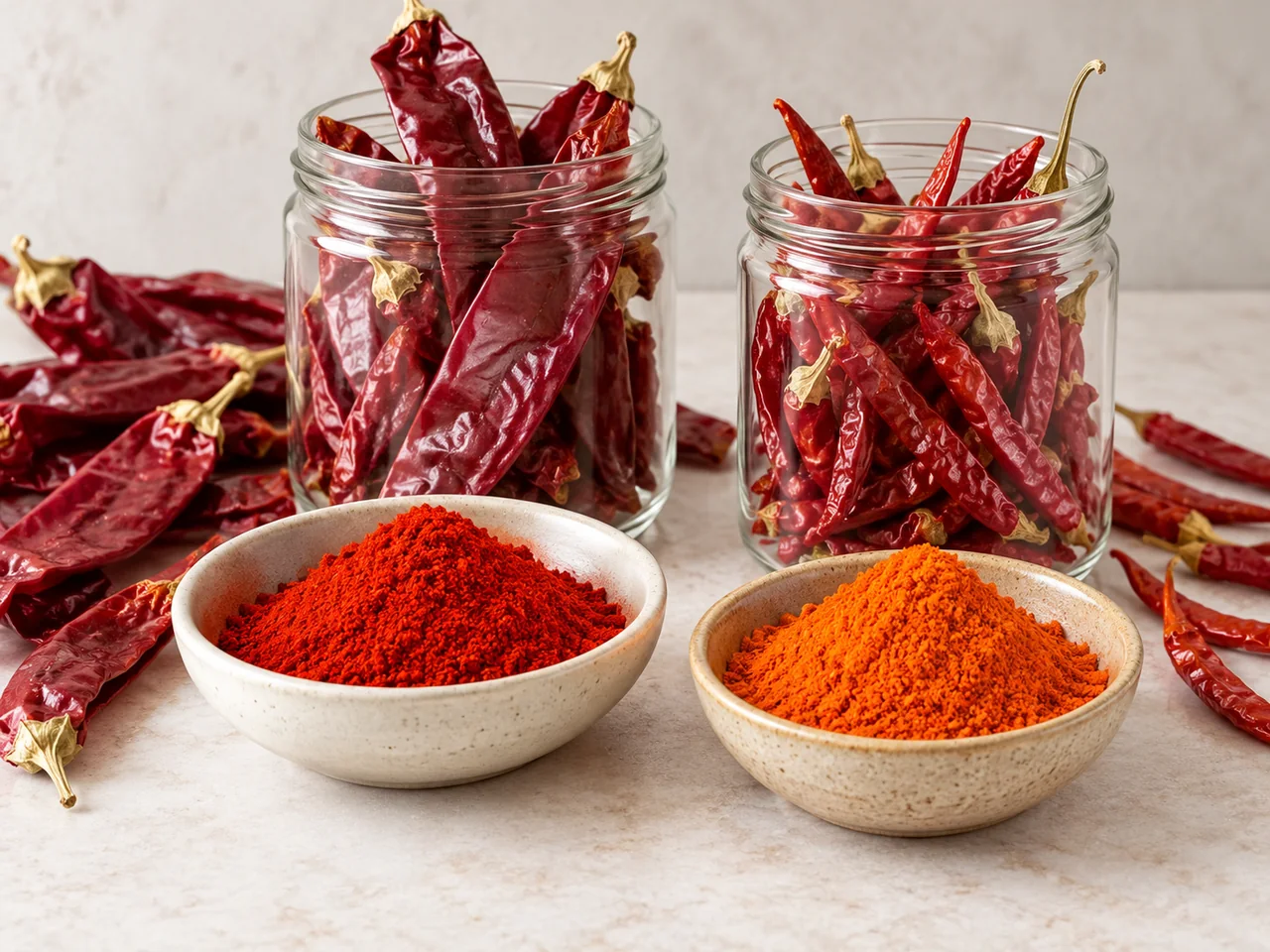
Retain the current recipe and actual ingredient identity as the starting comparison. Photograph the observed condition for communication, but use a handling or measurement procedure relevant to the problem. A free-pouring sample in a small open dish does not reproduce a packed seasoning under storage load.
Choose a comparison endpoint that matches the operation, such as dose consistency, ease of discharge or the defined amount of retained lumps after a stated handling step. Use the same sample preparation and method for current and candidate materials. Where flow under consolidation matters, specialist powder testing may be more informative than an improvised pouring score.
Ingredients to compare for this application
Paprika grade for a matched flow trial
Consider only when its paprika food contribution fits the seasoning as well as the physical comparison.
- Moisture specification: ≤8%.
- Nominal 70 mesh.
- Storage ≤25°C and humidity ≤60%, with a 24-month statement.
Cayenne grade for a matched flow trial
Evaluate when the food needs the selected Cayenne character and the trial can isolate the actual handling difference.
- Moisture specification: ≤9%.
- Nominal 60 mesh.
- Storage ≤25°C and humidity ≤60%, with a 12-month statement.
These product specifications are a starting point for selecting a grade. Match the proposed material and sample to your food and order requirements.
Read the Two Catalogue Moisture Limits Correctly
A lower catalogue moisture maximum does not establish better storage flow.
| Reference | What it describes | What it does not establish |
|---|---|---|
| Paprika moisture ≤8% | A candidate specification limit | Actual trial moisture or anti-caking performance |
| Cayenne moisture ≤9% | A separate candidate specification limit | A measured comparison with the paprika |
| Nominal mesh | A starting particle reference | Complete distribution or storage flow |
The sweet paprika powder declares moisture at no more than 8%; the dried Cayenne red pepper powder declares no more than 9%. These are distinct specification references. They do not show the actual moisture of either trial sample, and the difference between limits does not establish a difference in storage performance.
The powders also differ in food role and nominal grind: paprika has a 70-mesh reference with separate customisation, while Cayenne has nominal 60 mesh. A candidate must fit colour, flavour and heat as well as handling. Do not change the seasoning’s intended eating profile solely to obtain a lower catalogue moisture maximum.
Separate Water Quantity, Exposure and the Flow Result
Moisture, water activity and the flow endpoint are different properties.
- 01Describe the exposure
Locate the problem in incoming powder, opened material or stored blend.
- 02Identify the preparation
Keep the selected grade and any order-specific steam scope.
- 03Measure appropriately
Separate moisture, water activity and the relevant handling endpoint.
- 04Compare the food system
Use matched package conditions and preserve the food requirements.
Moisture percentage describes water quantity; water activity is a different property, and flow is a handling result. A catalogue maximum cannot be converted into an assumed water activity or anti-caking guarantee.
RELIA SPICES checks routine moisture and particles internally and grinds and sieves in-house. If order-specific steam treatment is selected, identify that preparation. Its heat and moisture exposure does not by itself establish a final moisture value or storage outcome.
Compare current and candidate powders in matched containers, then in the same seasoning. Keep opening, closure, exposure history and assessment consistent. Judge colour, flavour, heat and particles alongside the actual flow endpoint before deciding whether the ingredient, package or handling needs to change.
Compare the Ingredient and the Finished Blend Separately
Compare the powder alone and in the same finished blend.
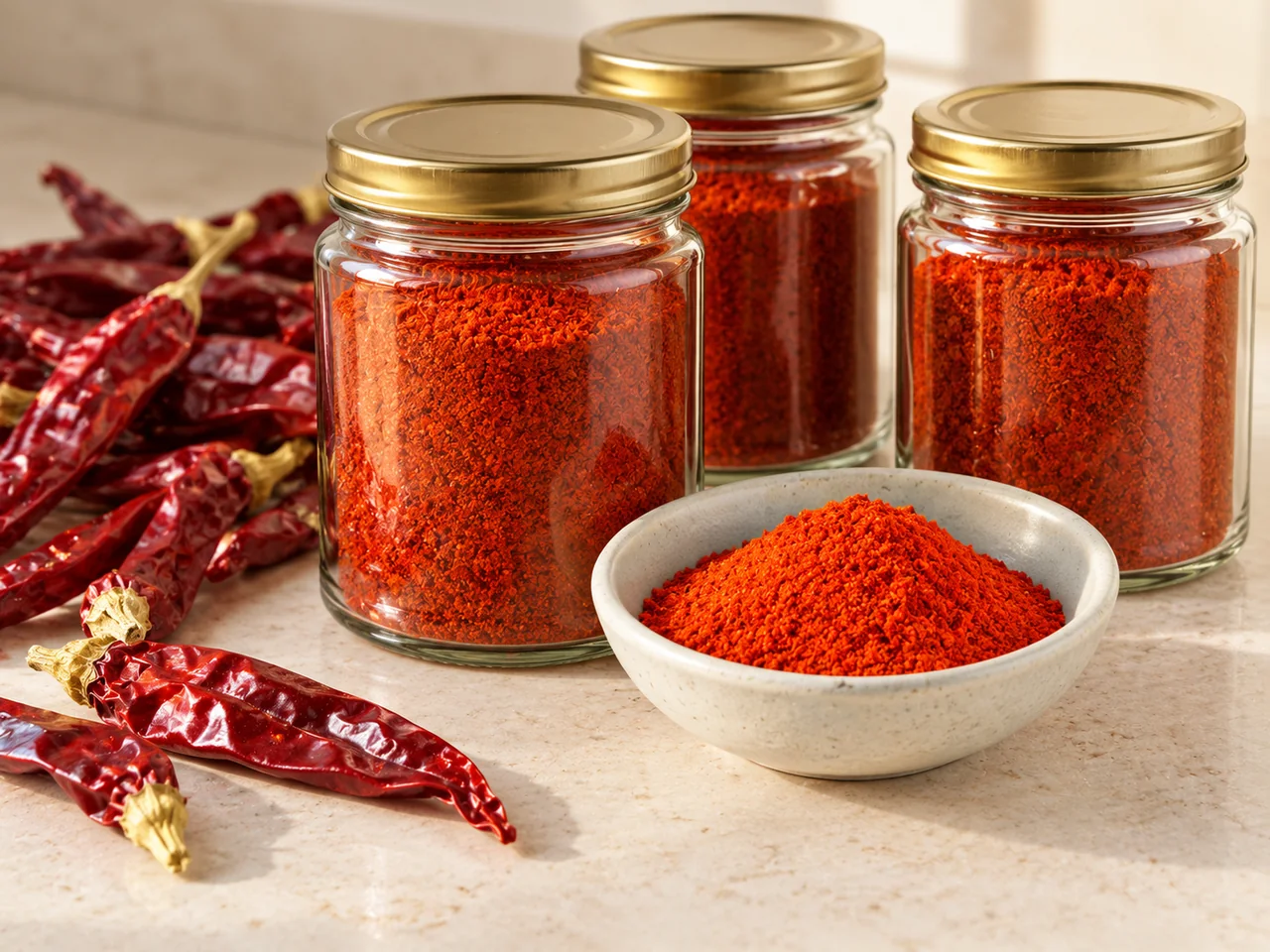
Examine the current and candidate powders before blending, then compare each in the same seasoning formulation. This helps distinguish an ingredient arriving in poor condition from a blend that changes during storage. Keep all other ingredients and the relevant mixing and packing procedure fixed for the initial trial.
If the candidate powder looks acceptable alone but the stored blend still fails, do not keep changing chili grades without reviewing the rest of the system. The formulation contains other materials with their own physical behaviour, while pack exposure and handling can affect both trials. A useful trial narrows the cause rather than merely producing another sample.
Control the Package and Exposure in the Trial
Match containers, closure and the relevant opening pattern.
- 01Incoming powder
Keep its own grade, receiving package and declared conditions together.
- 02Opened material
Reproduce the relevant opening and closure pattern in the comparison.
The two powder listings give storage at or below 25°C and humidity at or below 60%, with 24 months stated for the paprika and 12 months for the Cayenne. Read each within its actual ingredient and package scope. These declarations do not establish the life of an opened container or the finished seasoning.
For a replacement comparison, use matched receiving or trial containers, closure procedures and fill conditions. Follow the real opening and use pattern if the complaint occurs after opening. Record the relevant storage history; do not claim that a short trial at a different condition validates a longer commercial life.
Change One Candidate Property Before Changing the Whole System
Separate a powder substitution from a package or handling intervention.
- 01Material comparison
Hold the formula and relevant storage/handling baseline while changing the selected powder.
- 02Separate intervention
Evaluate a package or handling change on an identified additional basis.
- 03Complete acceptance
Read flow observations alongside the food attributes that must remain acceptable.
Compare the proposed grade with the current powder on the accepted baseline first. If a package or handling intervention is also being considered, assess it as a defined additional change. Otherwise a better result cannot show whether the material, closure or exposure difference caused it.
Preserve food-quality requirements throughout. Compare colour, flavour, heat and particle texture after the relevant storage period as well as the flow endpoint. A sample that discharges more readily but changes the intended food is not an acceptable ingredient replacement.
Connect the Accepted Result to the Proposed Grade
Retain the exact grade and conditions behind an accepted improvement.
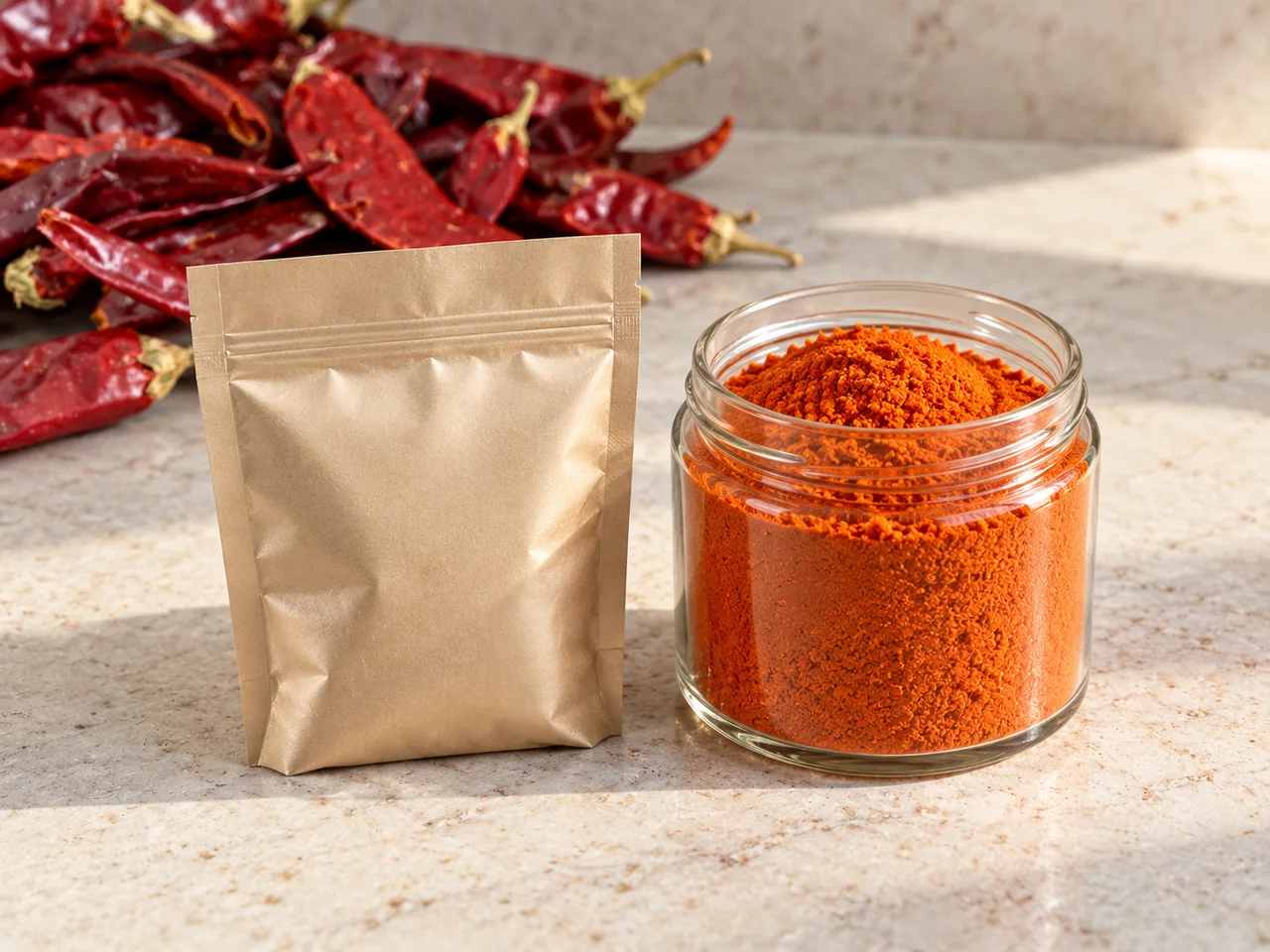
If the candidate meets the food requirements and improves the defined handling endpoint in the comparison, retain the sample, grade and exact conditions behind that decision. Describe the result within the trial scope rather than as a universal cure for caking.
Carry the material characteristics that mattered into the purchase specification. RELIA SPICES performs the physical preparation and routine moisture and particle checks in-house. Review a change in formulation, selected grind, order-specific steam preparation or pack against the accepted comparison instead of carrying forward an unrelated storage-flow result.
Send the Observed Flow Problem and Comparison Conditions
Send the failure location, package history and food requirements together.
- 01Problem evidence
Describe the flow failure and material condition at the stage it affects work.
- 02Replacement conditions
Preserve ingredient identity, food contribution and customer restrictions.
- 03Decision evidence
Use a matched trial and actual offer rather than a moisture-limit shortcut.
Share the current powder, the failure point, formula context and actual pack. Add the opening pattern, storage history, available measurements and the handling result you need, such as consistent dosing or easier discharge.
We can discuss a candidate against that task. Choose a replacement only if the matched comparison supports both food and operation. If the evidence points to the package or handling instead, keep that investigation separate rather than repeatedly changing chili grades.
- Observed flow problem and stage
- Current powder and formula context
- Actual package and storage conditions
- Food requirements to preserve
- Available comparison methods and records
- Quantity and proposed material needs
Your next purchasing decision
Talk through your storage-flow replacement enquiry
Explain where flow becomes difficult and what a replacement must preserve.
Tell RELIA SPICES where flow becomes difficult and provide the current material, formula context and package history. Add the food requirements a replacement must preserve.
We can discuss the proposed powder and internal physical evidence, while the matched trial determines whether an ingredient change is justified.
The enquiry page keeps this guide with your message. Add your quantity and destination so we can discuss the relevant material.