Launch a Chili Brand with Factory-Filled Retail Packs
Launch one clear pepper product before expanding your range. RELIA SPICES in China supplies paprika or chili ingredients and fills retail packs under your logo, bringing material choice and branded presentation together.
Packaging and project details
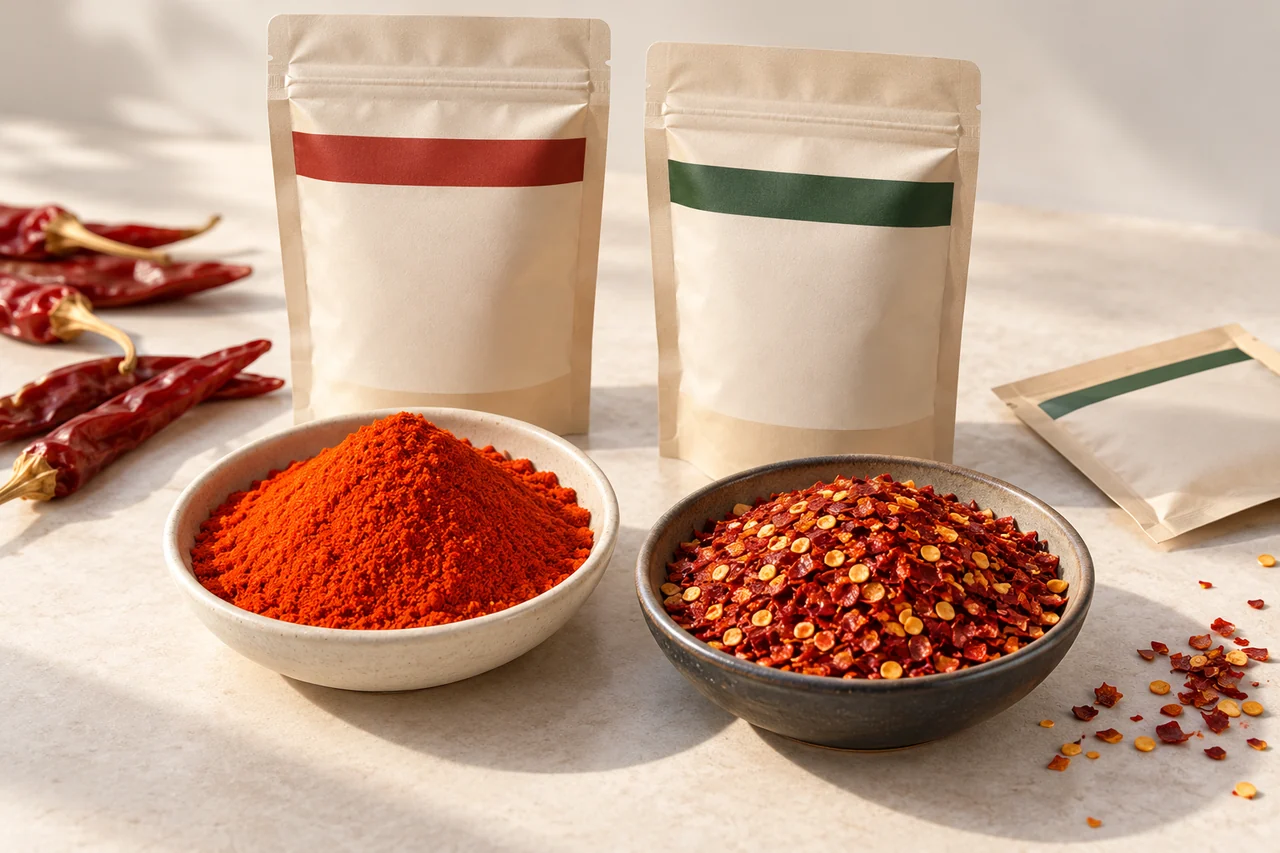
Start with colour-led sweet paprika or visible seeded flakes, then send your intended use, destination, packaging specification and launch quantity. We assess your pack and quote the product, printing and order requirements together.
Two useful starting points for a first launch
- Colour-led cooking
Begin with sweet paprika powder and choose its colour and grind.
- Visible pepper pieces
Begin with seeded chili flakes and define the cut and heat.
Bring Ingredient Preparation and Retail Filling Together
One manufacturing brief connects the pepper you select with the branded product you sell.
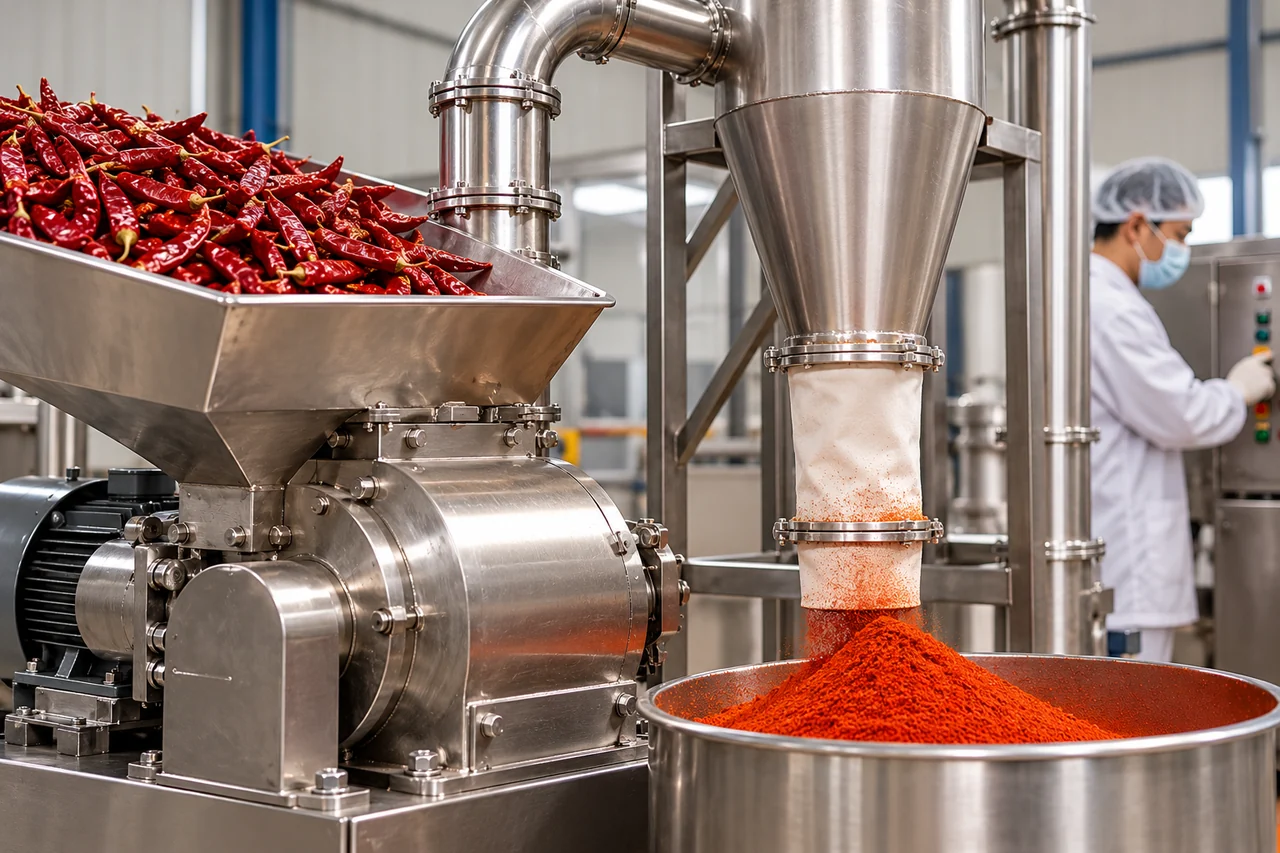
RELIA SPICES purchases dried chilies, cleans and removes foreign matter, destems, grinds or cuts/crushes, sieves and packages the selected preparation. We supply the ingredient and fill retail packs under your logo, with packaging assessed for your project.
Coordinate packaging, treatment and tests
We can assist production of customer-branded packaging or accept customer-supplied packaging. Moisture and particle size are checked internally; ASTA, SHU and microbiology use external laboratories. In-house steam microbial reduction is available when required by the order.
The preparation route behind your branded pack
- Purchased dried chilies
Start with the dried pepper input for the selected product.
- Clean and destem
Remove unwanted matter and stems before size reduction.
- Grind or cut
Prepare powder or retain pepper pieces for the chosen product.
- Sieve
Select the agreed particle fraction.
- Package
Fill the assessed retail pack using your customer branding.
Choose a First Product with a Clear Consumer Role
Paprika colour and a visible seeded-flake mixture support different buying reasons.
Our sweet paprika listing gives nominal 70 mesh, a separate customizable 60–70 mesh reference, customizable 80–220 ASTA colour and moisture ≤8%. Choose the colour and grind for your intended food; the full listing range describes selection scope, rather than one batch result.
Define the complete seeded-flake mixture
The coarse seeded-flake listing carries 7,000–10,000 SHU. Its 1–4 mm and 5 × 7 mm entries are separate references. Agree the actual cut, measurement basis and seed expectations for the flakes you want to put under your label.
Match the first SKU to its eating or cooking role
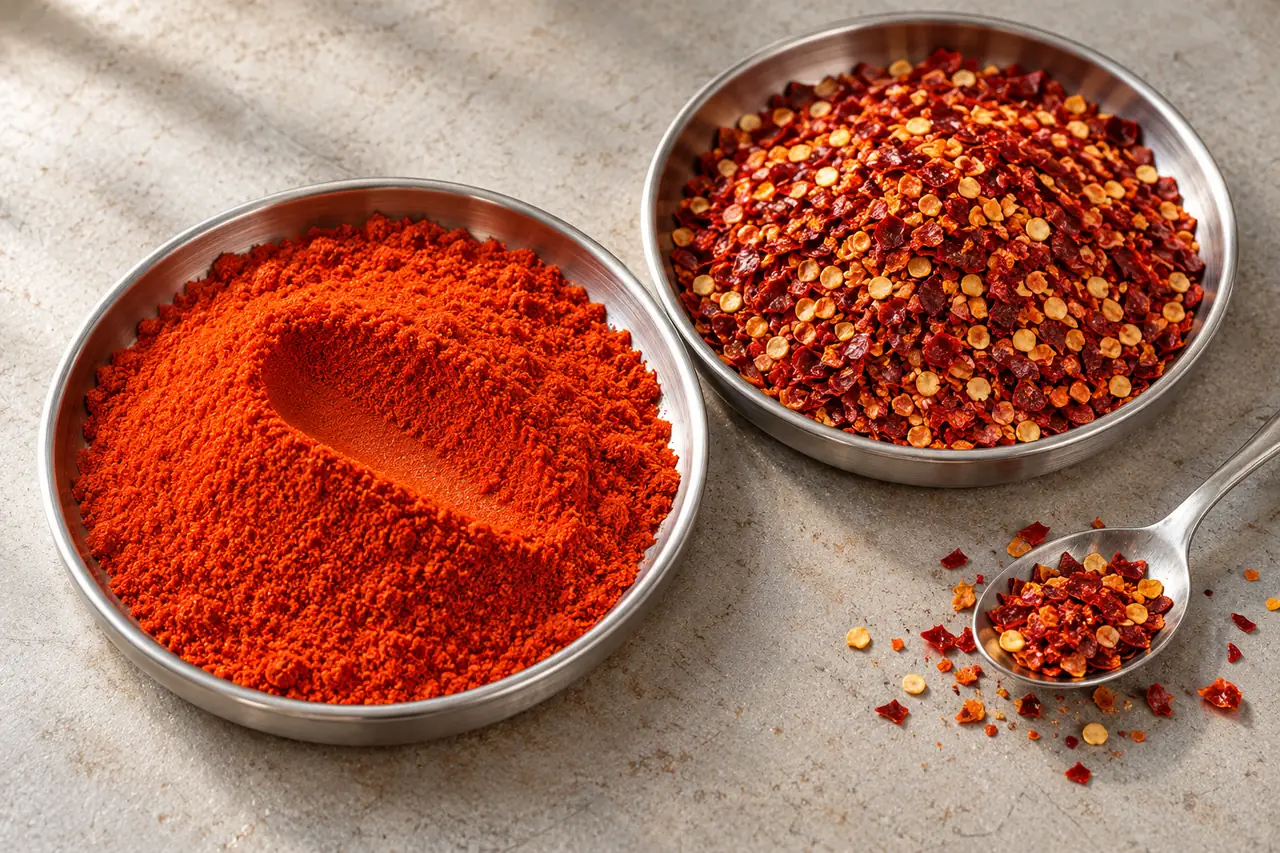
Colour-led sweet paprika powder
Choose a powder-led first SKU when shoppers want red colour distributed through a dish.
- Grind
- Nominal 70 mesh; separate customizable 60–70 mesh reference.
- Colour selection
- Customizable 80–220 ASTA; agree the selected grade.
- Moisture
- ≤8% listing limit, linked to the proposed material.
Coarse chili flakes with seeds
Choose visible pepper pieces when the retail promise depends on flake appearance and bite.
- Heat reference
- 7,000–10,000 SHU; establish applicability to the proposed material.
- Cut references
- 1–4 mm and 5 × 7 mm are independent entries; agree dimensions and measurement basis.
- Appearance
- Coarse red flakes with visible pale seeds; agree the desired seed condition.
Review the selection criteria
- Sweet paprika powder
- 70 mesh nominal A colour-led powder starting point with a selected ASTA grade and grind.
- Coarse seeded flakes
- 7,000–10,000 SHU Visible pepper pieces; agree the cut and assess the whole mixture.
Compare the Attribute Your First Label Promises
Keep the food base and preparation constant so the material difference is useful.
For paprika, compare colour and any coarse sensation in the same food base. For flakes, inspect the complete mixture, visible seeds, hard pieces and local bite at the intended addition stage. A display handful can miss the fines and smaller pieces that customers will also receive.
Separate product selection from safety acceptance
Keep the accepted comparison linked to its proposed material specification. Use applicable analytical evidence for the selected heat or colour requirement, and handle microbial acceptance and packed shelf life as separate decisions.
Give the comparison a specific job
- Colour
Compare the selected paprika grade in one fixed food base.
- Powder texture
Check distribution and unwanted coarse particles alongside nominal mesh.
- Flake mixture
Look at seeds, fines and main pieces together.
- Heat
Match the intended bite to applicable material evidence.
Carry the Chosen Texture Through Production
Cleaning, size reduction and sieving affect different parts of the finished ingredient.
Cleaning and destemming remove unwanted material while it can still be distinguished from the pepper. Grinding then creates a powder background, while cutting or crushing retains pieces. Sieving separates a fraction; the accepted flake product still needs a description of the complete particle mixture.
Approve the preparation requested for packing
Connect our internal moisture and particle checks to that preparation. When your order calls for steam treatment, include it before final approval and compare the proposed treated material as well. This keeps the product you assess aligned with the product requested for packing.
From preparation choice to a useful material comparison
- Prepare the input
Cleaning and destemming address unwanted matter before grinding.
- Choose the texture
Grinding produces powder; cutting or crushing retains pieces.
- Select the fraction
Sieving supports the agreed particle requirement.
- Review the proposed material
Use moisture and particle checks with any selected treatment scope.
Build a First-Order Brief That Can Be Quoted
Your intended launch quantity and date help shape a product-specific proposal.
Send the intended units, requested net content, destination and desired launch window for your first product. Include the packaging specification, printing request and any treatment or testing requirements so the quotation addresses the full retail item.
Set project-specific order and timing commitments
MOQ, net content and lead time are quoted according to product, package specification, printing method and quantity. Keep your planning targets visible in the request, then use the agreed proposal to set the order commitments.
Move from launch planning to an agreed order
- Your target
Product role, intended units, requested fill and launch window.
- Our project assessment
Material, packaging, printing and requested technical work.
- Agreed proposal
Quantity basis, net content, price and schedule for that combination.
Put Accurate Product Facts Behind the Logo
Approve the brand presentation and the product information as connected tasks.
Prepare the product name, complete ingredient declaration, requested net content and intended-use wording for destination-specific review. The selected pepper preparation gives those label facts their basis; the authorized logo gives the retail item its brand identity.
Assign identifiers and label approval
Assign responsibility for identifiers and label approval. GS1 normally places GTIN allocation with the brand owner. Include any coding or application request in the project discussion so its feasibility and responsibility are agreed alongside the artwork.
Four inputs for artwork approval
- Ingredient identity
Use the selected paprika or chili preparation and full ingredient information.
- Authorized brand
Provide the logo and the artwork version you want reviewed.
- Destination wording
Review the actual label and intended use for your market.
- Identifiers
Assign ownership and discuss any coding or application request.
Shape the Retail Pack Around the Selected Pepper
Powder and flakes need different attention to settling, opening and dispensing.
Assess your specified packaging with the actual ingredient and requested fill. Powder can settle differently from irregular flakes, and pepper pieces need an opening that supports normal use. Agree the proposed material, container, closure and fill as one combination.
Choose packaging supply and storage basis
You can provide packaging or discuss assistance making customer-branded packaging. Review storage and handling for the chosen retail configuration: an ingredient listing's storage period is a reference for that ingredient and package basis, rather than a ready-made duration for a new retail pack.
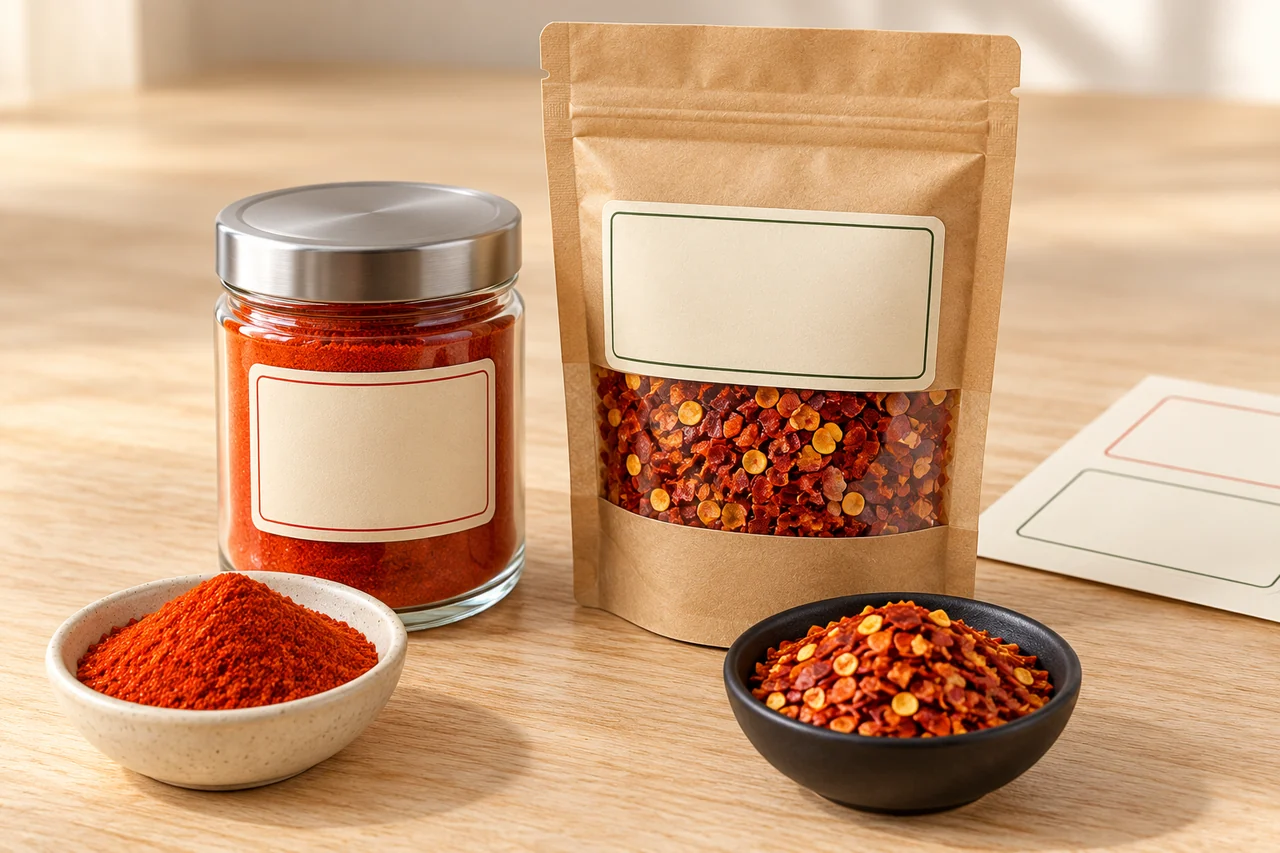
Build the pack proposal from three connected inputs
- Selected pepper
The accepted powder or complete flake mixture.
- Specified pack
Material, opening, closure and requested net content for assessment.
- Handling basis
Storage requirements and evidence relevant to the proposed retail configuration.
Make the First Approval Useful for the Next Order
Save the decisions that define the product your customer will recognize.
Keep the accepted material reference, specification version, treatment request, pack proposal and approved artwork together in your project file. This gives your next enquiry a clear starting point for the same product and evidence scope.
Focus the review on reorder changes
For a reorder, identify what stays the same and what changes. A different grind, heat profile, pack or label calls for a focused review of the affected decision, rather than restarting the whole launch discussion.
| Your input | Factory assessment focus | Decision to confirm |
|---|---|---|
| First product One priority ingredient, target food use and a clear reference. | Narrow a candidate before committing to a wider range. | Selected ingredient and the comparison or test basis. |
| Proposed retail pack Pack concept, requested fill, logo status and packaging source. | Assess the requested format and identify the material or pack comparison still needed. | Packaging format, component responsibilities and approval references. |
| Launch scope Planned quantity, destination and requested launch timing. | Quote the actual project; agree unresolved material, artwork and package decisions first. | Agreed product, packaging and order scope for quotation. |
This is a planning handover for your enquiry. Packaging, MOQ, net content and timing are assessed and quoted for the product, format, printing method and quantity.
Take the Next Step in Your Launch
Use the guide that resolves your next product or packaging choice.
Use the paprika guide to narrow colour and grind, or the flakes guide to define visible pieces, seeds and bite. Each gives your material comparison a more precise job.
Connect the ingredient to logo packing
Once the product role is clear, use the logo-packing guide to connect the ingredient to packaging feasibility, artwork and component responsibilities.
Continue with the decision your first product needs
Review the next-step choices
- Select paprika
- Choose a colour-led powder and its grind.
- Specify flakes
- Define the visible cut, whole mixture and heat.
- Coordinate the pack
- Connect the accepted ingredient, your logo and the requested packaging.
Send Your First Branded Pepper Brief
A focused product and retail-pack request gives the discussion a useful starting point.
Contact Qingdao Relia Spices Co., Ltd. / RELIA SPICES with the proposed paprika or chili product, intended consumer use, destination and material comparison.
Send logo, packaging and order requirements
Add your authorized logo, packaging specification, requested fill, intended quantity and desired launch timing. Tell us whether you will supply packaging or would like assistance producing branded packaging.
The three parts of a first-launch enquiry
- Product
Ingredient link, intended use and the colour, heat or texture you want.
- Brand pack
Authorized logo, requested fill and packaging-supply route.
- Launch plan
Destination, intended units, desired timing and technical requirements.