
Choosing Chili Powder or Flakes for a Dry Seasoning Blend
Choose powder for a fine red background and flakes when the seasoning should show visible chili. Then check the amount that reaches the portion your customer actually uses, after mixing, transfer and packing. Start with the paprika, Cayenne or seasoning-flake candidates below. Send the blend design, surrounding ingredients and use portion so we can discuss a physical grade worth testing.
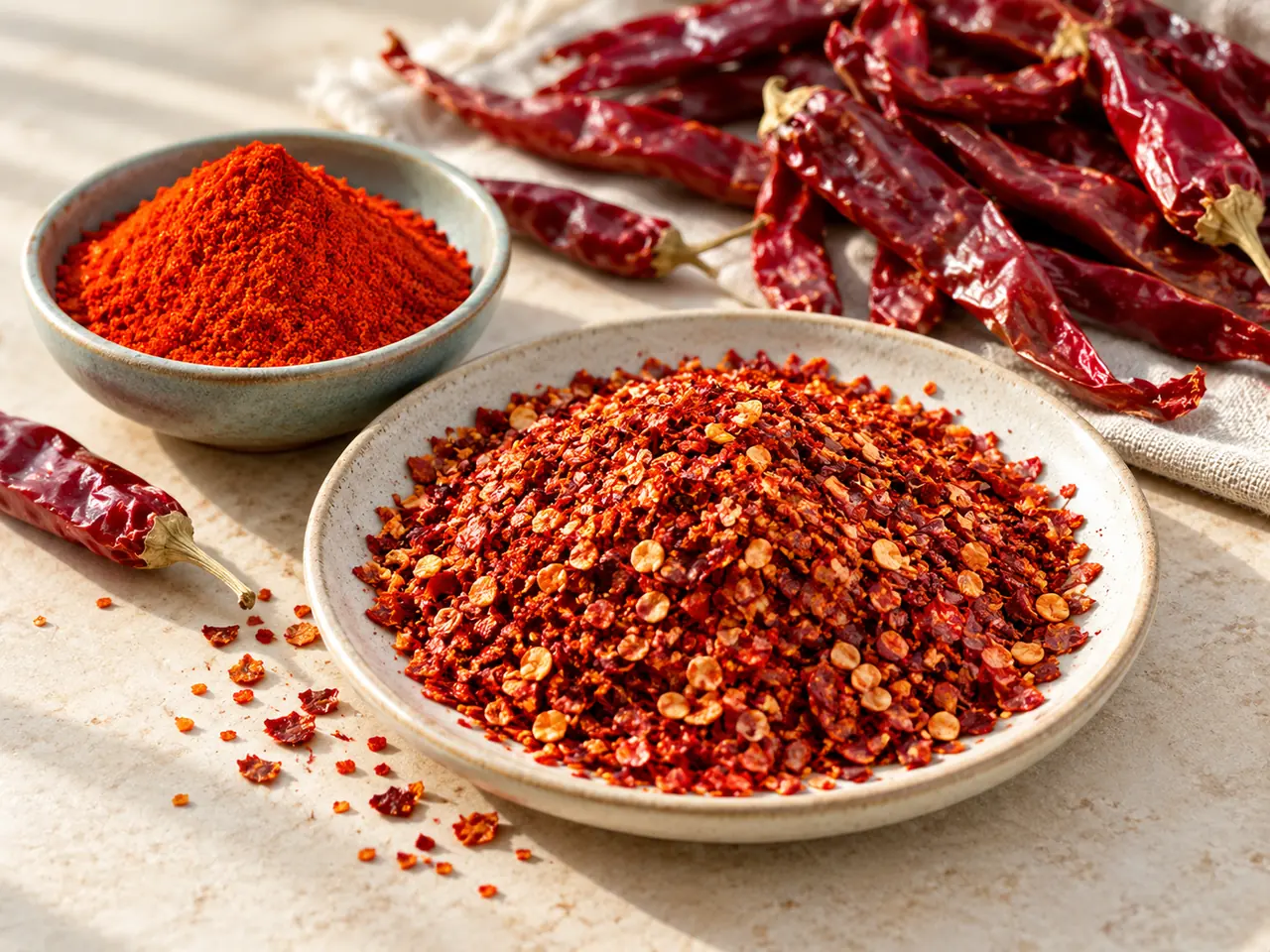
- Fine background
- Compare a selected paprika or Cayenne powder on its actual particle basis.
- Visible inclusion
- Define the flake cut, fines and seed appearance at the customer-use portion.
- Whole handling route
- A uniform-looking mixer sample may change during discharge, transfer or packing.
Define Uniformity at the Portion the Customer Uses
Define what uniformity means before judging colour or visible flake distribution.
- 01Fine background
Judge powder appearance and the actual attribute that must be distributed.
- 02Visible inclusion
Define the desired flake presence at the serving or dosing scale.
- 03Ingredient dose
Use a method that addresses composition or heat when appearance is insufficient.
RELIA SPICES grinds powders and cuts or crushes dried chili, then sieves the selected preparation in-house. Our routine particle and moisture checks help define the ingredient for your trial; your recipe and handling route determine the blend result.
Choose fine paprika or Cayenne when the design needs a powder background. Choose actual seasoning flakes when visible pieces matter. Define the serving or dosing portion and the attribute to distribute, rather than using uniform colour as proof of an even ingredient dose.
Compare Two Powders on Their Actual Particle Basis
Nominal mesh and moisture limits do not establish identical powder mixing behaviour.
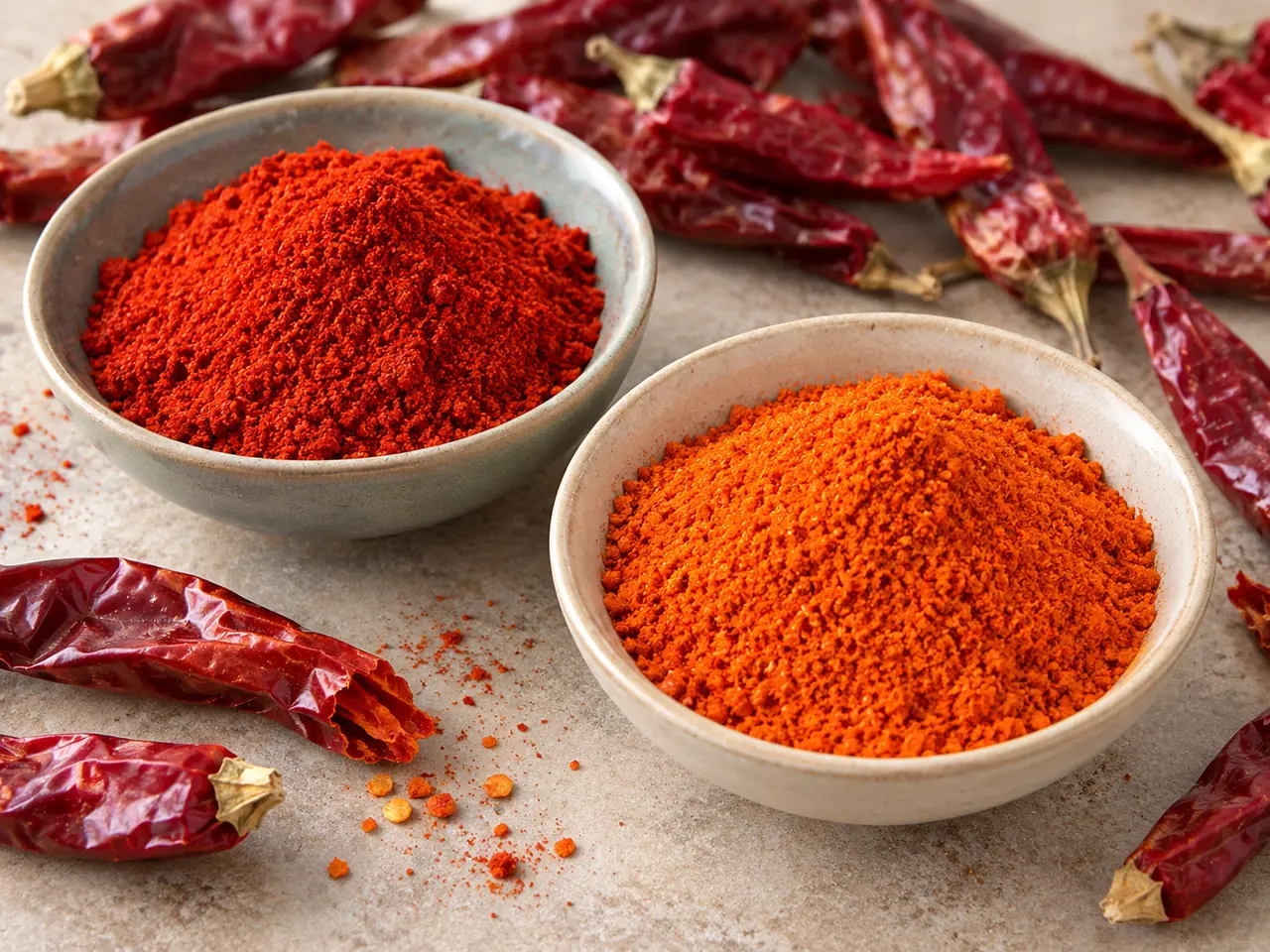
The sweet paprika powder has a nominal 70-mesh reference and separate 60–70 mesh customisation. The dried Cayenne powder has nominal 60 mesh and its own separate 60–70 reference. These can start a powder shortlist, but the names do not establish identical particle distributions, densities or mixing behaviour.
Select the actual grades and examine their sieve profiles on a common basis. The paprika lists moisture at no more than 8%, while the Cayenne lists no more than 9%; these are different catalogue limits, not measurements of the samples on your bench. Keep colour and heat requirements alongside the physical comparison so a better-looking blend does not mask a changed food contribution.
Ingredients to compare for this application
Paprika for a fine red background
Evaluate when the seasoning design needs dispersed paprika colour and flavour rather than visible chili pieces.
- Nominal 70 mesh; separate 60–70-mesh customization.
- 80–220 ASTA customization.
- Moisture specification: ≤8%.
Cayenne powder for the pepper contribution
Use a selected grade when the blend needs Cayenne identity and a separately chosen heat character.
- Nominal 60 mesh.
- Mild, medium and hot qualitative options.
- Moisture specification: ≤9%.
Visible seasoning chili flakes
Test the actual cut through mixing and discharge when the customer should see chili in the used portion.
- Dried raw red chili flakes.
- Seasoning is the stated ingredient use.
- Sealed, dry storage with a 12-month statement.
These product specifications are a starting point for selecting a grade. Match the proposed material and sample to your food and order requirements.
Define the Actual Flakes for the Blend
Choose visible flakes for their cut and appearance, not unselected powder sieve references.
- 01Powder route
Compare the actual fine-grade distribution and contribution to the seasoning.
- 02Flake route
Define visible cut, fines and material-part composition for the chosen preparation.
The seasoning-flake candidate provides a visible-particle route. Its independent 40–80 mesh and 80/100 mesh references do not define the actual coarse cut or two confirmed supply variants; establish the relevant material fraction and basis separately.
Select the proposed flake preparation for its cut, fines and seed presence in the intended portion. Use this route because visible chili benefits the product, then test its distribution through the normal mixing and transfer sequence.
Follow the Physical Grade Through Mixing and Transfer
Follow the selected grade through mixing, transfer and the final portion.
- 01Define the material
Select powder or flakes with an actual particle criterion.
- 02Mix on a baseline
Keep the relevant recipe and loading conditions fixed.
- 03Follow transfer
Compare the agreed attribute after normal handling.
- 04Check the portion
Judge the quantity the customer actually applies or consumes.
RELIA SPICES grinds or cuts/crushes and sieves dried chili in-house. The resulting particles enter a blend with other ingredients of different sizes, shapes and bulk behaviour; nominal mesh alone cannot describe the mixture.
Use the selected grade in the actual recipe, keeping its particle distribution and condition with the trial. Our routine moisture and particle checks are internal.
Inspect the agreed attribute after mixing, discharge, transfer and packing. If early and late portions differ, locate the stage where the change appears before adjusting the ingredient or mixer. Flake count, colour and heat measurements answer different questions. Select for the relevant customer-use portion rather than assuming universal resistance to separation.
Follow the Blend Beyond the Mixer
Inspect the blend after discharge as well as inside the mixer.
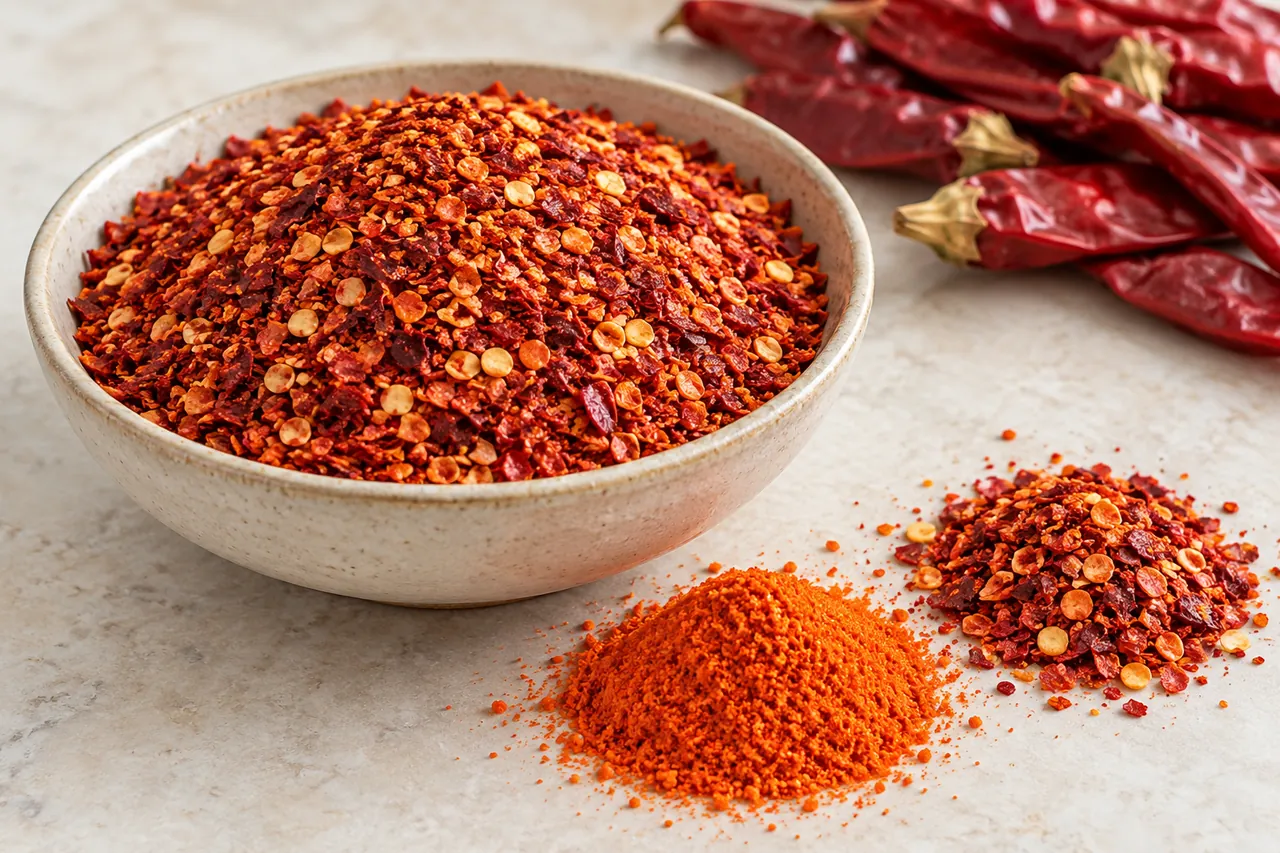
Use the current recipe and a documented loading sequence for the first candidate trial. Hold mixer fill and operating conditions on a relevant basis. Take samples that address the agreed attribute after mixing, then examine material after unloading and the actual transfer to packing.
Keep early, middle and late packed portions identifiable where discharge order is relevant. A satisfactory mixture inside the vessel may not answer what reaches the consumer after handling. Compare these stages before deciding that the ingredient is unsuitable or that the mixer needs more time; otherwise the intervention can target the wrong part of the operation.
Use Sampling That Can Detect the Intended Difference
Keep separate samples capable of detecting the difference you need to find.
| Stage | Comparison purpose | Evidence object |
|---|---|---|
| After mixing | Assess the agreed distribution attribute | Separate location-linked samples |
| After discharge and transfer | Find handling-related changes | Identified sequence and sample positions |
| At packing or dosing | Assess the consumer-use portion | Independent accepted-size portions |
Define sampling locations, portion mass and the attribute being evaluated with the people responsible for product quality. Keep each observation separate before calculating a summary. Pooling all portions can hide the very variation the purchasing trial needs to detect.
For visible flakes, an agreed physical fraction or image-based count can be useful only within a defined method and portion. For a heat or composition criterion, use an appropriate measurement instead. Avoid using salt conductivity as a chili measure merely because it was used in a published binary-powder experiment.
Compare One Change at a Time
Change the ingredient or the operating method as separate trials.
- 01Ingredient trial
Keep the recipe and operating baseline while comparing defined material grades.
- 02Process trial
Evaluate a documented loading or handling change as a separate decision.
- 03Purchase handover
Carry forward the properties that mattered to the accepted result.
If the powder route is preferred, change the selected powder grade while retaining the recipe and relevant process baseline. If visible flakes are required, test a defined flake preparation rather than adding several unmeasured particle changes together. Separate a new ingredient decision from a new mixer procedure.
Keep a promising result provisional until the transfer and portion checks support it. A trial that changes grade, order of addition and mixing conditions at once may produce an acceptable sample, but it gives the next purchase little guidance on which material characteristic must remain controlled.
Retain Both Ingredient and Blend References
Retain ingredient and finished-blend references as different evidence objects.
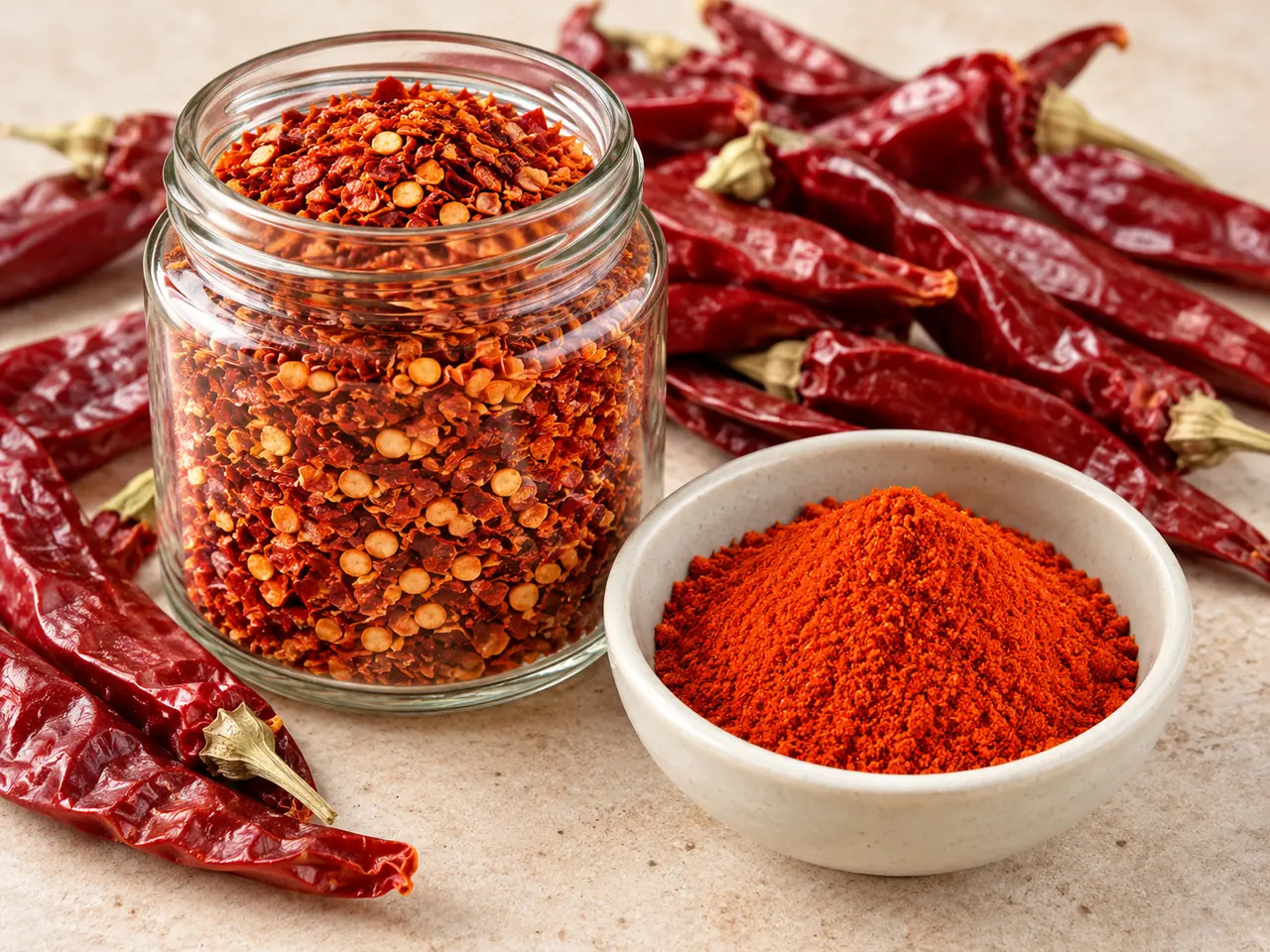
Keep the selected powder or flakes separate from the finished-seasoning reference. The ingredient sample describes what was purchased; the blend sample describes what your operation produced under the trial conditions. Both help resolve a later change in texture or distribution.
The flake listing describes sealed storage in a dry place with a 12-month duration and carton packing. The powder candidates have their own storage declarations. Apply the selected material’s actual package and conditions, and assess the finished seasoning separately. A successful short mixing trial does not establish a long-term storage-flow result.
Request a Grade for a Defined Blending Task
Request a physical grade for a specific blending and portioning task.
- 01Product design
Define portion size, visible-particle intent and the attribute to distribute.
- 02Material proposal
Select a grade with composition, particle and condition information.
- 03Evidence for purchase
Compare actual mixing, transfer and packed portions before approval.
Tell us whether the product needs a fine background or visible inclusions, the intended use portion and the physical ingredients surrounding the chili. Include the current grade, particle criterion and the sampling stages that will decide acceptance. Add quantity and receiving pack after defining that technical task.
We can discuss candidate forms and actual grade information for your trial. Choose the material whose food contribution and distribution survive the relevant handling stages, rather than a powder advertised with a broad claim that it mixes uniformly.
- Seasoning design and use
- Powder or visible-flake objective
- Composition and particle conditions
- Mixing and handling stages
- Sampling and acceptance basis
- Quantity and proposed grade records
Your next purchasing decision
Talk through your seasoning-distribution task
Send the use portion and the stages that affect distribution.
Send RELIA SPICES the intended portion, powder or visible-flake design and the current ingredient. Describe the mixing, transfer and packing stages that affect the result.
We can discuss an actual physical grade for that comparison while your operation evaluates the blend and customer-use portion.
The enquiry page keeps this guide with your message. Add your quantity and destination so we can discuss the relevant material.