Bulk Chili Ingredients for Spice Brands Packing Their Own Retail Products
Buy the powder or flakes that suit the retail jars or pouches your business will fill. Use sweet paprika for a colour-led powder concept, Cayenne for a separately defined chili product, or actual flakes for visible pieces. Test the chosen ingredient through your own filler and in the food before committing to artwork. Send your material, filling and bulk receiving needs together.
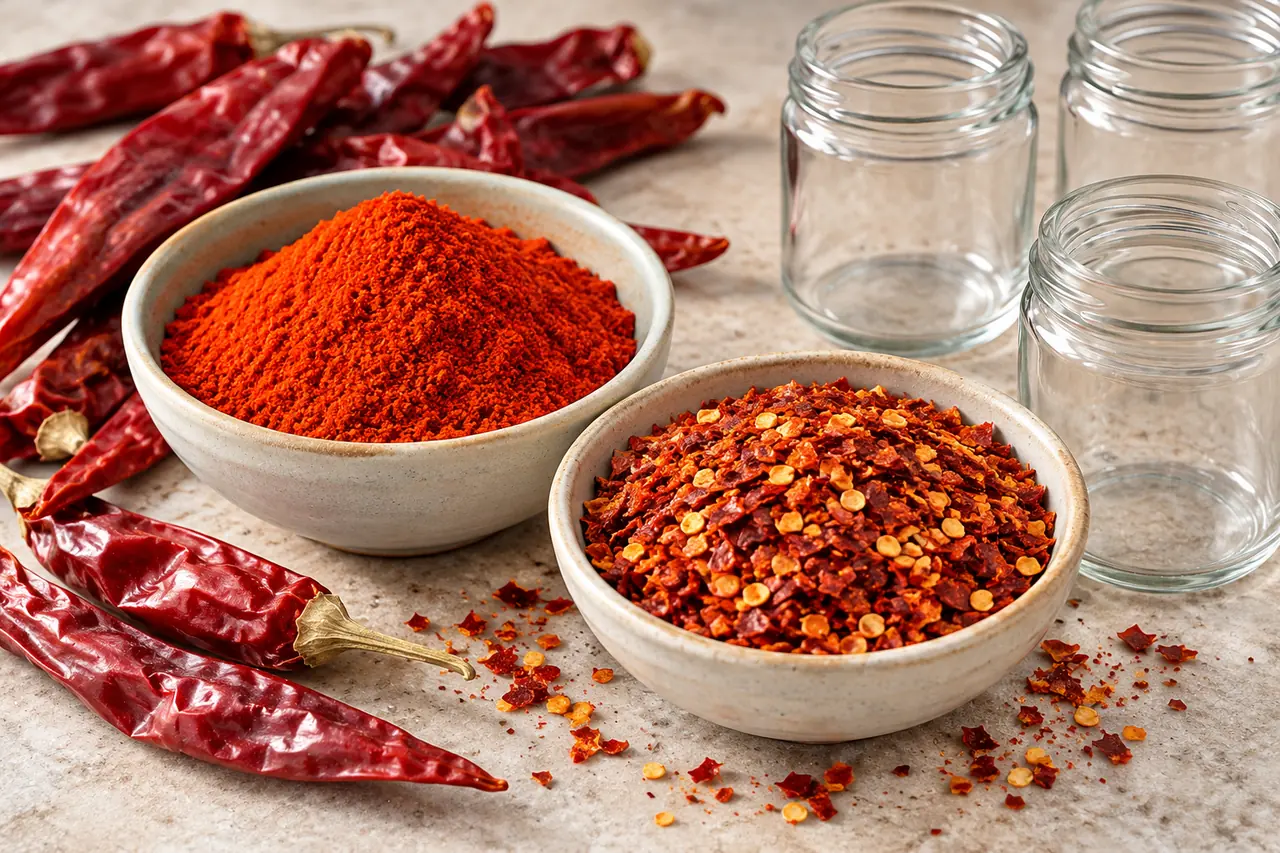
- Powder concept
- Choose paprika or Cayenne for its food role before setting the filler.
- Visible flakes
- Specify the actual cut and seed appearance rather than borrowing a powder mesh label.
- Your retail operation
- Bulk ingredient supply remains separate from your filling, artwork and finished-pack decisions.
Work Backwards from the Retail Format
Work backwards from dosing, dispensing and the food result.
- 01Fine powder line
Begin with a ground material and test metering, dust and pack presentation.
- 02Visible flake line
Begin with the actual cut and evaluate bridging, breakage and seed appearance.
- 03Receiving format
Choose a bulk pack your team can open, transfer and consume efficiently.
RELIA SPICES supplies the powder input; your business operates the retail filling and label programme. Our in-house grinding, sieving and routine particle checks help define a bulk grade for your dosing route. Keep its receiving pack separate from the jar or pouch you sell.
This guide covers bulk ingredients for a brand that operates its own retail filling. RELIA SPICES also offers a separate factory-filled customer-brand retail route when you want the prepared spice and packing coordinated together.
Choose Between the Two Powder Starting Points
Paprika and Cayenne are different ingredient concepts, not interchangeable red powders.
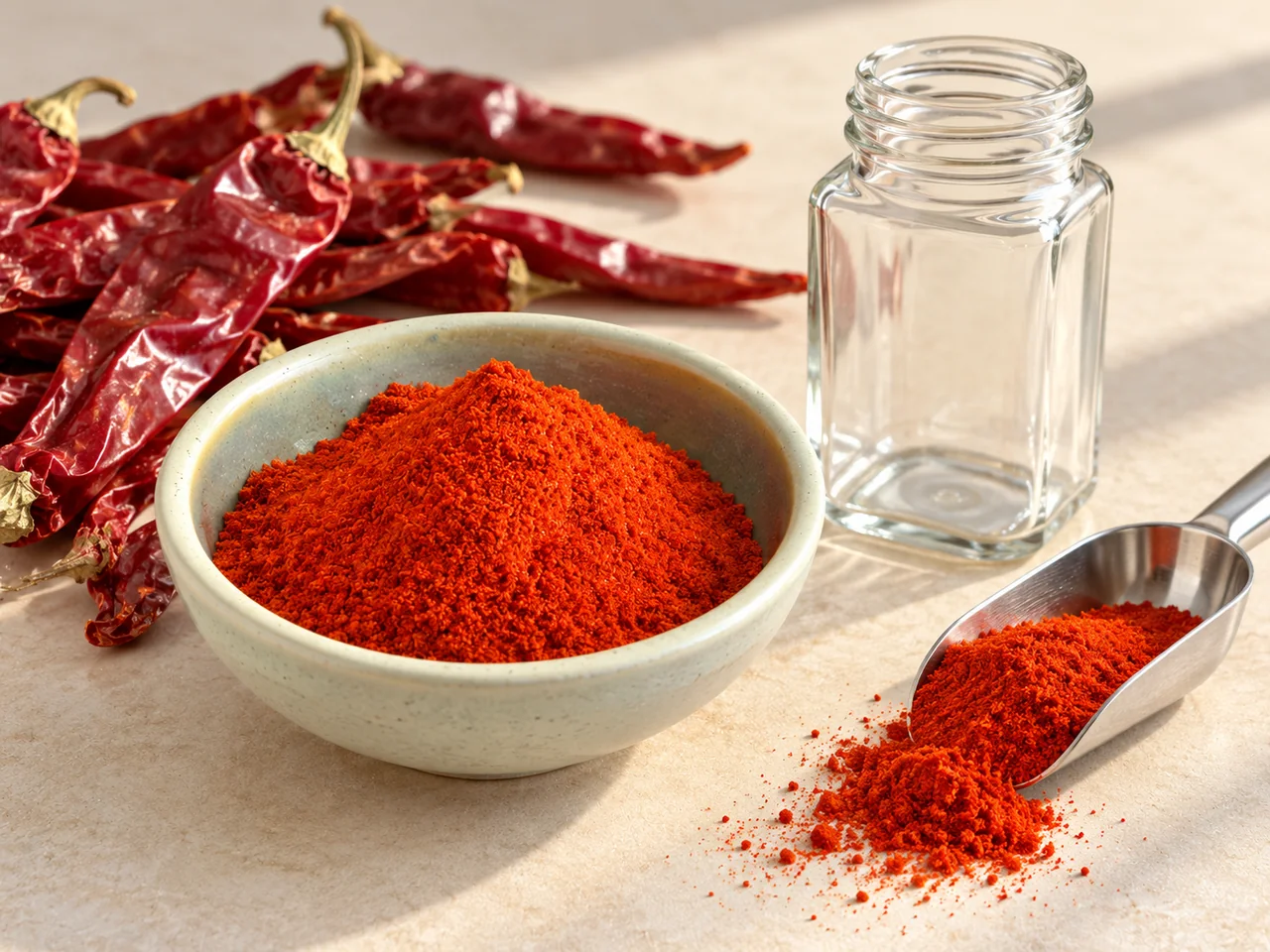
The sweet paprika powder lists nominal 70 mesh with a separate 60–70-mesh customization reference and 80–220 ASTA scope. The Cayenne red pepper powder lists nominal 60 mesh, no additives and qualitative heat options. These are distinct ingredient briefs rather than interchangeable red powders for the same retail name.
Use paprika when the retail concept centres on its colour and paprika flavour. Use the Cayenne route when the brand needs that commercial pepper identity and a chosen heat character. For either powder, evaluate the actual proposed material before using its nominal grind to set your filling equipment.
Ingredients to compare for this application
Sweet paprika for a powder retail line
Evaluate when the retail concept centres on paprika colour, flavour and a ground-spice presentation.
- Nominal 70 mesh with separate 60–70-mesh customization.
- 80–220 ASTA colour customization.
- Moisture specification: ≤8%.
Cayenne for a chili retail line
Use as a separate pepper candidate when the brand needs a selected Cayenne heat character.
- Nominal 60 mesh.
- Mild, medium and hot customization without numerical tiers.
- Dried red pepper and no additives declared.
Visible chili flakes for own packing
Evaluate the actual cut, seed appearance and transfer breakage when the retail pack must show visible chili.
- Dried raw red chili flake preparation.
- Seasoning is the stated use.
- Sealed, dry storage with a 12-month statement.
These product specifications are a starting point for selecting a grade. Match the proposed material and sample to your food and order requirements.
Define a Flake Product by Visible Material
Judge flakes before and after your normal transfer to the filler.
- 01Before filling
Inspect actual flake shape, coarse pieces, fines and visible seed distribution.
- 02After transfer
Look for newly generated fines and any separation caused by normal handling.
The seasoning chili flakes are presented as dried raw red chili flakes for seasoning. They carry independent 40–80 mesh and 80/100 mesh references, which are not an accepted flake cut specification and should not be combined into a promised range of retail grades. Define the actual fraction shown in the sample instead.
Spread the flakes in a shallow tray and inspect cut variation, fine material and seed appearance before filling jars. Then inspect them again after your normal transfer. A visually appealing sample can change during handling, so the material entering the retail pack is the relevant comparison.
Connect the Powder Grade to Filling Behaviour
A mesh label cannot predict pack mass, settling or filler output.
| Stage | Purpose | Buyer check |
|---|---|---|
| Grinding and sieving | Define the proposed bulk powder | Selected distribution and material identity |
| Dosing and filling | Put the intended mass into the retail pack | Weigh packs and observe retained material |
| Handling and presentation | Preserve the chosen eating and visual effect | Compare settling, appearance and the food |
The same weighed mass can occupy different volumes because particle distribution, shape and packing affect the powder bed. A nominal mesh label therefore cannot predict your fill level or line output.
RELIA SPICES grinds and sieves in-house and checks routine particles and moisture internally. Use the proposed grade in your actual dosing path, container opening and closure.
Weigh packs across a normal filling trial. Observe retained material, settling and the appearance after expected handling. Keep ingredient identity, fill mass and operating settings together. If powder and flakes behave differently, choose the material that meets the food and retail concept before committing to artwork or packaging quantities.
Use a Controlled Filling Trial Before Artwork Commitment
Test the actual container and closure before artwork commitments.
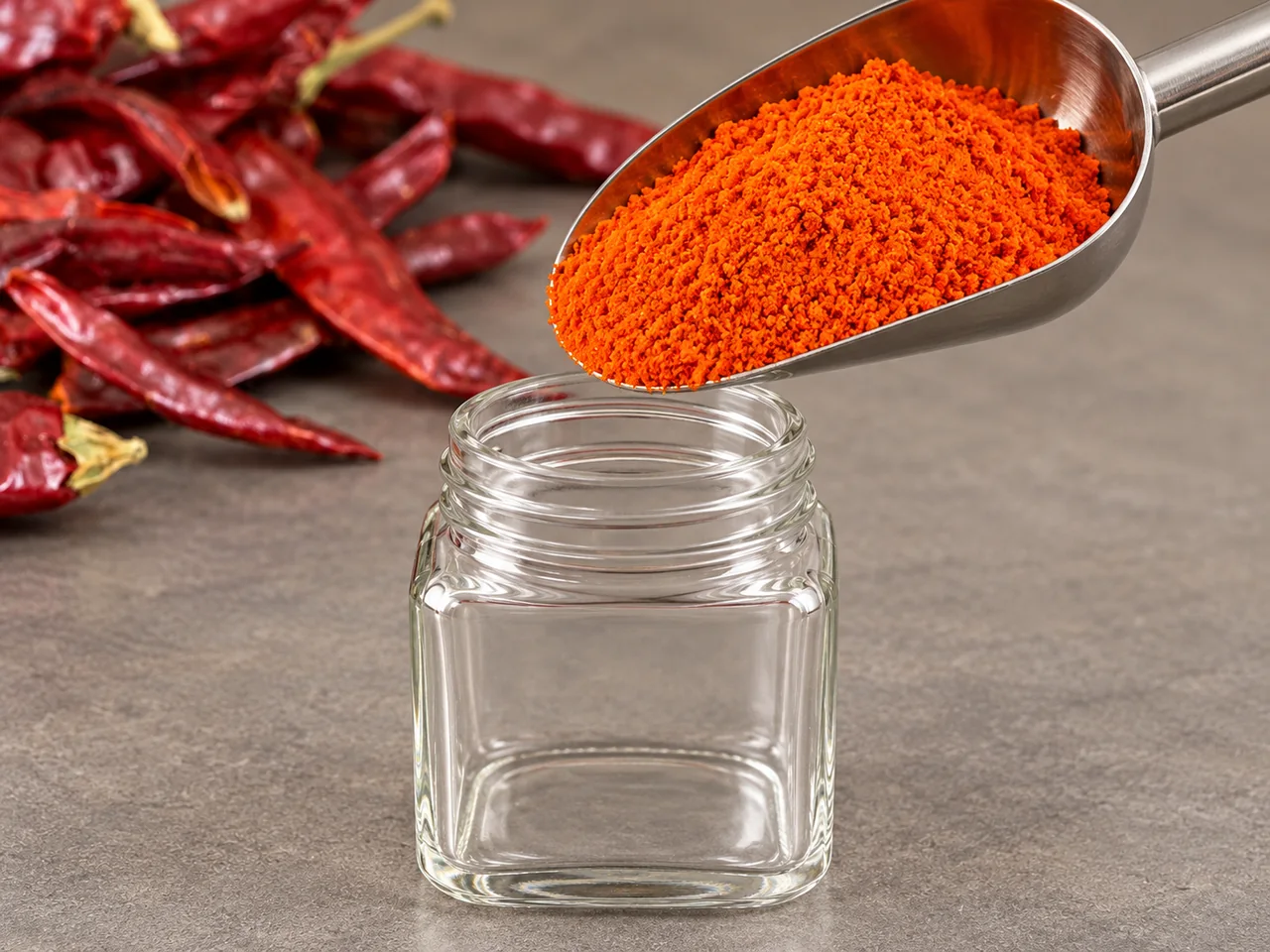
Prepare sample packs with the same container, closure and filling method. Observe the product immediately after filling and after the handling expected between packing and sale. Keep powder and flakes in separate trials, since their appearance and dosing issues differ.
Use the results to refine the ingredient brief before committing to claims or artwork that depend on a particular texture. A photograph of fine powder cannot establish a cut specification for a flake label, and a single retail mockup cannot establish a finished-product storage period.
Link the Bulk Ingredient to Your Retail Run
Connect the incoming ingredient lot to the specific retail packing run.
- 01Receipt
Identify the actual powder or flakes and the incoming lot used.
- 02Packing
Connect that material to the specific filling run and retail format.
- 03Release
Review the finished composition, label and pack under the brand own procedure.
Record the supplied material and incoming lot when it arrives, then connect that ingredient to the filling run and finished retail item. This gives your team a practical starting point for investigating a flavour change, packing complaint or substitution.
A simple handover can use four entries: supplier material, incoming lot, packing run and retail item. Keep the finished composition, label and storage validation within your own brand procedures; the bulk ingredient listing does not establish those retail decisions.
Set Storage Scope for Each Package Stage
Unopened bulk, opened material and retail packs need separate storage decisions.
- ✓Unopened bulk
Use the selected ingredient and actual supplier-pack instructions.
- ✓Opened ingredient
Set a controlled transfer and holding routine for your packing operation.
- ✓Retail container
Establish the finished-pack storage and date basis for the brand product.
For the sweet paprika powder, the catalogue declares≤25°C and humidity≤60%, with 24 months for the stated ingredient. For the seasoning chili flakes, sealed dry storage and 12 months are written. Those declarations do not automatically describe your opened bulk pack or a new retail container.
Compare package materials, closure and expected exposure in your own chain. Decide how much material to open per run and how to handle any remainder. A smaller operational pack may reduce repeated opening, but its suitability and cost need an actual offer rather than an assumed universal packing service.
Review Retail Presentation Alongside the Eating Result
Accept both dispensing performance and the eating result.
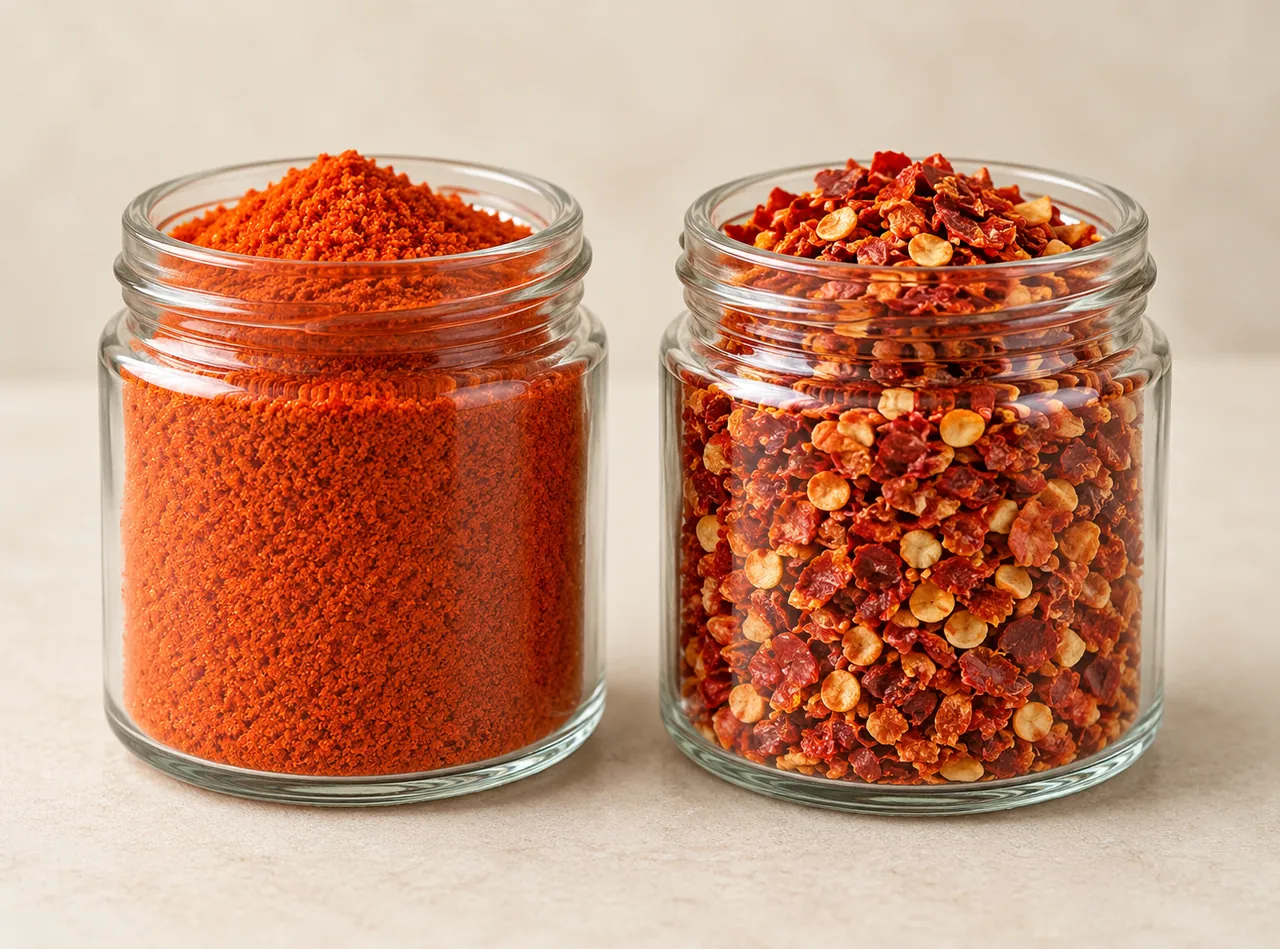
Show the packed material in the actual jar or pouch and use it in the food the customer is likely to prepare. For a shaker, observe how the ingredient dispenses; for flakes, look at the visible inclusion after cooking or garnishing as appropriate to the intended use.
Keep commercial presentation and ingredient acceptance connected but distinct. An attractive jar cannot rescue an unsuitable heat profile, while an accepted flavour does not demonstrate reliable filling. Select the material only when both sides of the retail concept are workable.
Send a Buyer-Operated Packing Brief
Send a bulk material brief for your own packing operation.
- 01Material
Choose a powder or flake candidate that fits the retail ingredient concept.
- 02Operation
Describe your container, dosing route and practical filling concerns.
- 03Order
Request the bulk quantity and receiving package appropriate to your packing runs.
Tell us the retail concept, actual form, ingredient exclusions, expected quantity and bulk receiving format. Add the filling observations you need to resolve and the application in which taste or appearance will be judged. These details let the material proposal address the brand’s real production task.
For factory-filled retail packs carrying your logo, use our separate private-label paprika and chili programme. This guide keeps the buyer-operated filling route distinct, so the ingredient and packing responsibilities stay clear.
- Retail ingredient concept
- Powder or flake form
- Composition and heat limits
- Bulk quantity
- Receiving package
- Own filling and document requirements
Your next purchasing decision
Talk through your buyer-operated packing project
Share the retail format and filler observations with the requested bulk ingredient.
Show RELIA SPICES the retail format, material form and ingredient declaration you need. Add the bulk receiving package, quantity and observations from your own filler.
We can discuss a powder or relevant flake candidate against that brief while keeping retail packing, artwork and label decisions with your business.
The enquiry page keeps this guide with your message. Add your quantity and destination so we can discuss the relevant material.