
Chili and Paprika Ingredients by Food Application
Choose the pepper form by what the food should look and feel like after its normal preparation. Start with powder for smooth dispersion, coarse flakes for visible coating, or pods for recognizable pepper pieces and further preparation. Then choose the relevant food guide below. Send the application, addition stage and colour, heat or texture priority so we can discuss a useful ingredient candidate.
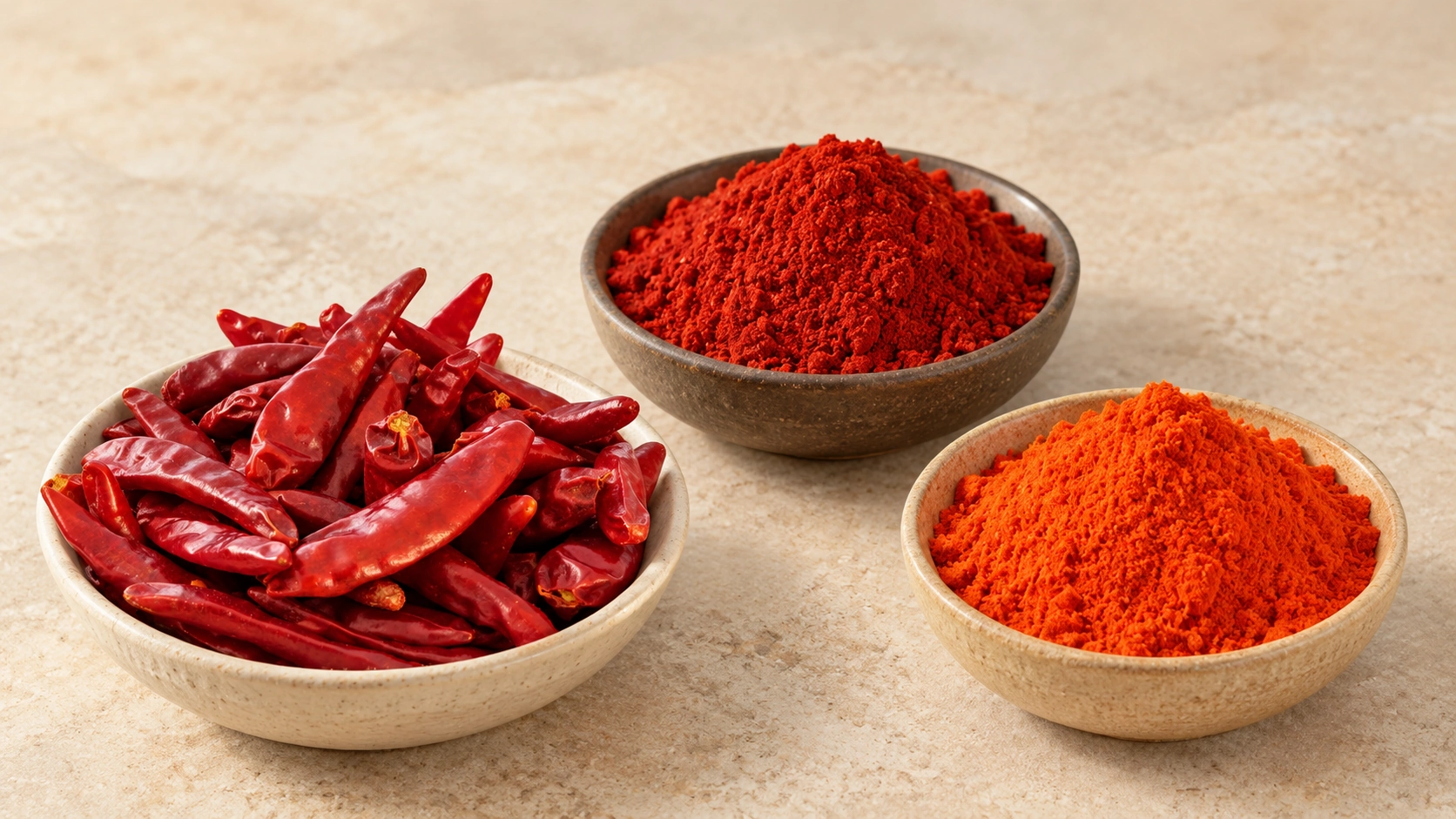
- Smooth result
- Begin with a powder and evaluate dispersion, specks and mouthfeel after processing.
- Visible pieces
- Choose actual flakes or pods for the texture that should remain in the food.
- Right comparison stage
- Judge the ingredient after the cooking, coating, rehydration or separation step that matters.
Define Colour, Heat and Visibility Independently
Set colour, heat and visible-particle requirements independently.
- 01Colour
Judge the colour in the cooked, mixed or finished food, not only in a bag.
- 02Heat
Specify a sensory target and any analytical requirement separately.
- 03Visible form
Choose a smooth appearance, retained flakes, intact pods or fine threads.
RELIA SPICES manufactures powders and prepares dried chili in-house through grinding or cutting/crushing and sieving. Routine moisture and particle checks are internal; relevant ASTA, SHU and microbiological analyses go to laboratories.
Start with paprika for a colour-led powder, Gochugaru crushed chili for coarse material, or sweet paprika flakes for a mild visible inclusion. Keep colour, heat and visibility separate. Our steam equipment is used according to the order requirement, not assumed from the application name.
Chili Oil Routes Depend on the Solids You Keep
Filtered oil and retained chili solids need different material routes.
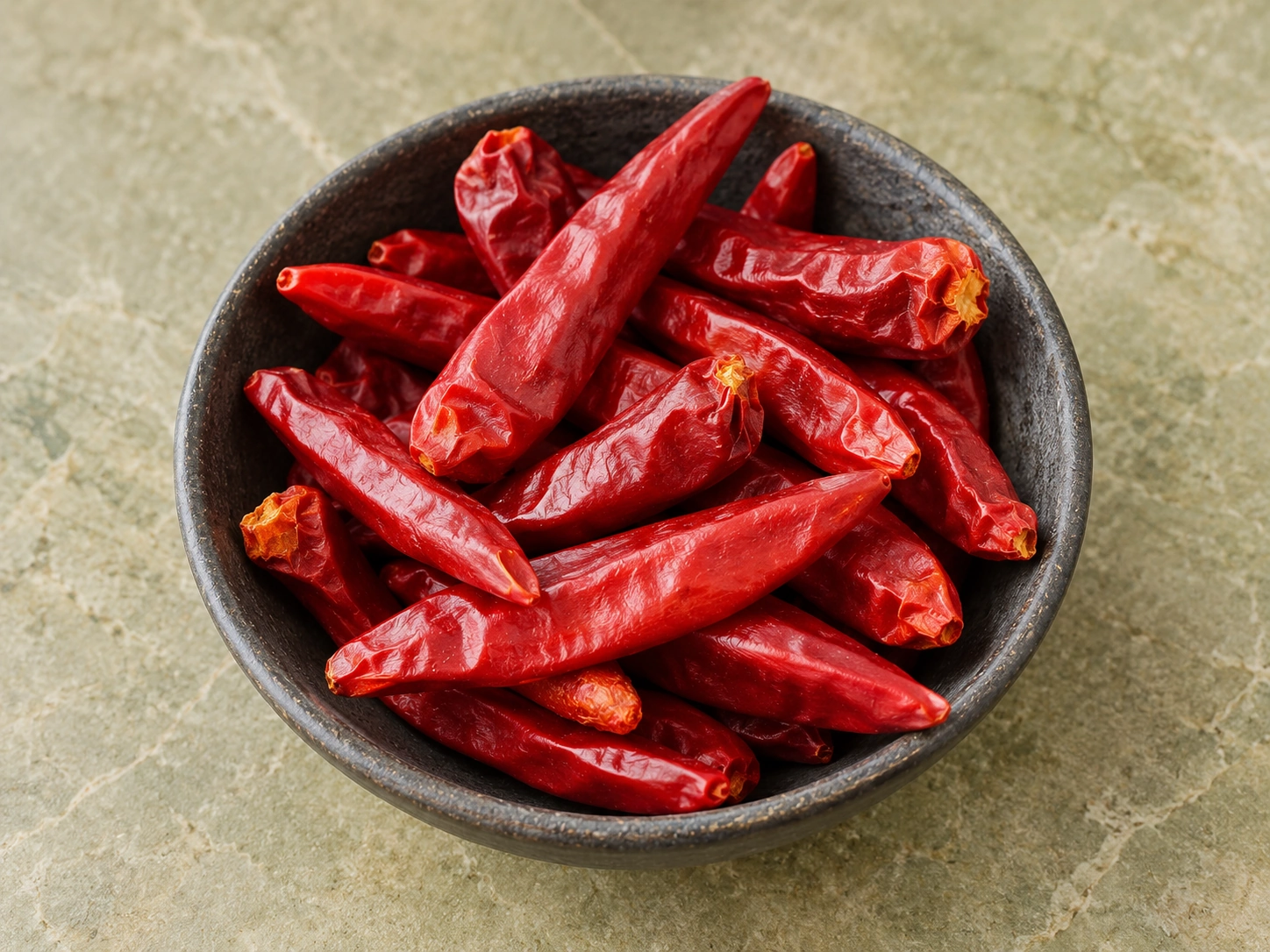
For filtered oil, ingredient selection includes how easily the solids can be removed and how the recovered oil looks. For chili crisp, the retained solids become part of the product texture. For hot-oil-poured chili, particle preparation and the contact process need their own comparison.
Whole peppers, flakes and powder therefore answer different oil questions. The oil guide separates those routes so a buyer does not choose a fine powder for a coarse retained texture simply because both carry a chili-oil use description.
Ingredients to compare for this application
Paprika powder for a colour-led food
Start where the application needs a dispersed paprika contribution rather than visible pepper pieces.
- Nominal 70 mesh.
- 80–220 ASTA customization.
- Moisture specification: ≤8%.
Coarse Gochugaru for visible material
Evaluate for kimchi coating or hotpot dipping when coarse pepper particles are part of the intended result.
- 5–8 mesh reference.
- Moisture ≤8%; impurity ≤0.3%.
- Kimchi and hotpot dipping are described uses.
Whole pods for further preparation
Discuss the selected pod and stem condition when the food or buyer process needs recognizable whole chili.
- 3–6 cm size description.
- 50,000–90,000 SHU reference.
- Stemless or stem-cut conditions are described.
These product specifications are a starting point for selecting a grade. Match the proposed material and sample to your food and order requirements.
Choose Particles for the Sauce Endpoint
Smooth, chunky and heated sauces require different particle and comparison decisions.
| Food endpoint | Ingredient decision | First trial observation |
|---|---|---|
| Smooth sauce | Powder preparation and actual sieve distribution | Specks, mouthfeel and colour uniformity |
| Chunky sauce | Wet cut size and fines | Passage, bridging and retained pieces |
| Heated sauce | Replacement powder under the existing process | Colour and flavour after heating and holding |
| Fermented sauce | Ingredient preparation and addition stage | Process-specific evaluation under the buyer's controls |
For a smooth sauce, compare actual powder dispersion, specks and mouthfeel after finishing. For a chunky sauce, test the wet pepper pieces against the narrowest pumping and filling passages.
For a heated replacement, compare colour, flavour and texture after the normal heating and holding sequence. A fermented sauce adds its own preparation and addition-stage requirements. Use the actual sauce base rather than ranking dry powders by appearance.
Kimchi and Paste Separate Coarse from Fine Material
Coarse vegetable coating and fine paste are separate Gochugaru preparation tasks.
- 01Coarse vegetable coating
Assess retained flakes, seed appearance and distribution on the prepared vegetable.
- 02Fine paste
Assess smoothness, mixing and the colour/heat profile in the paste.
- 03Preparation history
Connect the ingredient's supplied state to your actual food-safety process.
A coarse preparation can leave visible pepper pieces on vegetables; a finer powder can distribute differently in a paste. In our catalogue, the Gochugaru crushed listing carries a 5–8 mesh reference, while the separate Gochugaru powder listing carries 60 mesh.
Use those as two material starting points, then compare the actual preparation in your vegetable or paste system. Particle appearance, heat and preparation history remain separate choices. The commercial Gochugaru name alone does not establish origin or fermentation performance.
Seasonings and Snack Coatings Need Even Delivery
Blend distribution and adhesion to a snack surface are different checks.
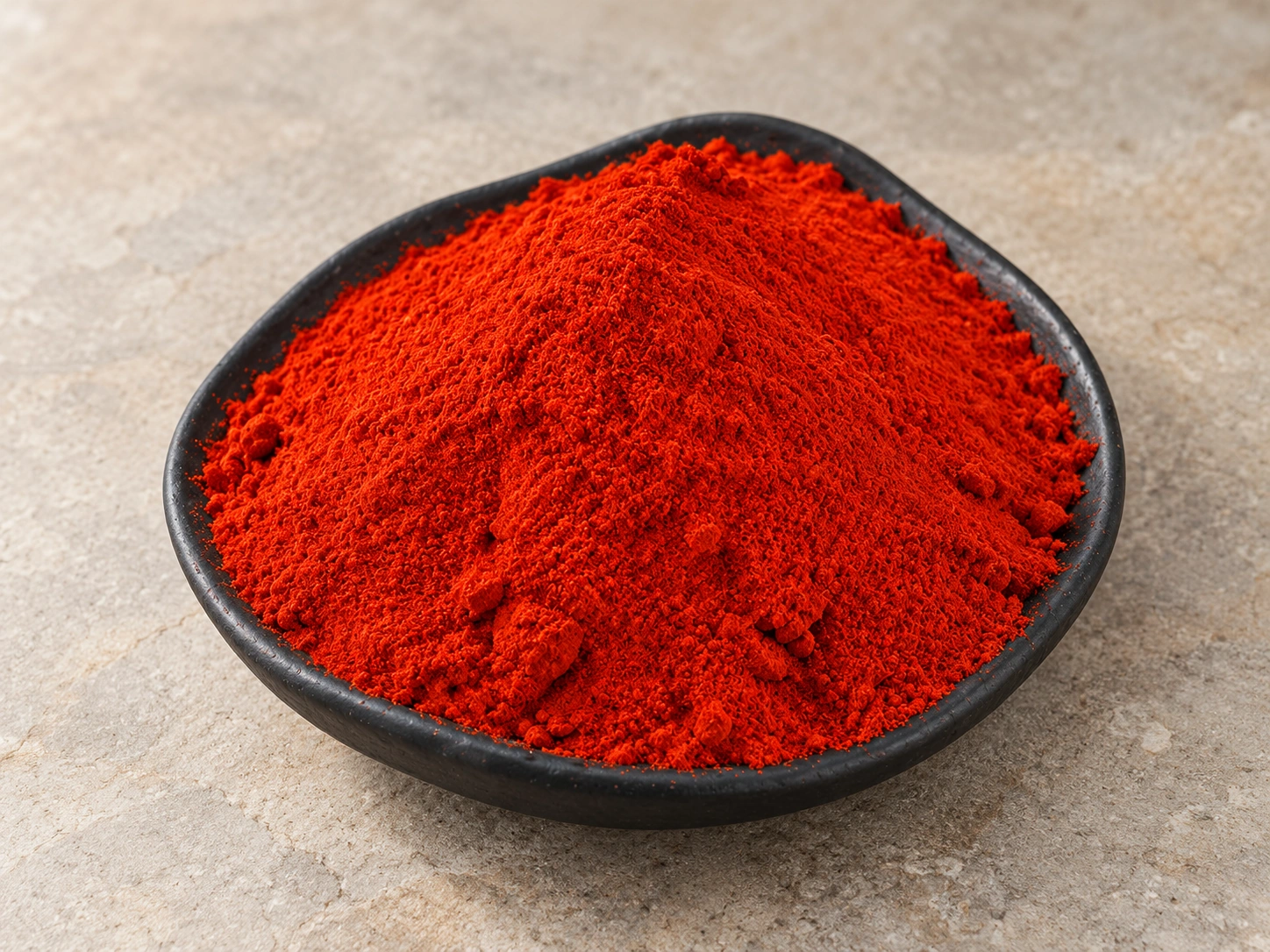
A dry blend can segregate when its components differ in size or handling behaviour. A surface seasoning also has to stay on the food. Compare the blended material and the coated product separately: an attractive bulk blend can still deposit unevenly on chips or nuts.
For a mild visible inclusion, the sweet paprika crushed listing describes 3–5 mm pieces. For a powder-led mix, the 70-mesh paprika is a different starting point. Choose the physical effect before combining the ingredient with the rest of your seasoning.
Connect the Prepared Ingredient to the Food’s Next Step
Evaluate the ingredient at the food's actual operating and eating endpoint.
- 01Select the form
Choose powder, visible pieces or pods for the actual task.
- 02Identify the food stage
Name mixing, heating, rehydration, coating or separation.
- 03Observe the endpoint
Judge the attribute in the food or process that defines acceptance.
- 04Discuss the grade
Connect the selected material and preparation to that result.
A powder, coarse flake and pod meet different conditions after leaving the pack. RELIA SPICES makes powders and prepares cut or crushed chili in-house; choose the output your operation needs, such as smooth dispersion, retained pieces or solids that will later be removed.
Compare after the relevant mixing, heating or rehydration step. In a pumped marinade, check the actual liquid and passages; in a rub, check coverage and retained particles; in a sausage or patty, inspect the cooked-food distribution.
Use our internal routine moisture and particle checks with relevant outsourced colour or heat analysis. Trial the selected grade under normal recipe conditions, keeping any agreed steam preparation with that sample.
Meals and Baking Change the Timing of the Comparison
Rehydration, freezing, reheating and baking change when the ingredient should be judged.
| Application | Comparison stage | Main material question |
|---|---|---|
| Instant noodles | At the intended rehydration endpoint | Powder dispersion or retained-piece texture |
| Frozen meals | After the relevant reheating sequence | Particle integrity and distribution |
| Rice and dairy dips | In the mixed food and serving state | Uniformity, mouthfeel and heat perception |
| Bread and pizza | After baking | Visible inclusion and acceptable surface flavour |
Instant-noodle ingredients need a comparison at the intended short rehydration endpoint. Frozen-meal flakes need to be judged after the relevant freeze, storage and reheating sequence. Pizza and bread inclusions need an assessment after baking, when exposed and embedded pieces can behave differently.
These pages keep the food endpoint explicit. They do not replace your recipe or process validation. Their practical use is to identify which material, observation stage and comparison belong in the sample request.
Use Real Catalogue Candidates for the First Trial
Keep every catalogue value attached to its own selected material.
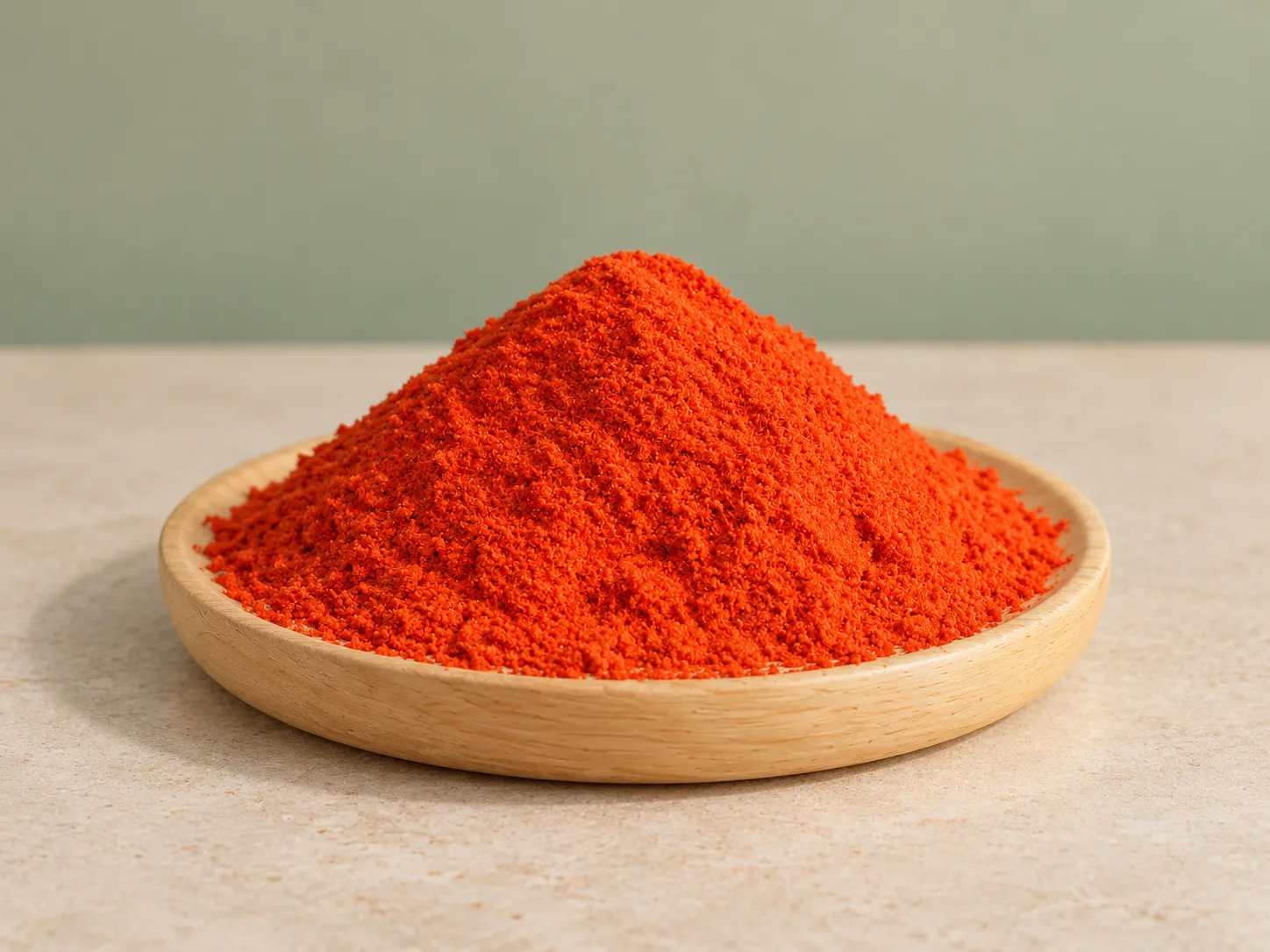
The sweet paprika powder listing gives a nominal 70-mesh reference, 80–220 ASTA customizable colour and moisture ≤8%. The Gochugaru flake listing gives 5–8 mesh and moisture ≤8%. The New Generation pod listing gives 3–6 cm and a 50,000–90,000 SHU range.
These examples show why the material choice matters. Keep each value attached to its own listing and selected grade. Do not build a new product specification by combining the most convenient numbers from several materials.
Send the Food Task with the Ingredient Request
Send the food, addition stage and material effect you need.
- ✓Food and stage
Name the food and whether the ingredient enters blending, heating or finishing.
- ✓Material effect
State colour, heat, visible form and any particle constraint.
- ✓Purchase scope
Give quantity, receiving pack, destination and the comparison you need.
Tell us the food you make, the stage where pepper enters the process and the effect you need to achieve. Add a current product link or the required form, then describe the colour, heat, texture and quantity priorities.
A short, precise brief lets us discuss the relevant material and sample purpose. The detailed application pages can then help you compare the candidate against the part of your process that actually changes the buying decision.
- Ingredient and form
- Application
- Technical targets
- Quantity and pack
- Destination
- Sample purpose
Your next purchasing decision
Talk through your food-application ingredient choice
Share your current ingredient and the food property that should change.
Tell RELIA SPICES the food and the step where the pepper ingredient enters it. Share a current material, desired colour or heat, particle constraint and quantity.
We can direct the discussion to a real powder, flake or pod candidate and the application comparison that will decide the purchase.
The enquiry page keeps this guide with your message. Add your quantity and destination so we can discuss the relevant material.