
Paprika Powder for Uniform Sausage Colour
Choose paprika for the sausage cross-section your customers should see, not only the colour of dry powder. RELIA SPICES can discuss a selected paprika grade and grind, starting with nominal 70-mesh sweet paprika within its 80–220 ASTA customizable scope. Compare overall shade, streaks and particle feel at the same recipe dose. Send your accepted slice and mixing route so the sample targets the actual meat product.
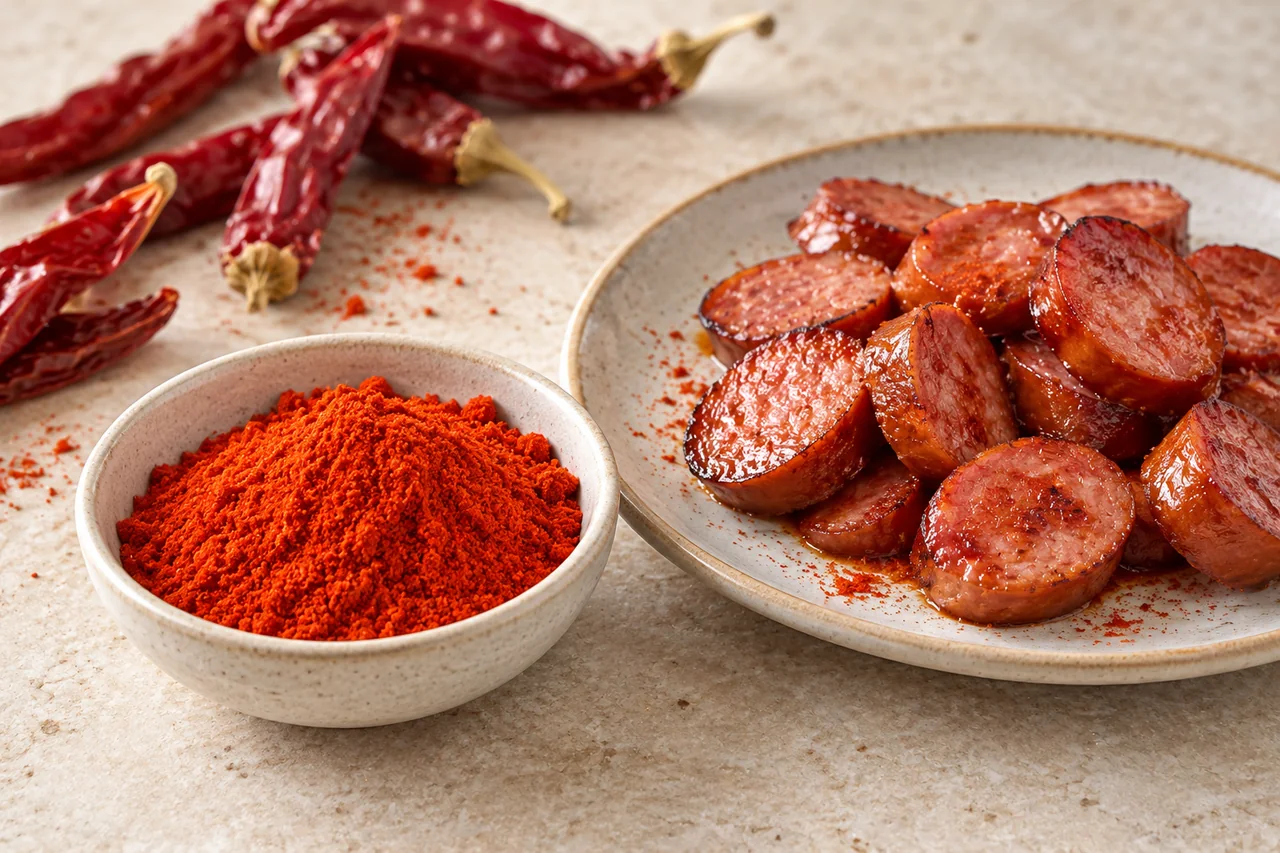
- Colour-led candidate
- Sweet paprika lists nominal 70 mesh, moisture ≤8% and 80–220 ASTA customization.
- Separate grade scope
- Another sweet paprika lists the complete 80–280 ASTA range.
- Sausage endpoint
- Inspect whole-slice shade and local streaks or pockets separately.
Choose the paprika grade reaching the batter
Agree colour grade and particle preparation for the actual batter.
- 01Selected paprika
Agree the actual colour grade and distribution.
- 02Mixed batter
Check incorporation, clusters and local streaks.
- 03Finished cross-section
Approve overall shade and local variation after the real route.
RELIA SPICES cleans and destems purchased dried chilies before grinding, sieving and packaging paprika. For sausage, agree a colour-led grade and the particle preparation entering the batter. The nominal 70-mesh sweet paprika lists customizable 60–70 mesh, moisture ≤8% and 80–220 ASTA customization.
The separate sweet paprika lists 80–280 ASTA; its unitless 40–60 entry does not define a mesh grade. We check moisture and particle size internally, arrange ASTA, SHU and microbiology through outside laboratories, and select in-house steam treatment according to order requirements. Compare the selected powder with your accepted slice and flavour reference.
Use colour analysis and the slice for different decisions
Extractable colour and the sausage's visible shade are different observations.
| Object | Useful observation | Buyer decision |
|---|---|---|
| Selected powder | Applicable colour result and method | Choose the ingredient grade |
| Whole slice | Shade under consistent preparation and light | Match the accepted sausage |
| Local areas | Streaks, pockets and particles | Improve distribution or particle preparation |
An ASTA-related extractable-colour result describes the ingredient on its analytical basis. A sausage slice also reflects meat, fat, recipe and processing. Keep the material result and the actual food reference together.
Judge overall shade and local distribution separately. An average colour result can look acceptable while streaks, pale pockets or visible particles still miss the product brief.
Ingredients to compare for this application
Sweet paprika, nominal 70 mesh
The direct colour-led starting point for a sausage-grade and dispersion comparison.
- 80–220 ASTA customizable scope
- Nominal 70 mesh; 60–70 mesh customizable
- Moisture ≤8%
Sweet paprika with 80–280 ASTA scope
Compare a separate actual colour grade against the same sausage cross-section and flavour target.
- Ground red sweet paprika presentation
- 80–280 ASTA range
- One-year duration stated
These product specifications are a starting point for selecting a grade. Match the proposed material and sample to your food and order requirements.
Fix the meat and recipe basis first
Keep meat, fat, dose and processing fixed before attributing a difference to paprika.
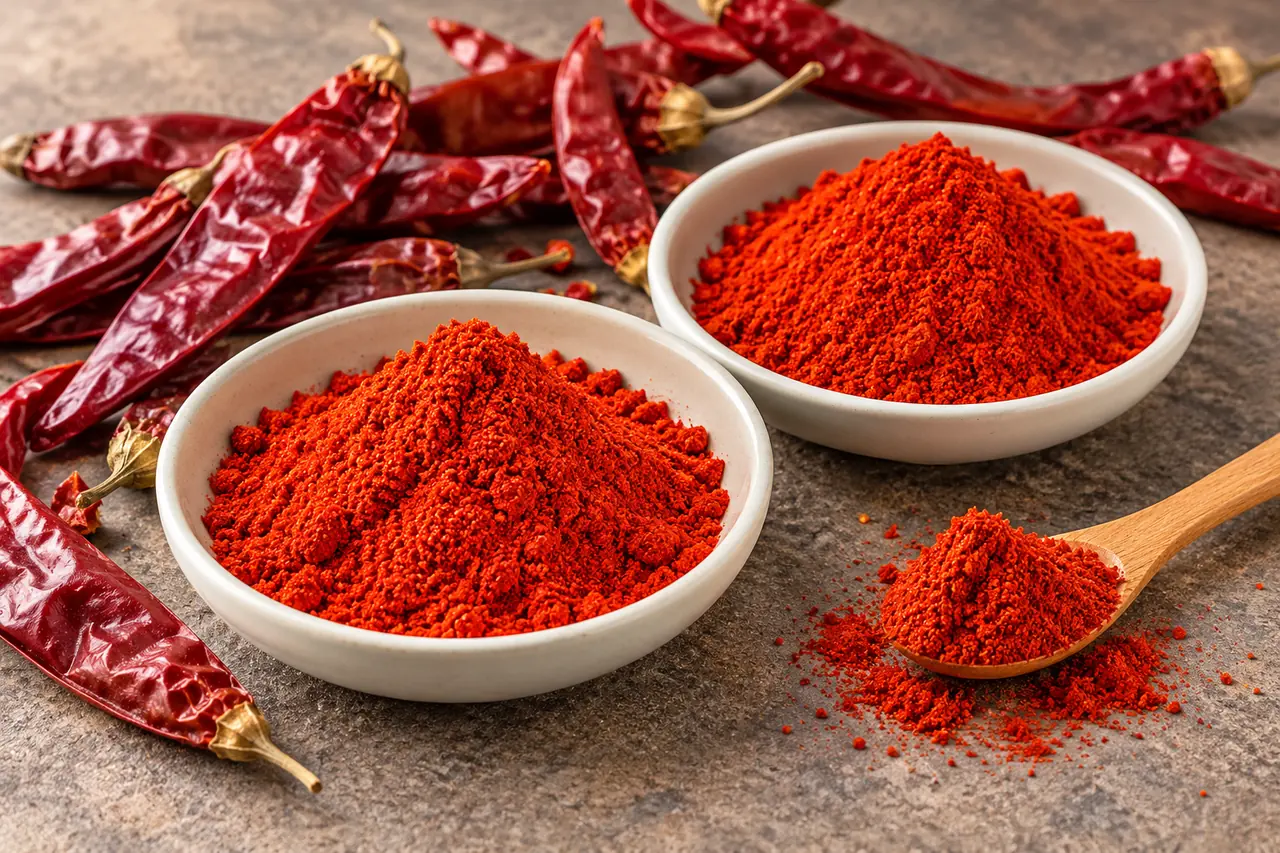
Use the same meat and fat basis, salt and other ingredients, powder dose and process for the initial candidate comparison. Record the actual mince preparation and batch size. Do not compare one candidate in a leaner or more coarsely cut product and attribute the changed appearance entirely to paprika. If a recipe adjustment is allowed to reach the target colour, keep it as a second version. It must still meet the intended heat, pepper flavour and other product requirements.
Find whether the problem is shade or distribution
Correct local distribution problems before simply increasing ASTA or powder dose.
- 01Wrong overall shade
Review the selected grade and tested recipe dose.
- 02Streaks or pale pockets
Review incorporation and the actual particle preparation.
- 03Correct appearance, wrong flavour
Reassess the pepper profile at the accepted dose.
Paprika can provide enough red background while leaving streaks or pale pockets because the powder is unevenly incorporated. More colour strength does not automatically correct that distribution problem.
Compare samples at the same meat–fat basis, dose, batch size and mixing route. Record direct addition or a permitted premix. Inspect representative batter portions, then take comparable slices from the normal filling sequence after processing. Keep thickness, lighting and observation time consistent. Compare overall shade, local unevenness, particles and flavour separately. If shade is right but pockets remain, investigate incorporation and the supplied coarse fraction before raising ASTA or dose. Return the slice observations to RELIA with the selected grade.
Read several cross-sections on a consistent basis
Use several consistently prepared cross-sections to judge shade and variation.
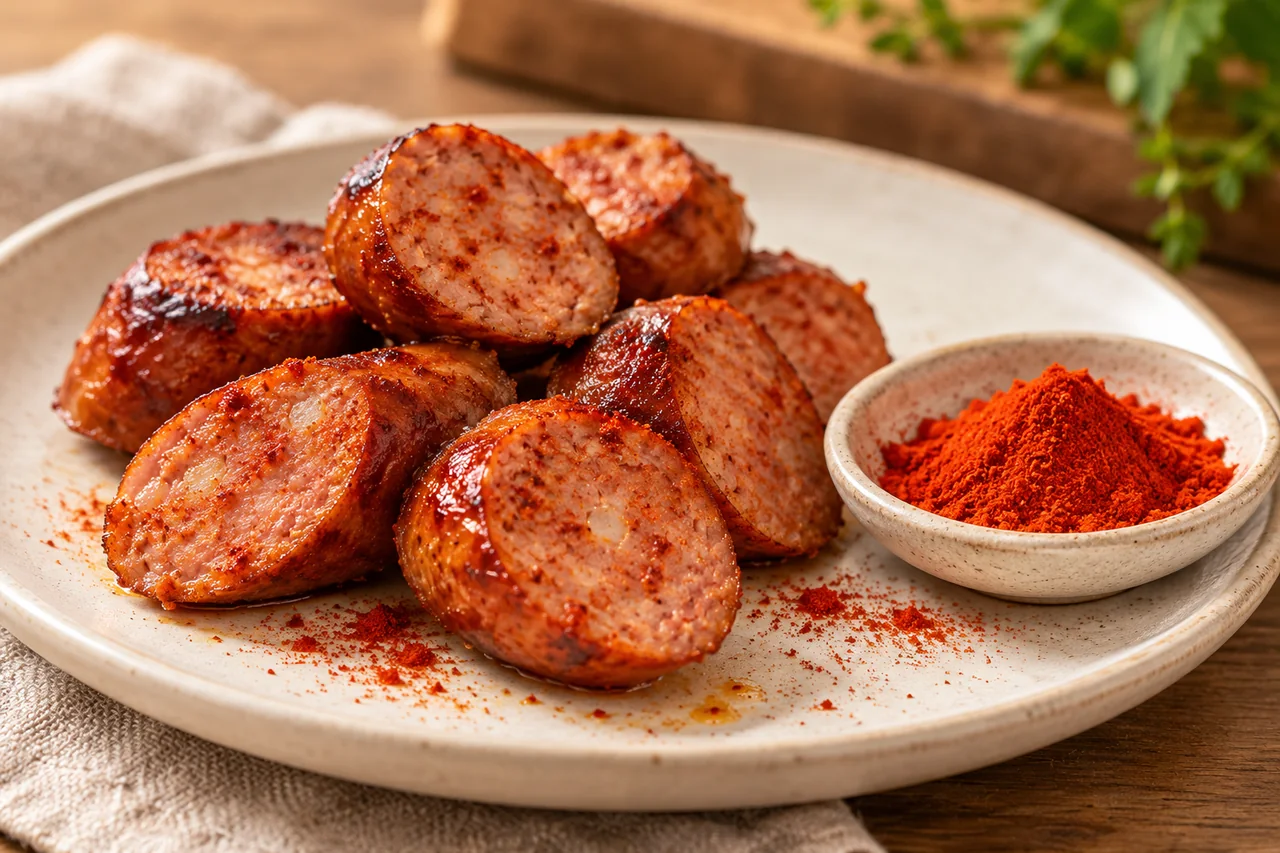
Prepare comparable cut surfaces from representative positions in the batch or filling run. Keep slice thickness, surface condition, lighting and the interval before inspection consistent. Compare overall shade and local variation separately. If instrumental colour is used, keep the measurement geometry and locations with the result; do not compare an average from one method to a visual photograph from another as if they were identical evidence. Retain coded images and the physical reference where practical so development and receiving teams share the same target.
Follow the real sausage route before approving the colour
Approve colour after the real sausage process and intended use point.
- 01After mixing
Establish dispersion and the starting appearance.
- 02After the actual route
Judge the product state that your process is designed to make.
- 03At intended use
Compare colour under the agreed presentation and observation conditions.
Assess the product after its actual cooking, resting, drying or other intended route rather than extending a batter observation to every sausage style. Keep only the stages that apply to your product. Compare the finished state and the defined later use or observation point, with the appropriate technical team's criteria. Published paprika/meat findings concern specific systems. They do not establish colour retention, shelf life or a preferred processing route for these catalogue powders in your sausage.
Balance the chosen shade with flavour and particle feel
Any dose change also needs a flavour and particle-feel check.
- 01Appearance
Accept shade and local distribution on the defined cut surface.
- 02Sensory profile
Retain the intended pepper character, heat and particle sensation.
- 03Recipe version
Recheck the complete product when paprika dose changes.
A dose change made for redness also changes the amount of pepper material in the recipe. Evaluate the intended pepper character, heat and particle sensation in the actual sausage. Sweet taste wording is a direction for discussion, not proof that every offered material is free of pungency. Keep colour-led and flavour-led decisions visible. The accepted solution is the powder and dose that meet the complete product brief, rather than the material with the largest catalogue colour number.
Connect purchase cost to the accepted formulation
Compare cost at the tested formulation meeting the complete sausage brief.
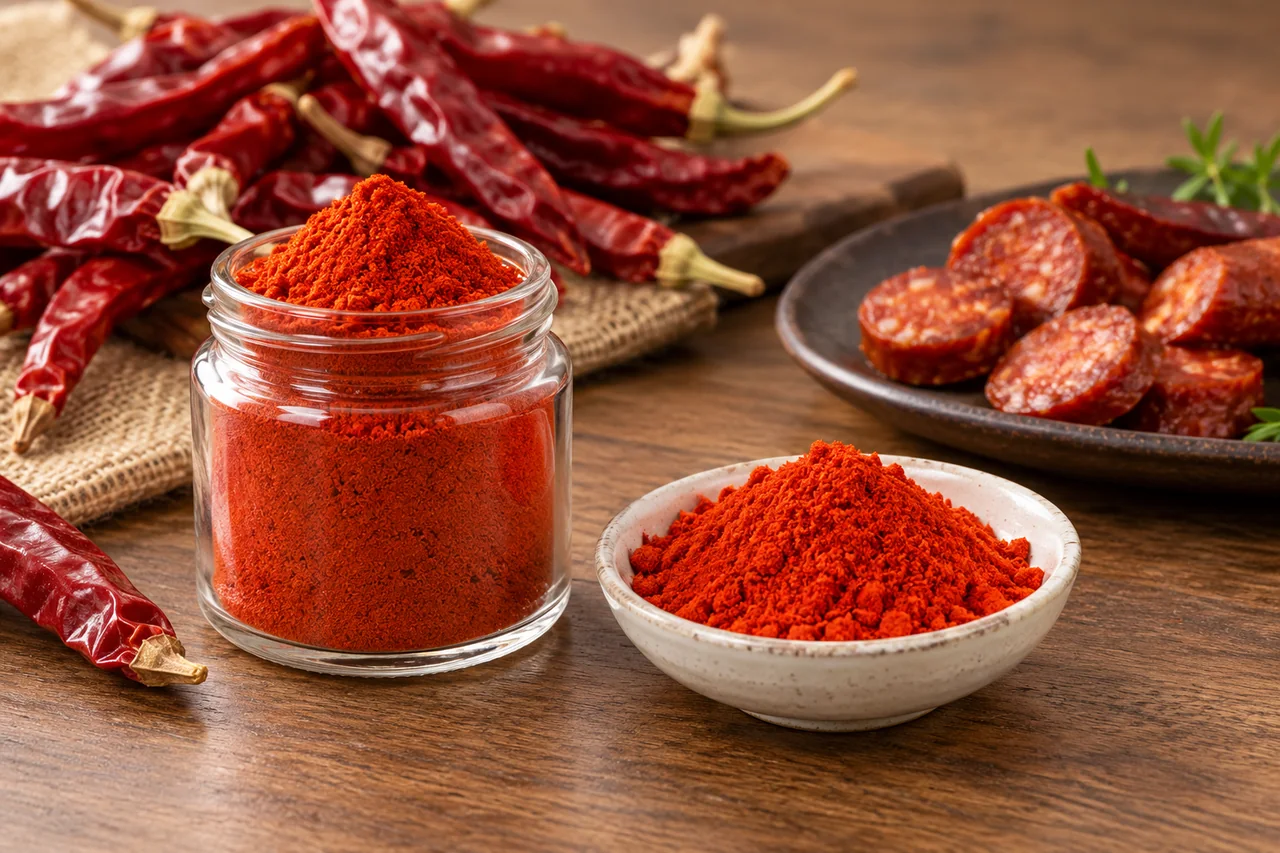
Calculate the material cost using the actual dose that meets the approved recipe, including measured screening or premixing work where applicable. Keep package and storage conditions with the chosen material. The nominal 70 mesh listing states 24 months under its own temperature and humidity conditions; the other powder lists one year without the same defined storage scope. Do not transfer the longer declaration or use either as a sausage shelf-life statement. Ingredient acceptance and finished-product controls remain separate.
Send a cross-section-led paprika enquiry
Send the accepted slice, powder requirement and actual mixing route.
- 01Reference
Show the accepted cut-surface shade and local distribution.
- 02Input
Specify actual powder preparation and the applicable colour evidence.
- 03Application
Connect dose, dispersion and the real sausage route to approval.
Send the accepted sausage cross-section, shade, visible-particle tolerance and actual meat/mixing route. We can discuss the manufactured paprika grade, grind and sieve criteria, internal physical checks and outside-laboratory ASTA work. Include the tested dose, required treatment and package so the offer refers to the complete accepted recipe.
- Sausage colour and particle reference
- Meat-fat-water formula boundary
- Actual distribution requirement
- Mixing and cooking conditions
- Composition, colour and heat methods
- Sample quantity and package
Your next purchasing decision
Discuss a paprika grade for your sausage colour
Discuss a paprika preparation matched to your sausage colour target.
Bring comparable cross-section photographs and the accepted flavour, with the meat basis and mixing route used to obtain them.
Include particle tolerance, colour method, order treatment and quantity. We can connect a specific paprika preparation to a useful sausage comparison.
The enquiry page keeps this guide with your message. Add your quantity and destination so we can discuss the relevant material.