
Sourcing 60-Mesh Chili Powder with a Clear Sieve Acceptance Basis
Start with a 60-mesh powder reference, then specify the coarse or fine fraction that matters to your food or handling step. The Cayenne and separate ground-chili listings both provide a 60-mesh starting point, but not an identical particle distribution. Send the food use, sieve basis and fraction you need to control so we can discuss a measurable physical grade.
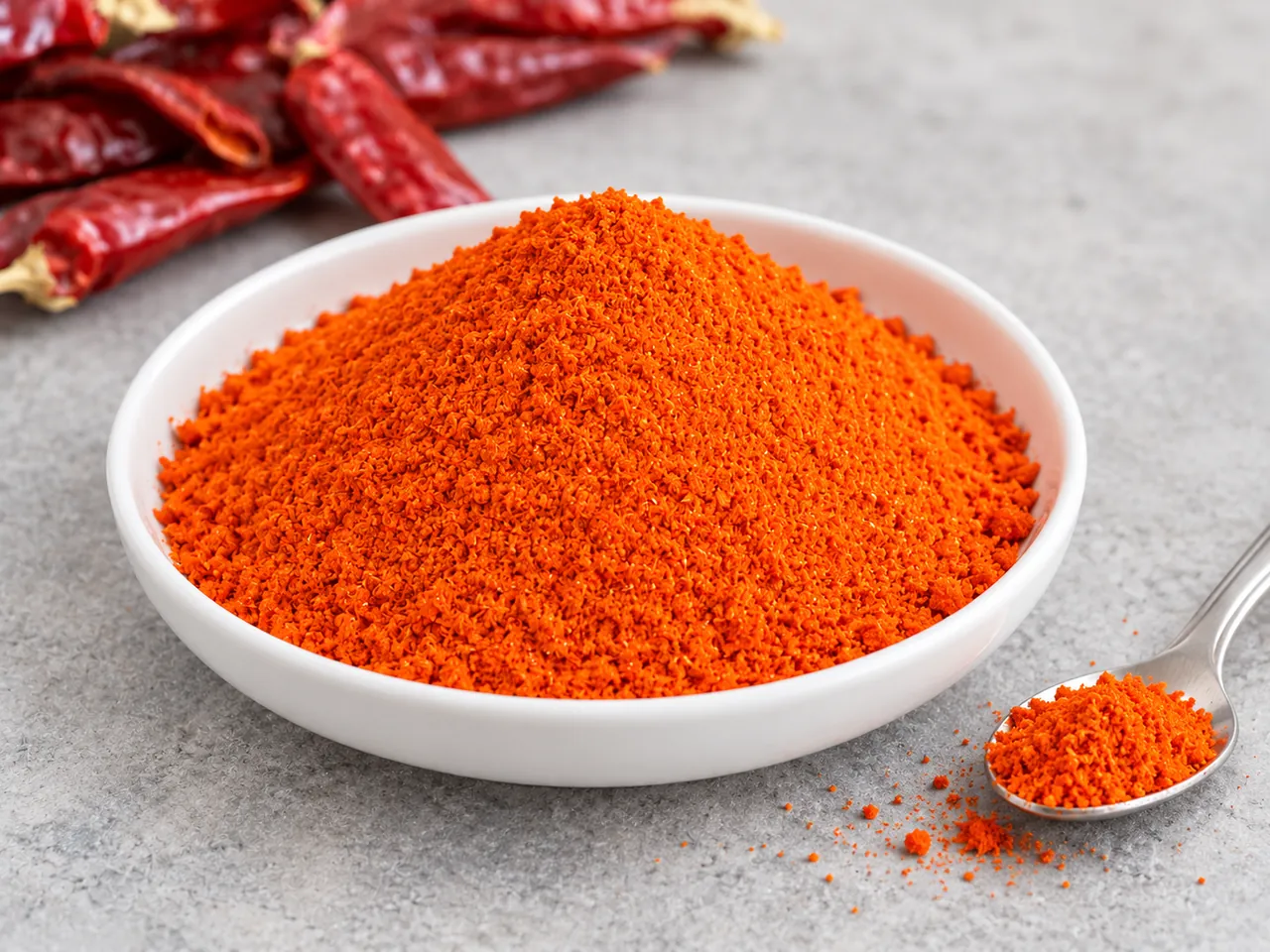
- Start from the defect
- Name coarse specks, fine material or the handling problem you need to control.
- Define the measurement
- Use the sieve system and retained or passing fraction, not only a mesh nickname.
- Keep the food test
- A particle result should protect an observable food or operating requirement.
Choose the Particle Property That Protects the Food
Choose the particle property that prevents your actual food or handling problem.
- 01Texture
Control the particle fractions relevant to the actual food surface or mouthfeel.
- 02Handling
Assess dosing and transfer using the actual proposed powder.
- 03Specification
Connect the sieve criterion to a real defect the buyer needs to avoid.
RELIA SPICES grinds and sieves chili powder in-house and carries out routine particle and moisture checks internally. Use those capabilities to define the fraction your food needs, rather than selecting a powder by keyword alone.
Tell us whether the concern is coarse specks, fines, dosing or visible texture. Compare the Cayenne and separate ground chili on that agreed physical basis, while keeping composition, heat and selected preparation with the same material. SHU, ASTA and microbiological analyses are outsourced.
Begin with Two Documented Powder References
Both candidates have 60-mesh references, but their distributions still need comparison.
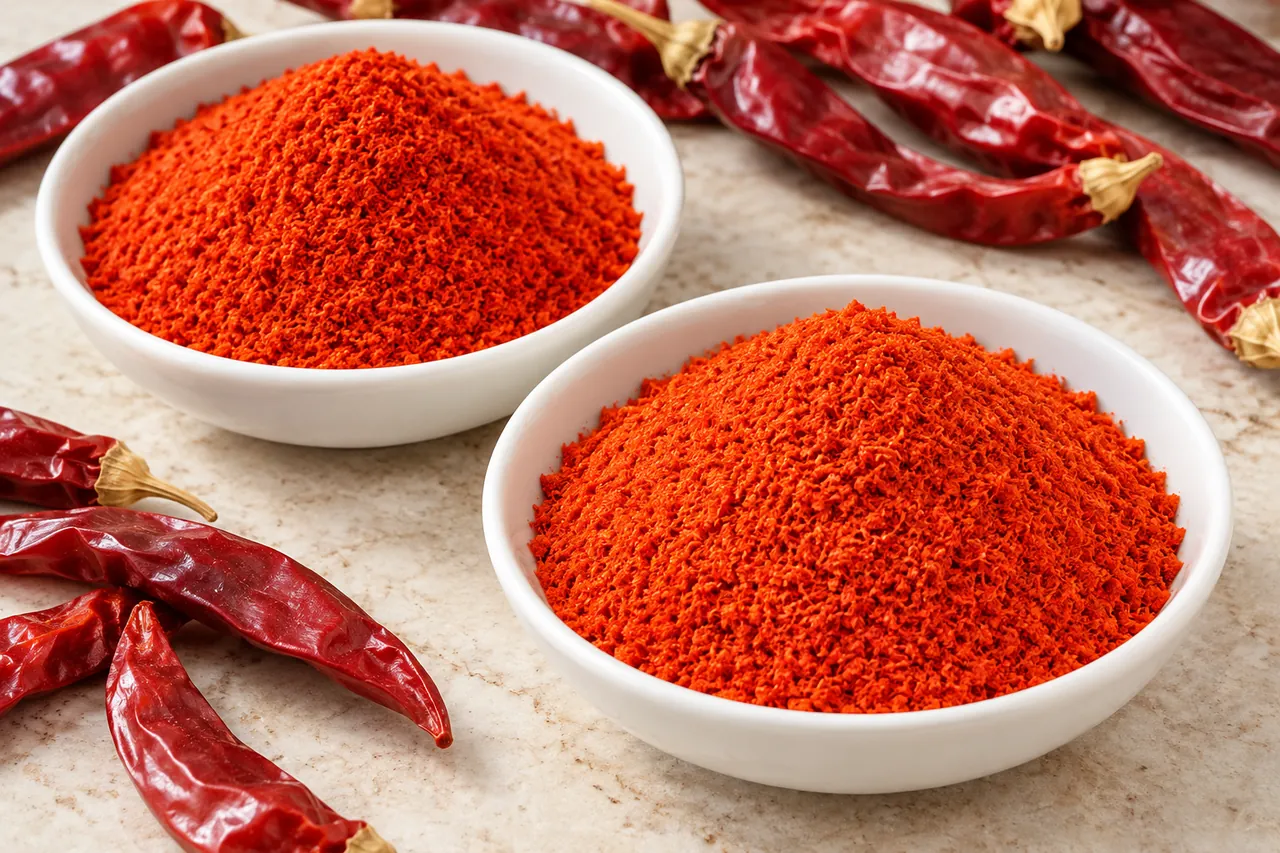
The Cayenne red pepper powder lists nominal 60 mesh and a separate customizable 60–70 mesh reference. The dried ground chili ingredient has an independent Graininess declaration of 60 mesh. These are useful starting points for a sieve-defined enquiry.
The latter listing also contains a different unitless or unit-mismatched specification field, which should not replace the independently written graininess reference. Compare the actual ground material offered and the distribution it supplies. Do not combine several labels into a more precise grade than the evidence establishes.
Ingredients to compare for this application
Cayenne nominal 60-mesh powder
Start here when a ground pepper with an explicit nominal sieve reference needs a food-specific particle criterion.
- Nominal 60 mesh.
- Separate 60–70-mesh customization.
- Dried red pepper and no additives declared.
Separate ground-chili sieve candidate
Compare its actual distribution on the same agreed sieve basis rather than treating it as identical to Cayenne.
- Independent graininess declaration: 60 mesh.
- Dried powder preparation.
- Raw and AD are written processing references.
These product specifications are a starting point for selecting a grade. Match the proposed material and sample to your food and order requirements.
Distinguish Production Screening from the Acceptance Measurement
Production screening and the acceptance measurement need a shared, explicit basis.
- 01Set the food concern
Name coarse specks, fine material, dosing or another actual physical task.
- 02Define the criterion
State aperture or sieve system and accepted fraction.
- 03Read the measurement
Use the identified powder and agreed test basis.
- 04Check suitability
Compare the physical result with the food or operating endpoint.
RELIA SPICES uses sieving during powder preparation and checks particles internally. Production screening separates a fraction; the acceptance measurement explains how the offered powder is tested against your criterion.
Define the sieve system or aperture and the relevant retained or passing fraction. Sample condition and the agreed procedure also affect interpretation, so an industrial screen description alone is not a complete acceptance result.
Read the actual distribution with its material identity and method. Compare the same powder in your sauce, seasoning or dosing step to see whether the physical difference matters. Keep composition, heat and any agreed order-specific steam preparation separate. A mesh label does not mean every particle has one size or guarantee a food texture.
Control the Tails Rather than Only the Grade Name
Control the relevant coarse or fine tails instead of relying on the grade name.
| Specification part | Information to define | Why it is useful |
|---|---|---|
| Main grade | Relevant sieve system and material | Identifies the candidate particle scope |
| Coarse tail | Retained fraction and accepted limit | Addresses unwanted larger particles |
| Fine tail | Defined fine fraction where relevant | Addresses the buyer handling or blend concern |
A useful distribution can include the coarse fraction that creates unwanted specks and the fine fraction relevant to handling. Define those separately when both matter. Do not invent a passing percentage from a nominal mesh declaration or assume every particle has the same size.
Put the buyer numerical criteria in the request after the application need is understood. If an incumbent powder already works, its measured distribution can help select meaningful limits. If the product is new, use trial observations to identify the fractions that deserve control rather than borrowing arbitrary figures from an unrelated spice.
Prepare a Sample That Represents the Powder
Use a representative sample without changing its condition through improvised sieving.
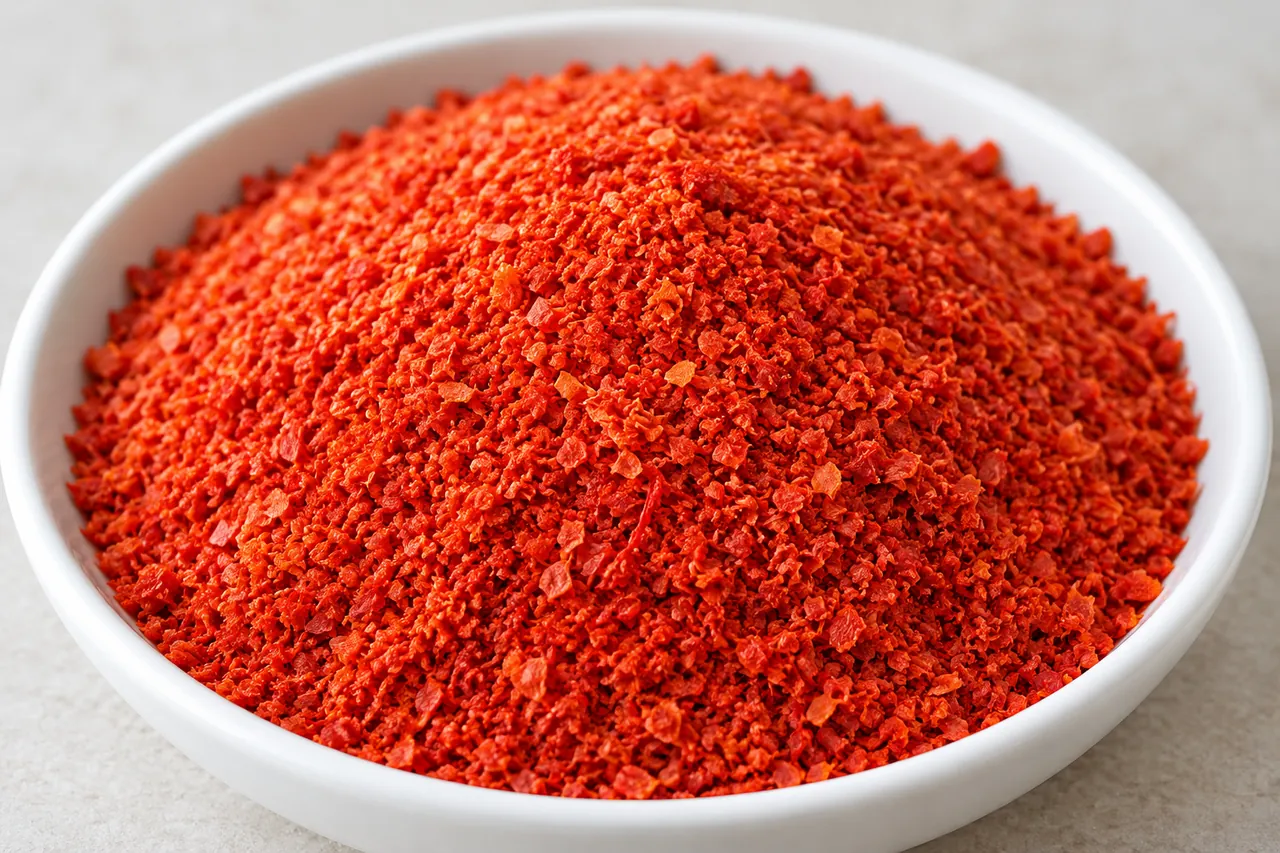
Use an identified sample of the proposed grade and keep its condition clear. RELIA SPICES performs routine particle checks internally; agree the physical test basis used for the selected criterion so the buyer can interpret the result on the same terms. Representative sample reduction matters more than choosing an attractive surface portion.
Inspect the powder before interpreting the result. Lumps, segregated fractions or moisture exposure can affect the material presented for measurement. Do not force powder through a sieve or break agglomerates using an improvised procedure and then compare that outcome with a different method as if the two were the same test.
Compare Like Particle Measurements
Compare results from the same technique and reporting basis.
- ✓Method
Identify the technique and actual procedure used for the result.
- ✓Material condition
Retain the supplied preparation and sample handling basis.
- ✓Interpretation
Compare like results rather than translating between techniques without evidence.
Sieve analysis, image measurement and other particle techniques describe material through different principles and reporting quantities. Name the technique and procedure before comparing two numerical results.
Keep the supplied preparation and sample condition with the method. Use a food trial for the behaviour the measurement is meant to protect, rather than converting between techniques without an established relationship. NIST's guide supports measurement interpretation; it does not prescribe a chili grade for your food.
Keep Heat and Composition in the Same Powder Grade
Particle acceptance does not replace composition, heat or preparation acceptance.
- 01Physical requirement
Use the agreed sieve distribution to address the particle concern.
- 02Food requirement
Retain composition, preparation, flavour and heat conditions for the same grade.
The nominal 60-mesh Cayenne also declares no additives and qualitative mild, medium or hot options. The separate ground-chili material has its own composition and qualified heat discussion. A sieve pass does not settle those ingredient choices.
Evaluate the selected powder as one complete material. Keep the required flavour, heat, composition and actual preparation with the particle criterion. If a supplier proposes a grind change, inspect the food again where particle character matters instead of assuming that every other aspect of the grade remains unaffected.
Use the Actual Trial to Refine the Specification
Keep only the particle criteria that protect a real application requirement.
Compare samples that meet the proposed sieve basis in the intended food or handling task. Observe whether the coarse or fine fractions actually explain the issue your team wanted to control. A particle criterion that does not affect the decision may add cost without protecting the food.
Keep the most useful criterion and remove unnecessary duplication. For a replacement, compare against the working material under the same conditions. For a new formulation, establish the application requirement before turning a provisional mesh description into a permanent purchasing limit.
Request a Sieve-Defined Powder Rather than a Keyword Match
Send sieve basis, fractions and food purpose in the same powder request.
- 01Define
Explain the defect or process condition the sieve requirement protects.
- 02Measure
Use a named basis and interpretable fraction result.
- 03Select
Choose the powder that meets both the particle and food requirements.
Send the actual food use, sieve standard, pass or retain condition and any tail limits your team requires. Add the complete ingredient, heat and preparation requirements and the quantity or receiving pack needed for the order discussion. We can use that brief to discuss the relevant powder starting point.
The next reply should describe an actual proposed grade and its measurement basis. This page addresses ground-powder particle acceptance; a visible flake cut needs its own dimensional, seed and fines definitions rather than a copied powder specification.
- Food-processing use
- Actual powder candidate
- Sieve standard and set
- Pass or retain requirement
- Composition and heat conditions
- Quantity and lot-record needs
Your next purchasing decision
Talk through your sieve-defined powder enquiry
Include the current powder reference and the fraction that changes your decision.
Send RELIA SPICES the food use, sieve or aperture basis and the fraction that matters. Add the current powder reference, heat and composition conditions and receiving quantity.
We can discuss our produced grade and internal physical checks on that basis before the material enters your application comparison.
The enquiry page keeps this guide with your message. Add your quantity and destination so we can discuss the relevant material.