
Building a Chili Powder Heat Range for Import Distribution
Build your import range around the foods your customers make, with a separate powder grade for each useful heat position. Start with the Cayenne mild, medium and hot options, then compare other candidates only where their own specifications fit. Test the proposed grades in relevant customer recipes and use external heat analysis before giving each sales line a numerical heat description.
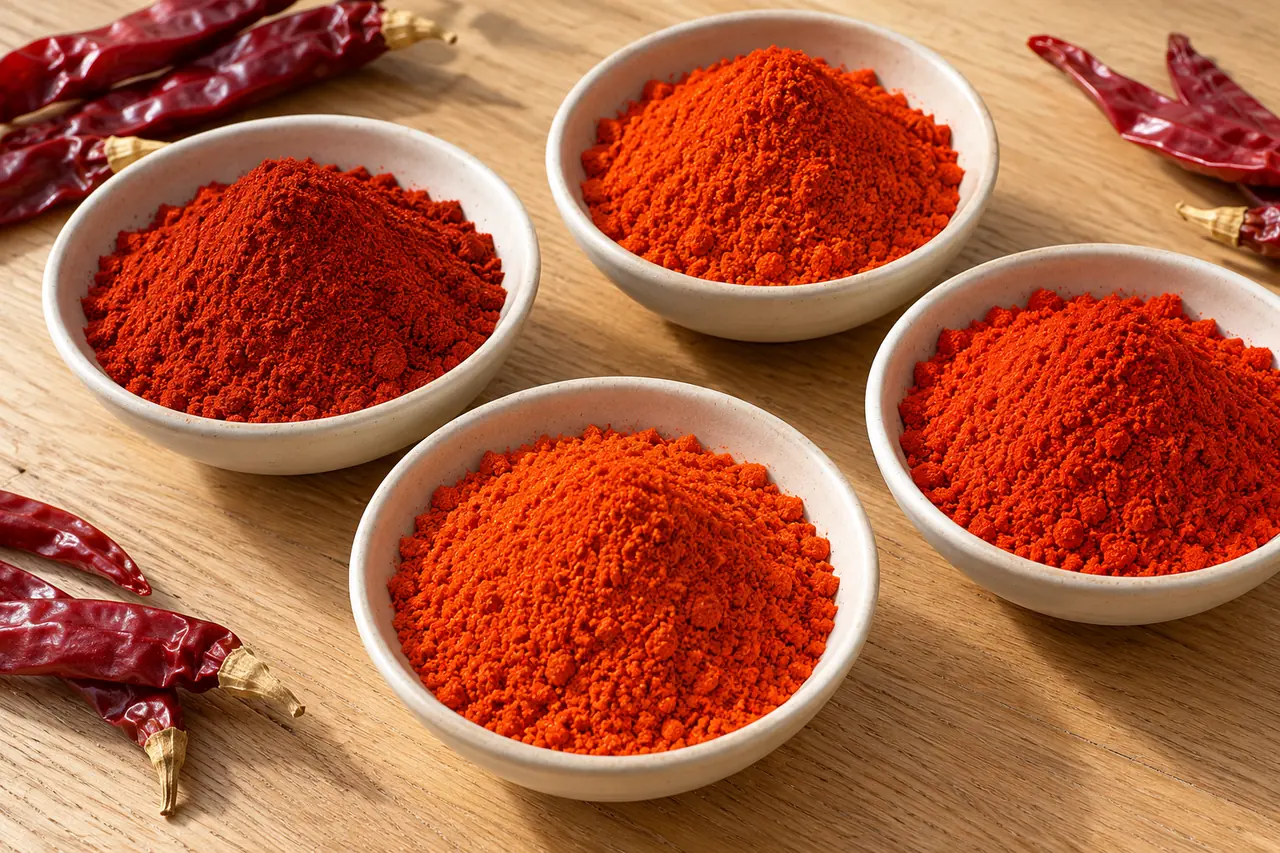
- Start from customer use
- A sauce customer and a meat-seasoning customer may need different heat and particle choices.
- Keep grades distinct
- Qualitative Cayenne options do not supply numerical heat intervals.
- Add stock deliberately
- Introduce another grade when its food role and demand justify a separate inventory line.
Separate Customer Segments by Use and Eating Stage
Choose grades around how customers prepare and eat the food.
- 01Sauce production
Evaluate heat in the finished sauce and particle visibility after its usual processing.
- 02Meat seasoning
Check the finished cooked food alongside the dry seasoning rather than tasting powder alone.
- 03Ingredient resale
Give downstream users a defined grade and technical description, not a universal use recommendation.
RELIA SPICES manufactures the powders behind the range through in-house dried-chili preparation, grinding, sieving and packing. Start with a real customer use for each line, such as a cooked sauce or meat seasoning, rather than dividing stock by red appearance.
We check routine moisture and particles internally and outsource SHU analysis. Begin with the Cayenne qualitative options, then evaluate the separate hot-spicy Cayenne or ground-chili candidate where its own composition and heat evidence fit the customer position.
Begin Grade Discussions with the Cayenne Options
Cayenne heat descriptions start a discussion; they do not establish numerical tier spacing.
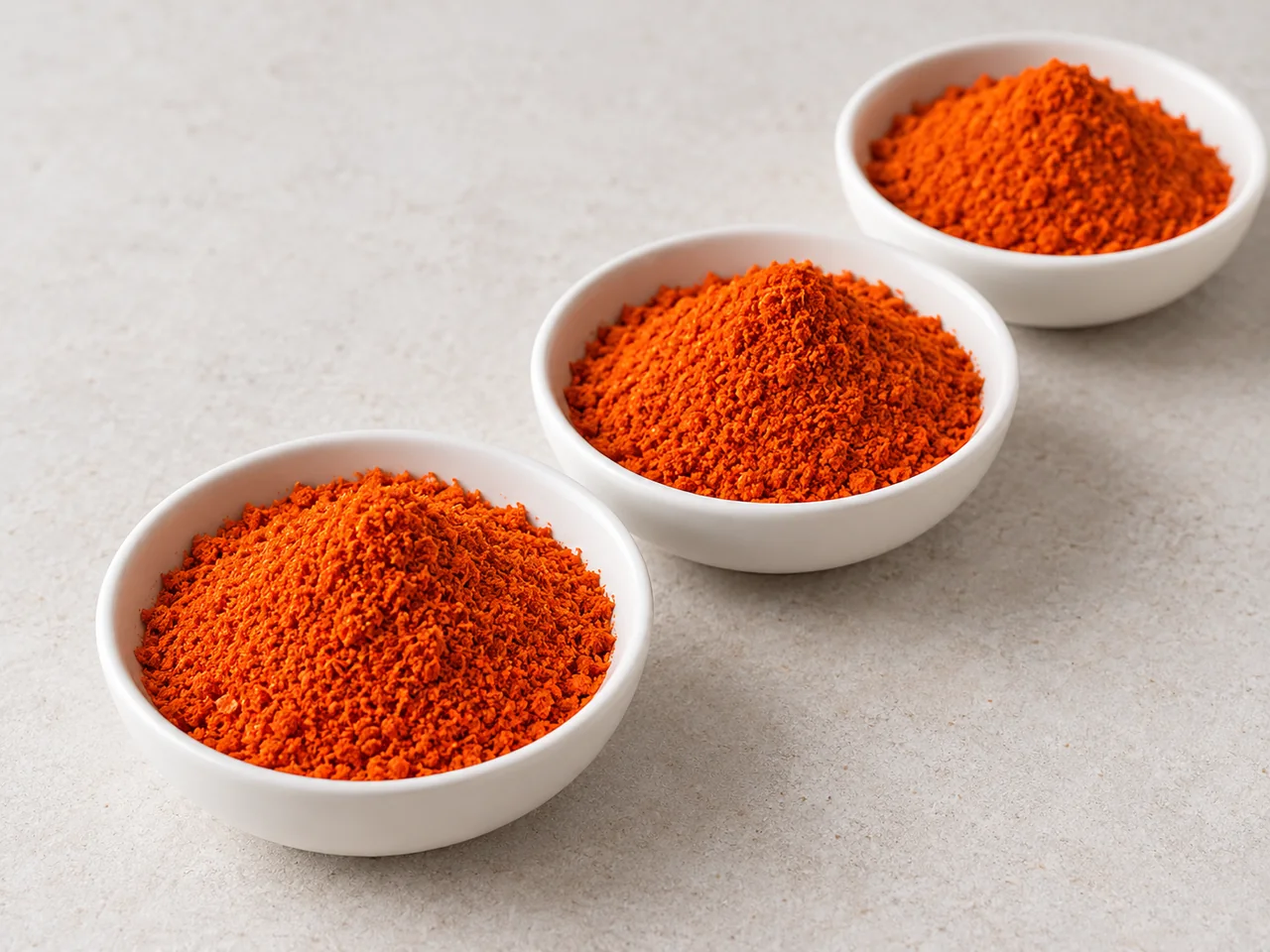
The Cayenne red pepper powder lists mild, medium and hot customizable pungency descriptions with a nominal 60-mesh grind. It also declares no additives and identifies seasoning, sauce production and meat products as applications. These facts create a useful candidate route, but none supplies a numerical interval for a heat tier.
Decide which customer segment should evaluate each proposed material. Give the samples neutral internal codes during comparison so a mild or hot label does not tell the panel what result to expect. Assign your sales name after the sensory and analytical basis of the actual grade is understood.
Ingredients to compare for this application
Cayenne qualitative heat options
Start an importer assortment discussion around separately evaluated mild, medium or hot customer needs.
- Mild, medium and hot customization is described without numerical tiers.
- Nominal 60 mesh.
- No additives are declared.
Hot-spicy Cayenne powder
Evaluate as a separate candidate when a customer needs this Cayenne identity and hot-spicy sensory character.
- Commercial Cayenne powder identity.
- 60Mesh reference.
- Hot-spicy taste; normal-temperature warehouse storage.
Ground chili with qualified heat notation
Consider for a numerical grade discussion only after its complete heat notation and actual material are resolved.
- Independent 60-mesh graininess reference.
- Heat notation: 30000–35000SHU(0.2), qualification unresolved.
- Dried powder preparation.
These product specifications are a starting point for selecting a grade. Match the proposed material and sample to your food and order requirements.
Keep the Alternative Powder Routes Distinct
Keep all three candidate routes separate until their heat criteria are understood.
| Candidate | Available starting information | Range decision |
|---|---|---|
| the Cayenne red pepper powder | Qualitative mild/medium/hot; nominal 60 mesh | Evaluate proposed grades by customer use |
| the hot-spicy Cayenne powder | Hot-spicy description;60 Mesh | Establish a usable grade criterion |
| the dried ground chili ingredient | Qualified numerical notation;60 mesh | Resolve full notation before a numerical tier |
The hot-spicy Cayenne is a separate powder with a 60 Mesh reference and normal-temperature warehouse storage. Its taste description has no numerical pungency criterion.
The other ground chili has its own 60-mesh reference and the complete notation 30,000–35,000 SHU(0.2). Resolve the meaning of (0.2), method and applicable material before using it for a numerical sales tier. Neither alternative can inherit the first Cayenne listing's composition or mild/medium/hot options.
Use Analysis and Customer Food as Two Range Anchors
Analytical heat describes the ingredient; the customer food decides its practical role.
- 01Analytical identity
Give each grade an interpretable pungency basis and actual material result.
- 02Customer fit
Keep the recipe and sensory target tied to the buyer segment that will use the grade.
ASTA describes HPLC pungency analysis for capsicums; it measures a different object from a diner sensory response. Establish the analytical method and edition used for the actual material, then judge whether that material serves the intended food. Do not derive finished-food heat directly from a sales adjective.
University guidance also shows that pepper heat can vary with growing conditions. That is a reason to define a commercial grade by its accepted criteria rather than assuming a familiar commercial name guarantees every future batch has the same heat.
Run the Range Comparison in Relevant Customer Bases
Screen at equal additions, then test each retained grade at its intended use level.
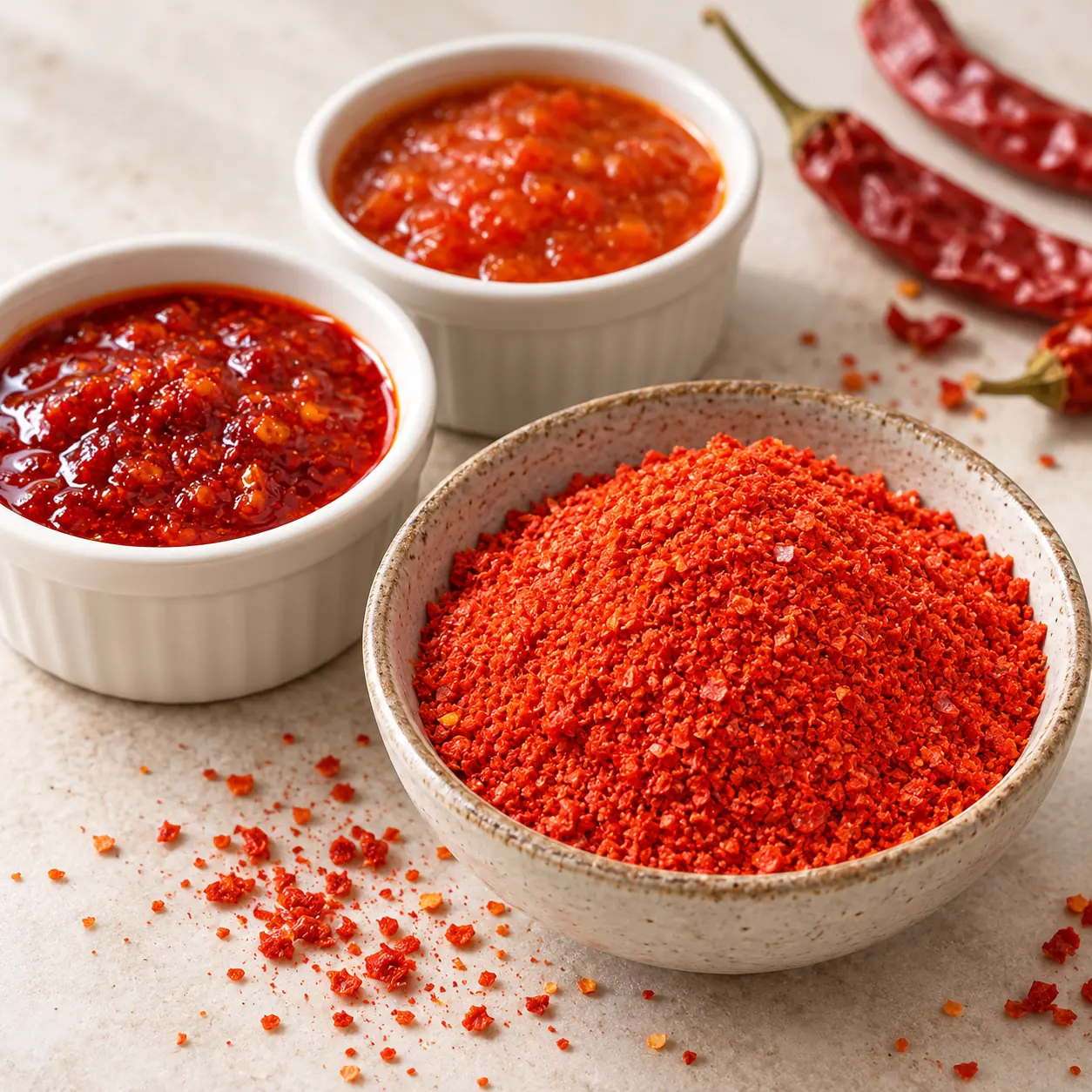
For the initial screen, add equal weights of each candidate to the same base food. Keep the base formulation, heating and serving conditions constant. Compare the progression of heat, pepper flavour, colour and particles rather than forcing all differences into one overall liking score.
After screening, evaluate each retained grade at the intended commercial use level. This second step tests whether the range positions are useful in practice. A powder that needs a very different dose may belong in a specialist item rather than the standard range, even if its raw analytical result looks convenient.
Give Each Heat Tier a Material and Food Basis
Connect every tier to one physical preparation, heat result and customer application.
- 01Define the powder
Identify the proposed preparation and physical grade.
- 02Read the heat evidence
Use the external SHU analysis on the stated method and material.
- 03Test the customer use
Compare the powder in the food that defines the tier.
- 04Name the sales line
Describe the accepted material without inventing numerical spacing.
RELIA SPICES grinds and sieves the selected dried-chili preparation. A sieve result describes its particles, not its capsaicinoid content, so a finer powder cannot stand in for a heat analysis.
For each proposed tier, keep the powder identity and physical preparation with our routine moisture and particle checks and the relevant external SHU result. Use an interpretable method and result for that material rather than an unexplained catalogue endpoint.
Then compare the grade in the customer's food at its intended dose. Keep that use with the accepted sales line. Review changes in the pepper or preparation before carrying the description forward, without assuming equal sensory steps between tiers.
Plan Inventory Around Grade Demand and Pack Use
Forecast and store each accepted grade under its own conditions.
- ✓Core item
Prioritize the grade with a defined recurring customer use.
- ✓Specialist item
Evaluate whether the distinct application justifies separate inventory.
- ✓Receiving plan
Use grade-specific pack and storage instructions in the warehouse.
Forecast quantities by accepted grade rather than splitting an estimated total equally among names. Consider how many packs customers normally open and how quickly each is used. Slow-moving specialist grades can create more storage exposure than the main volume line.
Use the storage declaration belonging to each actual powder. For the hot-spicy Cayenne powder, normal-temperature warehousing is stated, not a documented cool-dry temperature range. Keep its conditions separate from the Cayenne red pepper powder, whose listing specifies≤25°C and humidity≤60%. Commercial consolidation is a discussion point, not an assumed common handling instruction.
Test the Range Handover Before Customer Expansion
Test whether sales and technical colleagues select the same sample for a customer brief.
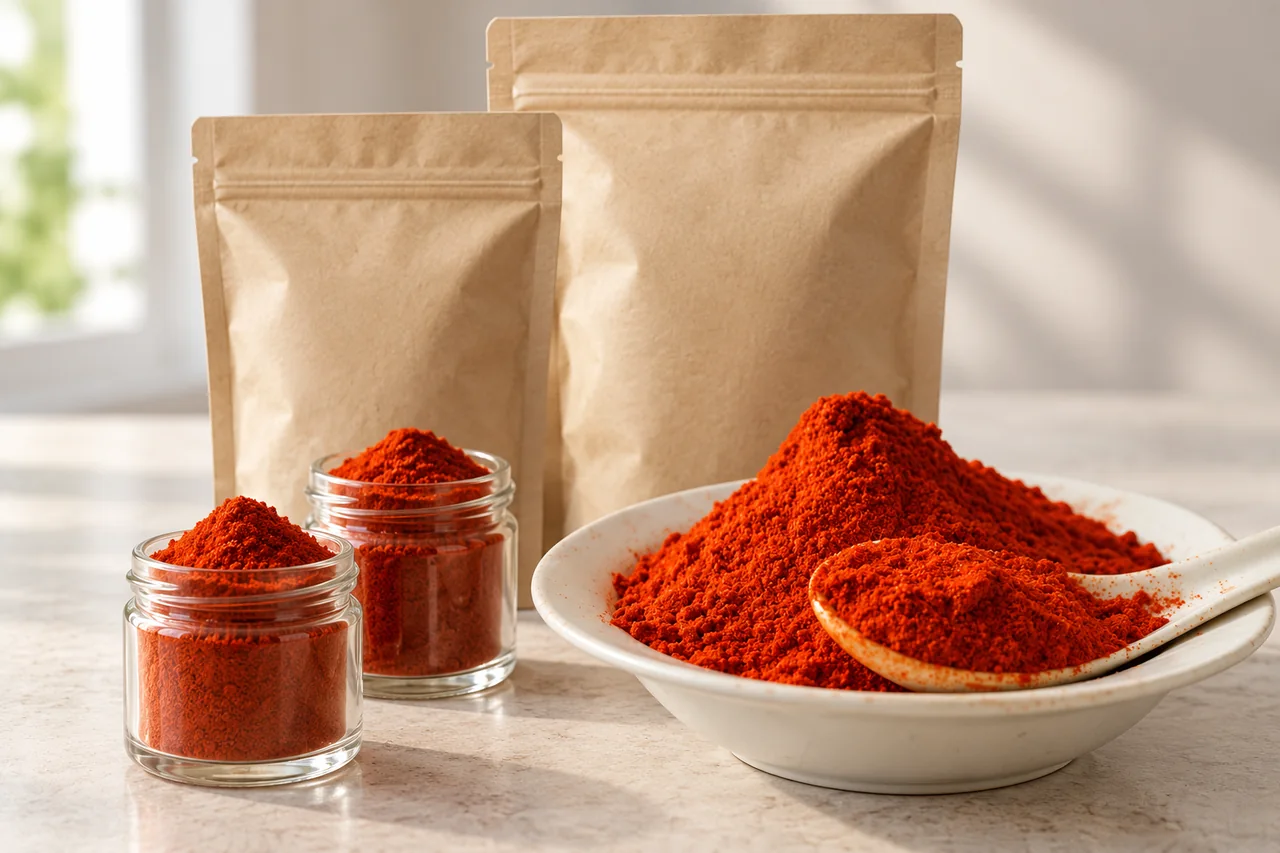
Give a technical colleague and a sales colleague the same three material descriptions and ask them to select a sample for a real customer brief. Differences in their choices reveal unclear range language before the business buys stock or distributes sample kits.
Keep powder samples separate during the exercise and protect their identities through handling. Once a customer accepts a grade in a food, carry that approved item and relevant criteria into reorder discussions rather than substituting the closest-looking red powder. This protects the usefulness of the range without promising automatic lot equivalence.
Launch with Separate Material and Commercial Lines
Launch the first useful line before expanding the assortment.
- 01Prioritize
Select a customer segment with a distinct use and credible demand.
- 02Differentiate
Approve a material difference that the customer can actually use.
- 03Expand
Add another item after its grade, food fit and inventory purpose are clear.
Send us the customer groups, first-use priorities and a separate material request for each intended range position. Include the technical distinctions that matter and the quantity each segment may consume. We can discuss relevant catalogue starting points without presenting an untested full range as ready stock.
Select the first item for a controlled evaluation, then add a second only when its purpose is clear. This page is about importer assortment design; choosing one powder for a precise ingredient heat criterion belongs in the defined-heat-grade guide.
- Customer uses
- Separate heat-grade objectives
- Composition and particle requirements
- Grade-specific evidence
- Forecast quantity per grade
- Receiving packs and repacking plans
Your next purchasing decision
Talk through your importer heat-range plan
Send a customer use, heat basis and forecast for each proposed grade.
Send the intended customer segment, food use and heat acceptance basis for each proposed line. RELIA SPICES can discuss the actual powder candidates, particle requirements and relevant SHU analysis.
Include the receiving pack and forecast for each material separately so the technical range and commercial enquiry describe the same ingredients.
The enquiry page keeps this guide with your message. Add your quantity and destination so we can discuss the relevant material.