
Chili Ingredients for Even Distribution in Seasoned Rice
For seasoned rice, choose Cayenne powder for a distributed pepper background and a defined coarse flake separately when visible pieces matter. Compare the material where it enters the rice: cooking liquid, cooked-grain mixing or finishing oil. We can discuss the fraction and selected heat profile. Send representative filled portions and photographs of clusters or hard pieces so the next sample addresses the actual distribution problem.
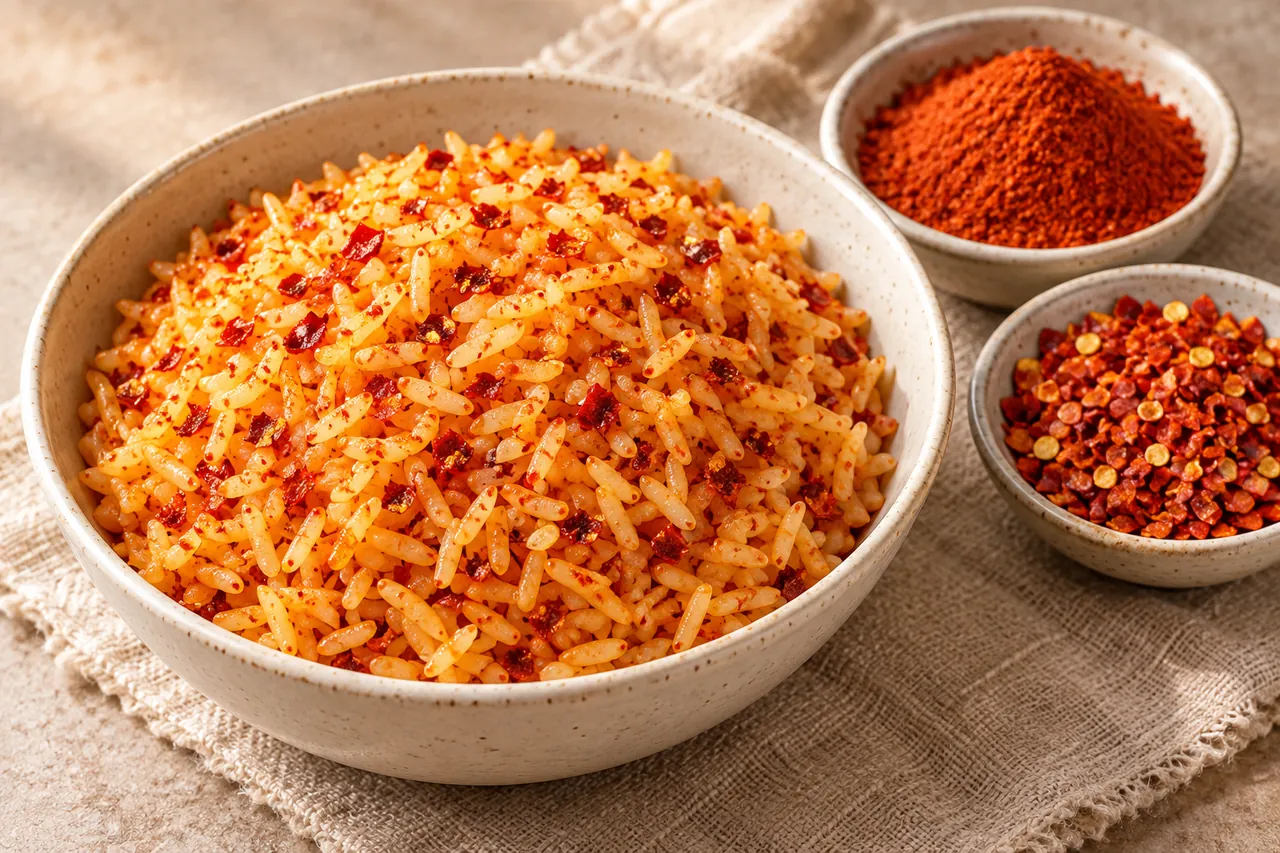
- Background seasoning
- Cayenne lists nominal 60 mesh and moisture ≤9%, with descriptive pungency selected separately.
- Visible flakes
- The coarse flake lists 5–8 mesh and moisture ≤8%, without a numerical SHU specification.
- Portion consistency
- Compare mixer positions and early, middle and late fills at the same serving size.
Prepare pepper for the rice addition point
Choose the addition point before selecting the powder or flake preparation.
- 01Before cooking
Compare the actual pepper in the cooking formulation; retain that route for the served-rice assessment.
- 02After cooking
Check incorporation into moist grains and distinguish powder agglomerates from rice clumps.
- 03Finishing stage
Inspect the seasoning liquid or oil and its distribution across actual filled portions.
At RELIA SPICES, we clean and destem purchased dried chilies, then grind or cut, sieve and pack the agreed preparation. For rice, separate powder entering a seasoning liquid or oil from visible pieces mixed among cooked grains. Those inputs need different particle criteria.
Our moisture and particle checks are internal; ASTA, SHU and microbiology use external laboratories. In-house steam microbial reduction is selected according to order requirements. State whether pepper enters before cooking, during cooked-rice mixing or at finishing so the proposal addresses the actual stage.
Choose a background seasoning or a visible piece
Use separate specifications for background seasoning and visible pepper.
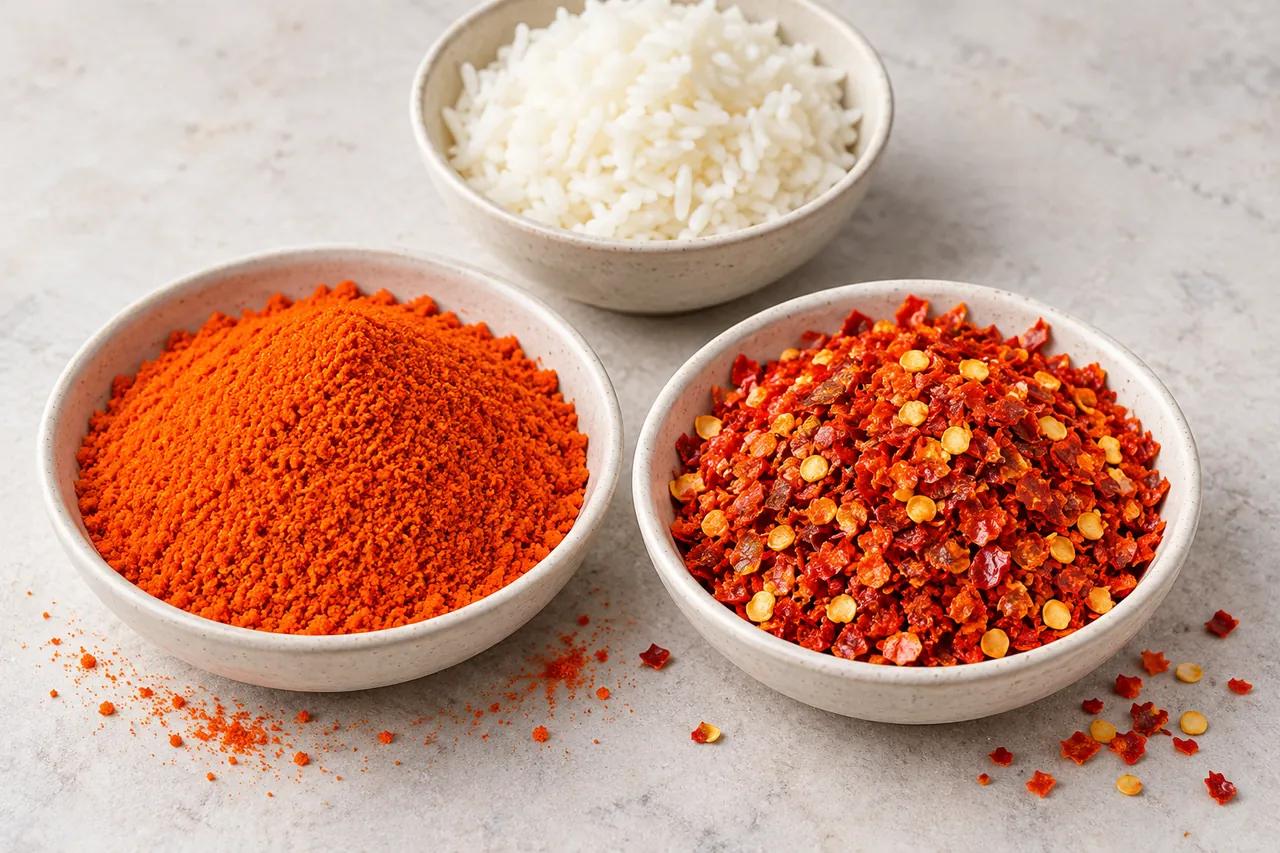
Our Cayenne powder is a practical background candidate with nominal 60 mesh, a separate customizable 60–70 mesh reference and moisture ≤9%. The fine red pepper powder also declares 60–70 mesh or a customized grind, but its hot-pepper name conflicts with a mild, sweet, non-spicy flavour entry. Resolve its actual flavour role before treating it as the heat component. For visible pieces, the coarse dried chili flakes declare 5–8 mesh and a strong, pungent flavour. Their named kimchi and hotpot uses do not constitute a validated rice application.
Ingredients to compare for this application
Cayenne for rice seasoning background
A powder comparison where the aim is distributed seasoning rather than visible coarse pieces.
- Nominal 60 mesh; separate customizable 60–70 mesh.
- Moisture ≤9%.
- Mild, medium and hot descriptions require a selected profile.
Coarse red flakes for visible pepper
A separate cut-based trial when the rice should contain noticeable red pieces with an accepted bite.
- 5–8 mesh reference.
- Moisture ≤8%; impurity ≤0.3%.
- Strong pungent flavour description, without an established numerical SHU value.
These product specifications are a starting point for selecting a grade. Match the proposed material and sample to your food and order requirements.
Match the fraction to contact with moist grains
Open a dark cluster before calling it a stronger pepper grade.
| Observation | Material distinction | Controlled comparison |
|---|---|---|
| Dark clusters | Powder agglomerate versus stronger grade | Open clusters under the same addition sequence |
| Hard pieces | Skin and seed condition versus nominal mesh | Actual served portion |
| Uneven fills | Supplied fraction versus discharge segregation | Beginning, middle and end portions |
| Local burn | Background powder versus visible flake heat | Separate the two ingredient roles |
Grinding creates a seasoning background; cutting retains visible pieces. Sieving defines a supplied fraction but does not ensure that oil or moist grains wet it uniformly. Open dark clusters to distinguish powder agglomerates from individual stronger pieces.
The coarse flake lists 5–8 mesh, moisture ≤8% and impurity ≤0.3%, with strong pungent flavour but no numerical SHU. Use internal physical checks and relevant external heat evidence for the selected preparation. Keep rice condition and addition sequence fixed, then inspect mixer positions and filled portions separately. If mixing is uniform but later fills vary, investigate transfer and discharge before requesting another grind. That keeps the material change focused on the observed defect.
Sample the mixer and the filled portions
Uniform mixer samples do not rule out segregation during discharge and filling.
- 01Mixer positions
Inspect representative portions from more than one area of the mixed rice.
- 02Filling sequence
Compare early, middle and late fills at the same serving size.
- 03Eating portion
Taste several spoonfuls so a local pepper pocket is not averaged away.
Take portions from different mixer positions and from the beginning, middle and end of filling. Use the same serving size and compare the number of obvious pepper clusters, visible pieces and lightly seasoned areas. This reveals whether the proposed ingredient is being distributed consistently enough for your product. If the mixer looks uniform but later fills separate, inspect transfer and discharge before requesting a finer powder. A change in ingredient preparation should address a demonstrated defect rather than conceal an unresolved filling difference.
Taste heat and particles at the intended serving temperature
Keep visible-piece count separate from the background heat adjustment.
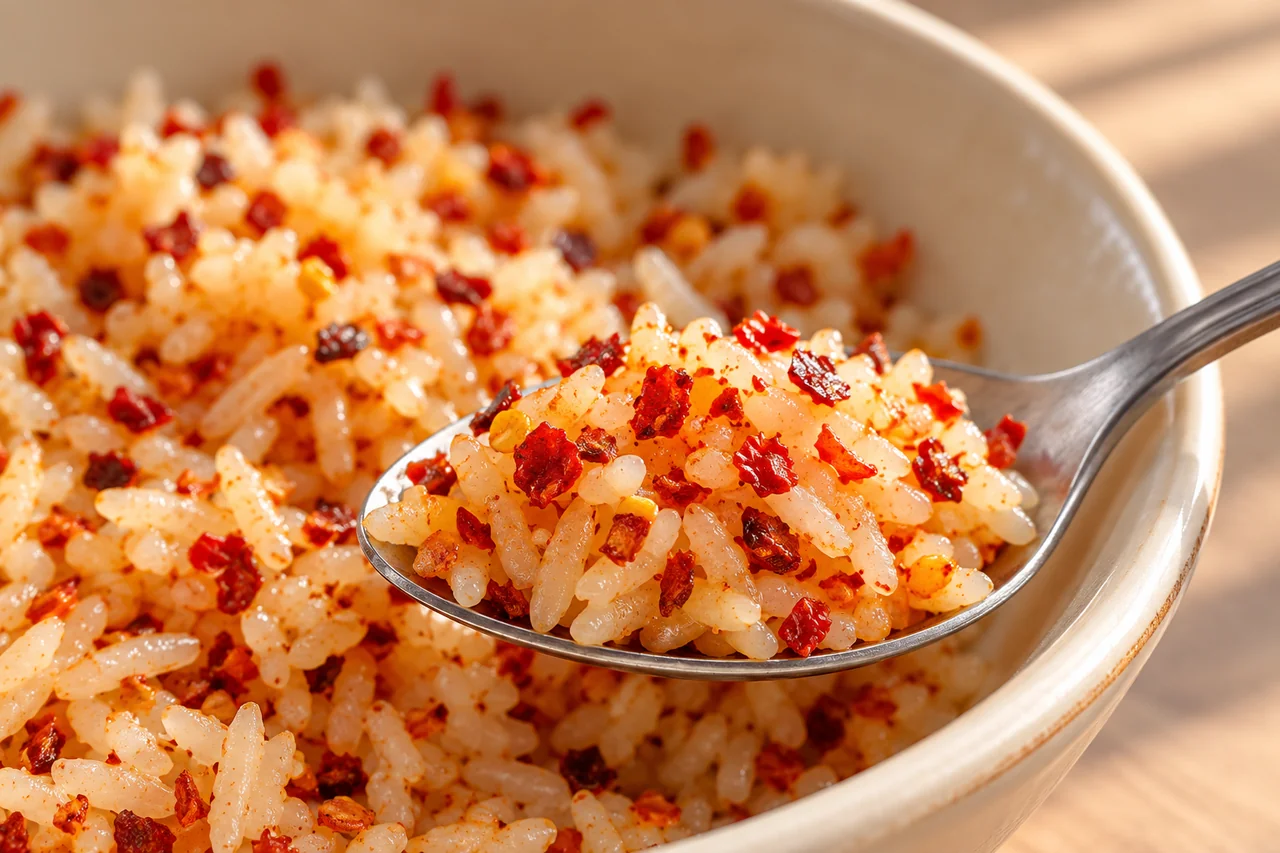
Taste several representative spoonfuls at the intended serving condition. Rice, sauce and oil may not carry pepper equally, so separate background flavour from concentrated heat beside a visible flake. The Cayenne listing offers descriptive mild, medium and hot options, not a numerical finished-rice heat specification. The coarse-flake listing supplies no numerical SHU reference. Select their actual offered pungency independently. If the visible-piece target is already right, adjust the background ingredient in a separate comparison instead of adding more flakes merely to intensify the whole dish.
Follow the selected holding or reheating route
Holding and reheating routes need their own served-rice comparison.
- 01Held service
Inspect the actual later service point with the same rice-handling controls retained.
- 02Chilled and reheated
Repeat the intended preparation route; do not borrow an incoming spice shelf life for the rice.
For held rice, compare the initial served product with the actual later service point. For a chilled product intended for reheating, repeat the specified preparation route and inspect the same distribution defects afterwards. FoodSafety.gov identifies rice and leftovers among foods associated with Bacillus cereus when improperly handled. That is a reason to keep the rice operation’s validated handling controls in place; it is not an ingredient-specific cooking instruction. This page concerns mixing and serving distribution, while frozen-meal selection additionally needs the freeze-and-reheat comparison described in our frozen-meal guide.
Set treatment for the actual rice addition point
Select treatment for the actual pepper addition stage, not a generic rice application.
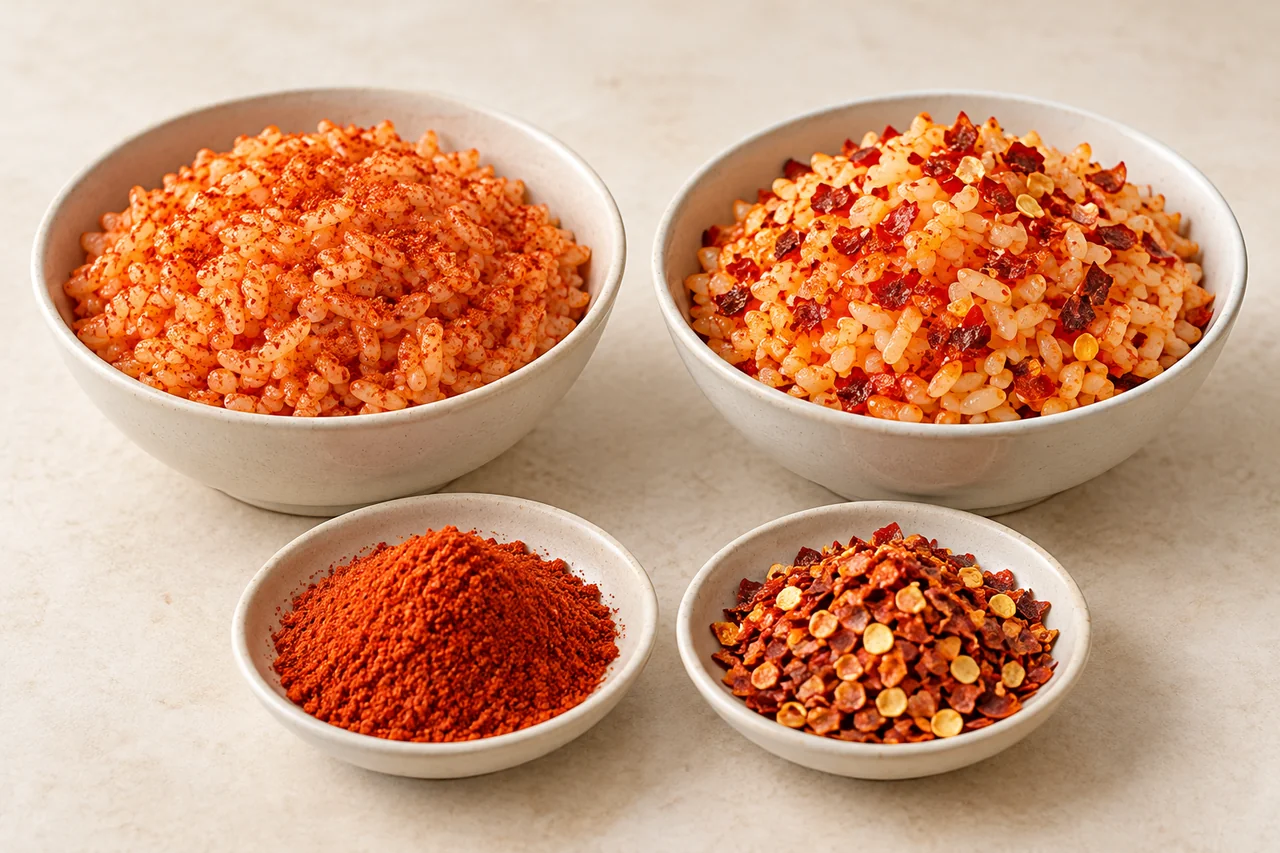
RELIA SPICES offers in-house steam microbial reduction according to order requirements, so identify whether pepper enters before rice cooking or later. Select the actual powder or flake process and applicable external microbiological evidence. Our moisture and particle checks are internal. For coarse flakes, ≤8% moisture, ≤0.3% impurity and 24 months cool and dry remain incoming-material references, with impurity and seed-to-skin definitions to agree. They are not seasoned-rice limits or shelf life. Likewise, Cayenne's stir-fried and AD-dried-and-ground descriptions need an actual offered route rather than a guessed treatment outcome.
Compare material offers at the same food target
Price the preparation that meets the same filled-portion result.
- ✓Powder role
Nominal 60 mesh or a separate 60–70 mesh reference must describe the actual offered powder.
- ✓Visible role
A 5–8 mesh flake reference still needs an agreed fraction, seeds and served bite.
- ✓Accepted portion
Compare dose, distribution and flavour in the same filled-rice endpoint.
Compare quotations using the pepper dose and preparation that met the same portion target. A lower bag price does not offset unacceptable clusters, a hard seed fraction or irregular heat between filled portions. Keep background powder and visible flakes as separate cost lines when they do different jobs. Ask for the actual sieve basis and applicable material results, rather than converting a customizable range into a selected grade yourself. Establish the offered package and any further preparation your operation performs before judging the commercial alternative.
Send the rice route and portion defect
Send the addition stage and representative fills with the distribution defect.
- 01Locate addition
Identify the cooking, cooked-rice mixing or finishing stage.
- 02Show the outcome
Send clustered, lightly seasoned and representative portions from the actual filling sequence.
- 03Discuss the preparation
Request a powder background or defined flake proposal with its applicable specification.
Share rice style, pepper addition stage, liquid or oil contact and whether the product is served, held or reheated. Link a background powder or coarse-flake candidate and send representative early, middle and late fills. Mark clusters, hard pieces or heat pockets. Include treatment, package and quantity needs so we can discuss the actual preparation and a useful sample comparison.
- Rice type and water-and-oil background
- Before-cook or after-cook addition
- Visible-piece or background flavour target
- Mixing and portioning route
- Serving and holding condition
- Particle criteria, documents and quantity
Your next purchasing decision
Discuss pepper distribution in your rice portions
Ask for improvement in background flavour or visible pieces as a specific ingredient role.
Send the rice style, pepper addition stage and filled-portion photographs to Qingdao Relia Spices Co., Ltd. / RELIA SPICES. Name whether background flavour or visible red pieces need improvement.
The enquiry page keeps this guide with your message. Add your quantity and destination so we can discuss the relevant material.