
Private Label Whole Dried Chilies for Cooking
Start with the pod your customer needs for cooking, then check its fit and intact appearance in the proposed retail pack. RELIA SPICES cleans and prepares purchased dried chilies and fills packs under your brand.
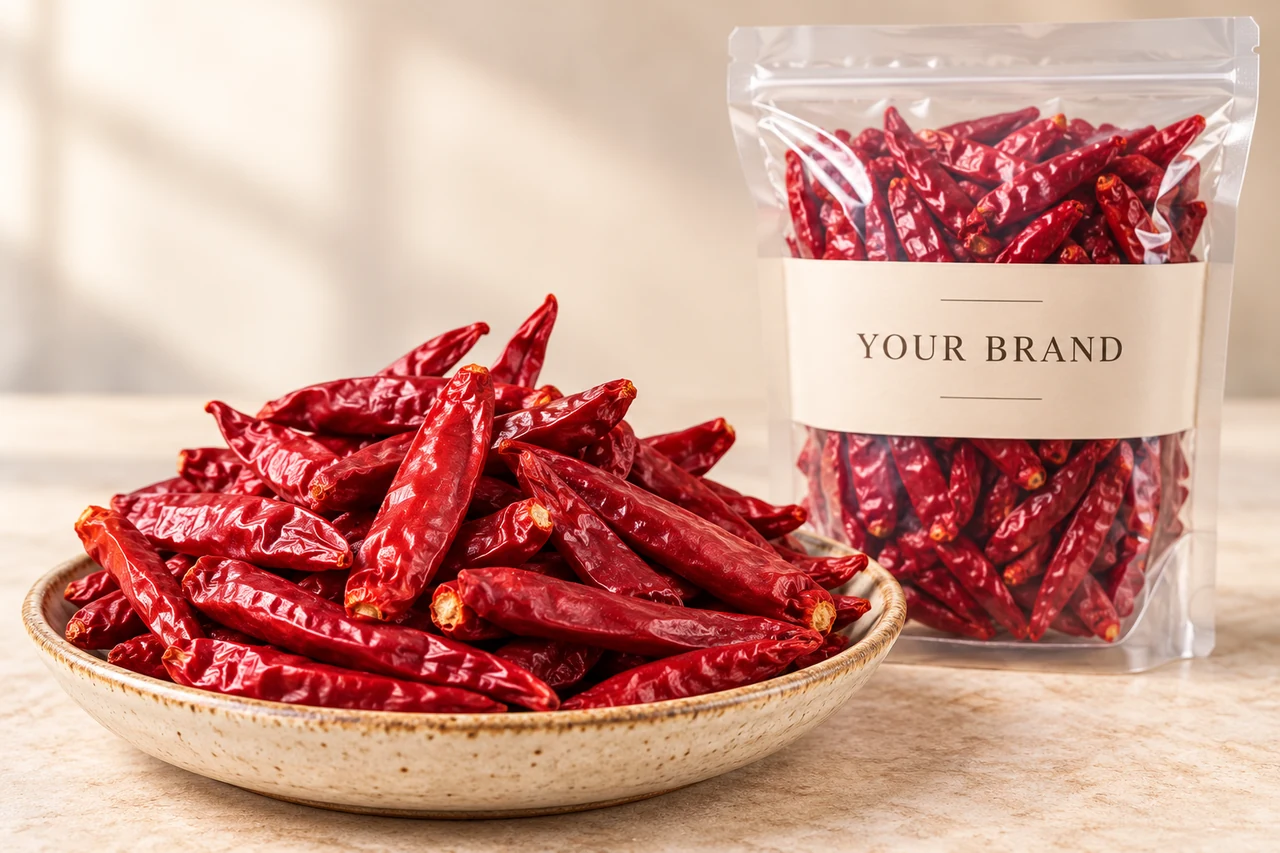
Packaging and project details
Compare the named pepper options using their own size and heat information. Send the cooking use, pod reference, stem requirement and packaging proposal so we can discuss the ingredient and retail presentation together.
The whole-pod buying decision
- Pepper choice
Named material, cooking role and heat requirement.
- Whole appearance
Intact pods, stem condition and loose pieces.
- Retail use
Preparation instructions and a practical pack opening.
Preparation That Retains the Selected Whole Pod
The whole-chili route preserves the pod rather than turning it into powder.
RELIA SPICES cleans purchased dried chilies and removes foreign matter and stems according to the agreed preparation. Our factory also sieves and packages materials. The selected whole-pod route retains the pods; grinding or cutting is used for the separate powder and crushed forms.
Match checks and treatment to pods
Internal routine checks include moisture and particle size. ASTA, SHU and microbiological analyses use outside laboratories. In-house steam microbial reduction is available according to order requirements, with the selected route tied to the material.
A whole-chili project route
- Choose the pod
Select the pepper and its intended cooking role.
- Clean and prepare
Agree foreign-matter and stem requirements for that material.
- Review the whole portion
Compare intact pods and loose broken material.
- Retail-pack
Keep the selected form in customer-branded packaging.
Three Pod Options for Different Cooking Briefs
Size and heat stay with the named pepper, not the retail range as a whole.
New Generation pods list 3–6 cm, a full 50,000–90,000 SHU range and stemless or stem-cut descriptions. Sanying red chili lists 7–9 cm and 3,000–5,000 SHU.
Compare the sample-led cooking candidate
The separate whole dried red chili cooking preparation is a sample-led option: its listing does not establish a pod length or numerical heat. Use these references to shortlist the pepper, then agree the supplied preparation and cooking requirements.
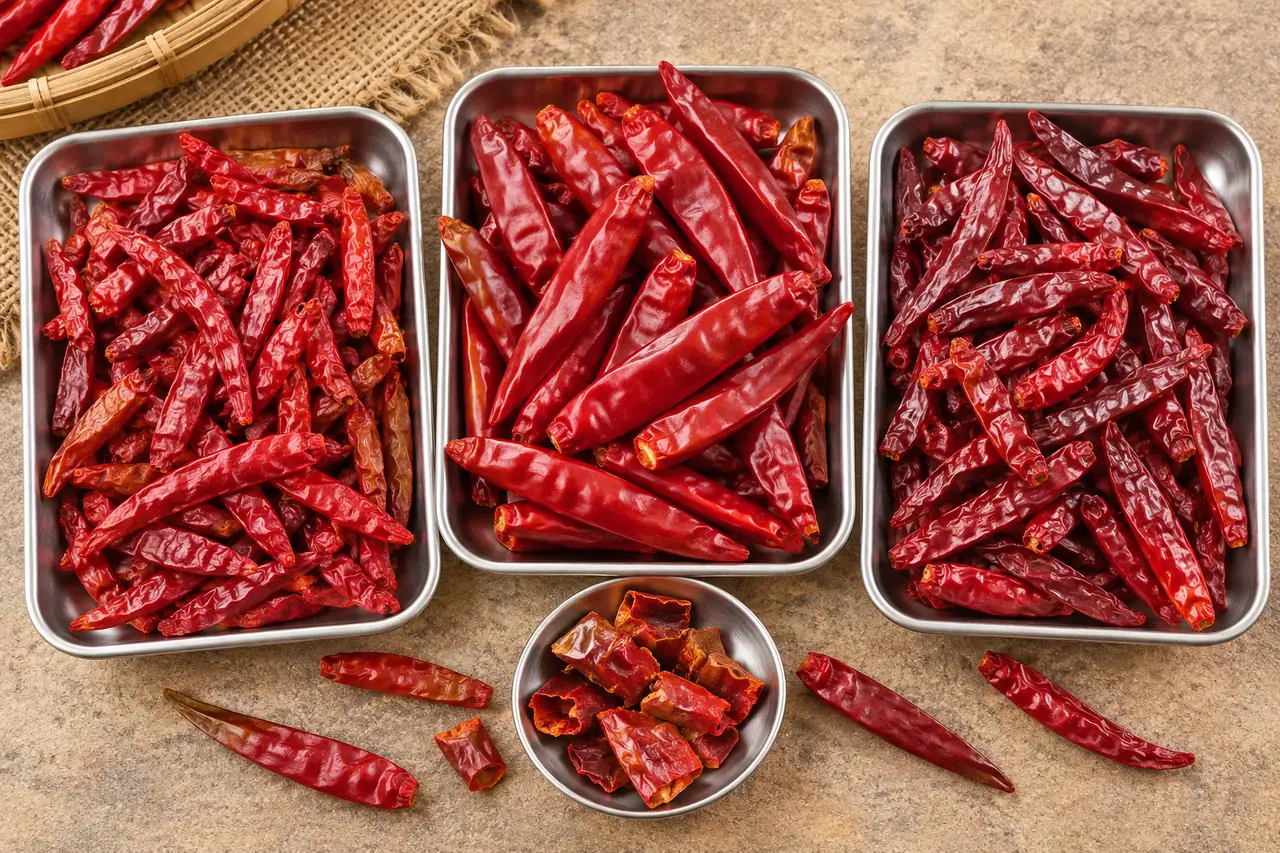
Match the named pod to your product brief
New Generation Dried Chili Pods
Shortlist for a whole-pod cooking range using the listed 3–6 cm size and full 50,000–90,000 SHU heat scope.
- Pod-size description
- 3–6 cm
- Full heat reference
- 50,000–90,000 SHU
- Stem descriptions
- Stemless or stem cut; select the supplied condition
Whole Dried Chili for Cooking
Build a sample-led cooking brief around intact red wrinkled pods and the product's stated preparation instruction.
- Form
- Whole dried red chili; intact red wrinkled pods
- Use instruction
- Do not eat directly
- Storage reference
- 24 months with cooler storage; actual package and conditions to agree
Sanying Dried Red Chili
Compare this named pepper for a 7–9 cm cooking or hotpot brief with its own 3,000–5,000 SHU reference and physical limits.
- Size and heat references
- 7–9 cm; 3,000–5,000 SHU
- Declared physical limits
- Broken rate ≤1%; impurity ≤0.3%; moisture ≤12%
- Storage reference
- 24 months in a cool, dry place; package applicability to agree
Review the selection criteria
- New Generation
- 3–6 cm; 50,000–90,000 SHU Smaller listed pod-size scope with its own pungency range.
- Sanying red chili
- 7–9 cm; 3,000–5,000 SHU A separate size and heat starting point for cooking.
- Whole cooking chili
- Intact red wrinkled pods Set pod and heat requirements through the selected sample.
Agree Intactness, Stems and Loose Material Separately
A representative mixed portion reveals more than one attractive pod.
Separate intact pods, broken pieces, loose seeds and stems when reviewing a portion. Record the selected size and how acceptance will be measured so both teams compare the same preparation.
Keep Sanying limits with Sanying
Sanying's declared limits are broken rate ≤1%, impurity ≤0.3% and moisture ≤12%. Keep these limits with Sanying and use the agreed methods and actual-order evidence when evaluating it.
The four parts of pod presentation
| Selection point | What to consider |
|---|---|
| Pod size | Selected size description and an agreed measurement basis. |
| Intactness | Whole peppers and broken material considered separately. |
| Stem condition | The accepted stemless, stem-cut or selected preparation. |
| Loose material | Seeds, fragments and foreign-matter criteria for the portion. |
Review the Whole Pepper After Its Chosen Preparation
Physical cleaning and ordered microbial treatment answer different requirements.
Cleaning and foreign-matter removal address the physical material. Put stems, broken pods and loose-material criteria into the same brief so the prepared pepper has a clear appearance target.
Assess the finished pods after treatment
When steam treatment is specified, assess the finished pods and the relevant analytical acceptance after that route. The treatment decision is order-specific; it does not establish a guaranteed microbial outcome.
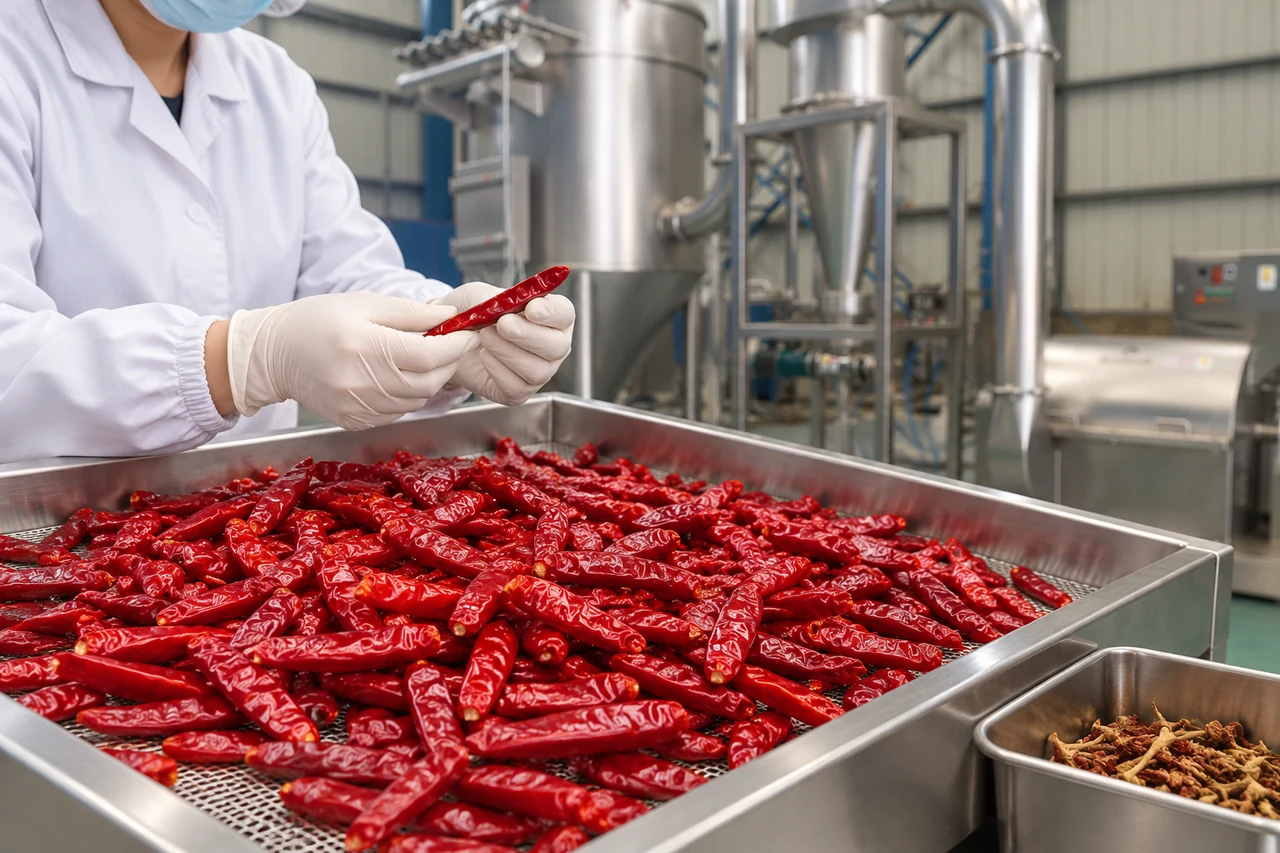
Link preparation to the result you review
- Physical preparation
Inspect stems, intactness and loose material in the prepared portion.
- Selected treatment
State the microbial requirement and ordered route.
- Finished material
Review pod appearance, cooking result and applicable analysis.
Compare the Pepper in the Intended Cooking Method
Keep cooking conditions consistent while assessing heat and pepper character.
Use the same recipe and preparation method for candidate peppers. Note pungency, pepper character and cooked appearance separately from the dry pod's colour and intactness.
Apply each pepper's preparation instruction
The general whole-pod cooking preparation says 'do not eat directly'; New Generation says 'clean before eat'. Develop usable instructions around the selected material and actual cooking use rather than treating one product's instruction as universal.
Dry presentation and cooking result meet at selection
- Before cooking
Pod appearance, stems and loose material.
- In the finished food
Pepper character, heat and cooked appearance.
- Consumer instructions
Preparation steps appropriate to the selected material.
Use the Right Evidence for Each Pod Requirement
Appearance, moisture, pungency and microbiology need their own acceptance basis.
Use the representative pod sample and physical criteria to describe appearance. Match the moisture requirement to the selected preparation, and the heat brief to the applicable sensory comparison and SHU method.
Request evidence for the selected pepper
RELIA handles moisture, particle size and routine checks internally; ASTA, SHU and microbiology use commissioned laboratories. Request the analyses relevant to your pepper, intended use and ordered treatment, linked to the actual material.
A practical whole-chili evidence set
- Pod review
Named pepper, stem condition and broken-material observations.
- Factory checks
Relevant moisture and routine physical requirements.
- Laboratory scope
Applicable SHU, microbiology or other requested analysis.
- Use information
Preparation instructions for the selected cooking ingredient.
Size the Retail Pack Around the Real Pods
Compare fit, removal and breakage with the ingredient inside.
We assess customer-specified packaging, can assist production of packs printed with your brand and also accept packaging you supply. Share the proposed dimensions, opening and net content.
Check pod removal and breakage
Try normal filling, handling and removal with the selected pods. Observe forced bending, breakage and material left near the opening before agreeing the specific product–pack combination.
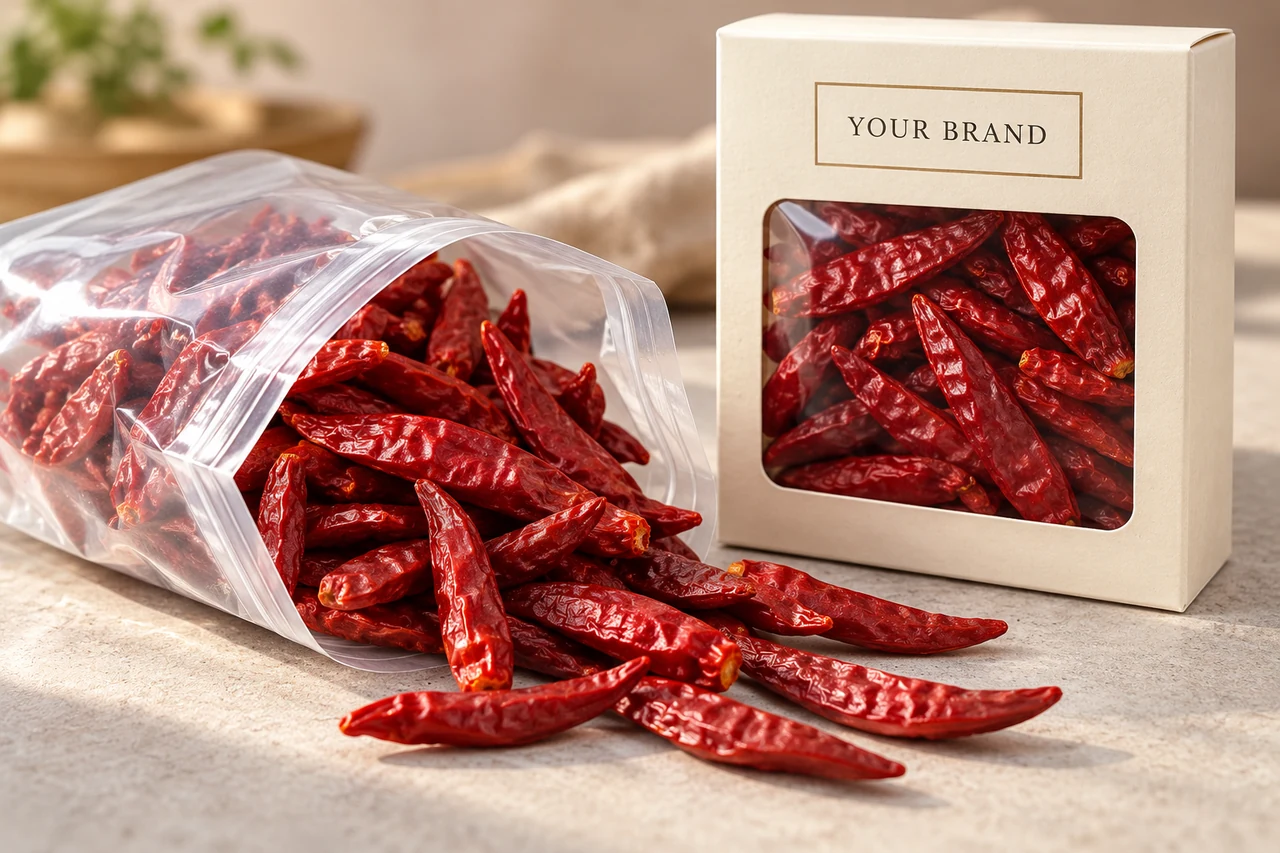
Three observations for whole-pod pack fit
- Fit
The selected pods sit comfortably in the proposed space.
- Removal
The opening lets the user take out the pepper.
- Handling
Compare breakage and loose pieces after normal movement.
Set Storage and Label Information for the Final Pack
Keep the selected pepper, package and keeping period together.
New Generation lists six months in a cool, ventilated place. Sanying lists 24 months in cool, dry storage. These are different ingredient references, so use the storage basis for the pepper you select.
Link retail labels to agreed storage
Agree the product, retail package, handling and proposed keeping period together. Carry the accepted composition and cooking instructions into the destination-market artwork review.
| Your input | Factory assessment focus | Decision to confirm |
|---|---|---|
| Pod selection Whole-pepper identity, dimensions, stem condition and heat requirement. | Proposed cleaned preparation to compare for appearance and cooking use. | Selected ingredient and the comparison or test basis. |
| Package fit Requested container, opening, net content and handling route. | Assess intact pods with the proposed pack; identify fit decisions before ordering. | Packaging format, component responsibilities and approval references. |
| Retail proposal Logo, artwork status, order quantity and destination. | Confirm selected pods, packaging supply and the scope of the quotation. | Agreed product, packaging and order scope for quotation. |
This is a planning handover for your enquiry. Packaging, MOQ, net content and timing are assessed and quoted for the product, format, printing method and quantity.
Bring Material and Packaging Approval into the Quote
A useful proposal starts with the pepper, cooking role and pack requirement.
Send a pod reference and intended cooking use, then review the prepared material, proposed pack and artwork responsibilities together. That makes the quotation specific to the chosen ingredient.
Define quantity, timing and packaging scope
MOQ, net content and lead time are quoted by product, package specification, printing method and quantity. Include requested launch timing so feasibility can be addressed within the proposal.
From the pod brief to a packing proposal
Review the next-step choices
- Select
- Named pepper, physical criteria and cooking purpose.
- Evaluate
- Representative material and the intended cooking result.
- Match
- Pack fit, opening and customer branding.
- Quote
- Quantity, timing and agreed approval responsibilities.
Share the Pod Reference for Your Retail Cooking Range
Connect the chosen pepper, cooking use and pack in the first message.
Send the pod reference, accepted stem condition and heat requirement, with the intended dish or cooking use. Add the proposed pack, net content and destination.
Add order quantities and required documents
Include quantity, requested timing and the documents your team needs for approval. We can discuss whole-chili preparation and customer-brand filling as one coordinated project.
Your whole-chili project handover
- Pepper
Pod reference, stems, physical criteria and cooking use.
- Pack
Proposed opening, net content and branding supply route.
- Launch
Destination, quantity, requested timing and approvals.