
Sourcing Cayenne Pepper Powder to a Customer Specification
When your customer specifies Cayenne, preserve that ingredient identity and compare the actual powder against the customer's composition, heat and particle requirements. Start with the declared no-additives red pepper powder or the separate hot-spicy Cayenne, keeping their specifications distinct. Send the customer brief and approved food reference so we can discuss the proposed preparation before the customer evaluates it.
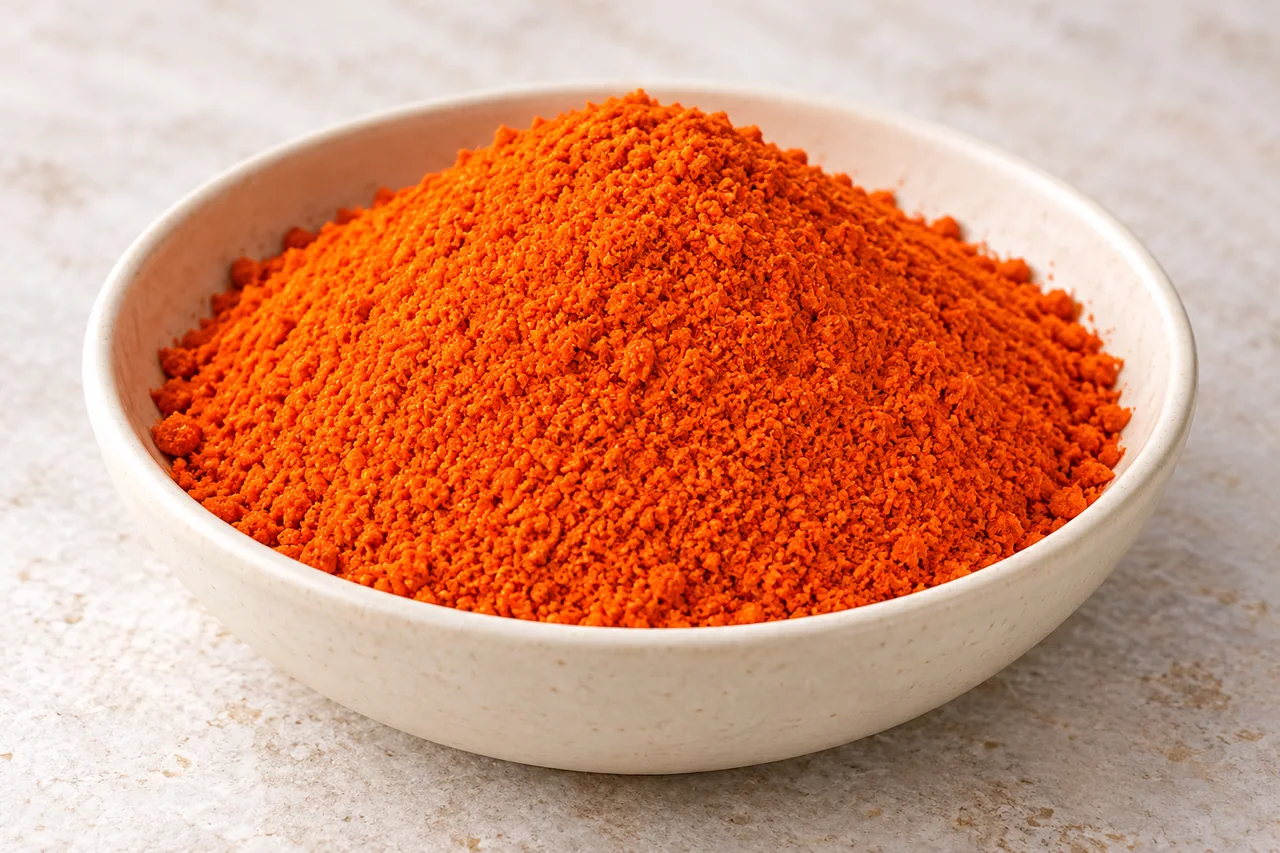
- Keep the customer definition
- The Cayenne name does not establish origin, genetics or a fixed heat level.
- Compare the actual candidates
- The hot-spicy powder cannot inherit the other listing's no-additives or moisture declaration.
- Approve the use
- Separate unchanged-dose acceptance from a customer-approved recipe adjustment.
Translate the Customer Brief into Material Decisions
Translate the customer brief into composition, preparation, particles and food decisions.
- 01Identity requirement
Preserve the customer’s commercial wording and any separately defined identity or origin evidence.
- 02Hard material limits
Identify composition, preparation and analytical requirements that can exclude a candidate.
- 03Application preferences
Use a food reference to compare acceptable flavour, heat experience and texture.
RELIA SPICES makes chili powders from purchased dried chilies through in-house cleaning, destemming, grinding, sieving and packing. We check routine moisture and particles internally; SHU, ASTA and microbiology go to laboratories.
Start with the declared red pepper or separate hot-spicy Cayenne according to the customer brief. Keep mandatory ingredient exclusions and preparation requirements with that same proposal. The Cayenne name alone does not establish origin, genetics or a fixed numerical heat level.
Use the Declared Red Pepper Powder as One Candidate
The declared red pepper candidate provides an explicit no-additives starting route.
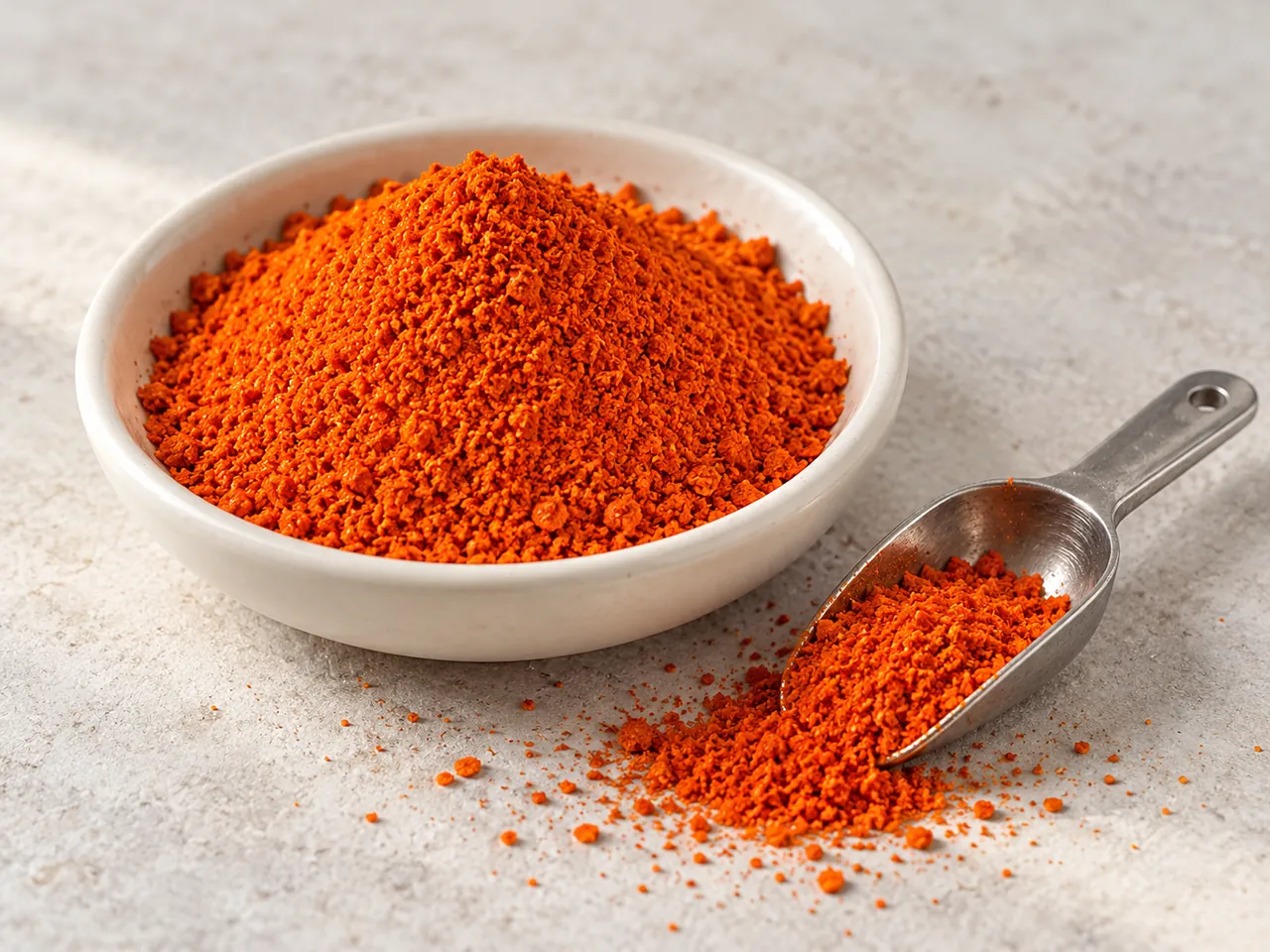
The dried Cayenne red pepper powder lists dried red pepper at 100% and no additives. It has a nominal 60-mesh reference, a separate 60–70 mesh customisation reference and qualitative mild, medium and hot descriptions. This is a useful starting candidate for a customer seeking a declared red-pepper ingredient with a defined grind discussion.
The catalogue also lists moisture at no more than 9% and an 80–220 ASTA customisable colour range. Use these as candidate references, not as a selected colour or a measured batch result. Request the complete declaration for the proposed grade when the customer’s exclusions are a deciding factor.
Ingredients to compare for this application
Declared Cayenne red pepper powder
Start when the customer needs an explicitly declared red-pepper ingredient with no additives and a defined grind discussion.
- 100% dried red pepper and no additives declared.
- Nominal 60 mesh; separate 60–70-mesh customization.
- Moisture limit: ≤9%.
Separate hot-spicy Cayenne powder
Evaluate when the customer's Cayenne use can be assessed against this material's own composition and sensory proposal.
- Cayenne commercial identity.
- Hot-spicy taste descriptor.
- 60Mesh reference.
These product specifications are a starting point for selecting a grade. Match the proposed material and sample to your food and order requirements.
Evaluate the Hot-Spicy Cayenne on Its Own Terms
The hot-spicy Cayenne remains a separate candidate with its own evidence.
| Candidate | Actual starting references | Customer decision still needed |
|---|---|---|
| Declared red pepper powder | 100% dried red pepper; no additives; nominal 60 mesh | Selected heat, complete grade and preparation |
| Hot-spicy Cayenne powder | Hot-spicy descriptor; 60 Mesh | Full formula and quantitative heat basis |
| Approved reference | Customer’s accepted material | Which differences are acceptable |
The other Cayenne listing describes hot-spicy taste and a 60 Mesh reference, without a numerical heat grade or complete formula. It may suit the customer, but cannot inherit the first candidate's no-additives declaration, colour range or moisture limit.
Resolve mandatory composition requirements before calling it equivalent. Then compare its actual heat, particles and food result against the same customer reference, rather than substituting on a familiar name alone.
Make the Customer’s Preparation Requirement Specific
Specify the required preparation alongside the powder, not through the commercial name alone.
- 01Define the restriction
Record composition, identity and preparation conditions.
- 02Describe the material
Use the actual RELIA powder proposal and particle basis.
- 03Set any steam requirement
Agree the order-specific treatment rather than assuming it.
- 04Review the food
Compare the same material in the customer’s accepted application.
RELIA SPICES prepares purchased dried chilies, then grinds, sieves and packs the selected powder in-house. A roasted-flavour request, particular treatment or restricted ingredient definition is a separate customer requirement, not something established by the Cayenne name.
Our in-house steam microbial-reduction equipment is used according to order requirements. If selected, keep that preparation with the grade and customer trial; equipment availability does not establish a universal sensory result.
Routine moisture and particle tests are internal; SHU, ASTA and microbiological analyses are outsourced. Compare the identified material in the customer's food at the current dose, assessing flavour, heat, colour and particles separately. Approval should address the actual restrictions as well as the tasting result.
Compare Cayenne in the Customer’s Finished Food
Use the customer's finished-food reference at the current accepted dose first.
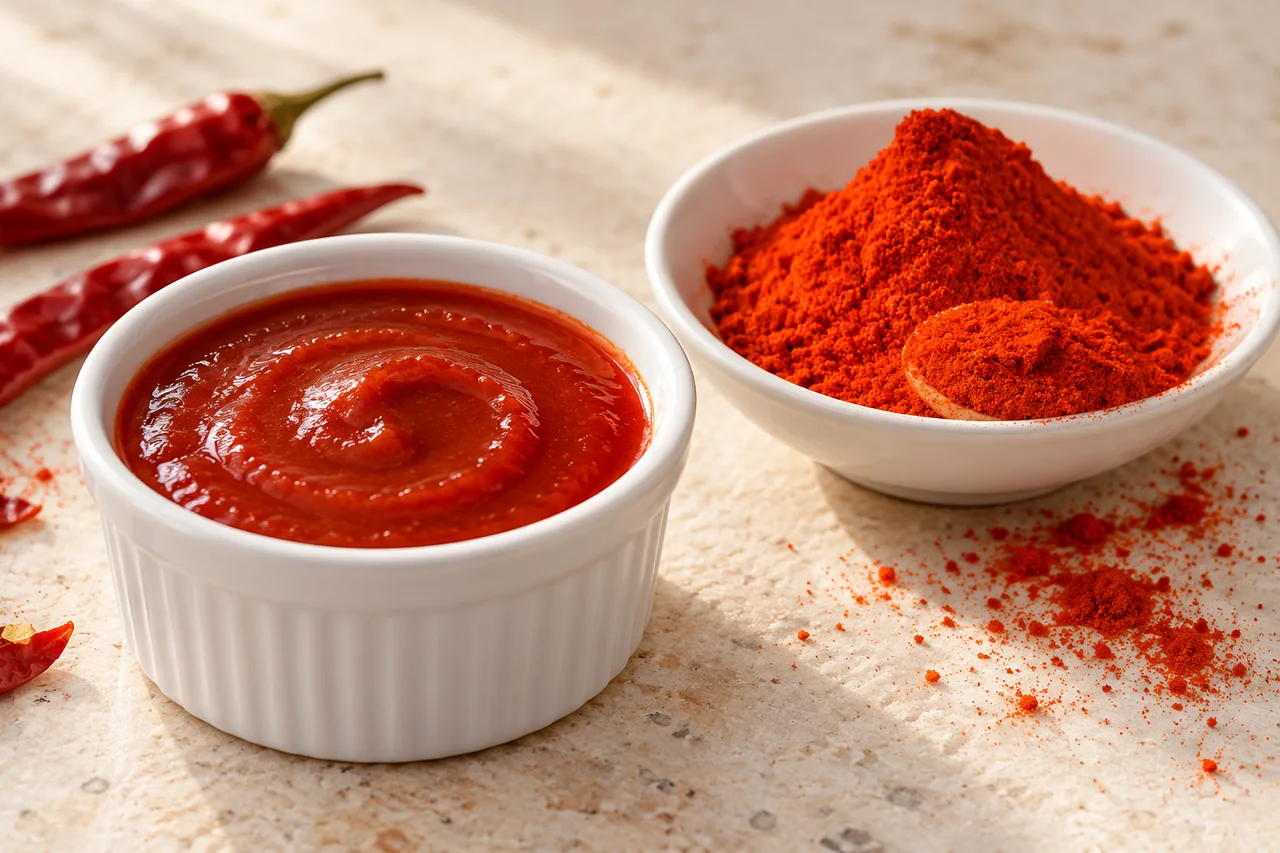
Prepare the approved reference and the candidate in the same recipe, with the same weighing basis, ingredient addition stage and finished serving conditions. Begin at the current accepted use level. Compare heat, flavour, colour and particle visibility separately, so a colour difference does not become a vague overall rejection.
If a dose adjustment is allowed, make it in a second trial and retain the changed quantity. A powder that works only after reformulation is a different approval outcome from a direct replacement. NMSU explains that chile pungency varies; a commercial Cayenne name therefore does not eliminate the need for this defined grade and food comparison.
Give Heat and Sieve Acceptance Separate Methods
Heat and sieve acceptance require their own measurement bases.
- 01Heat acceptance
Use the selected grade’s agreed analytical or application criterion.
- 02Particle acceptance
Specify sieve basis and distribution relevant to the customer’s food.
Choose the heat criterion the customer actually uses, including the analytical method and reporting basis where a numerical band is required. Mild, medium and hot descriptions are not substitutes for that band. Avoid adding a numerical target from another powder or a title alone.
For particles, state the sieve standard and required distribution rather than accepting 60 mesh as a complete pass criterion. ASTA’s public index treats particle distribution and pungency separately. Both can matter to a customer, but neither proves the other or predicts the entire eating experience.
Make Customer Approval Specific Enough to Reorder
Keep approval specific enough to distinguish the material and permitted recipe use.
- ✓Approved material
Connect the selected grade to the sample the customer actually evaluated.
- ✓Accepted use
Distinguish unchanged-dose use from a reformulation approved after a separate trial.
- ✓Change control
Identify the material and package differences that require renewed customer review.
Retain the exact candidate sample, the specification version and the trial outcome. Identify whether approval covers a direct replacement or a revised dose. Include unresolved mandatory conditions as open items; they should not disappear when a favourable sensory comment is summarized.
Define which later changes trigger another review. Composition and preparation changes can affect a customer restriction, while a particle or heat change may affect the recipe. A package change can alter handling even when the commercial ingredient name stays the same.
Carry the Selected Grade into Receiving and Storage
Apply the selected candidate's own warehouse and package conditions.
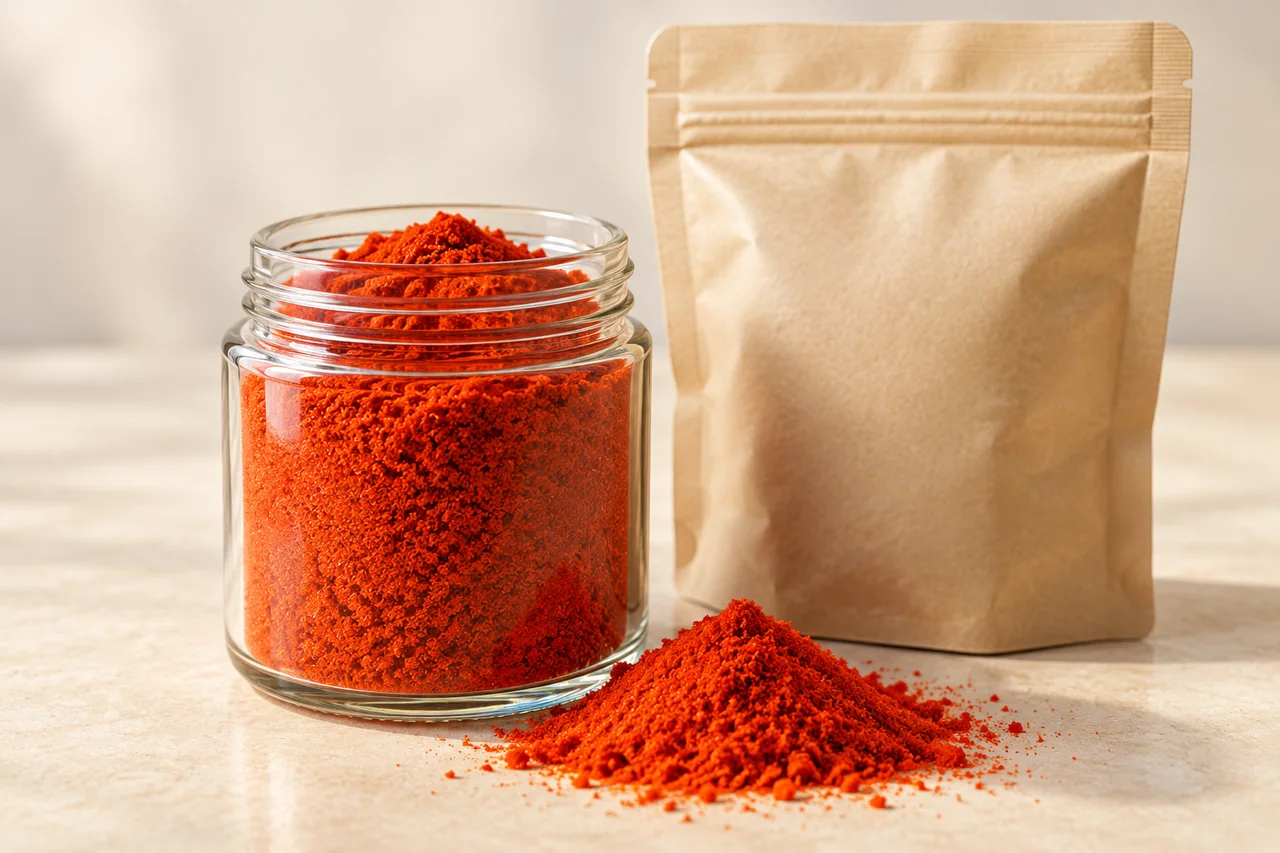
Use the selected declaration in the order and receiving criteria rather than a broad Cayenne category. The declared red pepper powder lists storage at or below 25°C and humidity at or below 60%, with 12 months stated. The hot-spicy candidate instead lists two years in a normal-temperature warehouse.
Keep these conditions independent and resolve the actual package and temperature meaning before relying on a duration. Neither duration automatically becomes an opened-pack or finished-seasoning life. Receiving should check the identity and pack of the selected grade, not merely that the label contains the word Cayenne.
Send a Customer-Ready Cayenne Enquiry
Send the customer specification and decision criteria rather than just the Cayenne name.
- 01Customer object
Provide the ingredient definition, reference and non-negotiable restrictions.
- 02Technical comparison
State heat, particles and the actual food comparison that will decide approval.
- 03Order scope
Connect sample, grade, package and quantity after the material decision.
Share the customer specification, approved reference and mandatory exclusions with the intended food and current dose. Add the required heat and particle criteria, the preparation restriction and the sample approval route. Quantity and receiving pack can then be discussed around the actual material being evaluated.
We can use that brief to identify a relevant candidate and make the differences visible. Choose the powder that clears the customer’s material requirements and food trial, rather than the proposal with the most familiar name.
- Customer name and ingredient definition
- Specification version and reference
- Composition restrictions
- Actual preparation requirement
- Heat, sieve and other grade criteria
- Quantity and approval documents
Your next purchasing decision
Talk through your customer’s Cayenne specification
Include the specification version, reference and mandatory ingredient or preparation restrictions.
Share the customer wording, specification version and current reference with RELIA SPICES. Include mandatory ingredient or preparation conditions and the heat and particle criteria that decide approval.
We can discuss the actual Cayenne candidate and relevant test allocation, then keep the accepted food use attached to the proposed order.
The enquiry page keeps this guide with your message. Add your quantity and destination so we can discuss the relevant material.