
Chili Processing History for Kimchi Ingredient Selection
Choose the powder or flake your kimchi needs, then discuss the ingredient treatment for that actual preparation. RELIA SPICES has in-house steam microbial-reduction equipment used according to order requirements, with microbiology tested through outside laboratories. Compare the supplied post-treatment material for cut, moisture, colour and eating texture in your recipe. Send the intended preparation and ingredient acceptance criteria so the factory and food-development discussions stay connected.
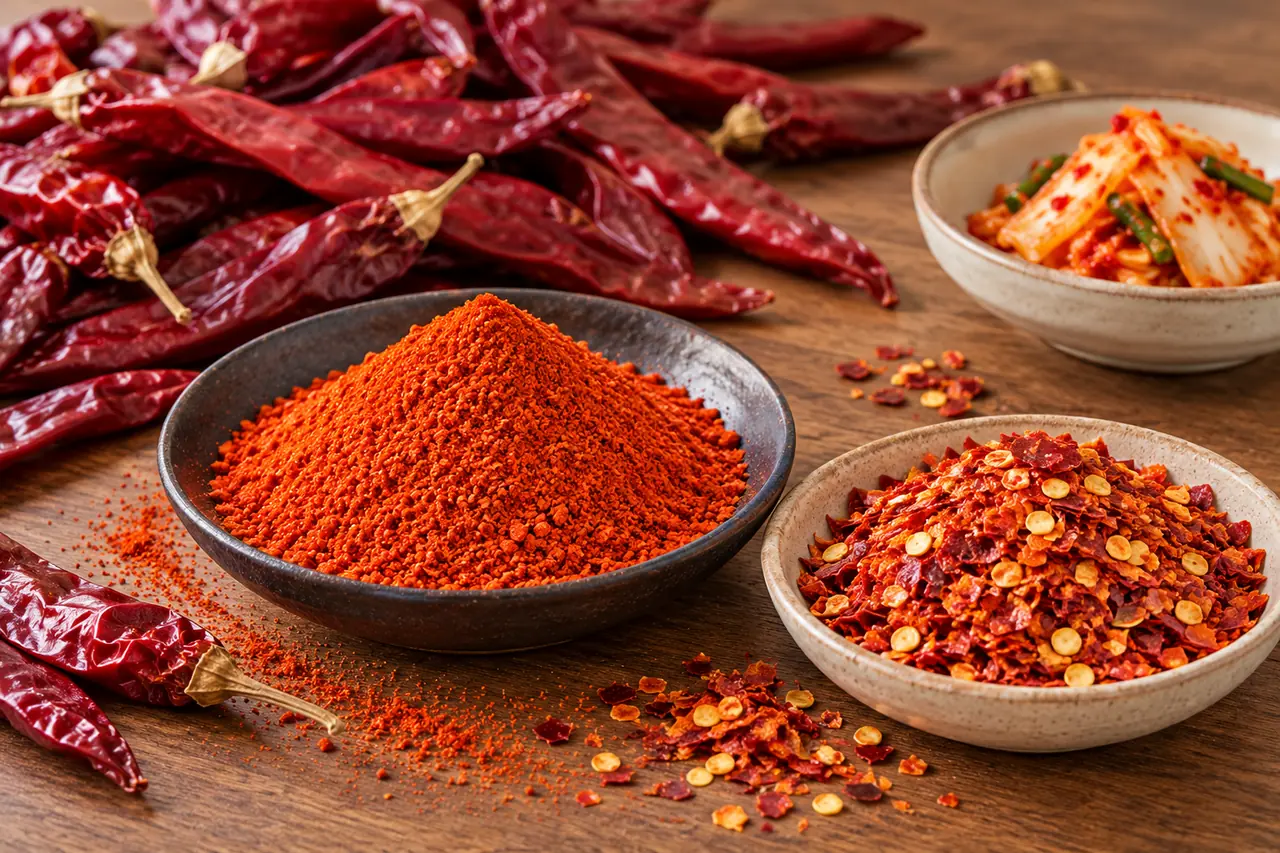
- Actual capability
- RELIA has in-house steam microbial-reduction equipment used according to order requirements.
- Testing roles
- Moisture and particle checks are internal; microbiology, ASTA and SHU use outside laboratories.
- Food comparison
- Evaluate the delivered preparation in the same kimchi recipe and process.
Choose the supplied preparation and ordered treatment
Our factory preparation and testing roles provide a concrete ingredient handover.
- 01Select powder or flake
Define the texture role and actual particle requirements.
- 02Agree ordered treatment
Connect the steam requirement and applicable laboratory scope.
- 03Compare delivered material
Check physical condition and the actual kimchi result.
RELIA SPICES cleans and destems purchased dried chilies, then grinds or cuts, sieves and packages the selected ingredient. We have in-house steam microbial-reduction equipment and use it according to order requirements. Moisture, particle size and routine checks are internal; ASTA, SHU and microbiology are arranged through outside laboratories.
For kimchi, Gochugaru-described powder lists 60 mesh and moisture ≤7%. Coarse flakes list 5–8 mesh, moisture ≤8% and impurity ≤0.3%. Choose the preparation and treatment together, then use the corresponding delivered sample in development.
Use the right evidence for each acceptance decision
A process description, validation and sampled lot result answer different acceptance questions.
| Evidence | Buyer use | Keep with it |
|---|---|---|
| Actual process | Identify the ordered material route | Preparation and order scope |
| Applicable validation | Assess the specified control | Defined material and conditions |
| Lot test | Review sampled-material acceptance | Sampling basis, method and result |
A process description shows which operation applies to the material. Applicable validation concerns its control under defined conditions. A lot result describes the sampled material and test method.
Tell us the ingredient criteria your responsible food-safety team requires for the product and market. Keep those requirements alongside the physical sample and your food trial, so a satisfactory texture result does not stand in for microbiological acceptance.
Ingredients to compare for this application
Coarse Gochugaru-described flakes
Select when visible pieces, seeds and fine coating are the kimchi's main physical requirements.
- 5–8 mesh reference
- Moisture ≤8%
- Impurity ≤0.3%
Gochugaru-described chili powder
Select a powder route when dispersion and fine particle feel are more important than visible coarse flakes.
- 60-mesh reference
- Moisture ≤7%
- Kimchi and hotpot-dipping uses described
These product specifications are a starting point for selecting a grade. Match the proposed material and sample to your food and order requirements.
Follow the ordered treatment into the delivered preparation
Keep the sample and package connected to the material delivered after the ordered route.
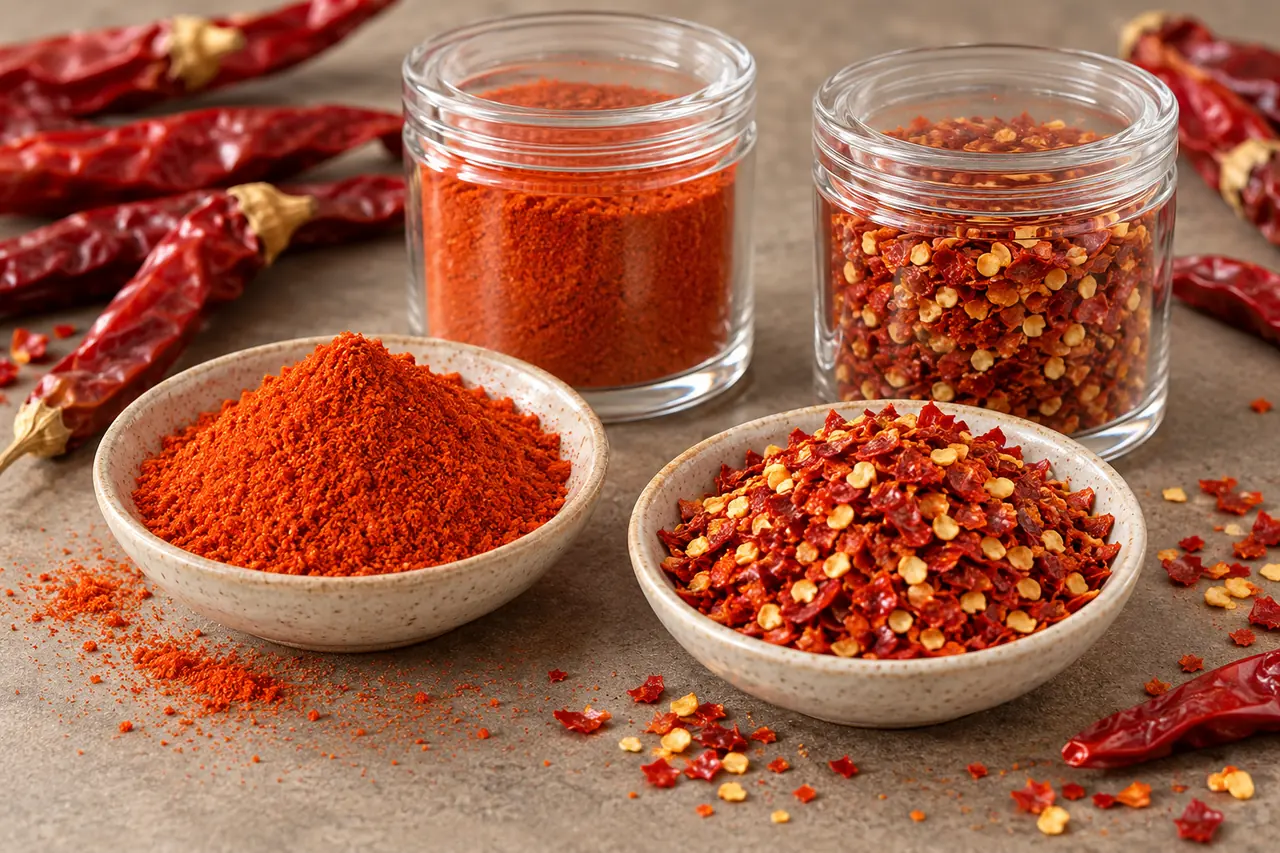
Discuss where the selected steam treatment sits within the preparation being ordered and which material reaches packaging afterwards. RELIA's established operations begin with purchased dried chilies; this does not claim an in-house fresh-pepper drying route.
Keep the post-route sample and chosen package with the order requirement. That makes a later question about clusters, moisture or the main cut a discussion of the actual delivered ingredient, rather than an isolated treatment label.
Check the material you will actually use
Inspect post-treatment particles before comparing the kimchi.
- 01Ordered process
The selected requirement applies to the identified material.
- 02Delivered condition
Physical checks describe the particles entering your recipe.
- 03Kimchi result
The preparation meets the actual food's sensory and technical criteria.
A microbial-reduction requirement and a particle specification meet in the delivered ingredient. Steam introduces heat and moisture, so inspect the post-route powder or flakes rather than relying only on an earlier dry sample.
Agree the treatment handover and relevant outside-laboratory microbiology with RELIA. Compare moisture, main cut, seeds, loose fines and clusters in representative supplied material. Then hold vegetable preparation, salt basis, dose and process fixed and evaluate colour, pepper character and particle feel at your accepted kimchi stage. If cut and treatment both change, record the candidate differences instead of attributing the outcome to steam alone. This gives the next discussion a material condition and a food result.
Use a controlled kimchi comparison rather than a treatment ranking
Use matched conditions when isolating treatment effects; otherwise compare the actual candidates honestly.
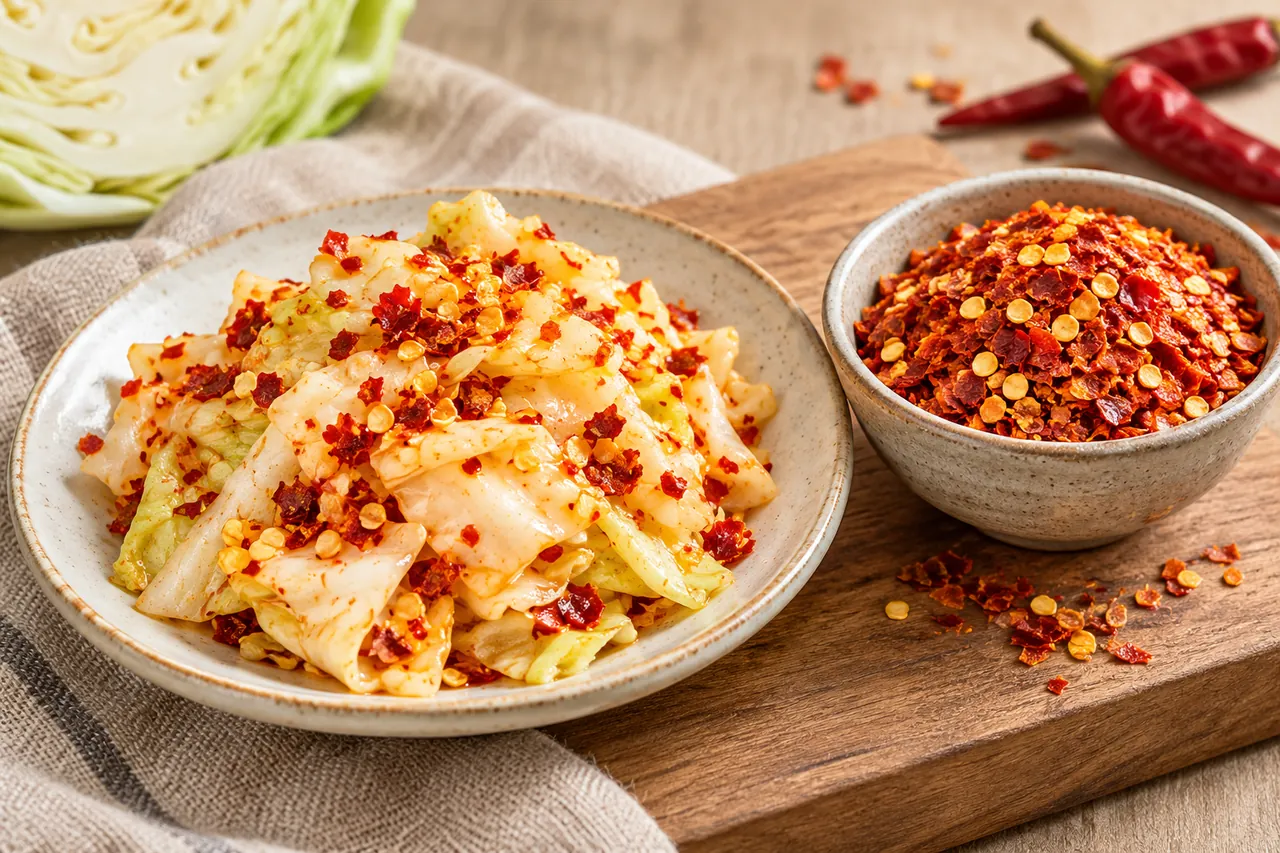
Hold the vegetable preparation, salt basis, chili dose, other ingredients, addition stage and handling constant. Compare the same physical chili preparation where the purpose is to isolate treatment history. If matched treated and untreated material is not actually available, describe the exercise as a candidate comparison with known differences. Do not imply a controlled treatment experiment. Prepare coded samples and record the development team's real observations so a preference for colour or texture remains separate from a food-safety acceptance decision.
Observe fermentation with its own acceptance criteria
Evaluate fermentation in your own recipe rather than predicting it from a treatment name.
- 01Ingredient control
Approve the actual material and its applicable process and lot evidence.
- 02Development trial
Keep recipe and fermentation conditions identifiable.
- 03Food outcome
Evaluate the kimchi against its own technical and sensory criteria.
Original kimchi research found that adding red pepper changed microbial community and metabolite development in its tested system. It does not predict the behaviour of these powder or flake lots, and it does not establish that a particular treatment improves fermentation. Use your actual fermentation route and the criteria set by the responsible technical team. Compare ingredient-stage observations with the kimchi's development, sensory profile and applicable analytical results. Keep the formulation and processing conditions with the outcome so it can be interpreted and repeated.
Check colour, heat and particle feel after the actual route
Approve colour, heat and particle feel in the finished kimchi.
- ✓Technical track
Keep process scope and required ingredient controls complete.
- ✓Sensory track
Evaluate real kimchi colour, aroma, heat and particle feel.
- ✓Change control
Reconnect any new dose, cut or route to both approval tracks.
Evaluate the finished kimchi, not only the dry material or the newly mixed paste. Use a consistent reference and preparation for colour, pepper aroma, heat and particle sensation. The powder and coarse flakes serve different texture roles; this difference must remain visible if both are shortlisted. If the dose is changed to balance flavour, record a separate formula version and revisit colour and solids. A satisfactory taste trial cannot fill an evidence gap about treatment, and a documented treatment cannot by itself approve the eating quality.
Keep receiving and opening conditions with the selected package
Keep receiving and opening conditions with the selected ingredient package.
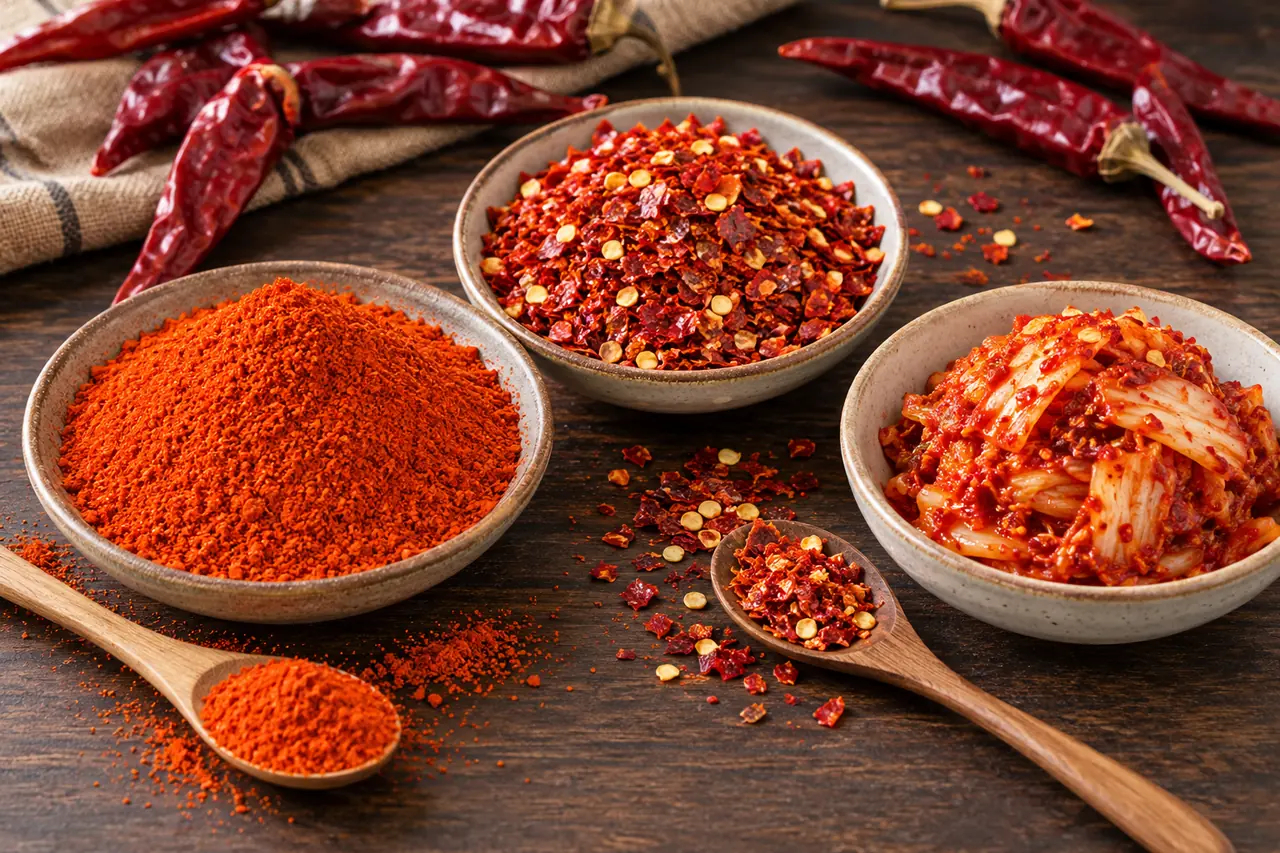
Agree the actual bag or other package, its integrity checks and the conditions supporting the ingredient's declared storage period. The listings' cool/dry statements apply to the identified material and package; they do not establish the kimchi's storage life or an opened-container period. Retain the product identity and lot through internal use. When the offered preparation changes, review both the process evidence and the practical handling observations instead of assuming that a familiar commercial name represents an unchanged ingredient.
Build one practical treatment and trial handover
Send the material, ingredient criteria and food trial observations in one handover.
- 01Material
Identify the actual powder or flake and the complete delivered preparation.
- 02Evidence
Specify applicable process, validation and lot-result requirements.
- 03Trial
Return kimchi observations with the real recipe and processing basis.
Send the actual powder or flake requirement, kimchi process and microbial-reduction objective. We can discuss our order-selected steam equipment, internal moisture and particle checks and the outside-laboratory work needed for the ingredient. Return post-route physical and kimchi observations so the selected preparation addresses both technical and eating criteria.
- Actual kimchi process
- Powder or flake specification
- Executed-treatment documents
- Analytical items and lot scope
- Trial and product acceptance
- Sample quantity and package
Your next purchasing decision
Discuss the treatment handover for your kimchi ingredient
Discuss the ordered preparation and tests needed for your kimchi ingredient.
Bring the required powder or flake, ingredient acceptance criteria and actual kimchi recipe and process boundary.
State the requested microbial-reduction arrangement and tests. We can connect the offered preparation to the corresponding physical checks and your food trial.
The enquiry page keeps this guide with your message. Add your quantity and destination so we can discuss the relevant material.