
Chili Powder and Fine Cuts for Cracker Dough
For a smooth cracker dough, start with Cayenne powder for pepper character or sweet paprika for colour. Choose a defined crushed cut only when visible specks are part of the design. Compare the coarse tail through your actual sheet and cooled bite. Send the dough base, sheet constraint and photographs of marks or hard particles so we can discuss the right powder or cut preparation.
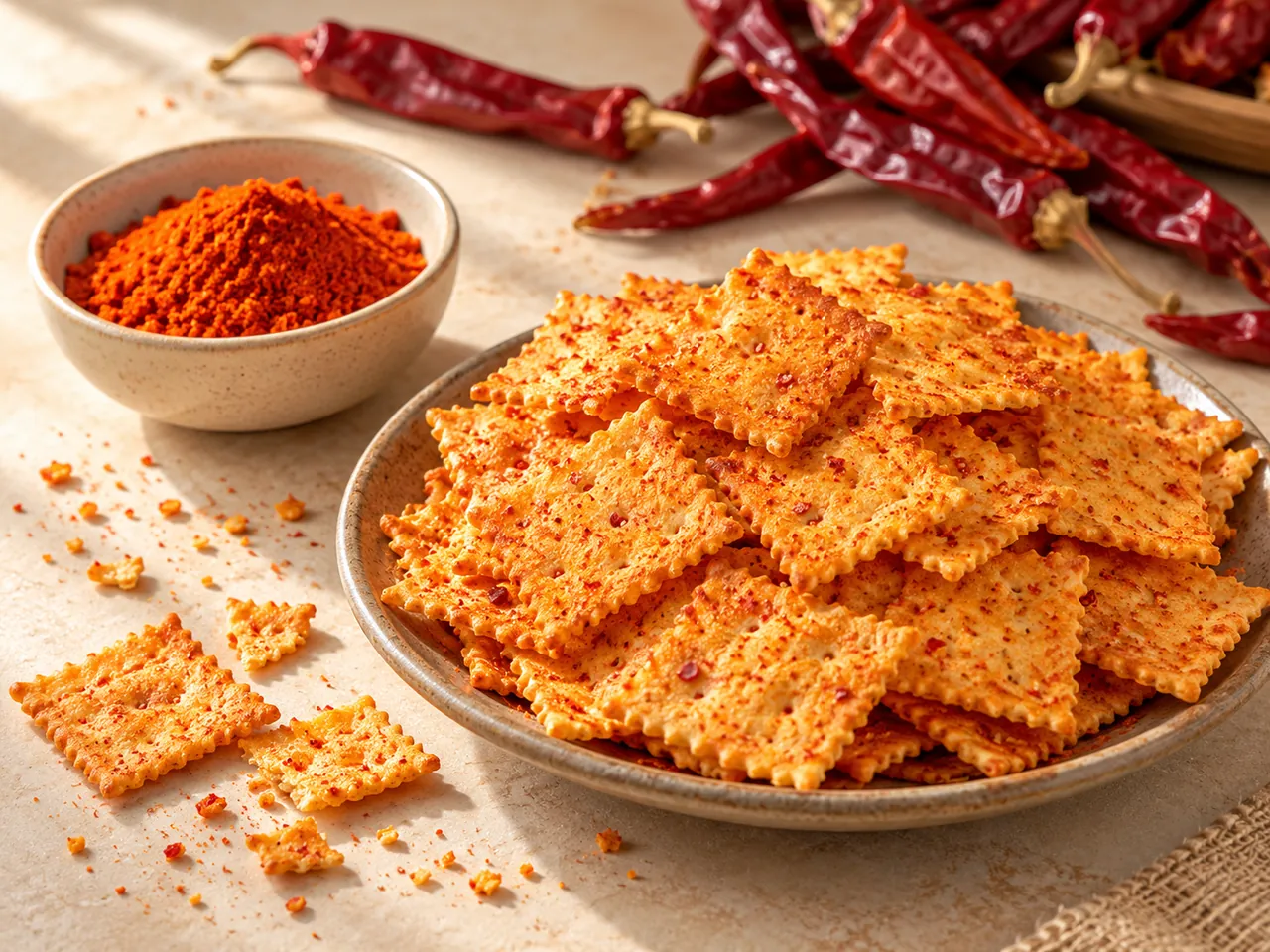
- Smooth background
- Compare nominal 60-mesh Cayenne with nominal 70-mesh sweet paprika according to flavour and colour role.
- Visible inclusion
- Crushed flakes carry independent 1.5 mm and 1.8 mm references, not a selected dimension pair.
- Forming constraint
- The actual coarse tail matters alongside average fineness when a particle can mark the sheet.
Prepare a fraction for your cracker sheet
Ask for the unwanted coarse fraction as well as the desired powder or visible speck.
- 01Powder route
Use an identified paprika or Cayenne powder when the dough needs a continuous seasoning background.
- 02Flake route
Use a defined crushed fraction when the cooled cracker needs visible pepper pieces.
- 03Sheet interface
Compare the pepper’s coarse fraction against the real sheet and cut format rather than an assumed thin-cracker grade.
At RELIA SPICES, we clean and destem purchased dried chilies before grinding or cutting, sieving and packing. For a thin cracker, define the coarse residue and hard fragments alongside the desired powder or visible speck. A nominal mesh is not the maximum dimension of every piece.
Moisture and particle tests are internal; ASTA, SHU and microbiology use external laboratories. In-house steam microbial reduction is selected according to order requirements. Share the wheat or gluten-free base and whether pepper sits inside the sheet or on its surface so the material proposal addresses the right interface.
Compare powders with an identified fine-cut candidate
Powder background and visible pepper are different cracker styles, not direct substitutes.
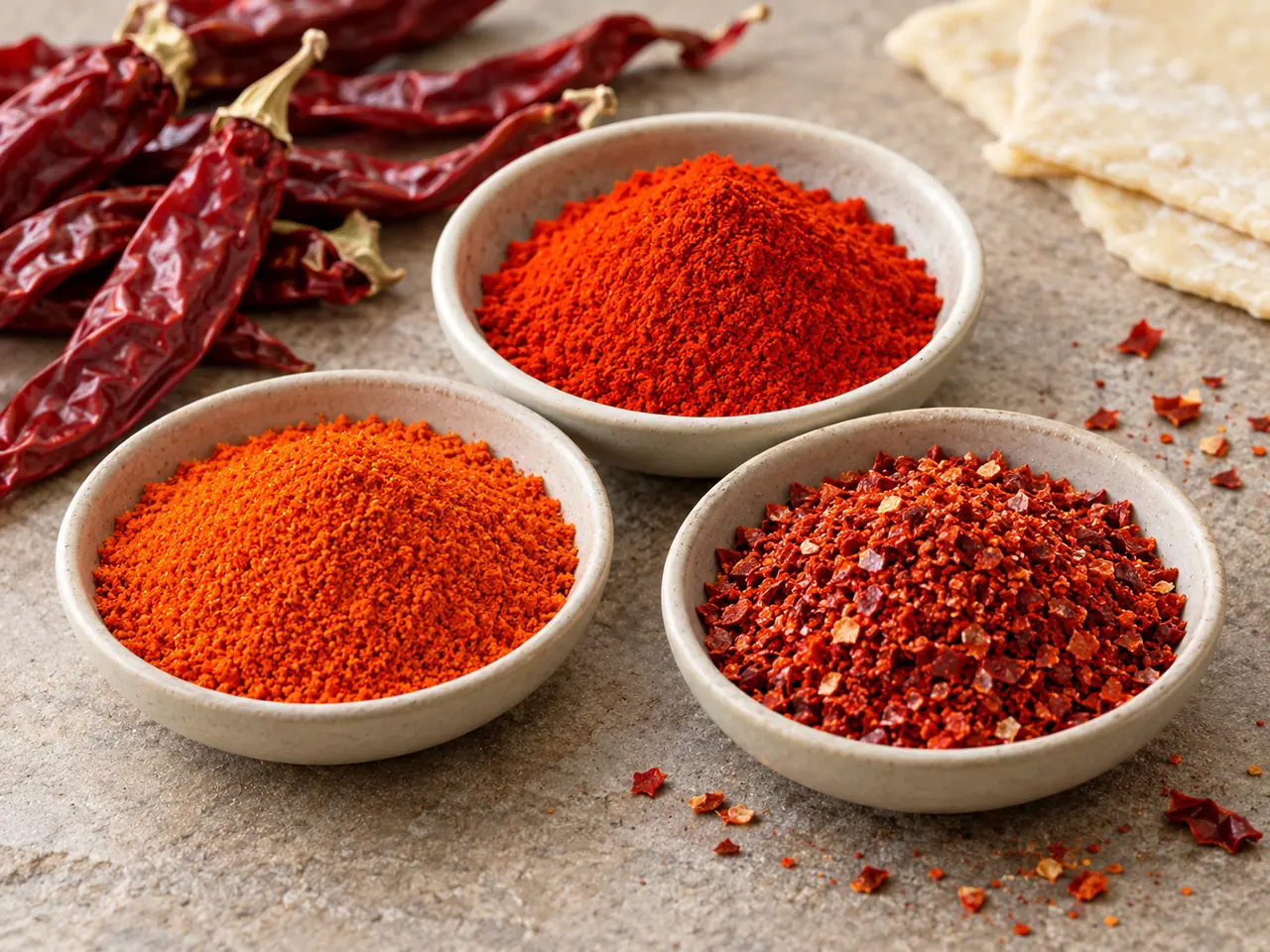
Cayenne powder has nominal 60 mesh and a separate customizable 60–70 mesh declaration. Sweet paprika gives nominal 70 mesh, customizable 80–220 ASTA colour and moisture ≤8%. These are different background-seasoning candidates. For visible specks, the crushed red chili flakes give independent 1.5 mm and 1.8 mm references and 3,000–5,000 SHU. Neither millimetre entry identifies a selected grade or a length-and-width pair. Obtain a usable actual sieve distribution rather than relying on the listing’s malformed size notation.
Ingredients to compare for this application
Sweet paprika for cracker colour
A first powder route when continuous colour is wanted without visible pepper pieces.
- Nominal 70 mesh.
- Customizable 80–220 ASTA.
- Moisture ≤8%.
Cayenne for powder seasoning
A separate pepper-profile option for the same smooth-dough comparison.
- Nominal 60 mesh; customizable 60–70 mesh is separate.
- Moisture ≤9%.
- Mild, medium or hot descriptive options require selection.
Crushed chili for visible specks
Use for a defined inclusion trial where the visible cut must fit the actual sheet and cooled bite.
- Independent 1.5 mm and 1.8 mm entries need an agreed actual basis.
- 3,000–5,000 SHU reference.
- Steam treatment is optional, rather than automatic.
These product specifications are a starting point for selecting a grade. Match the proposed material and sample to your food and order requirements.
Link the coarse tail to forming and bite
Inspect sheet defects before baking and coarse bite after cooling.
| Material question | Factory-side basis | Buyer-side endpoint |
|---|---|---|
| Powder background | Actual sieve distribution and coarse tail | Smooth sheet and cooled bite |
| Visible specks | Selected cut and hard-fragment criteria | Appearance without local tears |
| Ingredient water | Internal moisture result | Fixed dough-water comparison |
| Colour and heat | Applicable outside-laboratory evidence | Accepted cracker flavour and colour |
Cleaning and destemming remove unwanted material before size reduction. Grinding creates a powder background, while cutting retains pieces; sieving separates the offered fraction without making every particle identical. Define unwanted hard fragments separately from the visible-speck target.
Sweet paprika's nominal 70 mesh and ≤8% moisture differ from Cayenne's nominal 60 mesh and ≤9%. Internal physical checks describe the actual preparation; external colour or heat evidence identifies its profile. On your line, keep the dough base fixed and inspect bumps, tears and cut edges before baking, then grit and flavour after cooling. If a coarse piece marks the sheet, compare a narrower fraction before changing pepper, water and flour together.
Sample the dough before the oven
Sample several mixing and sheeting positions to distinguish streaks from a stronger ingredient.
- 01Hold the base
Keep flour, water and fat basis constant during the first pepper substitution.
- 02Inspect after mixing
Check several dough positions so a red cluster is not mistaken for a uniformly stronger material.
- 03Inspect after sheeting
Track the actual pepper cut through forming before attributing a defect to baking.
Take dough from more than one mixing and sheeting position. Look for pepper islands, streaks, dry agglomerates and an uneven visible-speck count before baking. Retain a plain dough and an accepted-pepper reference. This separates an uneven feed from a later baking effect. Compare the initial and later dough portions if the mix waits before forming, because the same amount of pepper can be distributed differently even though the weighed recipe did not change.
Taste the cracker after baking and cooling
Judge pepper flavour, colour and hard particles separately in the cooled cracker.
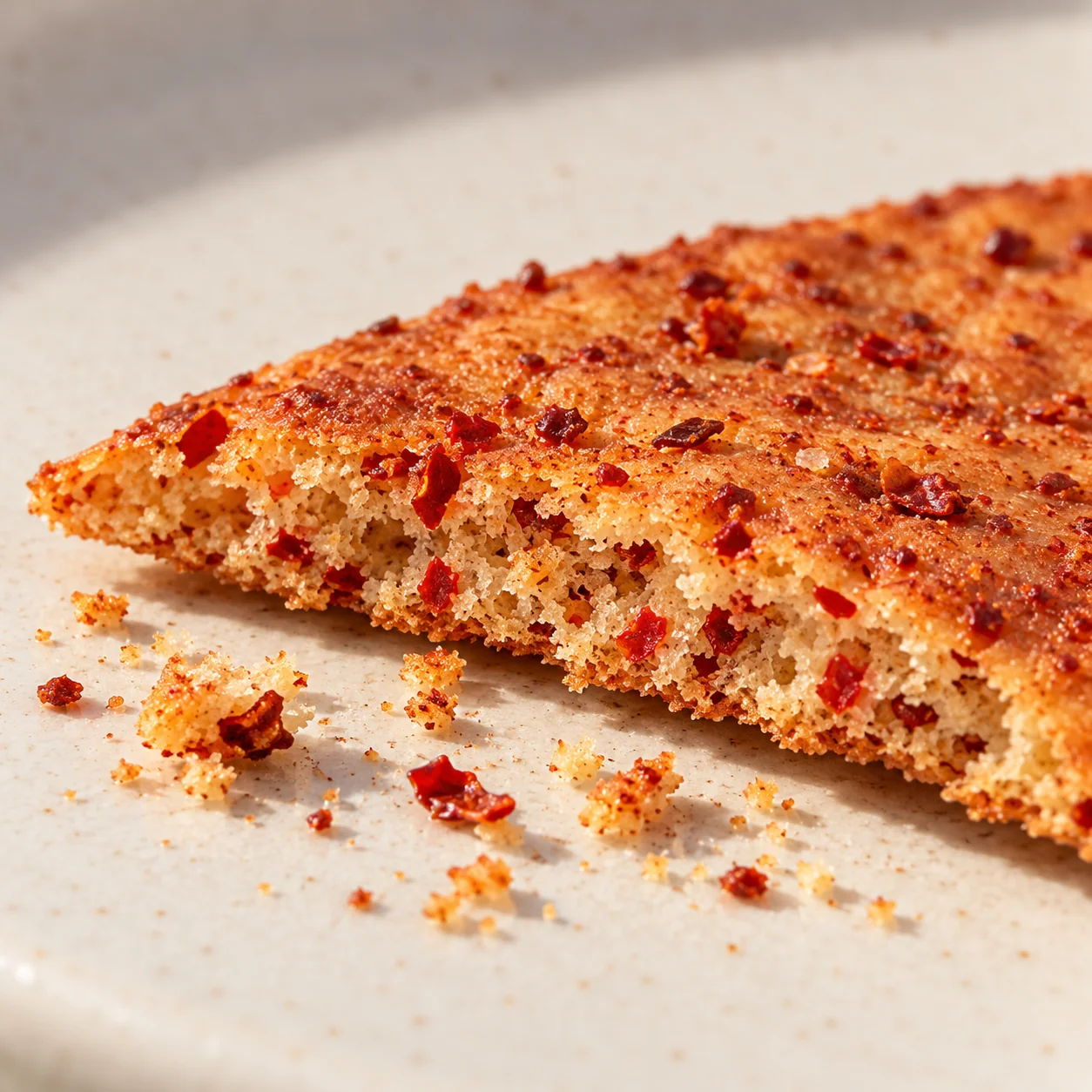
Judge the cracker only after the normal baking and cooling sequence. Compare the broken cross-section, both surfaces, pepper aroma and the bite of coarse particles. The crushed red chili-flake listing's full 3,000–5,000 SHU declaration applies to an ingredient reference, not cracker heat. A redder surface can also reflect browning in the base. Keep appearance separate from flavour: if a powder reaches the colour target but produces the wrong pepper character, it is not equivalent to the accepted ingredient.
Align the selected treatment with cracker preparation
An optional ingredient treatment and your oven process need separate approval.
- ✓Crushed flake reference
The listing states raw and AD with optional steam treatment; optional does not establish execution.
- ✓Cayenne reference
Stir-fried wording and an AD-dried-and-ground description require a coherent offered process.
- ✓Oven responsibility
Approve the actual ingredient and cracker process separately; an oven step alone is not an ingredient treatment certificate.
RELIA SPICES has in-house steam microbial-reduction equipment used according to order requirements. We can discuss that actual option alongside the powder or cut intended for your cracker. Identify the selected route where Cayenne has stir-fried and AD-dried-and-ground wording, or where crushed flakes list steam as optional. Internal moisture and particle tests do not replace outside-laboratory microbiological assessment. CFIA guidance separates inspection, sorting and treatment controls; your team should qualify the ingredient and oven process at their respective boundaries rather than assume either one automatically validates the other.
Inspect the packed cracker under its own conditions
Loose cracker fragments and loose pepper are different packing observations.
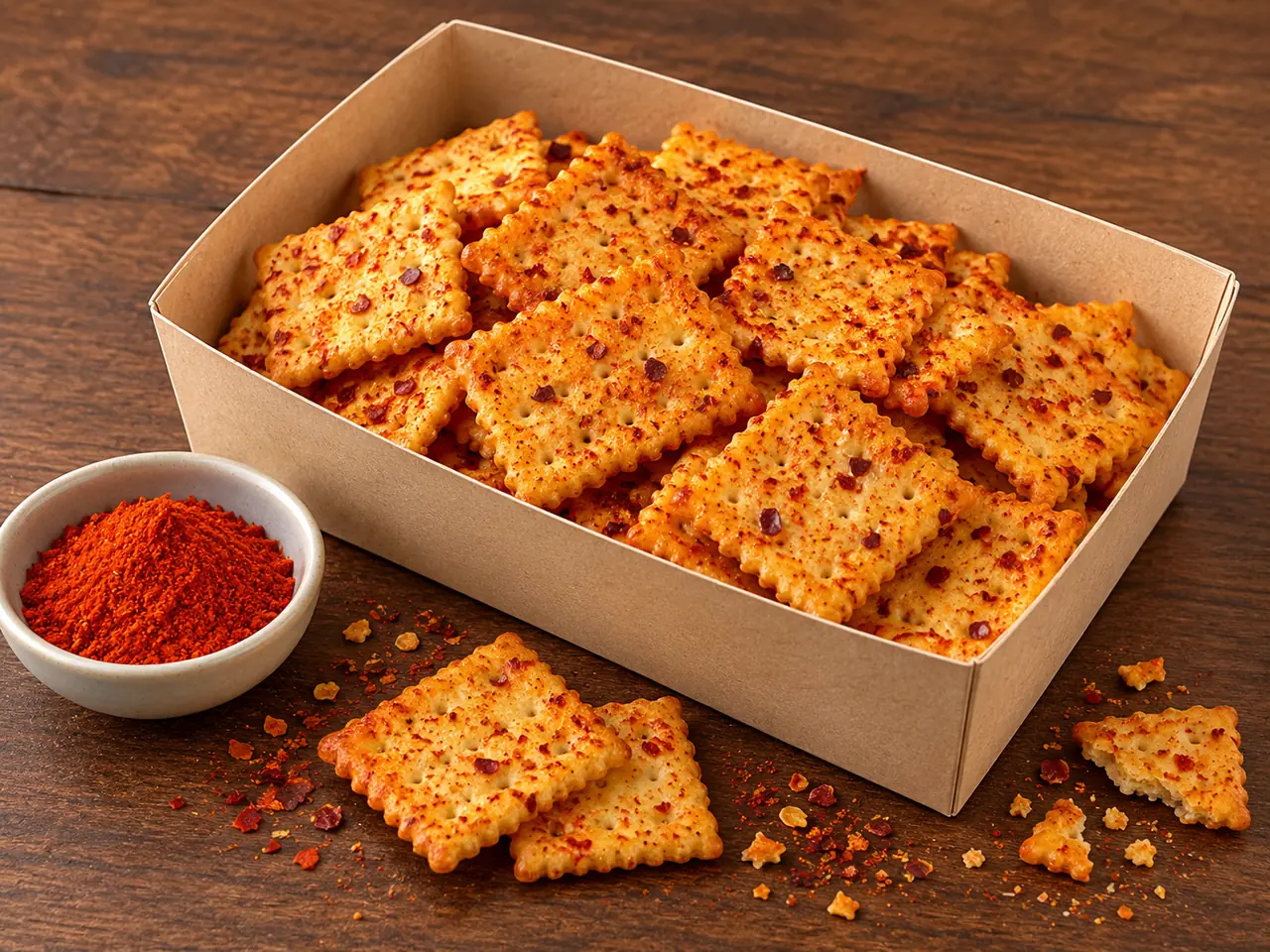
After packing, inspect loose cracker fragments separately from loose pepper. Compare the same pack and handling route for every candidate. If pepper pieces remain hard or pull free during breakage, keep that observation with the actual cut rather than calling the whole cracker brittle. The sweet paprika powder's ingredient storage declaration and the crushed red chili-flake listing's two-year cool-dry reference do not establish the cracker's storage life. Product crispness and flavour over storage need their own finished-pack assessment.
Compare offers for the same cracker style
Compare ingredient use only against the same accepted cracker style.
- 01Smooth background
Compare nominal 60-mesh Cayenne or nominal 70-mesh paprika with the actual distribution and desired cooked flavour.
- 02Visible inclusion
Compare the independent 1.5 mm and 1.8 mm references only after the actual measured cut is selected.
Compare ingredient use at the same cracker appearance and sensory endpoint. A powder and a cut may both be acceptable while serving different product styles, so a price comparison alone cannot make them substitutes. Include the fraction you reject during receiving only if it has actually been measured. A useful factory response identifies the actual grind or cut, composition and applicable process, allowing the next trial to change one ingredient characteristic without redesigning the entire dough.
Send a sheet-and-bite ingredient brief
Send sheet constraints and a cooled-product reference together.
- 01Describe forming
Provide the dough, sheet format and the point where bumps, tears or edge loss appear.
- 02Describe eating
Use a cooled cracker reference for pepper flavour, visible specks and hard-particle limits.
- 03Discuss supply
Request the defined powder or cut and its actual preparation; qualify performance on your own process.
Identify the dough base, sheet format and whether smooth colour or visible pepper is the priority. Link the powder or crushed-flake candidate and send photographs of bumps, tears or hard particles with the cooled reference. Include the relevant coarse limit, heat role, treatment requirement and package. We can then discuss an actual preparation and sample comparison for your forming route.
- Dough type and sheet format
- Powder background or visible specks
- Particle limits and measurement basis
- Mixing, baking and cooling route
- Finished colour, heat and texture reference
- Document, package and quantity needs
Your next purchasing decision
Specify pepper for your cracker sheet and bite
Discuss a powder or cut for the actual forming and eating target.
Share the dough style, sheet constraint and photographs of marks or hard particles with Qingdao Relia Spices Co., Ltd. / RELIA SPICES. Tell us whether smooth seasoning or a visible inclusion is the priority.
The enquiry page keeps this guide with your message. Add your quantity and destination so we can discuss the relevant material.