Sourcing Chili Powder, Flakes and Whole Pods for One Project
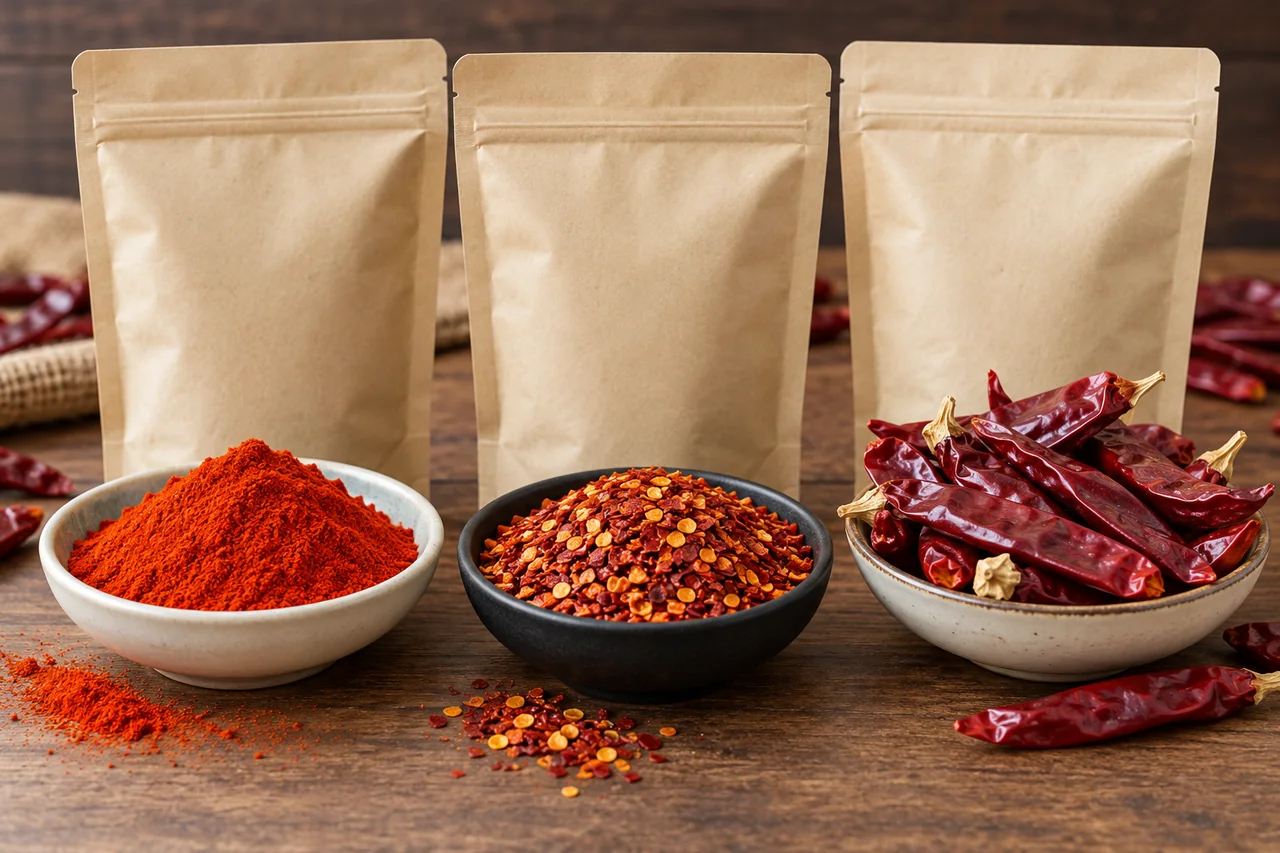
Use powder for dispersed colour and flavour, flakes for visible chili, and whole pods when your operation needs an intact pepper to prepare. You can discuss these forms in one project, but give each its own food role and acceptance criteria. Start with the paprika, seeded flakes and whole-pod candidates below, then send the form, intended use and quantity for each line.
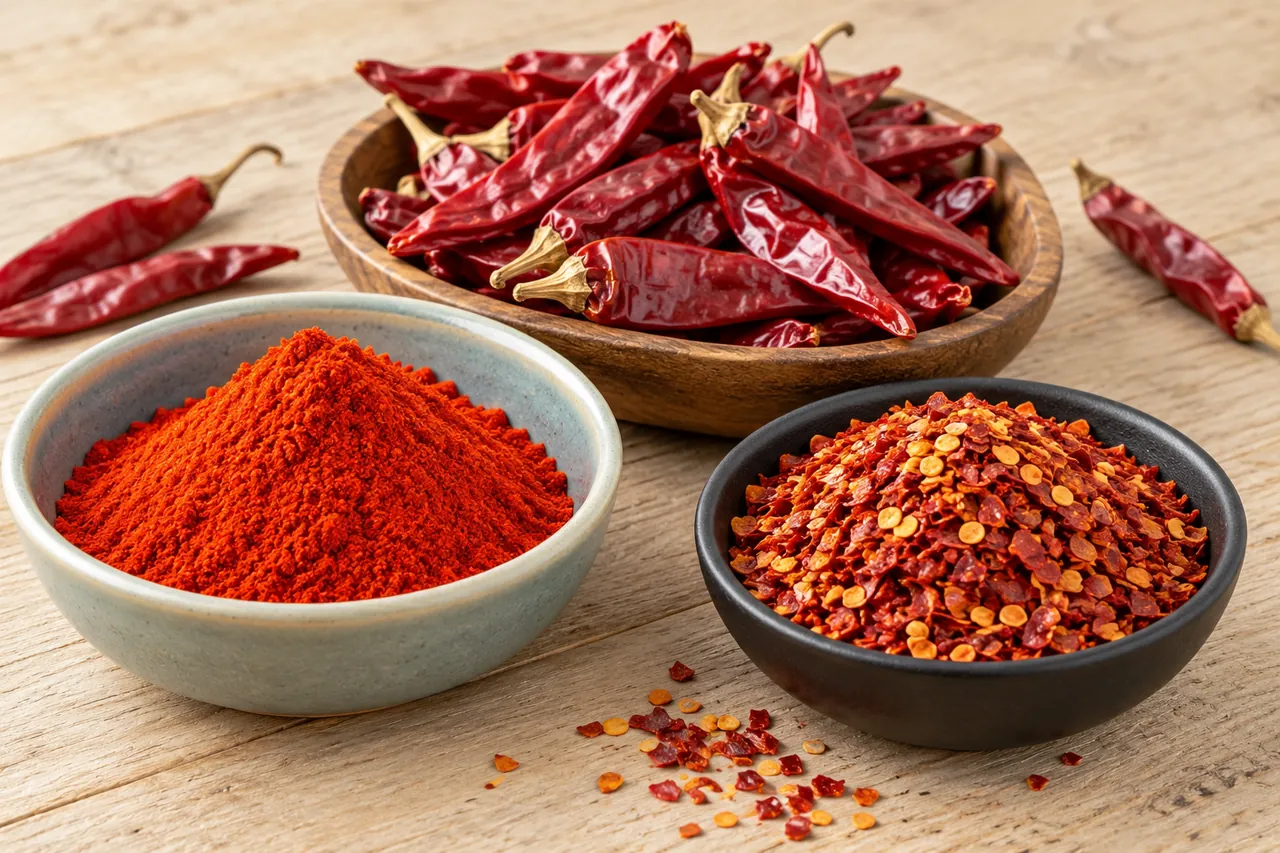
- Powder
- Nominal 70-mesh paprika starts the ground-ingredient discussion.
- Seeded flakes
- Define cut, seeds and fines separately from the 7,000–10,000 SHU reference.
- Whole pods
- Evaluate the preparation your operation will perform before the pods enter food.
Separate the Jobs Before Comparing the Materials
A shared factory discussion does not make the three forms interchangeable.
| Purchase line | Food or preparation job | First comparison |
|---|---|---|
| Ground powder | Dispersed colour and flavour | Actual grade in the food base |
| Seeded flakes | Visible chili inclusion | Cut, seeds and fines before/after handling |
| Whole pods | Buyer further preparation | Cleaning, sorting and usable output |
RELIA SPICES prepares dried chili in-house: cleaning and destemming prepare the input, while grinding or cutting/crushing creates different physical forms before relevant sieving and packing. Choose the form by the job it must do in your food or operation.
Keep nominal 70-mesh paprika, seeded flakes and whole pods on separate lines. Routine moisture and particle checks are internal; ASTA, SHU and microbiology are handled by laboratories as relevant. Approval of one form should not become approval of the other two.
Build the Powder Line Around the Paprika Grade
Select the paprika grade for its own mixing, colour and texture task.
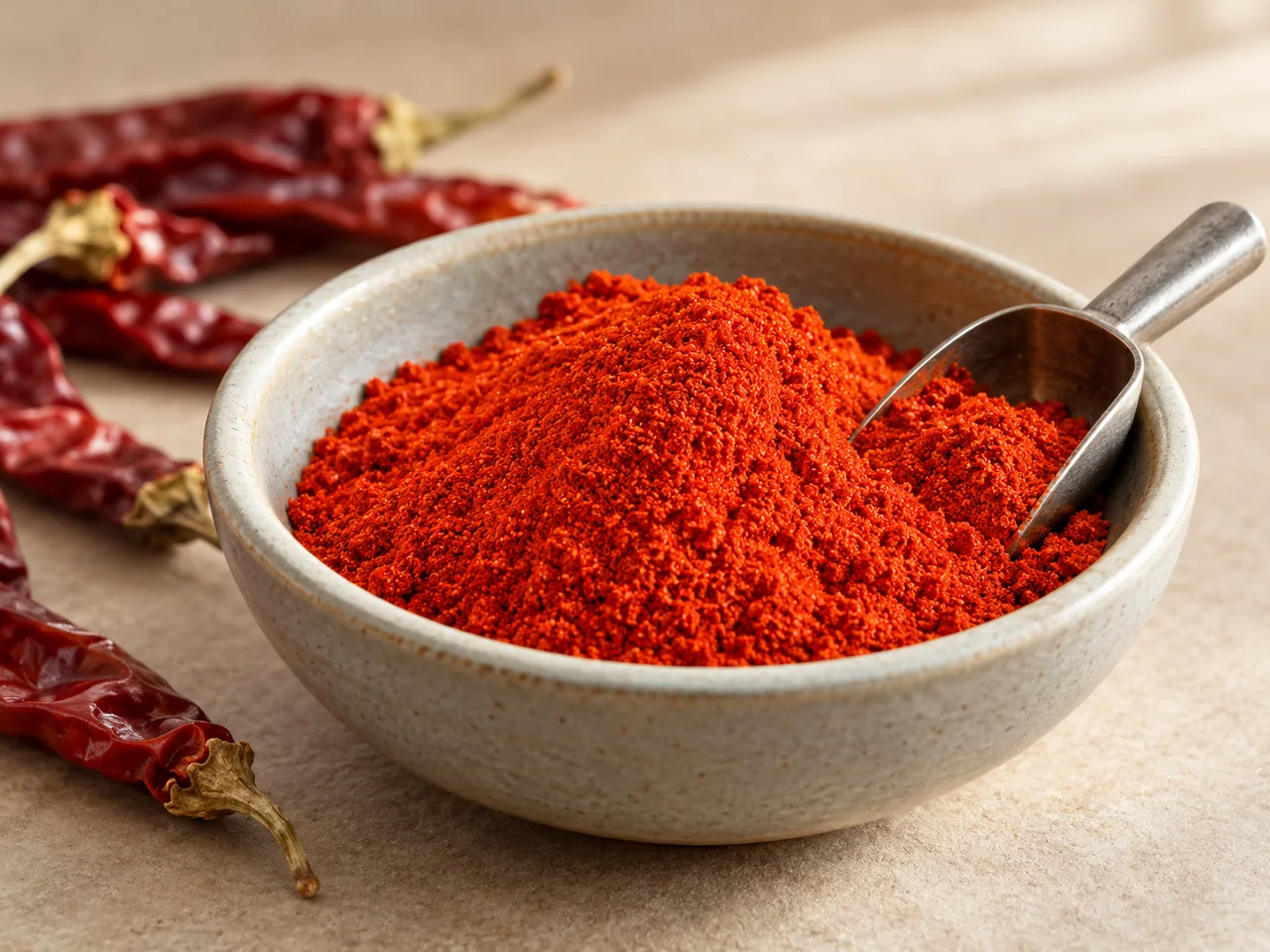
The sweet paprika powder lists nominal 70 mesh, a separate customizable 60–70 mesh reference, an 80–220 ASTA range and moisture ≤8%. These facts help start a ground-material specification. They do not define the flakes or pods elsewhere in the project.
Use equal weighed additions in the food for the first grade comparison. Look at the result after normal mixing or cooking, not only at the powder surface. A suitable powder line ends with a chosen grade and the actual recipe condition in which it was accepted.
Ingredients to compare for this application
Paprika powder for dispersed colour
Use as the project's ground line when the food needs a fine paprika background rather than visible pepper pieces.
- Nominal 70 mesh with separate 60–70-mesh customization.
- 80–220 ASTA customization.
- Moisture specification: ≤8%.
Coarse seeded chili flakes
Evaluate for visible chili pieces when the food can accommodate the actual cut, seeds and fine fraction.
- Dried red chili flakes with seeds.
- 7,000–10,000 SHU reference.
- 12 months with cool, dry storage described.
Whole dried red chili pods
Start the intact-pod line when your operation will carry out the relevant cooking or further preparation.
- Whole dried red chili; AD descriptor.
- Instruction: do not eat directly.
- Cooler storage with a 24-month reference.
These product specifications are a starting point for selecting a grade. Match the proposed material and sample to your food and order requirements.
Set a Flake Criterion That Survives Handling
Judge the flake cut after the handling that could create fines.
- 01Cut and fines
Choose a measurable cut criterion and inspect material generated during normal transfer.
- 02Seeds
Define the desired visible seed condition independently from the cut size.
- 03Heat
Use the full declared range only as the starting basis for the selected material.
The seeded red chili flakes have a written 7,000–10,000 SHU reference and are described as dried, Raw and AD. Their cut still needs definition because separate dimensional references occur in the listing. Do not turn those references into two promised supply options.
Inspect the sample on a contrasting tray, then transfer it through the normal handling route and inspect again. Count or weigh the fractions your team needs to control, such as coarse pieces, fines and seeds, using one agreed procedure. The post-transfer appearance is important when the food must show recognizable flakes.
Choose the Preparation Route Before Setting One Grade
Choose the required preparation output before setting its physical acceptance criterion.
- 01Intact pods
Keep the buyer’s later cutting or grinding task explicit.
- 02Visible pieces
Define the actual cut, seeds and fine fraction.
- 03Ground powder
Specify the particle distribution and food role.
- 04Separate approvals
Evaluate each preparation at its own acceptance endpoint.
An intact pod preserves material for later preparation. Cutting or crushing creates visible pieces; grinding produces a finer particle population. The right output depends on whether your food needs smooth dispersion, recognizable flakes or whole-pepper character.
RELIA SPICES cleans purchased dried chilies, removes foreign matter and stems, then grinds or cuts/crushes, sieves and packs the proposed material. Define each requested output separately. Sieving does not turn an unexplained dimensional entry into agreed length and width.
Test powder in its mixing or texture task, flakes after normal transfer and cooking, and pods through your actual preparation. Use internal physical checks and relevant external colour, heat or microbiological analysis for each selected material.
Use Separate Samples for Separate Food Decisions
Compare each form with its own reference and intended food endpoint.
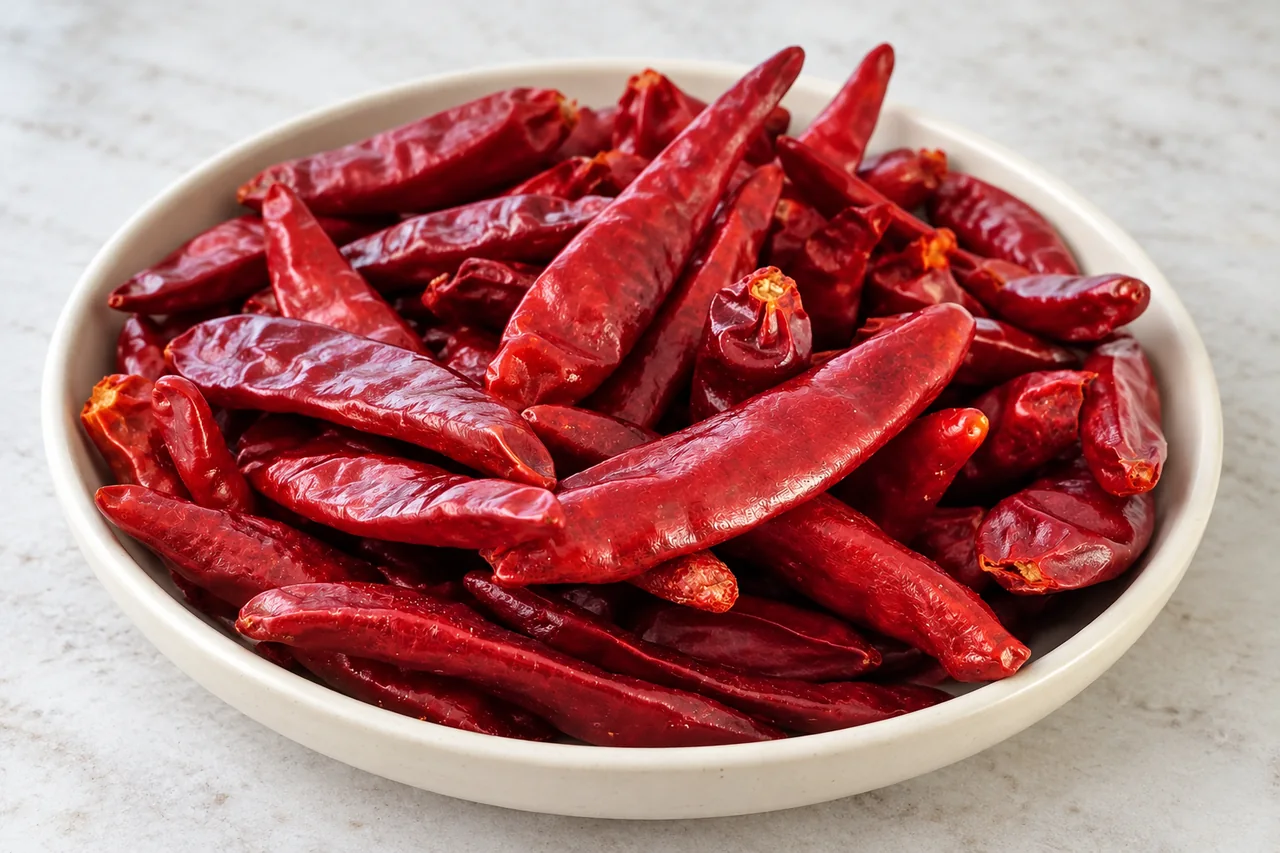
Put a distinct sample identity on every material in the project. Powder observations should address the food colour, flavour and particle result. Flake observations should address recognizable pieces and seed appearance. Pod observations should address the intended prepared output and the work needed to obtain it.
Compare each with its own reference rather than arranging three forms in a single overall quality ranking. A powder can be the best choice for a smooth sauce and the wrong form for a visible chili garnish. The project decision is a set of fit-for-purpose selections.
Make the Production Discussion Specific to Each Line
Progress a clear material line while keeping unresolved preparations separate.
- 01Established line
Proceed with a material and trial that already have a clear purpose.
- 02Development line
Keep an unresolved preparation as its own technical discussion.
Tell us whether you want the supplied form as shown or need another preparation considered. A catalogue may mention several forms, but the actual proposed material and production scope still belong on the individual line. Keep any preparation service request distinct from the ingredient already described.
The buyer can make progress before every project detail is settled. A well-defined powder line can proceed to comparison while an unresolved cut remains a separate development item. This avoids delaying a clear purchase or accepting an unclear ingredient merely to keep the entire project together.
Match the Test to the Form
Use sieve checks for powder and defined cut or sorting checks where those better fit.
- ✓Powder
Use the actual sieve criterion and an application comparison.
- ✓Flakes
Use a cut/fines procedure and seed-composition observations.
- ✓Pods
Use whole-material inspection and the intended preparation output.
A powder sieve distribution can describe particle fractions, while a flake brief may also need a defined cut axis and a fines fraction. ASTA lists sieve analysis as a specific particle-distribution method; it does not make every dimension in a catalogue a sieve result.
For whole pods, choose a dimensional or sorting check that matches their actual use. Keep the heat evidence associated with the selected material fraction as well. Removing parts, cutting or grinding can change what is being tested, so the comparison should describe the form the buyer intends to receive.
Plan Receiving Around Each Material
Apply each material's own storage and receiving conditions.
Use three receiving lines. The paprika powder has explicit temperature and humidity limits; the seeded flakes describe 12 months in a cool, dry place; the whole pods describe 24 months in cooler storage. Read each declaration with its own actual pack and use cycle.
Ask for the receiving arrangement your team can open, transfer and consume efficiently. Discuss commercial coordination after those needs are clear, without assuming common quantities, dispatch dates or warehouse conditions.
Coordinate the Purchase After the Technical Choices
Coordinate commercial lines after their separate technical choices are clear.
- 01Define
State a food or preparation task for each material.
- 02Compare
Run separate trials using actual powder, flake and whole-pod samples.
- 03Coordinate
Align accepted lines commercially without transferring their approvals.
Send the role, expected quantity and first acceptance task for every form. Add the constraints that could stop a line, such as visible seeds, further-preparation instructions or the receiving warehouse conditions. We can discuss the appropriate catalogue candidates and the next material-specific comparison.
Bring the results into one project summary only after the separate trial decisions are understandable. That summary should show which materials are ready for an offer, which still need development and which form should be dropped because it does not serve the intended operation.
- Role of each ingredient
- Form-specific specification
- Quantity per material
- Receiving pack per line
- Separate approval and document needs
- Requested project timing
Your next purchasing decision
Talk through your multi-form chili project
Send one brief with an individual material, requirement and quantity for every form.
Send RELIA SPICES one project brief with a separate line for each powder, flake and pod preparation. Include the food role, selected candidate, critical physical requirement and quantity for each.
We can then discuss the production and evidence needed for those materials without merging their grades or assuming identical order conditions.
The enquiry page keeps this guide with your message. Add your quantity and destination so we can discuss the relevant material.