
Choosing One Powder or Separate Paprika and Chili Inputs
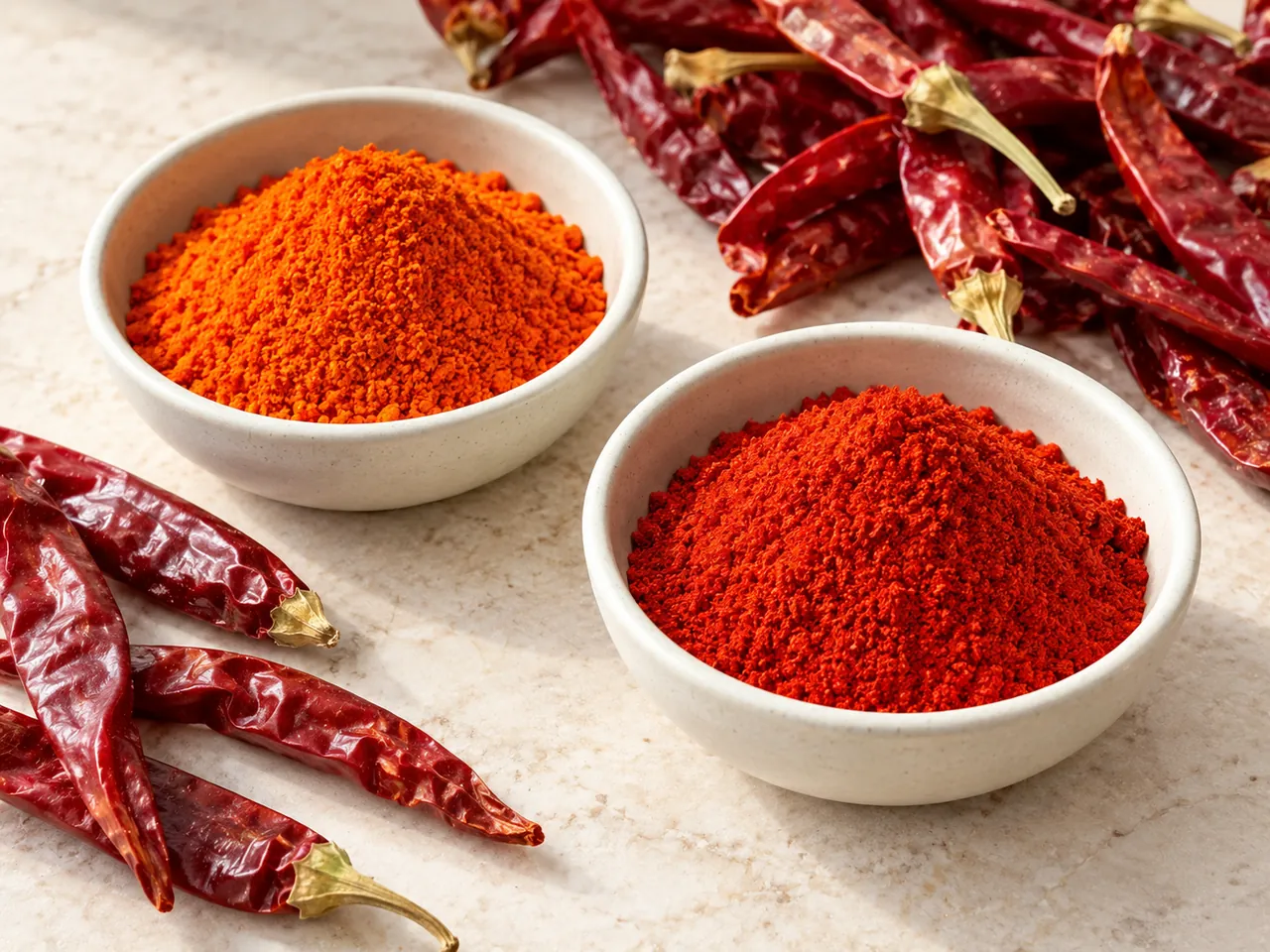
Use one selected powder when it meets your colour and heat targets without frequent adjustment. Consider separate paprika and chili inputs when the recipe needs the two contributions adjusted independently, then account for the extra dosing and stock control. Trial the actual grades in the same food. Send the adjustment problem and who will combine the ingredients so we can discuss a practical route.
- One powder
- Prefer the simpler route when one selected grade meets the complete food brief.
- Two powders
- Use separate inputs when independent adjustment is useful enough to justify extra control.
- Complete ingredients
- Both powders contribute flavour, colour, heat and particles; neither is a pure isolated function.
Identify Which Requirement Needs Independent Adjustment
Identify whether colour and heat genuinely need independent changes.
- 01One stable target
Evaluate a single selected grade against the complete food brief.
- 02Independent adjustments
Test separate inputs when colour and heat need different controlled changes.
- 03Unclear variation
Resolve the current material and process before adding purchasing complexity.
RELIA SPICES manufactures paprika and chili powders through in-house grinding and sieving, with routine moisture and particle checks internally. ASTA, SHU and microbiological analyses are outsourced.
First test whether one selected paprika can meet the complete food brief. If colour and heat need different adjustments, define the paprika and Cayenne separately, including any agreed order-specific steam preparation. Your operation controls the dosing and mixing; ingredient production does not by itself establish a supplied preblend service.
Keep One Paprika Grade in the Trial
Test one selected paprika grade rather than combining separate catalogue scopes.
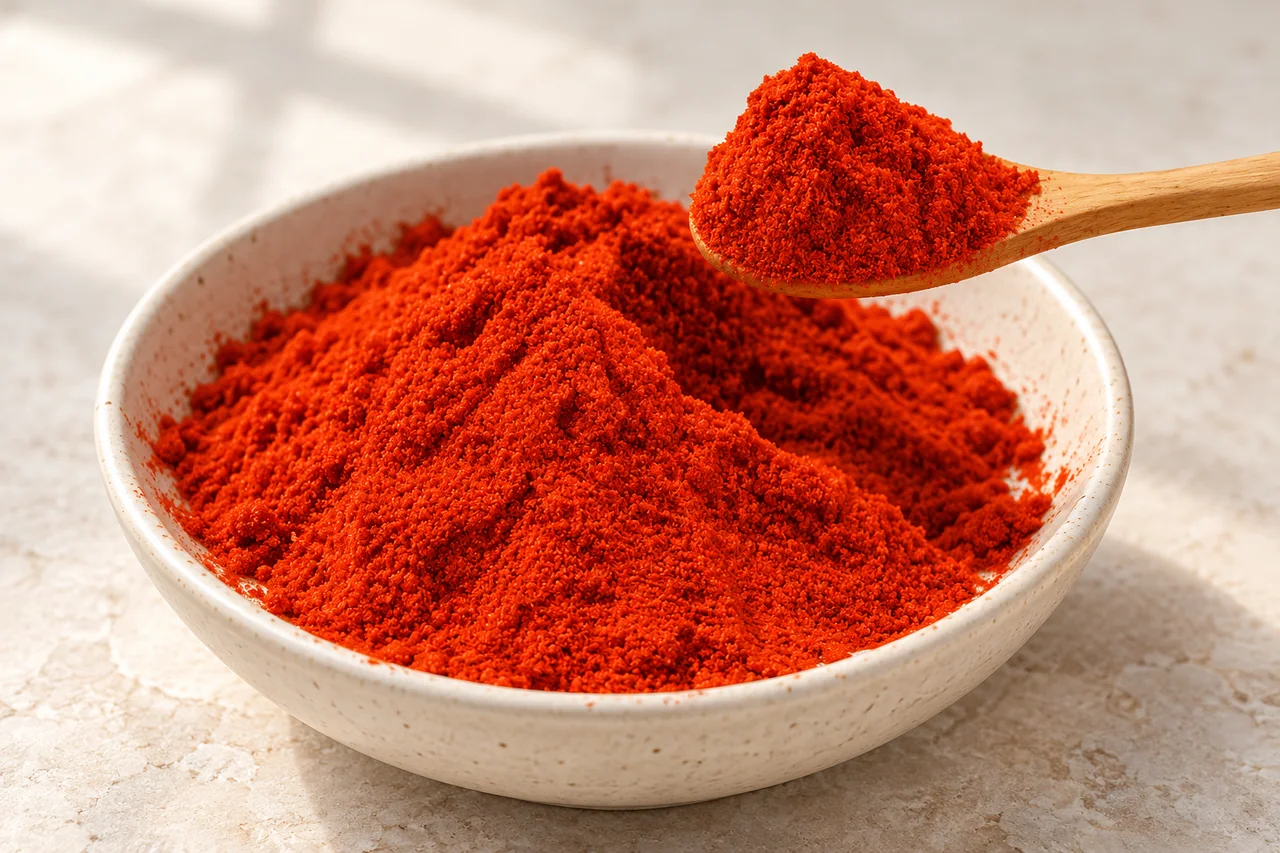
The sweet paprika powder has a nominal 70-mesh reference, separate 60–70 mesh customisation, an 80–220 ASTA customisable colour range and moisture at no more than 8%. The other dried sweet paprika lists 80–280 ASTA and a one-year duration. These are two distinct candidate descriptions, not a combined 80–280 range for every paprika.
Use a selected grade and identified sample from one candidate for the single-input trial. The second listing’s unitless heat entry does not establish a SHU value, and its sweet name alone is not a quantified low-heat test. A single material can remain in contention when its actual food result meets both targets.
Ingredients to compare for this application
Paprika starting point for one or two inputs
Evaluate as a selected single grade or the paprika component of a buyer-dosed two-input trial.
- Nominal 70 mesh.
- Separate 80–220 ASTA customization.
- Moisture specification: ≤8%.
Separate dried sweet paprika candidate
Compare independently where its actual selected grade can meet the food's colour and eating requirements.
- Sweet paprika powder identity.
- Independent 80–280 ASTA declaration.
- Dried style with sweet taste descriptor.
Cayenne input for buyer adjustment
Evaluate a separate heat-led ingredient when your operation will dose and mix the two powders.
- 100% dried red pepper and no additives declared.
- Nominal 60 mesh.
- Mild, medium and hot customization without numerical tiers.
These product specifications are a starting point for selecting a grade. Match the proposed material and sample to your food and order requirements.
Choose Two Complete Ingredients for a Dual Route
Two powders are complete ingredients, not isolated colour and heat controls.
- 01Paprika input
Select one colour-grade proposal and evaluate its complete contribution.
- 02Chili input
Select the actual heat grade while retaining its colour, flavour and particle effects.
Select a paprika grade for the colour-led starting point and a separate Cayenne grade for the intended heat adjustment. Cayenne declares 100% dried red pepper, no additives and nominal 60 mesh, with qualitative mild, medium and hot options rather than numerical heat tiers.
Test both contributions in the food. Chili can change colour, flavour and particles as well as heat, while paprika can contribute flavour and heat as well as redness. Two named powders do not create independent laboratory colour and heat controls.
Screen the Routes with Comparable Material Records
Compare both routes against the same food and material requirements.
| Route | Material object | Decision evidence |
|---|---|---|
| Single input | One selected ingredient grade | Colour, heat, flavour and texture in the food |
| Paprika plus chili | Two separately identified grades | Contribution of each input and combined result |
| Either route | Complete formula and actual preparation | Customer restrictions and accepted use conditions |
Use the same food target and define the selected sample behind each route. Retain the paprika colour method and the chili heat basis where those are part of acceptance. ASTA distinguishes extractable colour from visible appearance; the number helps describe the ingredient but does not replace a finished-food comparison.
RELIA SPICES manufactures the powders through the confirmed dried-chili preparation, grinding and sieving route. Keep the selected composition and any order-specific steam preparation with each input before the route trial. A favourable combined tasting should not silently approve a different ingredient definition or treatment scope.
Run the Comparison in the Same Food Base
Use one food base and change only the intended dose during adjustment trials.
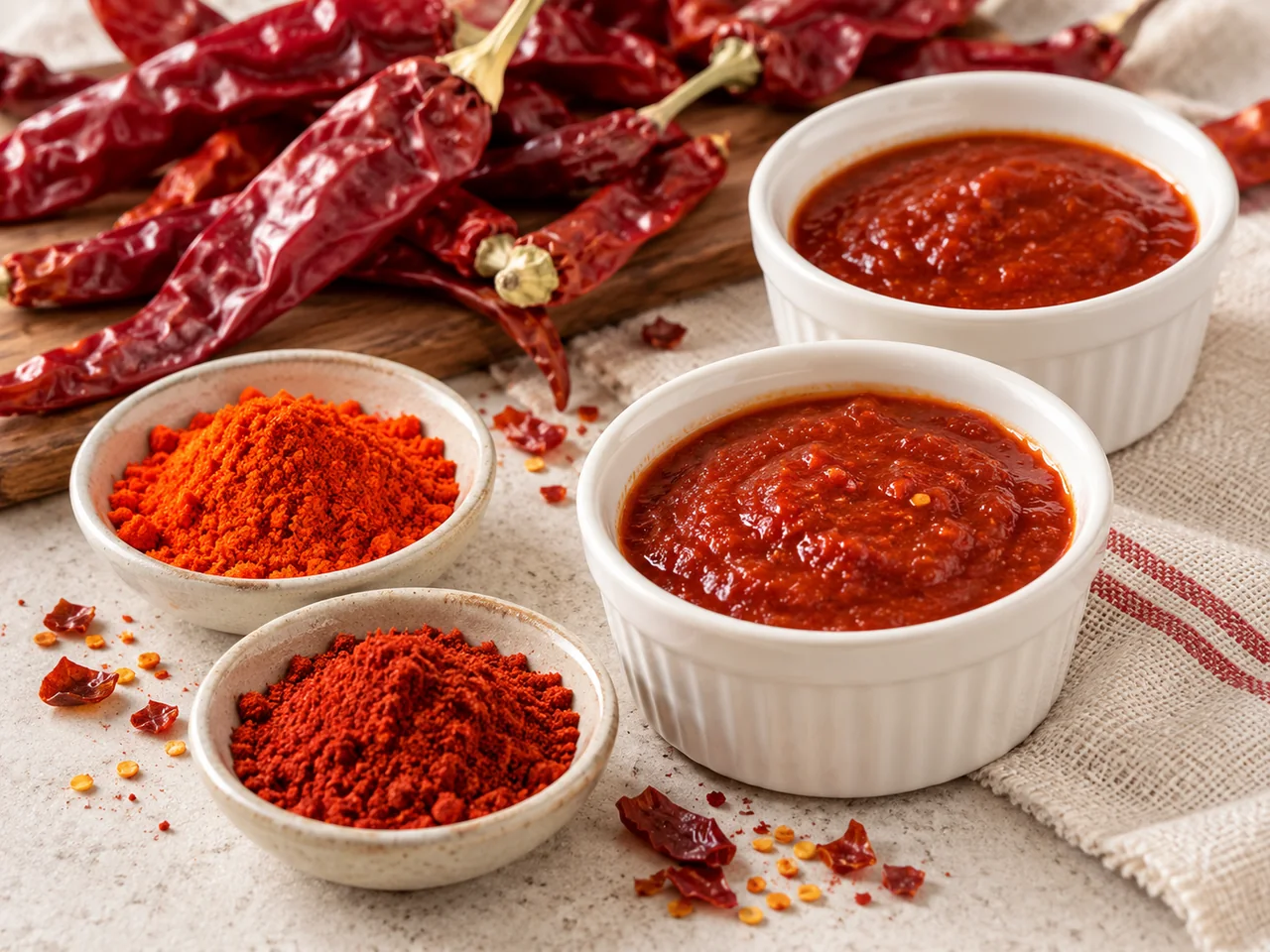
Prepare the single-input route and the initial dual route in the same accepted base formulation. Keep total batch mass, addition stage, processing and serving conditions consistent, making any permitted base adjustment explicit. Compare appearance, heat, flavour and visible particles separately rather than selecting an overall winner from a photograph.
Then vary only the input that serves the adjustment you are investigating. Record the actual quantities used. Original hot-pot research shows why food context matters to pungency; the proposed trial should answer your recipe question rather than assume a linear SHU or ASTA calculation predicts the complete result.
Connect Separate Powder Grades Through Buyer Dosing
Keep both grade identities clear while the buyer controls their dosing and mixing.
- 01Identify both materials
Keep each powder grade and its own evidence separate.
- 02Assign buyer dosing
Control the actual quantities and mixing responsibility.
- 03Compare the food
Judge colour, heat, flavour and particles together.
- 04Choose the route
Use accepted usage and operating work to compare one or two inputs.
RELIA SPICES grinds and sieves the paprika and chili grades in-house. Keep each powder's composition, physical preparation and analytical basis separate before combining them.
Both enter the same food, so test the actual combination rather than assuming ASTA or SHU arithmetic predicts flavour, colour or heat. Our routine physical checks are internal; relevant colour and heat analyses go to laboratories. Retain any agreed steam preparation with its own input.
In the buyer trial, preserve the food base and process, change one dose at a time and retain the accepted quantities. Compare that result and the extra handling work against the single-grade route. Choose for food and operating fit without assuming a validated factory preblend or a lower two-input cost.
Compare Cost at Accepted Recipe Usage
Compare accepted usage plus real handling and inventory work.
- ✓Usage cost
Use the accepted recipe quantities for every ingredient in the route.
- ✓Handling cost
Include the buyer’s real additional weighing, storage and control work where relevant.
- ✓Inventory fit
Check how each receiving pack will be consumed and replenished.
Calculate ingredient cost from the actual quantities that met the food target and comparable purchase prices. Add genuine material handling or inventory costs where they affect the decision. A high-colour range or a hot descriptor alone does not reveal the accepted use level, and price per ASTA unit is not finished-food cost.
With two inputs, consider pack consumption and reorder imbalance. One material may be used much more slowly than the other. Compare receiving quantities and storage needs on actual offers rather than assuming matching minimum quantities, availability or delivery terms.
Approve the Route with Its Adjustment Limits
Retain the route and adjustment limits that were actually evaluated.
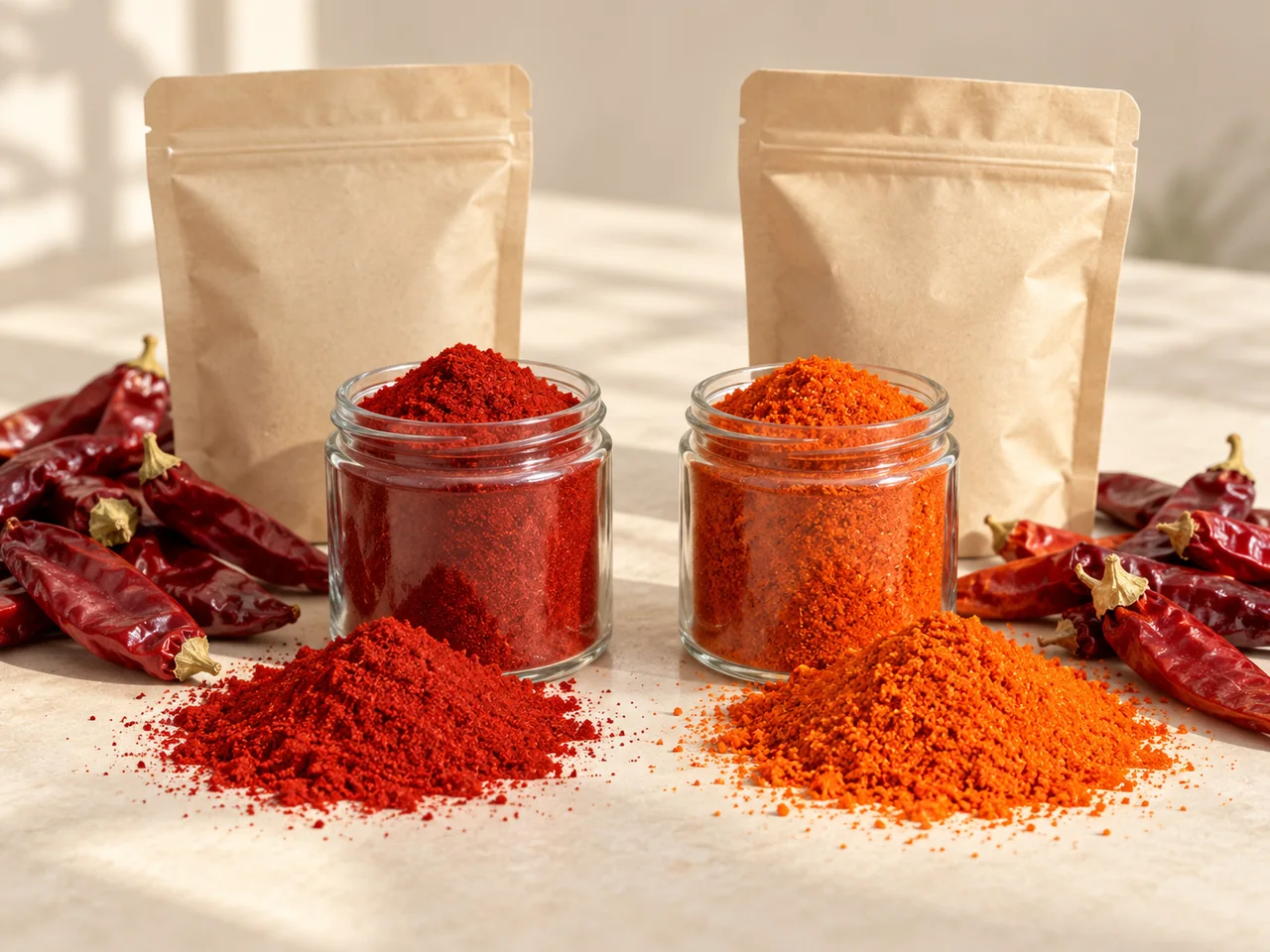
Retain the selected grade or grades, the accepted recipe and the range of adjustments actually evaluated. If the dual route works for one sauce but not another, keep that distinction. A trial result should describe the food and use conditions it supports.
Define what happens when one ingredient changes. A new paprika colour grade or chili heat grade may require a dose review even if the commercial names remain unchanged. Keep the accepted samples as material references and the food comparison as a separate application record; neither alone describes the whole purchasing decision.
Request the Materials Needed for a Route Decision
Explain the current adjustment problem before requesting one or two materials.
- 01Formulation need
State which colour or heat adjustment is difficult with the current material.
- 02Material brief
Identify the grade, composition and actual preparation needed for the trial.
- 03Operating fit
Compare accepted use, handling and order conditions before choosing the route.
Send the food target, the independent adjustment you need and the composition or preparation limits. Identify the current ingredient, selected sample candidates and the trial quantities if known. Add who will dose and mix the materials, together with quantity and pack requirements for the offer.
We can discuss relevant paprika and chili starting points without assuming either route is inherently cheaper or better. Choose the simplest arrangement that meets the complete food brief and can be controlled in the operation that will actually use it.
- Colour target and stage
- Ingredient and food heat requirements
- Other fixed food conditions
- Single or dual route trial records
- Actual mixing responsibility
- Quantity and pack per ingredient
Your next purchasing decision
Talk through your single- or dual-powder decision
Send the food target, current dose and responsibility for combining the powders.
Tell RELIA SPICES which colour or heat adjustment is difficult with the current material. Share the food target, current dose and who will combine the ingredients.
We can discuss relevant paprika and chili grades so your trial compares actual materials and responsibilities before the purchasing route is chosen.
The enquiry page keeps this guide with your message. Add your quantity and destination so we can discuss the relevant material.