Dried Chili Seeds for Food Processing and Pressing Assessment
Start with our dried chili pepper-seed material for a defined food-processing or exploratory pressing project. Agree the seed-to-skin mix and actual preparation before pricing it as a press input. We can discuss material condition, packing and relevant tests; your press trial determines recovery. Send the intended use, composition target and input specification so we can propose a suitable sample basis.
- The purchase
- Dried chili seed material is the input, rather than planting stock or finished oil.
- Material definition
- Set the seed-to-skin mix and define the axis behind the 2–3 mm reference.
- Trial endpoint
- Separate collected liquid, clarified oil and remaining solids when comparing recovery.
Start with the dry seed preparation
Our chili preparation supports the material enquiry; pressing remains your separate process assessment.
- 01Food-processing input
Identify the actual dried seed and accompanying skin fraction for the next operation.
- 02Outside this offer
Planting stock, finished oil and a supplier-operated pressing service are not established by the listing.
At RELIA SPICES, our factory cleans, removes foreign matter and destems purchased dried chilies before agreed grinding or cutting, sieving and packing. For this enquiry, define the actual seed material and accompanying pepper skin. That identifies the input you are buying without assuming a seed-purity grade or an oil-extraction service.
We check moisture and particle size internally and use external laboratories for ASTA, SHU and microbiology. In-house steam microbial reduction is available according to order requirements; discuss its applicability to the selected seed material and your next processing step.
Confirm seed, skin and foreign-material composition
Seed-dominant appearance does not measure the accompanying skin fraction.
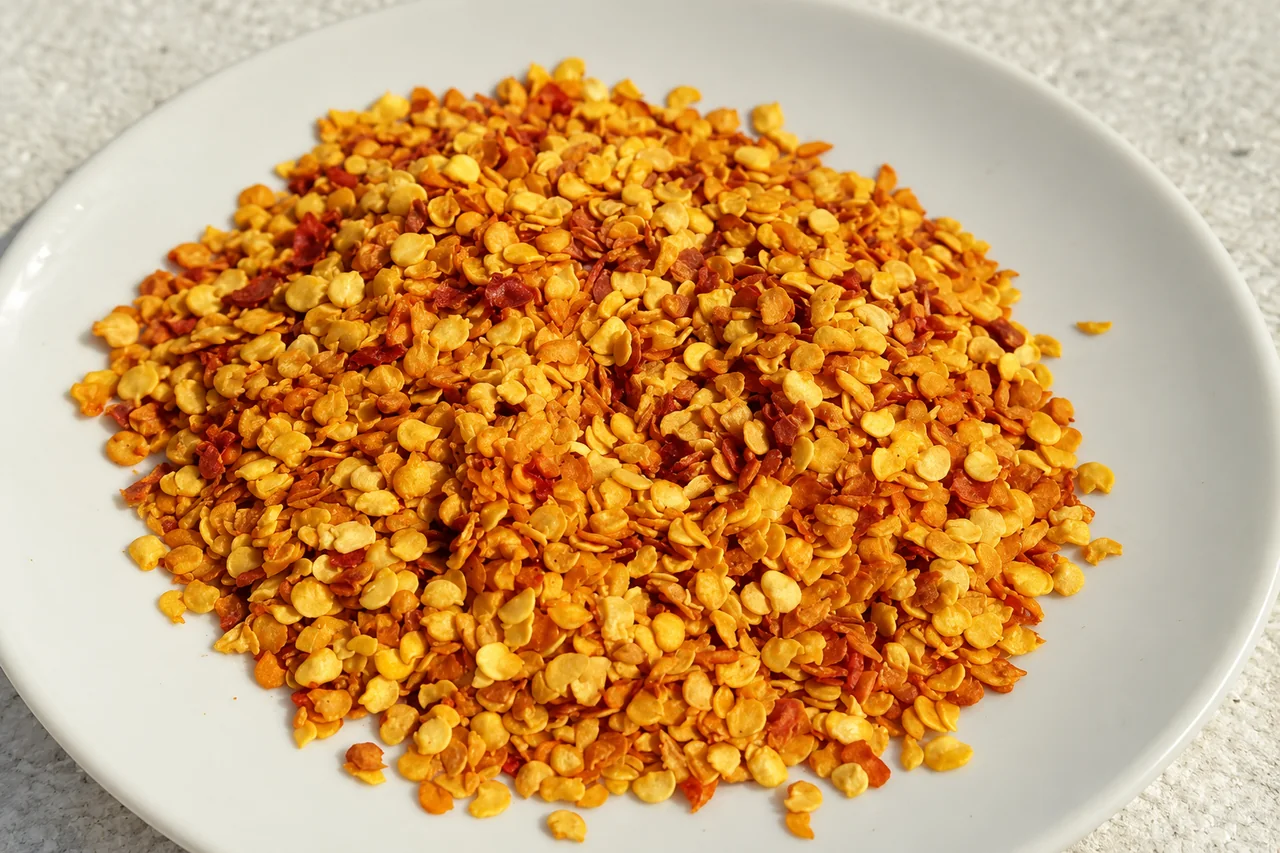
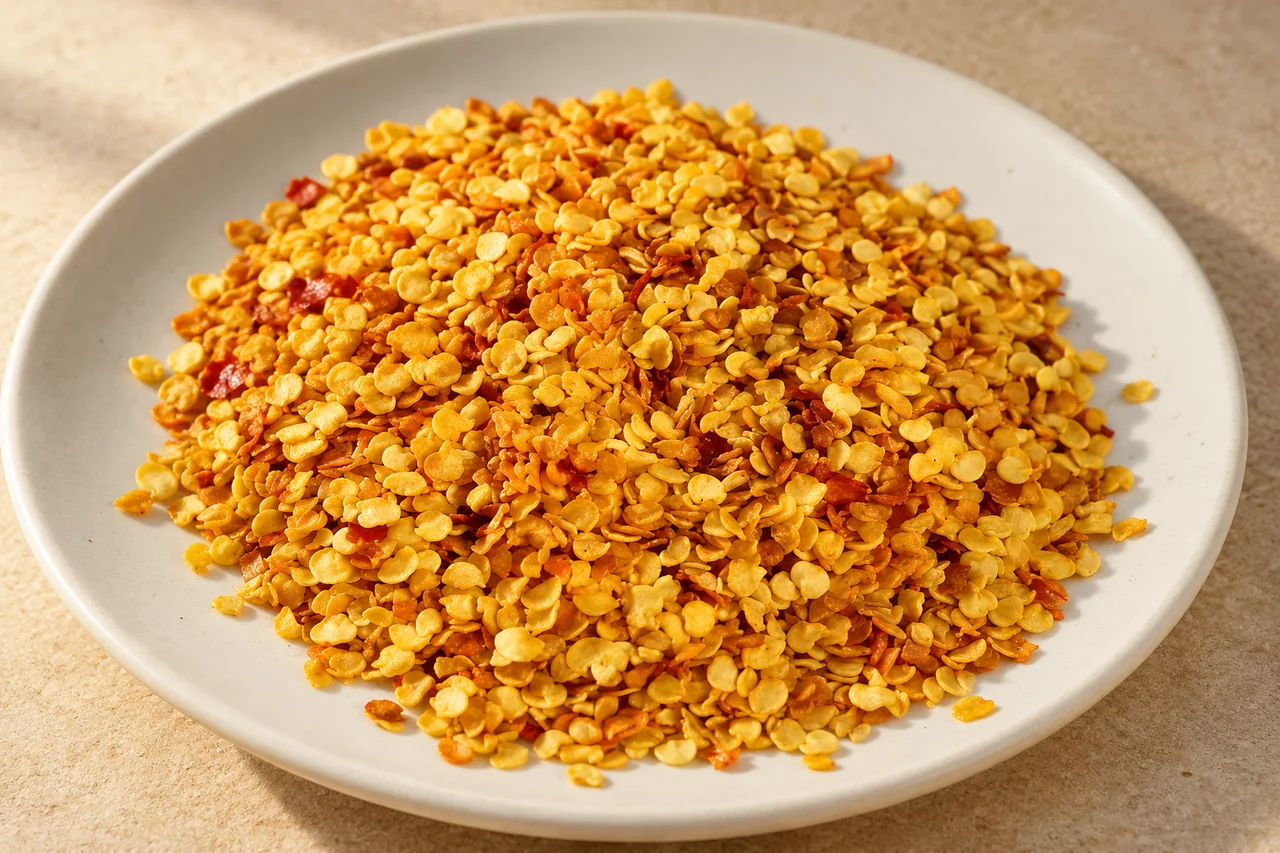
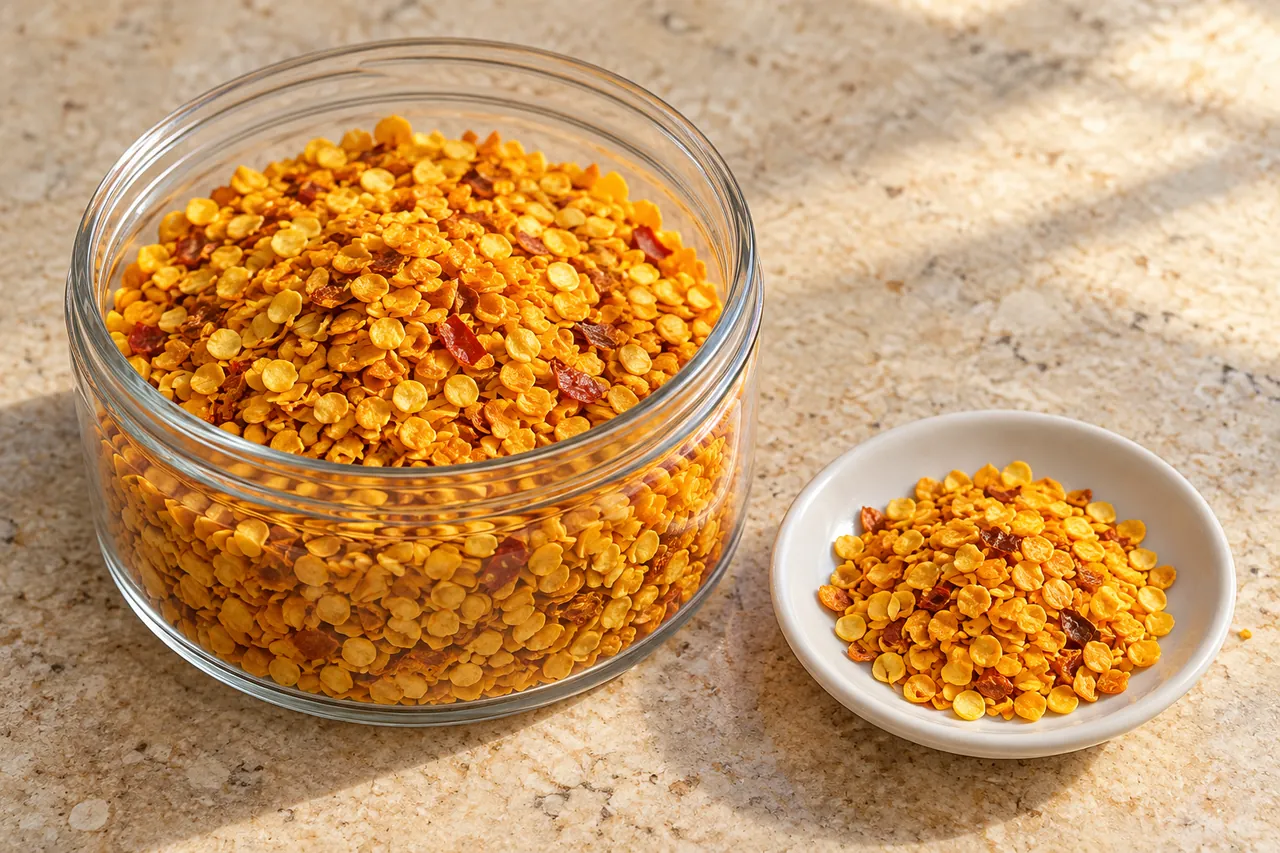
The source presentation is predominantly pale yellow or tan, flat rounded seed-like discs, with occasional pepper-skin fragments. That is the useful physical starting point. Inspect the actual offered material for accompanying skin, other plant parts, foreign material and condition rather than converting the image into a seed percentage. Spread representative material before separating display pieces. For a pressing comparison, a change in the accompanying fraction changes the input basis, so a more attractive photograph is not a substitute for an agreed composition and sampling method.
Ingredients to compare for this application
Dried chili pepper-seed material
The identified dry seed candidate suits a composition-led food-processing or buyer pressing assessment.
- Dried chili pepper seeds are the commercial description.
- Oil pressing and spice processing are named uses, without a stated oil yield.
- The source lists 2–3 mm; axis and seed-preparation applicability remain to be defined.
These product specifications are a starting point for selecting a grade. Match the proposed material and sample to your food and order requirements.
Request a seed-specific specification
A seed-specific composition and moisture basis is more useful than a borrowed flake specification.
| Decision | Available basis | Specify next |
|---|---|---|
| Physical identity | Seed-dominant discs with occasional skin | Seed, skin and foreign-material categories |
| Size | Listing reference 2–3 mm | Measured axis and actual material |
| Condition | Dried seed-material presentation | Moisture, selected treatment and relevant tests |
| Use | Food processing or pressing assessment | Your intended process and output definition |
Specify the seed-to-skin condition, actual preparation and moisture criterion your project needs. The listing's 2–3 mm entry needs an agreed axis and applicability to the offered seed material; it is not a press setting. Ask which sample and tests will represent that preparation, keeping composition and physical condition separate from any later oil-recovery target.
Keep preparation and pressing results on one material basis
Changing the seed-to-skin mix changes the input basis of your recovery calculation.
- 01Define the dry input
Agree actual seed-to-skin condition, foreign matter and applicable size and moisture criteria.
- 02Run your process
Measure the identified input and separate liquid, suspended material, cake and losses.
- 03Assess the output
Use relevant analyses for the intended oil or remaining material; do not substitute collected liquid for qualified oil.
Cleaning removes unwanted incoming matter, while the seed-to-skin mix determines what enters your pressing trial. A cleaner-looking sample is not automatically a higher-oil input. Define seed, accompanying skin and foreign matter before comparing material costs or recovery.
Use internal moisture and particle checks to describe the offered input, including the measured axis behind the 2–3 mm reference. Your controlled trial then separates collected liquid, suspended solids, remaining cake and losses. Relevant external analyses assess composition and microbiological suitability. The cited extraction research found method-dependent oil composition and quality; it supplies no transferable yield for this listing. Select the input because it suits a defined assessment, then judge recovery from that actual material and process.
Record the actual buyer-controlled pressing comparison
Collected liquid and clarified oil can give different economic results.
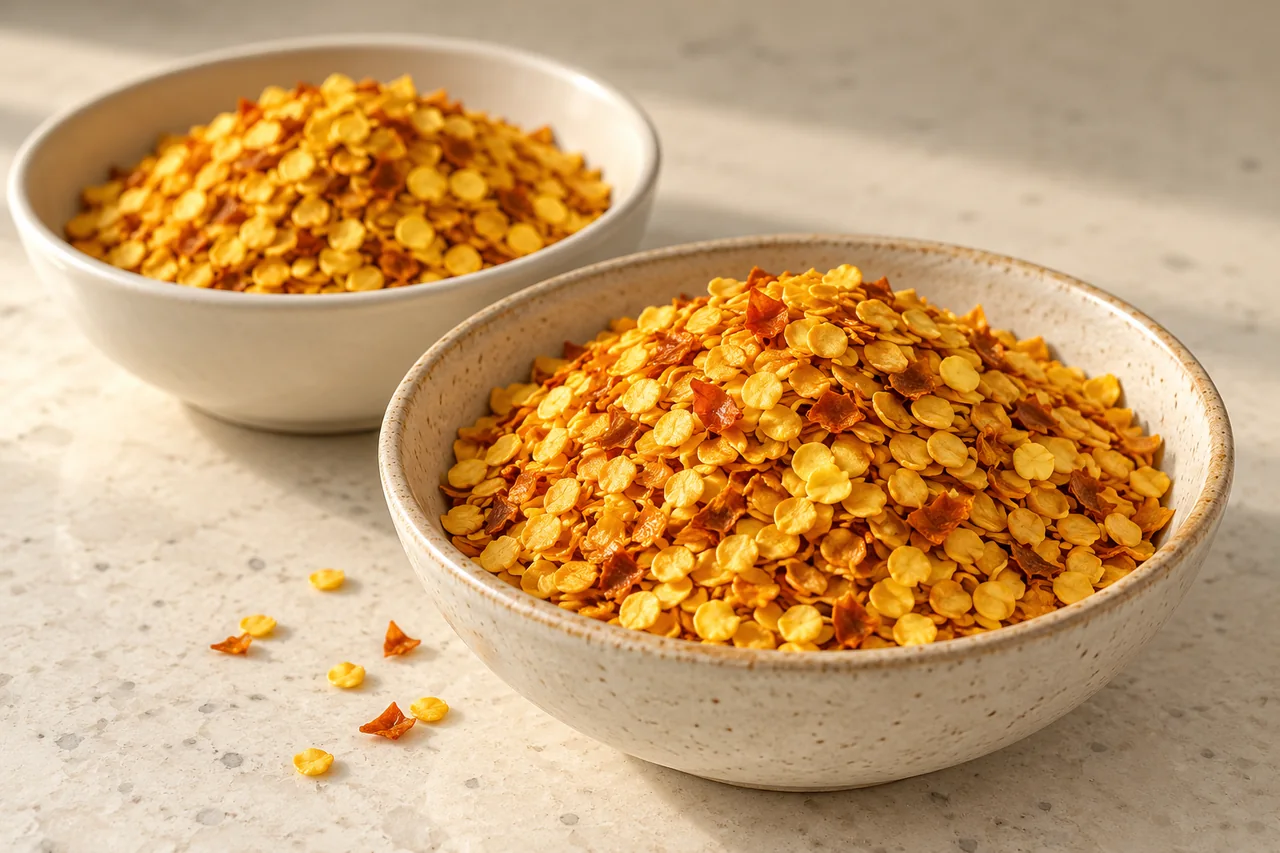
If your team proceeds with pressing, weigh the identified input on a stated basis and retain its actual moisture and preparation. Keep collected liquid, settled or suspended material, remaining solids and other losses separate. Establish which measured fraction is being called oil before calculating recovery. Record actual equipment and operating conditions from the buyer-controlled run rather than inserting a laboratory paper’s settings. A liquid collection figure and clarified-oil recovery can answer different economic questions. Use a consistent measurement boundary so a process comparison does not improve merely by counting more suspended solids.
Separate output quantity from product suitability
A measured output still needs assessment for its intended use.
- 01Collected liquid
May include suspended or settled material depending on the actual process.
- 02Defined oil output
Needs an agreed preparation and measurement basis before recovery is compared.
- 03Usable product
Requires its own intended-use assessment beyond a mass balance.
Assess the resulting oil and remaining material separately against their intended uses. An output quantity alone cannot establish identity, composition, food-use suitability or storage stability. Likewise, a favourable analysis from one experimental extraction method cannot be assigned to a different pressing route. Ask your qualified laboratory and quality team which analyses are relevant to the intended product and market. Keep the actual retained sample with those results. Do not present an exploratory pressing outcome as an established seed specification or extrapolate it into a promised factory production yield.
Select seed handling and treatment for the actual project
Apply the listed storage reference only to the agreed preparation and package.
The listing states 24 months with temperature ≤25°C and humidity ≤60%; confirm applicability to the actual seed preparation and selected package. Keep opening, further separation and repacking within the assessed project route. RELIA SPICES has in-house steam microbial-reduction equipment used according to order requirements, but the seed material's selected treatment and relevant external microbiological evidence must be identified. Internal moisture and particle checks concern the input condition, not oil recovery. Neither dry appearance nor the listed duration establishes ready-to-eat approval, planting use or a suitable moisture condition for an unspecified press.
Compare offers for an identified seed material
Include further separation work when comparing the cost of usable seed material.
- ✓Input basis
Specify seed, skin and foreign-material categories with an agreed sampling method.
- ✓Preparation work
Price the additional operations actually left to the buyer.
- ✓Economics
Leave yield and output value provisional until the actual process and analyses support them.
Compare offers only after the receiving definition is clear. Price the identified seed material, accompanying fraction, required documents, package and preparation responsibilities. Keep expected oil revenue or press-cake value provisional until your actual outputs and intended-use assessments support them. A low-cost material that requires more separation is not automatically a cheaper usable input, while paying for a seed percentage without a defined test offers little protection. This is a material qualification decision first and a process-economics decision second; neither should rely on an image or a yield borrowed from another pepper.
Send your dry chili-seed material brief
Send the input composition and intended trial before requesting a seed-material proposal.
- 01Name the purpose
State food-processing evaluation or a buyer-controlled pressing assessment.
- 02Define the material
Provide required seed-and-skin condition and approval evidence needs.
- 03Discuss the proposal
Request actual preparation, handling, sample feasibility and current terms without an assumed oil yield.
Send us the intended food-processing purpose, the required seed-to-skin condition and the information needed to assess the actual material. If a pressing study is planned, describe the buyer’s evaluation route and output definitions without treating a target as a supplier guarantee. Link the dried chili pepper-seed listing and include quantity and package needs. We can discuss the identified preparation and available supporting information. Agree sample feasibility and current terms specifically; we are not offering planting seed, a finished oil grade, verified pressing capacity or a fixed extraction result through this listing.
- Food-processing purpose
- Actual seed identity and composition
- Required seed-and-skin condition
- Treatment and lot-document needs
- Seed-specific package and storage
- Quantity and any proposed buyer pressing assessment
Your next purchasing decision
Define a dry chili-seed input for your processing study
Discuss the dry material and its next operation in one focused enquiry.
Send the seed-to-skin requirement and intended spice-processing or pressing assessment to Qingdao Relia Spices Co., Ltd. / RELIA SPICES. Keep the input criteria separate from any output target you will test.
The enquiry page keeps this guide with your message. Add your quantity and destination so we can discuss the relevant material.