
Choosing Paprika for Red Colour with a Limited-Heat Requirement
Choose a paprika grade that reaches your food's red-colour target without exceeding its accepted heat. Start with the nominal 70-mesh sweet paprika or the separate dried sweet paprika, then compare each at the same first-trial dose. Judge colour after the relevant cooking or mixing stage and assess heat separately. Send your food reference, viewing stage and heat limit to begin.
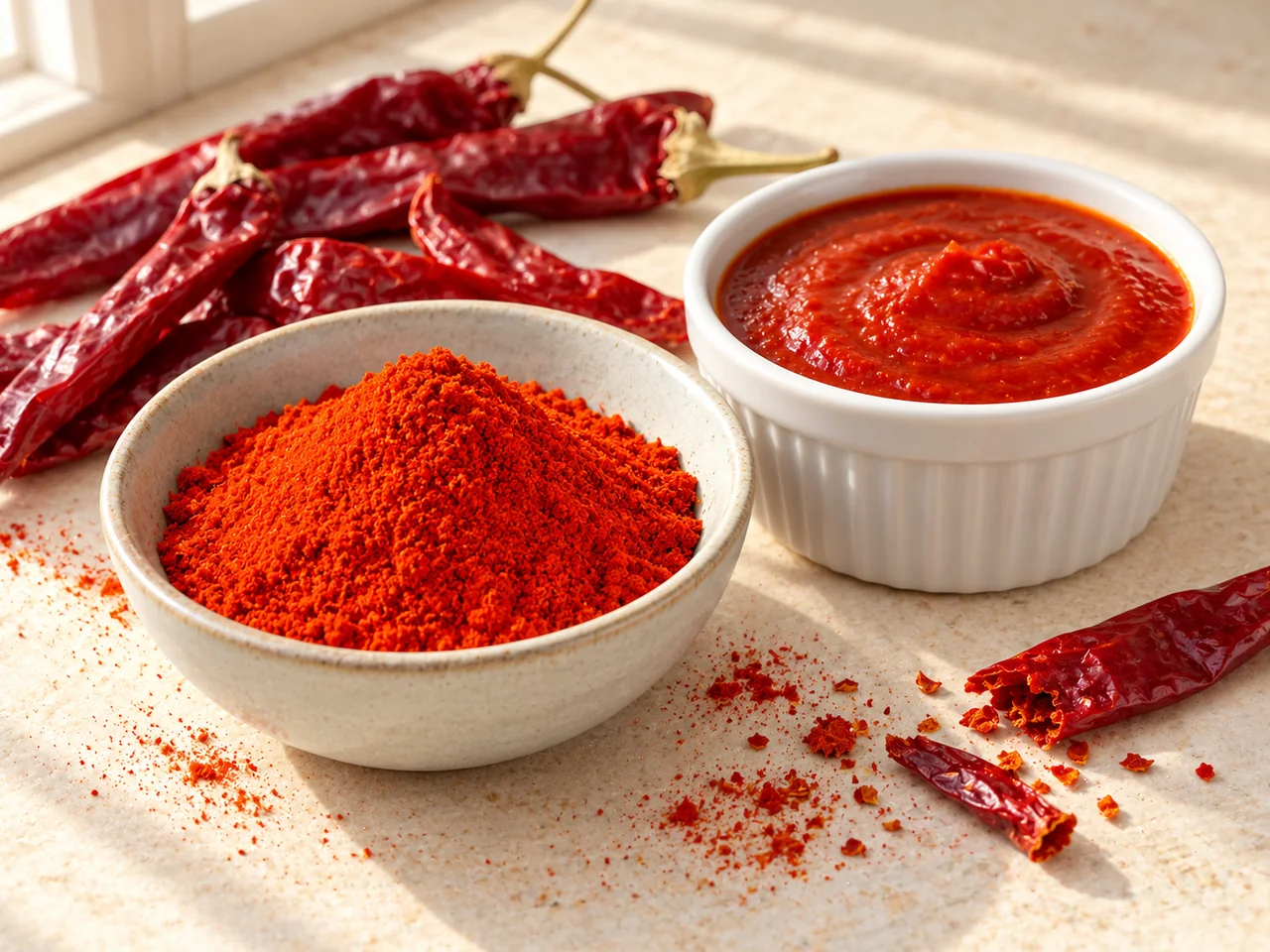
- Colour goal
- Select one actual grade within the relevant paprika listing's ASTA scope.
- Heat limit
- A sweet descriptor does not establish a measured low-heat ceiling.
- Food result
- Accept colour and heat together at the same selected material and dose.
Define the Colour at the Stage That Matters
Judge the colour after the food process that can change it.
- 01Food reference
Use the actual accepted product appearance rather than an unrelated red image.
- 02Observation stage
Judge the food after the process step that can change its appearance.
- 03Viewing conditions
Keep light, serving surface and comparison conditions consistent.
RELIA SPICES prepares dried chilies, grinds and sieves in-house, and checks routine moisture and particles internally. We outsource ASTA and SHU analyses, keeping colour and pungency as separate measurements for the proposed powder.
Choose one sweet-paprika grade and compare it in the actual food. If the order needs steam microbial reduction, our in-house equipment is used according to that agreed requirement; evaluate the selected preparation rather than a different sample.
Choose Between Two Sweet-Paprika Starting Points
The two sweet-paprika listings offer different colour and particle starting information.
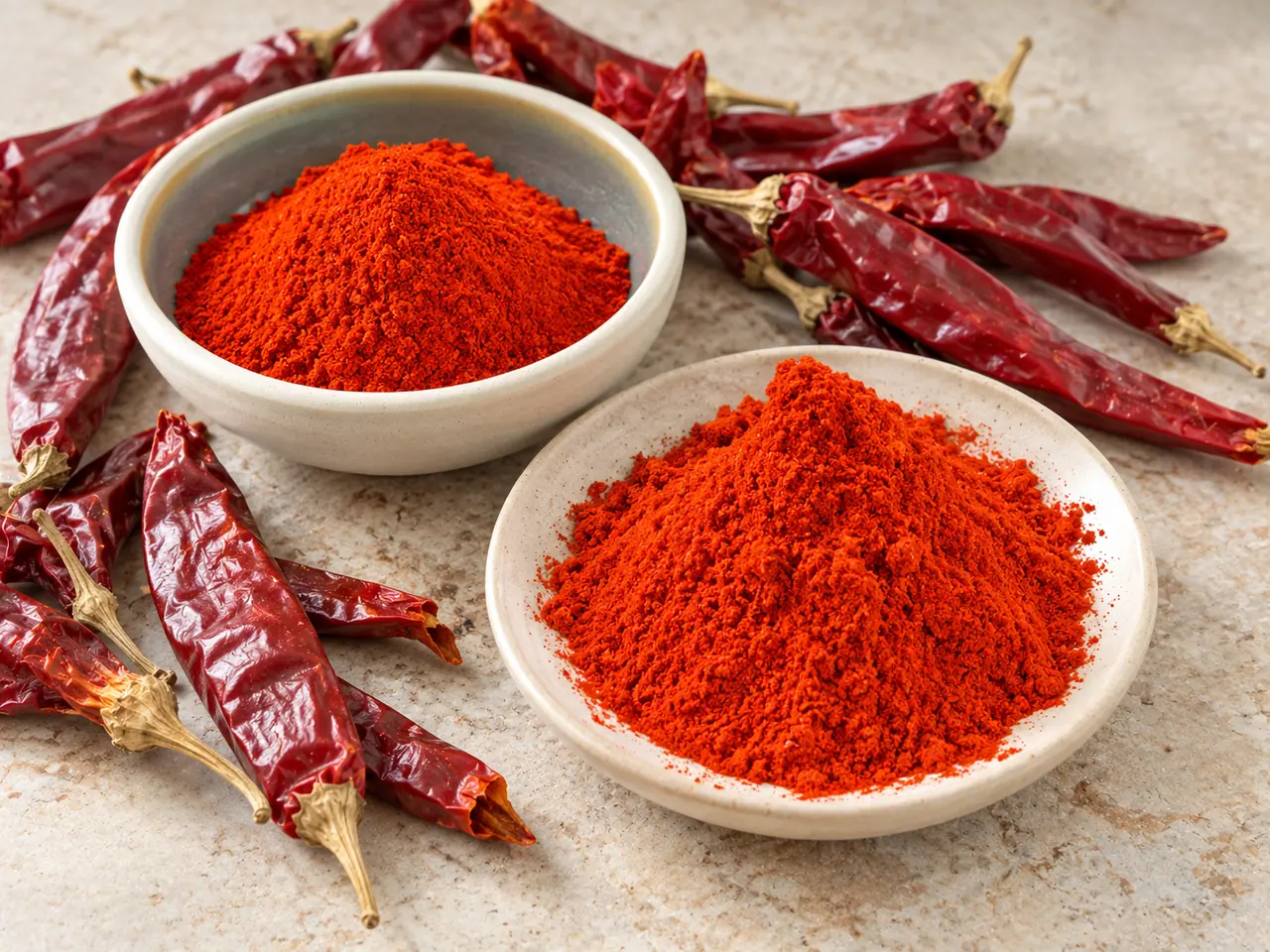
The nominal 70-mesh sweet paprika lists an 80–220 ASTA customization range and moisture ≤8%. The separate dried red sweet paprika lists an 80–280 ASTA range, red appearance and a sweet taste descriptor. These provide two concrete starting routes for a colour-led enquiry.
The first route supplies a clearer nominal grind for an initial particle discussion. The second needs an actual particle criterion because its size field has no usable sieve unit. Neither listing establishes a zero-heat guarantee or the measured colour of an unspecified offered batch.
Ingredients to compare for this application
Nominal 70-mesh sweet paprika
Start when the food needs a defined powder grind and a selected colour grade while heat is assessed separately.
- Nominal 70 mesh.
- 80–220 ASTA customization.
- Moisture specification: ≤8%.
Separate dried sweet paprika
Compare on its own selected colour grade when the actual particle preparation suits the food.
- Sweet paprika powder name and sweet taste descriptor.
- Independent 80–280 ASTA range.
- Dried style and red appearance.
These product specifications are a starting point for selecting a grade. Match the proposed material and sample to your food and order requirements.
Use ASTA for the Ingredient and the Food Trial for Appearance
Ingredient ASTA, powder appearance and finished-food colour have different meanings.
| Observation | What it describes | Purchasing use |
|---|---|---|
| Powder appearance | Visible material under the viewing conditions | Initial material inspection |
| Selected-grade ASTA | Extractable colour on the stated analytical basis | Ingredient specification |
| Finished-food colour | Appearance after actual recipe processing | Application acceptance |
ASTA describes the extractable colour of paprika separately from its visible surface colour. This helps explain why a colour declaration and an attractive powder photograph answer different questions. Use the selected-grade analysis to describe the ingredient, then judge the actual food result.
In the first comparison, use equal weighed paprika additions and the same food process. If the results differ, retain that finding before adjusting dose. Choosing a range endpoint from the catalogue or treating it as the offered batch result would skip the actual grade-selection step.
Keep Pepper Composition, Colour and Heat as Separate Controls
The physical grind does not establish pigment strength or heat.
- 01Prepare the pepper
Use the identified dried-pepper material and selected physical grade.
- 02Read colour
Connect the external ASTA result to that material.
- 03Read heat
Use its separate pungency criterion and evidence.
- 04Judge the food
Compare both outcomes under the actual application conditions.
Cleaning and destemming prepare the dried pepper; grinding and sieving shape the powder. RELIA SPICES performs these operations in-house, but grind alone does not specify pigment or capsaicinoid content.
Set the heat ceiling separately from the ASTA colour grade. Our routine moisture and particle checks are internal, while ASTA and SHU analyses go to laboratories. Connect each result to the selected material and method rather than treating a sweet name as a heat measurement.
Use that powder at a fixed first-trial dose. Judge colour after the relevant cooking, mixing or holding step, and assess heat independently. If an order-specific steam preparation or a different grind is proposed, compare that actual material against both requirements.
Run Colour and Heat Comparisons Together
Compare colour and heat together before placing the bulk order.
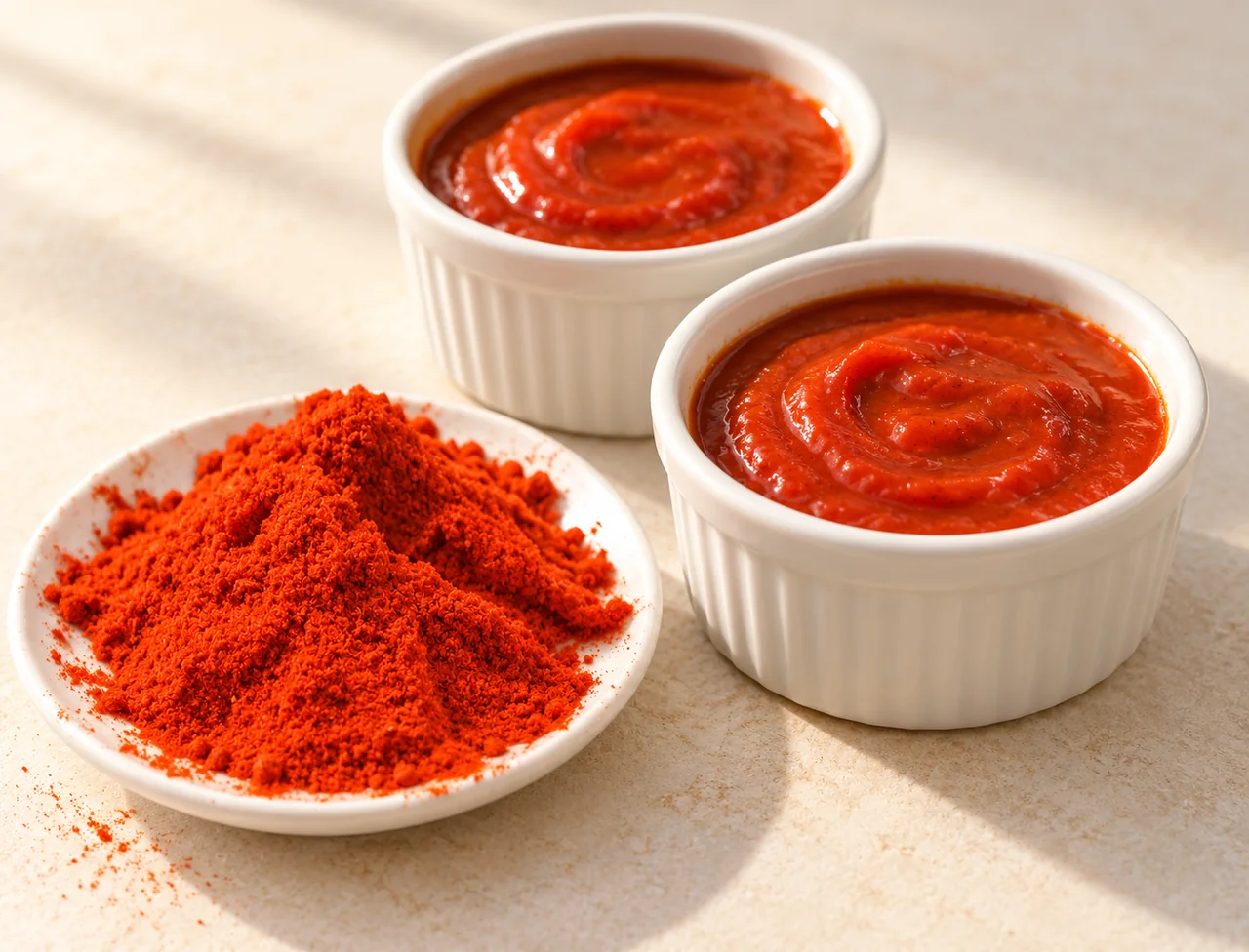
Prepare the same food base with each identified paprika sample. Keep addition order, heating and serving temperature consistent, and observe appearance and taste separately. Record the use level so the team can distinguish a material difference from a dosing difference.
Avoid choosing one sample on colour alone and evaluating heat only after the bulk order. The commercially useful candidate is the one that meets the red target while preserving the food eating requirements. If a dose adjustment is explored, repeat the whole-food comparison rather than retaining only the attractive photograph.
Check Whether Particle Character Changes the Choice
An ASTA match does not automatically provide the texture your food needs.
- 01Smooth food
Inspect visible specks and mouthfeel after the normal preparation.
- 02Visible seasoning
Inspect the powder contribution and distribution on the food surface.
- 03Selected grade
Keep particle character with the same material used in the colour-and-heat trial.
The nominal 70-mesh paprika provides a particle starting point, while the other dried sweet powder needs an actual criterion. Inspect the food for specks, perceived roughness and any particle distribution that matters to the product. Do not assume that an ASTA match also supplies a texture match.
If a finer or coarser material is proposed, evaluate that actual grade in the same food. Particle criteria are useful when they protect a real product condition; an arbitrary nominal mesh chosen without a food purpose can reject a useful candidate or create needless specification work.
Choose the Powder That Meets the Whole Food Brief
Choose the candidate that meets the whole brief, not only the strongest colour.
- ✓Composition fit
Establish the ingredient that the food is allowed to contain.
- ✓Colour and heat fit
Accept the same dose against both requirements.
- ✓Operational fit
Include texture, receiving pack and handling before purchase.
First check that the ingredient and required preparation fit your recipe. Then judge colour, heat and paprika flavour together, before checking particles, handling and the actual offer.
A stronger-colour powder can still be too hot at the dose needed, while a lower colour declaration may be sufficient for an accepted food result. Use the complete food brief to decide, rather than letting the most impressive colour claim win the comparison.
Protect the Comparison Samples and the Offered Grade
Protect sample identity and storage history so later comparisons remain useful.
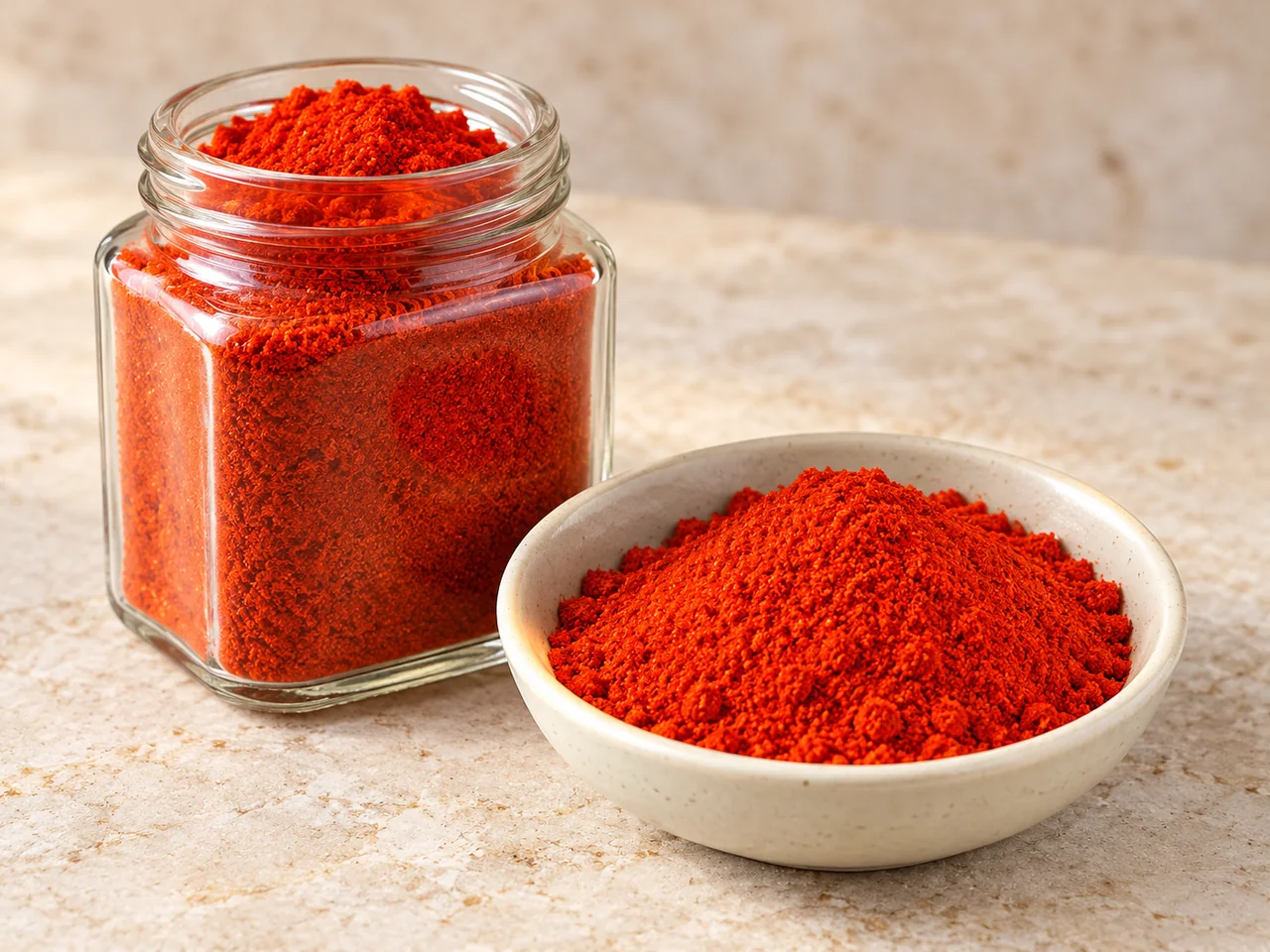
Keep the reference and candidate samples under the conditions appropriate to them, and identify which actual grade was trialled. A sample whose storage history differs can confuse a later colour comparison. Use the material and trial reference that the team can interpret.
For the nominal 70-mesh paprika, the written storage limits are ≤25°C and humidity ≤60%, with a 24-month ingredient period. The separate dried sweet powder has a one-year statement with its own package conditions. Neither statement defines the shelf life of the finished food or an opened comparison dish.
Send a Colour-First Brief with an Independent Heat Limit
Send a finished-food colour reference and an independent heat acceptance basis.
- 01Colour
Describe the finished-food reference and when it will be judged.
- 02Heat
Keep the eating limit and any ingredient analytical condition separate.
- 03Trial
Evaluate both at the same chosen material and use level.
Provide the food, accepted red reference, observation stage and the maximum heat your product can accept. Add the required composition, actual preparation and particle character. We can use that scope to discuss a specific paprika candidate and grade rather than a general sweet-powder description.
The next useful step is a comparable food trial, not a claim that one catalogue number predicts the finished result. This page chooses for a red-colour and restrained-heat food; dosage economics and a separate hot-chili ingredient require their own decisions.
- Food and colour reference
- Colour observation stage
- Ingredient and food heat requirements
- Particle and composition conditions
- Trial use conditions
- Quantity and required records
Your next purchasing decision
Talk through your colour-first paprika requirement
Include the food stage, colour target, heat limit and particle restrictions.
Send RELIA SPICES the food, colour observation stage and heat ceiling, together with the powder or reference you currently use. Add particle and composition restrictions that must remain unchanged.
We can discuss one actual paprika grade and the separate colour, heat and food comparisons that will decide the purchase.
The enquiry page keeps this guide with your message. Add your quantity and destination so we can discuss the relevant material.