
Chili Powder for Pre-Extrusion Snack Formulations
For pepper added before snack extrusion, compare Cayenne powder for a selected pepper profile with sweet paprika for a colour-led feed trial. Keep the cereal recipe and extrusion route fixed while following the ingredient from feed to finished piece. We prepare the powder fraction and check its physical condition. Send the addition point and finished colour or bite defect for a specific material proposal.
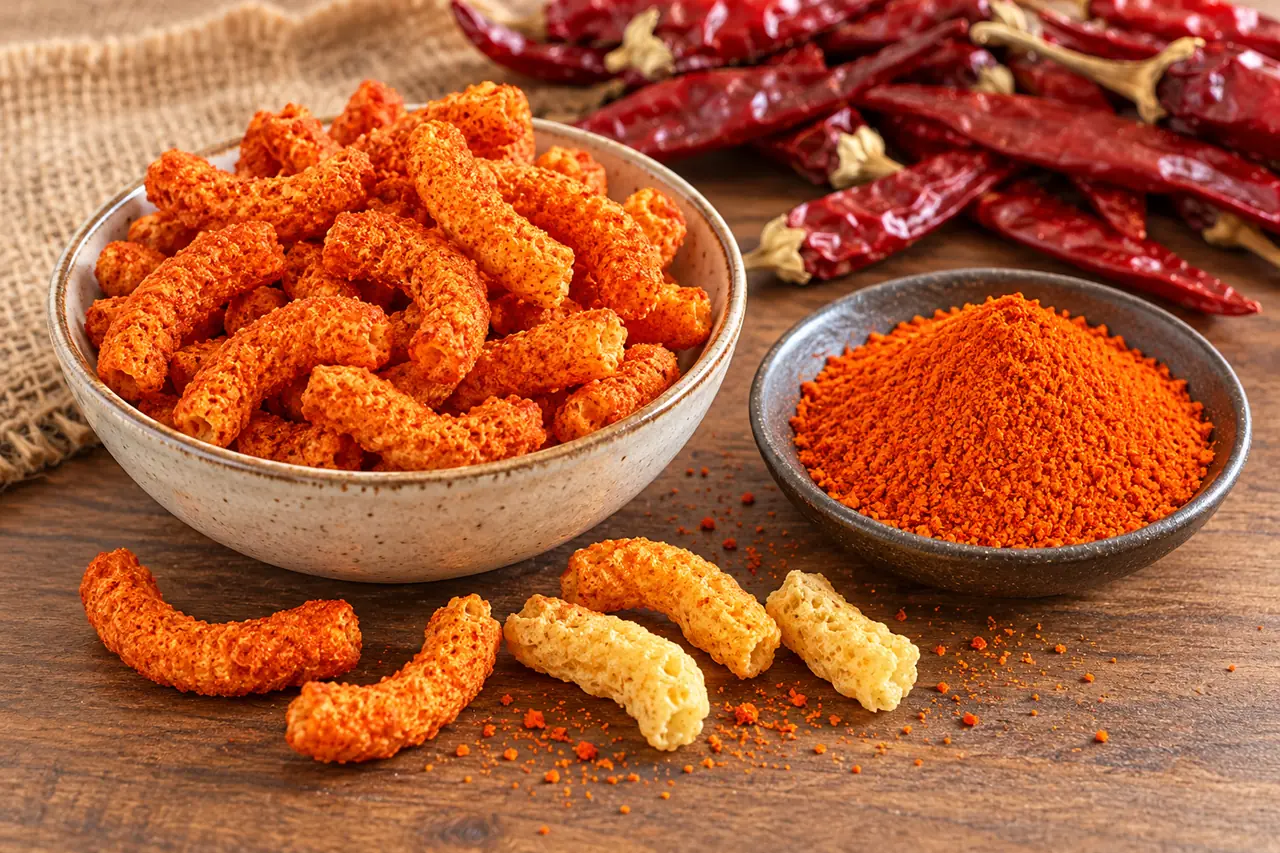
- Pepper-led candidate
- Cayenne lists nominal 60 mesh, moisture ≤9% and selectable descriptive pungency.
- Colour-led candidate
- Sweet paprika lists nominal 70 mesh and customizable 80–220 ASTA.
- Trial boundary
- Track feed, fresh extrudate and finished snack separately before assigning the cause of a change.
Define the powder input and the feed route
Specify the powder we supply separately from the feed-water and screw conditions you run.
- 01Feed blend
Check distribution of the ground spice in the actual cereal formulation before extrusion.
- 02Extruder response
Compare the same process route; do not borrow settings from a paprika-extract experiment.
- 03Finished snack
Assess colour, expansion and bite after the normal drying and cooling sequence.
At RELIA SPICES, we clean and destem purchased dried chilies, then grind, sieve and pack a selected powder. For pre-extrusion use, discuss its particle distribution, coarse residue and actual moisture alongside the cereal formulation. Your team sets the feed-water addition and extrusion conditions.
Moisture and particle tests are internal; ASTA, SHU and microbiology use external laboratories. We can select in-house steam microbial reduction according to order requirements. Keep pepper added after the extruder in a separate ingredient brief because it enters a different food-processing stage.
Choose powder candidates around your base recipe
Choose a colour-led or pepper-led candidate before comparing nominal mesh.
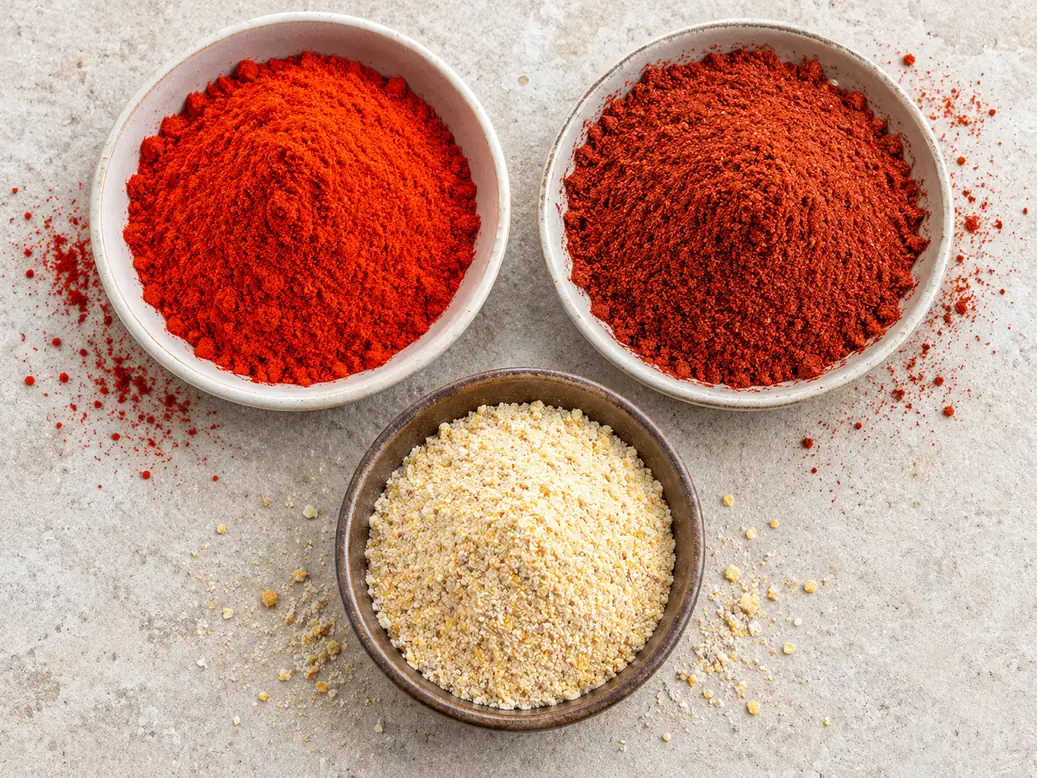
Sweet paprika powder offers nominal 70 mesh and customizable 80–220 ASTA colour for an initial colour-led comparison. Cayenne powder offers nominal 60 mesh, customizable 60–70 mesh and moisture ≤9%, with mild, medium or hot options requiring a selected profile. Fine red pepper powder gives 60–70 mesh or a customized grind, but its hot naming and mild sweet non-spicy flavour descriptions need reconciliation. These are separate listings, not interchangeable formulations. Start with the candidate whose actual composition, heat and particle basis can be connected to the feed requirement.
Ingredients to compare for this application
Cayenne powder for extrusion feed
A powder starting point when the snack needs a separately selected pepper profile.
- Nominal 60 mesh; separate customizable 60–70 mesh.
- Moisture ≤9%.
- Mild, medium or hot pungency descriptions require selection.
Sweet paprika for feed colour
A colour-led comparison where the powder will be dispersed through the cereal base.
- Nominal 70 mesh.
- Customizable 80–220 ASTA colour.
- Moisture ≤8%.
These product specifications are a starting point for selecting a grade. Match the proposed material and sample to your food and order requirements.
Follow the prepared powder through extrusion
Spice moisture contributes to the input but does not set your extrusion water requirement.
| Preparation | Relevant check | Meaning in the snack trial |
|---|---|---|
| Ground and sieved chili | Actual fraction and coarse particles | Compare feed distribution |
| Selected powder condition | Internal moisture result | Account for ingredient water without replacing feed settings |
| Selected colour or heat grade | External ASTA or SHU evidence | Identify the input rather than predict the output |
| Your extrusion and finishing | Feed, extrudate and cooled-piece observations | Locate colour or texture changes along the real route |
Grinding and sieving define the spice entering the feed. Coarse fragments, agglomerates and segregated powder pockets can all produce uneven red areas, but call for different changes. Compare the powder distribution with the actual flour blend.
Cayenne's ≤9% and sweet paprika's ≤8% moisture limits concern the ingredient, not the water setting of your extruder. Pair our physical checks with external colour or heat evidence for the selected grade. Retain feed, fresh extrudate and finished-snack samples under one process route. That reveals whether a change begins in mixing, extrusion or finishing. Published work with paprika oily extract offers process context, not settings or colour-retention claims for these powders.
Document exposure without inventing a processing window
Paprika-extract research cannot supply operating settings for a ground-spice ingredient.
- ✓Colour shift
Compare the feed, fresh extrudate and cooled snack before assigning a darker result to the paprika grade.
- ✓Expansion change
Retain the same cereal base and process; a pepper substitution trial is not proof of a universal expansion effect.
- ✓Hard particles
Inspect coarse spice particles separately from the snack’s overall cell structure and fracture.
An original rice-extrudate study found that paprika oily-extract colour depended on extrusion conditions and subsequent storage. It studied an extract, not these whole-spice powders, so its addition rates and process settings are not a specification for your snack. Its useful lesson here is experimental: compare the candidate through the actual exposure and finishing stages. Record the line conditions used in your plant and avoid assigning heat resistance from AD, raw or stir-fried catalogue wording.
Compare colour and flavour after the complete route
Locate colour or flavour change before or after the finishing stage.
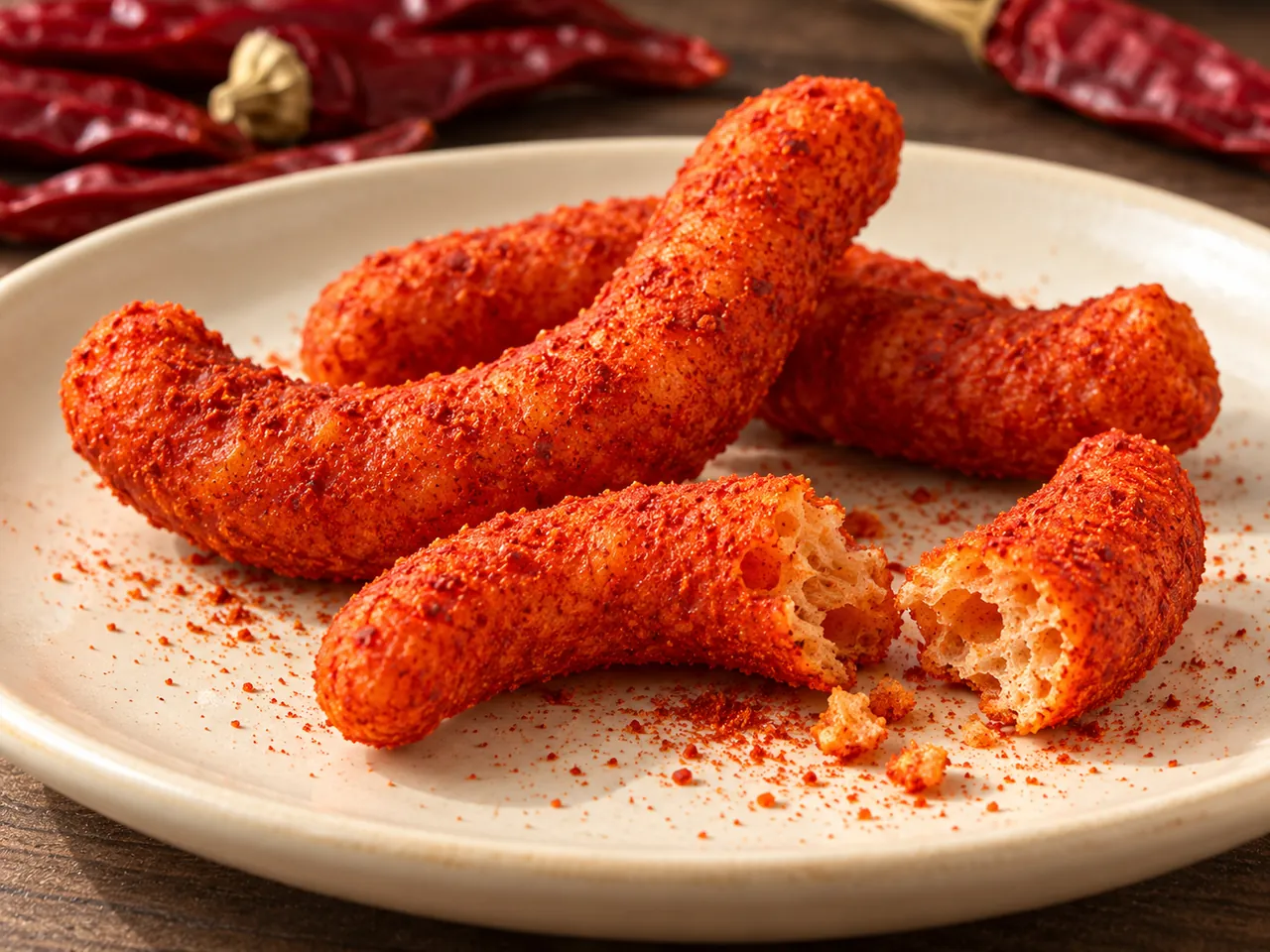
Retain intermediate samples after extrusion and after the final drying or baking stage. Compare the finished piece under the same lighting, then break it to inspect the interior as well as the surface. Keep pepper aroma, heat and any bitter or toasted note separate from colour. If the colour changes mainly during final drying, the first corrective comparison should examine that stage with the same powder. Ingredient ASTA is a colour declaration, not the percentage retained in the extruded piece.
Check expansion and bite on their own evidence
A redder piece is not evidence of improved expansion or bite.
- 01Surface and centre
Cut several pieces so visible colour is not judged only on the exterior.
- 02Pepper character
Taste the cooked base at a matched addition before changing colour and pungency together.
- 03Stored comparison
Use the intended pack and storage route; an incoming-powder shelf life is not a snack result.
Expansion, density and bite can change with the complete feed composition and process. A redder piece is not evidence of improved expansion. Compare your unchanged feed control with each candidate at an interpretable addition basis, measuring the structure your product actually requires. Examine cell appearance and eating texture after cooling. If a candidate changes the bite, repeat a focused comparison before attributing the change to pepper particles; altered water, fat or flour composition may have moved at the same time.
Set ingredient treatment before qualifying the snack route
Select ingredient treatment separately from your extrusion and later-seasoning approvals.
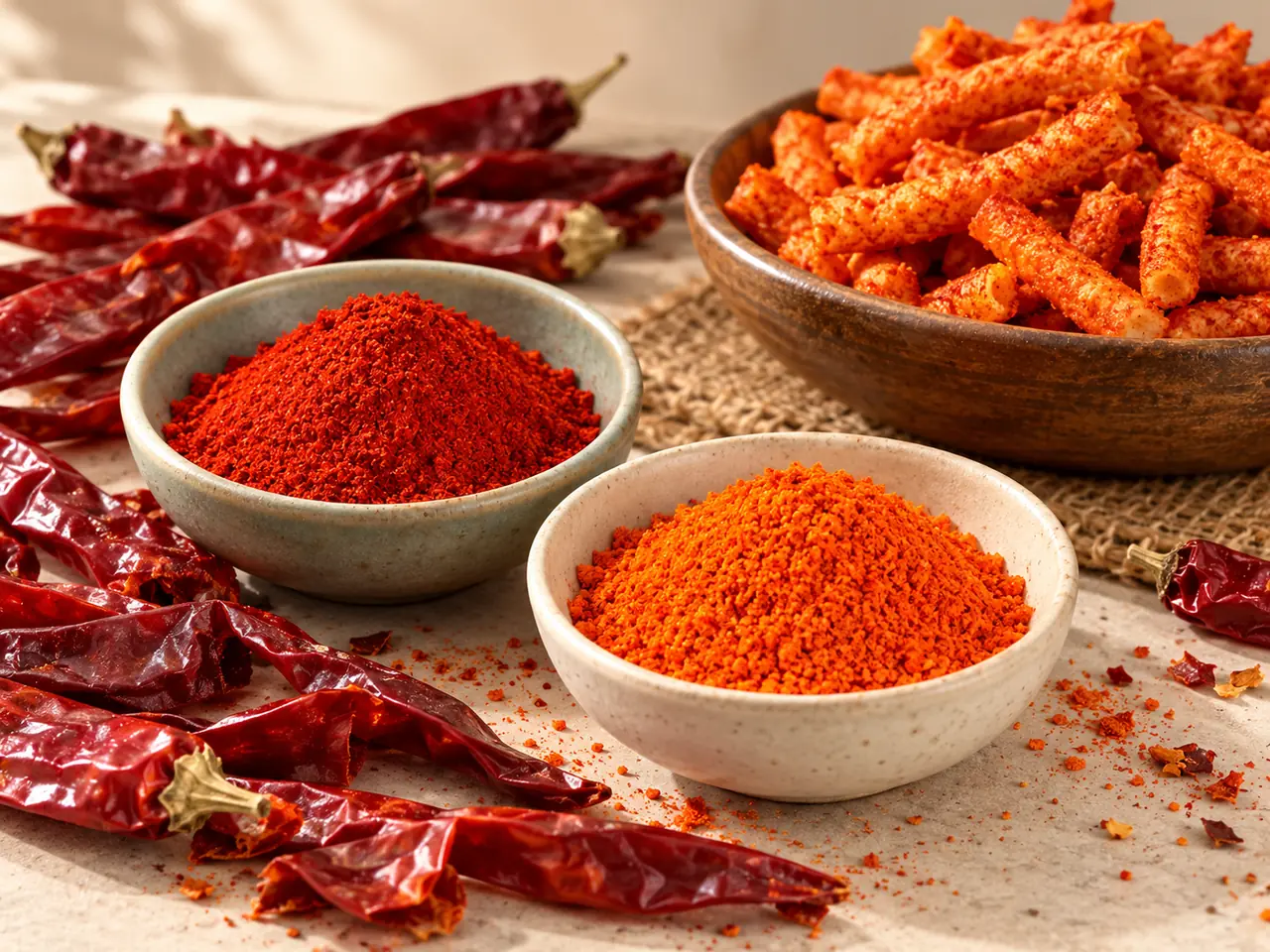
We prepare dried-chili ingredients in-house and can select steam microbial reduction according to order requirements. Identify the actual powder route where a listing contains both stir-fried and AD-dried-and-ground wording; those descriptions do not select the offered lot's complete process. Microbiology, ASTA and SHU are tested externally, while moisture and particle checks are internal. Your food-safety team still qualifies the extrusion and any later seasoning stage. Neither the presence of an extruder nor our steam equipment supplies a universal finished-snack validation, and the powder's storage period does not become the snack's shelf life.
Align the offer with the accepted feed comparison
Price the powder that produced the accepted snack under the fixed comparison.
- 01Powder responsibility
Specify the actual ground material, sieve distribution and ingredient declaration proposed for supply.
- 02Buyer process responsibility
Qualify the formulation and extrusion conditions on your line; a catalog listing does not supply a validated operating window.
Compare proposals against the feed material and cooked snack that your team accepted. A lower-cost grade that needs a changed dose or shifts the finished colour outside the target may not be equivalent. Use measured acceptable output and actual ingredient usage before drawing a cost conclusion. If the process has not yet been fixed, describe the trial as development rather than approval. This lets the factory respond with a specific powder preparation without implying control over the output of your extrusion line.
Send an extrusion-feed ingredient brief
Send the feed background and stage-specific defect rather than requesting a universal extrusion grade.
- 01Describe the feed
Name the cereal base, pepper addition stage and intended colour and flavour roles.
- 02Describe the defect
Show colour drift, coarse particles or a changed texture at the stage where it first appears.
- 03Discuss the powder
Request the actual grade, preparation and documents rather than an assumed extract-equivalent ingredient.
Name the cereal and protein background, pepper addition point and any later surface seasoning. Link the Cayenne or sweet-paprika candidate and send the accepted finished piece plus photographs of colour drift or hard particles. Include the actual particle criterion, heat role and treatment requirement. We can discuss the powder and sample scope while your team qualifies the extrusion process.
- Starch, protein and fat base
- Pepper addition point
- Extrusion and finishing route
- Finished colour and heat reference
- Structure and bite assessment
- Document, package and quantity needs
Your next purchasing decision
Discuss the pepper input to your extrusion feed
Discuss one pepper input for the extrusion feed you actually use.
Give Qingdao Relia Spices Co., Ltd. / RELIA SPICES your starch base, addition point and finished-piece reference. A useful request separates a powder specification from the extrusion conditions your plant will qualify.
The enquiry page keeps this guide with your message. Add your quantity and destination so we can discuss the relevant material.