Private Label Chili Flakes for Your Retail Range
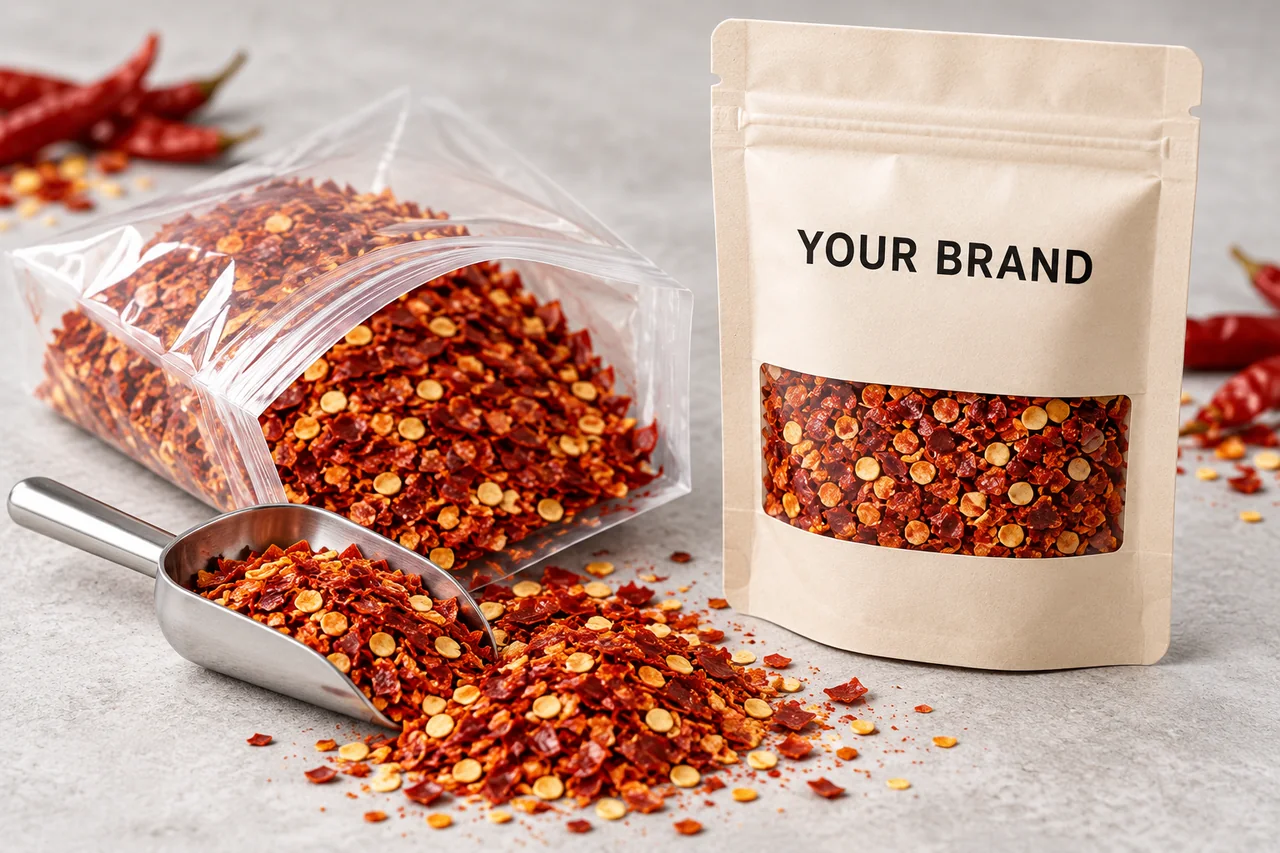
Choose chili flakes by the whole mixture your customer will see: red pieces, pale seeds and fine particles. RELIA SPICES prepares dried chilies and fills retail packs carrying your brand.
Packaging and project details
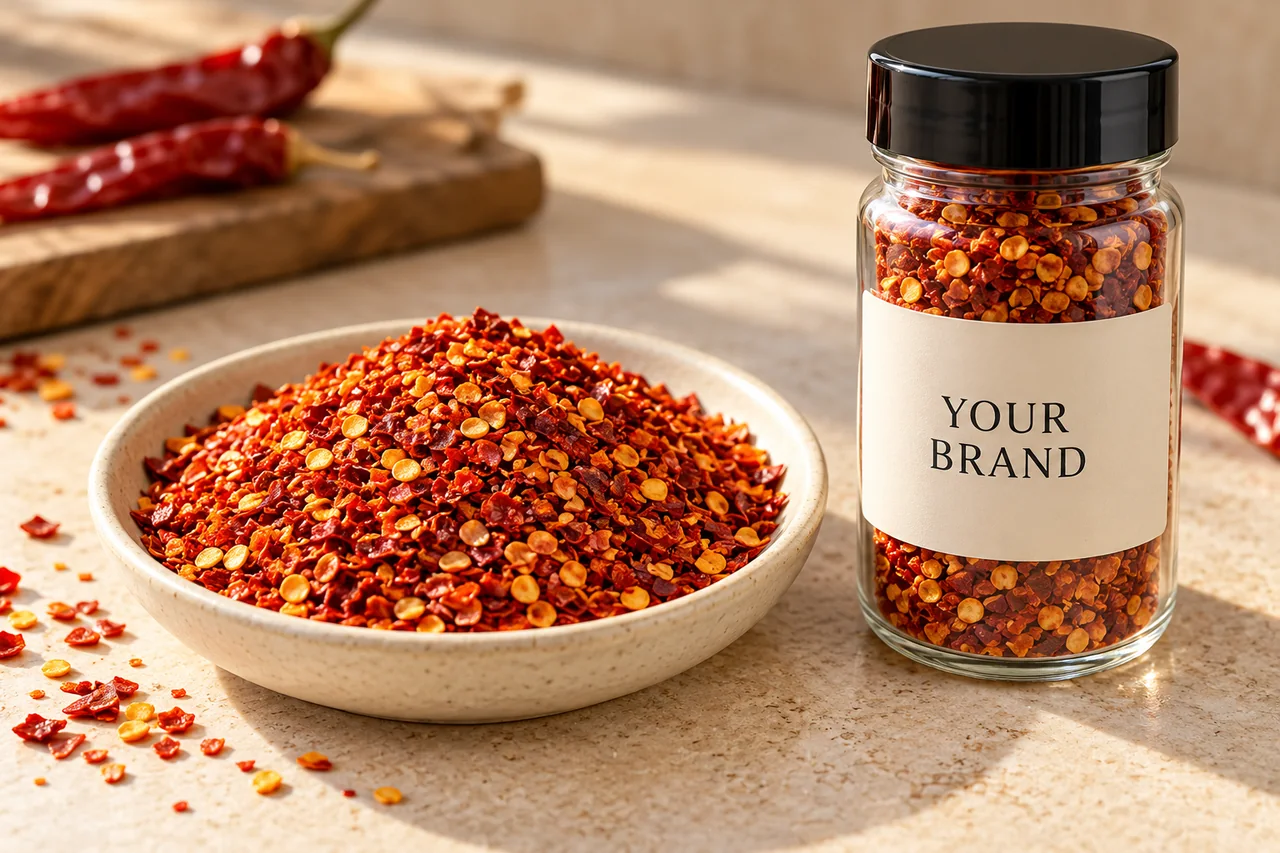
Compare a seeded chili option with a milder paprika flake, then settle heat separately from appearance. Send your reference sample, intended use and proposed pack so we can assess the ingredient and packaging together.
Three decisions shape the retail flake
- Appearance
Red pieces, visible seeds and fine coating considered together.
- Food use
A visible sprinkle or a flake cooked into food.
- Heat
A selected pungency requirement for that preparation.
Cutting and Sieving Connected to Your Flake Brief
The retained mixture links factory preparation to the retail sample.
RELIA SPICES cleans purchased dried chilies, removes foreign matter and stems, then cuts or crushes, sieves and packs the selected flakes. Cutting and sieving are tied to your approved mixture of red pieces, seeds and fines.
Match physical checks and analytical evidence
Moisture, particle size and routine checks are handled internally. ASTA, SHU and microbiological analyses use outside laboratories. In-house steam microbial reduction is available according to the order requirement.
From dried chili to the agreed flake
- Clean and destem
Prepare purchased dried chilies and remove foreign matter.
- Cut or crush
Produce the visible preparation selected for your use.
- Sieve and check
Review the retained pieces and fine fraction.
- Retail fill
Pack the agreed material under your brand.
Three Flake Options with Different Buying Roles
Use the heat and texture descriptions to build a purposeful shortlist.
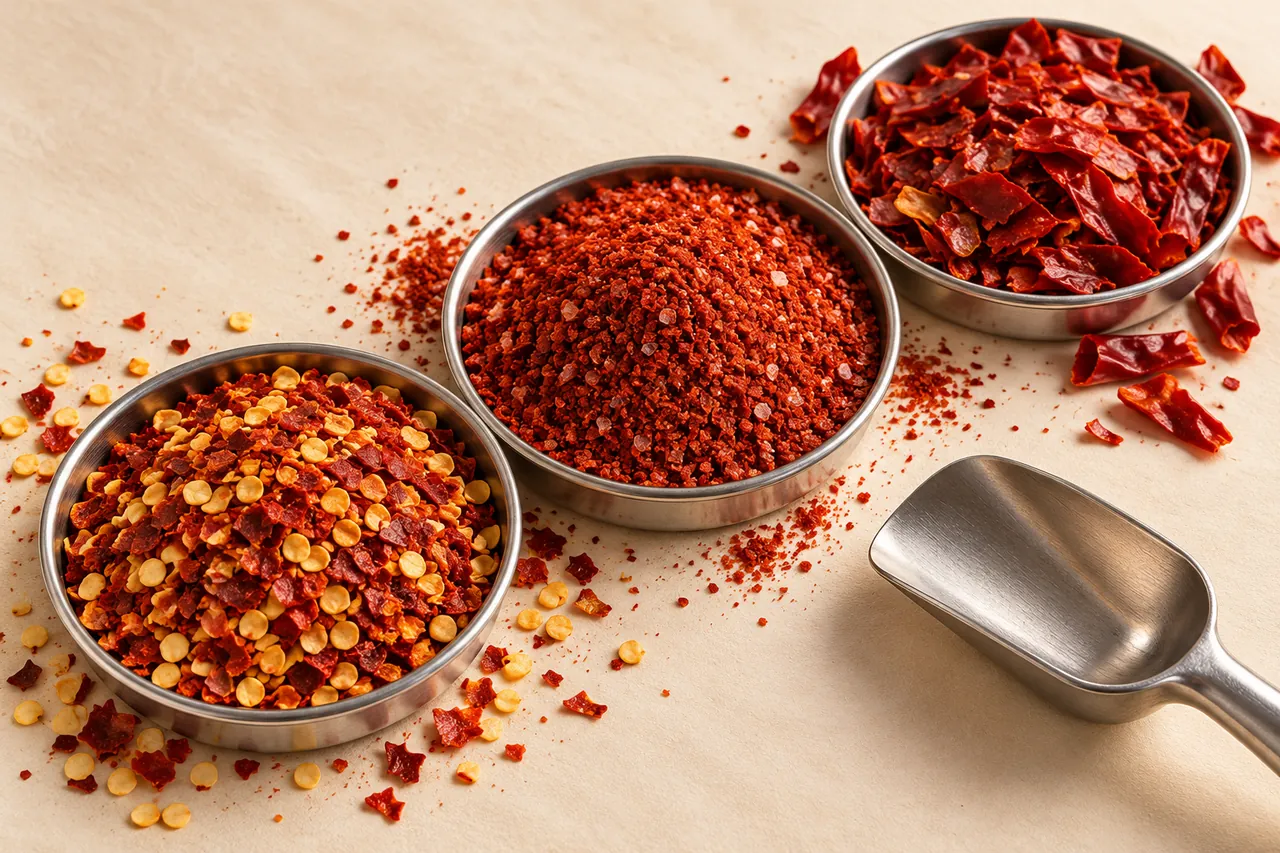
Coarse seeded chili flakes list 7,000–10,000 SHU. The separate dried crushed chili lists 3,000–5,000 SHU. Their heat references belong to their respective materials.
Assess the mild paprika-flake option
Sweet paprika flakes offer a mild, slightly sweet taste description, a 3–5 mm or customized size scope and moisture ≤12%. Use these listings to shortlist a material, then review its sample and order-specific specification.
Choose the starting point for your shelf product
Coarse Seeded Red Chili Flakes
Start here for a retail product whose visible mixture includes larger red pieces, pale seeds and accompanying fines.
- Form
- Coarse dried red flakes with visible pale seeds
- Heat reference
- 7,000–10,000 SHU
- Separate size references
- 1–4 mm and, independently, 5*7 mm; measurement basis to agree
Dried Crushed Red Chili Flakes
Compare this separate crushed preparation when selecting a 3,000–5,000 SHU ingredient reference and a defined cut for the food.
- Preparation
- Dried crushed red chili flakes
- Heat reference
- 3,000–5,000 SHU
- Independent particle references
- 1.5 mm and 1.8 mm, not a combined range
Mild Sweet Paprika Flakes
Consider this for a visible pepper-piece product with a mild, slightly sweet taste brief rather than selecting heat by appearance.
- Taste description
- Mild and slightly sweet
- Size scope
- 3–5 mm or customized
- Moisture specification
- ≤12%
Review the selection criteria
- Seeded red flakes
- 7,000–10,000 SHU reference A coarse red-piece and pale-seed appearance.
- Dried crushed chili
- 3,000–5,000 SHU reference A separate crushed preparation for comparison.
- Sweet paprika flakes
- 3–5 mm or customized; moisture ≤12% A mild, slightly sweet piece-style brief.
A Cut Specification for the Complete Mixed Portion
Describe the pieces and the fine fraction using an agreed measurement basis.
Spread a representative portion and compare larger red pieces, visible seeds and loose fines separately. Keep the same portion-preparation and inspection method when reviewing alternatives.
Resolve each independent cut reference
The seeded flakes list 1–4 mm and, separately, 5*7 mm. The crushed chili lists independent 1.5 mm and 1.8 mm references. Agree what each value measures for the selected preparation; neither pair defines a combined range.
What to observe in the mixed sample
| Selection point | What to consider |
|---|---|
| Red pieces | The dominant cut and the agreed sizing method. |
| Seeds | Their visible appearance and distribution in the portion. |
| Fines | Loose fine material and coating around larger pieces. |
| Complete portion | The mixture that will actually enter the retail pack. |
Keep Flake Character Through the Chosen Preparation
Evaluate the finished flakes after the processing specified for the order.
Cutting creates the pieces and accompanying fines; sieving helps define the retained preparation. Compare that final mixture with the reference used to develop your retail product.
Compare flakes after selected treatment
If steam treatment is selected, assess colour, pepper character and appearance after that route. General spice research shows steam can affect colour and flavour, so the final material is the useful comparison point.
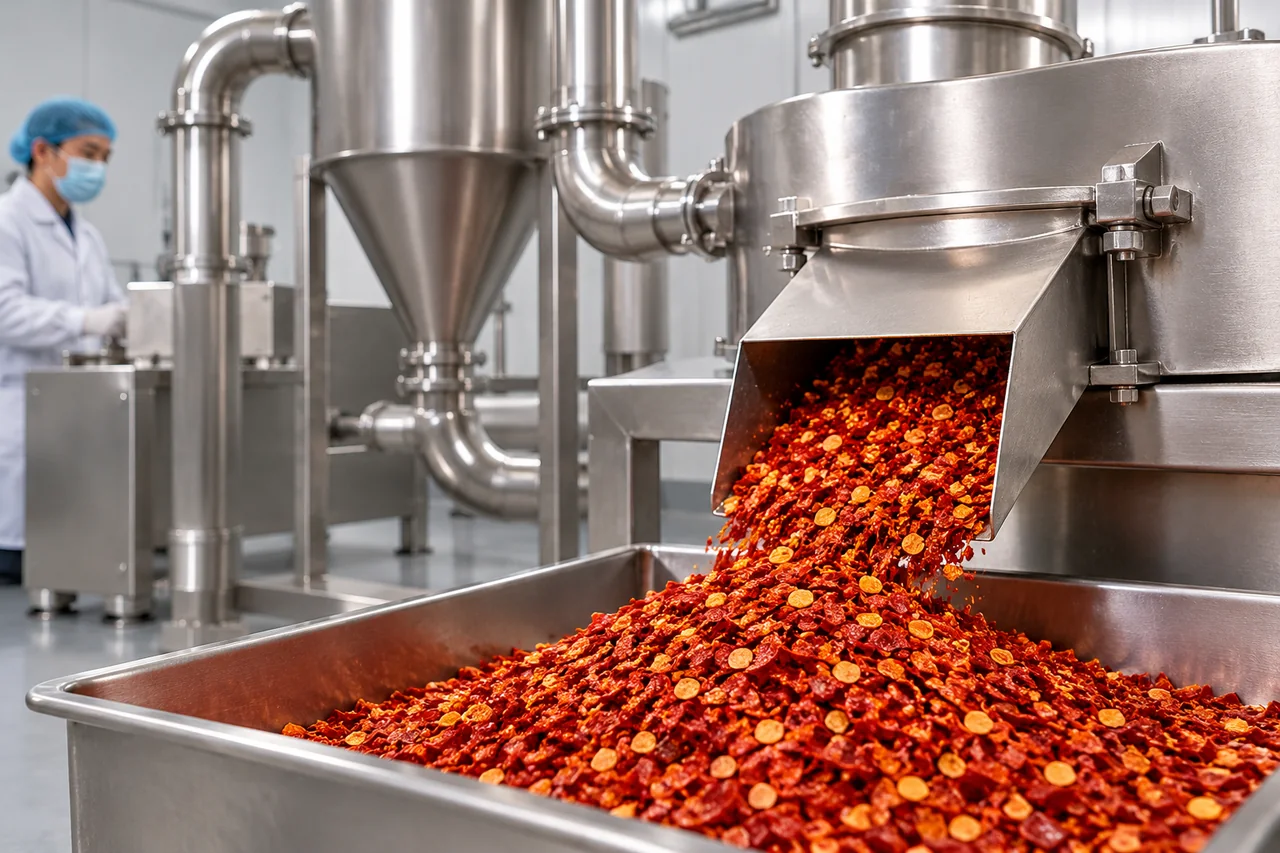
Connect the preparation with an observable result
- Cutting
Compare the red pieces and newly exposed fine material.
- Sieving
Review the retained mixture rather than one selected flake.
- Ordered treatment
Assess the finished colour and pepper character after the selected route.
Compare Dispensing and the Prepared Food
Keep dose and preparation constant so the useful difference becomes visible.
For a sprinkle, compare coverage, the mixture released through the opening and the material left after normal handling. For cooked use, compare visible pieces, particle feel and pepper character in the finished dish.
Separate cut changes from heat changes
Use the same dose, recipe and addition stage for each candidate. Decide whether the result calls for a different cut, a different heat profile or both.
Two views lead to a better material choice
- During dispensing
Coverage, mixture released and fine material left behind.
- After cooking
Visible pieces, particle feel and pepper character.
- Selection
Adjust cut and heat as separate decisions.
Agree Physical, Heat and Microbial Requirements
Each requirement has its own observation or analytical basis.
Use the approved mixed sample for cut, seed and fine-fraction appearance. Set the desired pungency and applicable test method separately; a mild taste description is not a numerical heat specification.
Set microbial criteria for intended use
For the intended food use, agree microbial criteria and any ordered treatment. Review the relevant laboratory results for that material and order. Steam is selected by requirement; its availability alone does not establish ready-to-eat suitability.
One retail ingredient, three acceptance decisions
- Physical appearance
Mixed reference and the agreed particle-inspection basis.
- Heat and flavour
Sensory comparison plus applicable SHU analysis.
- Microbial requirement
Ordered treatment, laboratory scope and acceptance criteria.
A Retail Opening That Works with the Flakes
Assess the material and package together before fixing the presentation.
We can assist production of packaging printed with your brand or accept packaging you supply. Send the proposed format, opening, net content and printing requirements for assessment.
Check the mixed flakes when dispensing
Review the filled mixture after normal handling and repeated use. Look at separation, the portion dispensed and any material trapped around the opening when comparing the proposed packs.
Two packaging routes meet at the filled sample
- Assisted branded packaging
Discuss production of packs printed with your branding.
- Customer-supplied packaging
Provide your proposed components for suitability assessment.
- Filled-pack review
Compare mixture, dispensing and opening behaviour together.
Build the Retail Label Around the Selected Ingredient
The product name, instructions and storage statement should describe the same supply.
Bring the selected chili or paprika preparation, full ingredient declaration and intended use into the artwork review. Assign an owner for the logo, wording and final approved file.
Set the retail product's storage basis
Set storage conditions and the keeping-period basis for the actual retail product–pack combination. An ingredient's catalogue duration is a reference, not a replacement for that packaging assessment.
| Your input | Factory assessment focus | Decision to confirm |
|---|---|---|
| Visible material Desired piece appearance, seed content and definition of fines. | Proposed crushed or cut preparation to compare in the intended food. | Selected ingredient and the comparison or test basis. |
| Serving and fill Requested pack opening, net content and consumer use. | Assess the actual flake-and-pack pairing rather than deriving fill from cut size. | Packaging format, component responsibilities and approval references. |
| Brand handover Authorized artwork, component supplier and quantity. | Agree ingredient, pack and artwork references for the project offer. | Agreed product, packaging and order scope for quotation. |
This is a planning handover for your enquiry. Packaging, MOQ, net content and timing are assessed and quoted for the product, format, printing method and quantity.
Request a Quote for One Defined Flake Project
Compare offers against the same material, packaging and approval responsibilities.
Send the mixed-flake reference, food use, heat requirement, proposed pack and requested quantity in one brief. State whether you will supply packaging or need assistance producing branded packs.
Specify branded-pack supply and quantity
MOQ, net content and lead time are quoted by product, packaging specification, printing method and quantity. Include your launch timing and the decisions still open so the proposal addresses the real project.
A practical route to the project proposal
Review the next-step choices
- Define
- Mixed appearance, food use and heat requirement.
- Compare
- Representative material and intended-food observations.
- Match the pack
- Opening, presentation and artwork supply route.
- Quote
- Quantity, timing and responsibilities on the same basis.
Bring the Flake Sample and Pack into One Enquiry
A complete reference helps us discuss the material and retail fill together.
Share your representative flake sample or appearance reference, intended food use and preferred heat profile. Add the proposed pack, net content and destination.
Add quantities and approval responsibilities
Include quantity, requested timing and the people approving the material and artwork. We can use these inputs to discuss preparation and customer-brand filling as one project.
The useful first message
- Material
Complete mixed reference, heat and food use.
- Pack
Proposed format, opening, branding and net content.
- Project
Destination, quantity, timing and approval owners.