
Whole Dried Chilies for Your Own Milling Line
For your own milling line, buy a defined prepared pod rather than an undefined whole-chili input. Start with New Generation when its size, moisture and heat references fit your powder brief. We can include cleaning and destemming before delivery. Send the feeder constraints, stem and seed condition and final powder target so the sample separates our supplied preparation from the recovery and output your mill must demonstrate.
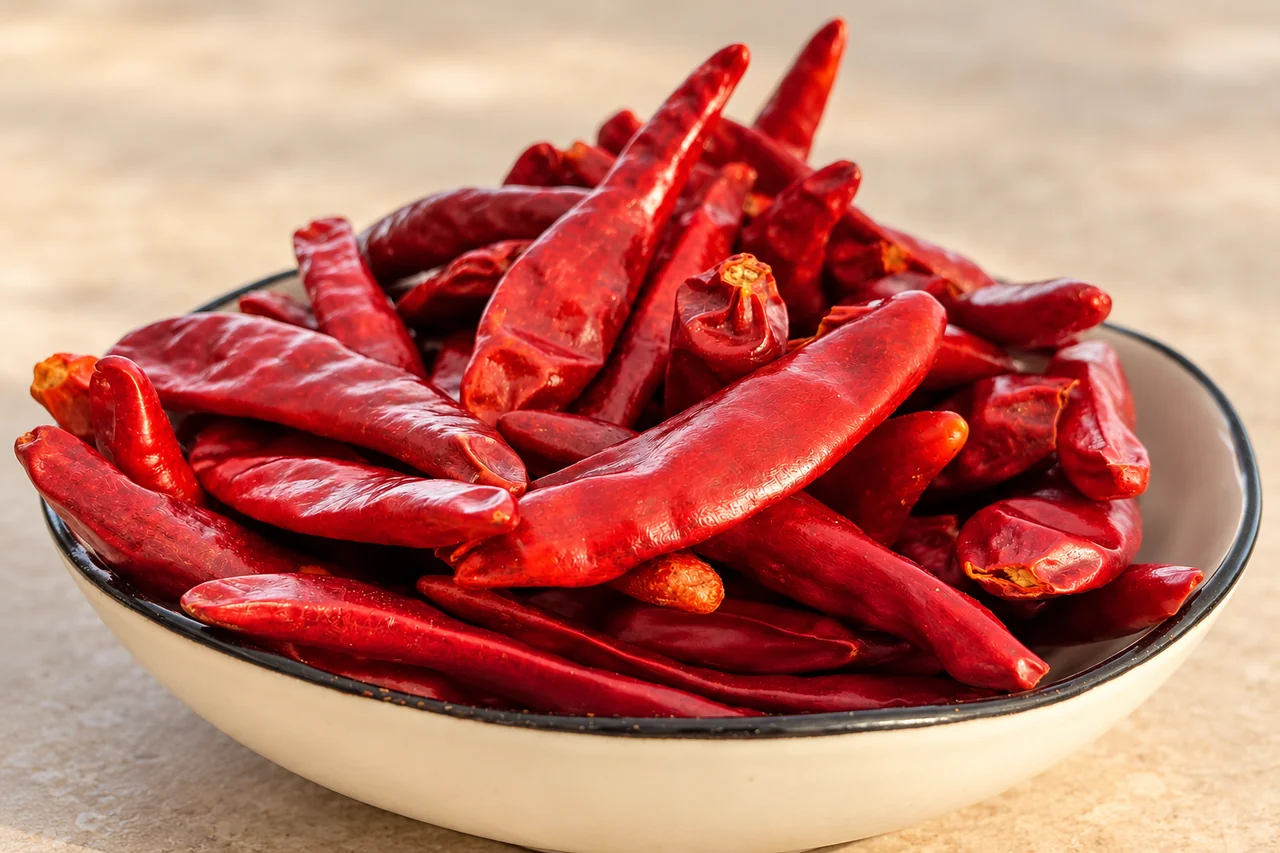
- Specified pod candidate
- New Generation lists 3–6 cm, 12–14% moisture and a full 50,000–90,000 SHU reference.
- Preparation boundary
- RELIA SPICES performs cleaning and destemming; specify which preparation belongs in the delivered pods.
- Your milling result
- Measure acceptable powder, oversize and removed fractions separately on your own equipment.
Choose the preparation delivered to your mill
Agree the delivered preparation before counting cleaning or destemming as work remaining with you.
- 01Our preparation
Agree cleaning, foreign-matter removal, destemming and any selected treatment included in delivery.
- 02Delivered pods
Define geometry, loose seeds, stems, broken material and actual moisture.
- 03Your milling
Measure accepted powder and separated fractions on the intended line.
RELIA SPICES buys dried chilies and cleans, removes foreign matter and destems them in-house. We also grind or cut, sieve and pack chili. For your own milling operation, specify the preparation included in the delivered pods and the accepted stems, loose seeds and broken fraction.
Moisture and particles are checked internally; ASTA, SHU and microbiology use external laboratories. In-house steam microbial reduction is selected according to order requirements. Agree the supplied input and treatment, then qualify feeder compatibility, milling recovery and operating conditions on your own equipment.
Confirm the actual pod identity and supply condition
Choose an actual pod condition rather than treating a form menu as stocked variants.
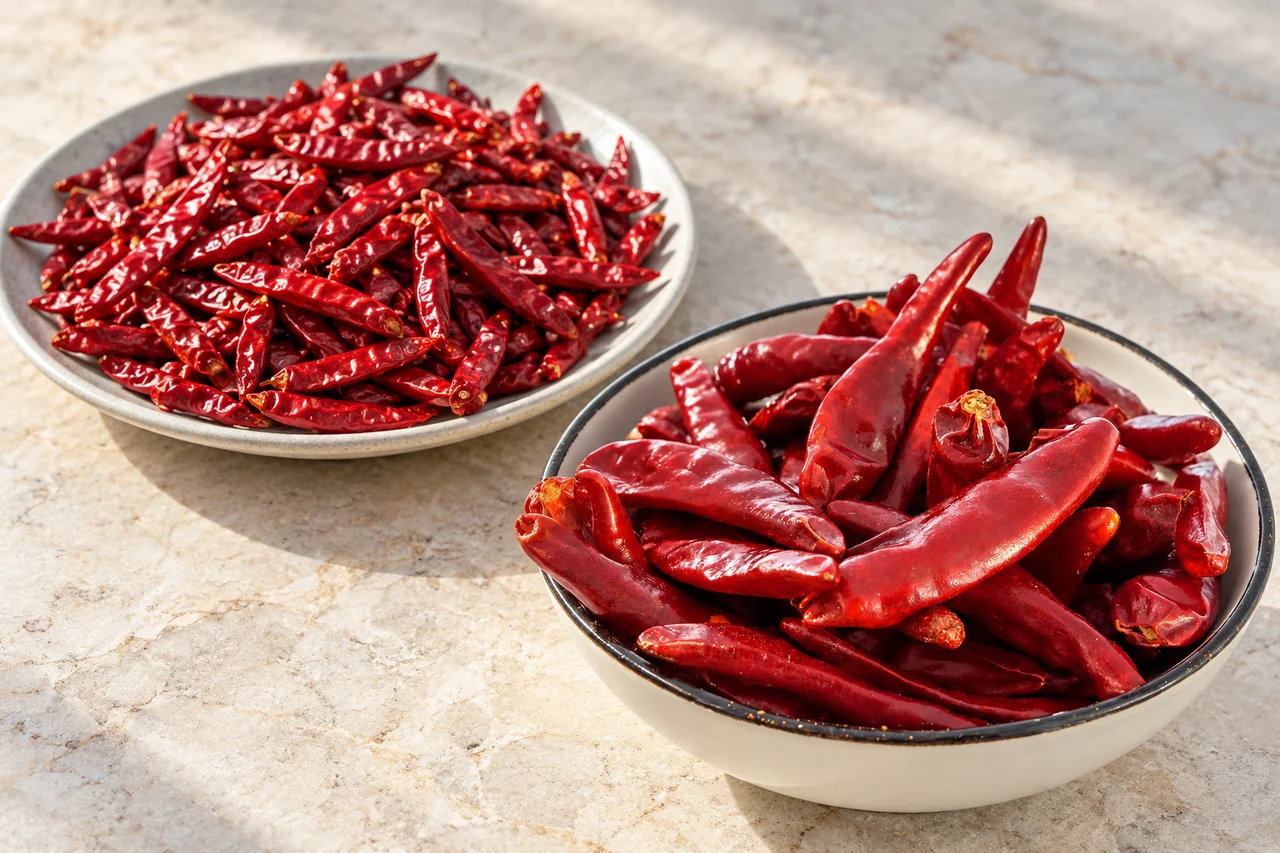
New Generation dried red chili gives 3–6 cm, 50,000–90,000 SHU, 12–14% moisture and impurity at 1% maximum. Its stemless-or-stem-cut description still needs an actual selected condition. The other whole red chili listing supports intact, red, wrinkled pods with AD as a written descriptor and an instruction not to eat directly. Its actual pod geometry needs a usable specification. Choose between identified preparations, not a whole/powder/flake menu mistaken for stocked variants.
Ingredients to compare for this application
New Generation pods for a defined milling input
A starting candidate when its stated dimensions and heat range align with the powder and feeder brief.
- 3–6 cm size and 50,000–90,000 SHU references.
- Moisture 12–14%; impurity 1% maximum.
- Stemless or stem-cut descriptions require an actual selected condition.
Whole red pods for a separately specified input
An alternative whole-pod enquiry when you will define geometry and heat rather than assume the other candidate's values.
- Intact red, wrinkled whole-pod presentation.
- AD written descriptor and instruction not to eat directly.
- 24-month reference with cooler storage; actual conditions require clarification.
These product specifications are a starting point for selecting a grade. Match the proposed material and sample to your food and order requirements.
Define the material that reaches the grinder
Changing stems, seeds or broken fractions changes what enters the grinder and what should be tested.
| Boundary | Define or measure | Purchasing use |
|---|---|---|
| Supplied preparation | Included cleaning, destemming and selected treatment | Price the work actually supplied |
| Input at the feeder | Geometry, stems, loose seeds and actual moisture | Qualify on the intended equipment |
| Milling outputs | Accepted powder, oversize and separated material | Measure usable recovery |
| Powder sold onward | Actual distribution and relevant laboratory result | Compare the intended finished ingredient |
Cleaning and destemming change which incoming material reaches the mill. Seed handling and broken-pod content can change it further. Define prepared pods, loose seeds, stem or calyx material and unusable matter separately; the commercial pod name alone does not do this.
New Generation's 3–6 cm, 12–14% moisture and impurity at 1% maximum are references, not a measured feeder distribution. We check actual moisture internally and use external laboratories for relevant heat, colour and microbiology. Your trial should separate accepted powder from oversize and removed material, then test the powder fraction sold onward. Composition changes mean the input SHU range is not automatically an output guarantee. Compare the same prepared input and powder endpoint before assigning differences to the mill.
Keep moisture and handling with the lot
Use the material's actual moisture at the feeder rather than a catalogue range alone.
- ✓Representative material
Separate intact pods, broken material, loose seeds and stems.
- ✓Moisture basis
Use an actual lot result and method; do not replace it with a catalog range.
- ✓Package history
Keep storage and buyer preparation with the comparison before diagnosing mill behaviour.
Moisture belongs with the actual lot and sampling method, not only the catalog range. New Generation’s 12–14% is a declaration, not a measured result for the material entering your mill. Check package condition and any storage or preparation changes before attributing a milling difference to the pepper name. Do not adjust moisture to a number copied from an unrelated machine study. The appropriate input condition depends on the identified material, food-process controls and your equipment; it needs to be established within your qualified route.
Compare through your own milling route
Compare accepted powder separately from oversize, removed material and other losses.
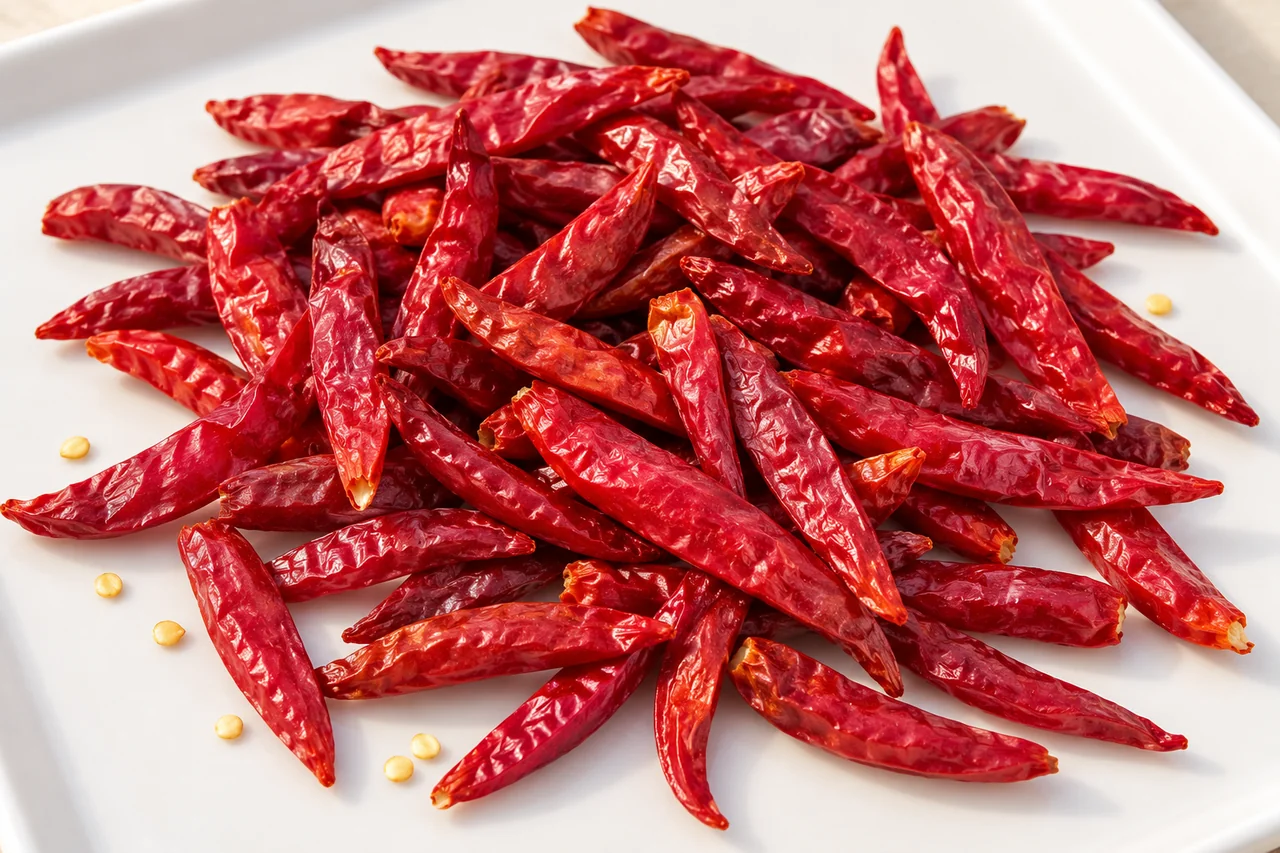
Run a defined material quantity through your own approved preparation and milling sequence. Keep accepted powder, oversize, separated seeds or stems and other losses as separate output categories. Compare the actual powder sieve distribution, coarse fraction, colour and pepper character against the intended specification. If the input preparation differs, do not call the resulting powders equivalent merely because they pass one sieve. Inspect powder as produced and after the normal packing route so an attractive freshly milled sample is not the only purchasing evidence.
Assess heat at the input and powder levels separately
The whole-pod SHU range is not automatically the guarantee for a differently composed milled powder.
- 01Incoming heat reference
The New Generation declaration spans 50,000–90,000 SHU and needs actual grade applicability.
- 02Milled powder
Inspect the resulting distribution, colour and heat after the chosen separation and milling route.
Keep heat and colour attached to the fraction actually tested. The full 50,000–90,000 SHU range describes the New Generation ingredient reference; it is not a finished-powder guarantee. Stem removal, seed handling or other separation changes the material composition, so the milled output needs its own relevant assessment. Do not infer a colour advantage or heat concentration from pod redness. When a powder target is critical, compare the buyer-produced powder with the accepted reference using an agreed sample basis and method.
Keep selected treatment and handling with the prepared pods
Select treatment and handling for the prepared pods without inferring ready-to-eat suitability.
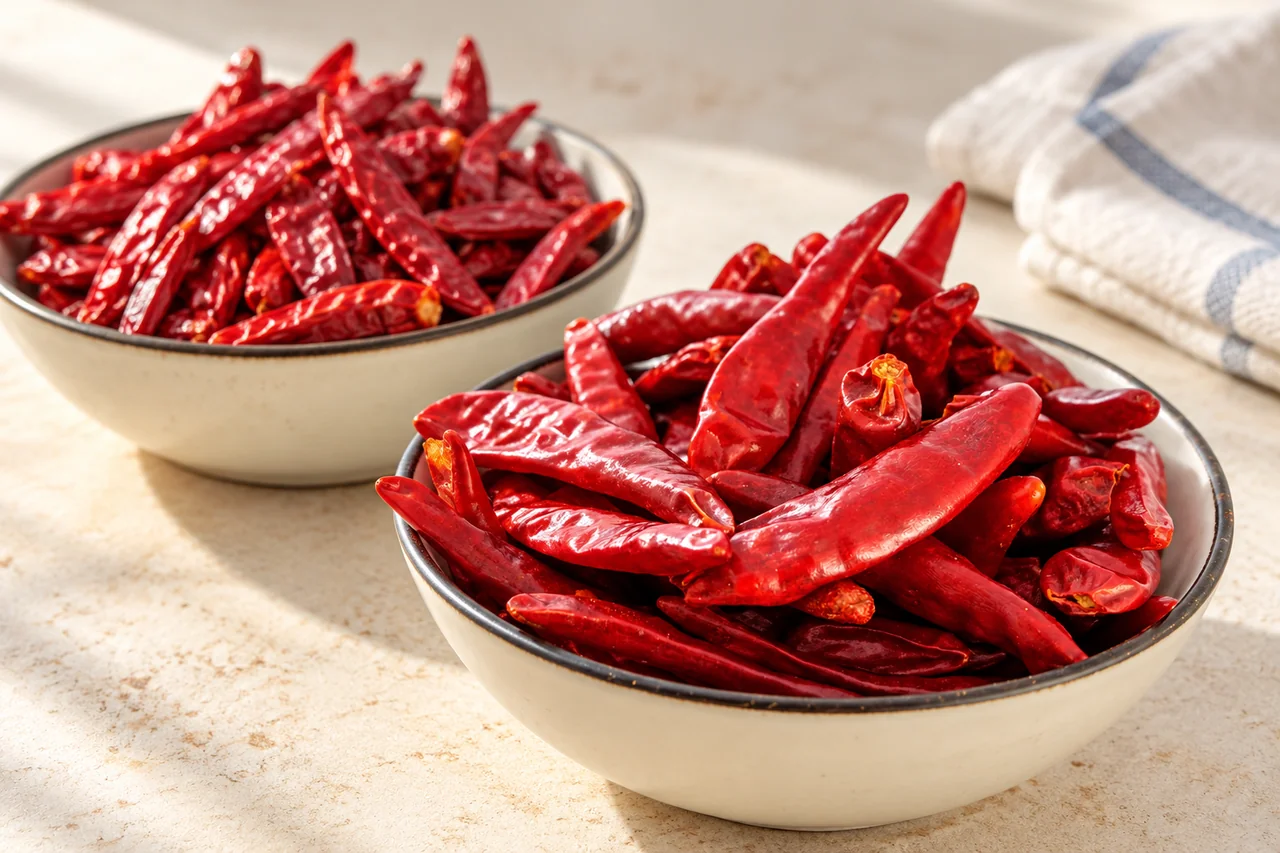
RELIA SPICES can use its in-house steam microbial-reduction equipment according to order requirements. Keep the selected treatment and applicable outside-laboratory evidence separate from mechanical cleaning and milling. New Generation states six months in a cool place with ventilation and cleaning before eating; the other whole-pod listing states 24 months in cooler storage and not to eat directly. Agree usable instructions for the actual prepared input and package. Do not combine those declarations into a 24-month ambient claim or assume that either our mechanical preparation or your milling establishes ready-to-eat suitability.
Compare prepared inputs at the same powder endpoint
Price the same preparation boundary and accepted powder endpoint across offers.
- 01Preparation cost
Count only the cleaning and separation actually required by your route.
- 02Accepted output
Measure usable powder separately from oversize and removed fractions.
- 03Supply evidence
Identify the actual preparation and production relationship; do not assume a title proves ownership.
Compare the cost of acceptable powder using the same incoming preparation boundary. RELIA SPICES performs cleaning and destemming in-house, so identify which work is included in the offered pods and which work your operation retains. Count separated fractions and labour only where your trial measured them. A lower whole-pod price can be offset by a different usable fraction or powder result, while a more prepared input still needs the actual composition and condition specified. Leave recovery and throughput as your measured equipment outcomes rather than infer them from our manufacturing role.
Send both ends of the milling brief
Send both the incoming-pod constraints and the intended powder specification.
- 01Powder endpoint
Provide the intended colour, flavour, heat and particle distribution.
- 02Incoming interface
Define pod geometry, stems, seeds and condition your line can receive.
- 03Responsibility split
Request the included preparation and documentation before arranging your own line comparison.
Share the powder's intended role, target particle distribution and accepted colour or heat reference. Add the pod geometry, stem and seed condition your feeder can receive. Link the New Generation or other whole-pod candidate and identify which preparation you want us to supply. We can discuss the prepared input, treatment and documents before agreeing a sample for your line comparison.
- Intended final powder and use
- Whole-pod receiving requirements
- Stem, seed and cleaning responsibility
- Actual buyer milling route
- Moisture, heat and lot documents
- Quantity, package and quotation scope
Your next purchasing decision
Specify the prepared pods for your milling line
Discuss prepared pods while qualifying milling capacity and recovery on your own line.
Send the powder endpoint, incoming geometry and preparation boundary to Qingdao Relia Spices Co., Ltd. / RELIA SPICES. We can separate our cleaning and destemming from the milling work your operation intends to perform.
The enquiry page keeps this guide with your message. Add your quantity and destination so we can discuss the relevant material.