
Chili Ingredients for Oil with Retained Fine Solids
When fine chili stays in the oil, choose the powder for the portion people can serve after normal shaking or stirring. RELIA SPICES can discuss a grind with the fine body you want and an acceptable coarse fraction. Compare sediment, redispersion and mouthfeel in your own container. Send the oil loading and serving action so we can target a useful preparation rather than appearance alone.
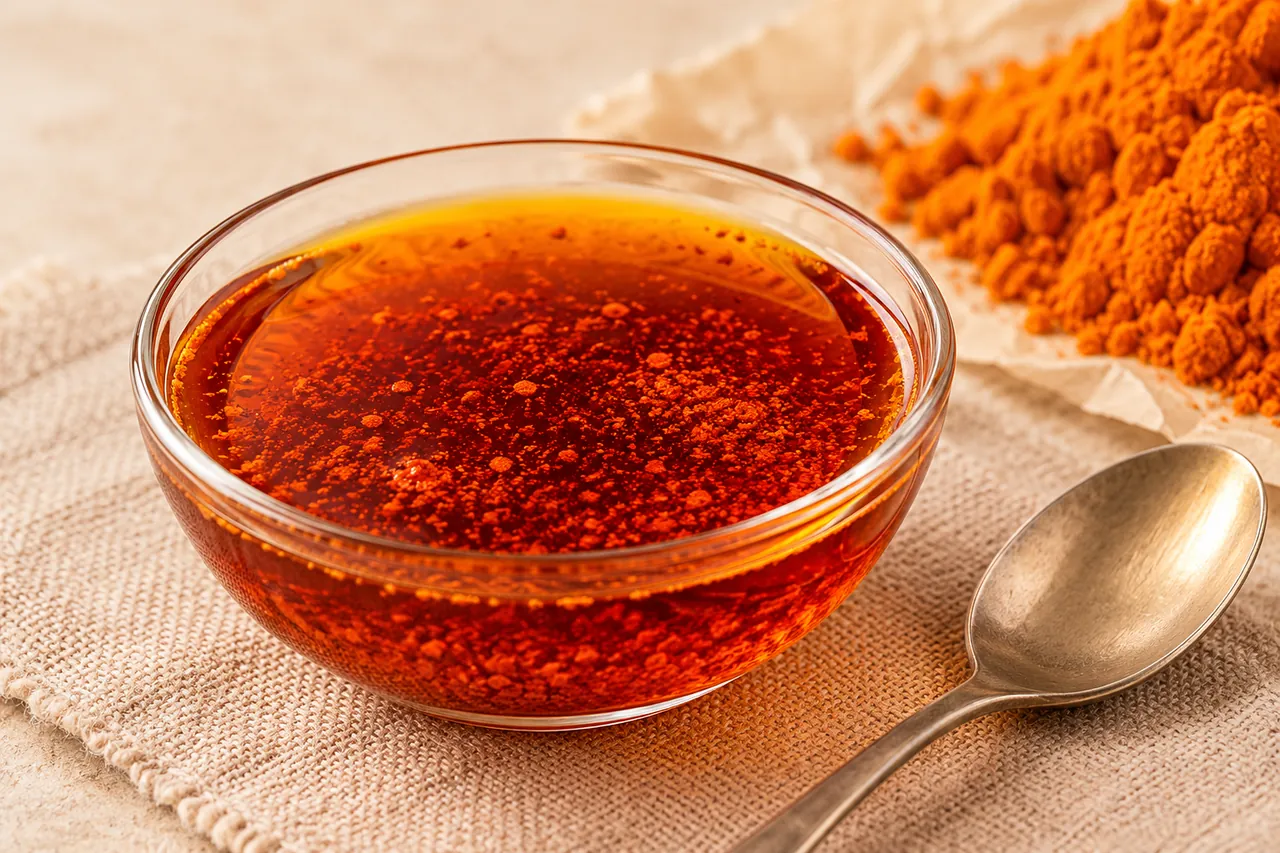
- Fine body
- Two listed powders carry 60-mesh references but different flavour and moisture descriptions.
- Coarse feel
- Inspect persistent pieces and seeds separately from temporary powder clumps.
- Practical use
- Compare the residual bed and first-to-last servings after the normal shake or stir.
Select fine body without an unwanted coarse bite
Describe fine body and unwanted coarse sensation as separate grinding requirements.
- 01Fine body
Choose the powder contribution in the permitted oil loading.
- 02Coarse tail
Set the pieces or seeds that must not dominate eating texture.
- 03Ordinary serving
Approve the portion after the real shake, stir or scoop.
RELIA SPICES cleans and destems purchased dried chilies before grinding, sieving and packaging. For retained-solids oil, specify the fine material that provides body and the coarse fraction you do not want in a normal mouthful. Cayenne powder lists nominal 60 mesh and moisture ≤9%; Gochugaru-described powder lists 60 mesh and moisture ≤7%.
We check moisture and particle size internally, arrange SHU and microbiology through outside laboratories, and use in-house steam treatment according to order requirements. A separate crushed chili lists 3,000–5,000 SHU and independent 1.5 mm and 1.8 mm references. Consider it only if you also want a coarser texture.
Keep powder candidates distinct from a crushed-flake comparison
A crushed-flake candidate serves a different texture role from a nominal 60-mesh powder.
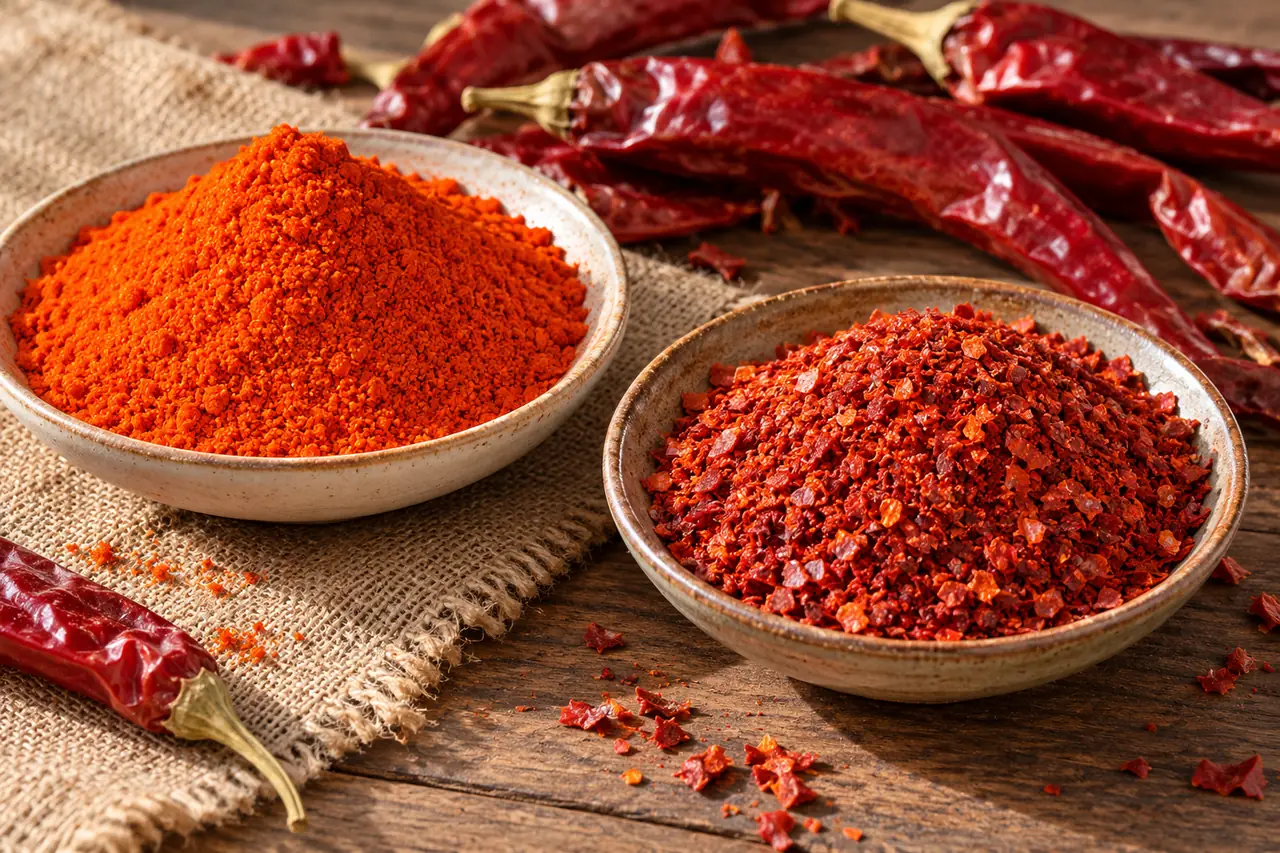
The Cayenne powder and Gochugaru-described powder each carry a nominal 60-mesh reference, but their moisture declarations are ≤9% and ≤7% respectively and their flavour/process descriptions differ. A separate crushed red chili candidate contains independent 1.5 mm and 1.8 mm references and a 3,000–5,000 SHU declaration. Treat that last material as a different particle preparation, not automatically as a fine powder equivalent. Obtain actual coarse-tail and seed information for whichever material is proposed.
Ingredients to compare for this application
Cayenne powder, nominal 60 mesh
Compare a selected powder and heat profile for fine body in the oil.
- Nominal 60 mesh
- Moisture ≤9%
- Mild, Medium or Hot profile to select
Gochugaru-described chili powder
A separate powder profile for comparison of body, coarse sensation and flavour.
- 60-mesh reference
- Moisture ≤7%
- 24-month cool, dry storage reference
Crushed chili for a coarser texture
Consider only when a noticeable crushed-particle role belongs in the retained solids.
- 3,000–5,000 SHU
- Independent 1.5 mm and 1.8 mm references
- Optional steam treatment
These product specifications are a starting point for selecting a grade. Match the proposed material and sample to your food and order requirements.
Inspect the particles that remain noticeable in oil
The coarse tail can control mouthfeel even when the main powder looks fine.
| Observation | Possible decision to investigate | Comparison |
|---|---|---|
| Persistent coarse pieces | Upper particle fraction or seed criteria | Mouthfeel after normal preparation |
| Fine sediment | Distribution and actual solids loading | Bed structure and ordinary redispersion |
| Dry clumps | Incoming condition and addition route | Whether clusters remain after mixing |
Assess the actual powder distribution rather than using nominal mesh as a description of every particle. Spread representative samples and examine coarse pieces, seeds and dry clumps separately. Use the agreed sieve method for the fraction relevant to your food.
A clump that disperses during addition is different from a persistent skin or seed fragment. Return that distinction with your observations so the next comparison can target grinding, sieving or the addition route appropriately.
Use the actual oil and permitted solids loading
Keep oil, solids loading and observation conditions fixed for the first comparison.
- 01Liquid phase
Use the actual oil and other permitted recipe components.
- 02Solids phase
Identify the complete particle preparation and actual addition basis.
- 03Observation
Record temperature, elapsed time and the unmodified serving condition.
Keep oil identity, solids amount, other recipe components and mixing route fixed in the initial comparison. Note the temperature and observation time rather than calling a warm freshly mixed sample representative of every use condition. Particle settling depends on more than the printed mesh label, including the liquid and interactions between particles. A basic suspension calculation can help frame an investigation, but irregular pepper fragments and a concentrated condiment need direct observation rather than an assumed settling-rate prediction.
Compare sediment structure, not just its height
A loose sediment and a compact base can behave differently during serving.
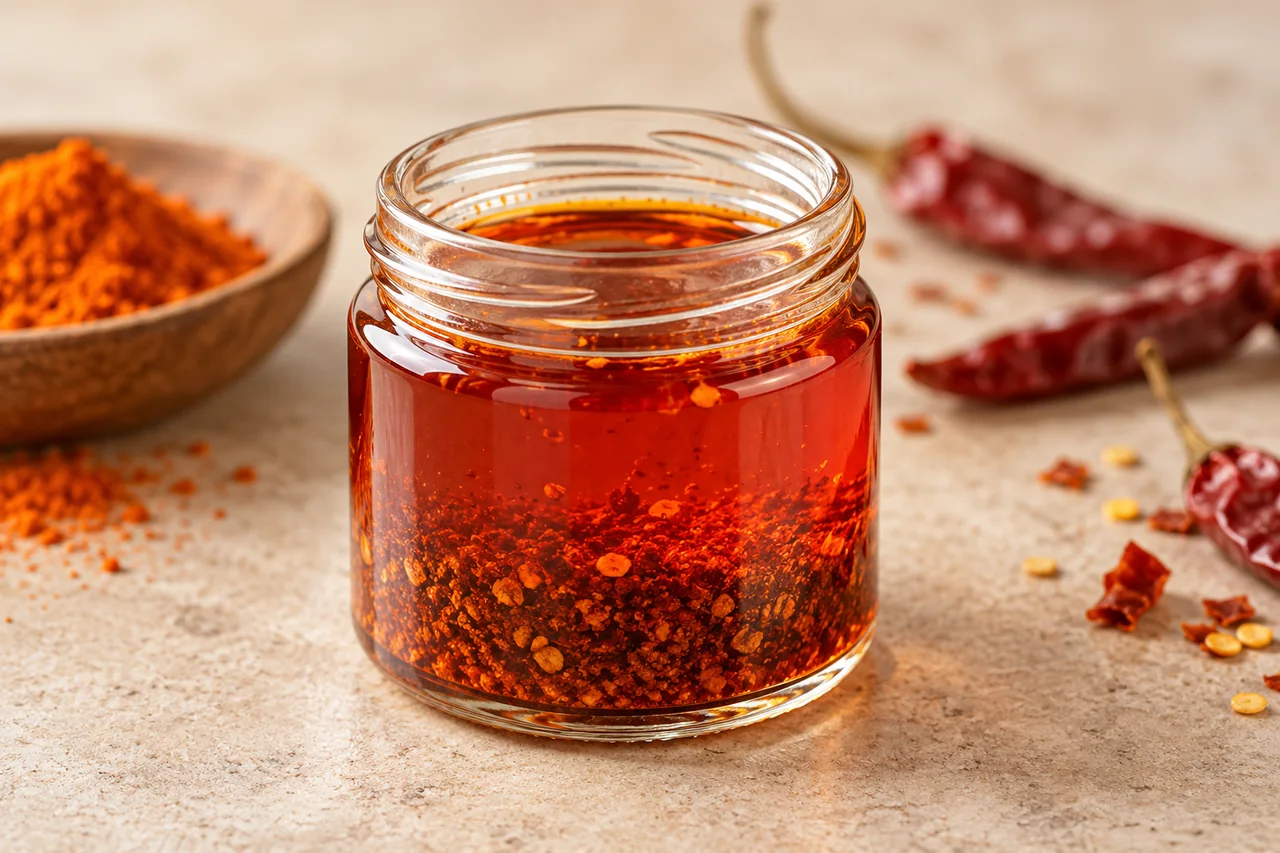
Use the intended container to inspect upper oil, the transition into solids, the sediment base and material attached to the walls. A taller loose layer and a smaller compact layer can behave differently when stirred. Photograph the same vessel against the same background and retain the time point. Do not attribute the pattern to water uptake, particle density or an additive without evidence. The immediate practical question is whether the product can be used as intended.
Make the settled pack practical to serve
Test redispersion with the ordinary action the customer can actually perform.
- 01Before movement
Observe the bed, wall deposits and clear upper oil.
- 02Normal action
Apply the same realistic shake, stir or scoop.
- 03Served portions
Compare residual solids and first-to-last eating texture.
Sediment height does not describe how easily a pack returns to use. A loose layer may stir back readily, while a compact base can leave a dense final portion. Compare that practical difference rather than demanding permanent uniformity from the powder.
Use matching containers, the real oil formula and the same holding points. Inspect the undisturbed base and walls, then apply one agreed ordinary shake, stir or scoop. Compare the remaining bed and representative early, middle and late servings for solids, heat and mouthfeel. If only vigorous laboratory mixing restores the target, revise the material or recipe deliberately. Send the accepted serving action and particle observations to RELIA so the grind discussion addresses normal use.
Compare first, middle and last servings from the pack
Compare early, middle and late portions rather than one freshly stirred spoonful.
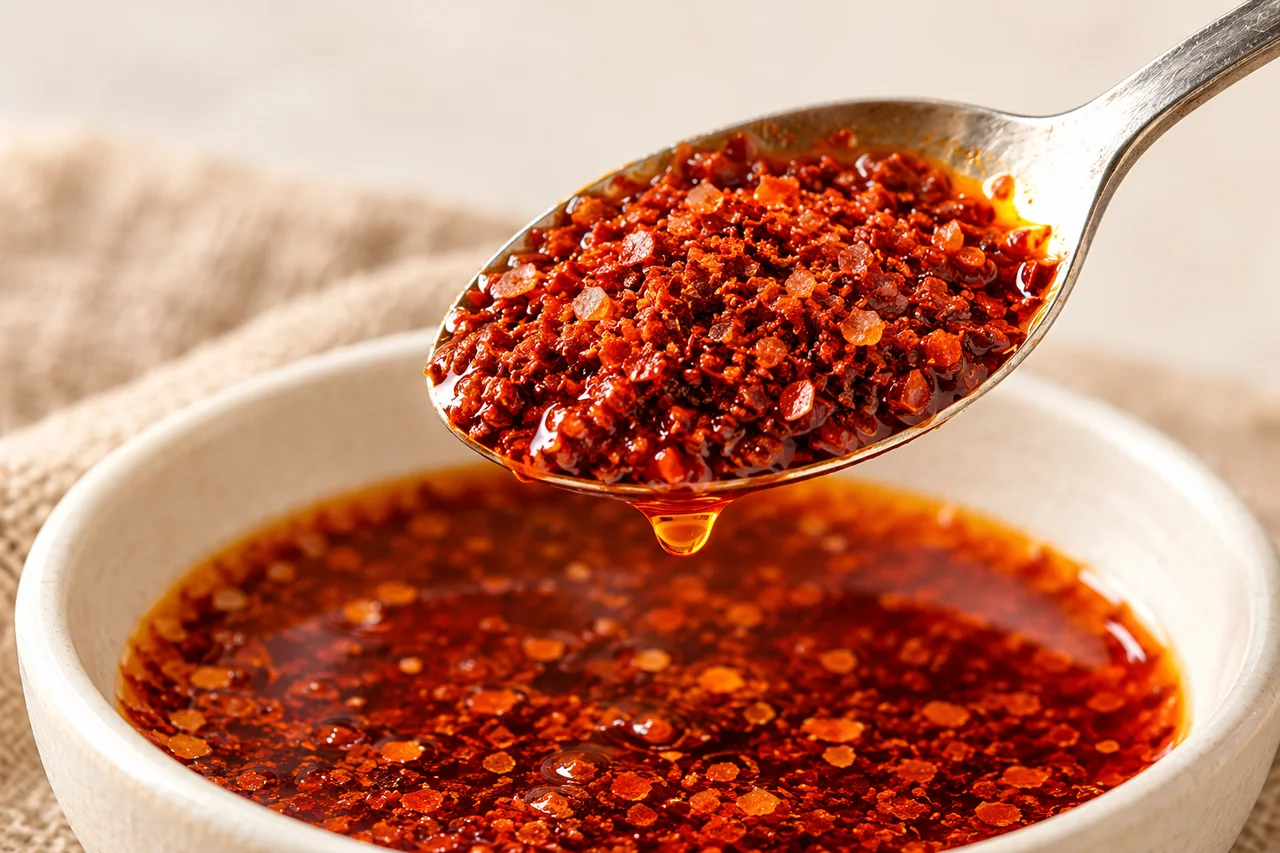
Use the normal action before each serving where the instructions require it. Collect representative portions through the container and compare solids, heat and flavour using your agreed methods. A good stirred mouthfeel can coexist with an oil-rich first pour and a dense last spoonful. Keep that serving result separate from incoming ingredient quality. If a revised formula changes body or redispersion, assess it as a new recipe rather than claim the original powder alone solved the issue.
Keep colour, flavour and treatment outside a sediment-only decision
Accept serving texture together with flavour, heat and the selected ingredient treatment.
- 01Physical use
Accept mouthfeel, sediment and ordinary serving consistency.
- 02Sensory balance
Accept colour, pepper character and heat in the actual food.
- 03Material approval
Review applicable ingredient treatment and intended-use evidence separately.
Accept the physical serving pattern together with colour, flavour and heat. Our outside-laboratory SHU work can support a numerical ingredient requirement; the Cayenne's mild, medium and hot options still need a selected profile rather than an invented SHU conversion.
RELIA's in-house steam microbial reduction is used according to the order requirement. Match the trial material to that treatment arrangement and the relevant microbiology evidence. The oil-system trial establishes physical and sensory use; finished-food safety and storage approval remain tied to the actual food process.
Send the retained-solids and serving brief
Send the container, settled-bed reference and ordinary serving action.
- ✓Particle target
Describe acceptable fine body and the unwanted coarse fraction.
- ✓Serving target
State the realistic action and acceptable portions through the pack.
- ✓Material response
Link the proposed sample to the selected preparation and your recipe boundary.
Send the oil system, solids loading, accepted coarse feel and normal serving action. Include the container, holding pattern and first-to-last observations. We can discuss a specific grind or crushed preparation, its particle and moisture checks, requested treatment and package against that useful serving brief.
- Oil base and preparation
- Solids inclusion level
- Mouthfeel and coarse-tail criteria
- Serving action
- Holding and acceptance method
- Sample quantity and packaging
Your next purchasing decision
Discuss a usable retained-solids oil preparation
Discuss a particle profile that works in the complete pack.
Bring the actual container, oil loading and serving action, plus the coarse feel and settled-bed condition you accept.
Include first-to-last observations and required ingredient tests. We can connect the proposed powder or crushed fraction to that defined comparison.
The enquiry page keeps this guide with your message. Add your quantity and destination so we can discuss the relevant material.