
Chili Cuts for Chunky Sauce Pumping and Filling
For chunky sauce, choose chili pieces that both pass through your line and remain recognisable in the pack. RELIA SPICES can discuss cut or crushed preparations with the seeds and fines your recipe needs. Compare the wet pieces before pumping, after normal recirculation and in filled packs. Send the finished-piece reference and relevant equipment passages so the ingredient discussion starts with your sauce and line.
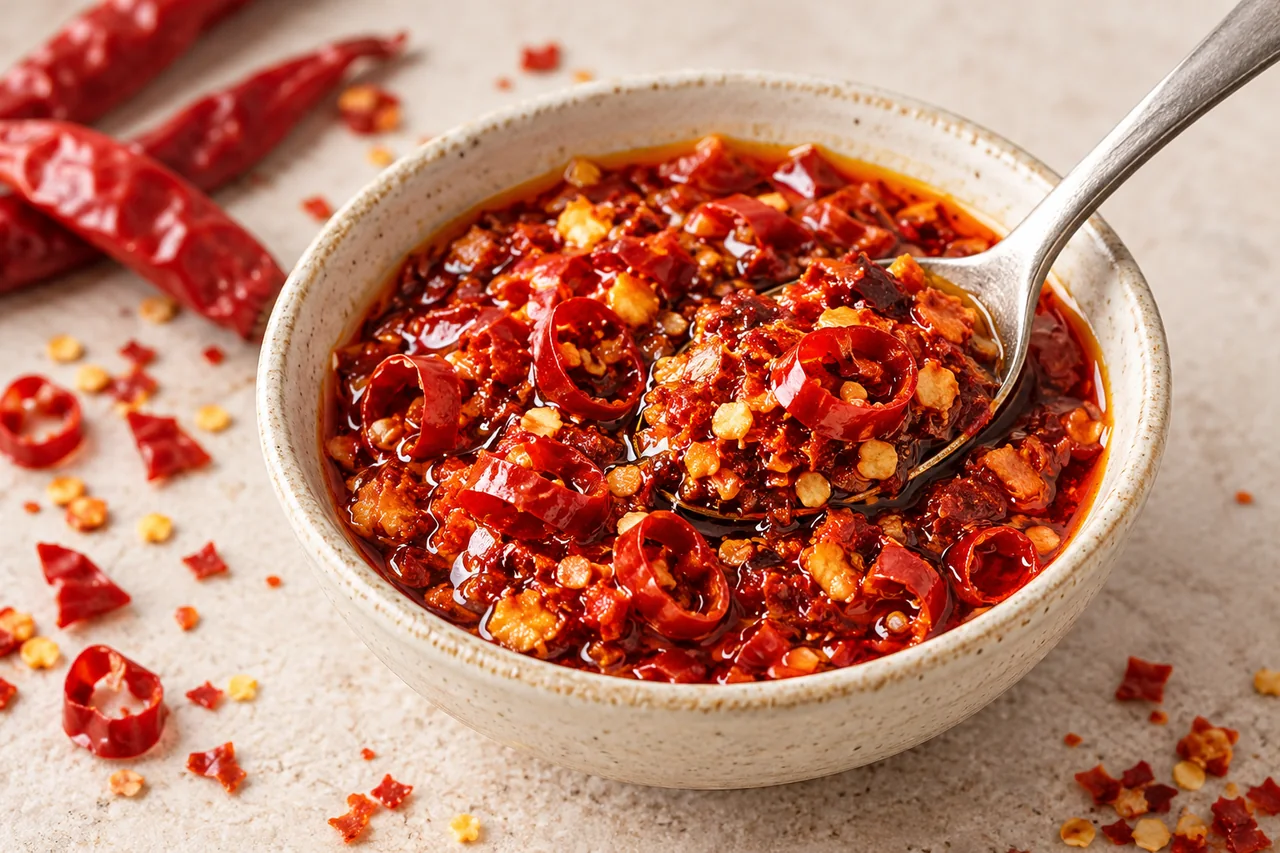
- Shape choices
- Cut-pod pieces, coarse flakes and Tianying rings provide different starting shapes.
- Two outcomes
- Free passage and survival of the visible piece need separate acceptance.
- Filled portion
- Check piece loading and fragments through start, steady operation and restart.
Prepare the cut around the finished wet piece
Define the main cut, seeds and fines against a wet-piece reference.
- 01Supplied dry cut
Agree principal pieces, seeds and fine material.
- 02Wet sauce piece
Observe actual shape, flexible folds and clusters.
- 03Filled product
Accept the visible feature and fragment level in the pack.
RELIA SPICES cleans and destems purchased dried chilies, then cuts or crushes, sieves and packs the chosen preparation. For chunky sauce, define the main piece, accompanying seeds and fines against the wet feature you want in the pack.
The cut-pod candidate lists 8–12% moisture and 8,000–12,000 SHU. Coarse flakes list 5–8 mesh and moisture ≤8%; Tianying rings list 15,000–20,000 SHU. We check moisture and particle size internally and use outside laboratories for numerical heat and microbiology; in-house steam treatment follows order requirements. Bring a wet sample or scaled photograph so the cut discussion addresses both appearance and passage.
Compare pod pieces, coarse flakes and rings deliberately
Dry size entries do not establish hydrated dimensions or filling-machine compatibility.
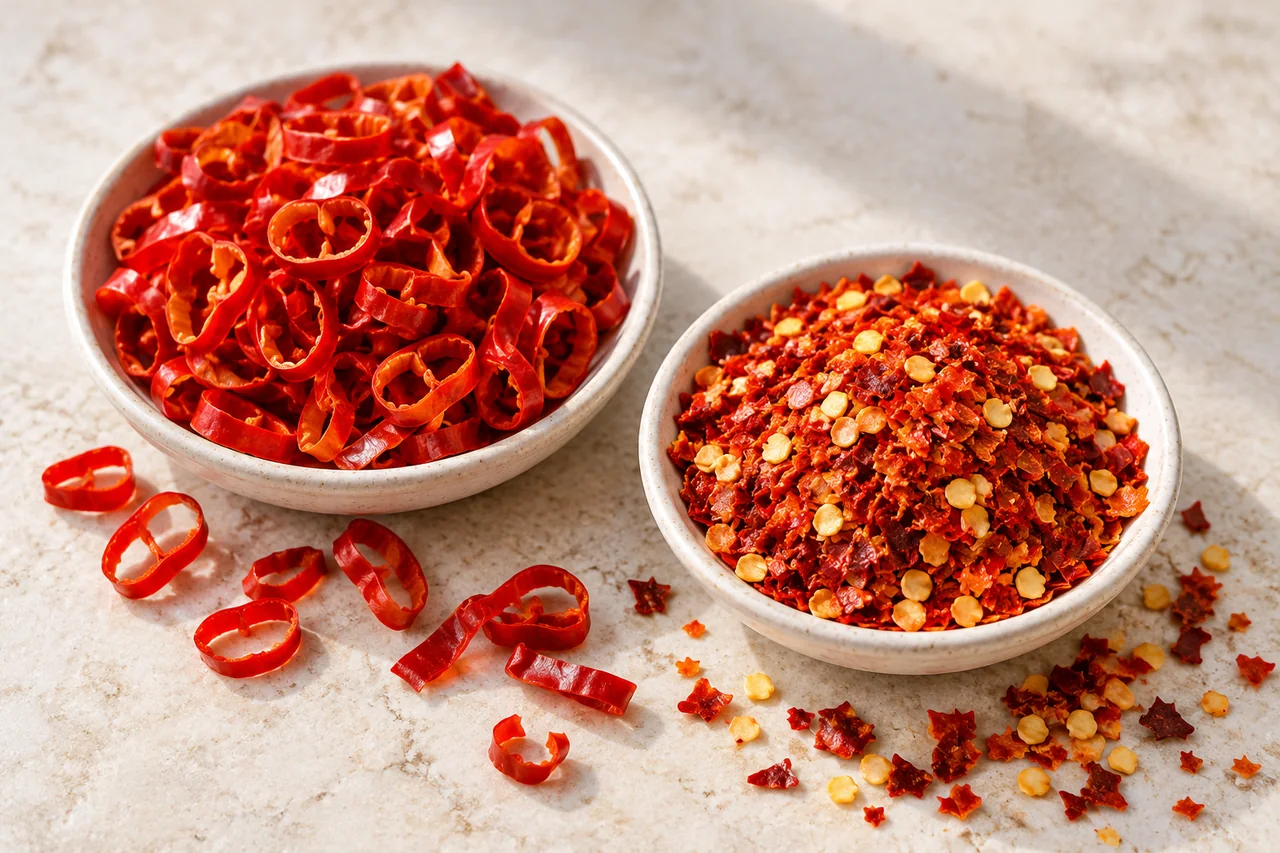
The cut-pod listing provides moisture 8–12% and heat 8,000–12,000 SHU, but its 4–7 cm entry is not an established delivered segment length. The coarse Gochugaru-described flakes carry 5–8 mesh and moisture ≤8%. The dried Tianying rings carry 15,000–20,000 SHU and a 1 mm reference with an undefined measured axis. These support three form-specific discussions; none establishes the wet maximum particle or compatibility with your filling machine.
Ingredients to compare for this application
Cut-pod chili pieces
Discuss a segment-like preparation for an actual wet-piece and line comparison.
- Cut-pod presentation with visible seeds
- 8–12% moisture
- 8,000–12,000 SHU
Coarse crushed chili flakes
Compare when irregular visible flakes suit the sauce better than rings or segments.
- 5–8 mesh reference
- Moisture ≤8%
- Crushed red chili preparation
Tianying chili rings
Consider a ring-shaped feature with a separate heat profile and actual cut to agree.
- Dried chili rings for cooking
- 15,000–20,000 SHU
- 1 mm reference with measured axis to agree
These product specifications are a starting point for selecting a grade. Match the proposed material and sample to your food and order requirements.
Find the restrictions the wet pieces actually meet
Map valves, strainers and outlet restrictions as well as pipe diameter.
| Location | Inspect | Decision |
|---|---|---|
| Inlet and mixing | Clusters and uneven particle loading | Prepare a representative wet feed |
| Pump and valves | Interruptions and changed pieces | Separate passage from fragmentation |
| Filling outlet | Actual portions and visible shape | Accept piece loading and integrity in packs |
Map the actual inlet, pump, valves, strainers and filling outlet using your equipment guidance. Include sauce temperature, piece loading and recirculation. The largest pipe diameter does not describe the narrowest passage.
Use the map to plan the trial, not to calculate a universal clearance from a catalogue cut entry. Flexible pieces, clusters and the surrounding sauce can change the result.
Check passage and piece integrity in the same trial
A piece can pass through the line yet lose its intended shape.
- 01Passage interruption
Identify the location, clusters and wet-particle condition.
- 02New fragments
Compare cut integrity before and after actual exposure.
- 03Uneven packs
Check agitation, waiting and portion loading through filling.
Flexible chili skin may fold through a restriction but break after repeated circulation. Clusters can behave differently from separated pieces. Passing the line therefore does not prove that the sauce retains its intended chunky appearance.
Collect representative wet samples before pumping, after a normal pass and after the recirculation you actually use. Keep sauce temperature, loading and pass history steady. Compare principal pieces and new fragments by the same scaled-image or separation method, alongside interruption locations. Inspect start, steady-run and restart packs. If passage is clear but fragments increase, compare another supplied cut or permitted equipment practice. Return that distinction to RELIA rather than widening a size limit without addressing the cause.
Evaluate the surrounding sauce at its real operating condition
Keep sauce condition and temperature with the particle trial.
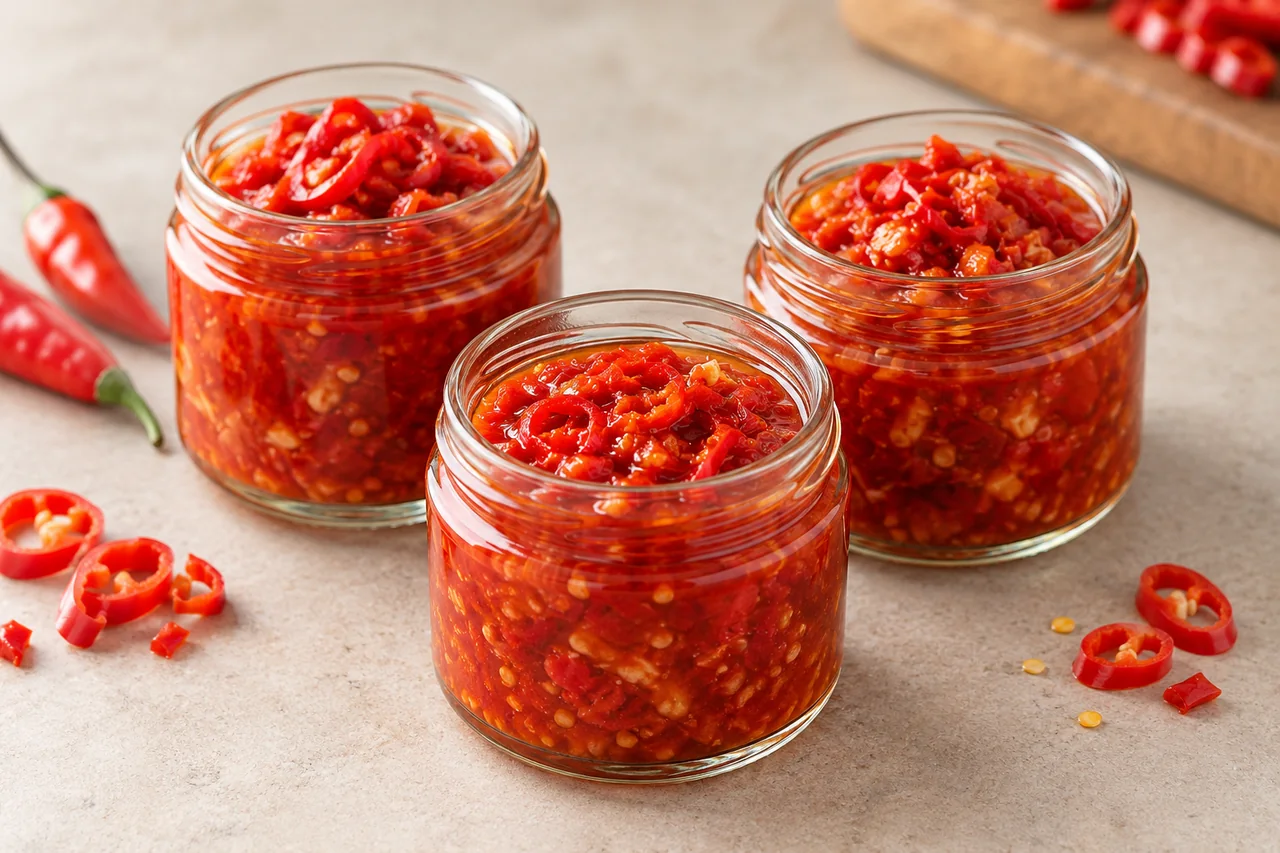
Keep the full sauce recipe and measurement temperature with the particle trial. A pepper-paste study reports shear-dependent flow for its tested preparation, illustrating why one viscosity reading does not describe every operating condition. That does not make your chunky sauce the same material. Use your responsible team's appropriate flow or rheology method and the actual pump observations. If the sauce formula changes to improve passage, retain that as a new route and reassess visible-piece distribution.
Compare filled packs through start, steady run and restart
Compare piece loading through the filling run, including normal restarts.
- ✓Start-up
Inspect the normal initial filled portions and their piece loading.
- ✓Steady run
Compare representative packs under actual agitation and feed conditions.
- ✓Restart and end
Check waiting and depletion effects rather than assume continuous uniformity.
Inspect representative first, middle and last packs, including the sequence after a normal interruption. Record the number or mass of relevant pieces on a defined basis, together with total fill and fine residue. Keep the vessel's actual agitation and waiting pattern unchanged during the comparison. A good inlet sample does not show what reaches every pack, and an attractive single pack cannot establish the consistency of the full run.
Approve the same cut for flavour and treatment
Approve heat, flavour and treatment for the same cut used in the line trial.
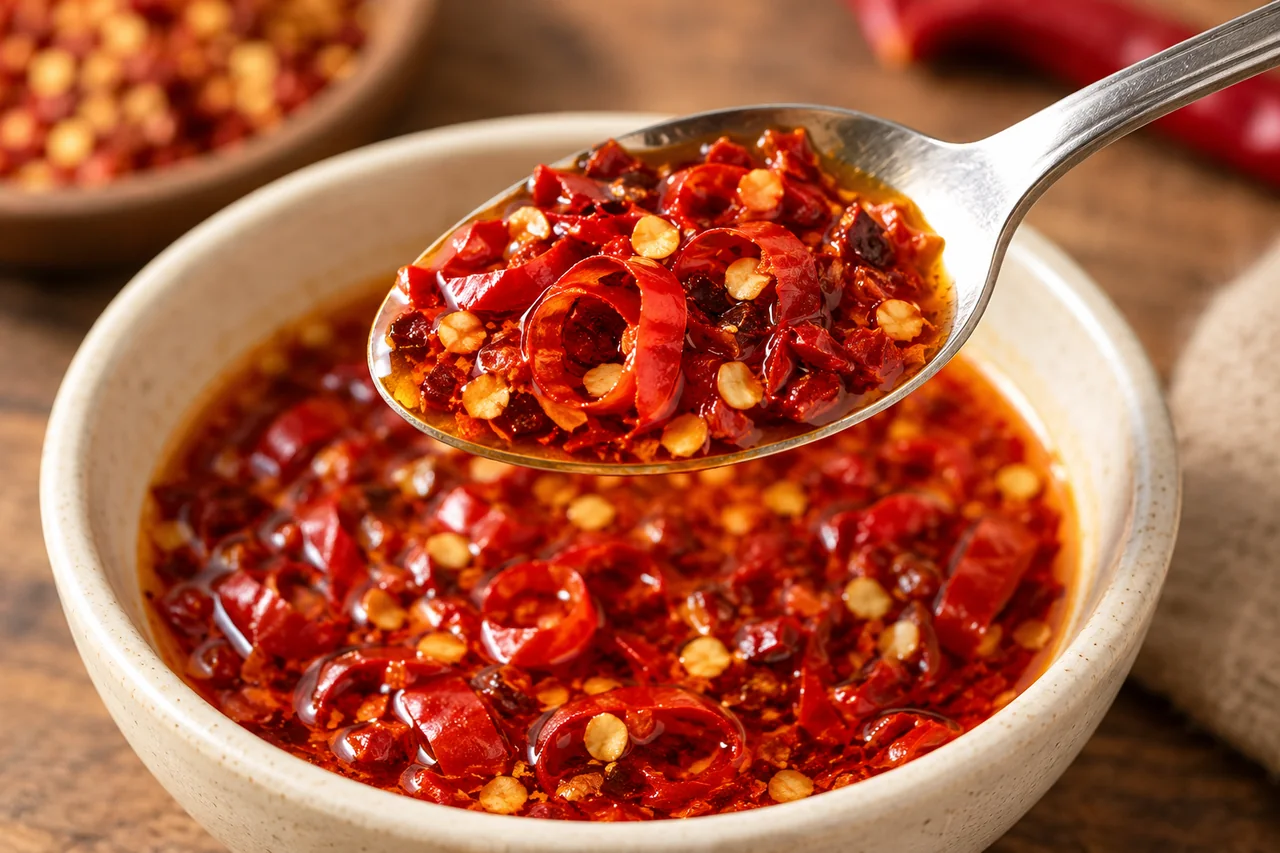
Approve the same selected cut for flavour, heat and treatment as for passage. The pod pieces' 8,000–12,000 SHU and rings' 15,000–20,000 SHU describe different ingredient ranges; assess them at the actual sauce inclusion.
RELIA has in-house steam microbial-reduction equipment used according to order requirements, while microbiology is tested through outside laboratories. Identify the ordered treatment and corresponding material used in the line trial, rather than assuming every candidate has the same preparation.
Write the accepted route as a repeatable purchasing object
Keep dry cut, wet-piece condition and accepted pack as one repeat-order reference.
- 01Incoming material
Identify the actual cut, composition and receiving method.
- 02Wet condition
Retain the sauce preparation and observed particle dimensions.
- 03Filled result
Accept passage, piece integrity and distribution as separate criteria.
Keep the dry cut sample, wet-particle observations and accepted filled-pack reference with the selected ingredient and line configuration. State the normal passage and fragment criteria. When a new sample differs, identify whether the change appears before pumping, after recirculation or during portioning. That narrows the next discussion to cut preparation, sauce condition or equipment practice rather than demanding an undefined pumpable chili. Include measured extra preparation or rejected material when comparing total cost.
Send a chunky-sauce line brief
Send the passage map and fragmentation observations with the material request.
- 01Describe the piece
Provide the finished shape and accepted fragments.
- 02Describe the line
Map actual passages and operating/recirculation conditions.
- 03Describe acceptance
Separate passage, intactness, flavour and filled-pack distribution.
Send the required wet-piece appearance, relevant equipment passages and actual sauce condition. Add recirculation, waiting and restart patterns with the filled-pack observations. We can discuss the cut, seed and fine-fraction preparation and requested treatment against that route, keeping the ingredient specification separate from equipment approval.
- Target cut and wet-particle criteria
- Effective pump and filling passages
- Sauce conditions and particle loading
- Recirculation and waiting pattern
- Breakage and pack-distribution acceptance
- Sample quantity and documents
Your next purchasing decision
Discuss the chili cut for a chunky-sauce line
Discuss a defined chili cut for your actual sauce route.
Bring the wet-piece reference, passage map and fragment observations, including the real recirculation and filling sequence.
State the heat profile, seed criteria and requested treatment for the selected cut. Our discussion can then address a defined ingredient for your actual sauce route.
The enquiry page keeps this guide with your message. Add your quantity and destination so we can discuss the relevant material.