
Ring-Cut Chili Products for Cooked Foods
For cooked food that should show circular pepper, compare Tianying ring preparations rather than irregular flakes. Both listed candidates share a 15,000–20,000 SHU reference, so first choose the ring shape, seed condition and fragments your portion can accept. Send a served-food photograph and the dimensions you need measured. We can discuss the actual cut and treatment around that brief without turning an unassigned millimetre entry into a ring grade.
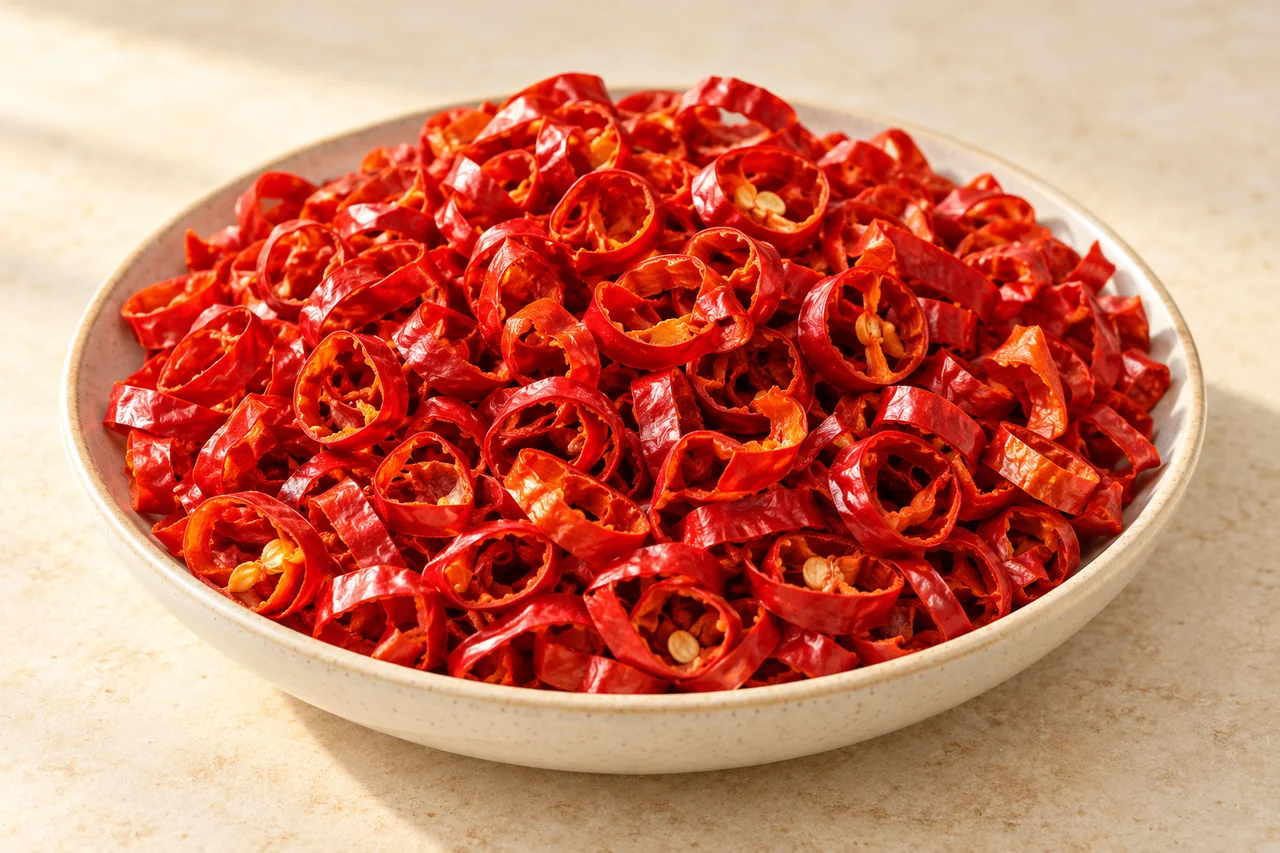
- Same heat reference
- R5002 and R5003 both list 15,000–20,000 SHU; the names do not establish different heat grades.
- Different shape categories
- Classify closed rings, open rings and fragments separately before comparing appearance.
- Dimensions to define
- The 1 mm and separate 1 mm/2 mm entries do not establish ring diameter or cut width.
Prepare rings around the visible shape you need
Define the delivered ring mixture rather than judge only the most attractive circles.
- 01Closed ring
Define the intact circular form required by the served-food reference.
- 02Open ring
Decide whether an opened circle remains acceptable and classify it separately.
- 03Irregular fragments
Keep fragments and fines outside the ring count instead of hiding them in one shape score.
RELIA SPICES cleans and destems purchased dried chilies before cutting, sieving and packing. Define the mixture of closed rings, open rings, fragments, seeds and fines wanted in your dish. Those categories make a clearer preparation brief than a demand for circular chili alone.
We check moisture and particles internally and use external laboratories for SHU, ASTA and microbiology. Our in-house steam microbial-reduction equipment is used according to order requirements. Select the ring geometry and treatment separately, then judge the actual preparation in the cooked portion.
Resolve the dimension axis before choosing a grade
Resolve each measured axis before selecting a millimetre criterion.
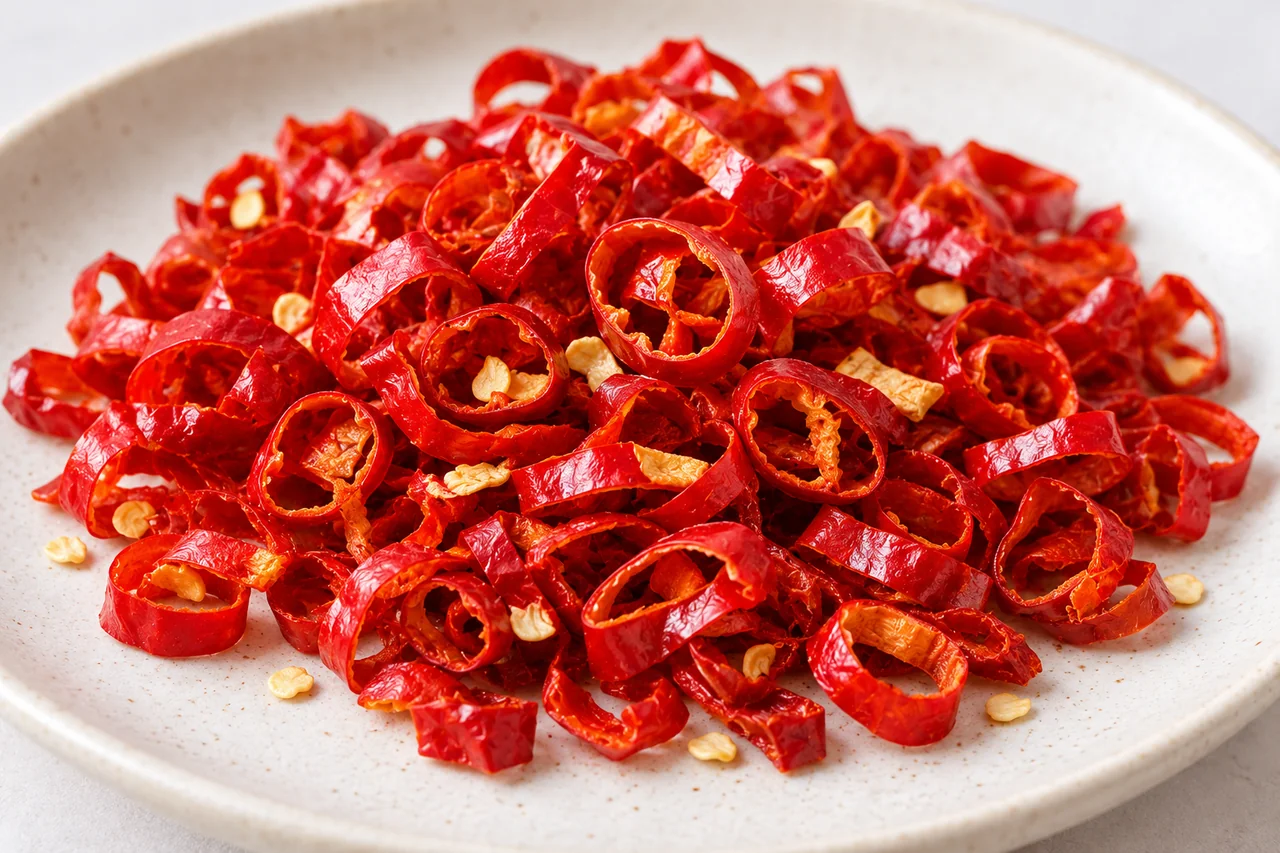
The R5002 listing carries a 1 mm graininess reference. R5003 contains specification entries of 1 mm and 2 mm and a separate graininess notation of 2 mm and 1 mm. None establishes ring diameter, cut width or skin thickness without the measured axis and method. Do not combine them into a selected 1–2 mm grade. For your purchasing brief, request the dimensions that affect the dish: the relevant circular size, cut section and any hard-particle criterion, with actual distributions rather than one unassigned number.
Ingredients to compare for this application
Tianying R5002 rings for a defined circular cut
A cooking candidate when you will specify the accepted ring shapes and the axis behind its written criterion.
- 15,000–20,000 SHU reference.
- 1 mm graininess requires a measured axis, method and material basis.
- Steam-treatment reference; 24 months with cool, dry storage require actual applicability.
Tianying R5003 rings for a separate cut comparison
Compare its actual geometry and Plant Aroma description without assuming a different heat grade from R5002.
- 15,000–20,000 SHU; Plant Aroma is a sensory description.
- Specification 1 mm/2 mm and graininess 2 mm/1 mm remain independent unselected entries.
- Spicy taste and steam-treatment reference require the actual material and process selection.
These product specifications are a starting point for selecting a grade. Match the proposed material and sample to your food and order requirements.
Link the cut to the mixture you receive
Cutting creates the form; grading and handling determine the mixture that reaches the food.
| Criterion | Define the supplied material | Compare in the food |
|---|---|---|
| Closed and open rings | Separate shape categories | Acceptable circular appearance at service |
| Measured dimensions | Axis and method for each criterion | Relevant circle size and cut section |
| Seeds and fines | Accompanying fractions identified separately | Loose material and concentrated bite |
| Heat and treatment | Selected material and applicable evidence | Flavour and ingredient approval kept separate |
A transverse cut can retain a circle of pepper wall; an existing split or later handling can leave an open ring or fragment. Sieving separates fractions without making those shapes equivalent. Compare the complete mixture rather than a display of intact circles.
Our internal particle and moisture checks describe the preparation. R5002's 1 mm entry and R5003's separate 1 mm/2 mm notations need actual axes and criteria; they do not define ring diameter or two selected grades. Relevant external SHU evidence belongs to the chosen material within the full 15,000–20,000 reference. Follow matched portions through preparation and cooking to distinguish incoming openings from later breakage, then judge skin bite and local heat alongside shape.
Follow the ring through preparation and cooking
Separate rings that arrived open from breakage first appearing during preparation or cooking.
- 01At receipt
Classify closed rings, open rings and fragments in the incoming material.
- 02After preparation
Repeat after the actual hydration and handling route, keeping the measurement basis fixed.
- 03At service
Inspect cooked shape and bite in the complete portion.
Compare the dry incoming material, the material after any buyer preparation, and the actual cooked food. Keep the same hydration, mixing and cooking route during the first material comparison. Original dried-pepper research shows that pretreatment and drying history can influence rehydration and texture. It does not prove that these rings received those treatments or provide a ready-made ring cooking schedule. Use the actual preparation to identify whether a ring arrived broken, opened during handling or lost form in the food. Those different causes call for different changes.
Taste the ring in its surrounding food
The right appearance can still produce an unwanted skin bite or local heat.
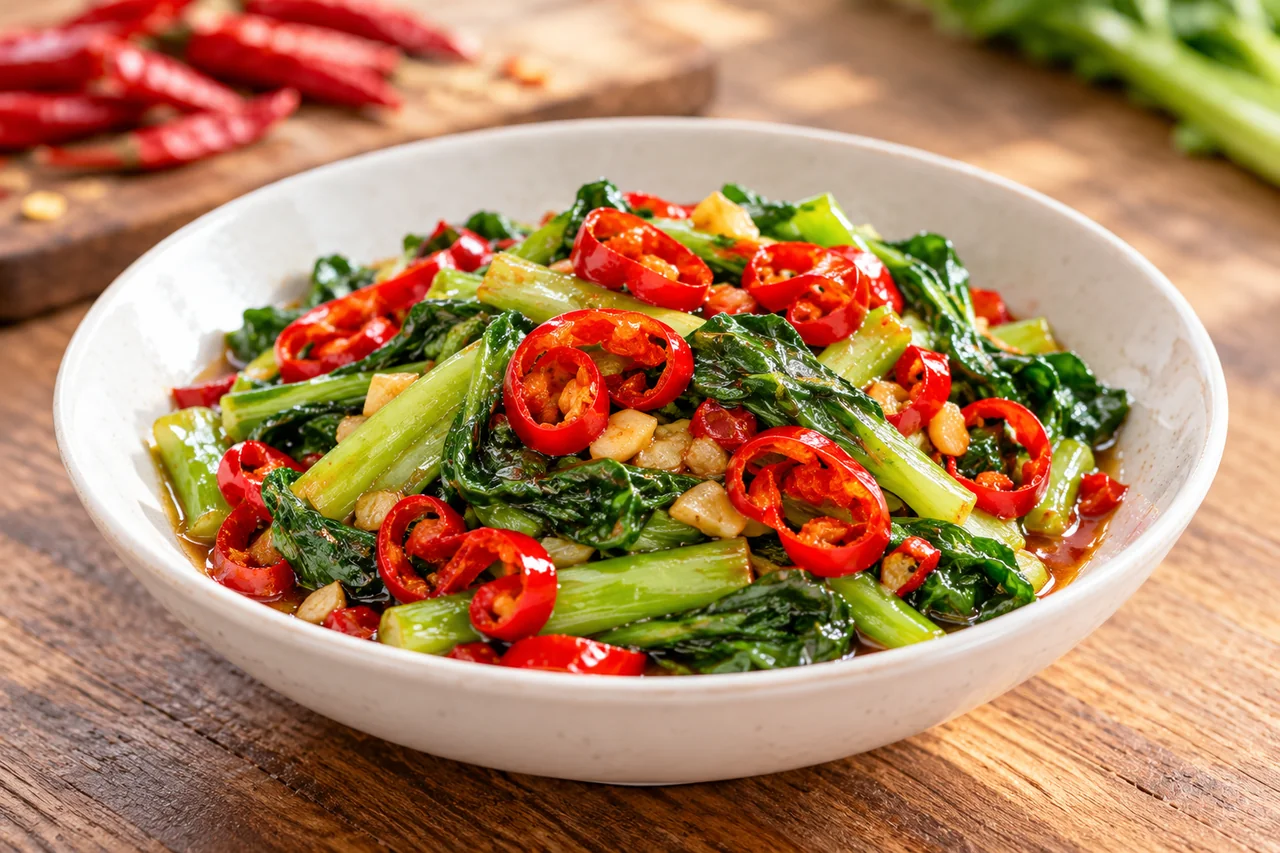
Taste the ring in the complete served portion and assess skin, seed fragments and local heat separately. The full 15,000–20,000 SHU reference belongs to an ingredient and relevant analytical basis; it does not establish identical flavour or finished-food heat for the two candidates. R5003 adds a Plant Aroma description, but that is not proof of aroma retention through cooking. If the ring looks right but produces an unpleasant concentrated bite, changing only its appearance will not solve the problem. Compare actual material, dose and placement in the intended food.
Select the actual steam-treated ring preparation
Select the actual steam process separately from cooked-shape acceptance.
- ✓Executed process
Obtain the actual treatment rather than assuming all shipments share the listing description.
- ✓Applicable material
Tie records to the ring preparation and lot under consideration.
- ✓Intended food
Approve the ingredient against the real use route separately from its appearance.
Both ring listings carry a steam-treatment reference, and RELIA SPICES has in-house steam microbial-reduction equipment used according to order requirements. Agree the actual selected process, material and acceptance evidence; the listing alone is not proof that every offer has received it. Microbiology is tested through external laboratories. Keep the ring-shape trial separate from treatment approval and from your finished-food controls. We do not infer a reduction level, operating setting or ready-to-eat status from the equipment's existence or the appearance of a cooked ring.
Align packaging and receiving inspection
Compare received shape after the package and handling route actually used.
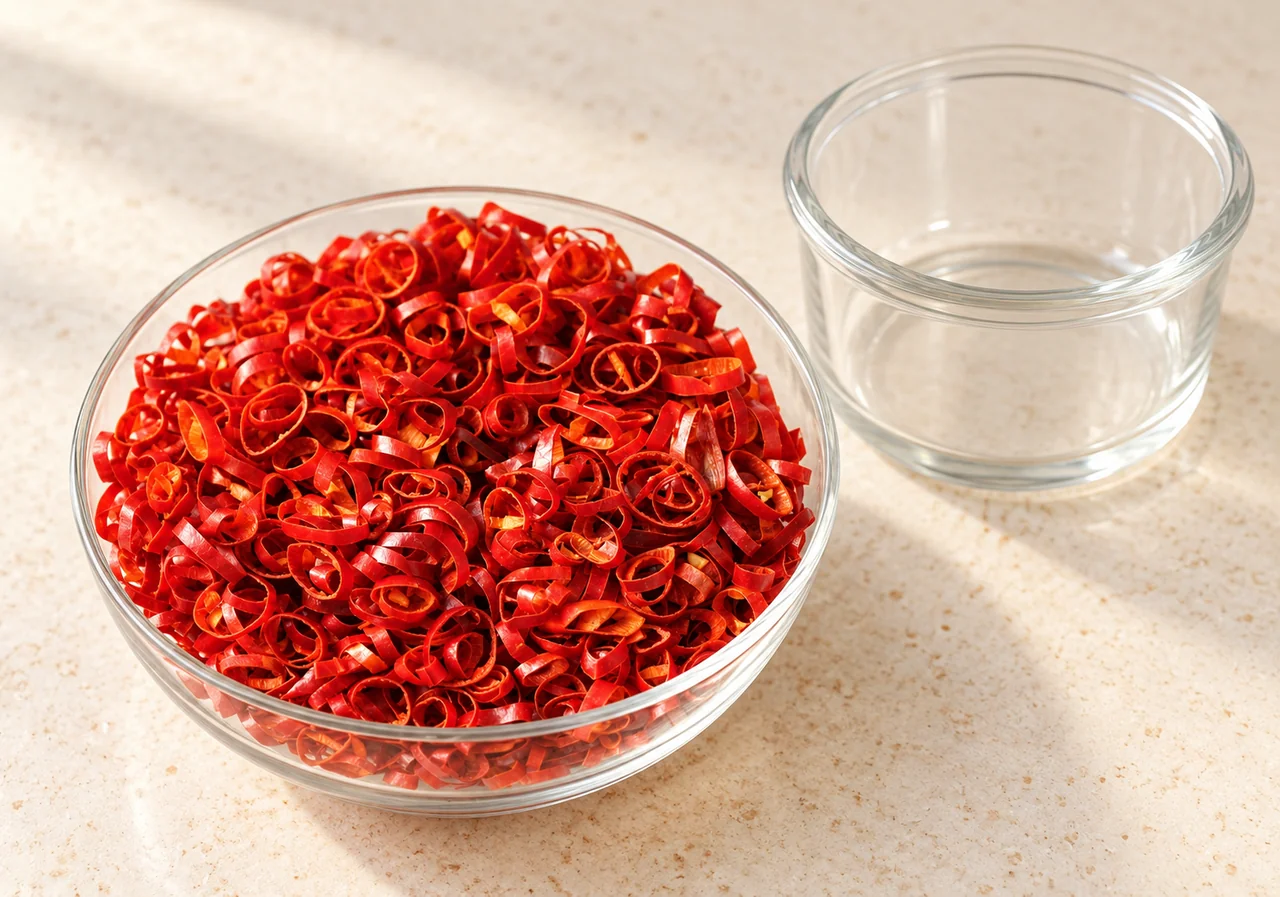
Compare package condition and the ring mixture reaching your receiving point. The written carton, box and bag options do not select one configuration. Inspect incoming rings using the same closed, open and fragment categories used in the brief, then repeat after the handling or repacking your operation actually performs. Both listings give 24 months in a cool, dry place, with actual conditions and selected-package applicability still to establish. That period does not demonstrate zero transport damage or describe the life of a cooked ring in your finished product.
Compare offers for a defined ring preparation
Price a complete ring preparation, including shape categories, seeds and fines.
- 01Comparable preparation
Use the same shape categories, dimension axes, seeds, fines and treatment scope.
- 02Comparable result
Judge the dose, ring appearance and eating quality at the same cooked-food endpoint.
Price an actual ring preparation, not an ambiguous 1 mm label. Include the selected dimensions, shape categories, seed and fine-material limits, applicable treatment and package. Compare those details against the cooked result you accepted. Where a lower-priced offer changes the proportion of open rings or fragments, evaluate that difference rather than assuming all circular chili has equal visual value. A well-defined preparation that misses the served-food target should be reconsidered; an undefined preparation needs clarification before it can be treated as an alternative.
Send a ring-specific food reference
Send the served ring and measured axes rather than an ambiguous 1 mm request.
- 01Show the form
Provide closed and open ring examples and a served-food reference.
- 02Define the cut
State the dimension axes plus seeds and fines acceptance.
- 03Discuss supply
Link the actual commercial candidate and request applicable treatment and package information.
Share the dish and served-ring photograph, with examples of acceptable closed and open pieces. State the dimensions that matter, seed and fine-material criteria, and the actual preparation route. Link R5002 or R5003 and describe the desired heat and bite. We can discuss the cut, selected treatment and package around that particular preparation before agreeing sample scope and terms.
- Food and cooking route
- Intact, open and broken-ring criteria
- Dimension axes and distribution
- Seed, skin and fines requirements
- Actual treatment and lot documents
- Receiving package and quantity
Your next purchasing decision
Specify the ring preparation your food needs
Discuss the cut, heat and seed condition as distinct purchasing choices.
Send R5002 or R5003, the served-ring photograph and your definitions of open and closed pieces to Qingdao Relia Spices Co., Ltd. / RELIA SPICES. Identify the measured axes and seed criteria required for the dish.
The enquiry page keeps this guide with your message. Add your quantity and destination so we can discuss the relevant material.