
Sourcing Chili Ingredients from Pilot Run to Commercial Orders
Use the pilot to choose an ingredient that works in your food, then test the handling changes needed for the next run. Choose paprika for a colour-led powder trial, Cayenne for a heat-led one, or crushed chili for visible pieces. Keep the accepted material stable as the operation grows. Send the trial purpose, chosen ingredient and next-stage receiving needs.
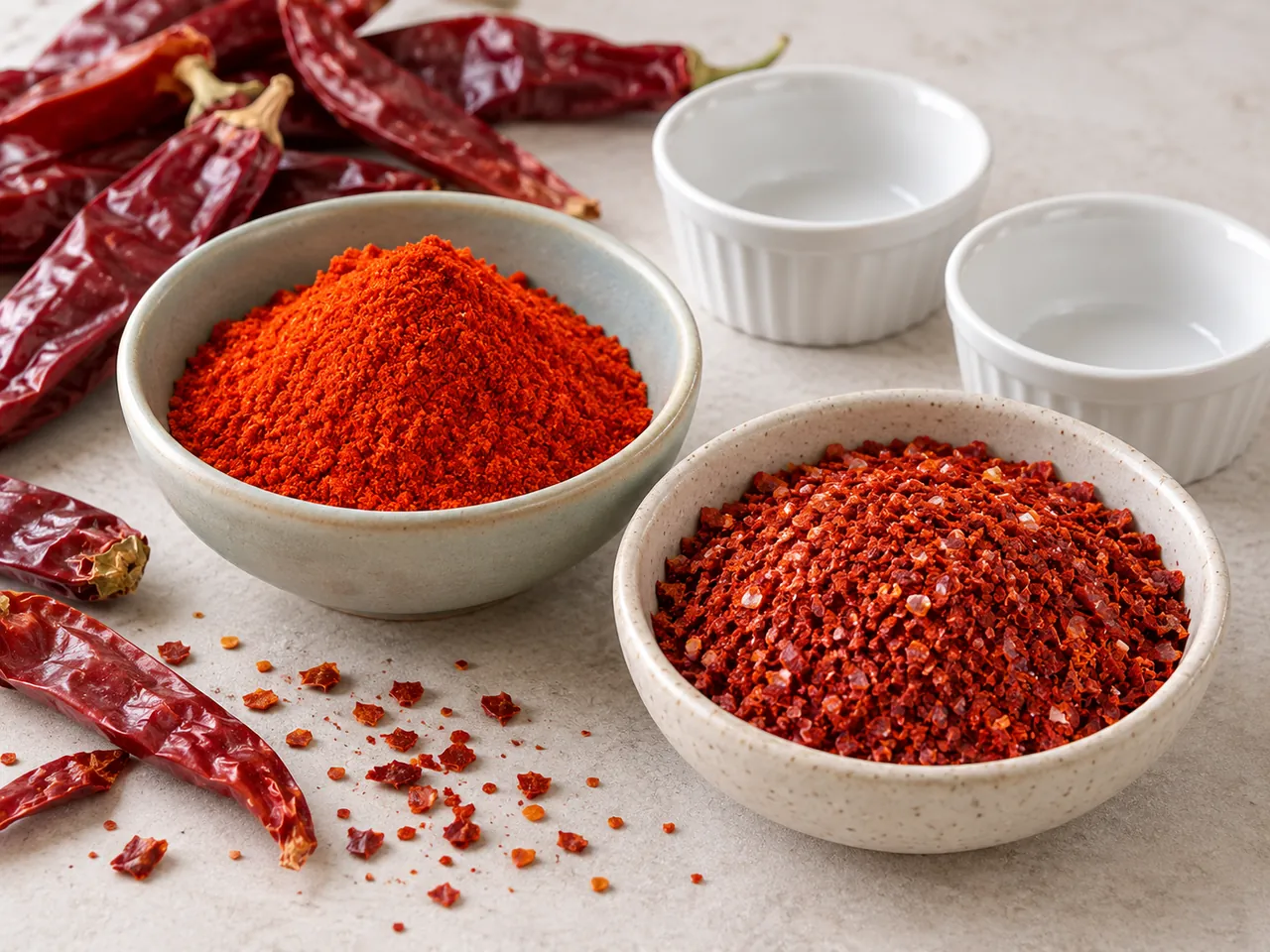
- Choose the trial question
- Test the food attribute that could decide whether the project proceeds.
- Hold the ingredient steady
- A larger mixer should not also introduce an unexplained powder or cut change.
- Separate the order stages
- Trial quantities and later forecasts need their own receiving and commercial requests.
Set a Trial Decision That Can Stop the Project
Choose the material whose form matches the first trial question.
- 01Primary decision
Name the attribute that the first food trial must resolve.
- 02Non-negotiables
List the composition and eating conditions that must remain acceptable.
- 03Next-stage trigger
Proceed only when the relevant food result is understood.
RELIA SPICES can prepare a powder or crushed chili for a specific trial. We clean and destem purchased dried chilies, then grind or cut/crush, sieve and pack the selected material in-house.
Choose paprika for colour, Cayenne for a defined powder heat task, or crushed chili for visible particles. Routine moisture and particle checks are internal; relevant colour, heat and microbiological analyses go to laboratories. State the first food decision before discussing trial quantity or a later order forecast.
Choose the Actual Trial Material
Paprika, Cayenne and crushed chili test different food requirements.
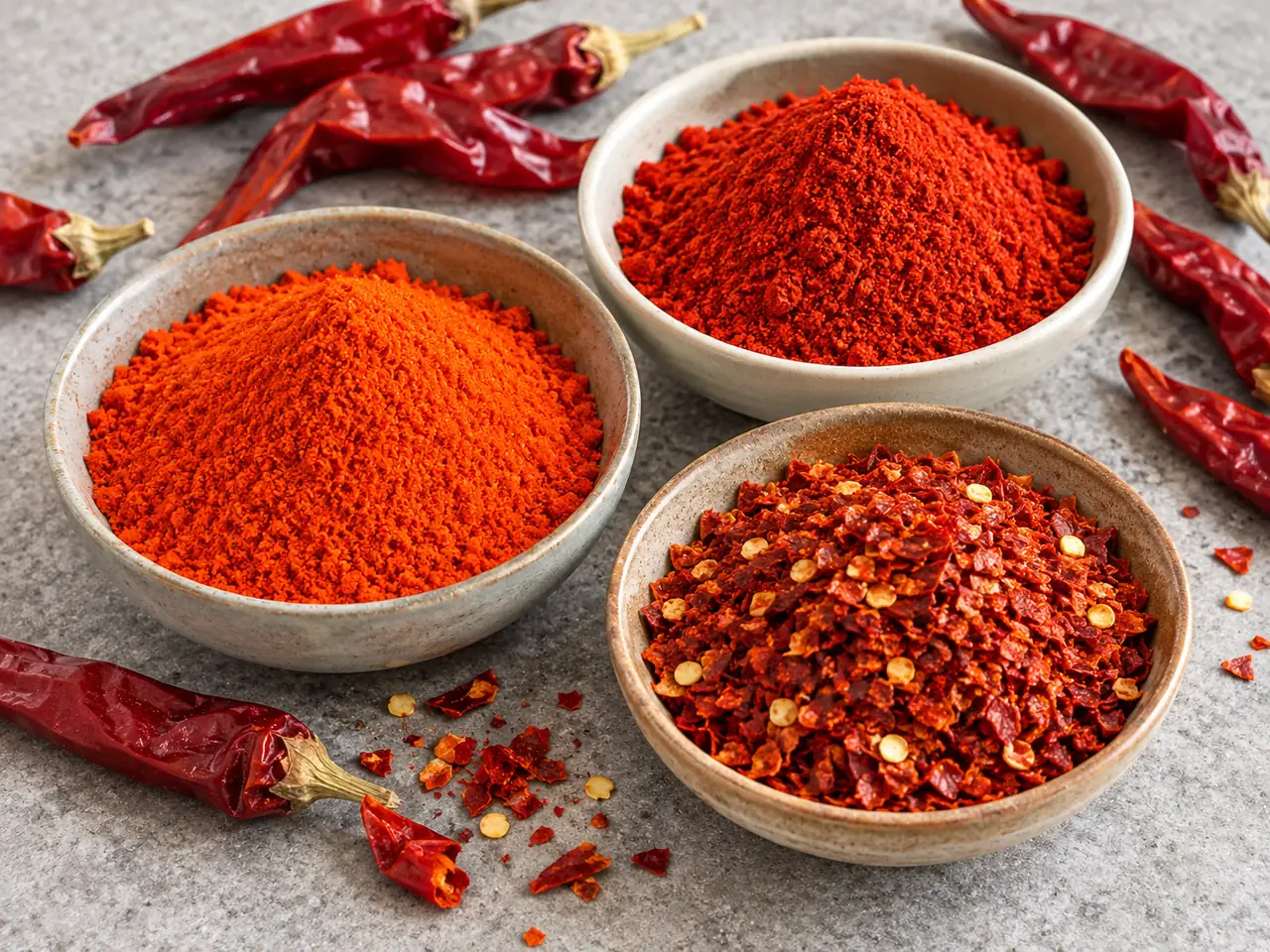
The sweet paprika powder offers nominal 70 mesh and an 80–220 ASTA range for a colour-led starting point. The Cayenne red pepper powder lists nominal 60 mesh and mild, medium or hot descriptions for a heat-led discussion. The crushed chili flakes carry a 3,000–5,000 SHU reference and independent 1.5 mm and 1.8 mm references.
Select the form your commercial food needs. The two flake dimensions are not two confirmed supplied grades, and the powder heat descriptions are not numerical bands. The trial request should identify the actual proposed material before quantity becomes the focus.
Ingredients to compare for this application
Paprika for a colour-led pilot
Use when the first decision is paprika colour, flavour and particle behaviour in the food.
- Nominal 70 mesh.
- 80–220 ASTA customization.
- Moisture specification: ≤8%.
Cayenne for a heat-led pilot
Evaluate a selected qualitative heat option in the recipe before planning the next run.
- Nominal 60 mesh.
- Mild, medium and hot customization without numerical tiers.
- Seasoning, sauce and meat applications are listed.
Crushed chili for visible particles
Test the selected cut through transfer and mixing when the food must retain visible chili.
- 3,000–5,000 SHU reference.
- Independent 1.5 mm and 1.8 mm references; actual criterion unselected.
- Cool, dry storage with a two-year statement.
These product specifications are a starting point for selecting a grade. Match the proposed material and sample to your food and order requirements.
Preserve Material Conditions While Changing Scale
Keep composition, particles and selected treatment stable while evaluating scale.
- 01Keep fixed
Use the same defined composition, grade and actual particle preparation.
- 02Review explicitly
Treat a different material or selected treatment as a separate change.
Keep composition, grade, particle preparation and any selected treatment stable between the small trial and the next run. Changing those at the same time as mixer size makes a disappointing result hard to interpret. Package size can change without automatically authorizing a different ingredient.
If the proposed commercial material differs, list the difference and decide whether a new small trial is needed first. This makes the sequence efficient: isolate ingredient uncertainty before investigating process scale, instead of discovering that a scale-up trial compared two different powders or flake cuts.
Keep the Material Constant While the Operation Changes
Separate a material change from a mixing, transfer or handling change.
- 01Material baseline
Identify the grade, particle requirement and selected treatment.
- 02Operating change
Record the larger run’s relevant mixing and transfer conditions.
- 03Output comparison
Assess the same food and handling attributes at the new stage.
- 04Purchase decision
Discuss the actual material and commercial scope after the trial.
A larger run changes mixer fill, transfer distance, holding and addition sequence. Keep the ingredient identifiable so a new particle distribution is not mistaken for a scale effect.
RELIA SPICES grinds or cuts/crushes and sieves in-house, checks routine moisture and particles internally, and has steam equipment for agreed order requirements. Use the selected grade and preparation as the baseline; colour, SHU and microbiological analyses remain external tasks.
Weigh the addition, retain the recipe basis and inspect output after the real handling sequence. Change the ingredient or operation deliberately, rather than changing both at once. Judge the same food and handling requirements at the new stage before settling the next purchasing step.
Test the Handling Differences at the Next Stage
Test the new handling steps that the bench trial did not represent.
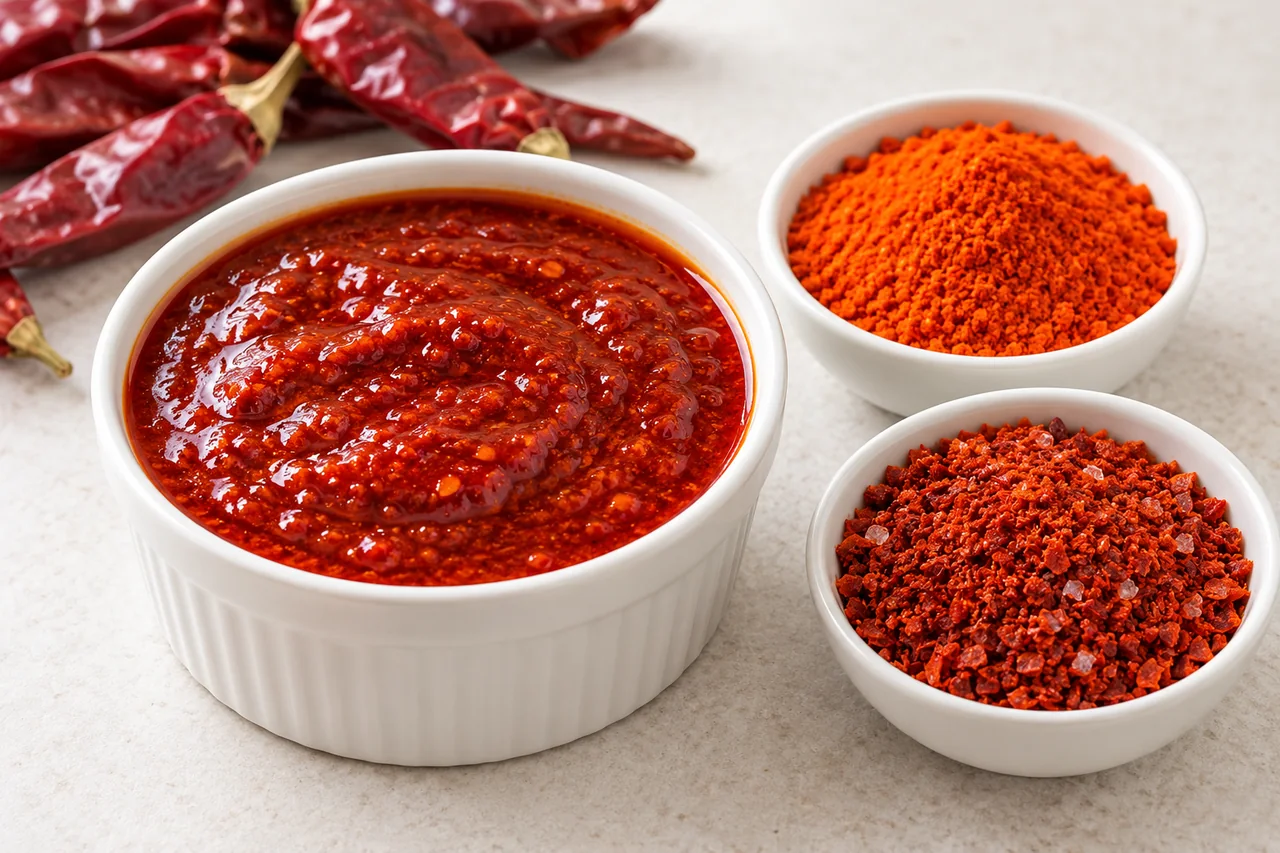
Map the commercial dosing and transfer route against the pilot. A scoop into a bench bowl is different from a bulk-pack discharge, hopper residence and production-mixer load. Test the steps that are new rather than assuming the bench result describes them.
Food-powder research shows that size and density differences can influence mixing quality. For your project, sample the actual output at meaningful points in the run and inspect whether colour, heat or visible flakes remain consistent. This is a proposed application check, not a claim that one published laboratory mixer predicts your production line.
Request a Pilot Quantity and a Later Forecast Separately
Request pilot and commercial offers as separate stages.
| Stage | Main decision | Concrete input |
|---|---|---|
| Bench trial | Food and ingredient fit | Identified material and recipe comparison |
| Representative run | Handling and output consistency | Actual dosing and production sequence |
| Commercial offer | Purchasable material and pack | Forecast, receiving format and selected grade |
Describe what the trial quantity must evaluate, the receiving pack you can handle and the timing you are working towards. Put the later commercial forecast on another line, so feasibility is discussed on actual terms rather than an assumed low minimum or reserved capacity.
Compare the commercial offer once the material and expected use are clear. The practical pack or quantity may change after the pilot, and the trial price does not automatically become the permanent bulk basis.
Check the Bulk Package in the Receiving Workflow
Try the actual bulk-pack opening and transfer route.
- ✓Open and transfer
Trial the actual receiving format with the intended handling method.
- ✓Consume
Align opened quantity with a normal production run.
- ✓Hold remaining material
Use the selected package and ingredient handling instructions.
Inspect how the proposed pack can be moved, opened, resealed if appropriate and transferred to production. Consider the amount a normal run consumes and the storage of any remaining material. A convenient sample jar does not represent the work involved in opening a bulk package.
Apply the selected material own storage conditions. The paprika and Cayenne powders have written temperature and humidity limits; the crushed flakes describe cool-dry storage for two years. These declarations should not be collapsed into one shared instruction merely because the trial foods were prepared together.
Review the First Commercial-Representative Output
Compare representative output rather than one convenient sample point.
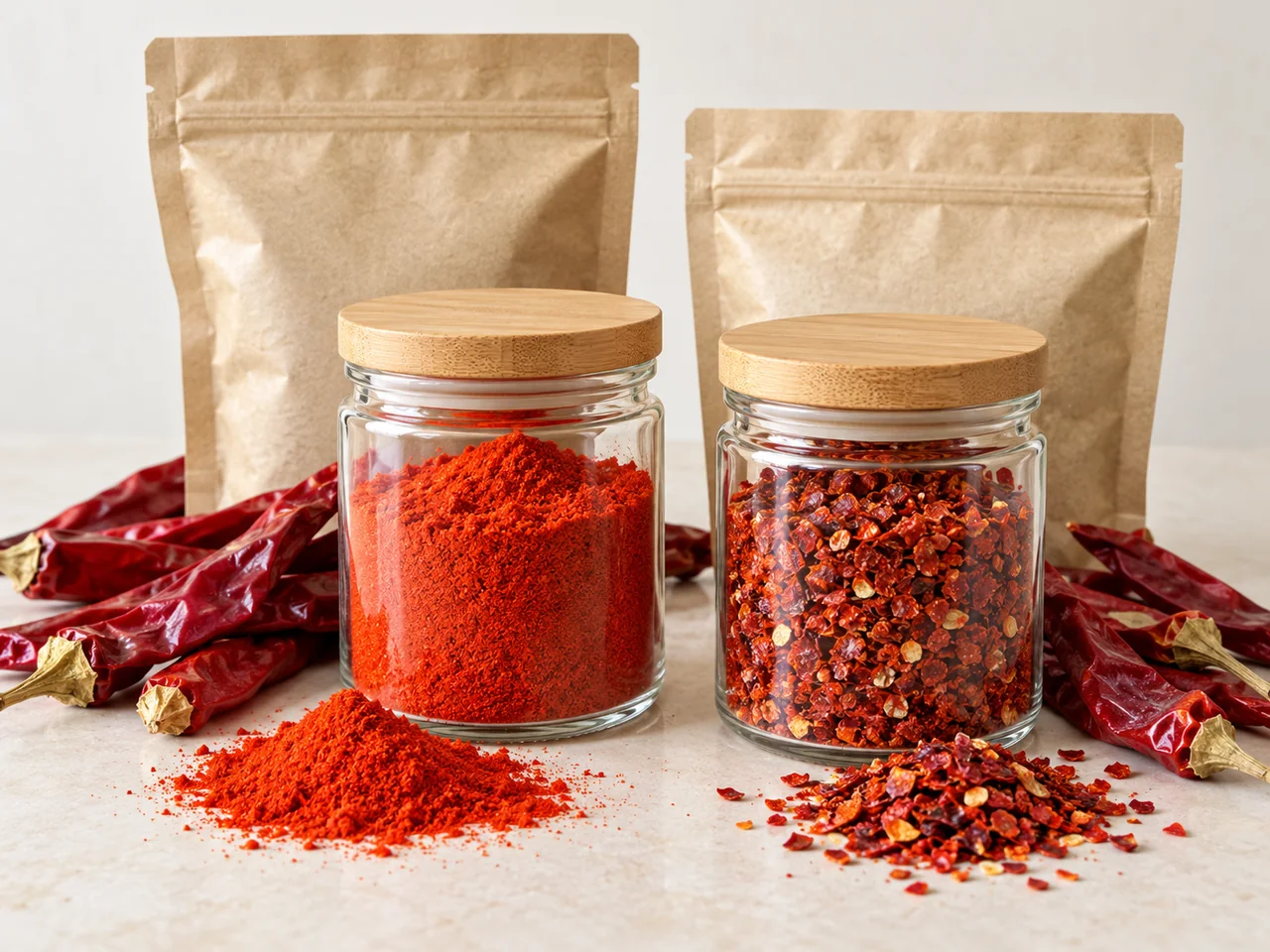
Compare the resulting food with the accepted pilot reference and inspect more than one convenient sample point. Look for meaningful differences in colour, flavour, heat or visible particles, and record any dosing or transfer intervention that could explain them.
Use an exception list to decide whether the material, process setting or receiving arrangement needs adjustment. A successful run can support the defined next purchasing step; it is not a claim that the supplier has already completed your scale-up work or that later lots no longer need acceptance.
Bring the Next Unresolved Decision to the Factory Discussion
Bring the next unresolved operating decision into the factory discussion.
- 01Resolve the food
Establish a useful small-scale material result.
- 02Resolve the operation
Evaluate the changed handling and production conditions.
- 03Resolve the order
Agree the actual grade, receiving pack and purchasing terms.
Send the completed pilot observations together with the actual grade and the next operation you need to assess. Explain whether the remaining issue is food performance, transfer, mixing, pack handling or commercial quantity. We can use that specific task to discuss the relevant ingredient proposal.
Move from one resolved question to the next rather than placing a large order to discover several variables at once. The purchasing goal is a material and pack that work in the intended operation, with each stage producing information that makes the following decision clearer.
- Food and pilot objective
- Preferred ingredient form
- Pilot quantity
- Commercial forecast and timing
- Attributes that must remain fixed
- Approval records and receiving packs
Your next purchasing decision
Talk through your pilot-to-order handover
Send the pilot result and the next-stage conditions with the chosen ingredient.
Tell RELIA SPICES what the pilot must decide and which operating change comes next. Share the selected product, recipe observations, receiving pack and trial quantity.
Keep the later commercial forecast on its own line so the production discussion and quotation describe the material your project actually evaluated.
The enquiry page keeps this guide with your message. Add your quantity and destination so we can discuss the relevant material.