
Chili and Paprika Ingredients Across Seasoning Applications
Choose the pepper's job first: sweet paprika for a colour-led powder background, Cayenne for a separately selected pepper profile or paprika flakes for visible red pieces. Then use the guide matching the actual surface, dough or moist-food contact. Send the food, addition stage and defect. We can discuss the relevant preparation without treating one ingredient as a complete seasoning or transferring a result from another application.
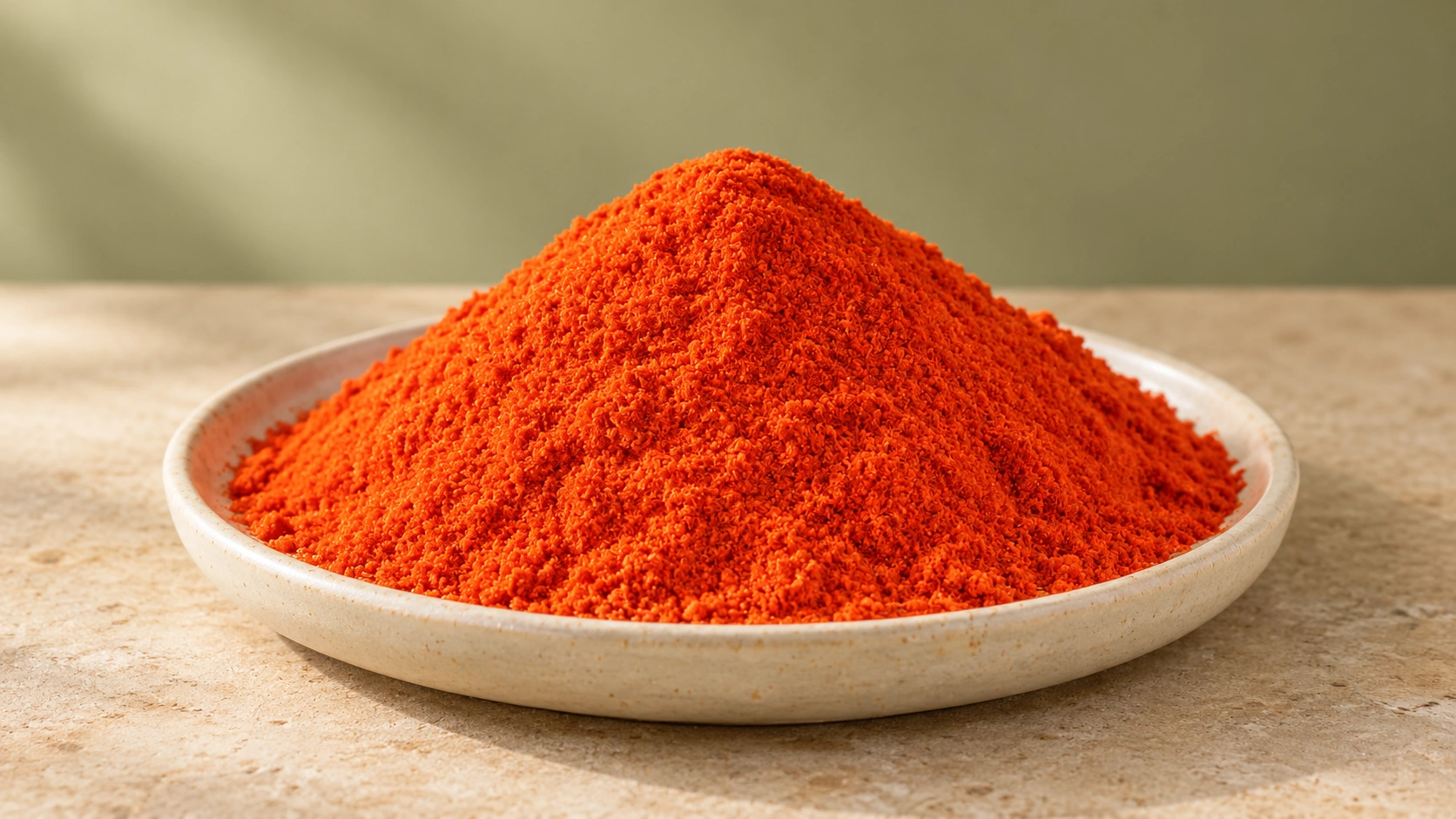
- Colour background
- Sweet paprika lists nominal 70 mesh and customizable 80–220 ASTA, with an actual grade to select.
- Separate pepper profile
- Cayenne lists nominal 60 mesh and descriptive pungency options, without a numerical SHU grade.
- Visible inclusion
- Sweet paprika flakes have separate 3–5 mm and 5–25 mesh references for an actual cut discussion.
Connect the food role to our pepper preparation
Factory preparation should serve a powder, visible-piece or further-processing task.
| Role | First candidate discussion | Food decision |
|---|---|---|
| Colour-led background | Actual sweet paprika powder grade | Appearance and flavour in the prepared base |
| Heat component | Selected Cayenne profile | Heat at the intended serving point |
| Visible red piece | Defined sweet paprika flake cut | Skin, seeds and appearance after the real route |
RELIA SPICES cleans and destems purchased dried chilies, then grinds or cuts/crushes, sieves and packs the agreed preparation. Choose the operation around a powder background, visible red piece or input for your next process. Those are different purchasing jobs.
Moisture and particles are checked internally; ASTA, SHU and microbiology use external laboratories. In-house steam microbial reduction is selected according to order requirements. Start with the material and its addition stage so the preparation and treatment fit a specific application brief.
Choose a Surface-Seasoning Route for Snacks
Surface dust, coating loss and hard particles require different snack comparisons.
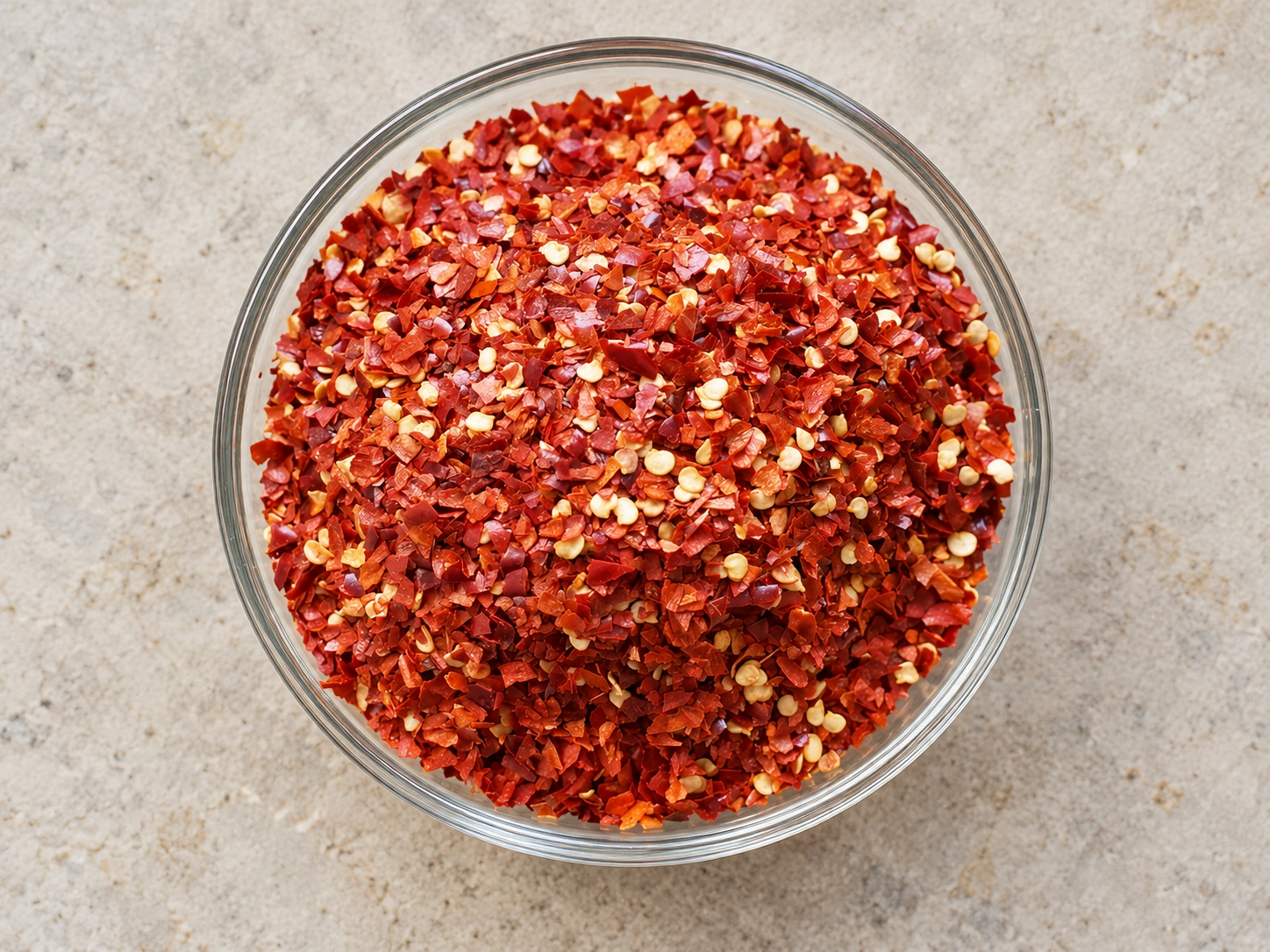
On chips or nuts, pepper meets a particular surface and oil or binder system. Uneven coating, loose dust and a hard particle are different defects. Research on tortilla-chip seasoning adhesion shows that particle and surface properties can affect retention; it does not qualify these ingredients on your snack line. Use the focused chip or nut guide when adhesion and packing losses drive the buying choice.
Ingredients to compare for this application
Sweet paprika for colour-led formulation
A starting powder when red colour should be selected independently of heat and visible inclusions.
- Nominal 70 mesh; separate customizable 60–70 mesh reference.
- Customizable 80–220 ASTA scope requires an actual selected grade.
- Moisture ≤8%.
Cayenne for a selected pepper profile
Compare separately when the food needs another pepper intensity alongside its colour input.
- Nominal 60 mesh; separate customizable 60–70 mesh reference.
- Mild, medium and hot are descriptive options, not numerical SHU grades.
- Moisture ≤9%.
Sweet paprika flakes for visible red pieces
A mild visible-inclusion discussion when the food should show pepper rather than only a powder background.
- Mild/nonspicy/slightly sweet descriptions require actual food assessment.
- 3–5 mm/customized and 5–25 mesh are separate references.
- Moisture ≤12%; dry-sealed storage reference.
These product specifications are a starting point for selecting a grade. Match the proposed material and sample to your food and order requirements.
Move from the food defect to the material choice
Match the physical defect to a preparation change, then test it at the relevant process stage.
- 01Name the job
Separate colour background, heat, visible inclusion and further-processing input.
- 02Define the preparation
Connect grinding or cutting and sieving to the fraction and relevant evidence.
- 03Use the food endpoint
Compare at the real contact stage before changing grade or form.
Grinding creates smaller tissue fragments; cutting or crushing retains pieces. Sieving separates a fraction without making powder soluble or flakes tender in every food. A powder cluster, hard skin piece and handling fragment call for different changes.
Use our internal moisture and particle checks to define the proposed preparation. Sweet paprika's nominal 70 mesh and customizable 80–220 ASTA, Cayenne's nominal 60 mesh and the flakes' separate cut references are ingredient starting points. Relevant external analyses identify the selected material. Compare it at its actual contact stage: a chip's surface, extrusion feed, dough or a dairy base. Hold that recipe and route fixed before changing the grade or form. The focused guide then addresses one buyer endpoint rather than a universal seasoning claim.
Keep Fat, Protein and Water Contact in the Brief
A dairy dip, patty and noodle bowl expose the pepper to different matrices and eating windows.
| Application | Primary selection concern | Focused endpoint |
|---|---|---|
| Dairy dip | Powder incorporation and local heat | Chilled or warm served dip |
| Plant-protein patty | Colour and heat roles in the base | Cooked centre and crust |
| Instant noodles | Visible cut and seed or skin bite | Actual first and later eating points |
A dairy dip, plant-protein patty and bowl of noodles do not provide the same flavour background or particle contact. In dairy, assess the actual served base; controlled protein-and-capsaicin research cannot supply a finished-dip dose. In noodles, the first spoonful can expose a hard piece that later softens. In patties, separate surface browning from the cut-face colour. These distinctions decide which specification and trial are useful.
Keep single spices separate from complete seasonings
Paprika and cumin are separate inputs; neither listing defines a complete seasoning formula.
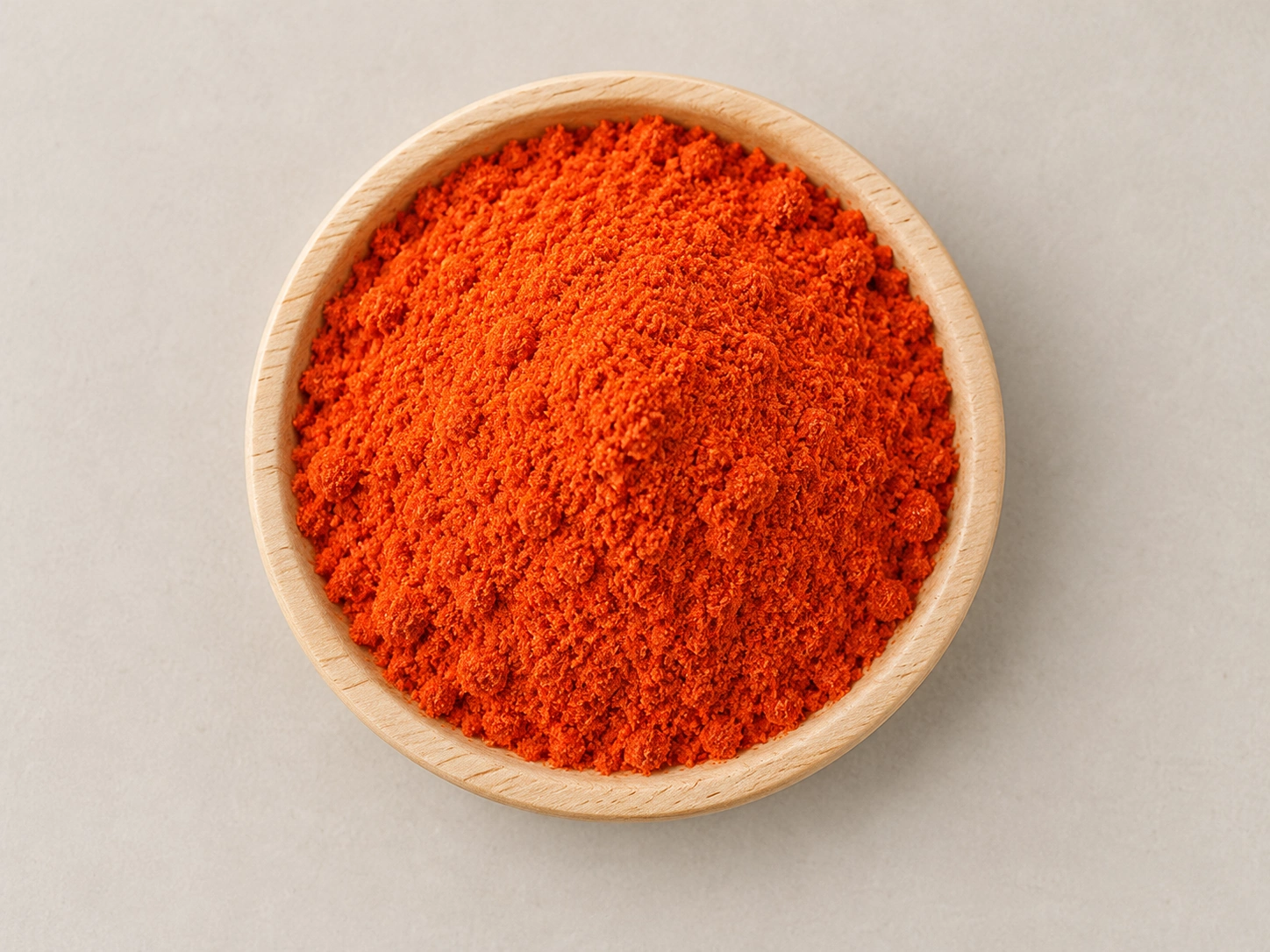
The paprika powder pictured here is one pepper ingredient. Its nominal 70 mesh and customizable 80–220 ASTA scope support a colour-led blend discussion, not a complete formula or guaranteed coating result.
Cumin powder is another input for curry or BBQ blending. Its listing gives dried powder and 12 months cool and dry, without a selected numerical mesh. Choose the actual cumin separately and judge the combined recipe in your own base. The paprika image does not represent cumin or a finished seasoning system.
Use a Defined Cut for the Actual Serving Effect
A pizza flake, thread garnish and removable-bag input need different shape and particle criteria.
- ✓Visible topping
Compare the piece after the actual bake and service route.
- ✓Fine presentation
Define thread axes, clumps and the intended visual portion.
- ✓Removable bag
Compare the complete particle mixture with actual fabric, seams and lifting.
Sweet paprika flakes suit a mild visible-piece discussion; the lower-heat crushed chili gives 3,000–5,000 SHU with independent 1.5 mm and 1.8 mm references. Neither creates a selected universal cut. Threads, rings and whole pods need their own shape and dimension definitions. A cut selected for pizza exposure can fail a removable spice bag for entirely different reasons.
Select the actual treatment for the food addition stage
Select treatment for the actual material and addition stage rather than a broad food name.
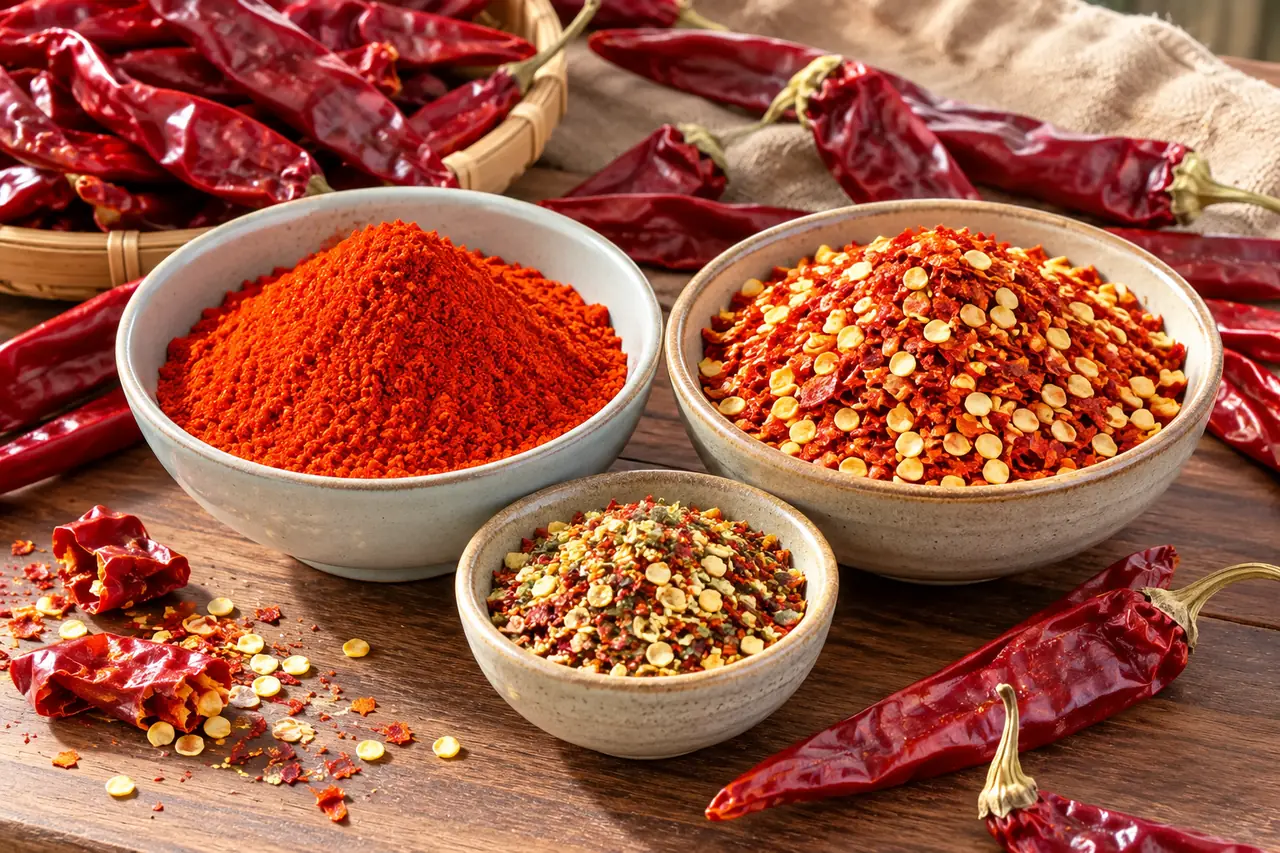
RELIA SPICES has in-house steam microbial-reduction equipment used according to order requirements. Select that process for the actual material where needed, with relevant external microbiological evidence, rather than assume a raw or AD descriptor means no treatment can be offered. Internal moisture and particle checks answer physical questions, not a universal microbial release. If cut, composition, treatment or package changes, revisit the affected food comparison. Keep the decision tied to the selected spice and its real addition point, without implying ready-to-eat status or a validated finished-food process.
Compare Alternatives on One Accepted Endpoint
Clarify an undefined proposal; change a defined material when its actual food result misses the target.
For a sesame–chili dry dip, compare the complete seasoning and its sesame information separately from plain pepper ingredients. Choose a sesame–chili hotpot dry dip →
- 01Undefined proposal
Resolve actual composition, cut or treatment before ranking it against an accepted material.
- 02Defined mismatch
Use the food result to select another grade, role or form.
Use the same base, initial dose and relevant process when comparing preparations, then adjust the selected material toward the accepted result. Track useful output or retained particles where the operation removes material. A cheaper powder that fails flavour and a more colourful flake that gives hard bite are not equivalent alternatives. Keep technical fit separate from missing supplier information.
Send the application with the ingredient request
Send the product link and application together so the next discussion has one material objective.
- 01Identify the role
Colour, heat, visible inclusion or further-processing input.
- 02Choose the food
Use the actual matrix, addition point and endpoint.
- 03Discuss supply
Request the identified preparation, documents and current commercial scope.
Share the product link, actual food and addition stage with a photograph of the defect or accepted reference. State whether you need a powder background, visible piece or prepared input for another process. We can discuss that material and relevant treatment before agreeing sample and receiving-pack scope. Choose a focused guide below when the process already identifies the next comparison.
- Ingredient role
- Actual food matrix
- Addition and process stage
- Particle, colour and heat priorities
- Observed defect or accepted reference
- Quantity, package and destination
Your next purchasing decision
Choose an ingredient route for the food you make
Use the focused guide that resolves your next ingredient choice.
Send the actual food, addition stage and defect to Qingdao Relia Spices Co., Ltd. / RELIA SPICES. We can connect a powder, flake or prepared chili input to a focused material proposal rather than a generic application label.
The enquiry page keeps this guide with your message. Add your quantity and destination so we can discuss the relevant material.