
Chili Ingredients for Short-Rehydration Instant Noodles
For short-preparation noodles, choose powder for the soup background and a defined flake separately when visible pieces must be pleasant to eat. Start with fine red pepper powder or compare the air-dried flake under your exact cup or packet instruction. We can discuss the cut, heat and selected treatment. Send first-spoonful photographs and any hard-skin, floating-piece or uneven-heat defect for a targeted proposal.
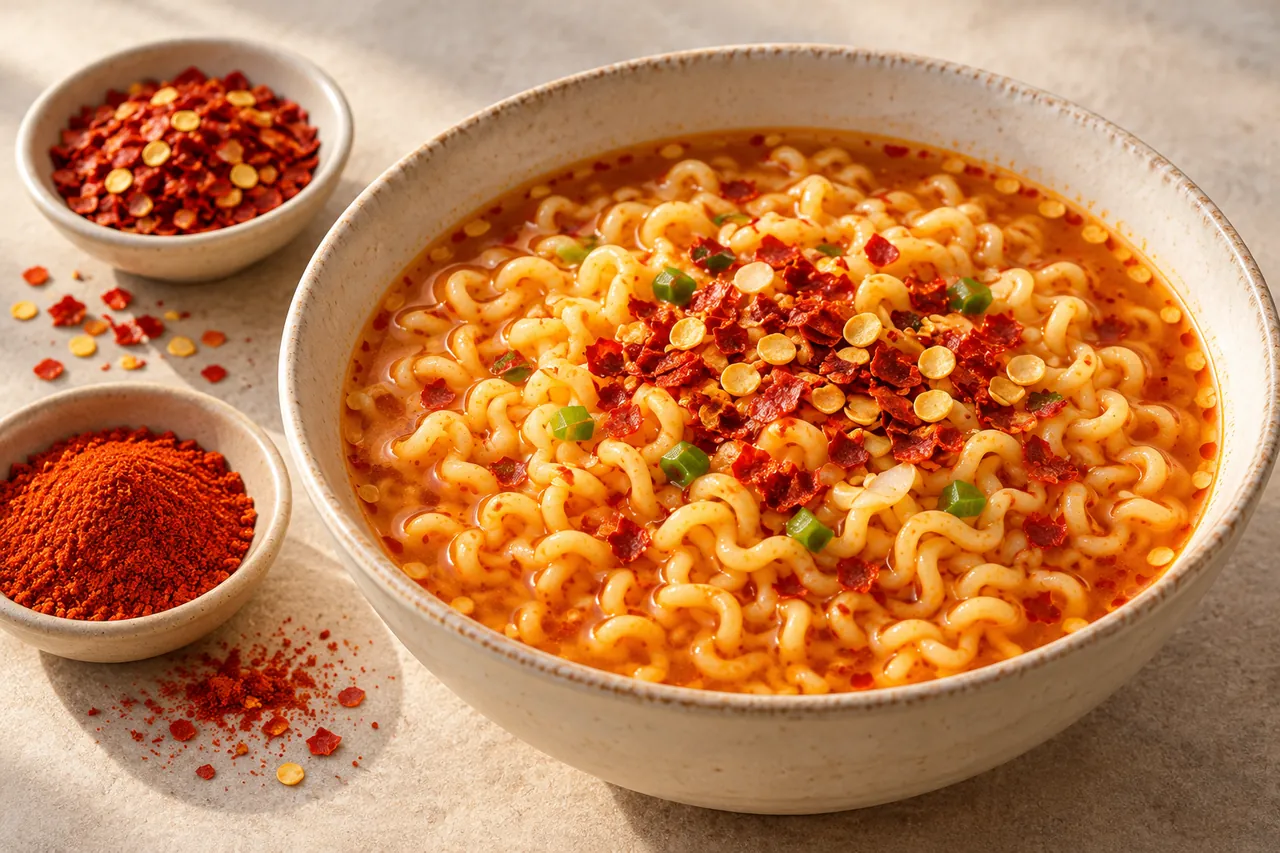
- Soup background
- Fine red pepper powder offers 60–70 mesh or customized grind; select its actual flavour and heat.
- Visible pieces
- Air-dried flakes have separate mesh and millimetre references; define one supplied cut.
- Consumer endpoint
- Compare first and later spoonfuls under the same preparation instruction.
Prepare powder and visible pieces for separate jobs
Choose the powder or cut for its role before selecting treatment.
- 01Dry pack
Check the pepper entering the actual soup base and sachet, including fines and agglomerates.
- 02Water and stirring
Follow the product instruction unchanged during the first material comparison.
- 03First and later spoonfuls
Assess piece bite, local heat and distribution at separate eating points rather than averaging them together.
At RELIA SPICES, we clean and destem purchased dried chilies before grinding or cutting, sieving and packing. For noodles, separate the powder seasoning the liquid from the flake the consumer will eat. Define the offered fraction and moisture basis for each role.
Moisture and particles are checked internally; ASTA, SHU and microbiology use external laboratories. In-house steam microbial reduction is selected according to order requirements. Discuss the actual addition point and treatment without treating steam availability as a rapid-rehydration process. Your cup or packet instruction remains the eating-quality test.
Separate soup seasoning from visible pieces
A lower-heat flake and a higher-heat flake produce different bowl comparisons.
- 01Powder
Fine red pepper powder declares 60–70 mesh, but its hot name and mild-flavour row need resolution.
- 02Flakes
Choose the actual cut and heat grade before asking a visible piece to provide all of the soup’s pungency.
Fine red pepper powder declares 60–70 mesh or a customized grind and moisture ≤9%. It is a powder starting point, but its hot name and mild sweet non-spicy flavour description require an identified heat profile. For visible pieces, raw air-dried red chili flakes give 10–40 mesh and 10–20 mesh fraction references, a separate 3–5 mm/customized size and moisture ≤12%. The lower-heat crushed flakes give a separate 3,000–5,000 SHU reference. These candidates address different particle and heat requirements rather than forming one interchangeable noodle grade.
Ingredients to compare for this application
Fine red powder for soup seasoning
A powder route when the main job is the flavour background rather than visible edible pieces.
- 60–70 mesh or customized grind.
- Moisture ≤9%.
- Hot naming and mild sweet non-spicy wording require a selected actual heat profile.
Air-dried flakes for visible pieces
A cut-based comparison under the consumer's actual short-preparation instruction.
- 10–40 mesh and 10–20 mesh are separate references.
- Separate 3–5 mm or customized size.
- Customizable 30,000–50,000 SHU; moisture ≤12%.
Crushed flakes for a different heat role
An alternative visible-flake comparison when the stronger stated heat range is not the desired starting point.
- 3,000–5,000 SHU reference.
- Independent 1.5 mm and 1.8 mm entries.
- Steam treatment is optional and needs selection.
These product specifications are a starting point for selecting a grade. Match the proposed material and sample to your food and order requirements.
Confirm the cut before describing it as thin
Define length, width and thickness rather than calling a flake thin from its name.
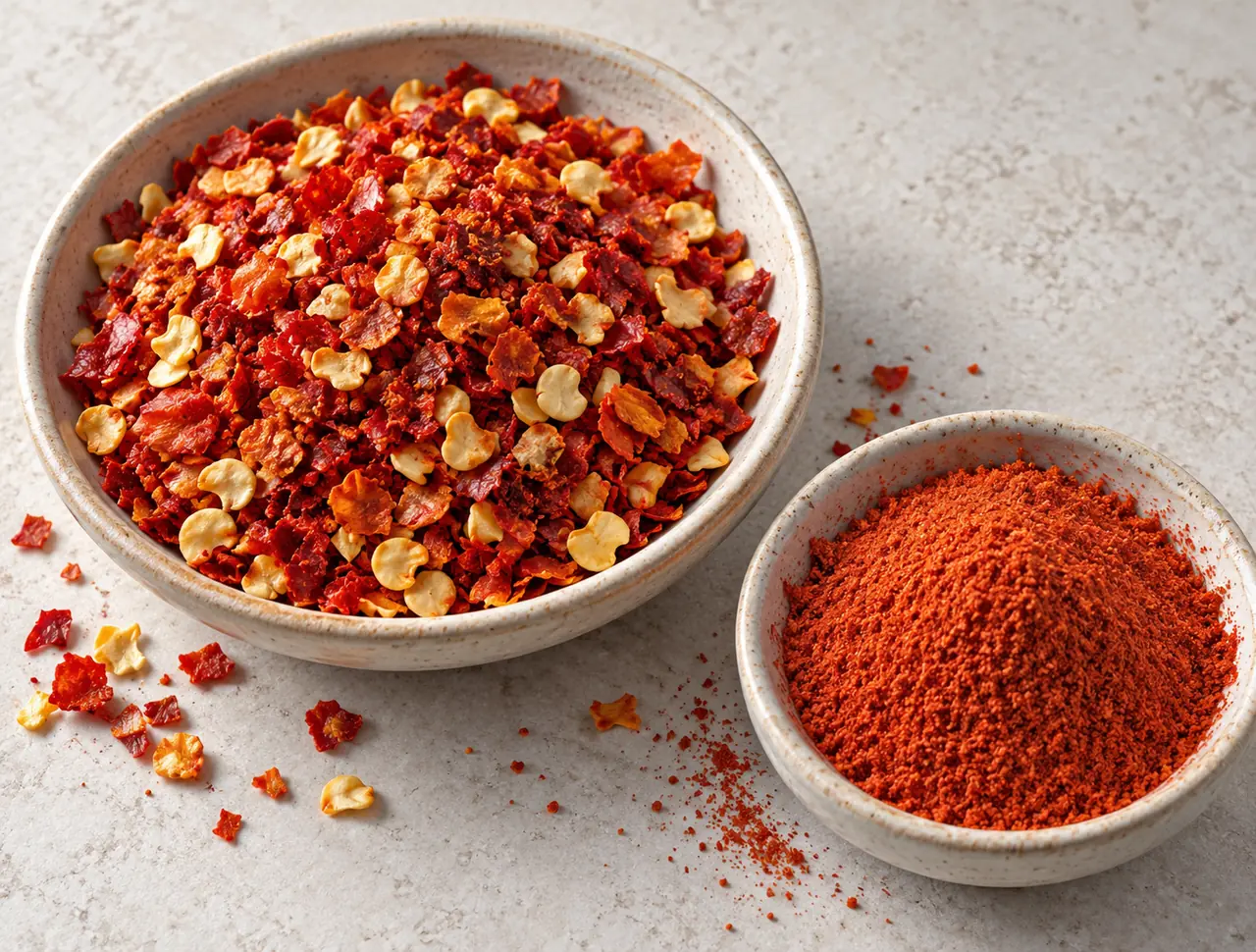
For a flake, request the relevant length, width and thickness instead of calling it thin from the name. The air-dried red chili-flake listing's millimetre and sieve entries are separate references, not the length and thickness of one selected fraction. Original pepper-drying research found that drying method and cultivar influenced rehydration behaviour. That does not qualify any of these listings as fast-rehydrating. It supports comparing the actual prepared material. Inspect skin and seed fragments separately because a soft-looking piece can still have an unwanted hard component.
Inspect the first spoonful and the later bowl separately
Separate hard centres, leathery skin and floating pieces at the first eating point.
- 01Skin
A softened-looking flake can still have a chewy skin component at the first eating point.
- 02Seeds
Inspect hard seed fragments separately from the skin rather than assigning one average tenderness score.
- 03Floating pieces
Judge serving distribution in the actual oily soup; one well-stirred bowl is not a whole portion comparison.
Lift pepper from the first spoonful, examine the centre and skin, then taste it within the actual soup. Repeat at the later intended eating point. Record floating dry pieces, hard centres and leathery skin as different failures. The distinction helps decide whether to try a smaller supplied cut, a different preparation or powder-only seasoning. Keep the accepted noodle reference beside the candidate. Do not use a photograph of fully soaked pieces to approve the short-preparation experience.
Connect the cut to the first spoonful
A powder cluster and a tough flake require different material changes.
| Bowl observation | Material distinction | Next comparison |
|---|---|---|
| Red clumps | Powder agglomerates versus individual particles | Same soup and addition sequence |
| Leathery pieces | Cut geometry, skin and seed condition | Actual flake under the first-spoonful instruction |
| Uneven burn | Different selected heat roles | Powder background separate from visible inclusion |
| Variable sachets | Actual supplied fraction and segregation | Filled packs rather than weighed laboratory blends |
Cutting changes exposed edges and piece size; sieving separates a fraction but does not describe skin thickness or loose seeds. A powder cluster and a leathery flake can therefore appear in one bowl while needing different corrections.
Retain the air-dried flake's separate 10–40 mesh, 10–20 mesh and 3–5 mm references until the actual cut is selected. Its customizable 30,000–50,000 SHU differs from the other crushed flake's 3,000–5,000 SHU. Internal particle and moisture checks describe the preparation; relevant external heat evidence identifies the selected ingredient. Prepare actual filled sachets using the unchanged consumer instruction. Compare first and later spoonfuls for skin, hard centres and local burn. If the pieces pass but heat varies, try an independently controlled powder background rather than increasing all flakes.
Check the dry sachet as a separate stage
Actual filled sachets reveal segregation that a laboratory-weighed bowl can miss.
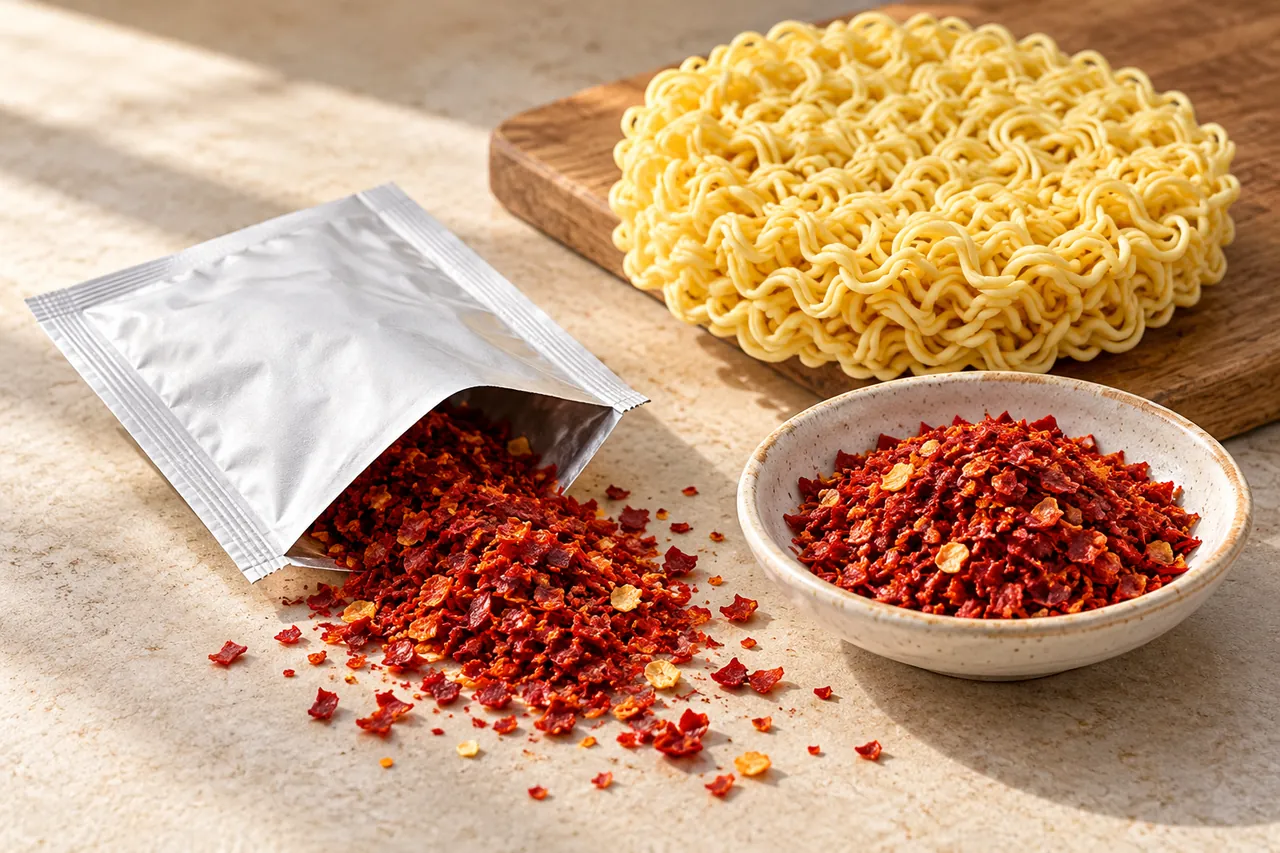
Dry-sachet behaviour comes before bowl behaviour. Inspect the seasoning mixture at the mixer, at filling and in more than one individual sachet. Check whether the larger flakes and fine powder are reaching each pack in the intended balance. A composite batch sample can look correct while individual packs vary. Repeat the bowl preparation using actual filled sachets rather than a laboratory-weighed mixture alone. This connects purchasing's cut specification to the product the consumer will prepare.
Select treatment separately from short-preparation texture
Pleasant softening is an eating result, not microbial validation.
- ✓Preparation
The air-dried flake description is raw; the other flake listing’s steam treatment is optional.
- ✓Consumer instruction
Hot-water addition does not by itself validate the ingredient or finished product’s safety controls.
- ✓Actual material
Tie treatment and composition evidence to the offered preparation, not merely the name of a noodle application.
RELIA SPICES can apply its in-house steam microbial-reduction equipment according to the order requirement. Identify the actual powder or flake and the process and microbiological criteria needed for its noodle addition point. The raw air-dried description or an optional-steam row does not select the shipment's treatment. Microbiology is assessed through outside laboratories, distinct from our internal moisture and particle checks. The consumer's hot-water instruction remains part of your finished-food validation. A flake that softens pleasantly has demonstrated eating quality under that instruction, not by itself a microbial control or ready-to-eat approval.
Compare an identified noodle ingredient offer
A flake that passes later but fails the first spoonful has not met the same brief.
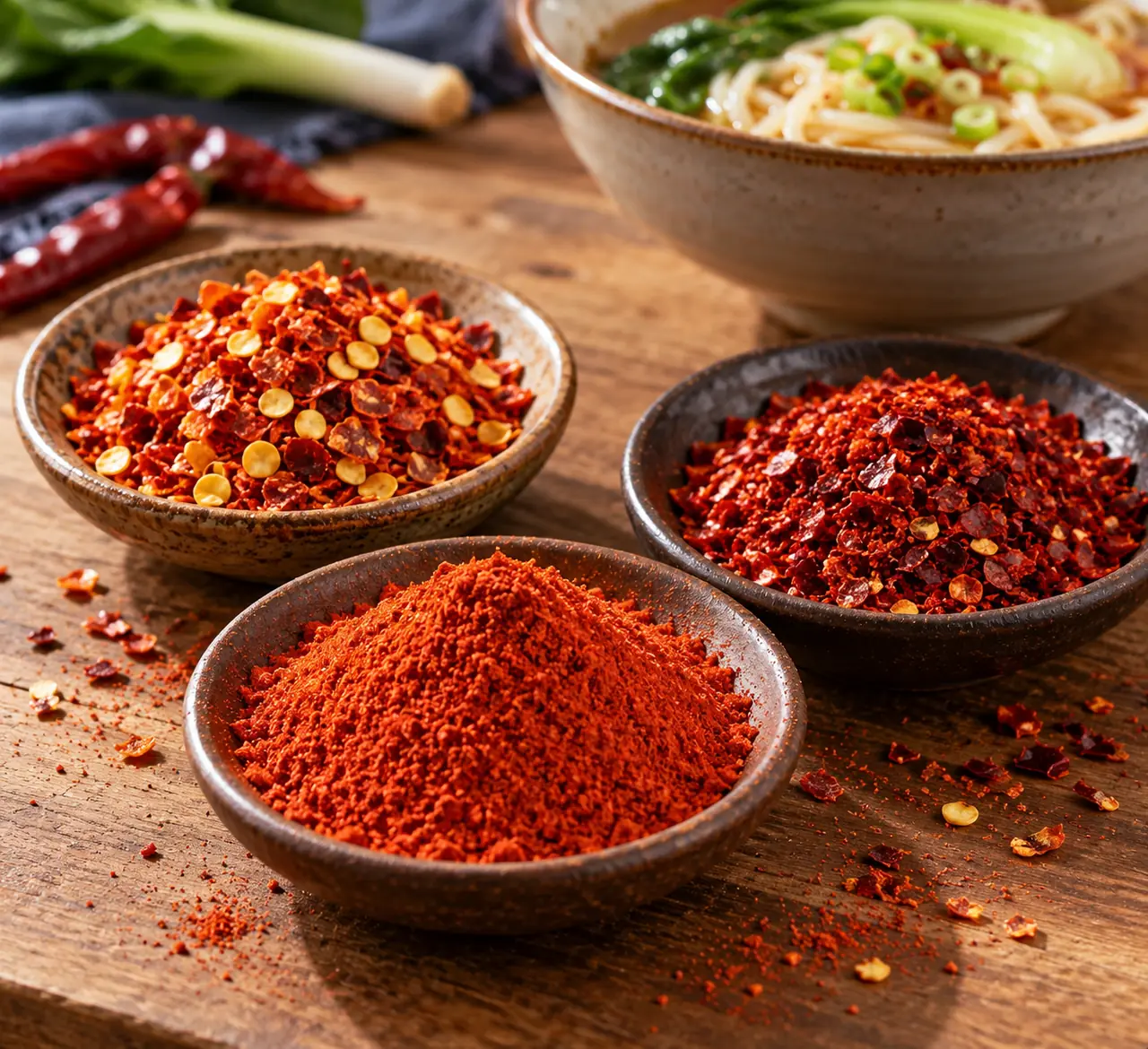
Compare the selected powder, lower-heat flake and higher-heat flake against their assigned roles. Do not rank them by a nominal mesh or ingredient price while they produce different bowls. A useful offer states the actual fraction, heat basis, composition and package. If a candidate meets the later eating point but fails the first, retain that limitation in the decision. This gives the next factory discussion a precise task rather than an untestable request for instant-noodle suitability.
Send the preparation instruction and bowl defect
Send the actual water, wait and stirring instruction with the particle defect.
- 01Describe the bowl
Provide the soup base, oil contact and actual water, wait and stirring instruction.
- 02Choose the role
Separate powder flavour from visible pieces, including the seed and hard-skin limits.
- 03Compare the result
Send first-spoonful and later-bowl observations to discuss a specific cut and heat proposal.
Share cup or packet format, soup and oil background, water addition, wait and stirring instruction. Name powder seasoning or a visible-flake role, then link the candidate and send first and later spoonful photographs. Include the relevant cut axis, hard-particle limit, desired heat and treatment need. We can discuss a selected preparation and sample basis without assuming a special instant-softening grade.
- Noodle format and preparation instruction
- Actual eating window
- Soup base and sachet composition
- Powder or visible-cut target
- Heat and particle-sensation limits
- Treatment documents, quantity and package
Your next purchasing decision
Discuss pepper for your noodle preparation instruction
Discuss one noodle preparation and its intended eating window.
Send the cup or packet format and first-spoonful reference to Qingdao Relia Spices Co., Ltd. / RELIA SPICES. Separate soup background, visible pieces and any required treatment in the request.
The enquiry page keeps this guide with your message. Add your quantity and destination so we can discuss the relevant material.