
Chili Ingredients for Seasoned-Nut Coatings
For seasoned nuts, choose Cayenne powder for a smooth pepper background or defined crushed flakes for visible pieces. Test them in your actual oil or syrup coating through setting and packing. We can prepare the powder or cut fraction and discuss selected treatment. Send the nut format, binder route and bare-patch, grit or loose-piece defect so the next sample changes one useful ingredient variable.
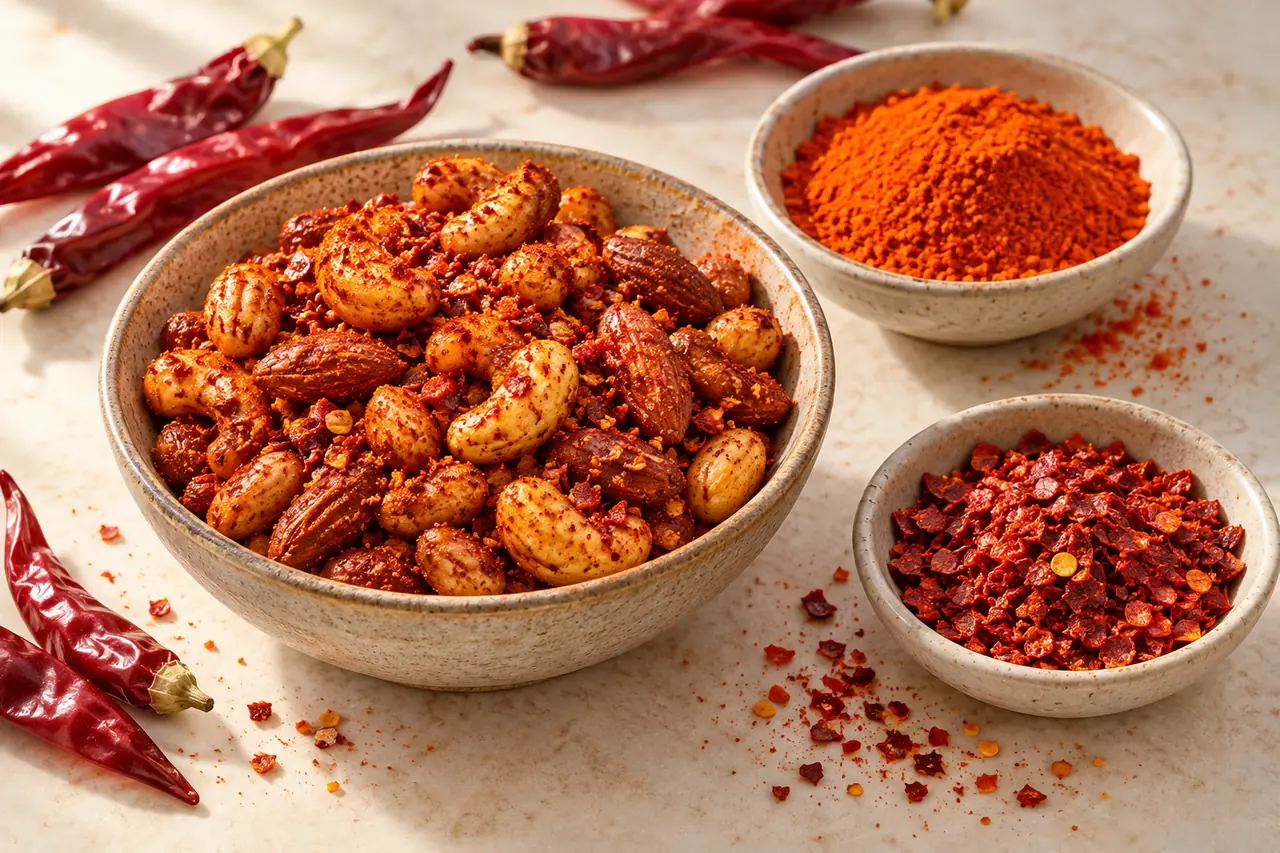
- Smooth coverage
- Cayenne offers nominal 60 mesh and moisture ≤9% for a powder comparison.
- Visible pepper
- Crushed flakes carry a 3,000–5,000 SHU reference; actual cut and seed condition remain separate.
- Packed endpoint
- Judge detached pepper, broken binder and nut fragments as different losses.
Prepare pepper for the actual binder
The same pepper fraction meets different interfaces in oil and syrup coatings.
- 01Dry roasted nut
Hold the roast and cooling stage constant before comparing powder retention.
- 02Oil or binder
Use the actual application system; a powder trial cannot diagnose an undefined adhesive layer.
- 03Added pepper
Distinguish a smooth seasoning background from visible flakes that must survive packing and eating.
At RELIA SPICES, we clean and destem purchased dried chilies before grinding or cutting, sieving and packing. For a smooth nut coating, discuss powder distribution and coarse residue. For visible pepper, define the flake cut, seeds and fines. State whether the binder is oil or syrup and when the pepper is added.
Our moisture and particle checks are internal; heat, colour and microbiology use external laboratories. In-house steam microbial reduction is selected according to the order requirement. Roasting the nut does not itself treat a spice added afterwards.
Compare powder coverage with visible flakes
Independent particle references do not establish two selected flake dimensions.
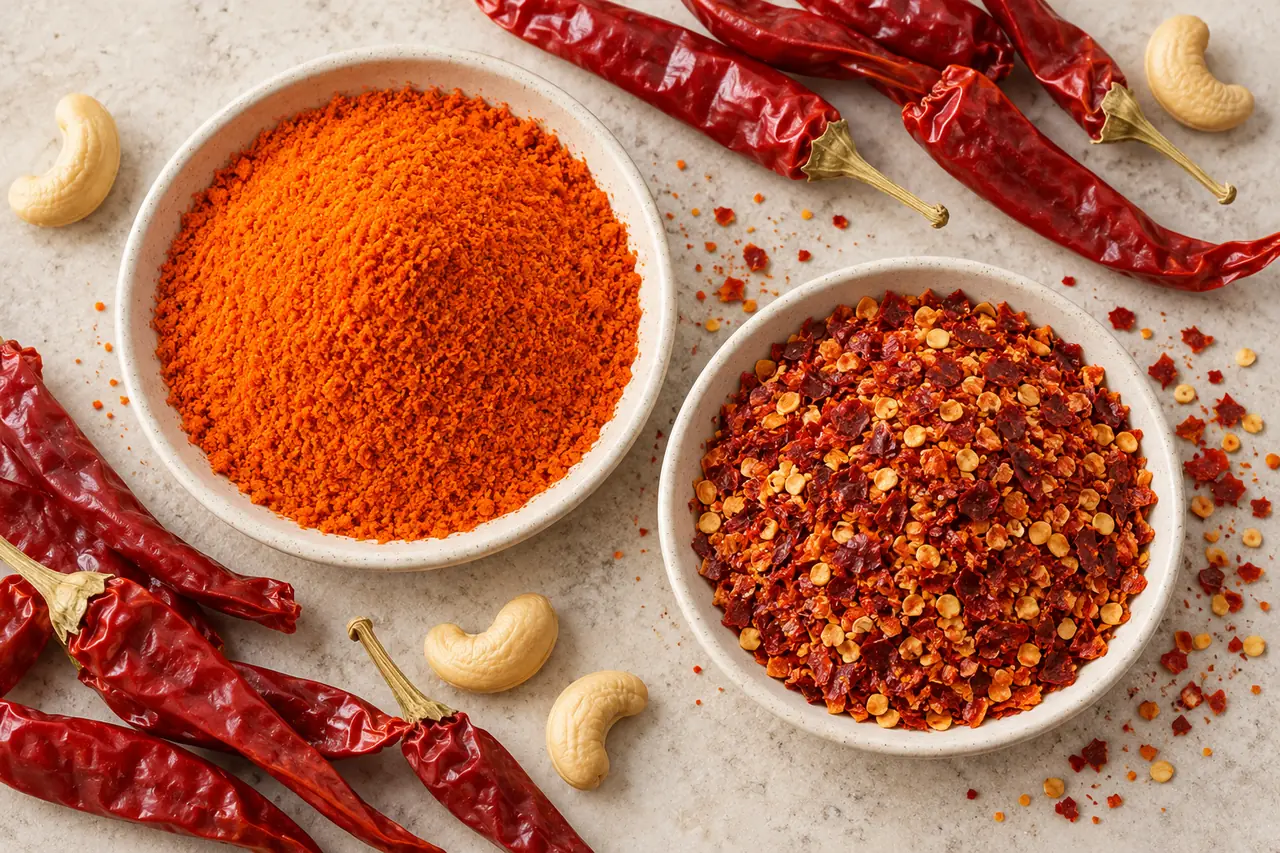
For a powder route, Cayenne gives nominal 60 mesh, customizable 60–70 mesh and moisture ≤9%. For visible pepper, the lower-heat crushed-flake listing gives a full 3,000–5,000 SHU reference and independent 1.5 mm and 1.8 mm particle entries. Raw red chili flakes are another preparation, with independent 40–80 mesh and 80/100 mesh references. Those sieve entries do not define the visible cut. Shortlist the actual preparation for your binder rather than combining specifications from all three.
Ingredients to compare for this application
Cayenne for a smooth coating
A defined powder comparison where continuous seasoning matters more than visible pepper pieces.
- Nominal 60 mesh.
- Customizable 60–70 mesh is a separate reference.
- Moisture ≤9%.
Crushed red chili for visible pieces
A visible-pepper alternative when the set coating must retain acceptable appearance, heat and bite.
- 3,000–5,000 SHU ingredient reference.
- Independent 1.5 mm and 1.8 mm entries require an actual cut basis.
- Steam treatment is optional and must be selected.
These product specifications are a starting point for selecting a grade. Match the proposed material and sample to your food and order requirements.
Judge the fraction at the binder interface
Hold the nut and binder fixed while following the prepared fraction into the packed product.
- 01Define the pepper
Choose powder background or a cut with explicit seed, fine and coarse criteria.
- 02Identify its condition
Pair internal moisture and particle checks with applicable external heat evidence.
- 03Read the set coating
Use the same nut and binder, then distinguish pepper loss, broken coating and nut fragments.
A powder particle, flat skin flake and loose seed contact the binder differently. Cleaning and destemming remove unwanted material before size reduction; sieving then helps define the fraction. These operations make the offered preparation identifiable without making the binder layer uniform.
Keep the crushed-flake candidate's 1.5 mm and 1.8 mm entries independent until their axes and applicability are known. Internal moisture and particle checks describe the input; external heat evidence relates to the selected ingredient within its full 3,000–5,000 SHU reference. Follow matched coated nuts through setting, transfer and packing. Separate pepper loss from broken binder and nut fragments before choosing a smoother powder or a visible cut.
Inspect the set coating before judging retention
An attractive wet coating can still lose pepper after it sets.
| Candidate | Listing reference | Nut-seasoning decision |
|---|---|---|
| Cayenne powder | Nominal 60 mesh; moisture ≤9% | Start with a powder where a smooth background is wanted |
| Lower-heat crushed flakes | 3,000–5,000 SHU; independent 1.5 mm and 1.8 mm | Select a visible cut and inspect local heat and bite |
| Raw red chili flakes | Independent 40–80 mesh and 80/100 mesh references | Define the actual flake fraction; do not assume dimensions |
Follow the same coated nuts after setting, after transfer and after packing. Examine whether the loose fraction consists of detached pepper, broken coating or nut fragments. Large clusters that split on handling indicate a different problem from an initially bare surface. Define visible-piece retention and acceptable loose material separately. Compare matched portions before and after the normal handling route so purchasing can distinguish an attractive wet coating from a stable-looking packed product without claiming a guaranteed shelf-life result.
Taste pepper against the nut and binder
Separate coarse pepper bite from the expected nut crunch.
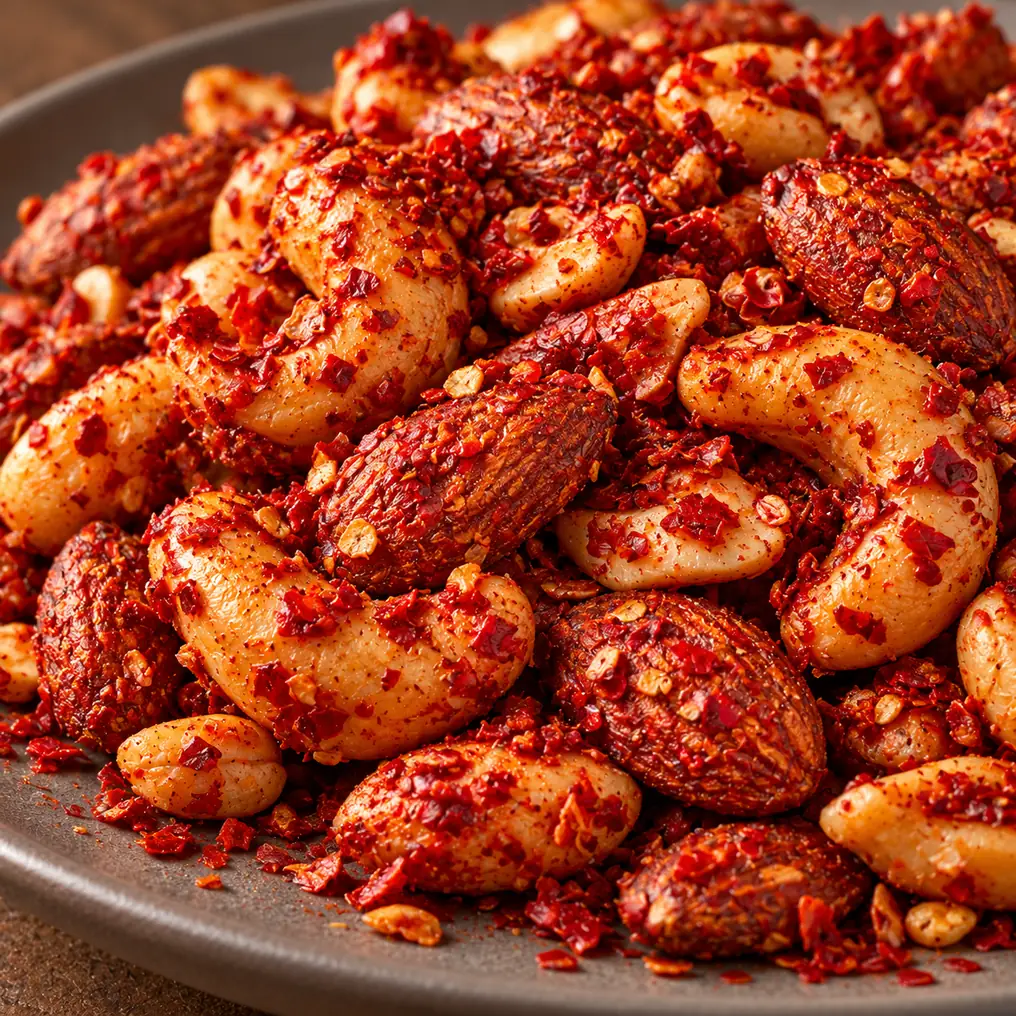
The lower-heat crushed-flake listing's 3,000–5,000 SHU range is an ingredient declaration, not the heat of a nut. Sweet binder and the nut's own flavour can change the eating comparison. Taste the complete coating at the same setting endpoint and examine several nuts within each portion. Score gritty fragments separately from the expected nut crunch. If the desired visual flake gives too much local heat, evaluate a separately identified milder preparation rather than changing the full powder dose and losing the background seasoning at the same time.
Match ingredient treatment to the nut-coating stage
Pepper added after roasting needs its own selected treatment scope.
- 01Retention target
Compare the proportion and type of loose seasoning after your chosen handling boundary.
- 02Eating target
Reject hard skin, coarse fragments or concentrated burn even if the particles remain attached.
Our in-house steam microbial-reduction equipment is available according to the order requirement, including discussion of a pepper added after the nut's roast. Select the actual material and process rather than assume the crushed-flake listing's optional treatment has been executed. Outside-laboratory microbiology can address the agreed ingredient criteria; internal particle and moisture checks address physical preparation. The nut product's allergen responsibilities remain separate from a pepper no-additives statement. FDA's spice risk profile supports this treatment review, without establishing an allergen-free material, a universal treatment outcome or safety of the complete coated nut.
Keep packed-product observations separate from ingredient storage
An ingredient storage period is not the shelf life of the coated nut.
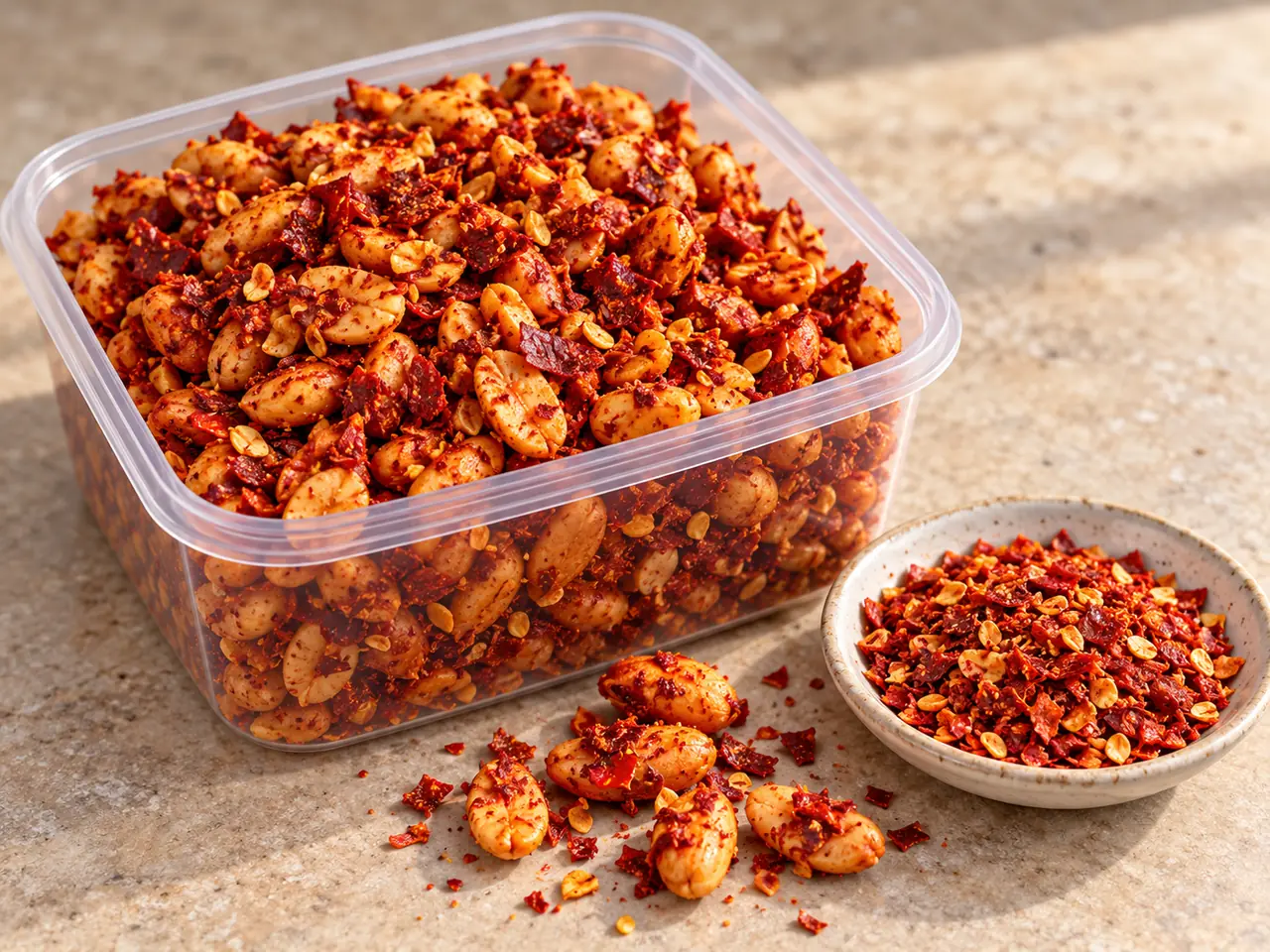
Watch the packed product for coating migration, agglomeration and changing bite under the actual product conditions. These observations concern the nut, binder and package together. The lower-heat crushed-flake listing describes two years in a cool, dry place; the raw red chili-flake listing describes twelve months sealed and dry. Neither statement is a finished seasoned-nut shelf life. Keep opened-ingredient handling apart from packed-product storage. A retained original coated reference helps determine whether a later change came from the new pepper or from the surrounding coating system.
Compare offers for the same coating brief
Compare offers at the same visual and eating target.
- ✓Same adhesive route
Keep oil or binder application fixed while comparing pepper preparations.
- ✓Same serving
Use matched pepper dose and flavour target, with visible pieces assessed separately from powder colour.
- ✓Same supply scope
Align composition, actual treatment and package rather than assuming raw or optional-treatment wording proves readiness.
Compare proposals for the same target appearance and eating result. Powder, flakes and a mixture can all be sensible candidates, but they are not direct substitutes when they deliver different visual effects. Include measured use and loss only where your comparison actually measured them. If a flake specification lowers reject clusters at the same flavour, describe that observed advantage without attributing all coating behaviour to the chili. Request the corresponding actual cut and composition in the next ingredient proposal.
Send a nut-coating material brief
Send binder and defect details with the particle role you want to buy.
- 01State the base
Identify the nut and roast route, then describe the actual adhesive and seasoning stage.
- 02State the particle role
Choose powder background or a visible flake with defined seed and coarse-particle criteria.
- 03State the failure
Use dust loss, bare patches or hard-particle observations to request a specific material comparison.
Share the nut and roast route, oil or syrup binder, pepper addition point and desired appearance. Send packed-product photographs showing bare patches, gritty pieces or loose coating. Choose the powder route or name the crushed-flake candidate with seed and fine-fraction requirements. Add treatment, package and quantity needs so we can discuss one actual preparation and sample scope.
- Nut and surface preparation
- Syrup or oil-based binder
- Powder coverage or visible-flake target
- Setting and packing route
- Heat, texture and loose-seasoning criteria
- Documents, quantity and package
Your next purchasing decision
Choose the pepper role in your nut coating
Ask for a preparation matched to your nut-coating route.
Send the nut format, oil or syrup route and packed-product defect to Qingdao Relia Spices Co., Ltd. / RELIA SPICES. Identify whether you need smooth coverage or visible pepper, and when it enters the process.
The enquiry page keeps this guide with your message. Add your quantity and destination so we can discuss the relevant material.