
Visible Pepper Inclusions for Savoury Bread
For visible red inclusions in savoury bread, start with mild sweet paprika flakes and compare their actual cut in a cooled slice. Consider the cut-pod candidate separately when a stronger pepper character and seed bite are wanted. Send the loaf style, incorporation route and slice reference. We can discuss pieces, seeds and fines around lost inclusions or hard fragments without treating a dry display as proof of baked-bread performance.
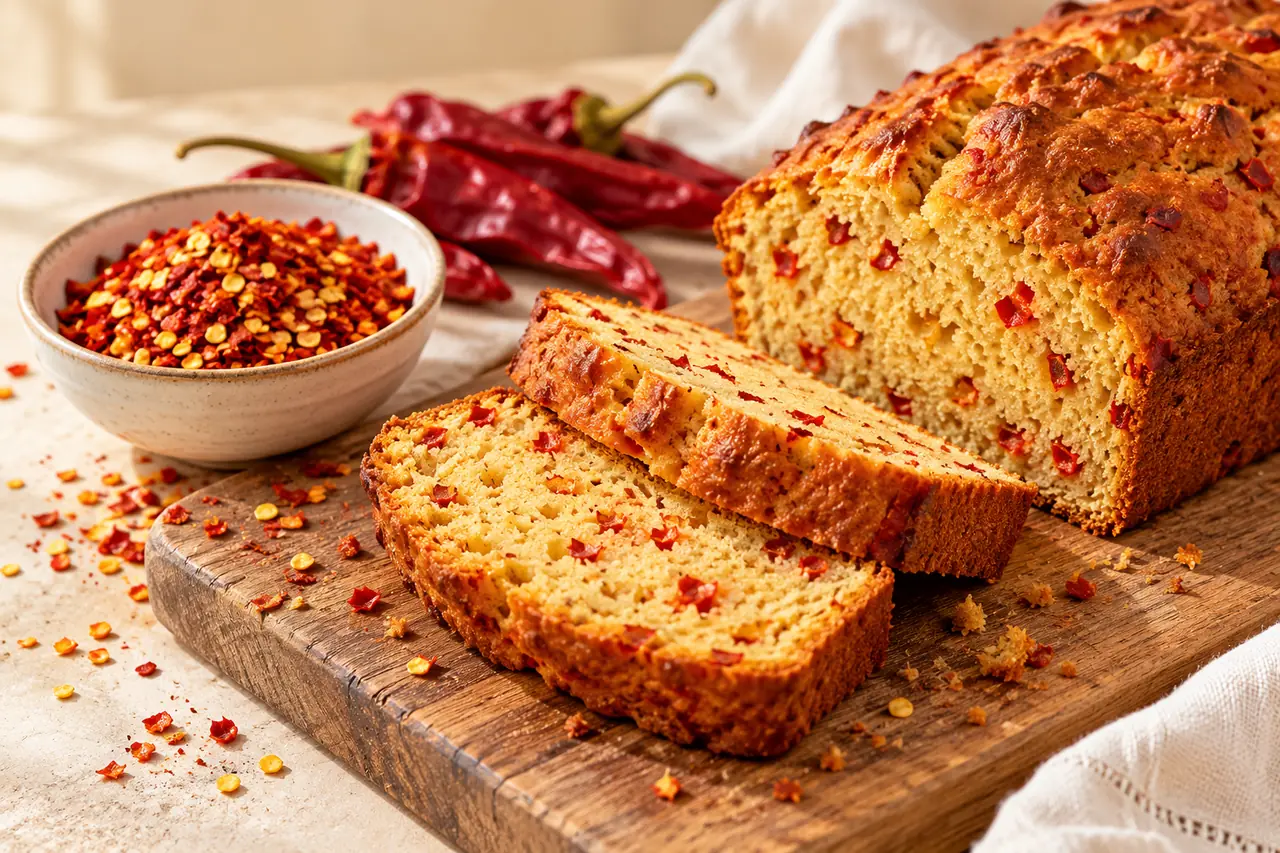
- Colour-led inclusion
- Sweet paprika flakes list mild/slightly sweet flavour and separate 3–5 mm and 5–25 mesh references.
- Stronger cut candidate
- Cut-pod pieces list 8,000–12,000 SHU, but the supplied cut dimensions still need definition.
- Acceptance endpoint
- Judge visible pieces, hard fragments and slicer losses in the same cooled bread slice.
Prepare a visible inclusion for the loaf
Prepare the visible inclusion separately from powder used only for background seasoning.
- 01Soft sliced loaf
Judge the thin slice and any pepper pulled out during slicing.
- 02Open crumb
Inspect distribution within the crumb rather than choosing one attractive exposed piece.
- 03Roll or portion
Compare a whole serving for local heat and hard skin or seeds.
RELIA SPICES cleans and destems purchased dried chilies before cutting or crushing, sieving and packing. For bread, we discuss the pieces, accompanying seeds and fines separately from any background powder. A soft sliced loaf and an open crumb need different visual references.
Moisture and particle checks are internal; ASTA, SHU and microbiology use external laboratories. We have in-house steam microbial-reduction equipment used according to order requirements. The chosen preparation supports your bread comparison while proofing, slicing and baked-product shelf life remain specific to your process.
Compare flakes with more substantial cuts
Mesh and millimetre entries do not jointly define every supplied piece.
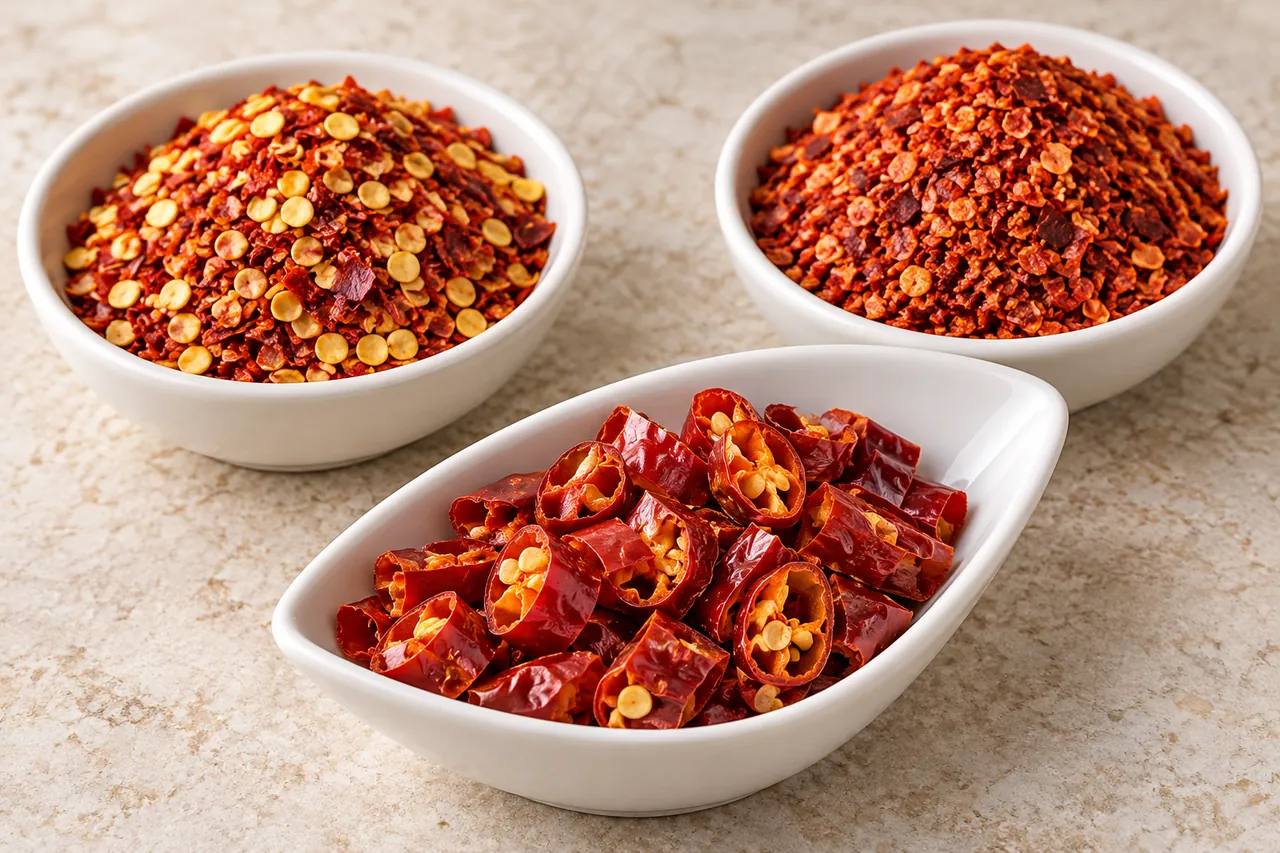
The sweet paprika flakes declare a mild, slightly sweet flavour, a 3–5 mm or customized size reference, 5–25 mesh and moisture ≤12%. Treat the sieve entry and millimetre entry as separate criteria until the actual supplied fraction is defined. The raw red-flake candidate instead carries independent 40–80 mesh and 80/100 mesh references, not two selected visible-flake grades. The cut-pod candidate shows rings or segments with seeds and gives 8,000–12,000 SHU. Its 4–7 cm entry does not establish the dimensions of those supplied cuts.
Ingredients to compare for this application
Mild paprika flakes for visible red pieces
A first colour-led inclusion where the bread should show red pepper without selecting a stronger heat role.
- Mild/nonspicy/slightly sweet descriptions do not guarantee zero pungency.
- 3–5 mm/customized and 5–25 mesh are separate references.
- Moisture ≤12%; ingredient storage dry and sealed.
Cut-pod pieces for stronger pepper character
A separate trial where seed bite and a more pronounced pepper contribution belong in the loaf.
- 8,000–12,000 SHU ingredient reference.
- Pictures show rings or segments with seeds; the 4–7 cm entry does not establish supplied cut dimensions.
- Moisture 8–12%.
These product specifications are a starting point for selecting a grade. Match the proposed material and sample to your food and order requirements.
Keep dry addition and prehydration separate
Keep dry incorporation and buyer-controlled prehydration as separate dough comparisons.
- 01Dry incorporation
Inspect dry centres, clumps and breakage under the normal mixing route.
- 02Buyer-controlled prehydration
Keep actual water and draining condition in the dough basis; no soaking time is assumed.
Choose either dry incorporation or a defined buyer-controlled prehydration route for the first trial; do not let the two become an unrecorded difference between candidates. With prehydration, account for the actual water and draining condition in the dough comparison. With dry addition, inspect whether pieces remain dry or form local clusters after mixing. A wetter inclusion and a larger inclusion are not interchangeable fixes. We do not infer water uptake or prescribe soaking time from an image. Qualify the chosen preparation on your existing food-process controls.
Find where the inclusion first changes
Locate the first breakup at mixing, proofing or slicing before blaming the oven.
- 01Supplied cut
Define skin pieces, seeds and fines using separate cut and sieve criteria.
- 02Mixing and proofing
Inspect breakup and distribution before attributing damage to baking.
- 03Cooled slice
Compare visible pieces, hard bite and material pulled free by slicing.
Cutting retains tissue pieces; crushing can leave skin, seeds and fines together. Sieving selects a fraction without making those components behave alike in dough. Sweet paprika's 3–5 mm/customized reference and separate 5–25 mesh entry therefore need distinct definitions.
Use our particle and moisture checks to identify the preparation. Inspect pieces after mixing, after proofing and in the cooled slice. Breakup already present in the mixer is different from an intact piece pulled out by the slicer. Keep dry incorporation separate from buyer-controlled prehydration, including its water and draining condition. This connects our cut preparation to your observed inclusion defect without promising a hydration rate, fermentation effect or slice-retention result.
Use the cooled crumb as the acceptance endpoint
Use the cooled slice to compare visibility, hard fragments and pulled-out pieces.
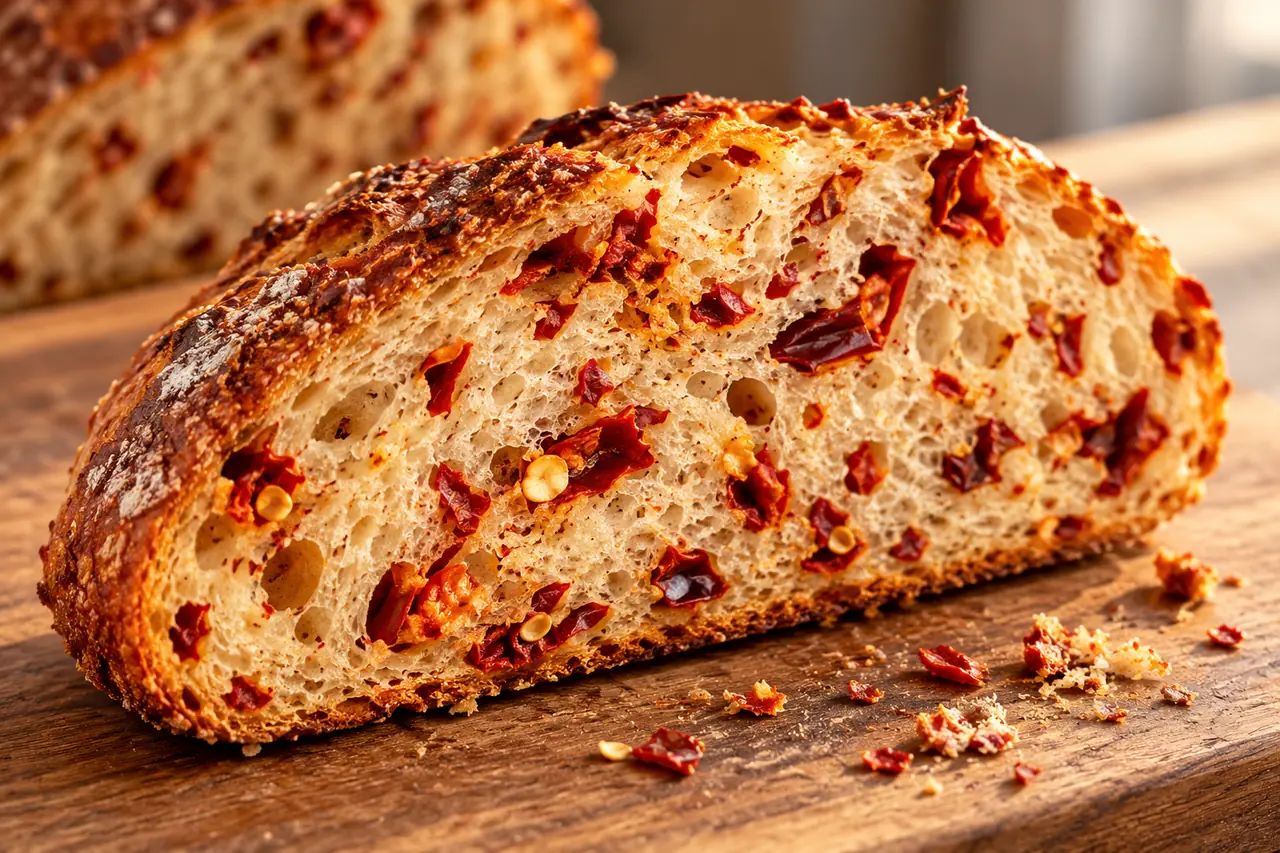
Bake, cool and slice the candidate loaves through the normal route. Inspect the crumb face, the crust near exposed pieces and the loose material at the slicer. Separate a hard skin sensation from a seed fragment and from the bread’s own crust. If the red inclusion remains visible but is pulled out by slicing, compare the actual piece geometry and preparation rather than simply requesting a brighter paprika. If the piece becomes visually indistinct while the bite is satisfactory, reconsider the colour contrast and placement before asking for a larger, harder cut.
Check flavour independently of the cut
A suitable cut can still deliver the wrong pepper flavour or seed bite.
| Candidate | Catalog evidence | Bread decision |
|---|---|---|
| Sweet paprika flakes | Mild/slightly sweet; 3–5 mm/customized; 5–25 mesh | First colour-led inclusion with actual cut defined |
| Raw red chili flakes | 40–80 mesh and 80/100 mesh independently stated | Resolve visible fraction; do not select a grade from notation |
| Cut-pod pieces | 8,000–12,000 SHU; seeds visible | Assess actual cut, seed bite and stronger pepper role |
Compare flavour using representative slices rather than tasting a loose pepper fragment. The mild sweet paprika description does not guarantee zero pungency. The cut-pod listing’s 8,000–12,000 SHU is an ingredient range, not the heat of a loaf or a statement about every pictured cut. Confirm the actual preparation used for that analytical reference. The raw red-flake listing does not provide an established numerical heat grade. Keep those differences visible when choosing a pepper character; a material with the right inclusion size can still be the wrong flavour.
Select treatment and retain each storage scope
Ingredient treatment and package declarations do not establish bread shelf life.
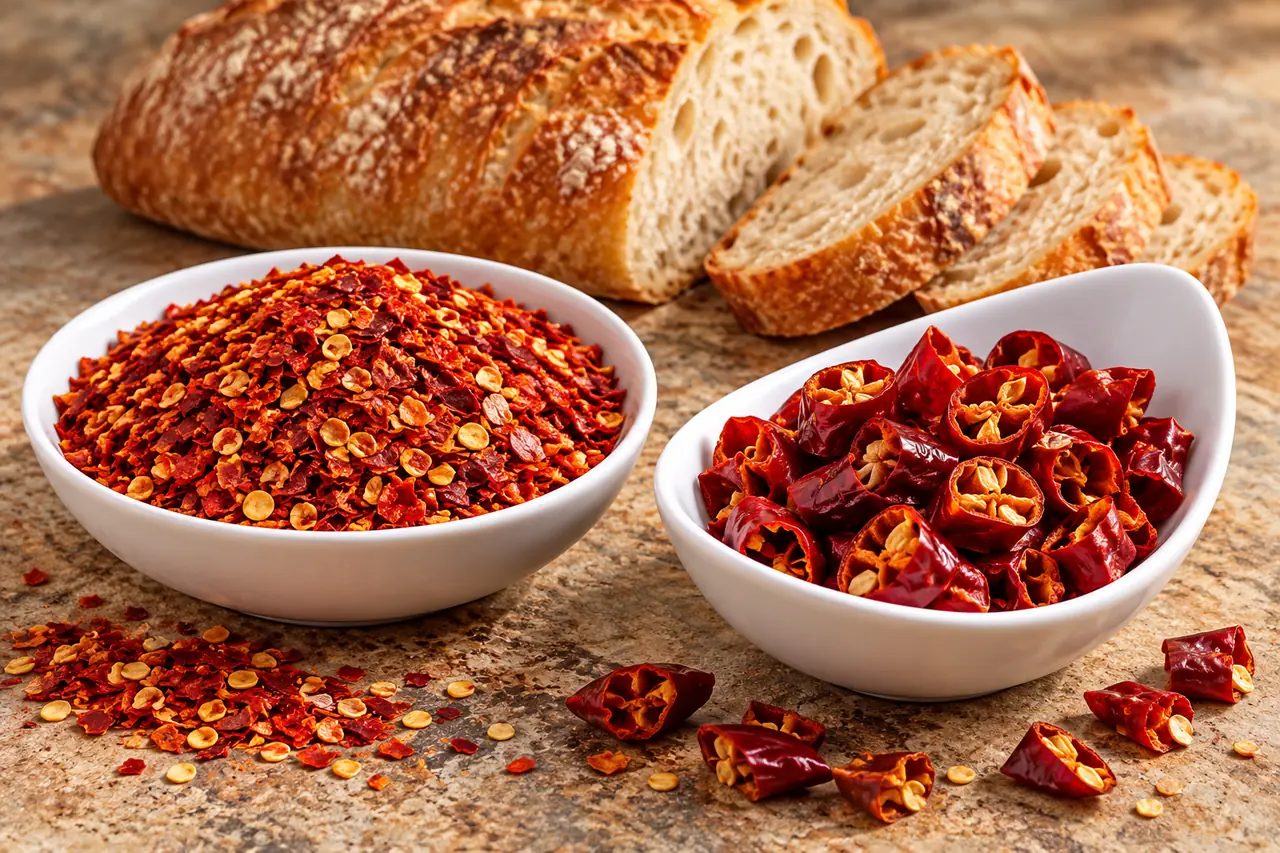
RELIA SPICES has in-house steam microbial-reduction equipment used according to order requirements. Identify the chosen ingredient treatment separately from your baking controls, using applicable outside-laboratory microbiological evidence. Sweet paprika flakes state 24 months dry and sealed; raw red flakes state 12 months sealed and dry; the cut-pod listing's 24-month reference still needs cut-specific storage conditions. Keep those declarations with their own preparations and packages. None establishes bread shelf life, and the existence of either an oven or steam equipment is not a universal food-process validation.
Compare offers for one defined inclusion style
Compare offers for one accepted slice and the same defined inclusion role.
- ✓Cut and seeds
Specify the actual geometry and accompanying seed or fine material.
- ✓Preparation
Keep dry addition and prehydration as separate trial routes.
- ✓Eating result
Use the same cooled slice for visibility, pepper flavour and hard-particle acceptance.
Compare offers against one accepted slice and a defined inclusion preparation. Include actual dimensions, seeds, fines and the pepper addition used to reach that endpoint. Price a smooth powder separately if it is being added only for background flavour; it does not replace the purchased visible inclusion. Where the supplier proposes a different fraction, repeat the relevant dough and sliced-bread checks instead of accepting a commercial name as equivalence. A defined material that fails slicing is different from an offer whose cut has never been established.
Send the loaf and cooled-slice reference
Send slice photographs and the incorporation route with the requested cut.
- 01Describe the loaf
Provide dough style, serving or slice format and incorporation route.
- 02Show the defect
Include slice photographs and pulled-out or hard fragments.
- 03Request the inclusion
Discuss a defined paprika, red-flake or cut-pod preparation with current supply terms.
Share the dough style, incorporation route and serving or slice format. Show hard fragments, lost pieces or uneven distribution in cooled-slice photographs. Link the mild paprika flake or stronger cut-pod candidate, with the intended flavour and seed condition. We can discuss a defined inclusion and the relevant treatment, sample and package scope around that bread comparison.
- Dough and loaf format
- Slice thickness and visible-piece reference
- Actual cut and seed criteria
- Dry or prehydrated addition
- Proofing, baking and cooled acceptance
- Treatment documents, quantity and package
Your next purchasing decision
Discuss a visible inclusion for your cooled bread slice
Discuss a visible inclusion against the bread you actually intend to slice and serve.
Send the bread style, incorporation route and cooled-slice reference to Qingdao Relia Spices Co., Ltd. / RELIA SPICES. Separate unwanted hard particles from pieces lost during slicing.
The enquiry page keeps this guide with your message. Add your quantity and destination so we can discuss the relevant material.