Supermarket Own-Brand Paprika and Chili Ranges
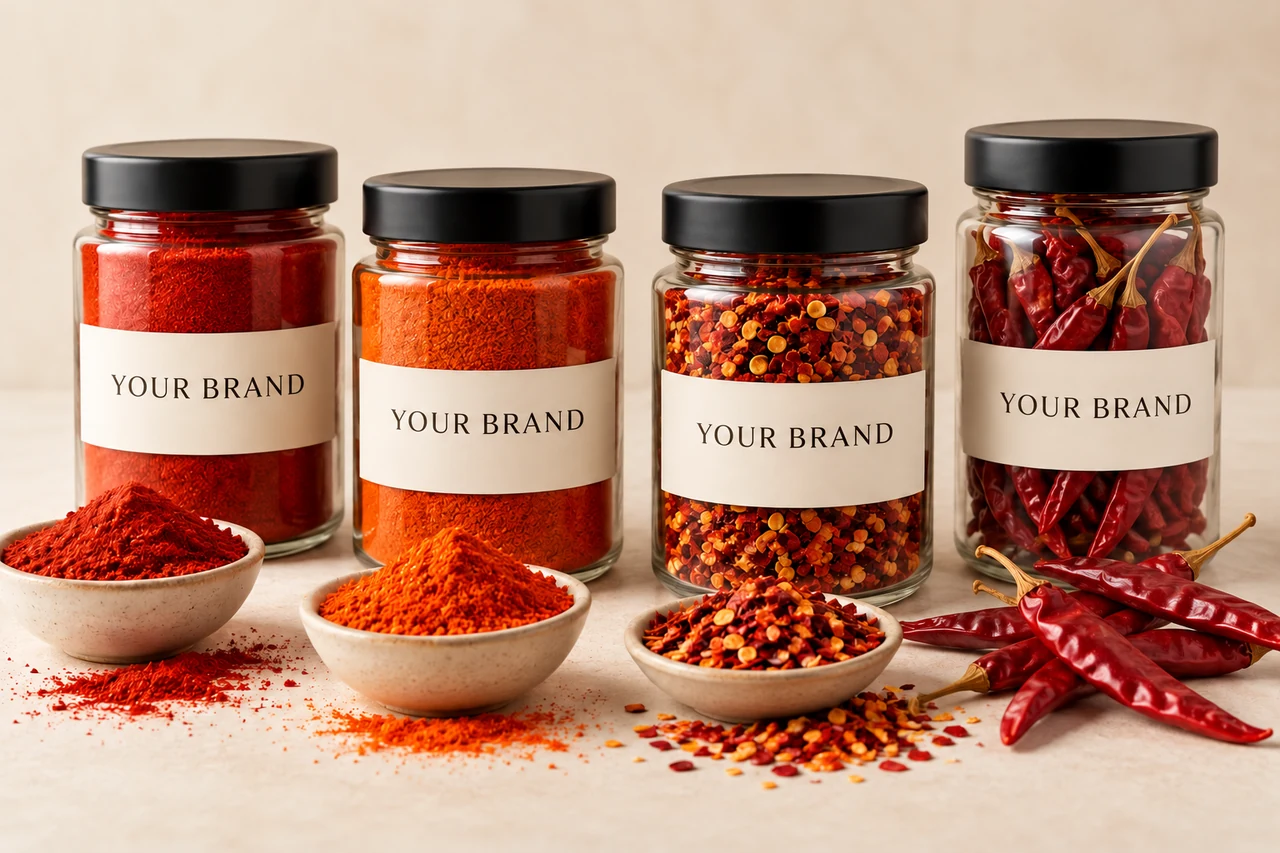
Build your own-brand spice range around four useful kitchen roles: colour-led paprika powder, selected chili heat, visible flakes and whole-pod cooking. RELIA SPICES prepares the chosen ingredients and fills customer-branded retail packs.
Packaging and project details
Give each item its own material, pack and approval owner, while keeping the range coordinated. Send your item list, quantities and packaging plans so we can assess the project on a consistent basis.
Four material roles within one retail range
- Sweet paprika
A colour-led powder choice for the intended food.
- Chili powder
A selected heat profile and ground-pepper texture.
- Chili flakes
Visible pieces, seeds and the fine fraction.
- Whole chili
A named pod and its cooking preparation.
Material Routes Connected to the Finished Retail Item
Shared manufacturing support still allows each form its own preparation.
RELIA SPICES cleans purchased dried chilies and removes foreign matter and stems. We grind and sieve powder, cut or crush and sieve flakes, and retain the agreed whole-pod form before packaging.
Link retail filling and technical checks
We fill customer-branded retail packs. Moisture, particle size and routine checks are internal; ASTA, SHU and microbiology use outside laboratories. In-house steam microbial reduction is available according to order requirements for the selected items.
Select the route after dried-chili preparation
- Powder
Grinding and sieving tied to the selected grind.
- Flakes
Cutting or crushing and sieving tied to visible pieces.
- Whole pods
Retain the selected pod and agreed stem condition.
Four Ingredient References with Distinct Selection Cues
Compare the properties that explain each item's place in the range.
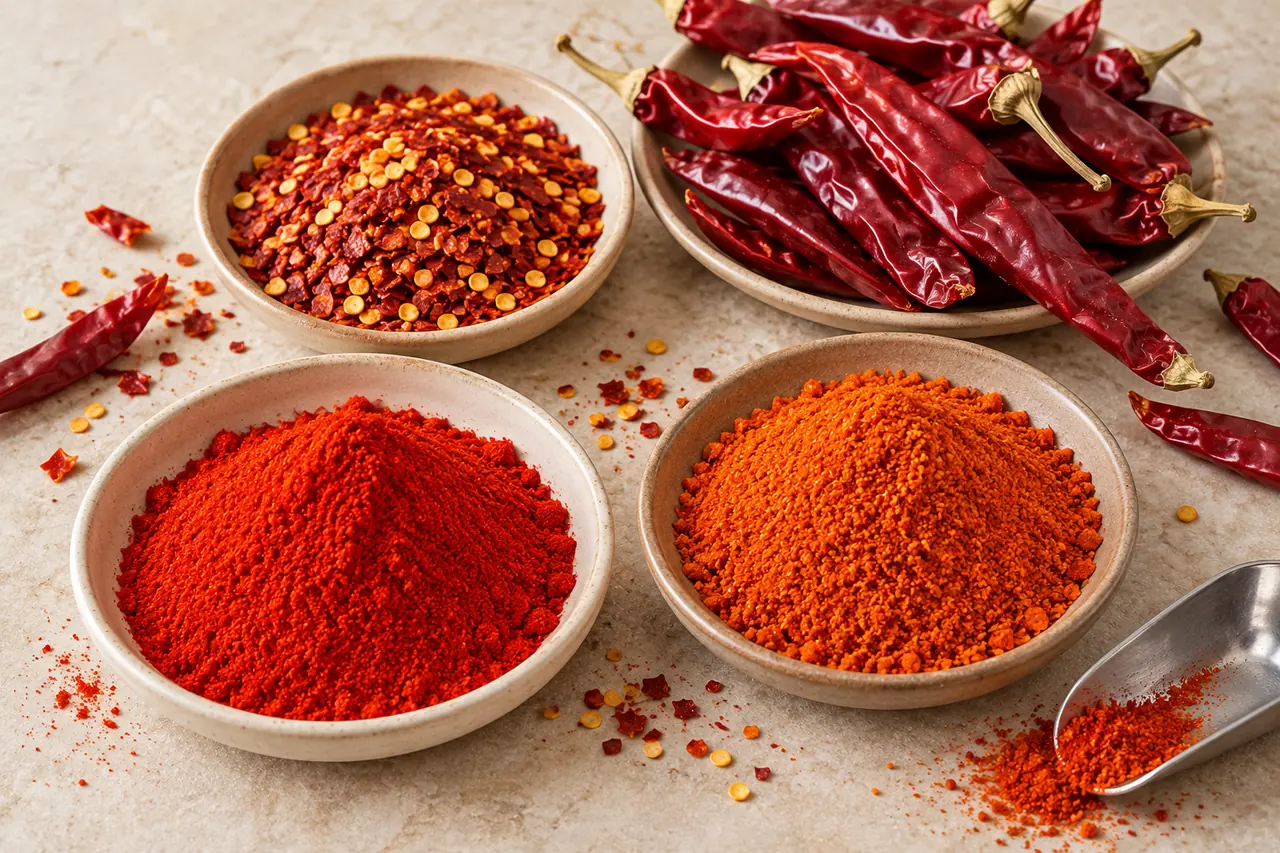
Sweet paprika lists nominal 70 mesh, 80–220 ASTA customization and moisture ≤8%. Cayenne powder lists nominal 60 mesh, moisture ≤9% and customizable Mild, Medium or Hot descriptions, without a numerical SHU value.
Compare flakes and pods independently
Coarse seeded flakes list 7,000–10,000 SHU. New Generation whole pods list 3–6 cm and the complete 50,000–90,000 SHU range. These product-specific references help shortlist ingredients; the agreed material and applicable results support the actual order.
Start each item with its relevant material information
Sweet Paprika Powder
Start the colour-led powder item here, then select its colour target and grind alongside the intended kitchen use.
- Nominal grind
- 70 mesh
- Colour scope
- 80–220 ASTA customizable
- Moisture specification
- ≤8%
Cayenne Red Pepper Powder
Use this as a chili-powder starting point when the brief calls for a selected Mild, Medium or Hot description and an agreed ground texture.
- Nominal grind
- 60 mesh
- Pungency descriptions
- Mild / Medium / Hot, customizable; no numerical SHU supplied
- Moisture specification
- ≤9%
Coarse Seeded Chili Flakes
Choose for the visible-piece member of the range, with red flakes, pale seeds and fines reviewed as a complete mixture.
- Form
- Coarse dried red flakes with visible pale seeds
- Heat reference
- 7,000–10,000 SHU
- Separate size references
- 1–4 mm and, independently, 5*7 mm; actual basis to agree
New Generation Whole Chili Pods
Consider for a whole-pod cooking item with a specific size and heat scope, then assess stem condition and removal from the proposed pack.
- Pod-size description
- 3–6 cm
- Full heat reference
- 50,000–90,000 SHU
- Stem descriptions
- Stemless or stem cut; select the supplied condition
Review the selection criteria
- Sweet paprika powder
- 80–220 ASTA customizable Nominal 70 mesh and moisture ≤8%.
- Cayenne powder
- Mild / Medium / Hot descriptions Nominal 60 mesh and moisture ≤9%.
- Seeded red flakes
- 7,000–10,000 SHU reference Coarse red pieces and visible pale seeds.
- New Generation pods
- 50,000–90,000 SHU reference Whole pods with a listed 3–6 cm size scope.
A Short Buying Brief for Every Shelf Item
Use the same project format while keeping the acceptance criteria distinct.
Give each item a shopper use, named ingredient, sensory target and physical preparation. Match its sample to that brief so technical and buying teams are discussing the same material.
Keep each requirement with its ingredient
Specify powder grind for powders, piece and seed appearance for flakes, and pod size and stems for whole chili. Keep each heat requirement with its selected ingredient instead of carrying a value across the range.
A repeatable format with material-specific decisions
- Kitchen role
The use that gives this item a purpose on the shelf.
- Ingredient choice
The named material and its relevant reference sample.
- Acceptance
The colour, heat, grind or pod criteria for this item.
- Retail presentation
Its proposed package and consumer instructions.
Review Each Ingredient After Its Selected Preparation
The material presented for approval should reflect the route ordered for that item.
Connect powder grinding and sieving to the agreed grind, and flake cutting to the piece, seed and fine-fraction appearance. Whole-chili items retain the chosen pod and stem condition.
Identify treatment requirements by item
Identify any items requiring in-house steam treatment and the analytical acceptance needed for them. Review their finished material after the selected route; treatment is order-specific rather than a universal promise across the range.

A useful preparation and evaluation sequence
- Select the form
Powder, visible flakes or retained whole pods.
- Set the order requirements
Material preparation and any selected steam treatment.
- Compare the finished material
Appearance, food result and relevant analytical acceptance.
Match the Evidence to the Retail Requirement
The technical review connects the same ingredient, sample and intended use.
Use the agreed material reference for physical and sensory requirements. Set the method and sampling scope for any analytical criterion with your technical team.
Separate physical checks from laboratory analyses
Internal moisture and particle checks and external colour, heat or microbiology analyses answer different questions. Keep composition, preparation instructions, storage and supported label statements with the same selected item.
Three evidence tracks for each item
- Material
Composition, physical form and the sensory reference.
- Analysis
Applicable method, sample scope and acceptance criterion.
- Consumer use
Preparation, storage and statements supported for that product.
Named Owners for Ingredient, Pack and Artwork Decisions
A coordinated launch needs clear sign-off for each part of each item.
Assign technical ownership for the ingredient and its acceptance requirements, packaging ownership for format and opening, and brand ownership for the artwork. Procurement brings the agreed inputs into the proposal.
Keep owners and approvals aligned
Use one item schedule showing the material, pack and artwork version each owner has approved. Record open decisions so a packaging change does not leave the ingredient or label brief behind.
A proposed approval map for your team
| Selection point | What to consider |
|---|---|
| Technical | Ingredient, intended use, methods and analytical requirements. |
| Packaging | Proposed format, net content and opening behaviour. |
| Brand | Artwork, supported wording and destination-language approval. |
| Procurement | Per-item quantity, commercial comparison and requested launch sequence. |
A Coordinated Look with Material-Specific Pack Use
Test dispensing and removal with each ingredient inside its proposed pack.
We can assist production of packaging printed with your brand or accept packaging you supply. Send the proposed container, printing requirements, net content and filling brief for assessment.
Adapt pack use to each ingredient
Compare powder dispensing, flake separation and whole-pod removal. Shared colours and artwork can connect the range while each material keeps an opening and format suited to its use.

Different forms call for different pack observations
- Powder
Observe dispensing and material left around the opening.
- Flakes
Compare the mixture released and any separation after handling.
- Whole pods
Check fit, removal and breakage during normal use.
Keep Retail Item Data Aligned with the Pack
Changes to the ingredient or net content can affect more than the artwork.
Keep the approved ingredient, declared net content, artwork version and ordering description together. The cited GS1 GTIN Management Standard requires a new GTIN for a change to declared net content; your responsible team should apply the applicable rules.
Coordinate barcodes, storage and instructions
Share proposed barcode and case information for feasibility review. Set the storage and keeping-period basis for each final product–pack pairing alongside the consumer instructions.
| Your input | Factory assessment focus | Decision to confirm |
|---|---|---|
| Category or buying team Shelf role, candidate ingredient, requested unit size and range quantity. | Separate material-and-pack proposals for each SKU; keep colour and heat roles distinct. | Each SKU’s ingredient, retail-unit brief and range role. |
| Brand and artwork approver Authorized design, market text and the person approving each version. | Coordinate component supply and identify the artwork and product information awaiting approval. | Named artwork approver and the version awaiting acceptance. |
| Receiving or replenishment team Requested case data, destination and each SKU ordering reference. | Confirm the agreed item, pack and quantity for quotation; assess later changes per SKU. | Each SKU’s product, case and order reference. |
This is a planning handover for your enquiry. Packaging, MOQ, net content and timing are assessed and quoted for the product, format, printing method and quantity.
Compare Proposals on the Same Range Brief
An itemized offer makes ingredient and packaging assumptions easier to compare.
State the quantity for each item and whether packaging will be customer-supplied or produced with our assistance. Identify the printing requirements and material or artwork decisions still open.
Share the intended launch sequence
MOQ, net content and lead time are quoted by product, packaging specification, printing method and quantity. Share the intended launch sequence and required dates for a project-specific feasibility discussion.
The inputs behind a meaningful range proposal
Review the next-step choices
- Item and quantity
- Initial requirement for each named ingredient.
- Packaging route
- Customer-supplied components or assisted branded-pack production.
- Approval stage
- Material, artwork and technical decisions already settled or still open.
- Timing
- Requested launch order and delivery requirements.
Send the Item List for Your Own-Brand Range
A clear per-item brief lets the range be discussed as one coordinated project.
Share the item list, intended shopper uses and selected colour, heat, grind or pod requirements. Add proposed packs, quantities and destination.
Identify artwork owners and supply routes
Identify your artwork supply route and approval owners, with the requested launch sequence. We can connect ingredient preparation and customer-brand retail filling to those specific needs.
Your range-project handover
- Range
Item list, kitchen roles and selected material targets.
- Retail
Proposed packs, branding route and approval owners.
- Launch
Per-item quantities, destination and requested dates.