
Chili Ingredients for Breaded Chicken Coatings
For breaded chicken, start with nominal 60-mesh Cayenne powder in predust or batter, and choose a defined chili flake separately for visible outer crumb. Keep the coating recipe fixed while comparing distribution, bite and loss. We prepare the pepper fraction in-house and can discuss order-selected steam treatment. Send the coating layer, cooked reference and defect photographs for a layer-specific ingredient proposal.
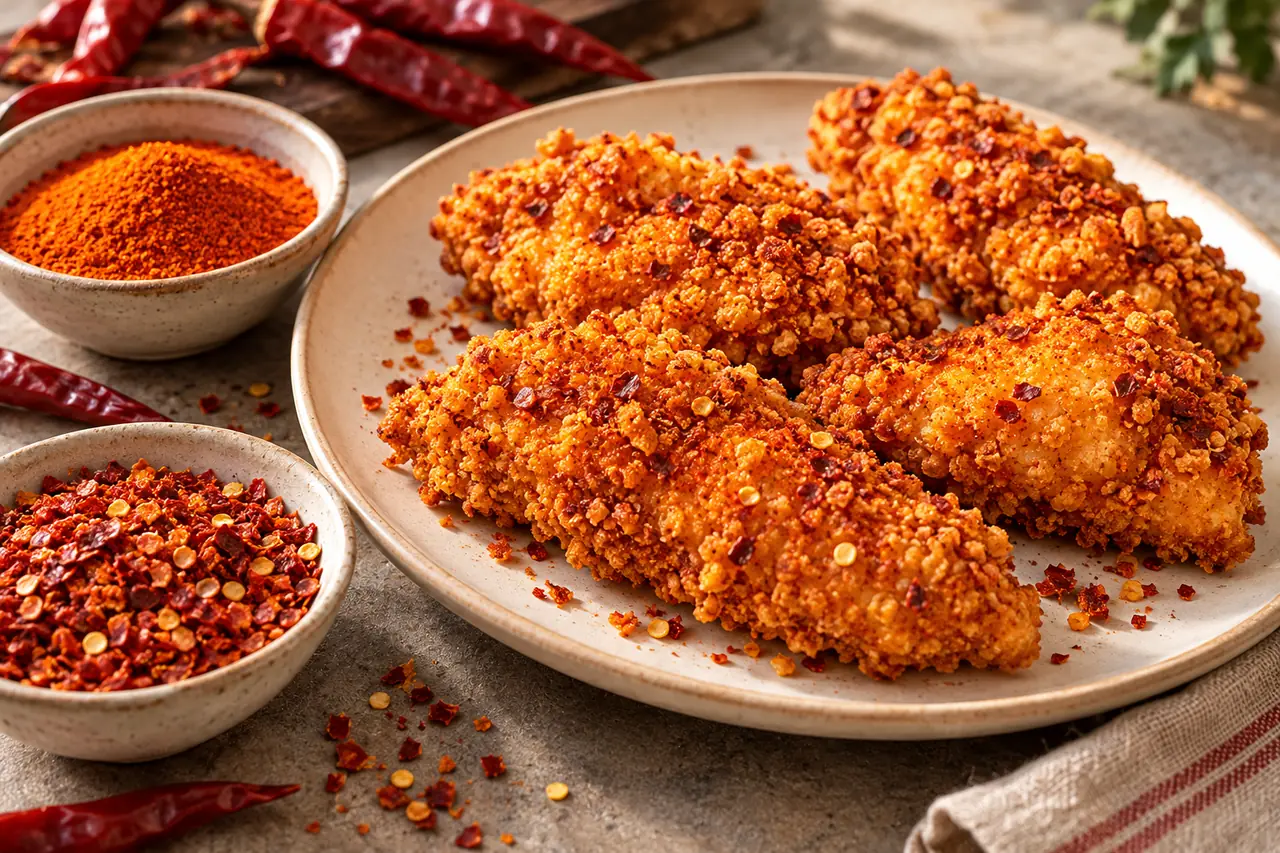
- Powder route
- Cayenne offers nominal 60 mesh and a separately selected pungency profile for the coating background.
- Visible-piece route
- Raw red chili flakes need a defined cut, seed condition and fine fraction.
- Cooked endpoint
- Compare crust distribution, local heat and retained pieces under the same coating route.
Prepare the pepper for predust, batter or crumb
A batter powder and an outer-crumb inclusion require different physical preparations.
- 01Predust
Use a powder for an even seasoning background; inspect dry pockets after the wet layer is added.
- 02Wet batter
Compare powder dispersion in the actual batter before blaming coarse particles on the breadcrumb.
- 03Outer crumb
Use defined flakes when visible red pieces matter, then assess their retention through handling and cooking.
At RELIA SPICES, we clean and destem purchased dried chilies, then grind or cut, sieve and pack the agreed preparation. For predust or batter, discuss powder distribution and unwanted coarse residue. For outer crumb, define the visible cut, loose seeds and fines. Those are separate ingredient choices.
Moisture and particle checks are internal; ASTA, SHU and microbiology use external laboratories. We can select in-house steam microbial reduction according to your order requirement. Tell us the pepper's addition point so the proposed treatment addresses the actual ingredient use.
Compare powder and flake preparations
Select Cayenne heat independently; a fine red powder's name does not settle its pungency.
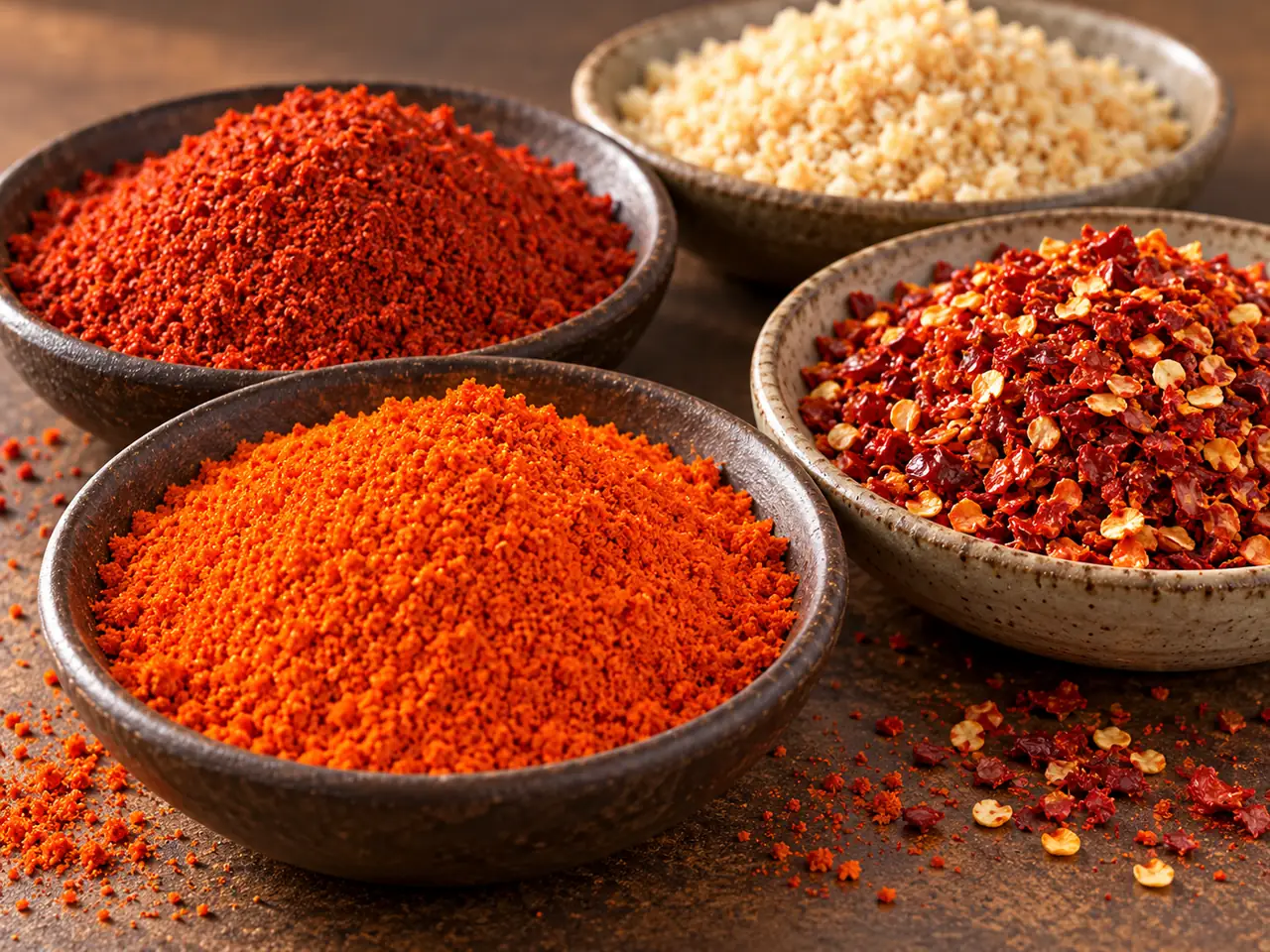
Our Cayenne powder states nominal 60 mesh, customizable 60–70 mesh, moisture ≤9% and customizable 80–220 ASTA colour. It is a practical first powder candidate, not a fixed heat grade. The fine red pepper powder gives 60–70 mesh or a customized grind, but its hot-pepper naming coexists with a mild, sweet, non-spicy flavour description. Resolve the actual proposed heat before substitution. For a visible outer layer, the raw red chili flakes are a separate candidate whose actual cut and seed content need definition.
Ingredients to compare for this application
Cayenne powder for coating background
A defined powder starting point for predust or wet-batter comparisons where visible flakes are unwanted.
- Nominal 60 mesh; customizable 60–70 mesh is a separate reference.
- Moisture ≤9%.
- Mild, medium and hot are selectable descriptions, without a supplied numerical SHU grade.
Raw red chili flakes for crumb
A separate visible-piece candidate for an outer layer where cut, seed content and retained appearance matter.
- Dried raw red chili-flake preparation for seasoning.
- 40–80 mesh and 80/100 mesh are independent unselected references.
- 12 months with sealed, dry storage, subject to actual material and pack scope.
These product specifications are a starting point for selecting a grade. Match the proposed material and sample to your food and order requirements.
Connect the grind to the cooked crust
Specify the coarse tail as well as nominal mesh when hard particles matter.
| Stage | Material decision | Buyer observation |
|---|---|---|
| Cleaning and destemming | Remove unwanted material before reduction | Inspect the proposed pepper preparation |
| Grinding or cutting | Powder for background; defined flakes for visibility | Assess batter distribution or crumb texture |
| Sieving and internal checks | Actual fraction, coarse tail and moisture | Compare recovered coating with fresh blend |
| Selected laboratory tests | Applicable heat and colour evidence | Judge the cooked crust at a matched recipe |
Cleaning and destemming remove unwanted material before grinding makes it harder to distinguish. Grinding creates a powder background; cutting retains visible pieces. Sieving selects a fraction, but nominal mesh does not describe every coarse particle, clump or loose seed.
For Cayenne, nominal 60 mesh and moisture ≤9% describe the incoming ingredient, not a batter setting. Use our physical checks and relevant external colour or heat evidence to identify the proposed material. Your matched coating run then shows distribution, hard bite, local heat and pepper lost with recovered crumb. Keep the breadcrumb system unchanged so its adhesion is not mistaken for a pepper specification.
Make the cooked crust the flavour benchmark
Judge several cooked portions, separating red patches, local heat and hard bite.
- 01Red patches
Open a section of crust to distinguish powder agglomerates from the colour of individual flakes.
- 02Local burn
Taste crust from several positions rather than using one evenly seasoned piece as the whole result.
- 03Hard particles
Separate breadcrumb crunch from pepper skin, seed fragments and any unacceptable coarse fraction.
Prepare an unseasoned coating control, your accepted pepper control and each candidate in the same chicken format. Judge the crust after the intended cooking route and normal delay before eating. Cut several portions to examine coating thickness and the pepper's position rather than photographing only the best surface. Score red appearance, pepper aroma, burn onset and hard particles separately. A darker crust may come from the surrounding coating, so do not infer paprika pigment loss from the outside colour alone.
Follow the pepper through handling
Find when the defect first appears before changing the pepper.
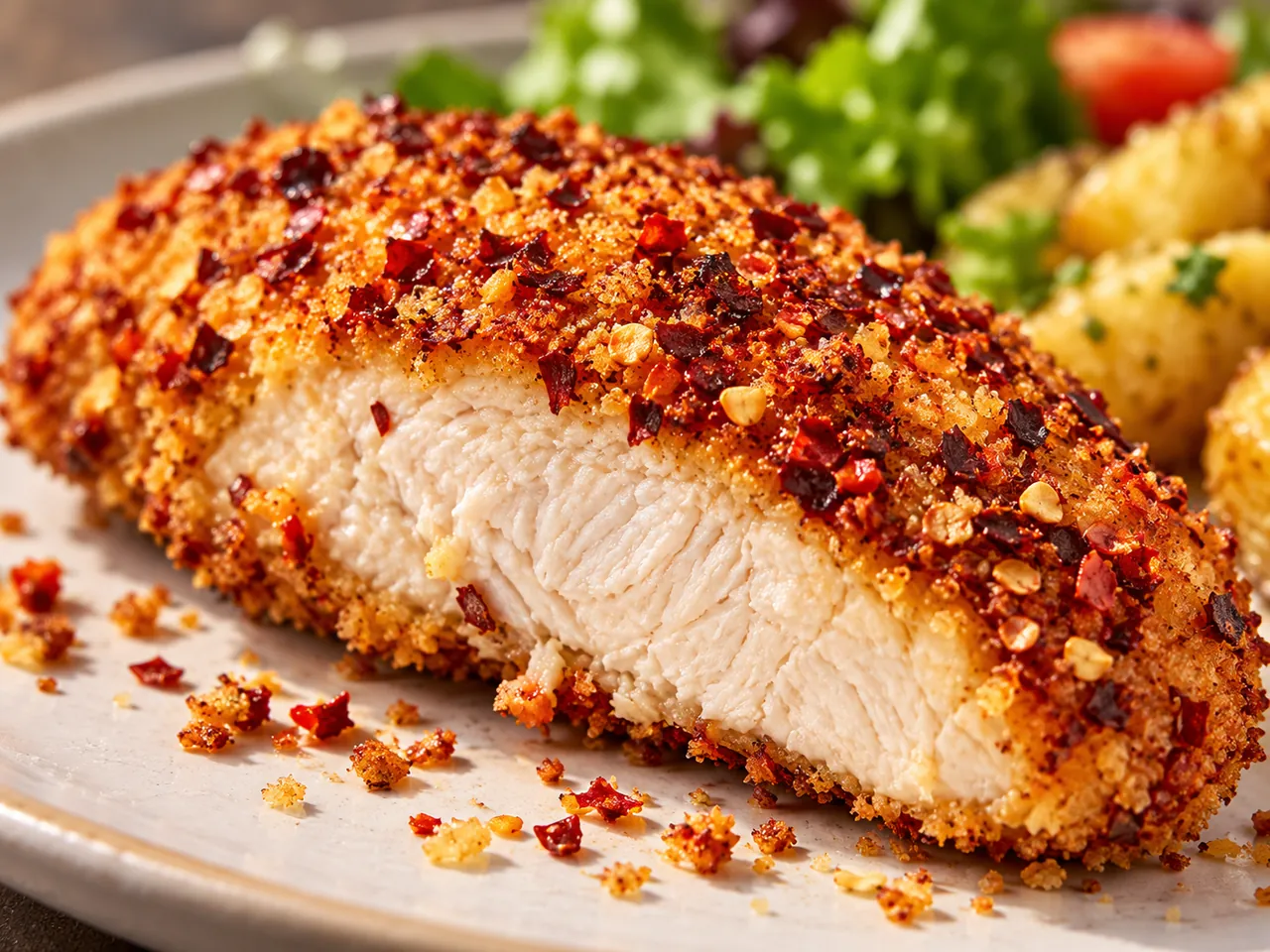
Check the point at which a defect first appears. Uneven red patches in wet coating suggest a mixing or wetting problem; loose red material before cooking suggests a transfer problem; particles lost only after cooking require examination of the cooked coating structure. These are diagnostic possibilities, not proof that the pepper caused the fault. Keep chicken surface preparation, coating pickup, drain time and handling constant. Then compare a narrower particle fraction before changing several recipe ingredients together.
Record coating loss without assigning the cause too early
Lost crumb weight alone does not measure lost chili.
- 01Before handling
Inspect distribution on coated pieces before transfer or recovery changes the mixture.
- 02After handling
Collect loose crumb and pepper separately where practicable; compare their composition, not only total loss.
- 03After cooking
Decide whether the remaining visible pieces, crust flavour and hard-particle sensation still meet the brief.
Use a defined amount of coating blend and collect the actual discard, recovered dry fraction and cooked loose crumb separately. Examine their pepper content visually or by a suitable analytical method: weighing all lost crumb cannot establish how much chili was lost. Compare first-pass and recirculated coating in a small controlled run. If flavour becomes inconsistent while total pickup stays similar, investigate segregation and concentration rather than immediately increasing the pepper addition. This gives purchasing a reason to specify distribution, not just a low ingredient price.
Select the treatment alongside the coating ingredient
Match selected ingredient treatment to its addition point in the coating process.
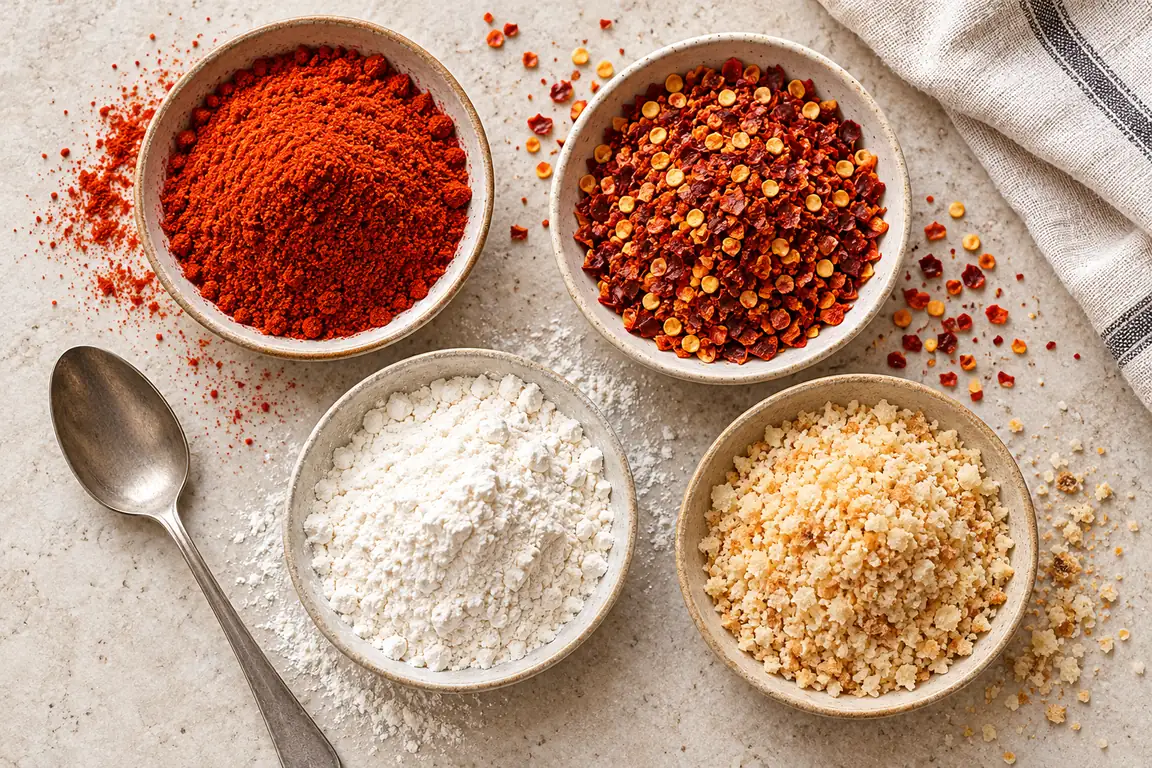
RELIA SPICES has in-house steam microbial-reduction equipment and uses it according to order requirements. Tell us which coating layer receives the pepper and what your food-safety team requires for the actual material. Cleaning, destemming and particle preparation address different tasks from microbial treatment. A selected steam process needs its applicable execution and acceptance evidence; equipment availability does not make every raw or stir-fried listing a treated lot. We test moisture and particles internally, while microbiology, ASTA and SHU go to outside laboratories. Keep those ingredient decisions separate from the chicken process and cooked-crust approval.
Compare offers at the same coating endpoint
Compare the preparation cost at an acceptable cooked-crust result.
- ✓Same layer
A batter powder and an outer-crumb inclusion are different inputs even when both are called chili.
- ✓Same cooked endpoint
Compare dose, retained appearance and flavour under the same coating and cooking route.
- ✓Same responsibility
Price the specified preparation and treatment scope, including any work your operation still performs.
Compare the delivered cost of the actual preparation at an acceptable crust result. A cheaper powder that requires a different dosage, produces reject portions or behaves differently in recovered crumb may not be the lower-cost option. Keep ingredient usage, acceptable finished portions and measured coating losses on the same production boundary. Do not charge every coating loss to pepper. A useful factory discussion separates a change in the supplied grind from a change in your crumb system, so the next comparison answers one practical question.
Send a coating-layer sample brief
A cooked reference and layer-specific defect make the sample enquiry useful.
- 01A useful enquiry
Identify the layer and send a cooked reference plus photographs of red patches, lost pieces or gritty crust.
- 02A useful offer
Name the powder or defined flake fraction and its applicable composition and treatment; agree current terms separately.
Name predust, batter or outer crumb and link the powder or flake candidate. Send a cooked reference and photographs of the actual defect: red clusters, loose pieces, gritty crust or uneven heat. Include the breadcrumb or batter background, recovery route, desired cut and treatment requirement. We can then discuss the preparation, sample scope, package and quantity for that specific coating job.
- Coating layer
- Powder or visible-particle target
- Coating base and recovery route
- Cooking and sampling endpoint
- Colour and heat reference
- Quantity, package and document needs
Your next purchasing decision
Discuss a pepper preparation for your chicken coating
Ask for a powder or flake preparation for one named coating layer.
Send your predust, batter or outer-crumb brief to Qingdao Relia Spices Co., Ltd. / RELIA SPICES. Include a cooked reference and distinguish powder distribution from visible-flake retention.
The enquiry page keeps this guide with your message. Add your quantity and destination so we can discuss the relevant material.