
Hot Chili Powder Packed Under Your Brand
Choose a Cayenne powder for the heat, pepper flavour and texture your customers expect in food. We manufacture chili powder in China and can fill retail packaging with your branding.
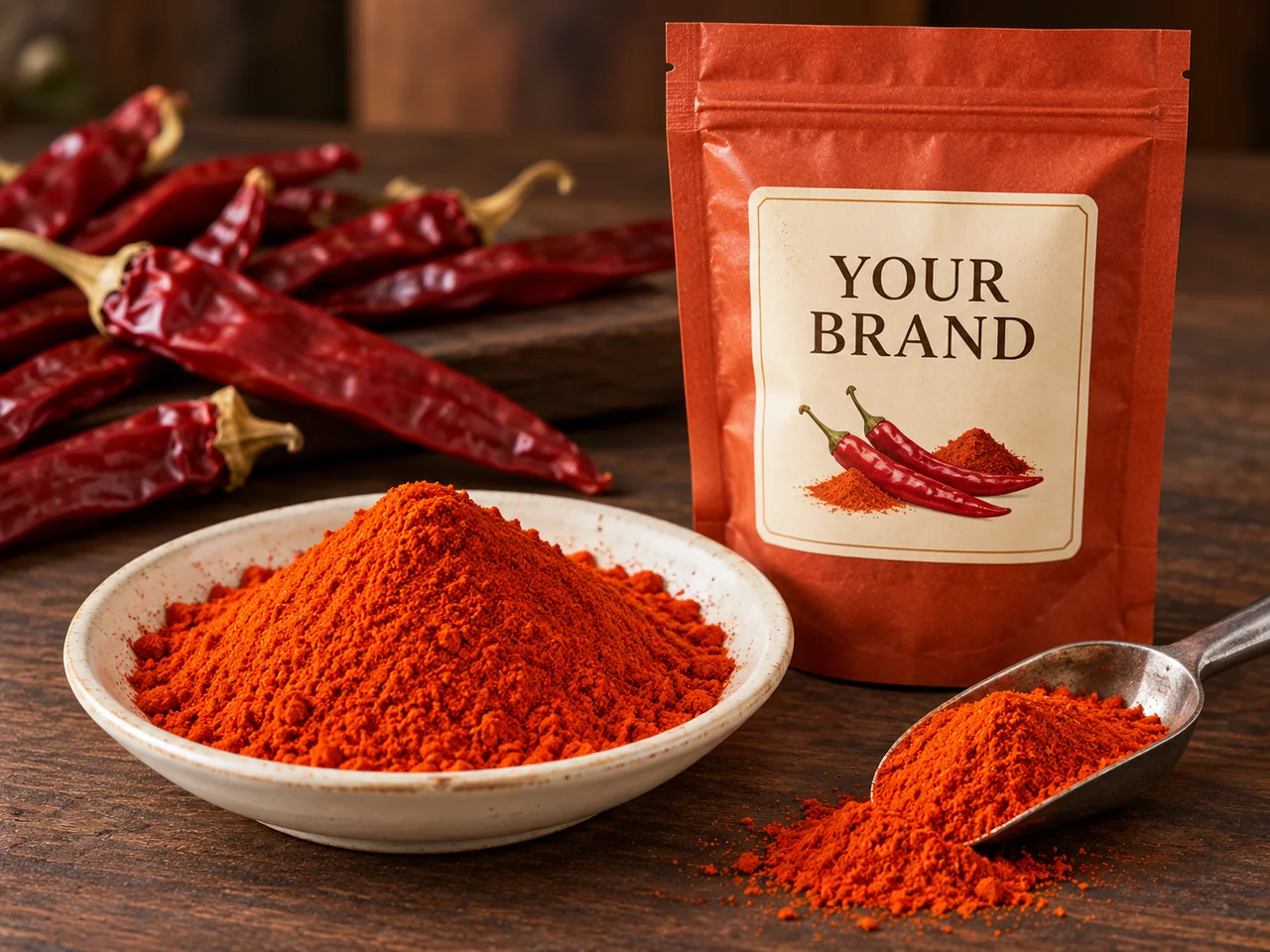
Packaging and project details
Compare the customizable qualitative heat options with the separate hot-spicy Cayenne candidate, then send your food reference, particle requirement and package proposal. We can assess supplied packs or assist with branded packaging for a project-specific offer.
Connect the heat choice to the customer's use
- Heat and flavour
Start with an accepted food reference and the amount normally used.
- Powder preparation
Select composition and particles for the same food and dispenser.
- Retail delivery
Assess the approved powder in its proposed own-brand package.
Bring Your Heat Brief into Manufacturing
Our confirmed powder preparation and retail filling can address one defined product.
RELIA SPICES prepares purchased dried chilies in-house: cleaning, foreign-matter removal and destemming precede grinding, sieving and packaging. For your brand, we can supply the selected chili powder and fill retail packaging carrying your logo.
Link heat selection and packaging
Send the food reference, heat requirement and pack proposal together. We can assist with making printed branded packaging or assess packs you provide, connecting powder acceptance and the filling task before the commercial scope is settled.
Turn a customer expectation into one product brief
- Describe the food
Show the current reference, usual dose and expected heat experience.
- Select the powder
Agree composition, heat basis and particle acceptance.
- Assess retail packing
Review the proposed package, dispensing and branding supply route.
Choose Between Two Cayenne Candidates
The hot-spicy description and customizable heat options belong to separate materials.
The Cayenne red pepper powder has nominal 60 mesh, separate 60–70-mesh customization and qualitative mild, medium or hot options. Its own specification also lists 80–220 ASTA customization, moisture ≤9%, dried red pepper composition and no additives. Choose the qualitative heat grade in your reference food, and request an applicable SHU result when numerical heat acceptance is needed.
Compare the separate hot-spicy powder
The separate Cayenne powder is described as hot spicy with a 60Mesh reference. Compare its complete composition, preparation and food result independently. Its name does not make it the same material or transfer the first candidate's no-additives declaration and other specifications.
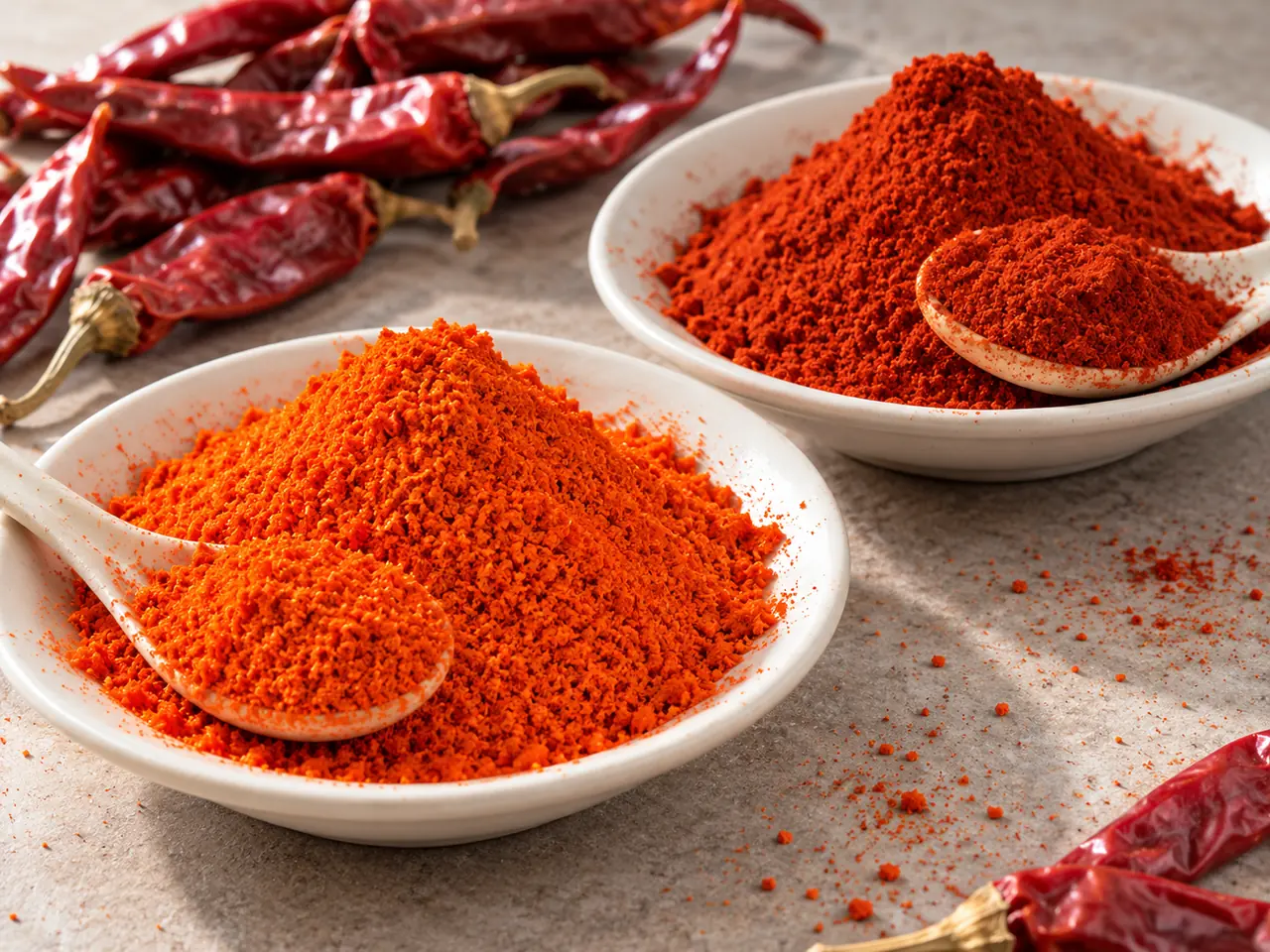
Keep each Cayenne specification attached to its material
Cayenne powder with qualitative heat options
Compare a selected mild, medium or hot grade when the retail product needs a defined heat-and-grind brief.
- Grind references
- Nominal 60 mesh; separate 60–70 mesh customization
- Pungency options
- Mild / medium / hot, qualitative and customizable
- Declared composition
- Dried red pepper; no additives declared
Separate hot-spicy Cayenne powder
Evaluate a separate hot-spicy candidate in the reference food while defining its own composition, preparation and receiving conditions.
- Particle reference
- 60Mesh, with sieve standard and method to agree
- Taste descriptor
- Hot spicy
- Ingredient storage reference
- Two years; actual normal-temperature warehouse and package conditions to agree
Review the selection criteria
- Heat-grade options candidate
- Nominal 60 mesh Mild, medium or hot are qualitative choices; select the proposed grade.
- Separate hot-spicy candidate
- 60Mesh reference A distinct powder with its own composition and preparation brief.
- Useful comparison
- Evaluate both identified samples in the same food and dose before choosing.
Set Heat Acceptance in the Ingredient and Food
An ingredient SHU result and the heat experienced in a recipe serve different decisions.
Capsaicinoids create pepper pungency. Laboratory analysis can quantify them and support a reported SHU value; the customer's recipe and use level still determine the practical eating result.
Define analytical and sensory heat
If numerical heat acceptance matters, specify the method and reporting basis for the actual powder. In the food trial, compare onset, intensity and lingering heat alongside pepper flavour. Keep the same preparation and serving conditions so a sample difference is not confused with a recipe change.
Connect analytical heat with the eating result
- Ingredient analysis
An identified sample, applicable method and numerical reporting basis.
- Food comparison
The same base, weighed addition and serving conditions.
- Acceptance decision
Select a powder that meets the ingredient criterion and the desired food experience.
Use Grinding and Sieving to Select Fineness
Particle preparation changes the powder form without proving its heat level.
Cleaning and destemming prepare the dried input before size reduction. Grinding creates a population of particles; sieving separates fractions around the agreed physical requirement before packaging.
Check fineness separately from heat
Define the coarse specks or fine fraction that matters to your food and dispenser. Compare the actual sieve distribution and sample rather than treating nominal 60 mesh as one particle size. Heat remains a separate criterion: a finer-looking powder does not establish capsaicinoid content.
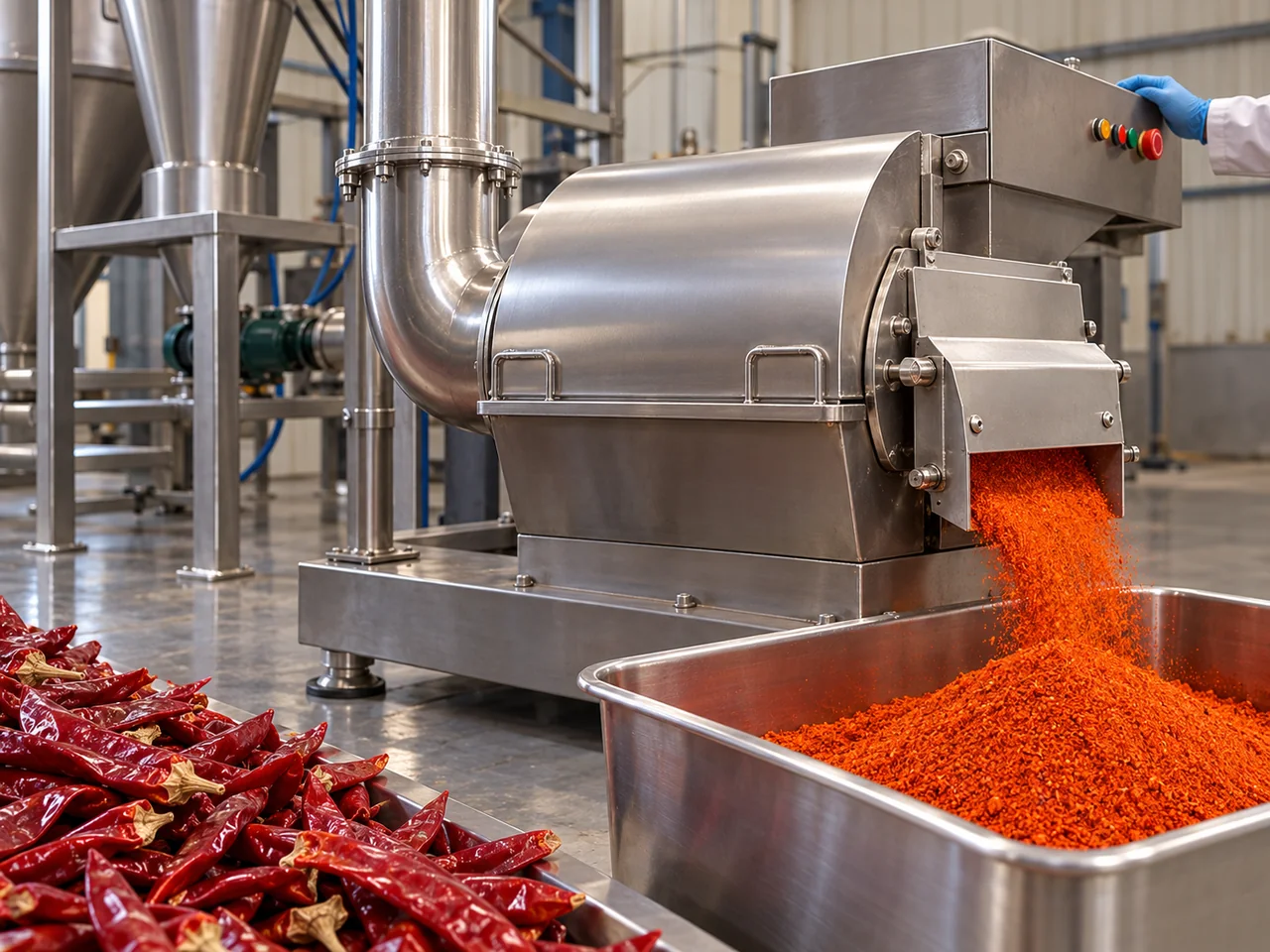
Prepare and check the powder's physical form
- Clean and destem
Prepare purchased dried input before grinding.
- Grind
Reduce the material to a powder particle population.
- Sieve
Select against the agreed standard and fraction requirement.
- Check the application
Assess visible specks, texture and dispensing with the selected sample.
Compare Hot Powders Without Hiding Differences
Start at the current dose before using formulation changes to compensate.
Prepare the current reference and proposed Cayenne samples in the same food at the same weighed addition. Hold preparation and serving conditions steady. Compare heat, pepper flavour, colour and visible particles as separate observations.
Review any permitted dose change
Explore an allowed dose change only after that first screen. Record whether the selected powder works at the current dose or needs a revised formulation, so a heat match does not conceal an unwanted flavour or texture change.
A controlled comparison identifies the useful grade
- Hold conditions steady
Use the same food base, preparation, starting dose and serving conditions.
- Separate observations
Judge heat, flavour, colour and particles individually.
- Adjust deliberately
Test an allowed dose change after preserving the first comparison.
- Record the selected use
Identify the powder and whether approval requires a recipe change.
Choose the Evidence and Treatment You Need
Internal physical checks and external analyses describe different parts of the product.
Routine moisture and particle checks are internal. SHU, ASTA and microbiology are outsourced to laboratories. State the material, methods and result scope your product needs so the checks support the actual heat and physical specification.
Evaluate the selected steam route
Our in-house steam microbial-reduction equipment is used according to order requirements. If steam is selected, evaluate that preparation in the food and pack trial. Neither a hot taste nor equipment availability establishes a microbial reduction result or ready-to-eat status.
Match responsibilities to the product decision
- Internal physical checks
Routine moisture and particle information for the agreed material.
- External analyses
Relevant SHU, ASTA and microbiology results with their applicable scope.
- Order-specific steam
Select treatment for the order rather than assuming universal treatment.
- Brand approval
Evaluate the selected preparation in the intended food and package.
Assess the Filled Pack and Dispensing
A fine-looking powder still needs to fill, close and dispense suitably.
Provide your proposed package material, dimensions, closure and net content. We assess customer-specified packaging and can assist with branded packaging production or accept packs you supply, subject to that assessment.
Assess filling and consumer dispensing
Use the selected powder to examine visual fill after settling, closure and dispensing after expected handling. Check how the opening delivers the amount a customer intends to use. Treat jars, pouches or other formats as project proposals rather than a fixed supported-container catalogue.
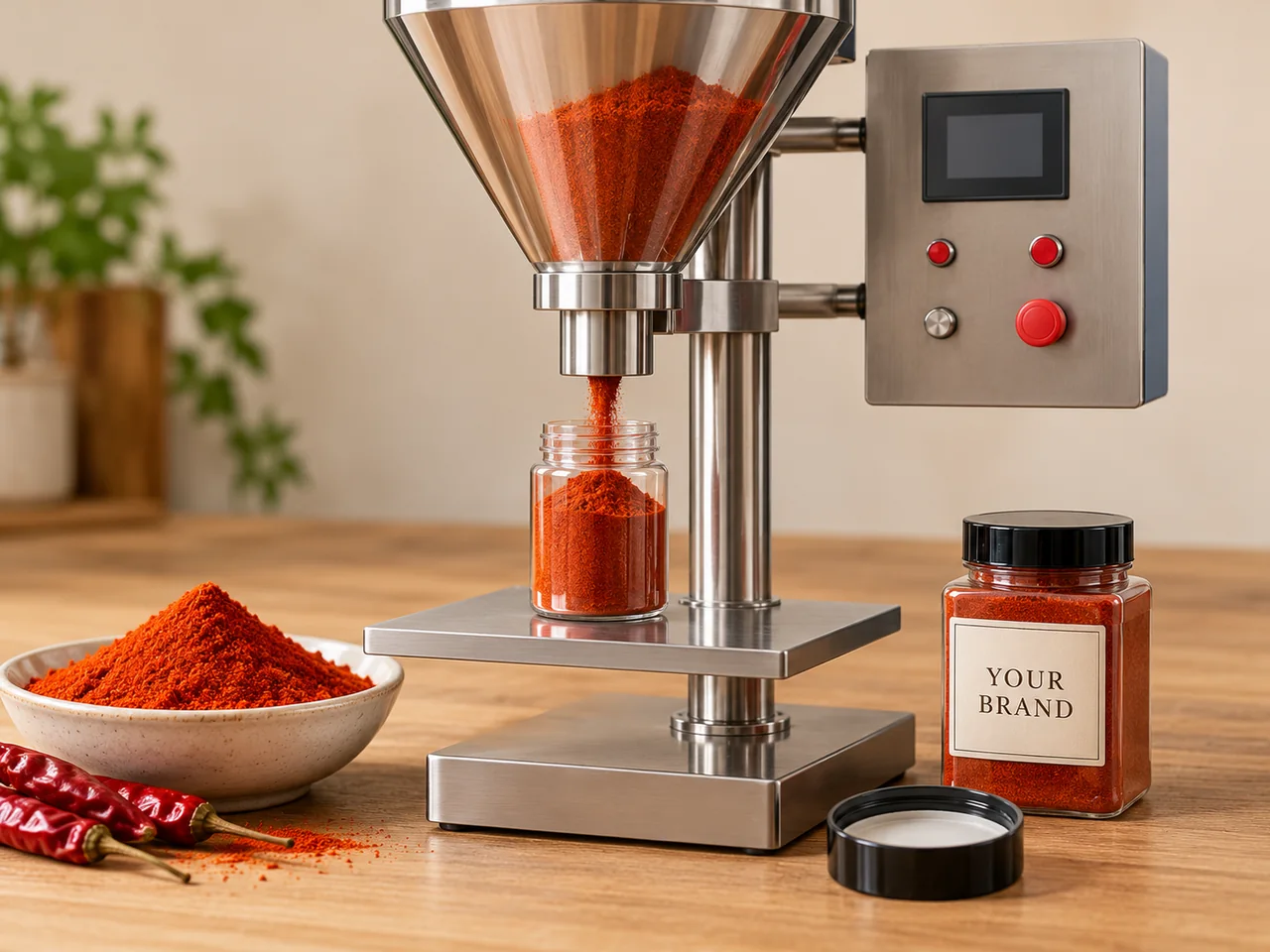
Check how the customer will receive and use it
- Package fit
Assess the proposed material, dimensions and closure for this powder.
- Fill presentation
Compare the intended mass and appearance after settling.
- Dispensing
Try the opening with the selected grind and normal food-use task.
- Handling
Inspect closure and powder escape after expected distribution handling.
Base the Retail Description on the Selected Powder
Use the selected composition, heat basis and finished-pack conditions for the brand product.
Use the selected composition, supported heat wording and preparation instructions in the product brief before artwork approval. Keep the complete declaration specific to the actual Cayenne powder; qualitative hot wording alone cannot support a numerical label claim.
Keep storage with its own ingredient
The first candidate lists moisture ≤9% and a 12-month ingredient duration with temperature ≤25°C and humidity ≤60%. The separate candidate states two years with normal-temperature warehouse storage, whose actual conditions and package must be agreed. Neither statement alone establishes the date for a new retail pack.
| Your input | Factory assessment focus | Decision to confirm |
|---|---|---|
| Heat brief Customer food, desired pepper profile and analytical acceptance basis. | Proposed chili grade; discuss SHU testing through an outside laboratory. | Selected ingredient and the comparison or test basis. |
| Physical form Acceptable coarse particles, dispensing and intended fill. | Powder-preparation and pack assessment for that selected material. | Packaging format, component responsibilities and approval references. |
| Order review Treatment requirement, logo files, quantity and destination. | Confirm the grade, required treatment and packaging scope in the quotation. | Agreed product, packaging and order scope for quotation. |
This is a planning handover for your enquiry. Packaging, MOQ, net content and timing are assessed and quoted for the product, format, printing method and quantity.
Request an Offer for the Defined Hot Product
A useful offer joins powder acceptance, packaging and order requirements.
Send the accepted food reference or customer specification, heat criterion, particle requirement and package proposal. Add the branding route, quantity and destination so sample selection and the offer describe the same product.
Include retail work in the quotation
MOQ, net content and lead time are quoted per product, packaging specification, printing method and quantity. Include any selected steam requirement and analytical work when comparing offers, rather than comparing ingredient price while the retail scope differs.
Make the offer comparable and actionable
Review the next-step choices
- Powder acceptance
- Composition, heat, particle criteria and an accepted food reference.
- Retail execution
- Proposed pack, net content and assisted or supplied branding route.
- Order scope
- Quantity, destination, timing and required treatment or analyses.
Talk Through Your Branded Hot-Chili Product
Share the heat your customer needs and the way the powder will be used.
Tell RELIA SPICES the food your customer prepares, its accepted heat reference and normal use level. Include composition or particle limits that must stay unchanged.
Add your pack and order requirements
Qingdao Relia Spices Co., Ltd. can discuss the selected Cayenne powder and factory-filled retail scope. Send your package proposal, branding route, quantity and destination to develop a focused offer.
Start with one identifiable hot-chili product
- Food target
Reference food, use level and the heat experience to preserve.
- Powder target
Candidate link, composition and heat/particle acceptance basis.
- Pack and order
Package proposal, branding route, quantity and destination.