
Chili Powder Selection for Smooth Sauce Formulations
For a smooth sauce, choose chili powder by the particles that remain noticeable after your normal mixing and finishing. RELIA SPICES can discuss grinding and sieving to control the supplied coarse fraction. First separate persistent skin or seed pieces from powder clumps that disperse during mixing. Send the sauce reference, permitted liquid amount and finishing method so the next powder comparison targets the real texture problem.
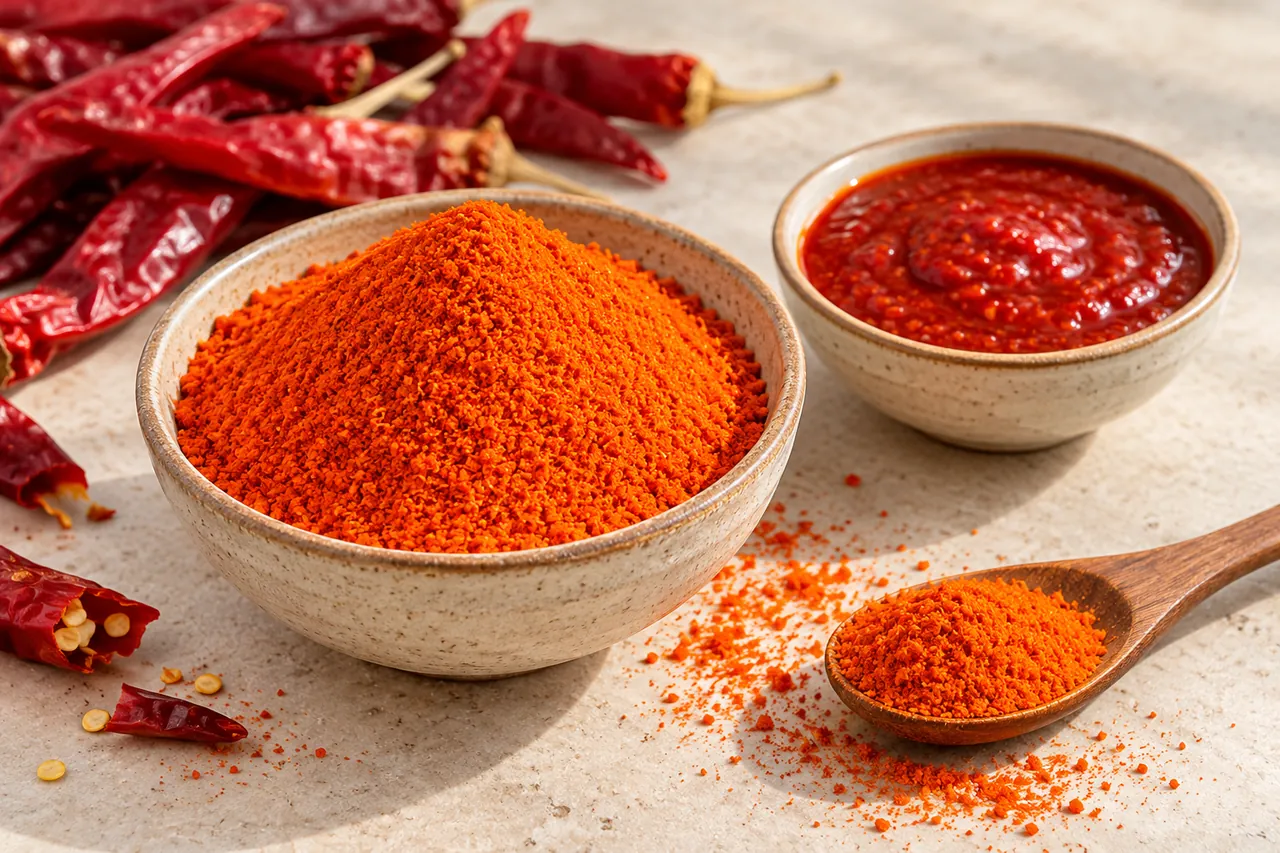
- Powder candidates
- Cayenne and Gochugaru-described powders list 60 mesh; the sauce powder lists 60–70 mesh/customized.
- Texture diagnosis
- Separate persistent coarse pieces from powder clumps with dry centres.
- Recipe boundary
- Assess smoothness without hiding extra water or finishing work.
Choose a grind that addresses the sauce defect
Grinding and sieving address particles; the addition route addresses some clumps.
- 01Persistent piece
Discuss the coarse fraction, skin or seed condition.
- 02Dry-centred cluster
Compare incoming clumps and the permitted addition sequence.
- 03Accepted sauce
Keep smoothness, body, colour and flavour together.
RELIA SPICES cleans and destems purchased dried chilies, then grinds, sieves and packs the selected powder. For smooth sauce, describe persistent coarse material as well as the main grind. Cayenne powder lists nominal 60 mesh and moisture ≤9%; Gochugaru-described powder lists 60 mesh and moisture ≤7%.
The noodle-and-sauce powder lists 60–70 mesh/customized grind and moisture ≤9%, with its actual flavour grade to select. We check moisture and particle size internally, use outside laboratories for ASTA, SHU and microbiology, and select in-house steam treatment according to order requirements. Compare the named grade and supplied preparation in the same sauce.
Compare the three powder listings on their actual profiles
Select the actual pepper profile as well as the grind.
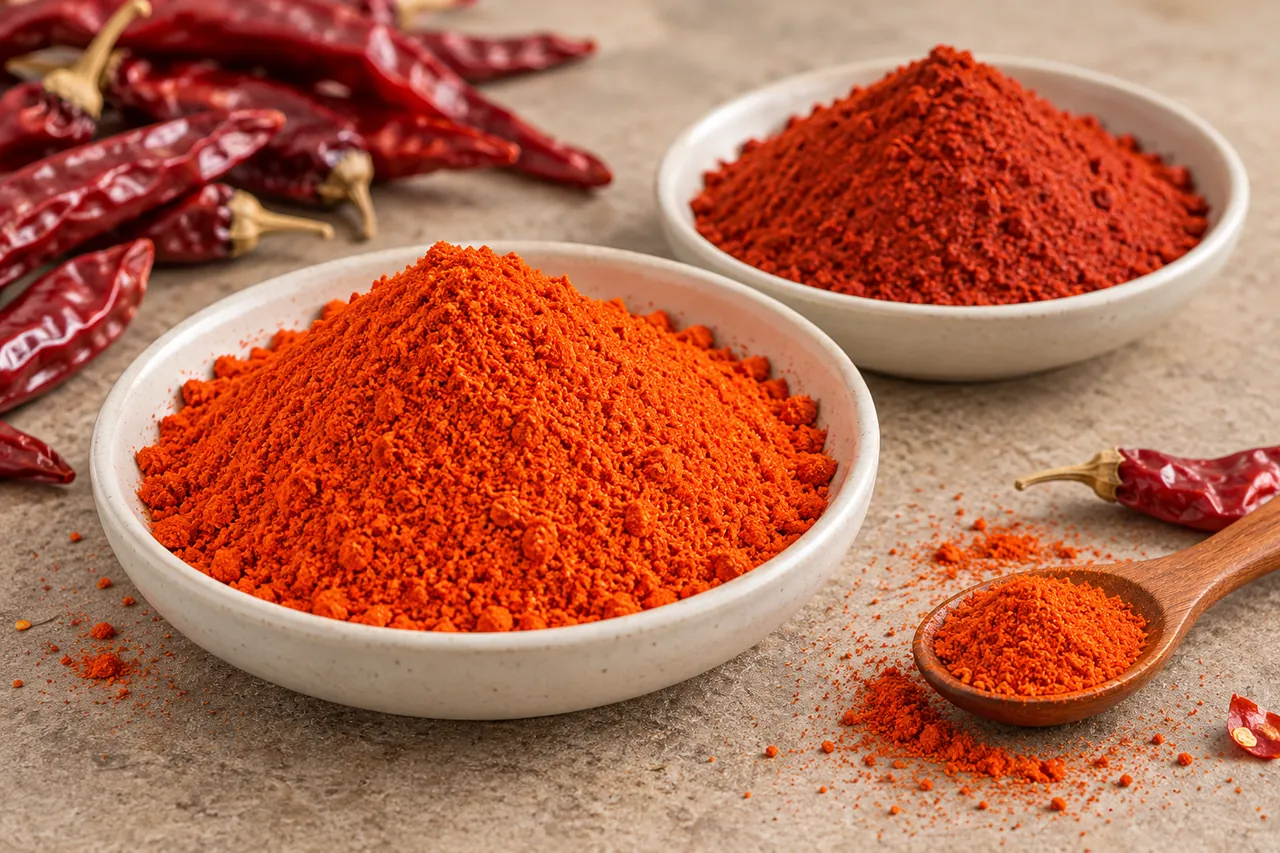
The Cayenne powder offers nominal 60 mesh, customizable 60–70 mesh, moisture ≤9% and qualitative heat choices. The Gochugaru-described powder separately states 60 mesh and moisture ≤7%. The noodle-and-sauce red pepper powder describes 60–70 mesh or customized grind and moisture ≤9%, but combines hot-pepper naming with mild/non-spicy wording. Resolve that actual named flavour grade before a texture comparison. All three are powder candidates; matching the number alone would miss consequential recipe differences.
Ingredients to compare for this application
Cayenne powder for sauce comparison
A ground candidate when you need to select flavour, heat and coarse-particle acceptance together.
- Nominal 60 mesh
- Moisture ≤9%
- Sauce-production use listed
Gochugaru-described chili powder
Compare a distinct powder profile while keeping the same sauce and texture test.
- 60-mesh reference
- Moisture ≤7%
- Strong, pungent flavour description
Fine red pepper powder for sauce
A sauce-listed candidate with a grind scope to agree alongside the actual flavour grade.
- 60–70 mesh or customized grind
- Moisture ≤9%
- Sauce and food-processing uses listed
These product specifications are a starting point for selecting a grade. Match the proposed material and sample to your food and order requirements.
Specify the particles your sauce cannot accept
Ask for the coarse fraction relevant to the sauce, not nominal mesh alone.
| Sauce observation | Inspect first | Useful next comparison |
|---|---|---|
| Persistent skin or seeds | Actual coarse fraction | A different grind or sieved preparation |
| Clumps with dry centres | Incoming condition and wetting | Permitted addition order or dispersion |
| Smooth but wrong body | Liquid and finishing changes | Same formula before accepting the new route |
Describe whether the problem is a visible speck, a coarse sensation or a cluster that breaks during mixing. Use the agreed sieve standard and pass-or-retain criterion for the relevant fraction, then examine the actual sauce after finishing.
A nominal mesh number does not describe every particle. Nor does it establish whether your mixer will wet the powder adequately. Keeping those two questions separate makes the sample request more useful.
Separate wetting problems from persistent coarse texture
Open a cluster before deciding whether the powder needs finer grinding.
- 01Before mixing
Identify coarse pieces and powder clumps separately.
- 02After dispersion
Check which clusters break and which individual particles persist.
- 03After finishing
Approve particle feel and body within the permitted formula.
A powder cluster can be wet outside and dry inside. An individual skin or seed fragment is different: mixing may distribute it without removing the coarse sensation. Check which object remains before choosing finer powder.
Use the actual water–oil composition, salt content and acidity at one powder dose. Hold addition order and mixing steady, inspect a consistent sauce smear, and open representative lumps. Repeat after normal heating, cooling and finishing. If extra water or wet milling improves texture, evaluate that as a second version and recheck body, flavour and cost. Send persistent-particle observations to RELIA for a grind discussion; use a wetting-only problem to guide the addition trial.
Choose where further size reduction belongs
Compare ingredient grinding with any extra wet finishing your plant would retain.
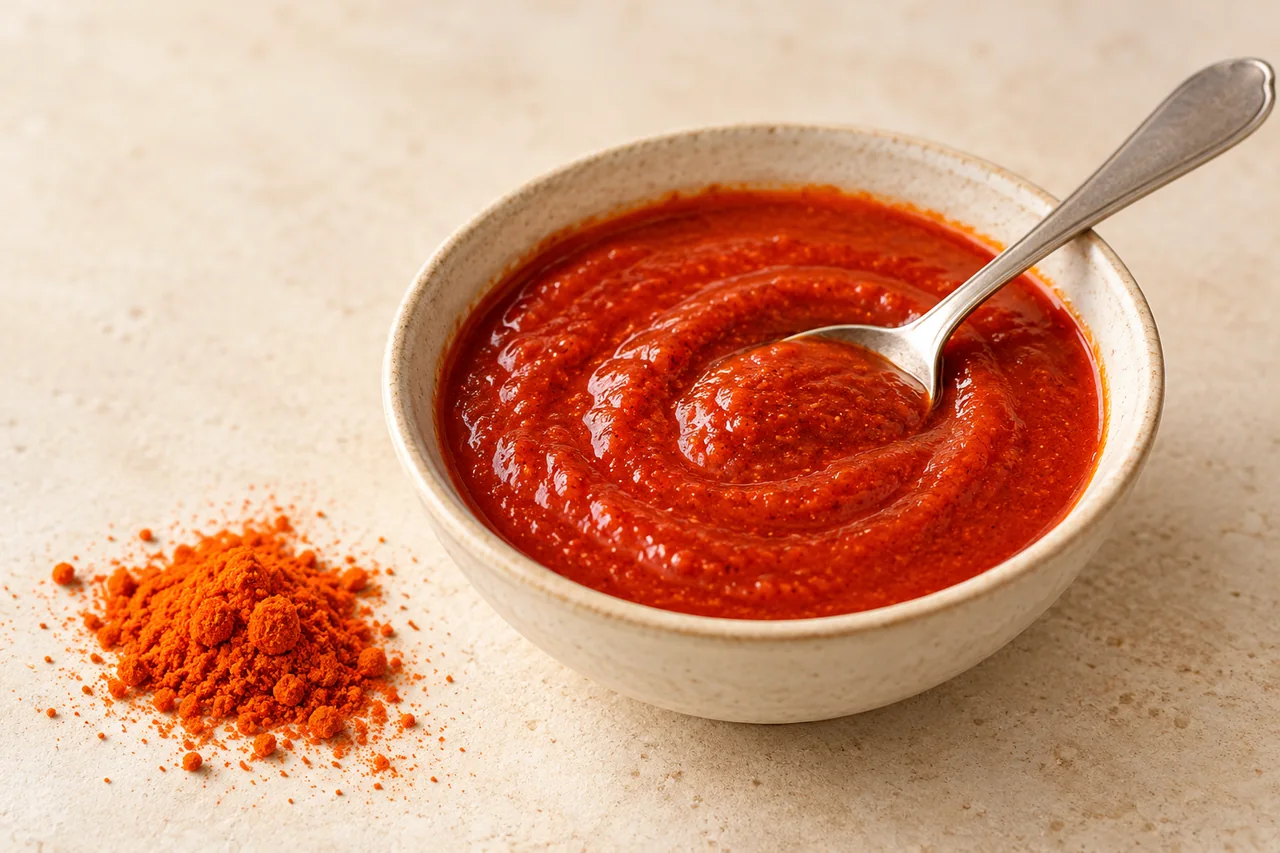
Compare an agreed RELIA grind and sieve preparation under your current sauce process with any wet milling or other finishing step your operation permits. Keep the material entering and leaving that step identifiable, including its coarse tail and actual sauce condition.
Our in-house grinding is an ingredient-manufacturing step. Your wet finishing is a separate process decision and should be costed with the changes it makes to sauce colour, flavour and body, not accepted only because visible particles become smaller.
Evaluate after the real heat and cooling sequence
Recheck texture after heating and cooling at the accepted serving condition.
- 01After mixing
Record wetting and particle distribution before later processing.
- 02After finishing
Judge the effect of the actual heat or mechanical route.
- 03At use
Assess the cooled or served product under the accepted method.
Take consistent samples after dispersion and after the actual heating, cooling and holding steps. Inspect lumps, particle feel, colour and separation using the same methods and temperature. If a material performs well before heating but not afterwards, retain both observations instead of averaging them into a general texture score. A smooth-sauce decision must include the product stage that matters to sale or use, while safety and shelf-life acceptance remain the responsibility of the applicable validated process.
Check heat and pepper flavour alongside a texture match
A texture match still needs the right flavour and heat.
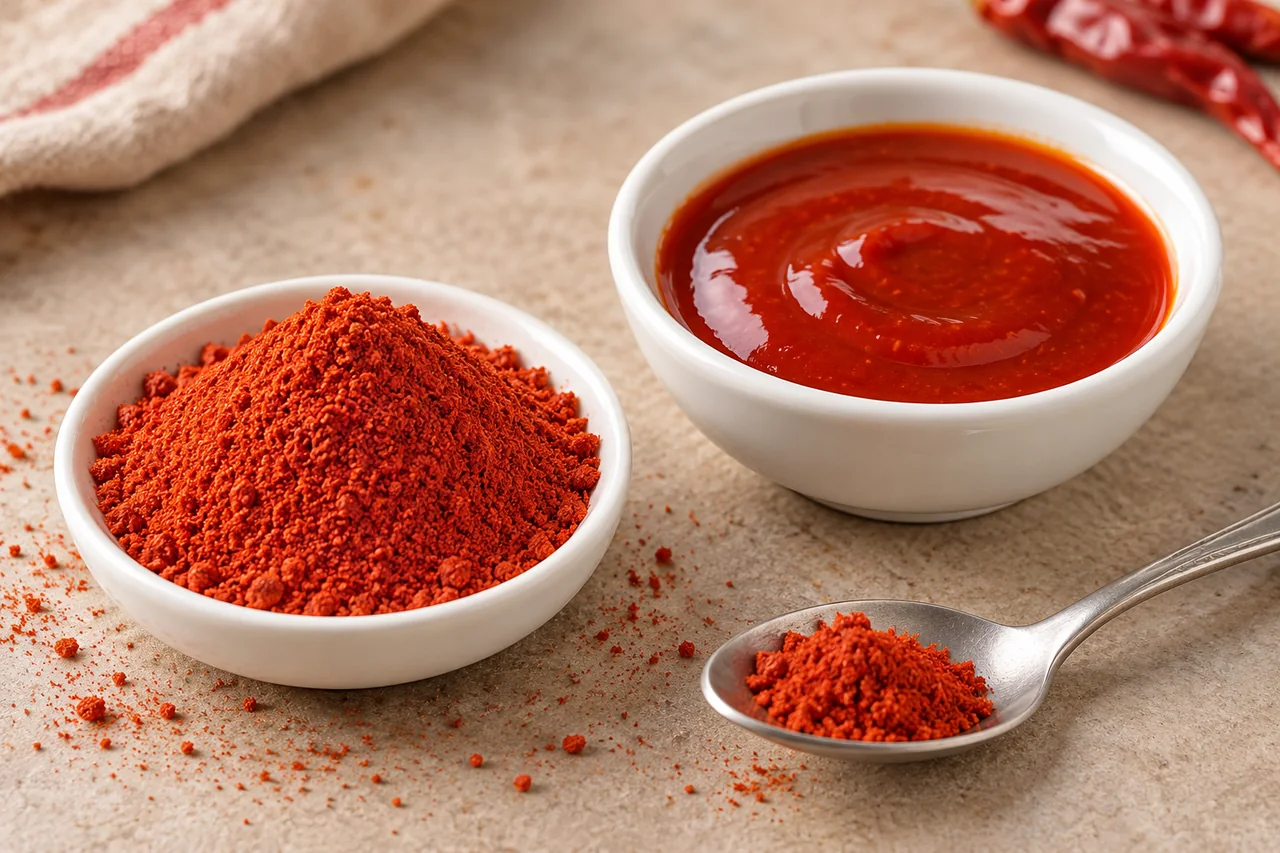
Taste the same sauce at the selected dose before calling powders equivalent. A grind change may produce a smooth result while the pepper character or heat misses the formula. The catalog's mild, medium or hot wording is a selection direction, not a numerical SHU value. Likewise, the conflicting flavour terms in the noodle-and-sauce candidate need an actual sample and grade rather than whichever adjective best fits the desired answer.
Compare the accepted route rather than only powder price
Include extra liquid, screening and finishing in the accepted-route cost.
- 01Material input
Compare identified grades and their complete ingredient declarations.
- 02Buyer work
Include measured dispersion, screening or finishing requirements.
- 03Accepted sauce
Meet particle feel, flavour and appearance at the intended endpoint.
Use material cost together with measured screening loss, finishing work and the addition rate needed for the accepted sauce. Keep each ingredient's own moisture and storage conditions with its receiving plan. The Gochugaru powder's twenty-four-month cool/dry reference and the Cayenne powder's twelve-month controlled-storage statement do not define sauce life. A useful approval identifies the powder, formula and process that met the product criteria, leaving repeat comparisons tied to a real route.
Send a sauce-specific powder brief
Send the unwanted texture and the process steps available to address it.
- 01Describe smoothness
Separate visible particles, coarse sensation and clusters.
- 02Describe the route
Provide the real formula and finishing responsibilities.
- 03Identify the offer
Connect the selected material and actual sample to the accepted sauce.
Send the accepted sauce reference, unwanted particle sensation, fixed liquid/formula boundary and available mixing or finishing steps. We can discuss the named powder profile, grinding and sieve requirement, internal particle and moisture checks and requested treatment. Use the actual sample and finished-sauce observations to define the proposed ingredient.
- Finished texture and reference
- Flavour and use level
- Actual sauce-base composition
- Mixing and wet-milling route
- Distribution and coarse-tail method
- Sample quantity and packaging
Your next purchasing decision
Discuss the powder for a smooth sauce
Discuss the powder distribution that fits your sauce and liquid budget.
Show the persistent particles or clusters and describe the sauce at its real serving temperature.
Include the liquid budget, finishing equipment and desired pepper profile. We can use those details to discuss an actual powder preparation and a focused comparison.
The enquiry page keeps this guide with your message. Add your quantity and destination so we can discuss the relevant material.