
Chili and Paprika RFQ and Sample Comparison Worksheet
Start one RFQ line for each chili or paprika preparation and give the sample a specific comparison task. Use sweet paprika for a colour-led powder line, Cayenne for a separate pepper profile or crushed flakes for visible pieces. Send the product link, addition stage and defect. We can discuss preparation, selected treatment and testing while keeping your requirement, our proposal and the observed sample result in separate fields.
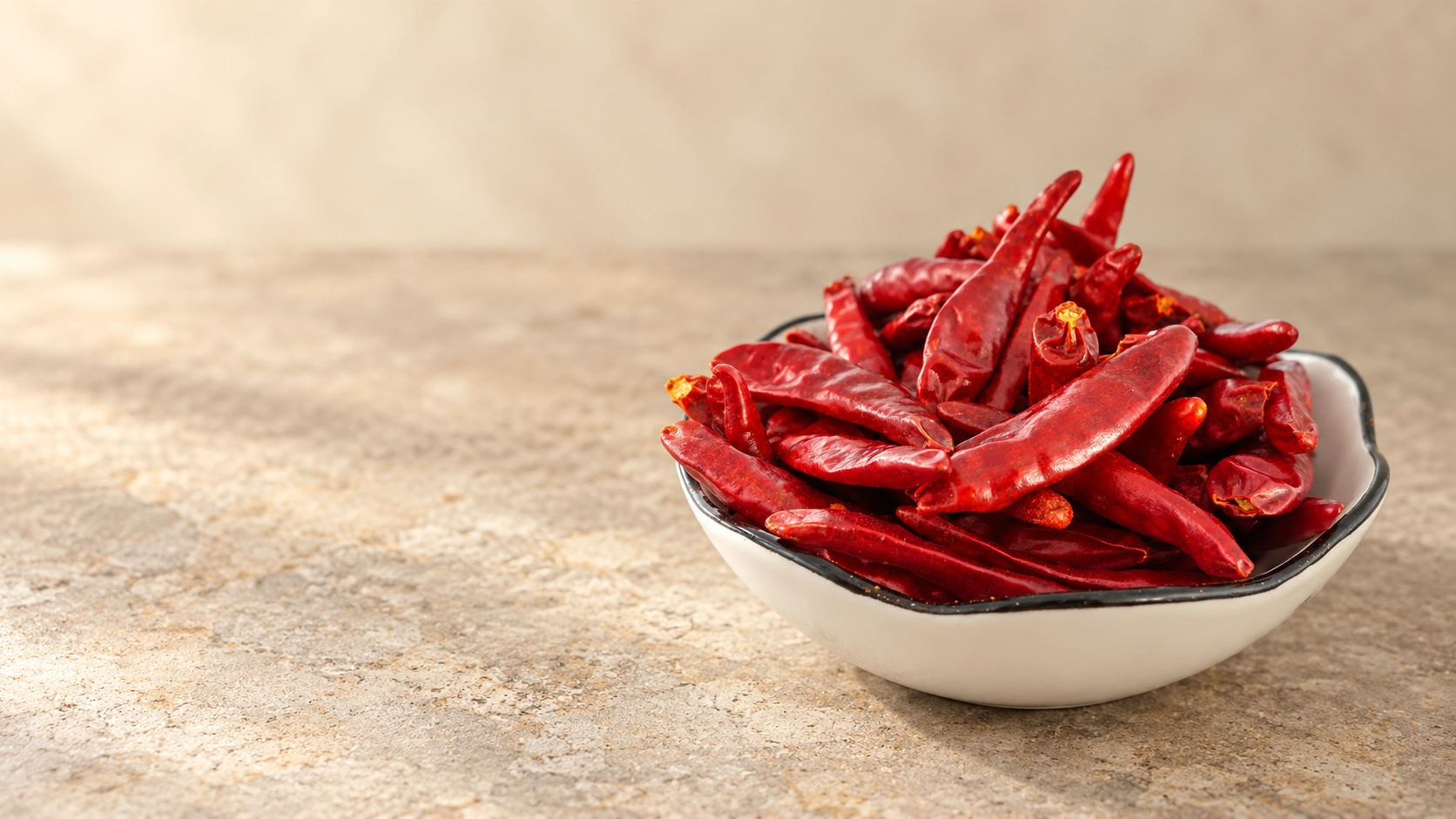
- One line per preparation
- Separate the colour powder, selected heat input and visible-cut request rather than share one physical specification.
- Three evidence fields
- Keep requested criteria, the offered preparation and measured results in separate columns.
- Useful sample task
- Define the food or equipment endpoint before deciding the material and quantity needed for comparison.
Connect each material line to our preparation
Link each RFQ line to a form, addition stage and actual preparation scope.
| Field | Buyer entry | Keep separate |
|---|---|---|
| Material | Current product link and required form | A generic red-pepper name |
| Application | Food base and actual addition stage | A broad industry label |
| Preparation | Powder, defined cut or pod condition | Unselected catalog options |
| Commercial scope | Quantity, destination and requested pack | Package reference versus MOQ |
RELIA SPICES cleans, removes foreign matter and destems purchased dried chilies, then grinds or cuts/crushes, sieves and packs the agreed preparation. Give each RFQ line its own product link, form and addition stage. A colour-powder request and a visible-flake request need different physical criteria.
Moisture and particles are checked internally; ASTA, SHU and microbiology use external laboratories. In-house steam microbial reduction is selected according to order requirements. Give the selected treatment its own response field rather than assume every proposed material has already received it.
Use Catalog Numbers Without Selecting a Grade Yourself
Copy catalogue ranges faithfully without choosing a maximum or merging independent dimension entries.
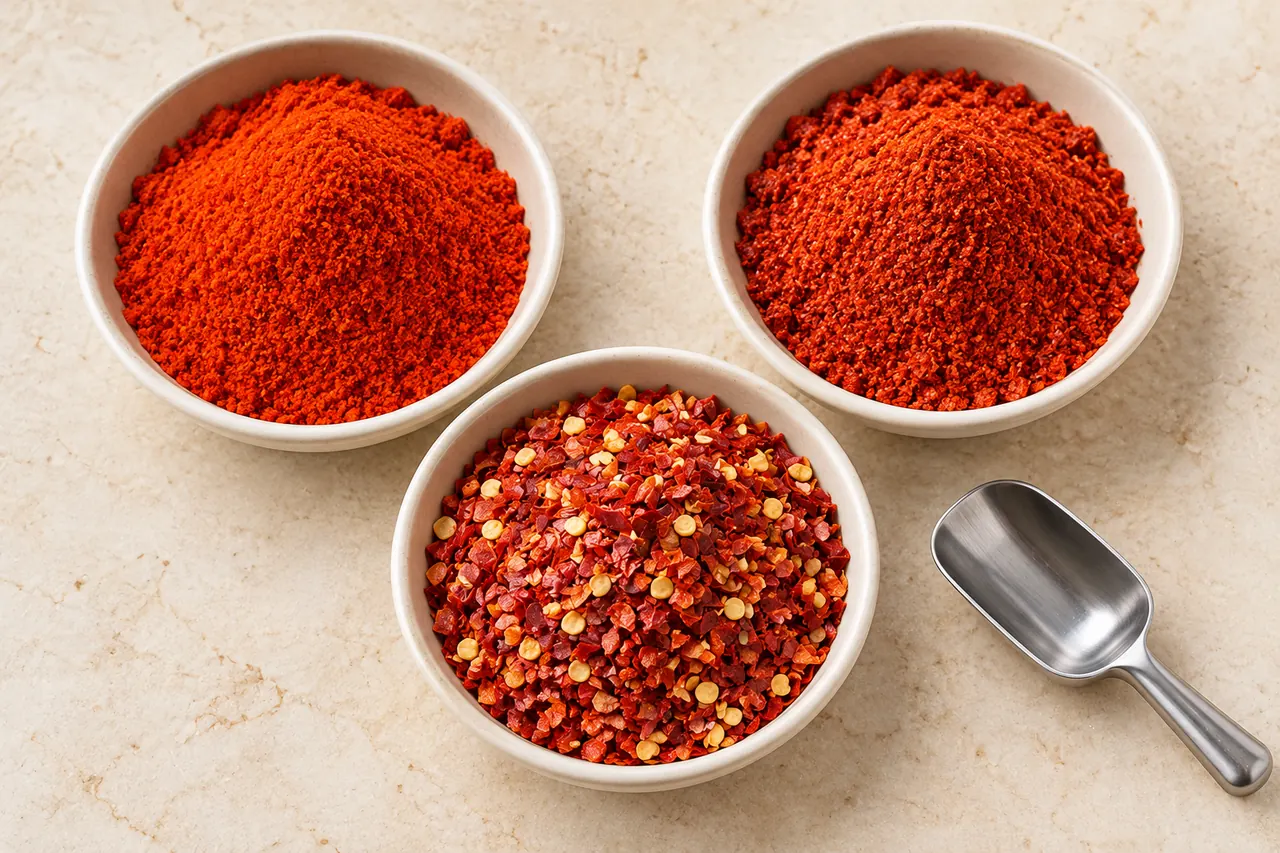
Sweet paprika powder gives nominal 70 mesh and a customizable 80–220 ASTA scope. Cayenne powder gives nominal 60 mesh and separate customizable 60–70 mesh. The lower-heat crushed-flake listing gives 3,000–5,000 SHU and independent 1.5 mm and 1.8 mm references. Copy each declaration faithfully, then ask for the actual offered preparation. Do not choose a range maximum, merge dimensions or invent a heat grade to complete the worksheet.
Ingredients to compare for this application
Sweet paprika for a colour-led RFQ line
Use a separate powder line when colour and physical distribution are the purchasing task.
- Nominal 70 mesh; separate customizable 60–70 mesh reference.
- Customizable 80–220 ASTA requires an actual selected grade.
- Moisture ≤8%.
Cayenne for a separate pepper-profile line
Keep heat selection independent when comparing a colour powder and a stronger pepper role.
- Nominal 60 mesh; separate customizable 60–70 mesh reference.
- Mild, medium and hot are descriptions, not numerical SHU grades.
- Moisture ≤9%.
Crushed flakes for a visible-piece line
Define the actual cut and seed condition when the sample task concerns visible pieces or bite.
- 3,000–5,000 SHU ingredient reference.
- 1.5 mm and 1.8 mm entries require independent axes and selection.
- Optional steam requires an actual selected process.
These product specifications are a starting point for selecting a grade. Match the proposed material and sample to your food and order requirements.
Turn the process request into a useful comparison
Connect the requested physical change to a specific food or equipment comparison.
- 01Your requirement
Name the product role, addition stage and defect to improve.
- 02Our proposal
Identify preparation, selected treatment and relevant physical or laboratory evidence.
- 03Your comparison
Record the actual result at one defined food or equipment endpoint.
Start with the ingredient's job and the physical defect. Cleaning and destemming remove unwanted matter before grinding creates a powder background or cutting retains pieces. Sieving defines a fraction, so request the relevant coarse tail or cut basis as well as nominal mesh.
Keep three fields: your criterion, our proposed preparation and the observed result. Internal moisture and particle checks identify physical condition; external ASTA, SHU or microbiology answers a different question. Sweet paprika's customizable 80–220 ASTA scope is not a sample result. The crushed flake's independent 1.5 mm and 1.8 mm entries do not select a cut. Finally compare the actual material at one unchanged food or equipment endpoint. That links the requested preparation to a buying decision.
Give the Sample a Defined Comparison Task
Keep the first substitution on one unchanged base and process.
| Worksheet field | Enter before trial | Enter after trial |
|---|---|---|
| Material identity | Candidate and preparation | Actual sample or lot identification |
| Food and dose | Fixed base and addition basis | Actual addition and deviations |
| Process endpoint | Mixing, cooking and serving point | Condition observed at that point |
| Decision | Specific acceptance criterion | Observed difference and next action |
Before requesting an amount, identify the test and the material consumed by it. A powder-colour comparison, a flake bite comparison and a whole-pod milling run do not need the same preparation. Keep the base recipe and process fixed during the first substitution. Use separate observations for appearance, flavour and particles rather than one unexplained acceptable score.
Keep the Sample and Its Handling Traceable
Ask which material the sample represents and preserve its actual handling history.
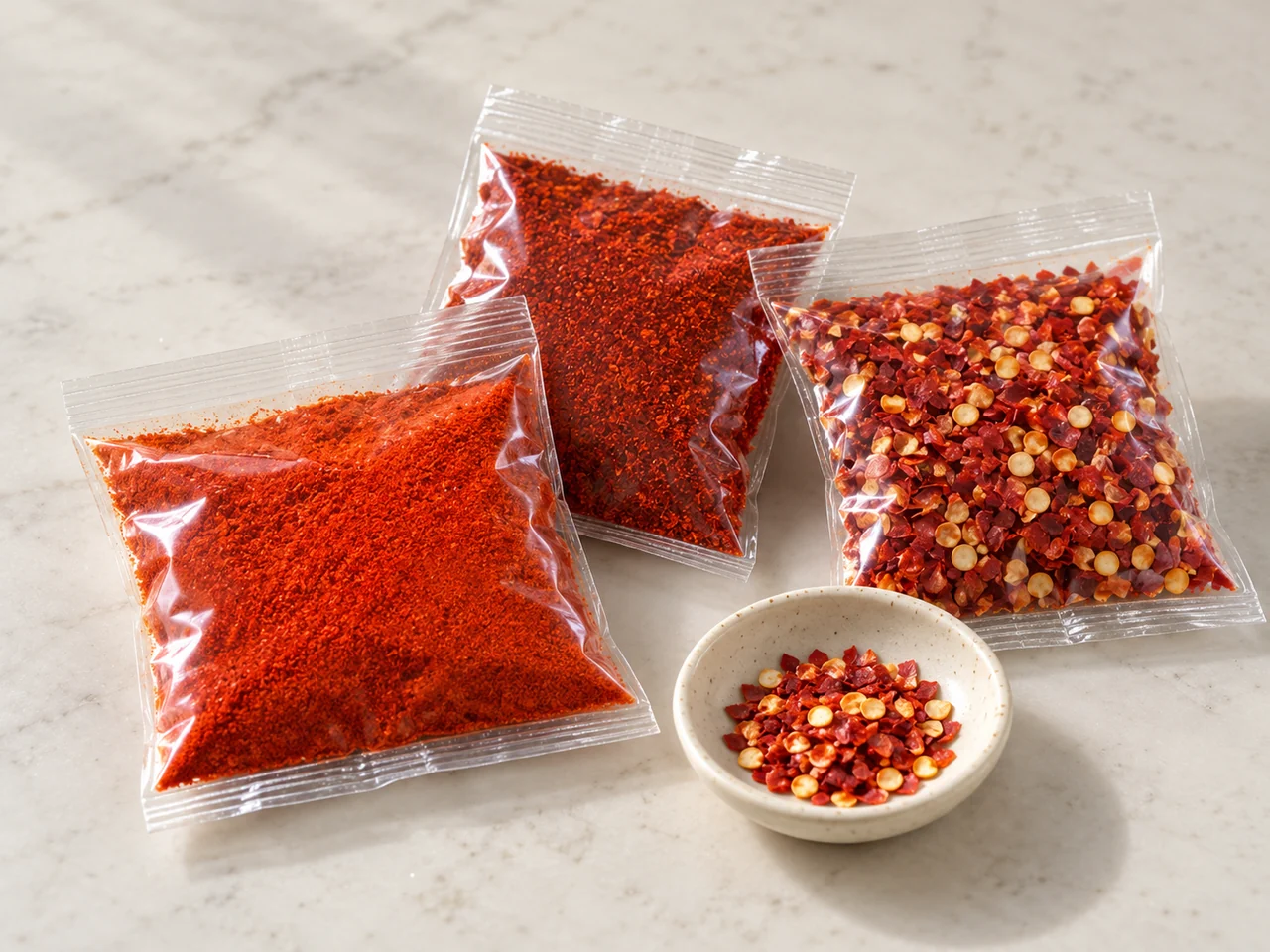
On receipt, note the sample identity, package condition, preparation and relevant lot information. Retain the actual opening and storage history with the comparison. Codex sampling guidance emphasizes representative sampling and preserving sample integrity. It does not turn a small display sample into proof of an entire future delivery. Ask what material the supplied sample represents and which production specification it is intended to illustrate.
Assign each test and document to a real decision
Assign physical checks, external analyses and treatment evidence to different acceptance decisions.
- ✓Formulation
Actual ingredients and relevant cross-contact information.
- ✓Technical acceptance
Methods and applicable results for colour, heat or particles.
- ✓Process approval
Actual treatment and use information for the proposed preparation.
Ask for the actual ingredients and selected preparation, then assign evidence to its purpose. Our internal moisture and particle checks address the physical material; outside laboratories handle ASTA, SHU and microbiology. In-house steam microbial reduction is a real order-dependent capability, with actual execution and acceptance scope to identify for the proposed ingredient. A certificate is a separate holder, scope and validity question, not a substitute for either process evidence or the fraction that passed your food trial. This keeps the worksheet useful without claiming a standard test frequency or a universal document package.
Transfer the Accepted Preparation into the Order Brief
Carry the accepted preparation forward and identify changes before accepting an order alternative.
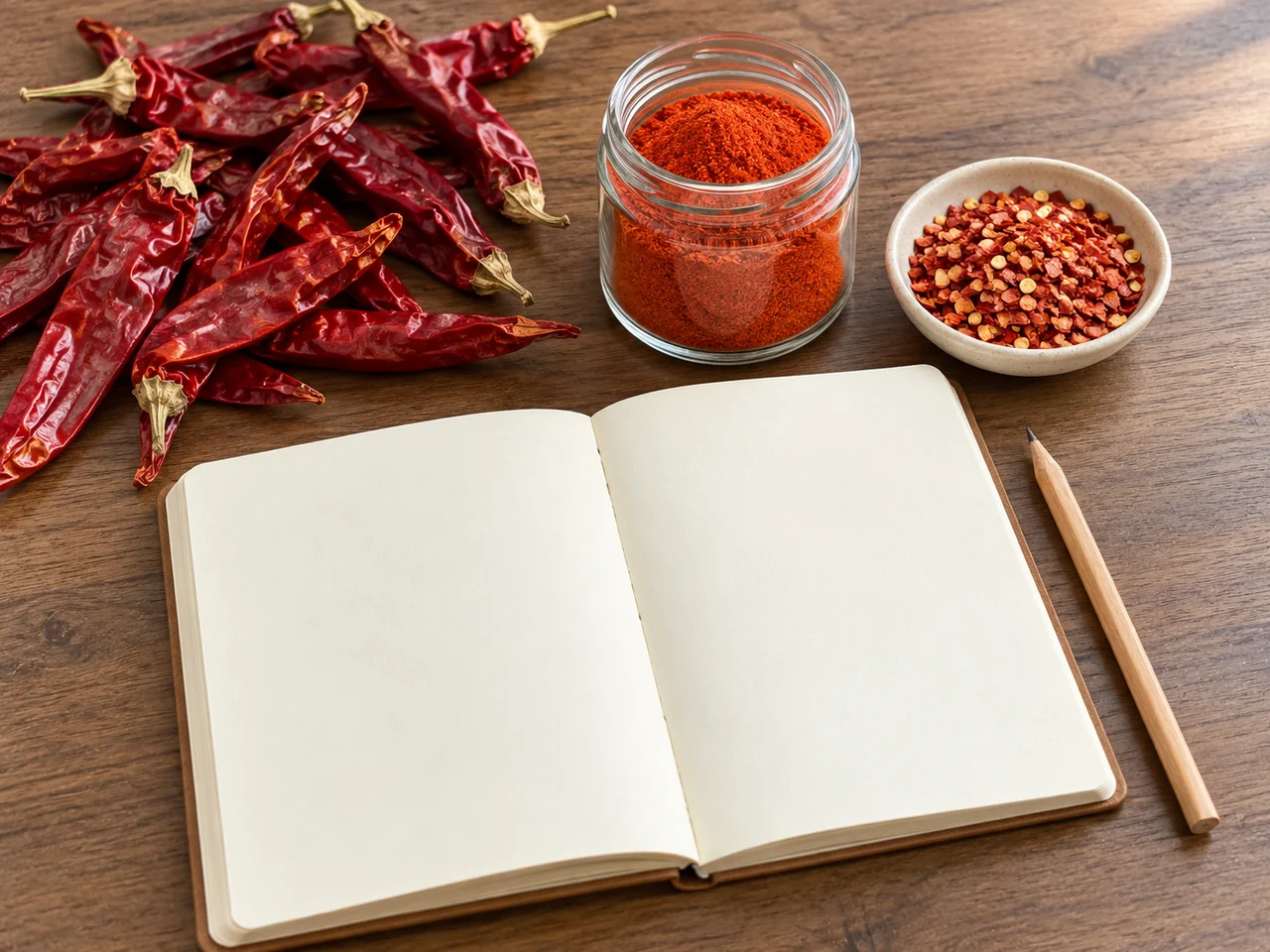
Carry the accepted preparation, test basis and food endpoint forward. Identify differences between the evaluated sample and proposed order material before accepting an alternative. Keep changes in cut, composition, treatment or packaging explicit. Sample acceptance supports that comparison; it does not establish identical future lots without an agreed receiving and acceptance approach.
Keep Commercial Terms as Actual Responses
A package weight is not an MOQ; requested arrival and the actual offer are separate fields.
- 01Your request
Quantity, destination, required pack and desired arrival point.
- 02The actual offer
Available scope, price basis, validity, responsibilities and transaction-specific terms.
Ask for item-specific minimum quantity, available preparation, package configuration, sample charges if any, quotation validity and the proposed timing for your destination. A package weight is not automatically an MOQ. Record requested arrival separately from the supplier’s offer, and agree freight responsibilities, payment and any inspection or claim arrangements for the transaction. This worksheet does not create universal delivery or return terms.
Send a focused material comparison
Send enough non-confidential application detail to scope one useful proposal.
- 01Identify
Link the preparation and describe its food role.
- 02Compare
Separate required criteria, offered data and actual observations.
- 03Agree
Carry the selected preparation and current commercial response into the next discussion.
Send one product link per material line, its application stage and the accepted reference or defect. Separate your requested criteria from offered values and test results. A non-confidential process description can start the discussion; detailed formulation is only useful where it changes the material decision. We can then discuss the actual preparation, sample task, package and current commercial response.
- Current product link and required preparation
- Food base and addition stage
- Buyer criterion and method basis
- Actual offered material and sample identity
- Comparison endpoint and observations
- Quantity, destination, package and requested timing
Your next purchasing decision
Send one focused material comparison to the factory
Enquire around one preparation and the defect the next sample should address.
Send your material lines and the intended comparison to Qingdao Relia Spices Co., Ltd. / RELIA SPICES. Include the application stage, accepted reference and the process or particle difference you want the proposal to address.
The enquiry page keeps this guide with your message. Add your quantity and destination so we can discuss the relevant material.