Private Label
Paprika & Chili
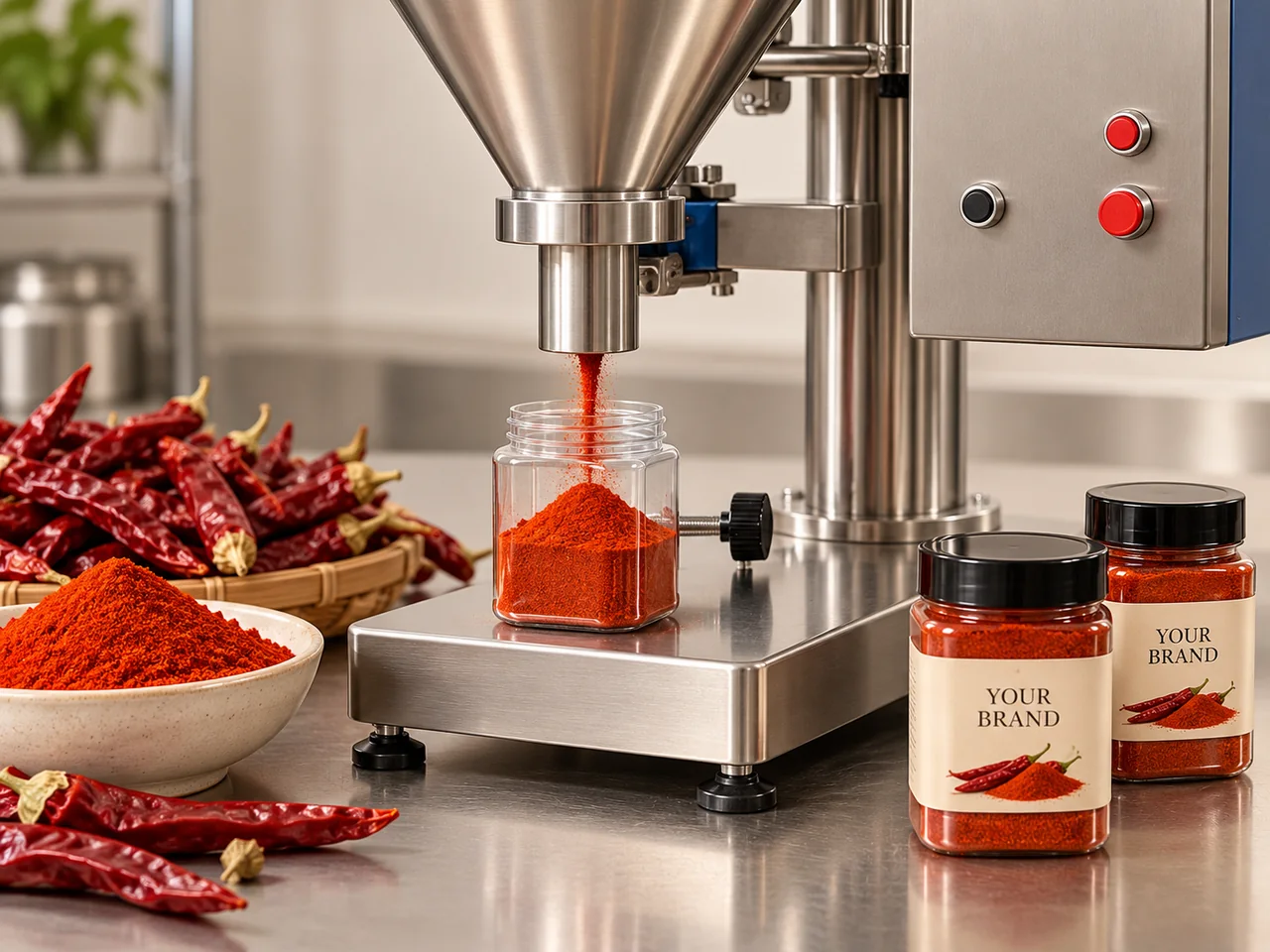
We manufacture paprika and chili ingredients in China and fill customer-branded retail packs. Build your range around the right powder, flakes or whole pods, then choose packaging that protects and dispenses that material well.
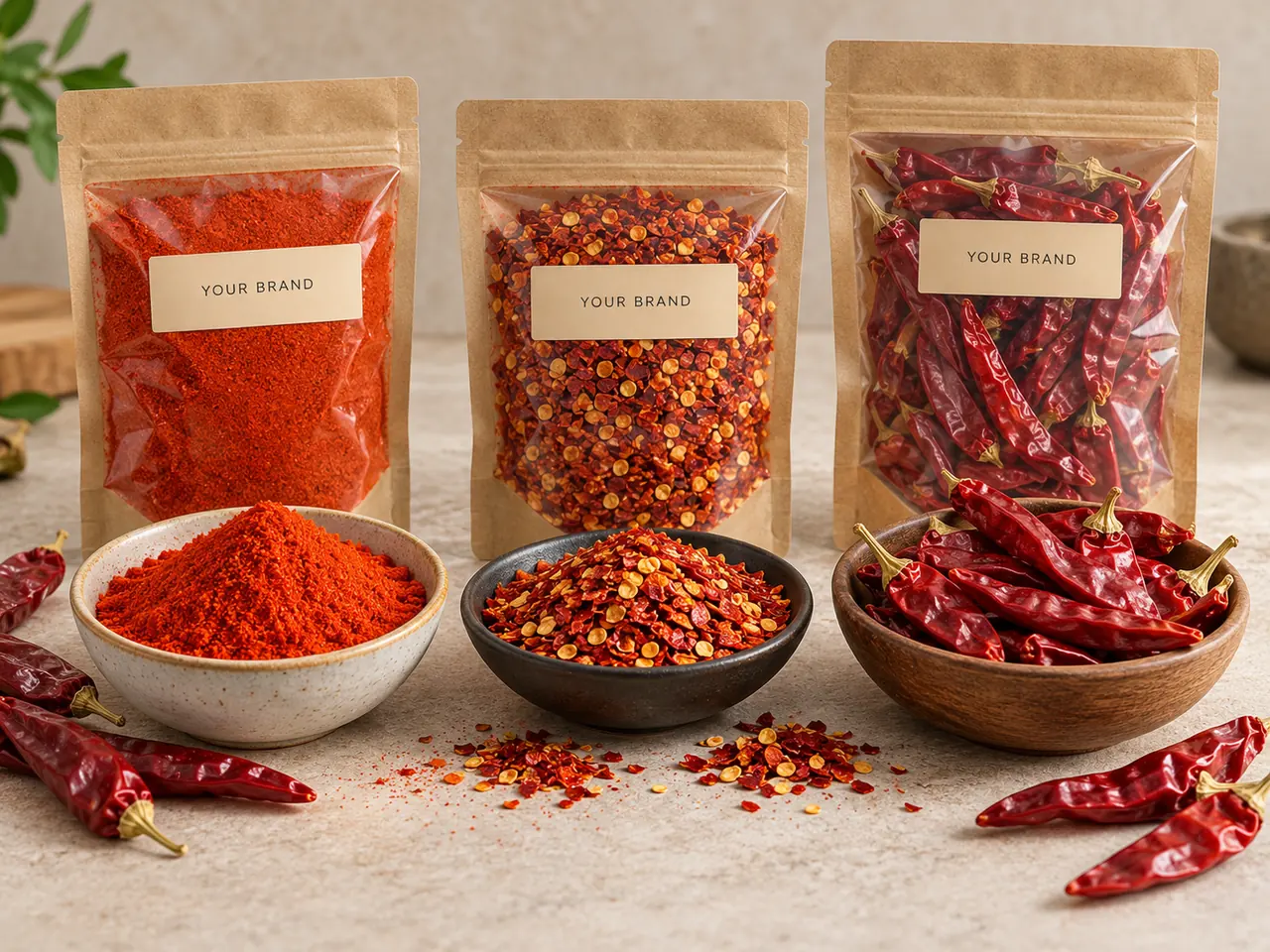
Packaging and project details
We can assist with printed branded packaging or assess packs you supply. Send your product choices, food reference, proposed pack and quantity to start a coordinated ingredient-and-packing proposal.
A clear route from ingredient to shelf
- Choose
Powder for a ground ingredient, flakes for visible pieces, or whole pods for preparation.
- Approve
Compare the material in its intended food and proposed retail pack.
- Develop
Bring ingredient, branding and order requirements into one project offer.
Connect Manufacturing to Your Brand Brief
One project can include our supplied ingredient and your branded retail packing.
RELIA SPICES supplies paprika and chili ingredients and fills retail packs carrying your logo. We prepare purchased dried chilies in-house through cleaning, foreign-matter removal and destemming, followed by grinding or cutting/crushing, sieving and packaging.
Coordinate the ingredient and packaging
Bring the ingredient and packaging requirements to the same discussion. We can assist with producing printed branded packaging or assess packaging you supply, so the proposed fill, closure and presentation are considered before packaging quantities are committed.
Two approvals make one branded product
- Ingredient approval
Select the actual material, composition and acceptance criteria.
- Packaging approval
Assess your proposed pack, closure and artwork supply route.
- Combined offer
Quote the agreed ingredient and retail-packing scope together.
Build the Range Around Distinct Ingredients
Different physical forms need separate specifications and food comparisons.
For a colour-led powder, start with sweet paprika: nominal 70 mesh, separate 60–70-mesh customization, an 80–220 ASTA customizable range and moisture ≤8%. For a heat-led powder, the Cayenne candidate offers nominal 60 mesh and qualitative mild, medium or hot choices.
Compare flakes and whole pods
For visible chili, the seeded flakes have a 7,000–10,000 SHU reference. The separate New Generation whole-pod candidate has a 3–6 cm size reference and a full 50,000–90,000 SHU range. Compare each material in the food it will serve; these figures describe separate catalogue candidates, not a single finished retail grade.
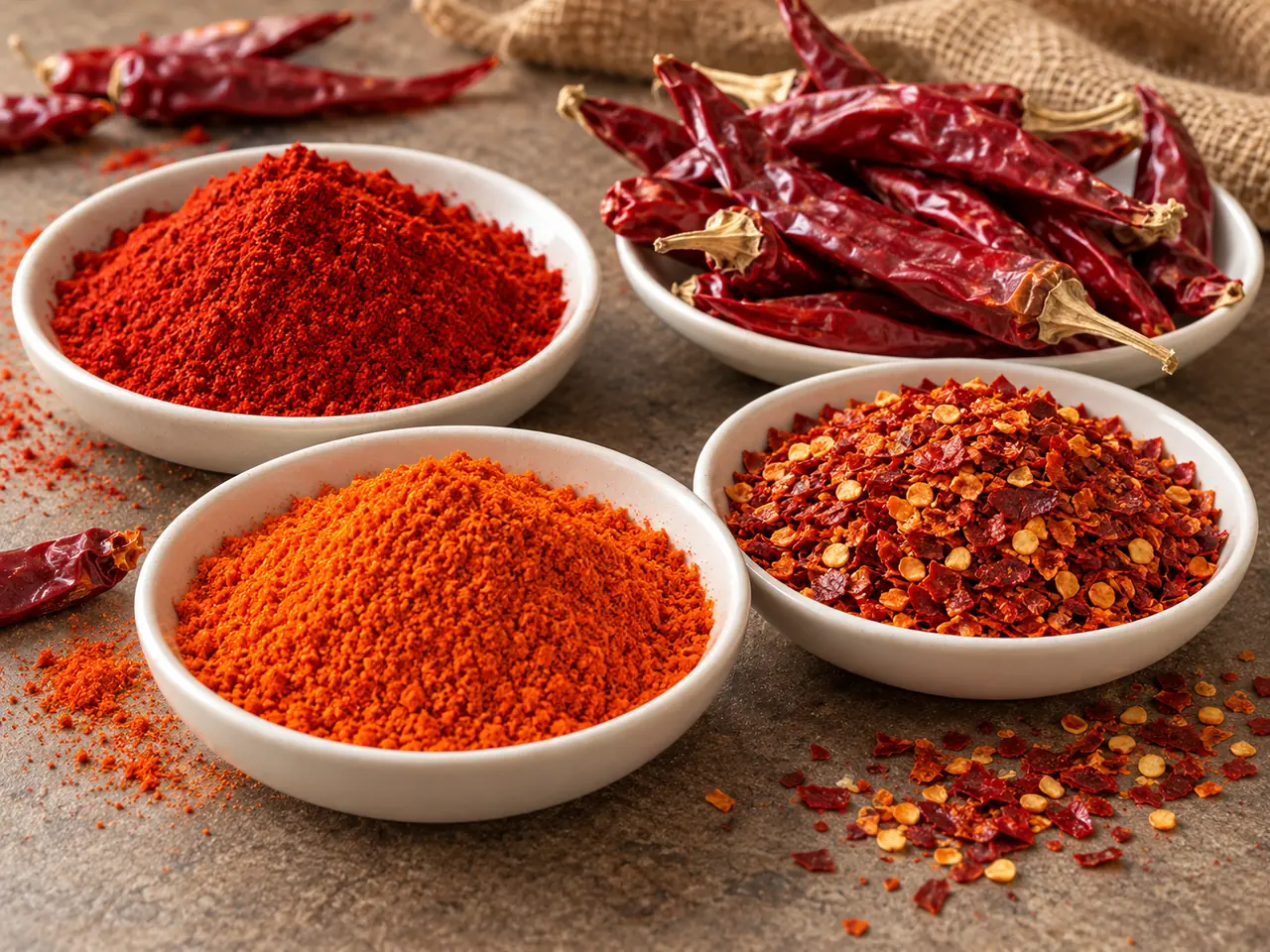
Choose the material for its job
Colour-led sweet paprika powder
Start here for a ground retail paprika where an agreed colour grade and grind guide the food trial.
- Grind
- Nominal 70 mesh; separate 60–70 mesh customization
- Colour
- 80–220 ASTA customizable
- Moisture
- ≤8%
Cayenne powder with heat-grade choices
Compare a proposed mild, medium or hot grade for a heat-led retail powder in the intended food.
- Grind
- Nominal 60 mesh; separate 60–70 mesh customization
- Pungency
- Mild / medium / hot, qualitative customizable options
- Declared composition
- Dried red pepper; no additives declared
Coarse seeded chili flakes
Choose this candidate for visible chili pieces, with actual cut and seed requirements set from the selected sample.
- Form
- Coarse dried red chili flakes with visible seeds
- Heat reference
- 7,000–10,000 SHU
- Cut references
- 1–4 mm and 5*7 mm listed separately; agree the cut and measurement basis.
New Generation whole chili pods
Assess a whole-pod retail item where the pod size basis and stem condition matter to preparation.
- Size reference
- 3–6 cm, with measurement basis to agree
- Heat range
- 50,000–90,000 SHU
- Stem condition
- Stemless or stem cut, selected condition to agree
Review the selection criteria
- Sweet paprika
- 80–220 ASTA customizable Start with colour and grind for a ground retail spice.
- Cayenne powder
- Nominal 60 mesh Select a proposed qualitative heat grade and compare it in food.
- Seeded flakes
- 7,000–10,000 SHU Evaluate visible pieces, seeds and heat together.
- Whole pods
- 3–6 cm size reference Assess the size basis and selected stem condition.
Give Each Retail Item a Clear Specification
A shared brand does not make the product specifications interchangeable.
Give each item its own identity, composition, intended use and deciding characteristic. A paprika buyer may put colour and limited heat first; a flake buyer may care more about visible cut, seeds and fines. Keep the chosen sample beside that written requirement.
Define the particle measurement criteria
Make particle criteria measurable. A nominal mesh name needs a sieve basis, while the flakes' independent 1–4 mm and 5*7 mm entries still need their dimensions and measurement basis resolved. They do not establish two supplied cut options.
Write one acceptance line per item
- Identity
Record the actual ingredient, form and complete composition.
- Food result
Name the colour, heat, flavour or visible texture that matters most.
- Physical criterion
Define the sieve or dimensional basis for the selected material.
- Reference sample
Use the identified sample to connect the specification to the food result.
Prepare the Form Your Customers Need
Cleaning, size preparation and sieving create the form your retail customers need.
Our preparation starts with purchased dried chilies. Cleaning and foreign-matter removal precede destemming. Grinding produces powder; cutting or crushing prepares larger pieces, while whole-pod products retain their selected whole form. Sieving selects the powder or cut material around the agreed particle requirement before packaging.
Check the prepared material in use
Use the prepared sample to check what that physical change means in practice. Compare powder dispersion and dispensing, or the appearance and handling of visible pieces. Keep analytical colour, heat and microbiology criteria separate from the particle selection.
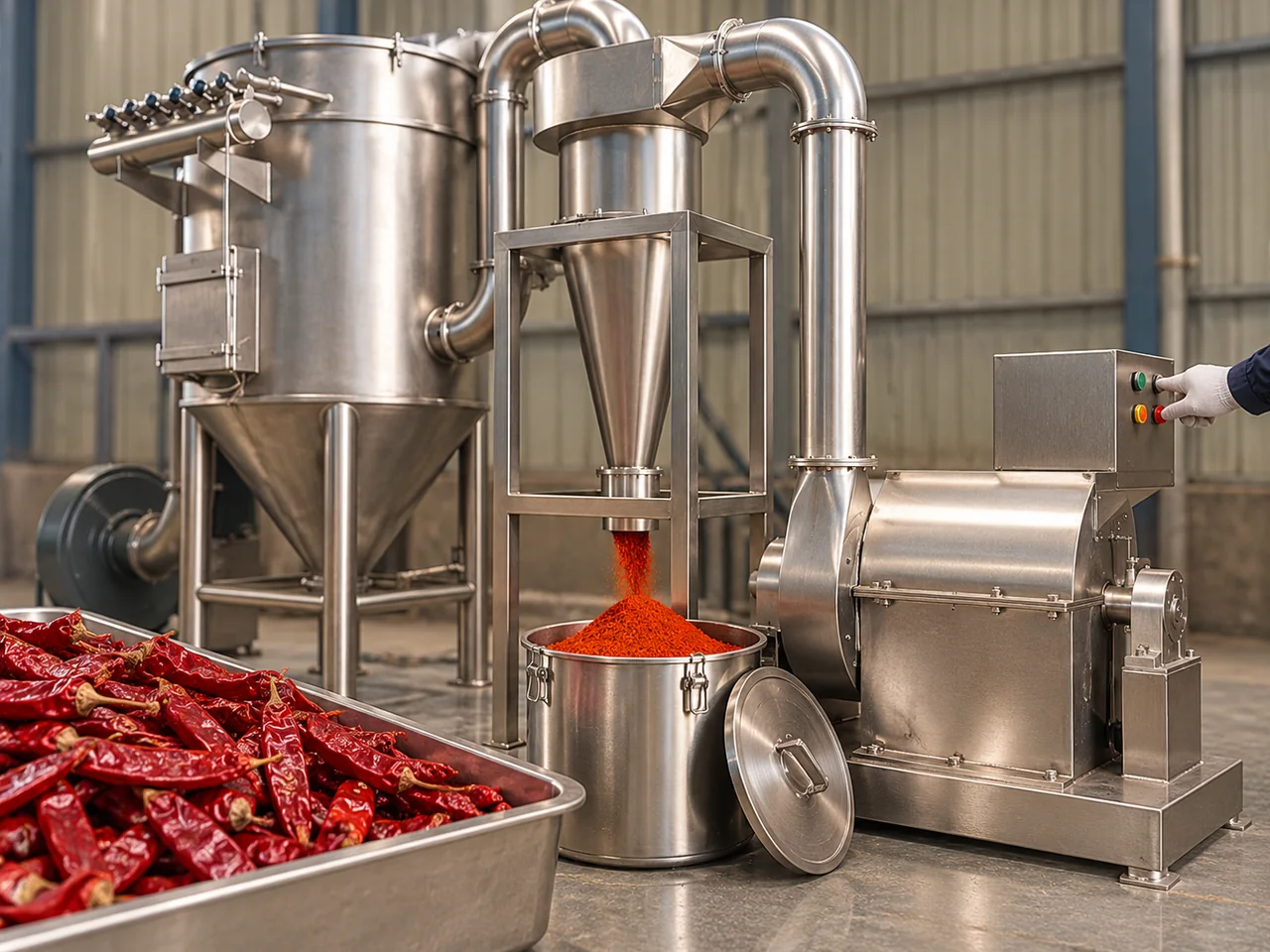
The confirmed ingredient preparation route
- Purchased dried chili
Purchased dried chilies are the input to our preparation route.
- Clean and destem
Remove foreign matter and stems before size preparation.
- Prepare the selected form
Grind powder, cut or crush flakes, or retain the selected whole-pod form.
- Sieve
Select the material around the agreed physical criterion.
- Package
Connect the prepared ingredient to its approved packing scope.
Match Treatment and Tests to the Order
Connect factory checks and laboratory results to the selected material and order.
We have in-house steam microbial-reduction equipment and use it according to order requirements. Include the intended food use and microbial criteria in your brief so treatment can be selected for that product. Steam availability does not establish that all material is treated or ready to eat.
Specify the tests and reporting scope
Routine moisture and particle checks are internal; ASTA, SHU and microbiology are outsourced to laboratories. Identify the material, method, sample or lot scope and acceptance limits needed for your project. A catalogue range helps select a candidate; the applicable report describes the tested material.
Use the right evidence for each decision
- Moisture and particles
Internal routine physical checks against the agreed requirement.
- Colour, heat and microbiology
Relevant laboratory analyses with their method and material scope.
- Steam treatment
In-house capability selected according to the agreed order requirements.
Choose How Branded Packaging Is Supplied
We can help produce your branded packaging or assess packaging you supply.
Send the package you want to use, its material and dimensions, closure, and how the customer will dispense the spice. We assess your proposed package against the ingredient, filling and dispensing requirements.
Choose your packaging supply route
Choose the supply route that fits your business. We can assist with producing packaging printed with your brand, or assess packaging you supply. Settle responsibilities, artwork version and technical suitability before committing to packaging quantities.
Two packaging routes, one suitability check
- Assisted branded packaging
Bring the design brief and proposed printing requirements.
- Customer-supplied packaging
Bring the package specification, closure and material information.
- Shared approval
Connect the chosen ingredient, packaging version and filling requirements.
Approve the Filled Pack in Use
Ingredient approval and attractive artwork still need a workable filled pack.
Evaluate the selected material in the proposed package. Check fill presentation by weight, closure, leakage, settling and dispensing after the handling your distribution route is likely to involve. Powder and coarse flakes can occupy and move through a pack differently.
Establish retail storage and date basis
Choose protection for the spice and expected climate as well as shelf appearance. Establish the retail-pack storage and date basis from the selected material, package and handling conditions; an ingredient storage statement alone does not validate a new retail pack.
Observe more than the artwork
- Fill
Compare declared mass with the presentation after settling.
- Close
Examine the proposed closure and leakage after handling.
- Dispense
Try the opening with the actual powder, flakes or pods.
- Protect
Assess moisture, light and handling exposure for the destination.
Compare Complete Project Offers
A comparable quotation needs the same material, pack and evidence requirements.
A useful comparison starts with the same material, package specification, printing method and quantity. Include any required treatment and analytical work in that scope, so an ingredient change is not confused with a packaging or evidence difference.
Prepare a project-specific quotation brief
MOQ, net content and lead time are quoted for the particular project. Send your proposed retail size and order requirements rather than planning around a fixed public figure that may not suit the selected ingredient and packaging.
| Your input | Factory assessment focus | Decision to confirm |
|---|---|---|
| Ingredient and use Product link, food use, colour/heat and particle criteria. | Proposed preparation and the points needing a sample comparison. | Selected ingredient and the comparison or test basis. |
| Packaging route Your requested pack, fill, authorized logo and who supplies components. | Assessment of the product-and-pack combination, with artwork responsibilities identified. | Packaging format, component responsibilities and approval references. |
| Commercial scope Quantity, destination, printing method and requested timing. | Project-specific quotation scope; confirm the material, pack and open decisions together. | Agreed product, packaging and order scope for quotation. |
This is a planning handover for your enquiry. Packaging, MOQ, net content and timing are assessed and quoted for the product, format, printing method and quantity.
Approve the Ingredient Before Releasing Artwork
Use sample and package decisions to remove the largest launch uncertainties first.
Start with the item that defines your range. Compare the proposed material in food, assess it in the retail pack, then settle the ingredient description and artwork together. This sequence avoids designing a label around a grade that later changes.
Choose who will fill the packs
Use this route when you want the factory to supply and fill your branded retail product. If your business will purchase bulk ingredients and do the filling itself, the separate self-packing guide addresses that different buying task.
Move from a useful sample to an agreed project
Review the next-step choices
- Select the lead item
- Choose the material and food result that define the range.
- Evaluate food and pack
- Compare the selected sample and proposed filled-pack presentation.
- Agree the scope
- Set the ingredient, artwork, evidence and commercial requirements.
- Proceed with the brief
- Use the agreed specification for the order discussion.
Talk Through Your Branded Spice Project
Send the product and packaging brief together for a useful first discussion.
Send RELIA SPICES the ingredients you want to sell, their intended food use and the characteristics your customers expect. Add the proposed package, branding supply route and quantity.
Include destination and testing requirements
Qingdao Relia Spices Co., Ltd. can discuss the ingredient and factory-filled retail scope together. Include the destination and any treatment or analytical requirements so the proposal addresses your actual product.
Send three connected parts of the brief
- Product
Candidate links, food reference and the deciding specification.
- Packaging
Proposed pack, net content and assisted or supplied branding route.
- Order
Quantity, destination, timing and required evidence.