
Coarse Gochugaru-Style Chili for Kimchi
For kimchi with visible red chili pieces, start with a coarse crushed preparation and judge it on your prepared vegetables. RELIA SPICES can discuss the main flake, seeds and fine coating separately. The Gochugaru-described flakes list 5–8 mesh and moisture ≤8%. Send the accepted coverage and eating-texture reference so we can compare a suitable cut and flavour profile for your actual kimchi process.
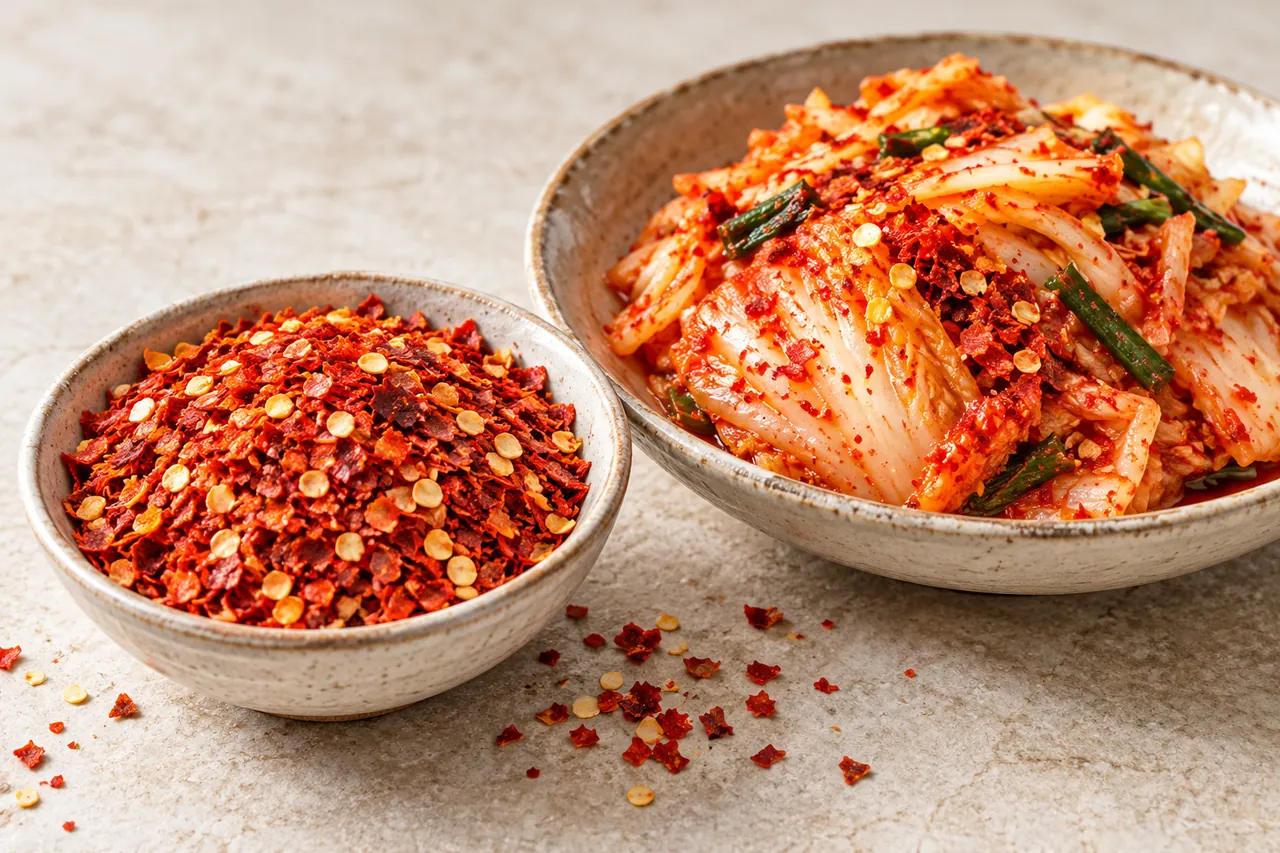
- Coarse candidate
- Gochugaru-described flakes list 5–8 mesh, moisture ≤8% and impurity ≤0.3%.
- Different powder role
- Dark-red kimchi powders offer a separate fine-background and flavour-profile discussion.
- Vegetable endpoint
- Compare visible coverage, skin feel, seeds and heat on representative portions.
Prepare coarse flakes for the vegetable result
Separate the main red pieces from the seeds and fine coating.
- 01Coarse red pieces
Provide the visible flake feature.
- 02Seeds and fines
Set eating texture and the fine coating around those pieces.
- 03Prepared vegetables
Approve coverage, flavour and bite at the accepted food stage.
RELIA SPICES cleans and destems purchased dried chilies, then cuts or crushes, sieves and packs the agreed preparation. For coarse kimchi, define visible red flakes separately from seeds and finer coating material. The coarse Gochugaru-described listing gives 5–8 mesh, moisture ≤8%, impurity ≤0.3% and a strong, pungent flavour description.
Dark-red kimchi/sauce powders serve a different particle role. We check moisture and particle size internally, arrange SHU and microbiology through outside laboratories, and select in-house steam treatment according to order requirements. Compare the selected preparation on your actual vegetables rather than treating application names as equivalent grades.
Start with the coarse listing's real physical details
A kimchi-labelled powder is not automatically the same preparation as coarse flakes.
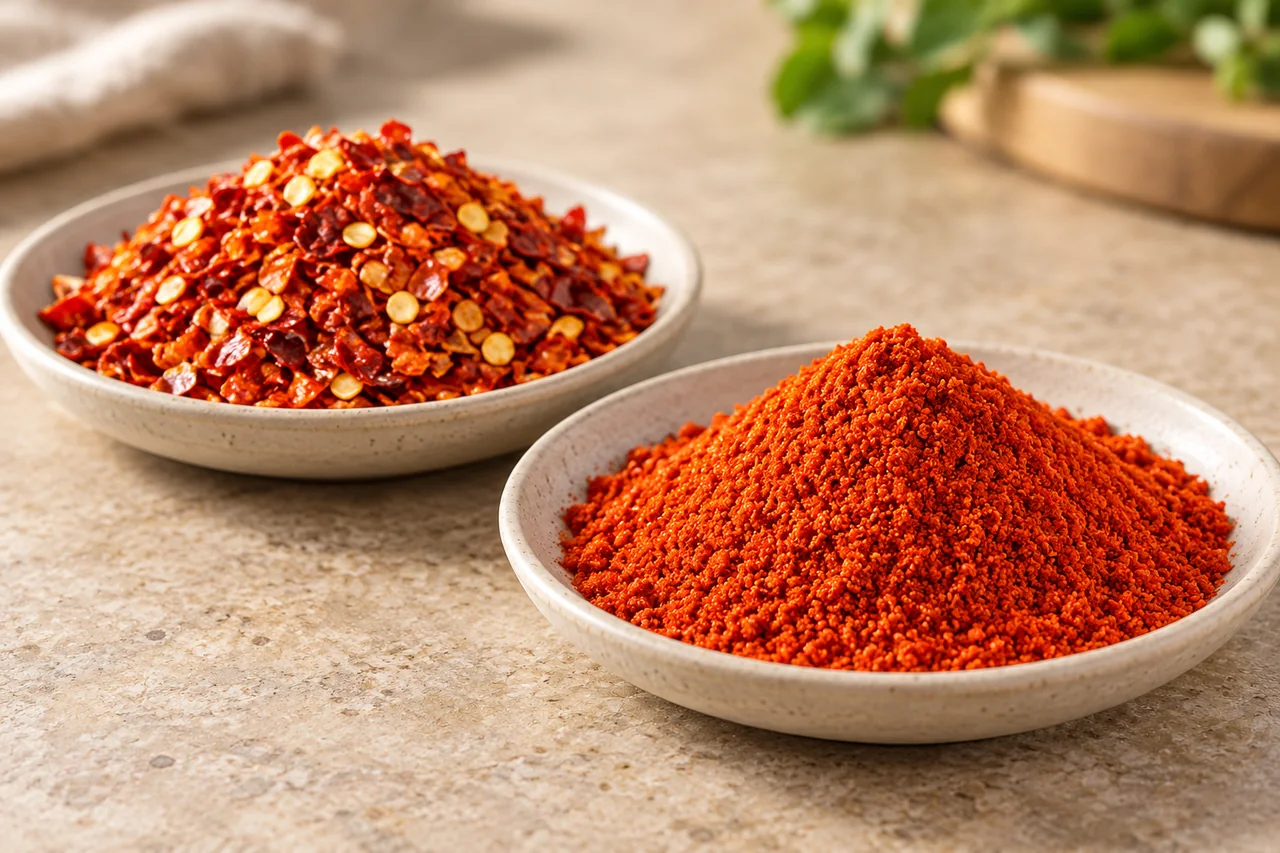
The coarse crushed chili lists 5–8 mesh, moisture ≤8%, impurity ≤0.3% and Raw/AD descriptions, with strong and pungent chili flavour. These are relevant receiving references, not a numeric heat value or fermentation assurance. The powder listing separately names dark red colour, qualitative Mild/Medium/High/Extra profiles and kimchi/sauce applications. Keep that powder identity explicit if it enters your shortlist; do not silently turn the application wording into an offered coarse grade.
Ingredients to compare for this application
Coarse Gochugaru-described flakes
The direct coarse candidate when visible red pieces and their accompanying fractions matter in kimchi.
- 5–8 mesh reference
- Moisture ≤8%; impurity ≤0.3%
- Strong, pungent flavour description
Dark-red chili powder for kimchi
Discuss a separate powder role when the recipe also needs finer background coverage.
- Kimchi and sauce uses listed
- Mild, Medium, High or Extra profile labels
- Independent 10–40, 10–20 and 60 mesh references
These product specifications are a starting point for selecting a grade. Match the proposed material and sample to your food and order requirements.
Choose an actual preparation, not a merged sieve range
Keep the three powder sieve references independent rather than combining them into a grade.
| Material | Listed reference | Decision to make |
|---|---|---|
| Coarse crushed flakes | 5–8 mesh | Actual cut, seeds and fines |
| Kimchi/sauce powder | 10–40 mesh; 10–20 mesh; 60 mesh separately | One selected preparation and sieve method |
| Prepared vegetables | Visible coverage and eating texture | Whether that sample meets the food target |
For coarse flakes, agree the actual cut and sieve acceptance behind the 5–8 mesh reference. For the separate powder listings, retain 10–40 mesh, 10–20 mesh and 60 mesh as independent references.
Select the sample and method that describe the preparation you will trial. Those entries do not combine into 10–60 mesh or establish three supplied choices. A representative scaled image can show the visible cut alongside the agreed test.
Use vegetable coverage to guide the next cut
Use coverage and eating texture to choose which particle fraction needs adjustment.
| Food observation | First distinction | Next discussion |
|---|---|---|
| Too few visible pieces | Cut versus dose or mixing | Main-flake distribution |
| Too much fine coating | Supplied fines versus surface liquid | Fine fraction and preparation route |
| Harsh eating texture | Skin versus seeds | Selected cut and seed condition |
Fine material spreads a coating, while larger flakes remain visible. Seeds and skin add separate texture. The vegetables' surface liquid and mixing also influence where those fractions end up.
Hold vegetable preparation, draining, seasoning base, dose and mixing fixed. Compare representative inner and outer portions after mixing and at the accepted product stage. Note red-piece coverage, loose fine coating, skin feel, seeds and heat separately. If flavour is right but red pieces are sparse, discuss cut or distribution. If appearance is right but seeds feel harsh, discuss the accompanying fraction. Keep any dose or liquid change as a new recipe version before choosing the final material.
Trial coverage on the actual prepared vegetables
Compare inner and outer vegetable portions after the same preparation and mixing.
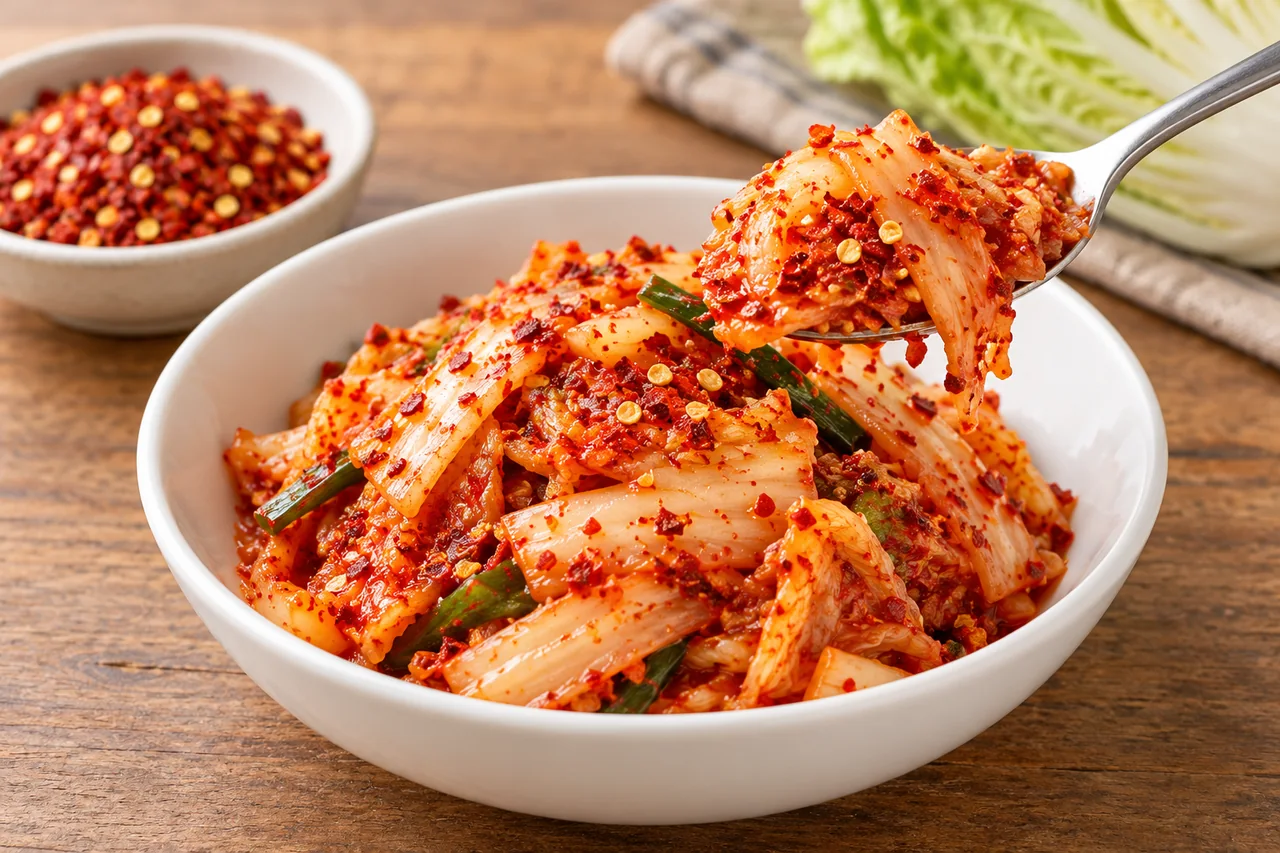
Keep the vegetable type, preparation, draining, seasoning base and addition method fixed in the initial comparison. Record the actual liquid composition and the point at which you inspect coverage. Compare representative outer and inner portions rather than a single well-coated leaf. A flake's dry colour is not the same as the kimchi's appearance. If the liquid or dose changes to improve coverage, record that as another recipe version so the material decision remains clear.
Compare heat and pepper character at the intended product stage
A visually suitable flake still needs the accepted pepper flavour and heat.
- 01Appearance
Judge red-piece distribution and fine coating on representative vegetable portions.
- 02Eating texture
Judge skin, seeds and pieces at the intended food stage.
- 03Flavour
Compare actual heat and pepper character at the same stated recipe basis.
Set a sensory reference and actual use level, then record pepper character, heat, skin feel and seed sensation. Strong and pungent wording on the coarse flakes does not supply a numerical SHU result. The powder listings' qualitative profiles also require an actual selected grade rather than an assumed progression. Do not accept a visually suitable flake while leaving flavour unresolved, and do not call a higher dose a material-only comparison.
Review treatment and fermentation as different questions
Ordered ingredient treatment and the food's fermentation process remain different decisions.
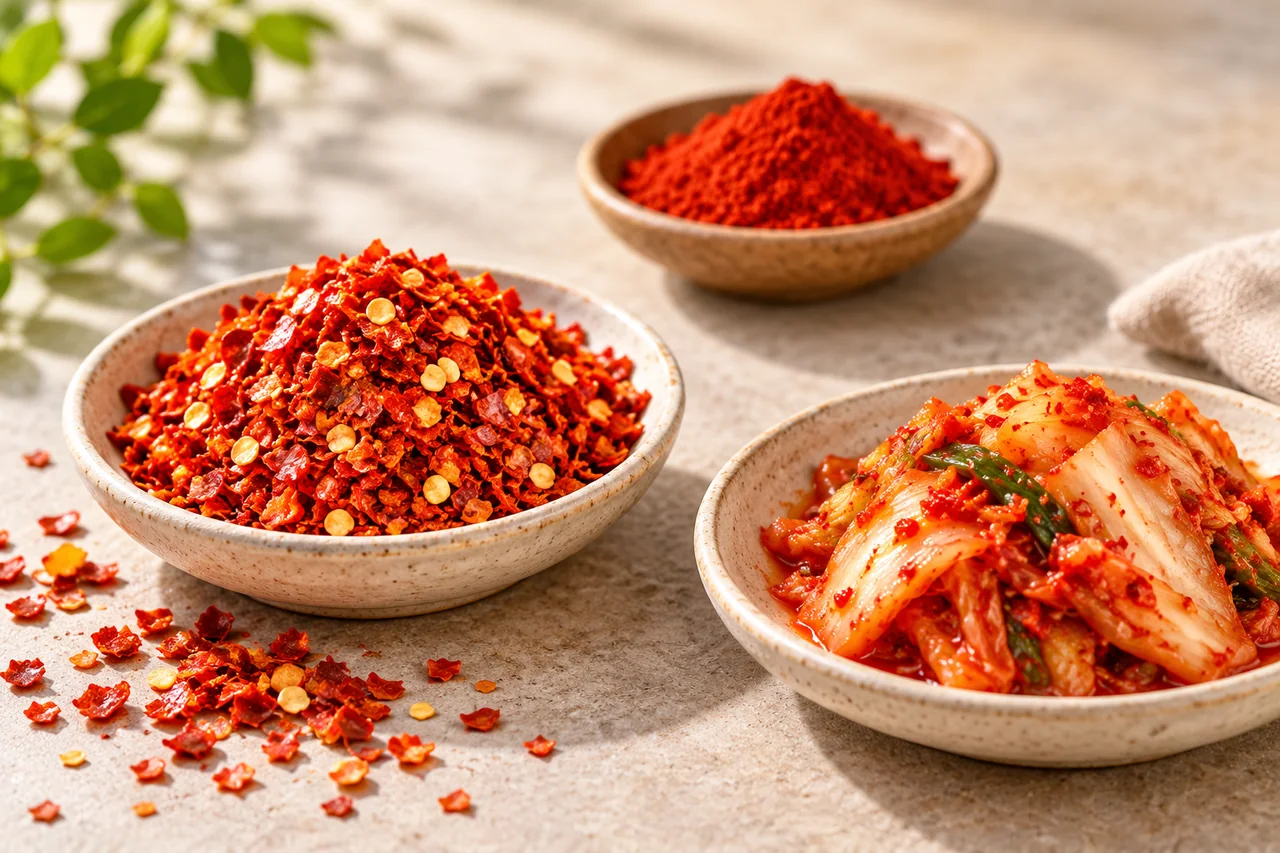
RELIA has in-house steam microbial-reduction equipment used according to order requirements; microbiology is tested through outside laboratories. Select the treatment for the ingredient and use the corresponding material in your kimchi comparison.
The supplied treatment and the kimchi fermentation process answer different questions. Original kimchi research observed changes in microbial succession and metabolites with red pepper addition. Evaluate your actual recipe and process after a material change rather than assume a fixed fermentation direction from culinary style or ingredient heat.
Keep style, origin and receiving scope separate
Gochugaru-style describes culinary direction, not verified Korean growing origin.
- 01Style fit
Use the actual cut and recipe observations to judge the intended kimchi style.
- 02Origin condition
Treat a requested growing origin as a separate evidence requirement.
- 03Receiving
Apply the selected ingredient's actual package and handling scope.
Gochugaru-style and Korean-style describe the intended preparation direction here. They do not establish Korean growing origin, cultivar or geographic certification. If origin is a purchase condition, obtain evidence for the actual material and lot. Keep the coarse flakes' twenty-four-month cool/dry reference with their selected package, while the powder entries state one year in a dry, sealed container. Neither period establishes kimchi life or makes the physical preparations equivalent.
Send a coarse-kimchi material brief
Send the vegetable reference with cut, seed, fines and flavour requirements.
- 01Visible result
Show accepted coverage and eating texture on the actual vegetables.
- 02Input specification
Separate flake cut, seeds, fines and flavour requirements.
- 03Offer scope
Identify actual material, package and intended-use evidence for the order.
Send the prepared vegetable reference, required flake coverage, fines and seeds, actual use level and flavour target. We can discuss crushing, sieving, internal particle and moisture criteria and order-selected steam treatment. Keep any growing-origin requirement separate from Gochugaru-style naming and identify the actual selected sample in the offer.
- Coarse cut, fines and seed criteria
- Finished appearance and mouthfeel
- Heat and colour acceptance
- Actual vegetable and process
- Treatment and origin documents
- Sample quantity and packaging
Your next purchasing decision
Discuss a coarse chili preparation for kimchi
Discuss the coarse preparation that meets your kimchi's visible and eating targets.
Share the accepted vegetable coverage and eating texture, with the seed and fine-fraction limits that matter to your product.
Include the actual process, treatment and flavour requirements. We can keep the coarse-flake purchase distinct from a separate fine-powder route.
The enquiry page keeps this guide with your message. Add your quantity and destination so we can discuss the relevant material.