
Chili Flakes for Frozen Ready-Meal Formulations
For frozen ready meals, choose the flake around its position and bite after reheating. Compare the air-dried flake's stronger declared heat range with the separate crushed-flake candidate before selecting a cut. We can prepare the supplied fraction and discuss treatment. Send the sauce or grain background, addition stage and reheating instruction so the sample addresses hard skin, broken pieces or local burn in the served meal.
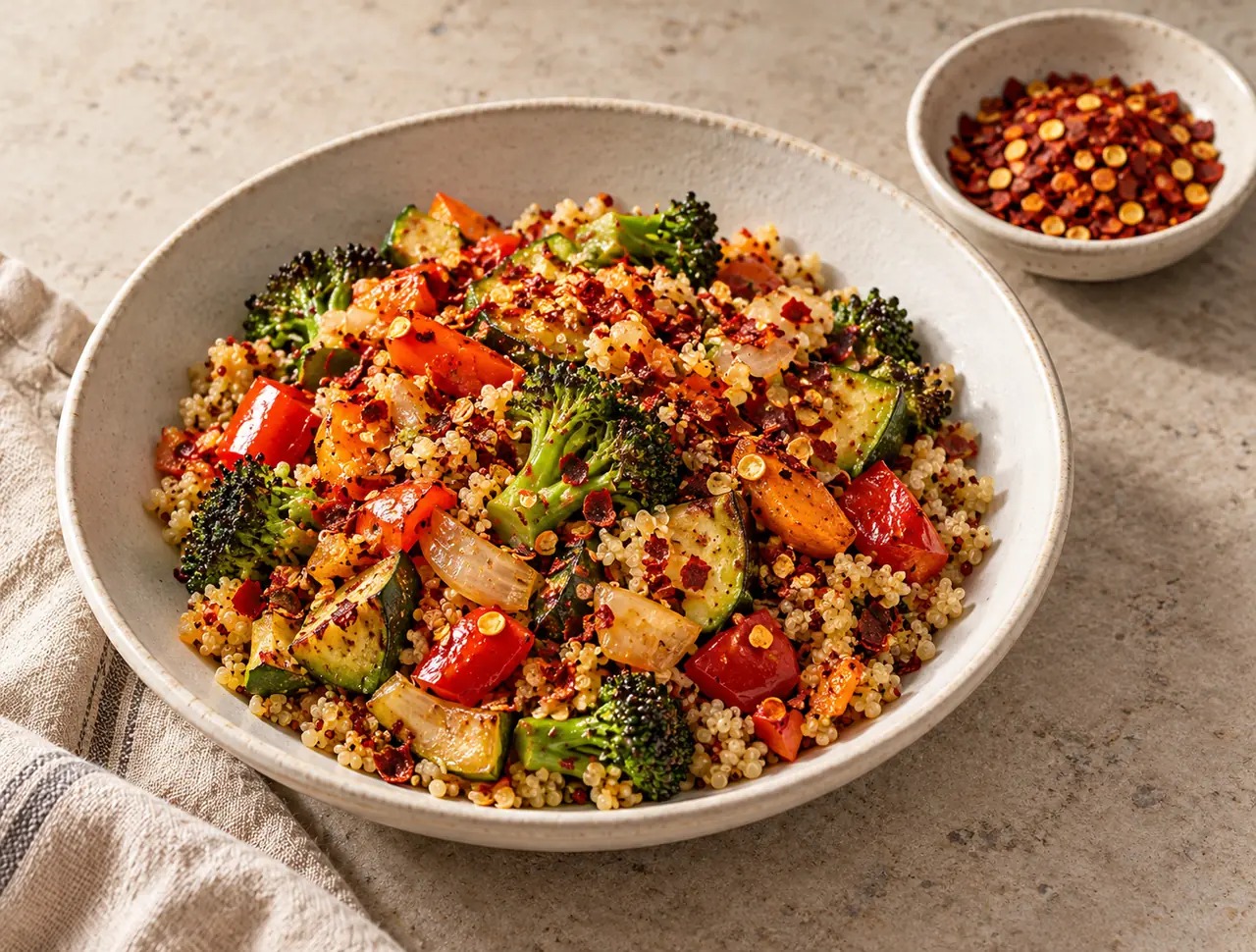
- Stronger heat reference
- Air-dried flakes list customizable 30,000–50,000 SHU and a separate 3–5 mm size reference.
- Different heat role
- The other crushed flakes list 3,000–5,000 SHU with independent 1.5 mm and 1.8 mm entries.
- Meal endpoint
- Compare the same preparation before freezing and after the intended reheating method.
Prepare the flake for its meal position
Sauce-submerged, mixed and exposed flakes need different appearance and bite comparisons.
- 01In sauce
Inspect distribution and local heat in sauce-rich portions after the intended reheating route.
- 02Among solids
Inspect the actual piece and bite where it contacts vegetables, starch or protein.
- 03At the surface
Judge exposed pieces separately from submerged ones; a single photograph can hide these differences.
At RELIA SPICES, we clean and destem purchased dried chilies before cutting or crushing, sieving and packing. Describe whether the selected flake is submerged in sauce, mixed among grains or exposed at the surface. Define the cut and seed condition around the appearance and bite wanted there.
Moisture and particles are checked internally; ASTA, SHU and microbiology use external laboratories. We can select in-house steam microbial reduction according to order requirements. The supplied fraction and selected treatment remain separate from your meal's freezing history, food-safety controls and reheating validation.
Confirm the actual incoming cut
Choose the heat role before treating two flake specifications as alternatives.
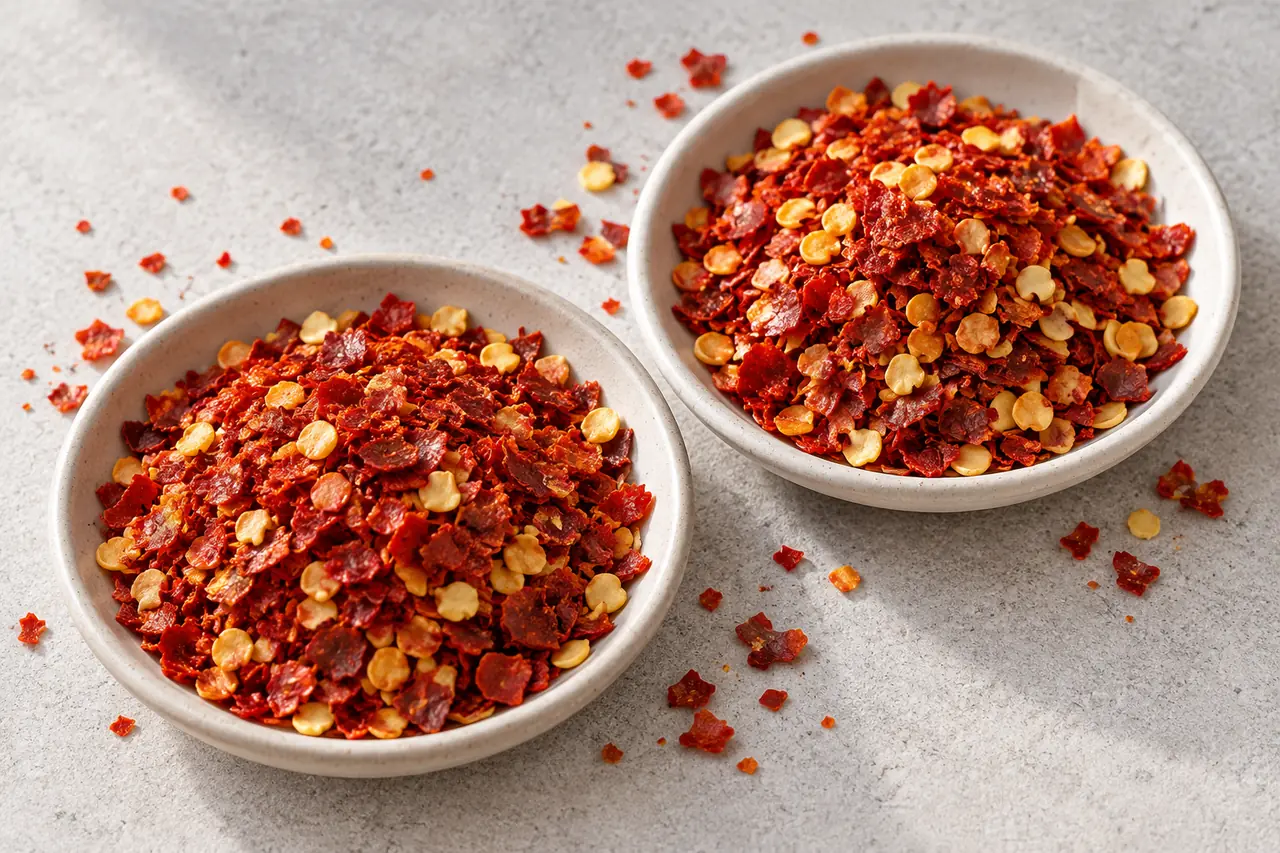
The air-dried red chili-flake listing presents raw air-dried red chili flakes, with a separate 3–5 mm/customized size, 10–40 and 10–20 mesh fraction references and moisture ≤12%. Its customized pungency description is 30,000–50,000 SHU. The lower-heat crushed-flake listing presents crushed raw flakes with 3,000–5,000 SHU and independent 1.5 mm and 1.8 mm entries. Choose between those heat roles first, then establish the actual supplied cut and seeds. Do not turn catalogue size references into guaranteed dimensions or assume both candidates have the same preparation.
Ingredients to compare for this application
Air-dried flakes for a stronger heat role
A visible-cut candidate to evaluate where the meal calls for its separately selected higher heat reference.
- Customizable 30,000–50,000 SHU.
- 10–40 mesh and 10–20 mesh are independent of the 3–5 mm reference.
- Moisture ≤12%; ingredient storage dry and sealed.
Crushed flakes for a different heat role
A separate ingredient comparison when visible pepper is wanted with the lower declared heat range.
- 3,000–5,000 SHU reference.
- 1.5 mm and 1.8 mm are independent entries requiring an actual cut basis.
- Optional steam treatment requires selection.
These product specifications are a starting point for selecting a grade. Match the proposed material and sample to your food and order requirements.
Follow the flake before freezing and after reheating
Inspect damage before freezing so mixing damage is not blamed on the cold chain.
- 01Identify the flake
Agree actual cut, seeds, fines and selected ingredient heat.
- 02Inspect before freezing
Locate breakup or hard pieces already present after mixing and cooking.
- 03Compare after reheating
Use the intended method and meal matrix; assess visible structure, bite and local heat separately.
Cutting exposes pepper tissue, while crushing can leave skin, seeds and fines together. Sieving selects a fraction without making these components respond identically in sauce. Decide whether a distinct piece or a softer dispersed inclusion is wanted.
Use our particle and moisture checks to identify the actual preparation, with external heat evidence for the selected ingredient. Keep mesh and millimetre references separate until the cut is defined. Inspect the meal before freezing to locate breakup caused by mixing or cooking. Then reheat matched portions by the intended method and compare skin, firm centres and local burn. This directs the next material change without turning an incoming-ingredient storage declaration into a frozen-meal guarantee.
Record the real cold-chain scope
Use the real meal history rather than inventing a universal freeze-thaw test.
- ✓Same meal
Keep the sauce, solids, portion and packaging constant during the first flake comparison.
- ✓Actual history
Retain the real freezing, storage and reheating route, including deviations, rather than assuming one universal cycle.
- ✓Separate causes
Meal texture change and pepper fragmentation can coexist without sharing the same cause.
USDA explains that large ice crystals can damage food structure during freezing and thawing, and that freezing is not a general destruction step for microorganisms. This is a reason to control the actual meal comparison, not a promise that one chili grade resists freezing. Keep the real freezing, storage and packaging history. Do not invent extra thaw cycles or use a deliberately abused sample as the only buying test. Temperature history belongs to the finished meal, not to a new spice-shelf-life claim.
Judge the flakes after the intended reheating method
A candidate must work under the reheating instruction actually intended for the pack.
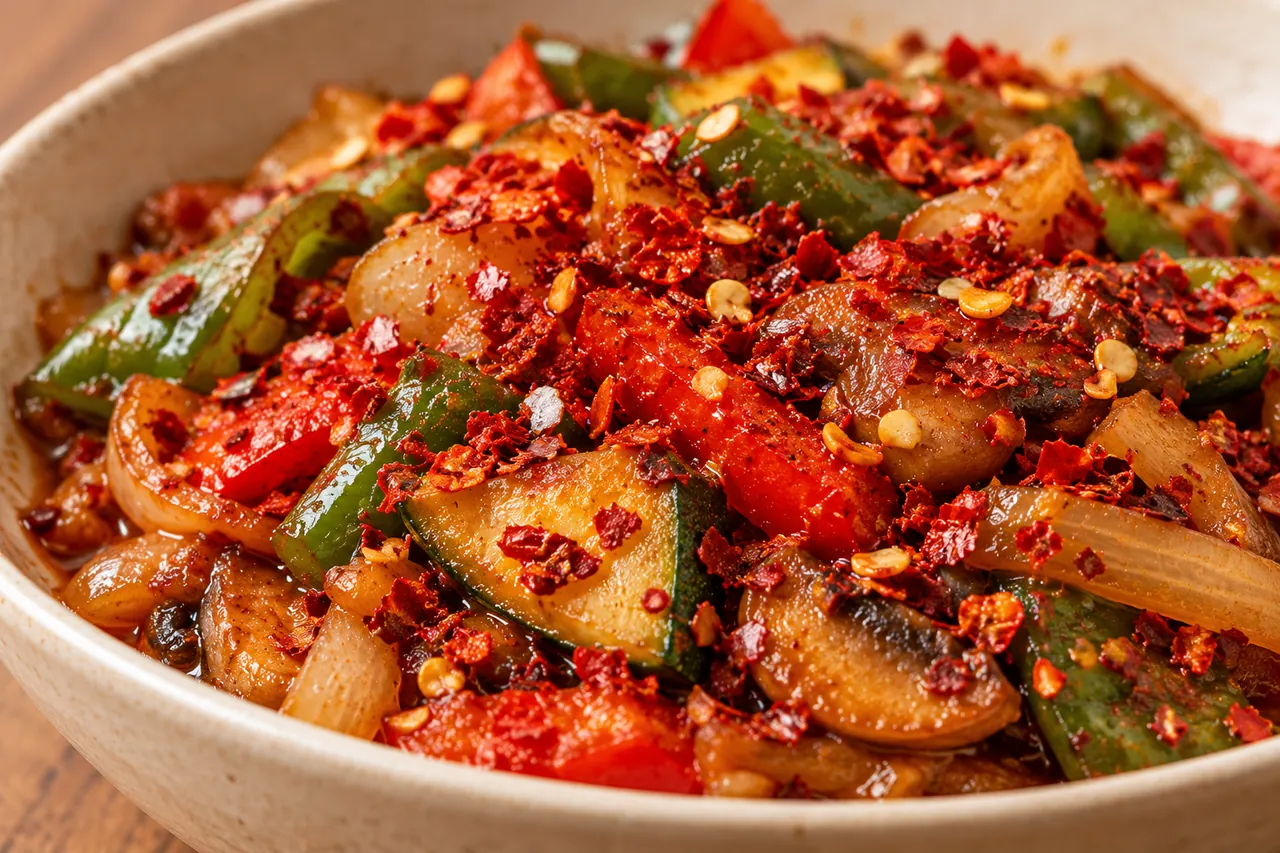
Reheat matched portions by the method intended for the pack, then inspect the meal at serving. Record broken skins, firm centres, dispersed red fragments and free liquid as separate observations. Microwave and oven routes should remain separate if both are specified. Check whether a difference occurs throughout the portion or only in one area. If a flake becomes acceptable only after a longer reheating route than the customer instruction, the candidate has not met that product's eating-quality brief.
Compare heat within the reheated portion
Sample sauce-rich and solid-rich areas to detect concentrated heat beside visible flakes.
| Candidate | Declared listing detail | Meal decision |
|---|---|---|
| Air-dried red chili flakes | 30,000–50,000 SHU | Compare actual grade and local burn in the reheated portion |
| Lower-heat crushed flakes | 3,000–5,000 SHU | Assess a different visible-inclusion heat role |
| Selected cut | Dimensions and seeds defined for that preparation | Inspect cooked bite and fragmentation separately |
| Incoming storage | Dry-sealed or cool-dry declaration, by listing | Do not turn ingredient storage into frozen-meal shelf life |
Evaluate flavour and heat in the reheated portion, not by tasting a dry flake alone. The air-dried red chili-flake listing's higher declared range and the lower-heat crushed-flake listing's lower range do not directly define the meal's heat. Sample several areas, including sauce-rich and solid-rich portions. If the problem is local burn around an intact piece, reducing the overall dose may also remove the intended visible pepper. A useful alternative comparison separates the main heat contribution from the visible inclusion, using actual identified ingredients rather than an assumed milder batch.
Keep ingredient treatment and frozen-meal validation distinct
Ingredient treatment and storage references do not validate the frozen meal.
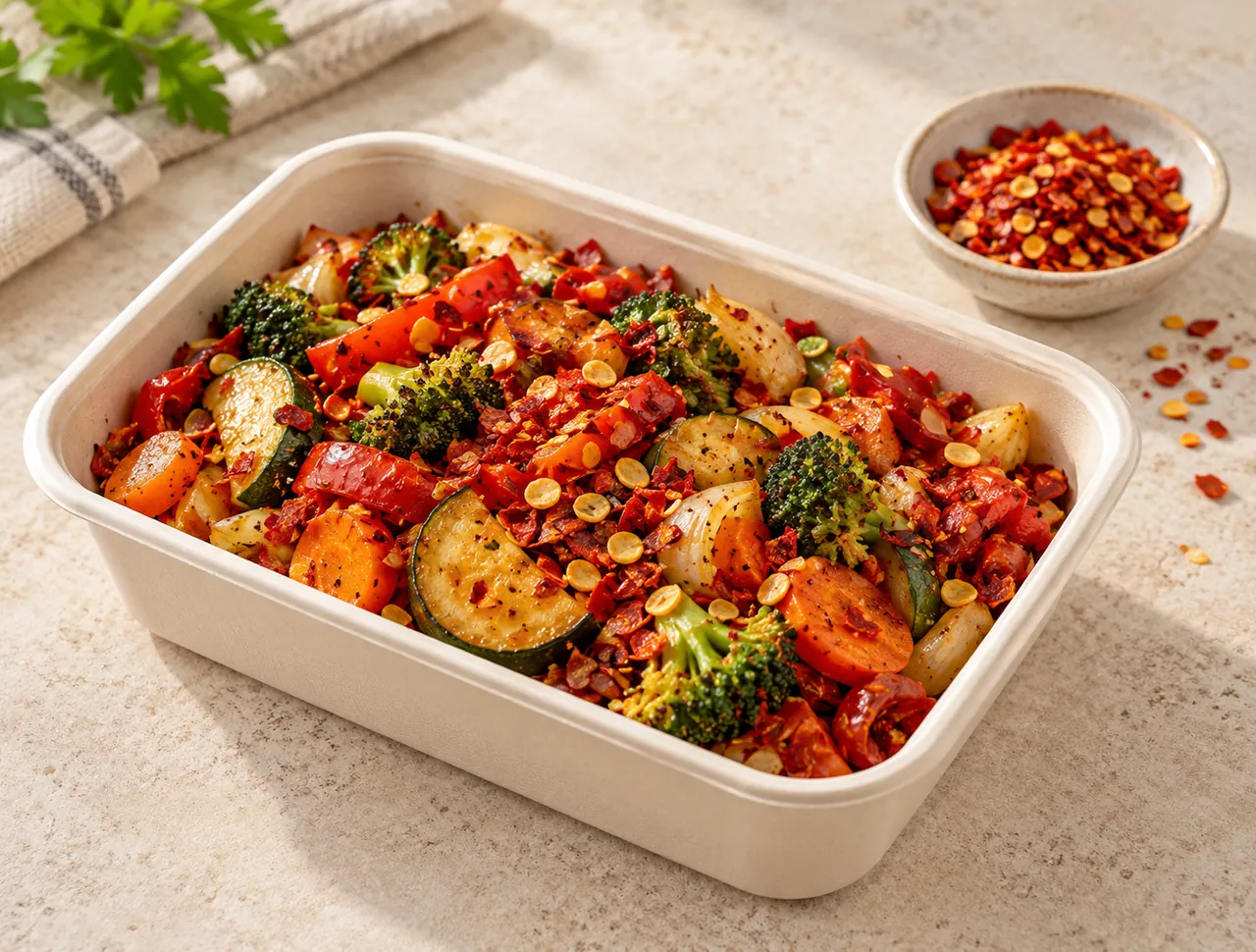
We can select in-house steam microbial reduction according to the actual flake order and its intended use. Ask for the selected process scope and applicable external microbiological evidence; optional treatment on a listing is not execution for every lot. Moisture and particle size are checked internally. Separately retain each ingredient's handling declaration: the air-dried flakes state 24 months dry and sealed, while the lower-heat crushed flakes state two years cool and dry. Neither sets the frozen meal's shelf life or demonstrates freeze-thaw performance. Your meal's controls and reheating validation remain specific to that food.
Compare offers against the same meal endpoint
A defined cut can still be unsuitable if skin, fragments or local burn miss the target.
- 01Undefined material
A missing cut, composition or executed treatment prevents a sample from representing repeatable supply.
- 02Defined but unsuitable
A known preparation that gives hard skin, excessive local burn or unacceptable fragments misses this meal’s endpoint.
Compare offers only after the material has been assessed in the same meal endpoint. Specify the actual cut, seeds, fines, heat basis and ingredient preparation that correspond to the accepted sample. Record a material that fails bite or appearance as a mismatch rather than burying it under missing paperwork. If a difference appears only after storage, retain the original meal and package conditions in the follow-up. The factory can discuss a particular ingredient; it cannot infer or guarantee your meal's cold-chain performance.
Send the flake position and reheating brief
Send where the pepper sits and when the defect first appears.
- 01Locate the pepper
Describe sauce or solid contact and the intended visible piece in the served portion.
- 02Describe the route
Include preparation before freezing and the actual reheating method used in your comparison.
- 03Set acceptance
Separate piece integrity, skin and seed bite, and heat before discussing the actual flake proposal.
Share the sauce, grain or solid background, pepper position and preparation before freezing. Link the air-dried or lower-heat crushed-flake candidate and send pre-freeze and served-portion photographs. Include the actual reheating instruction, desired visible cut, seed condition and treatment requirement. We can discuss the material and sample scope around the defect that matters in your meal.
- Meal matrix and pepper position
- Selected cut and seed criteria
- Preparation before freezing
- Actual cold-chain and package scope
- Reheating and served-piece target
- Lot documents, quantity and package
Your next purchasing decision
Specify the flake for your reheated meal
Discuss the flake against one reheated meal reference.
Give Qingdao Relia Spices Co., Ltd. / RELIA SPICES the meal matrix, pepper position and reheating method. A pre-freeze and served-portion comparison is more useful than a request for universal frozen-food suitability.
The enquiry page keeps this guide with your message. Add your quantity and destination so we can discuss the relevant material.