
Steam Treatment and Testing for Retail Chili Spices
Choose a retail paprika or chili powder with its treatment requirement built into the buying brief. RELIA SPICES in China supplies the ingredient, offers in-house steam microbial reduction according to order requirements and fills customer-logo retail packs.
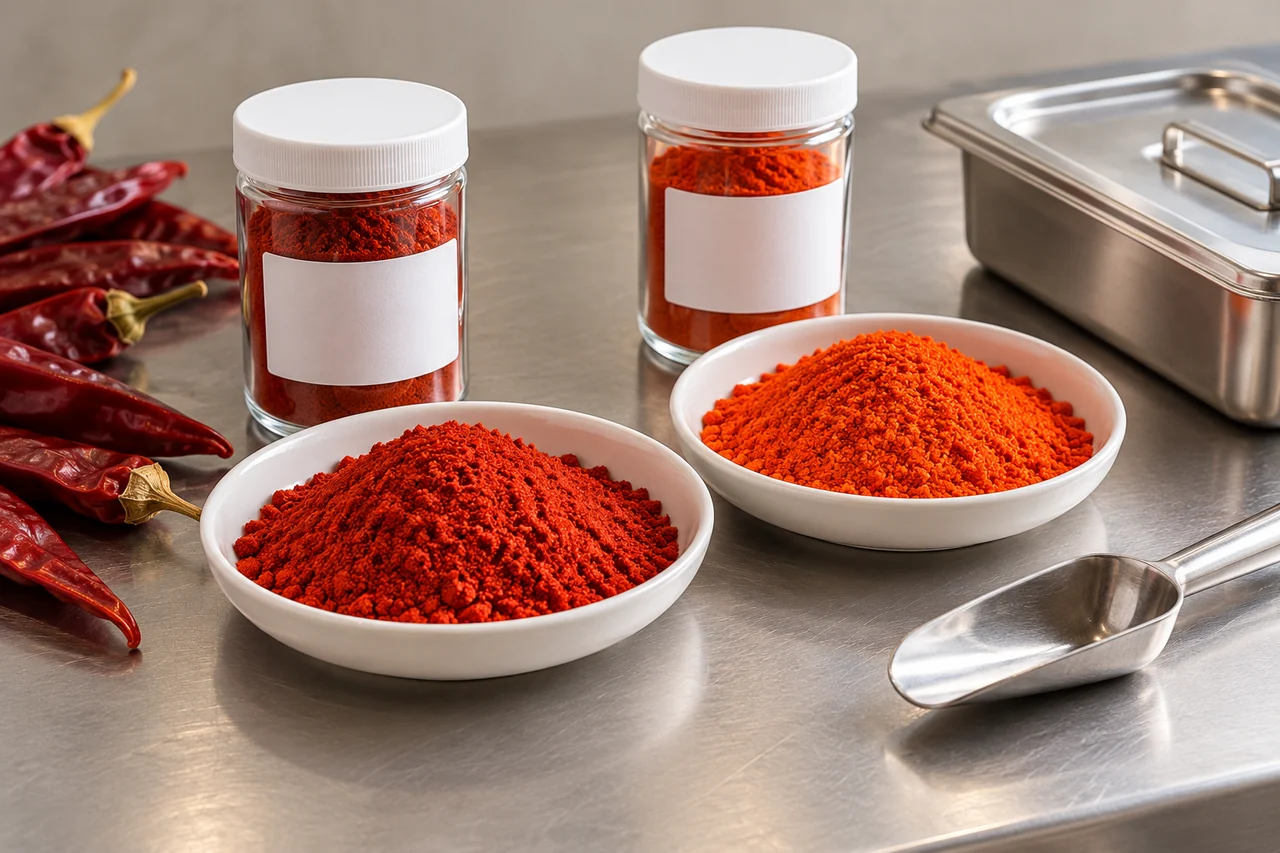
Packaging and project details
We check moisture and particle size internally and use external laboratories for ASTA, SHU and microbiology. Send the product, intended consumer use, test requirements and pack specification to discuss an appropriate proposal.
Connect three decisions in the first enquiry
- Choose the powder
Identify the paprika or chili preparation and intended consumer use.
- Specify the technical need
State the microbial requirement, sampling basis and evidence requested.
- Plan the retail product
Bring the chosen ingredient and treatment into the branded-pack proposal.
Connect Factory Preparation with the Right Tests
Preparation, order-specific treatment and analytical evidence play different roles.
RELIA SPICES prepares purchased dried chilies through cleaning, foreign-matter removal, destemming, grinding or cutting/crushing, sieving and packaging. In-house steam microbial reduction is available according to order requirements, and we supply and fill customer-logo retail packs.
Define the laboratory and sampling scope
Moisture, particle size and routine items are checked internally. ASTA, SHU and microbiology are outsourced to laboratories. Agree the actual laboratory, sampling and methods with the project evidence you need; the service statement does not specify accreditation or a test frequency.
Match the requirement to its source of evidence
- Factory preparation
Selected material, manufacturing route and any order-specific steam requirement.
- Internal checks
Moisture, particle size and routine items for the proposed ingredient.
- External laboratory
ASTA, SHU and microbiology within the agreed analytical scope.
Choose the Powder Before Assigning Test Results
Colour-led paprika and heat-led Cayenne need their own specifications.
Sweet paprika offers nominal 70 mesh, a separate customizable 60–70 mesh reference, customizable 80–220 ASTA and moisture ≤8%. Select the grade and grind you intend to brand, then link the applicable evidence to that identified material.
Resolve the Cayenne preparation route
Cayenne offers nominal 60 mesh, customizable 60–70 mesh, moisture ≤9% and descriptive mild, medium or hot options. The listing gives no numerical SHU grade. Its Stir-Fried and AD-related processing wording needs an agreed actual route before treatment and product comparisons are finalized.
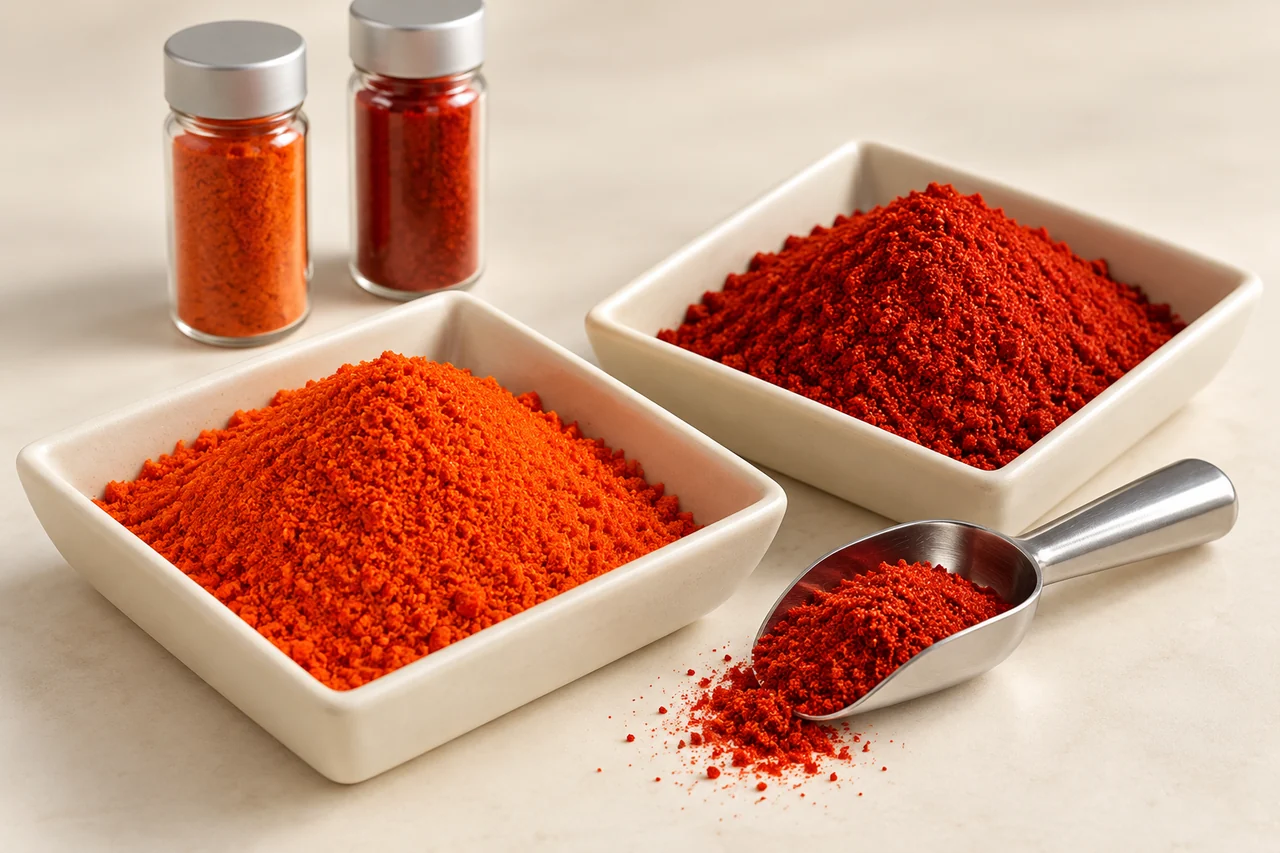
Keep each powder's buying cues together
Sweet paprika for a colour-led retail SKU
Use this powder as the colour-led candidate before specifying treatment and material-specific testing.
- Grind
- Nominal 70 mesh with a separate customizable 60–70 mesh reference.
- Colour
- 80–220 ASTA customization scope; select the actual grade.
- Moisture
- ≤8% listing limit; microbiological acceptance is a separate requirement.
Cayenne powder with selected pungency
Use this candidate for a heat-led powder, agreeing pungency and the actual route behind its differing processing descriptions.
- Grind
- Nominal 60 mesh; separate customizable 60–70 mesh reference.
- Pungency
- Mild, medium or hot options; no numerical SHU grade is supplied.
- Moisture
- ≤9% listing limit, tied to the proposed material.
Review the selection criteria
- Sweet paprika
- 70 mesh; moisture ≤8% Select a colour grade within the listing's 80–220 ASTA customization scope.
- Cayenne powder
- 60 mesh; moisture ≤9% Choose mild, medium or hot and agree the actual processing route.
Give the Laboratory Brief a Clear Acceptance Basis
The target, method and sample identity make a result useful to your buying decision.
State the organism or indicator, reporting unit, acceptance limit, method and proposed sampling point. Identify whether the requested sample represents the ingredient stage or the product after retail filling; those are different points in the material's journey.
Link acceptance to the identified sample
Use the catalogue declaration as a starting point for the specification. The proposed material needs applicable evidence for your agreed acceptance basis, with the selected preparation and sample identity kept visible in the report.
Build a usable test request
| Selection point | What to consider |
|---|---|
| Purpose | Distinguish detection, indicator enumeration and process validation. |
| Sample | Name the material, preparation and point at which it is sampled. |
| Method | Agree the method, sample quantity, unit and reporting format. |
| Decision | State the acceptance criterion and the evidence needed for approval. |
Review Steam Treatment with the Material It Changes
Microbial objectives and physical product quality belong in the same treatment discussion.
FDA's spice risk profile explains that steam effectiveness depends on actual conditions and exposure. Material and treatment conditions therefore need to be considered together, rather than using equipment availability as a universal reduction claim.
Compare the material after selected treatment
For your selected powder, agree the treatment scope and applicable process evidence, then compare the proposed material's moisture, particle condition, colour and aroma. Clumping or a changed flow can matter to retail handling even when the intended comparison began with a microbial requirement. Set the operating and acceptance basis for the project before making a reduction claim.
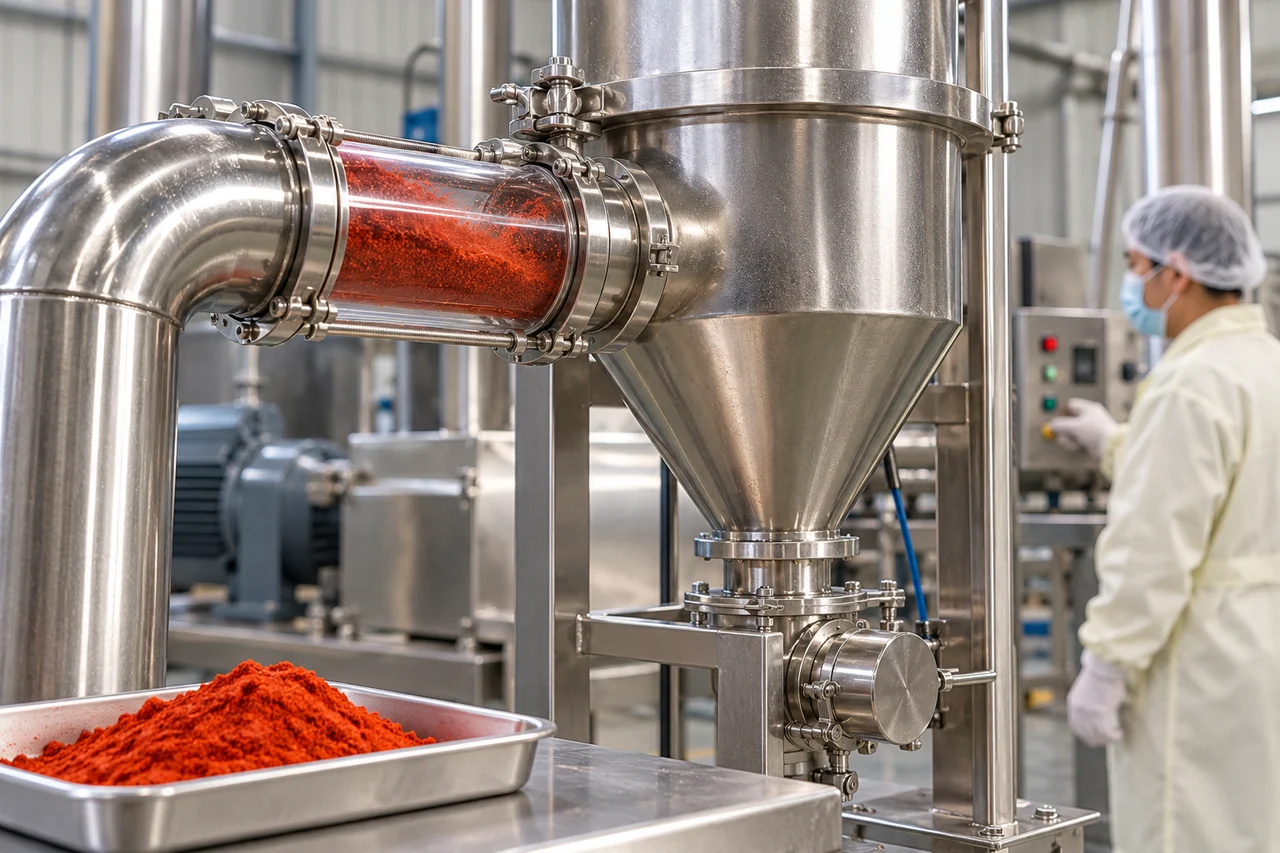
Evaluate a defined treatment on a defined product
- Identify the material
Keep the selected powder and preparation consistent through the discussion.
- Agree the treatment scope
Define the objective, operating basis and process evidence required.
- Check physical condition
Review moisture and particles on the proposed material.
- Compare the food role
Assess colour, aroma and use with the accepted product reference.
Compare Quality Alongside the Microbial Requirement
Keep colour, texture and flavour visible when assessing the proposed treated material.
Compare the proposed material with the reference that established your product choice. Use the same food base, addition stage and comparison method so differences in colour, texture or aroma can be interpreted usefully.
Separate physical quality from laboratory results
Our internal moisture and particle checks support the physical comparison; applicable external colour, heat and microbiology work addresses separate analytical questions. ASTA is a colour measure rather than a microbial result, and moisture content is different from water activity.
Read quality on three separate axes
- Microbial evidence
The agreed organism, method, sample and reported result.
- Physical condition
Moisture, particles and any clumping relevant to handling.
- Product role
Colour, heat and aroma in the same intended food use.
Use Each Report for the Decision It Supports
A sample result and a validated process claim answer different questions.
A laboratory result describes the tested sample within its method and sampling scope. FDA's risk profile explains why negative samples need careful interpretation when contamination is uneven, making sample identity and sampling basis important parts of the report.
State any required process-validation evidence
If your project requires process validation, certification or a stated reduction target, include that requirement at the start. Review the actual process evidence and sampling results for the selected material before using the requested claim; the treatment service itself is not a validation statement.
Read the evidence without losing its scope
- Sample result
What was found in the identified sample under the stated method.
- Sampling basis
How the sample and sampling stage relate to the proposed material.
- Process claim
The separate validation or reduction evidence required for the claim you request.
Plan Retail Filling with the Selected Treatment
The powder, treatment request and customer-logo pack should describe one product.
We supply the ingredient and fill branded retail packs. Send your specified packaging for assessment; we can assist production of customer-branded packaging or accept packaging supplied by you.
Assess storage with the retail pack
Include the handling, closure and storage requirements for the proposed retail configuration. Review the evidence relevant to moisture protection and shelf life with that combination; neither follows automatically from selecting steam treatment.
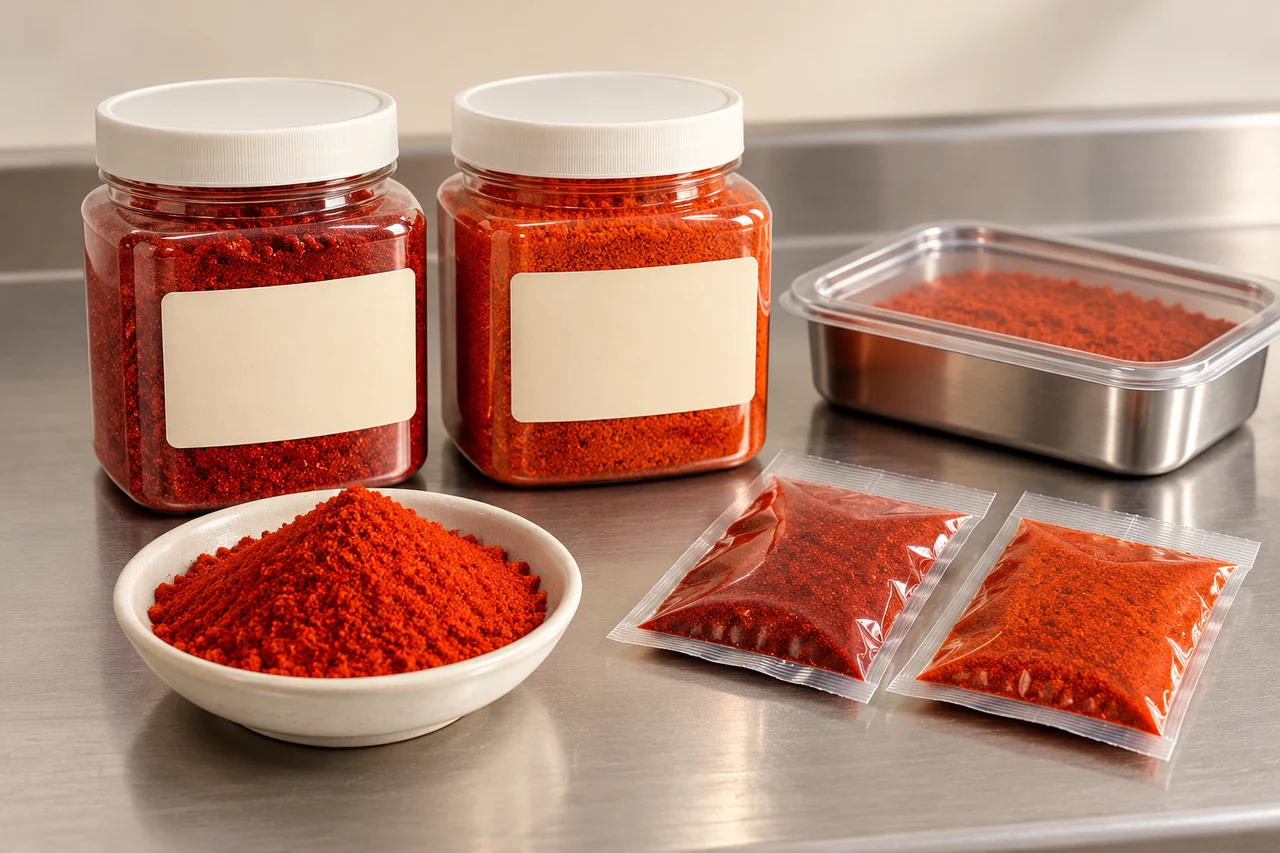
Carry the accepted powder into the retail-pack brief
- Selected material
The identified powder, preparation and any selected steam treatment.
- Packaging supply
Your specified components or assistance producing branded packaging.
- Filling request
Requested net content, closure and artwork for assessment.
- Handling basis
Storage and supporting evidence for the proposed retail configuration.
Match Product Information to Consumer Use
Microbial, composition and preparation requirements need their own supporting information.
Describe the intended consumer use and any downstream cooking step, particularly if the spice is added after cooking. Evaluate the selected material and its documentation for that use.
Address ingredients, allergens and other hazards
Keep full ingredients, relevant allergen information and chemical-contaminant requirements alongside the microbial brief. Steam microbial reduction alone does not establish ready-to-eat, sterile, hazard-free or allergen-free status.
| Your input | Factory assessment focus | Decision to confirm |
|---|---|---|
| Material and requirement Selected powder or flakes, requested treatment and test acceptance criteria. | Discuss in-house steam microbial reduction according to the order requirement. | Selected ingredient and the comparison or test basis. |
| Analytical scope Required ASTA, SHU or microbiology work and the material to be tested. | Commission the relevant laboratory work; keep the result linked to its identified sample. | Packaging format, component responsibilities and approval references. |
| Pack and evidence review Final ingredient, retail-pack proposal and the records needed for approval. | Review product-and-pack scope; request applicable inspection materials by email. | Agreed product, packaging and order scope for quotation. |
This is a planning handover for your enquiry. Packaging, MOQ, net content and timing are assessed and quoted for the product, format, printing method and quantity.
Quote the Ingredient, Technical Work and Retail Pack
A comparable offer covers the actual product and the QA work you request.
Include the selected grade, steam requirement, tests, packaging specification, printing approach and intended quantity in one request. MOQ, net content and lead time are quoted for that actual combination.
Finish ingredient and packaging decisions
Use the paprika or chili-powder guide to finish the material selection, and the logo-packing guide to organize packaging supply and artwork. This gives the treatment discussion a defined retail product to work toward.
Complete the choice that still needs detail
Review the next-step choices
- Colour-led powder
- Choose the paprika colour grade and grind.
- Heat-led powder
- Choose the Cayenne pungency and agreed processing route.
- Branded retail pack
- Connect the accepted material and QA requirements to the packaging brief.
Send Your Retail-Spice Treatment Brief
Bring the intended use, microbial requirement and pack request into one discussion.
Contact Qingdao Relia Spices Co., Ltd. / RELIA SPICES with the selected paprika or chili powder, intended consumer use, destination and proposed retail pack.
Specify sampling, methods and process evidence
Include the organism or indicator, acceptance criterion, method, sampling basis and process evidence your QA team requires. We can discuss order-specific steam treatment and laboratory work alongside the ingredient and branded-pack proposal.
The inputs for a QA-led retail enquiry
- Product and use
Ingredient link, selected preparation and how consumers will use it.
- Technical requirement
Organism, limit, unit, method and requested process evidence.
- Sample scope
The proposed sampling stage and material identity.
- Pack and order
Customer logo, packaging specification, quantity and destination.