
Choosing Chili Flakes for Fried Chili-Crisp Texture
For chili crisp with a lasting bite, start with the flakes you want customers to eat after frying and cooling. Choose coarse pieces for visible texture, then select seeds and heat separately. RELIA SPICES can discuss crushing, sieving and order-selected steam treatment. Send your cooled serving reference and filling method so we can compare a suitable preparation in your actual oil and recipe.
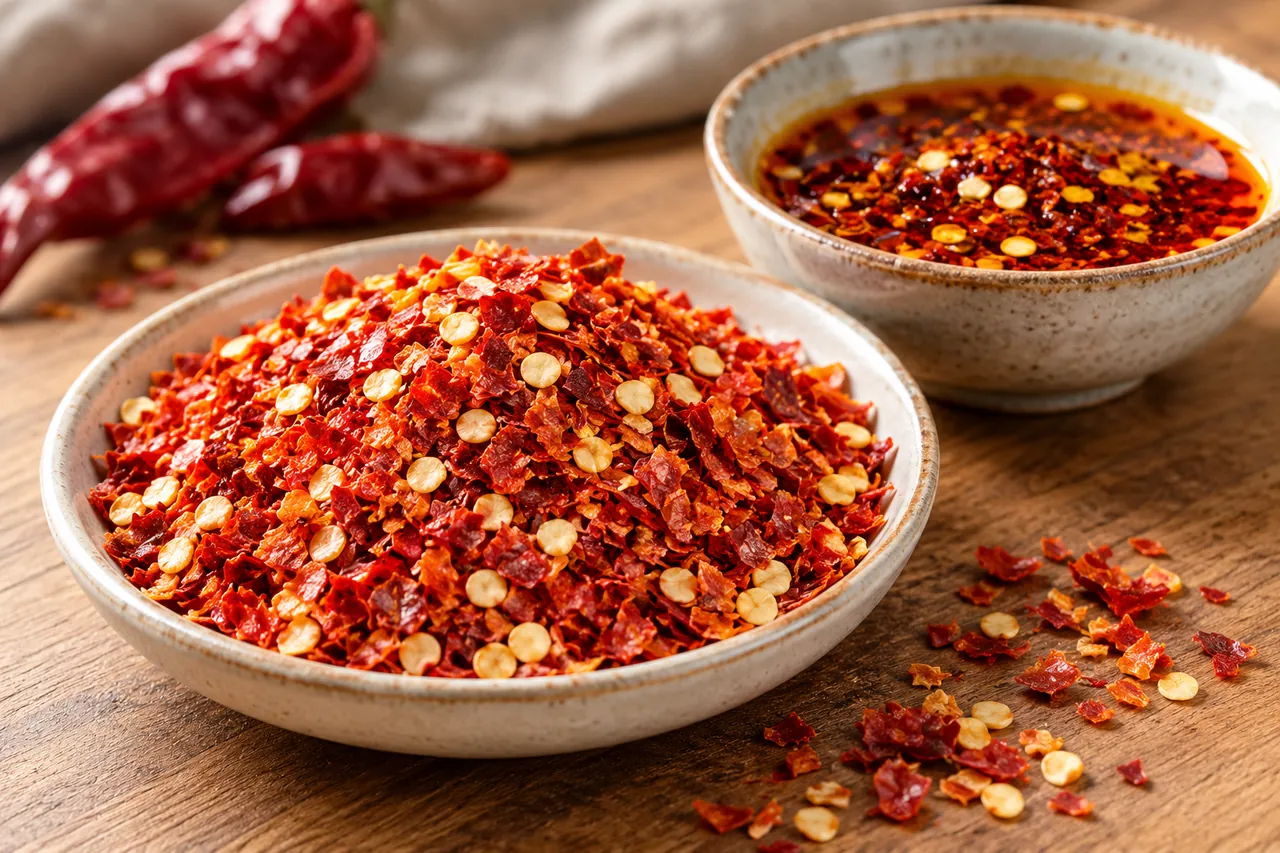
- Visible bite
- Coarse Gochugaru-described flakes list 5–8 mesh and moisture ≤8%.
- Heat choice
- Seeded flakes list 20,000 SHU; another crushed preparation lists 3,000–5,000 SHU.
- Purchase endpoint
- Compare cooled crunch, oil-held texture and solids reaching the finished pack.
Prepare the flake for the bite you want
Crushing and sieving define the particle; your frying route determines its eating texture.
- 01Cut or crush
Set the main visible pieces and acceptable seed condition.
- 02Sieve
Separate the wanted particle distribution from loose fine material.
- 03Trial the supplied flake
Compare the ordered preparation after frying, cooling and oil holding.
RELIA SPICES cleans and destems purchased dried chilies, then cuts or crushes, sieves and packs the selected preparation. For chili crisp, agree the main flake, accompanying seeds and loose fines separately. The coarse Gochugaru-described preparation lists 5–8 mesh and moisture ≤8%; the seeded alternative lists 20,000 SHU; another crushed preparation lists 3,000–5,000 SHU.
We check moisture and particle size internally. Steam microbial reduction is available in-house according to order requirements, with microbiology and numerical heat analysis handled through outside laboratories. Select the treatment with the ingredient, then use the corresponding supplied preparation in your frying comparison.
Shortlist three actual flake preparations for different roles
Choose the visible cut, seed content and heat as separate ingredient requirements.
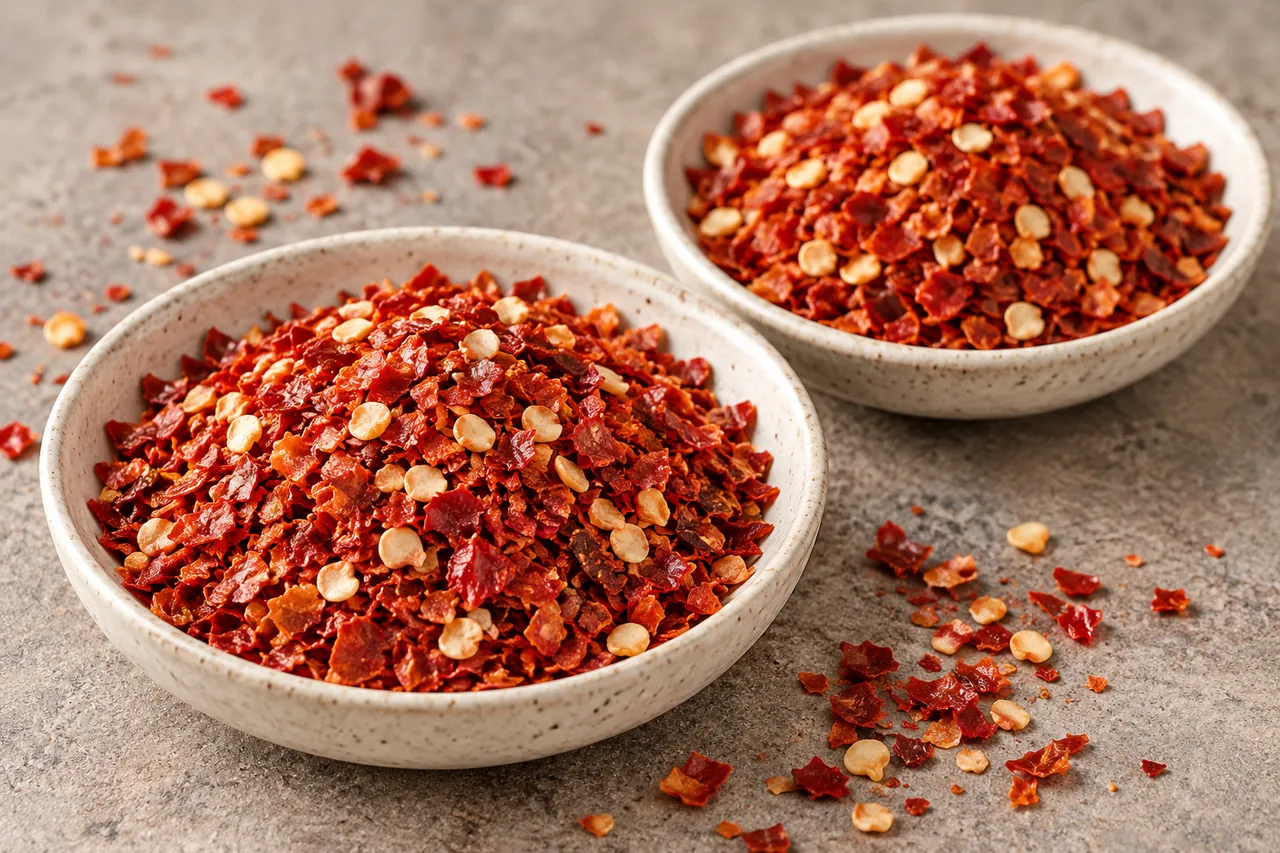
Use the coarse 5–8 mesh flakes as a starting point when visible irregular pieces are important. Consider the seeded red flakes when seeds belong in the bite and their 20,000 SHU reference fits the heat brief. The separate 3,000–5,000 SHU crushed preparation offers another heat starting point.
Choose samples by those roles rather than by a size ladder. The seeded material's 3*5 mm notation does not define its axes. The other crushed preparation lists 1.5 mm and 1.8 mm independently. Agree the actual cut and seed condition you will receive before comparing their frying response.
Ingredients to compare for this application
Coarse Gochugaru-described flakes
A coarse-particle starting point for a chili crisp with visible red pieces and a separately defined fine fraction.
- 5–8 mesh reference
- Moisture ≤8%
- Crushed red chili with strong, pungent flavour
Seeded red chili flakes
Compare when seeds are part of the intended bite and the stated heat suits your recipe.
- Red flakes with seeds
- 20,000 SHU reference
- 3*5 mm notation with axes to agree
Crushed chili, 3,000–5,000 SHU
A separate heat starting point for comparison alongside the coarse or seeded candidates.
- 3,000–5,000 SHU
- Independent 1.5 mm and 1.8 mm references
- Optional steam treatment
These product specifications are a starting point for selecting a grade. Match the proposed material and sample to your food and order requirements.
Use moisture as an input measurement, not a frying instruction
Use actual incoming moisture with the preparation selected for your frying trial.
| Stage | Record | Interpretation |
|---|---|---|
| Before frying | Actual moisture and particle condition | Describe the sample entering the trial |
| During frying | Actual temperature history and visible events | Compare the process, not a catalog promise |
| After cooling | Bite, colour and loose fine material | Decide against the accepted serving reference |
Use the actual moisture result to identify the sample entering the frying trial. RELIA checks moisture internally; the coarse-flake catalog limit is ≤8%, while a missing value on another candidate needs an order-specific specification rather than a borrowed limit. Record lumps and particle condition as separate physical observations.
Our steam microbial-reduction equipment is used according to order requirements. Specify the treatment you need and trial the corresponding supplied preparation. Bubbling, mass change and a crisp bite describe frying behaviour; they do not replace the outside-laboratory microbiology evidence required for the ingredient and finished-food use.
Separate crisp break from hard or leathery particles
Crisp fracture, hard seeds and leathery skin are different trial outcomes.
- 01Fracture
Compare a clean break with particles that resist chewing after cooling.
- 02Seed and skin
Identify hard seeds and leathery skin as separate texture observations.
- 03Oil holding
Recheck the accepted bite after the intended oil holding and packing route.
Skin fragments and seeds need not reach the same eating condition during frying. A particle that feels brittle when dry may become hard, leathery or pleasantly crisp after frying and cooling. Compare those sensations separately rather than scoring every resistant piece as extra crunch.
Use one approved oil, loading, agitation, draining and cooling procedure for the first comparison. Taste equal portions at the same serving temperature and note crisp fracture, hard seeds, leathery skin, colour and bitterness. Repeat after the intended oil holding. If a different cut needs another frying route, cost that as a deliberate second version. Return the preferred sample to RELIA so the cut and fines discussion follows a result you can reproduce.
Judge colour and bitterness alongside the desired crunch
The preferred crunch must also deliver acceptable colour, heat and flavour.
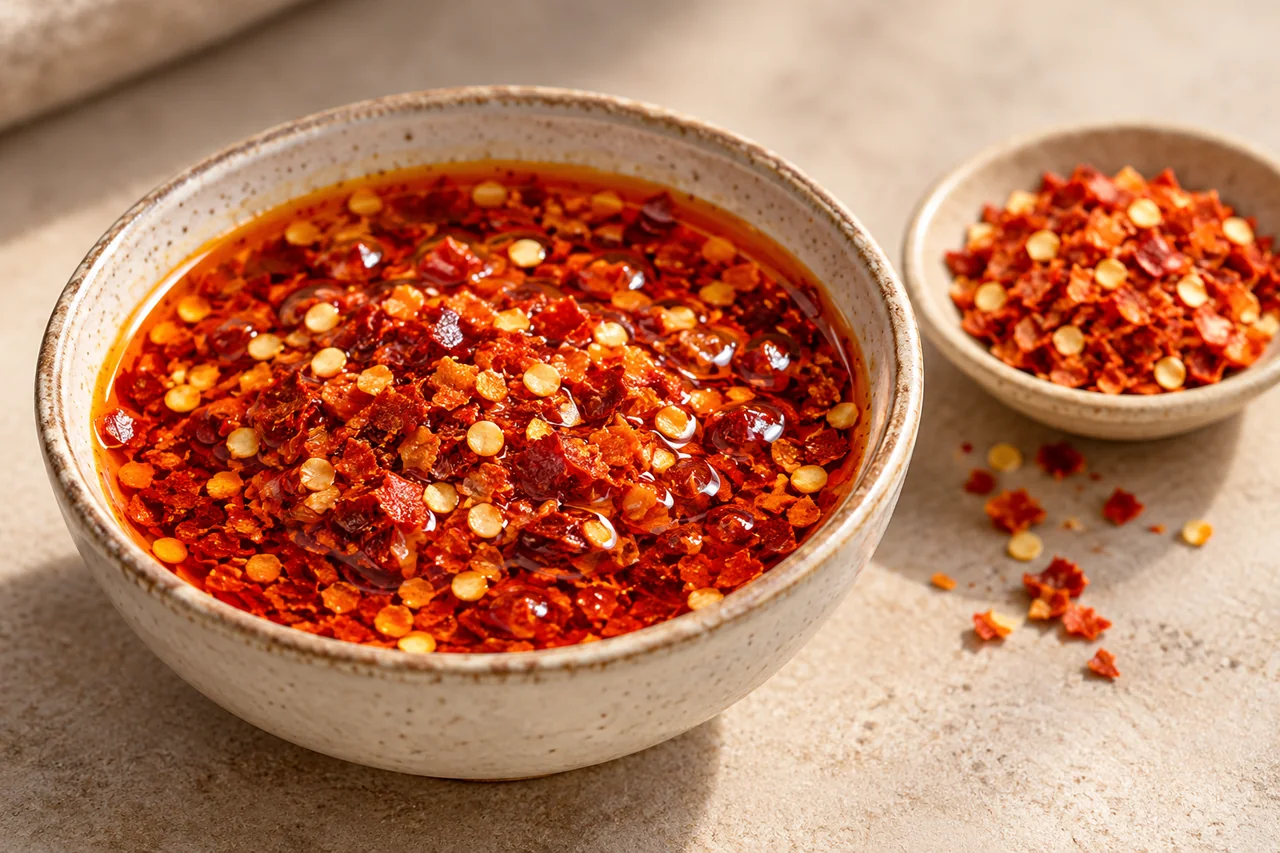
Inspect the cooled particles under consistent light and taste them at the intended serving amount. Separate dark skin, concentrated seasoning and a burnt or bitter note in the observation. Dry redness and a listed heat reference cannot predict either frying colour or the resulting sensory balance. The seeded flakes' 20,000 SHU and the crushed candidate's 3,000–5,000 SHU refer to ingredients, so a comparison made at different recipe doses cannot be called a texture-only experiment.
Keep the oil and solids consistent through filling
Compare oil and solids in early, middle and late filled packs.
- 01Initial fill
Record the solids and oil after the normal start-up practice.
- 02Steady operation
Compare representative portions with actual agitation and residence time.
- 03Restart and end
Check whether waiting or depletion changes the oil-to-solid handover.
Compare first, middle and last packs using your normal stirring, waiting and restart pattern. Separate and weigh oil and solids by the same method for each portion. Note any build-up at the outlet. This shows whether an attractive tasting bowl becomes an inconsistent commercial fill.
Keep filling distribution separate from texture change during oil holding. A cut can give the right bite but still need a different filling arrangement to deliver the intended amount of solids in every pack.
Recheck the particles in the intended oil package
A freshly cooled sample must also work after holding in its intended oil pack.
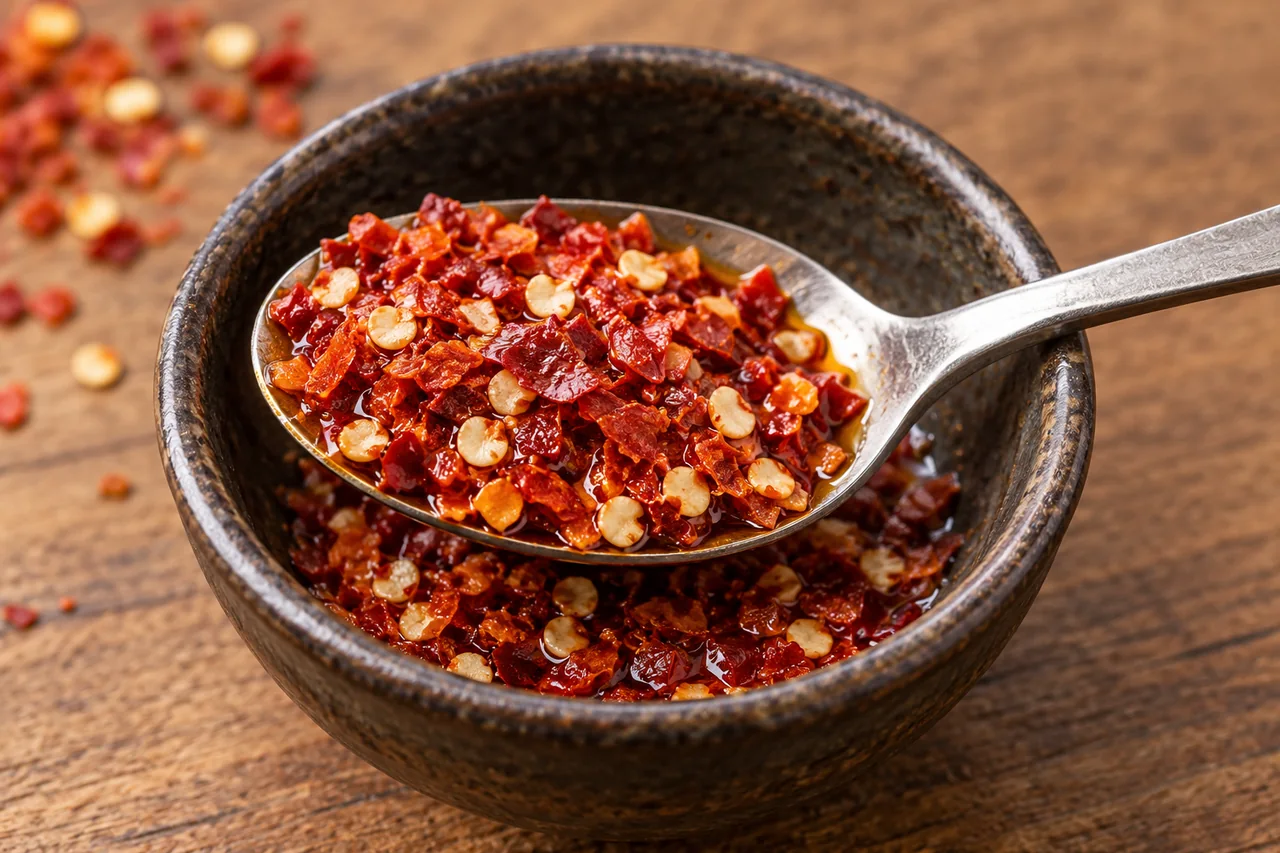
Hold trial packs using your actual container and planned conditions, then compare them with the freshly cooled reference at agreed observation points. Examine particle bite, oiliness, heat distribution and any fine sediment. Do not label a change as moisture uptake or oxidation without supporting measurement. The ingredient's period statement is not the finished chili crisp's life, and a texture tasting is not a shelf-life or safety validation.
Rank candidates by accepted servings and process burden
Price the accepted serving, including screening losses and extra preparation.
- 01Eating fit
Meet crispness, flavour and fine-residue criteria at the intended serving.
- 02Pack fit
Meet actual holding and filling observations without assuming stability.
- 03Operating fit
Compare measured usable output and added preparation with the material price.
Combine the cooled texture result, held-pack result, filling distribution and measured usable output. If fines are screened out, report that loss; if additional buyer preparation is needed, include it in the comparison. Avoid declaring one material universally crispest. A lower-heat input may be the best sensory starting point for one recipe, while a seed-bearing material may suit another. The result should explain which preparation meets your defined product and which observed limitation caused another to be set aside.
Send the particle and process brief together
Return the cooled reference, cut requirements and filling observations with your enquiry.
- 01Eating target
Describe crisp break, unwanted hardness and the normal serving context.
- 02Input preparation
Specify cut, seeds, fines and the heat requirement independently.
- 03Trial response
Return cooled, held and filling observations to guide the next material comparison.
Share your cooled chili-crisp reference, desired cut and seed criteria, permitted fine material and flavour target. Include your actual frying route, oil system, filling pattern and evaluation points. We can discuss the coarse, seeded and crushed preparations against those requirements. Link any proposed sample to the actual preparation and treatment being quoted; quantities, pack formats, sample arrangements and commercial terms remain specific to that discussion.
- Finished texture reference
- Cut, seed and fines criteria
- Oil and trial conditions
- Flavour and heat target
- Evaluation and holding plan
- Sample quantity and package
Your next purchasing decision
Discuss a chili-crisp particle specification
Discuss one defined flake preparation for the chili crisp your customers will receive.
Bring the cooled and oil-held serving references, cut and seed requirements, and the fine material you can accept.
Add your frying route, filling pattern and requested treatment. We can discuss the coarse, seeded or lower-heat preparation against that defined ingredient and process handover.
The enquiry page keeps this guide with your message. Add your quantity and destination so we can discuss the relevant material.