
Dried Chili Inputs for Fermented Hot Sauce
Choose the chili form around when it enters your fermented hot sauce and the preparation your plant will perform. Whole pods leave more cutting or milling to you; flakes and powder provide different ready-to-process starting forms. RELIA SPICES can discuss those preparations and order-selected steam treatment. Send the addition stage, water basis and finished sauce reference so the material fits your fermentation and finishing route.
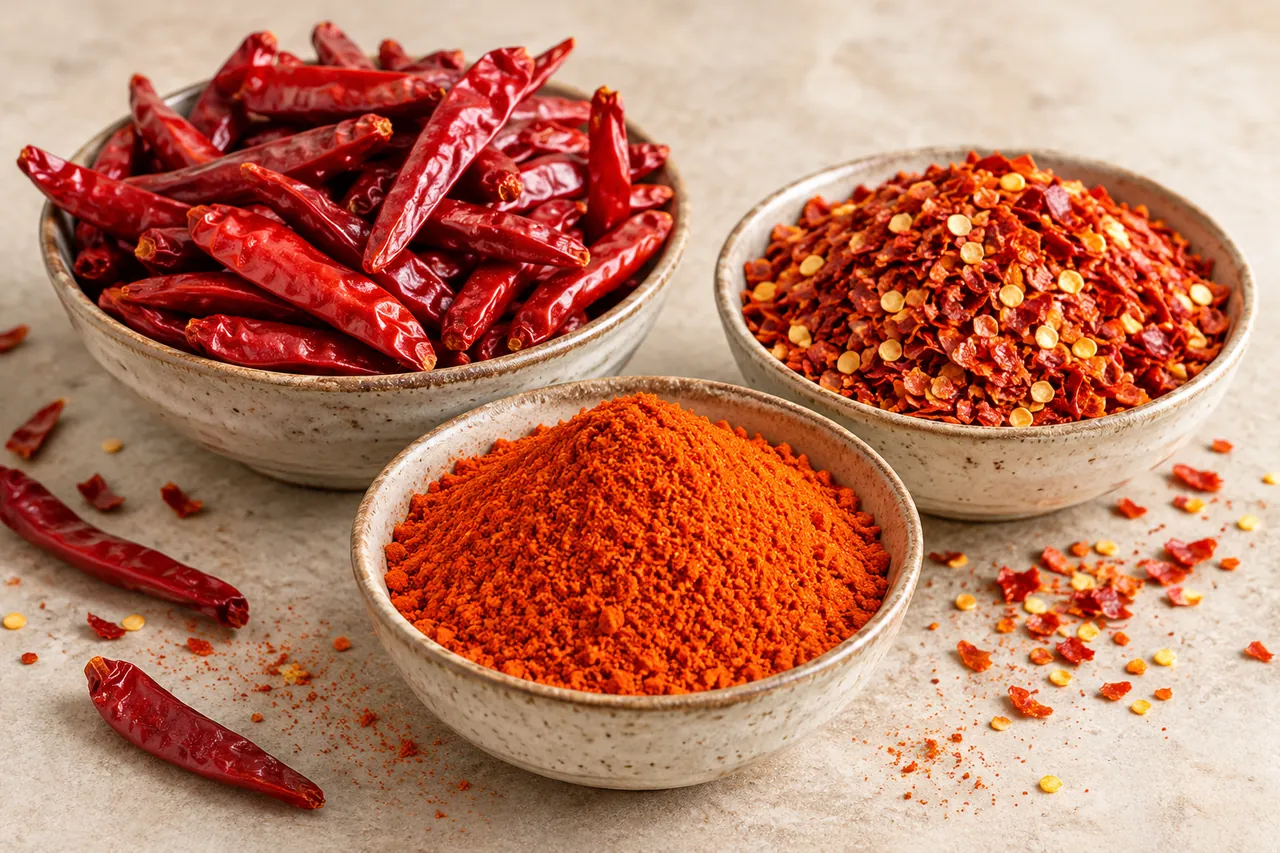
- Pod route
- New Generation pods list 3–6 cm, 12–14% moisture and 50,000–90,000 SHU.
- Prepared routes
- Coarse flakes list 5–8 mesh; Cayenne powder lists nominal 60 mesh.
- Addition stage
- Chili entering fermentation and chili added later need different process reviews.
Choose the chili handover for your addition stage
Agree which ingredient preparation arrives from RELIA and which steps remain in your plant.
- 01Whole-pod input
Define cleaning, stem condition and remaining size reduction.
- 02Flake or powder input
Select the distribution for the actual addition stage.
- 03Your sauce process
Keep fermentation, finishing and later additions in the approved route.
RELIA SPICES cleans and destems purchased dried chilies, then grinds or cuts, sieves and packs the agreed preparation. New Generation pods list 3–6 cm and 12–14% moisture; coarse flakes list 5–8 mesh and moisture ≤8%; Cayenne powder lists nominal 60 mesh and moisture ≤9%.
We check moisture and particle size internally, arrange SHU and microbiology through outside laboratories, and use in-house steam microbial reduction according to order requirements. State whether the chili enters fermentation or is added later. That lets the ingredient treatment and sample discussion address the same use your process team will assess.
Compare the named inputs without assuming equal heat
Pod, flake and powder candidates differ in flavour and heat as well as form.
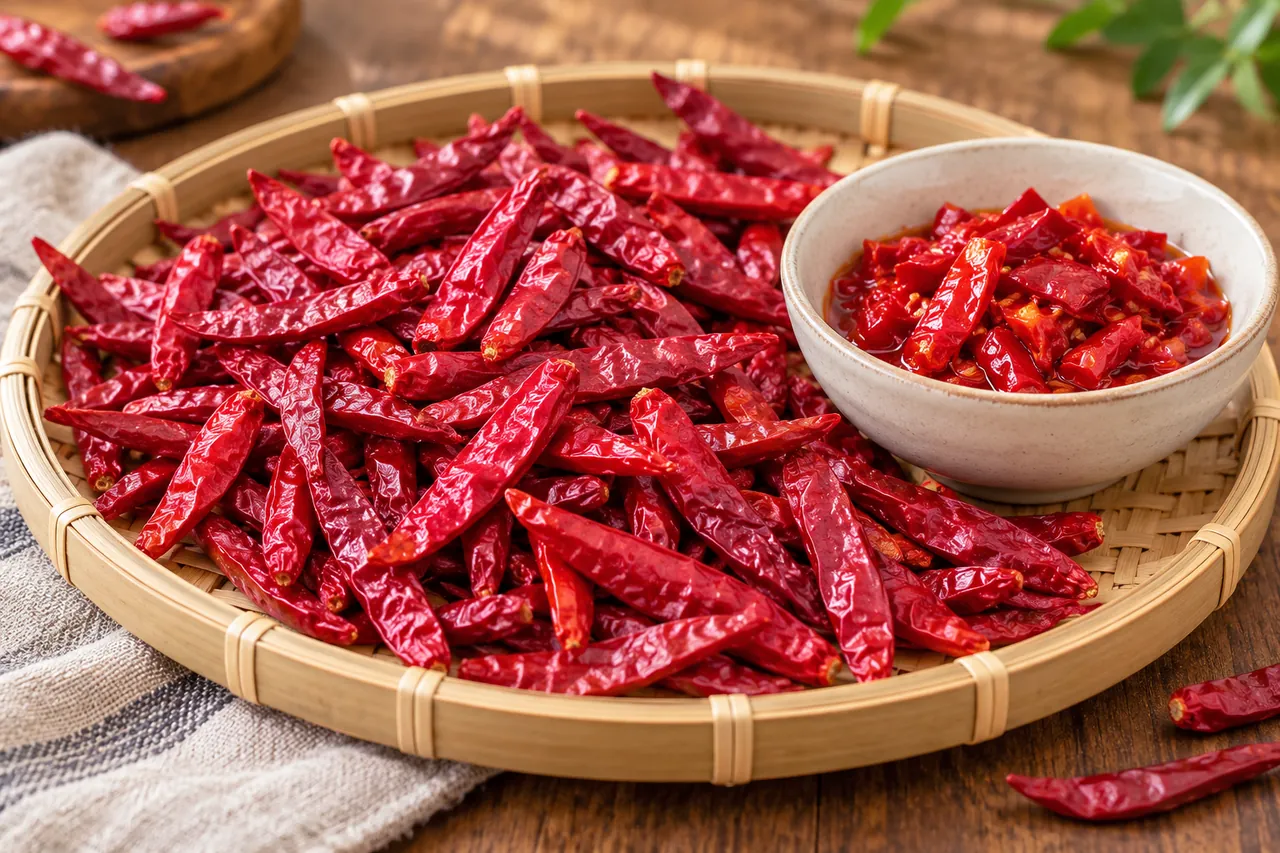
The New Generation dried pods list 3–6 cm, 50,000–90,000 SHU, moisture 12–14% and cleaning before eating. The coarse Gochugaru-described flakes list 5–8 mesh and moisture ≤8%. The Cayenne powder lists nominal 60 mesh, moisture ≤9% and qualitative heat choices. These give three concrete starting routes. They do not give equivalent pungency, fixed hydration yield or a supplied fermenting grade; select the actual preparation and flavour before testing the route.
Ingredients to compare for this application
New Generation dried whole pods
Compare when your plant wants to control more of the chili preparation before sauce production.
- 3–6 cm pods
- 50,000–90,000 SHU
- 12–14% moisture
Coarse red chili flakes
A prepared coarse input when the route will later hydrate, mill or screen the chili.
- 5–8 mesh reference
- Moisture ≤8%
- Crushed chili with pungent flavour description
Cayenne powder for sauce processing
Compare a ground starting form when direct powder addition suits the recipe.
- Nominal 60 mesh
- Moisture ≤9%
- Sauce-production use listed
These product specifications are a starting point for selecting a grade. Match the proposed material and sample to your food and order requirements.
Count the water that actually enters the recipe
Keep hydration water and drained liquid visible in the recipe and salt basis.
- 01Dry ingredient
Identify its mass and actual condition.
- 02Hydration and draining
Track water added and liquid removed.
- 03Sauce addition
Use the wet ingredient and total recipe basis actually entering the process.
When you prehydrate chili, record dry input, added water, drained liquid and the wet material entering the sauce. When powder enters directly, keep the actual formula liquid basis.
Those differences matter to the recipe's salt calculation and consistency. Compare the same approved formulation basis rather than equal wet-chili weights, and use actual sample moisture rather than treating a catalogue maximum as measured water content.
Match ingredient treatment to when the chili is added
Select ingredient treatment and addition stage together.
| Material entry | Process discussion | Food comparison |
|---|---|---|
| Before fermentation | Selected preparation, water basis and treatment | Approved fermentation observations plus finished sauce |
| After fermentation | Ingredient condition and subsequent controls | Final flavour, particles and actual finishing |
| Changed dose or finish | A separately identified recipe version | Repeat the product checks affected by that change |
Chili entering a fermenting recipe becomes part of that system. A later addition enters a different process stage. Neither the material's dry appearance nor a steam-treatment description settles both decisions.
Select the ordered ingredient treatment with RELIA and retain the corresponding sample and applicable outside-laboratory microbiology. For a pre-fermentation input, follow your approved fermentation observations with the actual recipe and water basis. For a later addition, review that ingredient and subsequent controls with your responsible team. Compare flavour, texture and usable output after normal finishing. This connects our supplied preparation to your route without treating steam or tasting as a complete finished-sauce validation.
Compare fermentation behaviour without promising a universal direction
Observe your actual fermentation rather than assuming a universal response to chili.
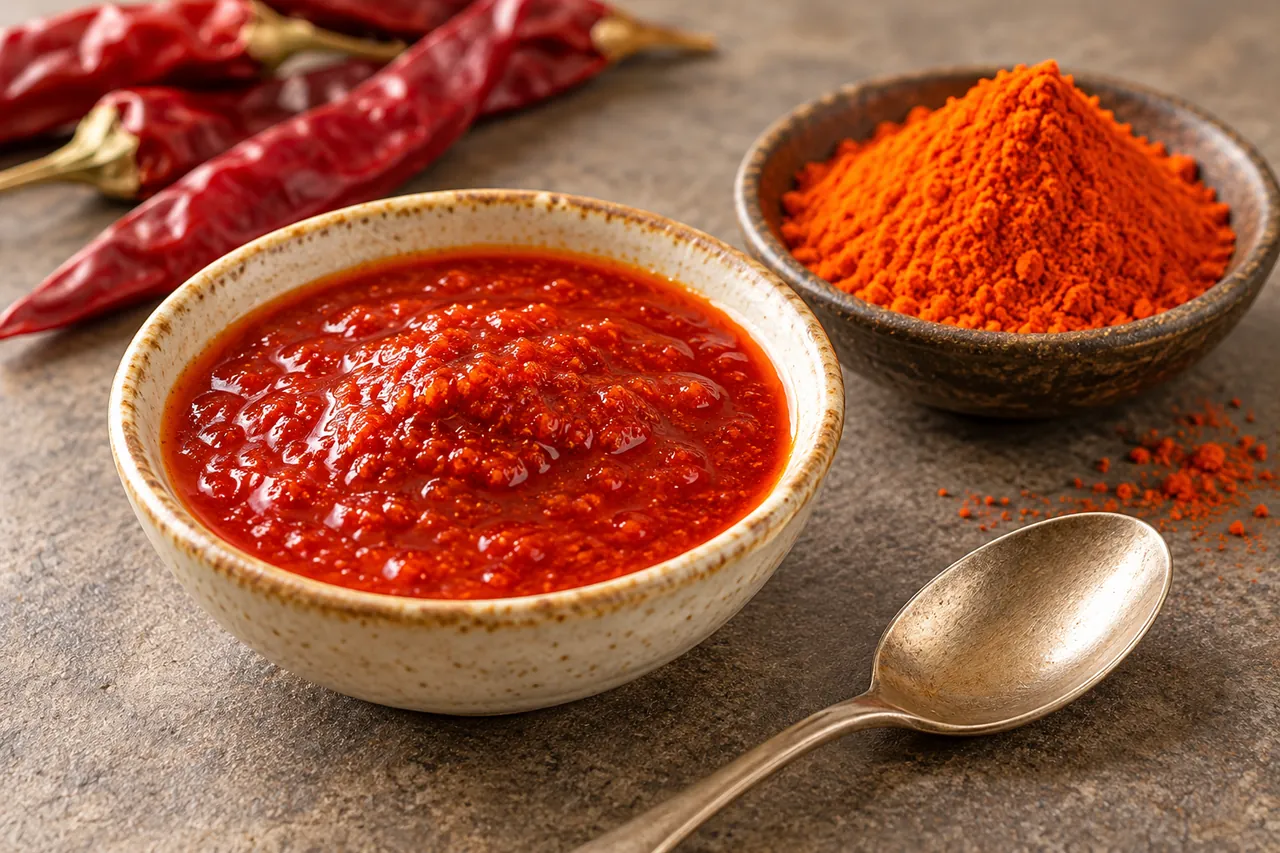
An original controlled kimchi study found differences in microbial succession and metabolites between recipes with and without red pepper powder. The practical lesson is that chili is not always an inert colour addition; it is not a prediction for your hot sauce. Keep the actual culture or other process method, formula, temperature history and approved observation plan with each trial. Describe measured changes without attributing them solely to chili heat, dryness or treatment when other variables differ.
Follow the sauce through its actual finishing route
Judge the finished sauce after your normal milling, screening or other finishing.
- 01Prepared input
Identify the form and water basis actually entering the process.
- 02Fermented material
Use the approved process observations and acceptance methods.
- 03Finished sauce
Compare texture, colour, heat and usable output after the real finishing steps.
Inspect the material after any buyer grinding, screening, filtering, heating or final seasoning used by the product. A pod route can create a different seed/skin fraction from a purchased powder, while a coarse input may produce a different screen residue. Compare the accepted sauce endpoint, not only the fermenting vessel. Record any preparation losses on a stated basis and taste the finished product at its actual use stage.
Keep flavour and solid distribution in the same product comparison
Taste and inspect the same finished recipe version.
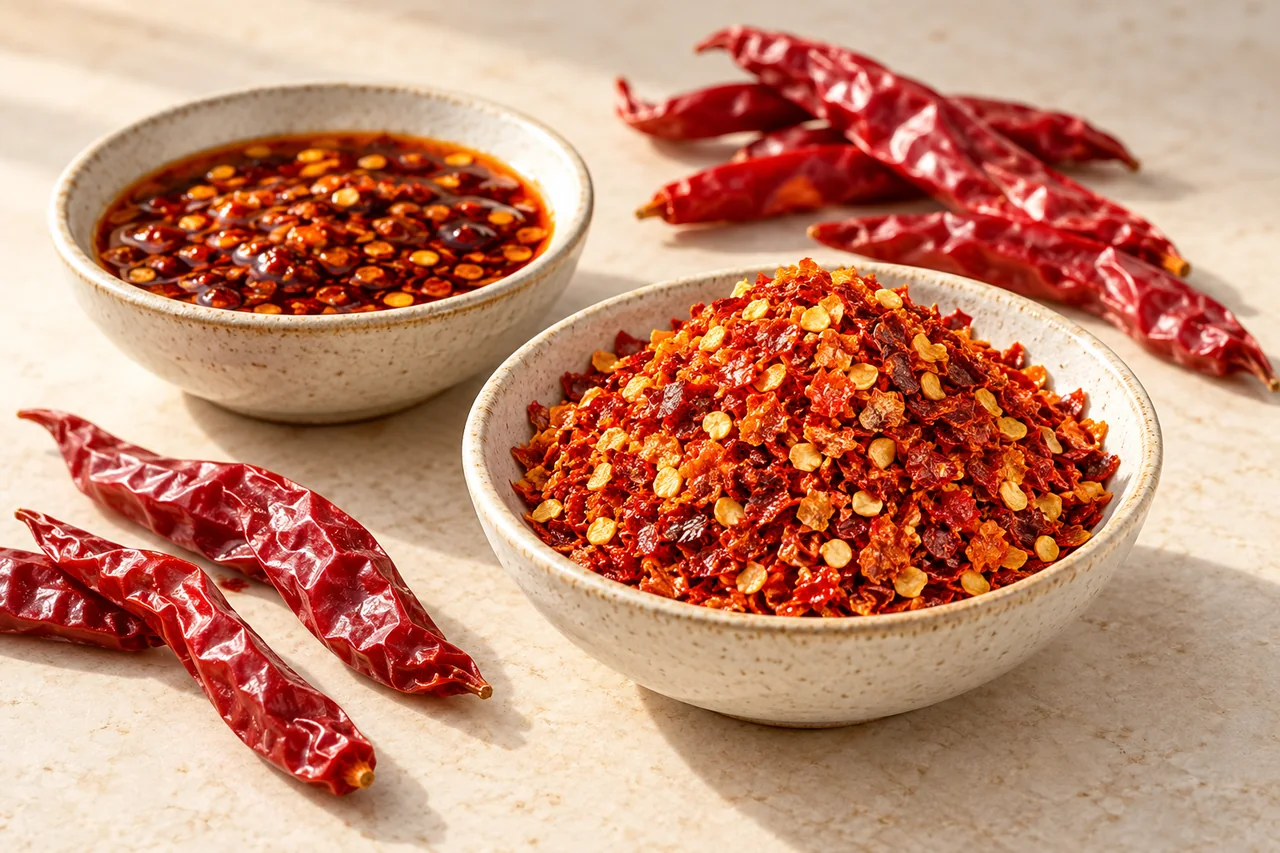
Taste heat, pepper character and acidity in the actual sauce using your agreed method, while inspecting fine material or pieces independently. The pod's full 50,000–90,000 SHU range does not predict the sauce's heat, and qualitative powder labels cannot be assigned a numerical result. If a dose or finishing change is needed, identify the new version and repeat the relevant product checks. Otherwise a recipe adjustment can be mistaken for evidence of an inherently better chili form.
Plan incoming storage and route economics independently
Compare usable sauce output while keeping each input's storage instructions separate.
- 01Receiving
Apply each selected input's own actual pack and handling instructions.
- 02Buyer work
Record cleaning, preparation and finishing burdens on a clear basis.
- 03Product output
Compare only sauce meeting the approved process and sensory endpoint.
The whole-pod listing states six months in a cool place with ventilation; it does not state a general dry-storage instruction to borrow across the other candidates. The flakes and powder have their own package-linked periods. Keep those with the incoming plan, separate from sauce life. For route comparison, include measured cleaning, size reduction, drainage and finishing losses where relevant. A useful delivered-material price becomes more meaningful when related to acceptable finished output.
Send an addition-stage and preparation brief
Send the addition stage, preparation work and accepted sauce reference.
- 01Addition stage
Identify whether the material enters before the process or later.
- 02Preparation route
Describe cleaning, water, cutting, grinding and finishing responsibilities.
- 03Acceptance
Connect the offered input to the approved process and finished sauce reference.
Send the chili addition stage, actual form and the preparation your operation retains. We can discuss the manufactured cut or grind, internal particle and moisture checks and order-selected steam treatment. Include the water basis, fermentation and finishing route and accepted sauce so the proposed material addresses a defined handover.
- Chili addition stage
- Form and buyer preparation
- Actual formula and fermentation route
- Treatment and analytical documents
- Finishing and sauce criteria
- Sample quantity and packaging
Your next purchasing decision
Discuss a chili input for your fermented-sauce route
Discuss an identifiable chili preparation for the route your team operates.
Bring the addition stage, actual recipe boundary and accepted finished-sauce reference.
State the preparation work, treatment and analytical requirements for the ingredient. We can then discuss the named pod, flake or powder against that specific route.
The enquiry page keeps this guide with your message. Add your quantity and destination so we can discuss the relevant material.