
Paprika and Chili Ingredients for Plant-Protein Patties
For plant-protein patties, start with nominal 70-mesh sweet paprika when colour is the main task. Add Cayenne as a separate heat choice rather than changing both roles together. Compare the cooked centre and bite in your actual protein, fat and binder base. Send a cut-face reference, particle tolerance and serving format so we can discuss a powder preparation for that patty.
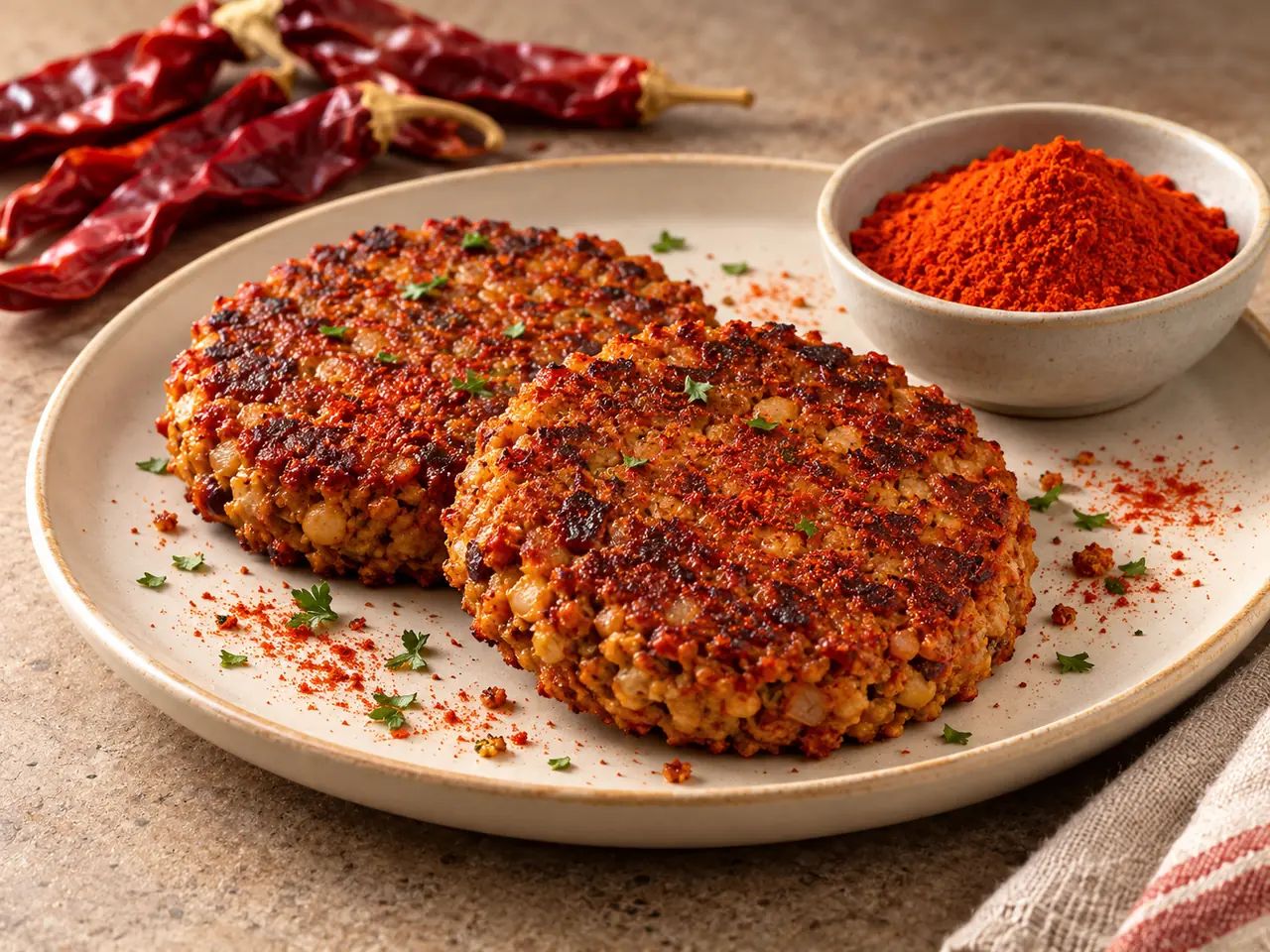
- Colour first
- Sweet paprika has nominal 70 mesh and customizable 80–220 ASTA colour.
- Heat separately
- Cayenne supplies a separately selected pungency role rather than a fixed numerical SHU grade.
- Actual base
- Judge the cooked centre and bite in one fixed protein, fat and binder system.
Prepare a powder for the patty base
Define the powder fraction for your base, rather than expecting pepper to create meat-like texture.
- 01Protein base
Use the actual protein blend; compare its beany or grassy notes with the pepper present.
- 02Fat distribution
Keep the same fat system and cooking route so colour and heat differences are interpretable.
- 03Binder and water
Hold the binder and water basis constant while comparing powder distribution and cut-face appearance.
At RELIA SPICES, we clean and destem purchased dried chilies before grinding, sieving and packing. For a smooth patty, specify the powder distribution and unwanted coarse fraction. Share the hydrated protein, fat and binder background so the proposal addresses mixing and bite without promising a meat-like texture.
Moisture and particles are checked internally; ASTA, SHU and microbiology use external laboratories. In-house steam microbial reduction is selected according to order requirements. Keep that ingredient decision alongside the complete composition and cross-contact information your patty approval needs.
Choose a colour-led or heat-led route
Different ASTA ranges do not make two paprika offers interchangeable.
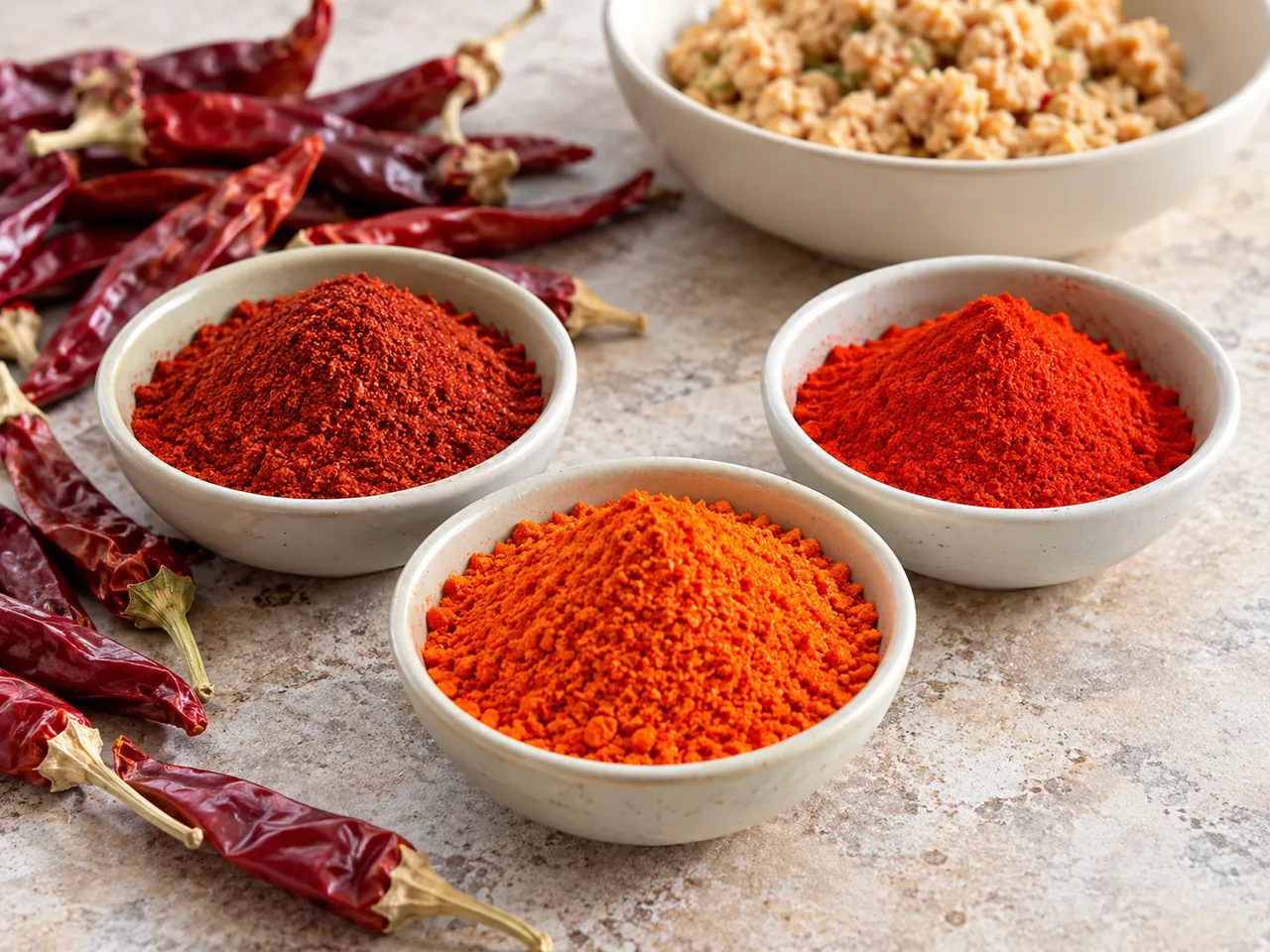
The nominal 70-mesh sweet paprika is a colour-led starting point with a customizable 80–220 ASTA declaration. The other dried red paprika powder has a separate 80–280 ASTA range. Cayenne powder is useful for discussing an independently selected pungency profile; its mild, medium and hot options are not numerical SHU grades. Start with the nominal 70-mesh paprika when its defined grind fits the first trial. Use the other paprika only after its actual particle specification is resolved, rather than treating two ASTA ranges as proof of equivalence.
Ingredients to compare for this application
Sweet paprika for patty colour
The clearer nominal grind makes a practical first colour-led powder trial in a smooth patty base.
- Nominal 70 mesh; customizable 60–70 mesh is separate.
- Customizable 80–220 ASTA colour.
- Moisture ≤8%.
Cayenne for a separate heat role
Keeps pungency adjustment separate from the paprika used to establish cooked colour.
- Nominal 60 mesh.
- Mild, medium or hot customizable pungency descriptions.
- Moisture ≤9%.
These product specifications are a starting point for selecting a grade. Match the proposed material and sample to your food and order requirements.
Read the powder in the cooked cut face
A measured ingredient colour does not predict the cooked centre or browned crust.
- 01Prepare the powder
Clean and destem dried chili, then grind and select the actual sieve fraction.
- 02Identify its profile
Use internal moisture and particle checks plus applicable external colour or heat evidence.
- 03Read the patty
Compare the cooked centre, crust and bite in the same protein, fat and binder base.
Grinding breaks dried pepper into powder, while sieving selects its physical fraction. Neither operation selects a colour grade. A coarse tail may remain perceptible in a smooth patty even when the nominal mesh appears suitable.
The sweet paprika lists nominal 70 mesh, separate 60–70 mesh customization and customizable 80–220 ASTA. Use internal particle and moisture checks plus applicable external colour evidence to identify the supplied grade. Then compare the same powder in a fixed protein, fat and binder base, opening cooked patties to examine centre, crust and bite separately. Serving-context research supports tasting plain and assembled patties; it does not show that paprika removes beany flavour or guarantees meat-like browning.
Choose a usable particle specification
Compare the coarse tail; the second paprika's unitless size entry is not a mesh grade.
| Candidate | Listing basis | Purchasing implication |
|---|---|---|
| Sweet paprika powder | Nominal 70 mesh; customizable 60–70 mesh | First colour-led trial with an actual sieve distribution |
| Dried red paprika powder | 40–60 size entry without a unit | Obtain a usable particle specification; do not call it mesh |
| Cayenne powder | Nominal 60 mesh; descriptive heat options | Select the heat role independently of paprika colour |
Use powder where visible pepper pieces are unwanted. Compare the actual coarse fraction alongside the nominal 70-mesh paprika or nominal 60-mesh Cayenne reference. The other paprika's 40–60 size entry has no defined unit, so obtain its actual particle basis before substitution. When grit appears, distinguish pepper fragments from protein granules or other inclusions before rejecting the spice.
Taste the cooked base at a matched addition level
Taste plain patties before sauce or bread hides a material difference.
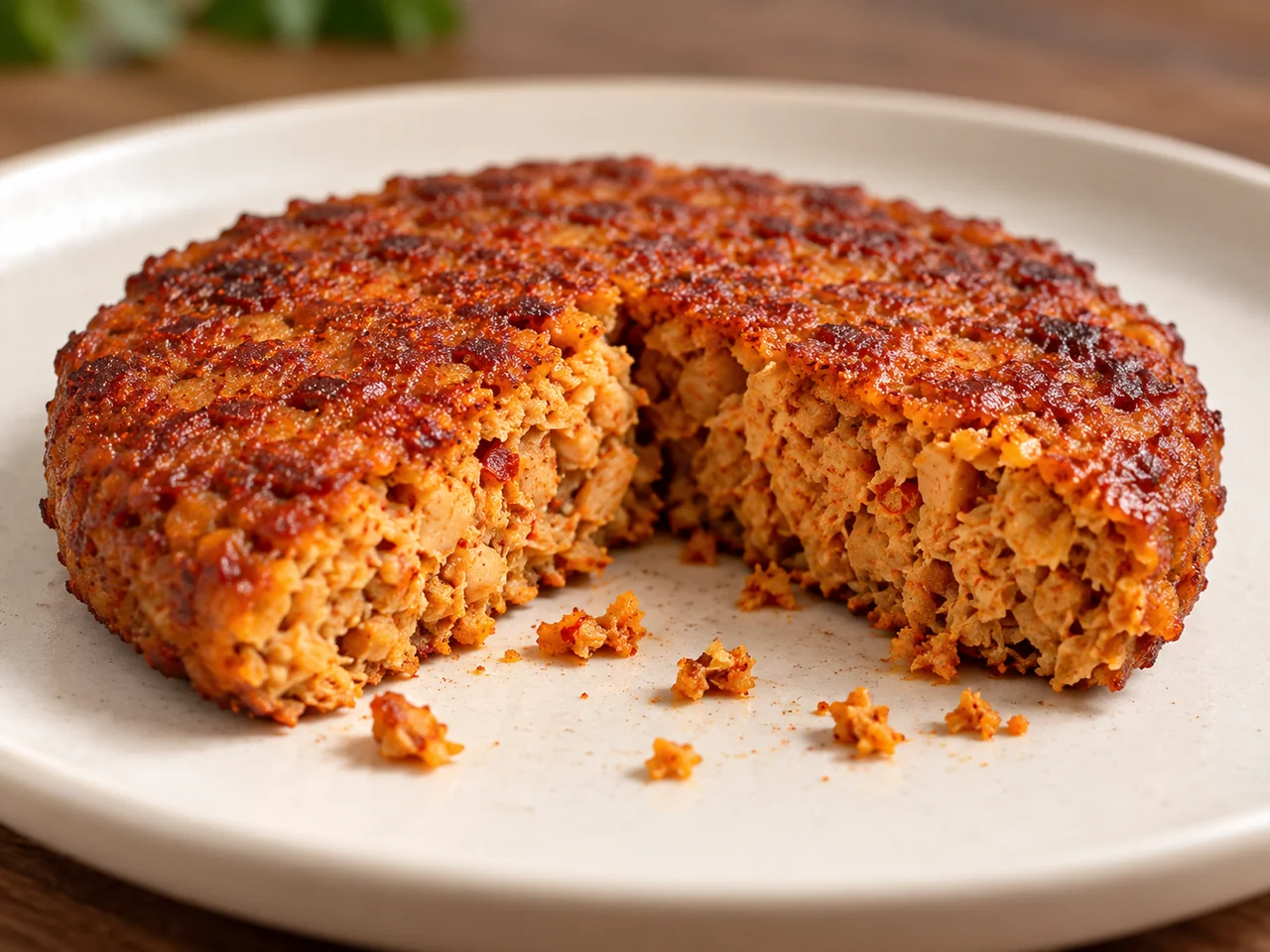
Make a small factorial comparison around two choices you can interpret: paprika candidate and the independently controlled heat addition. Include the unchanged base as a reference. Keep patty size, hydration, mixing and cooking consistent, then examine centre colour, surface colour, pepper aroma and aftertaste separately. Taste plain pieces before adding sauce or bread. When the assembled burger is the sales format, repeat that serving test. A blend accepted only under a strong condiment may miss the taste target for an unaccompanied frozen patty.
Choose treatment and composition for the actual patty input
Ingredient composition and treatment do not establish claims for the complete patty.
- ✓Composition
A generic spice row or numeric placeholder does not define the ingredients entering your formulation.
- ✓Cross-contact
Request relevant information for the actual material; plant origin alone does not prove an allergen-free product.
- ✓Preparation
Approve executed treatment separately from a successful cooked-patty sensory trial.
We can discuss in-house steam microbial reduction for the proposed paprika or chili according to your order requirement. Identify the actual material, its selected treatment and the outside-laboratory microbiological evidence needed by your quality team. Internal moisture and particle tests answer different physical questions. Obtain the complete ingredient and relevant cross-contact information alongside that process choice. Pepper's plant origin and our processing capability do not establish vegan certification, an allergen-free patty or a validated finished-food process. Keep those approvals with the complete protein, fat, binder and ingredient system.
Follow the route your product will actually use
Incoming powder storage conditions are separate from chilled or frozen patty life.
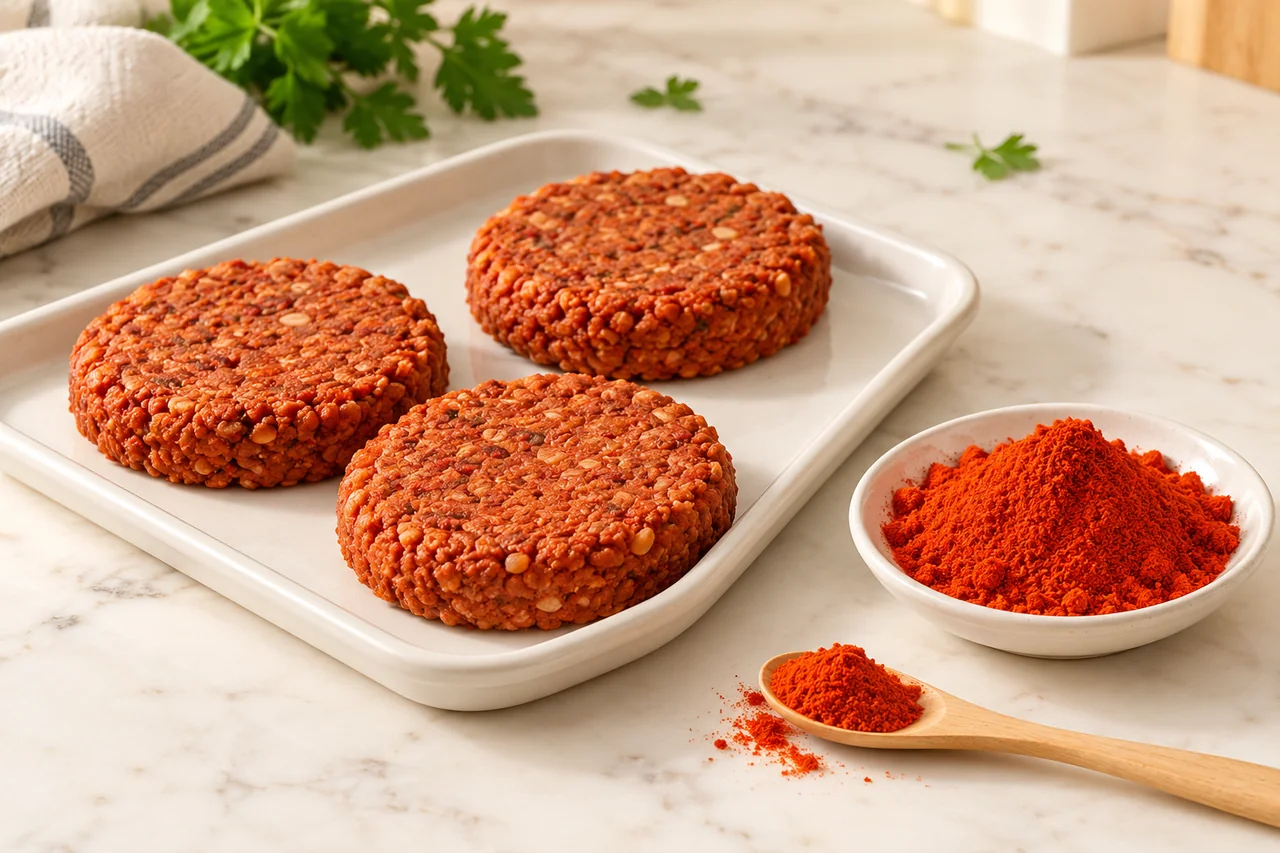
A chilled burger and a frozen burger are different application comparisons. For a frozen route, inspect cooked patties before and after the actual storage and preparation sequence; for a chilled route, evaluate the intended hold and reheating conditions. The nominal 70-mesh sweet paprika's own powder declaration is moisture ≤8%, 24 months, temperature ≤25°C and humidity ≤60%. These are incoming-ingredient conditions, not a patty shelf life. The other dried red paprika powder states one year but does not give a reliable storage environment, so do not borrow the nominal 70-mesh sweet paprika's conditions for it.
Compare proposals against the complete patty brief
When colour passes but flavour fails, reconsider the ingredient role rather than simply adding more.
- 01Resolve before comparing
An undefined grind or incomplete composition prevents a powder sample from representing a repeatable supply specification.
- 02Reconsider the route
A defined powder that meets colour but gives the wrong cooked pepper character may require a different ingredient role.
Reject a proposal that needs an undefined colour or heat adjustment before a price comparison can be interpreted. Compare the actual offered grind, colour grade and composition against the same cooked reference. If colour succeeds but flavour fails, keep those observations separate and ask whether a different paprika candidate is the next useful trial. If the base itself is dry or bitter, address that formulation issue rather than promise that more pepper will repair it. This keeps the factory discussion focused on an ingredient change we can identify.
Send your plant-protein patty requirements
Send the protein background and cooked reference together.
- 01Describe the base
Identify protein, fat, binder and whether the patty is eaten alone or with bun and sauce.
- 02Separate the roles
Set the colour target and the heat target independently before selecting paprika and Cayenne candidates.
- 03Compare the cooked product
Use the intended chilled or frozen route and an accepted cut-face and flavour reference.
Give us the protein and fat background, whether the patty is served alone or assembled, and the cooked-colour reference you want to approach. Link the nominal 70-mesh paprika or the other dried red paprika powder and identify whether Cayenne is a separate heat component. Include particle tolerance and the actual chilled or frozen route. We can discuss a material proposal, applicable specification and documentation for that use. Sample availability and order conditions remain specific to the request; complete plant-meat formulation development is not implied.
- Protein, fat and binder base
- Cooking and product route
- Cooked-colour reference
- Heat and aftertaste target
- Particle sensation and mixing needs
- Composition, claim documents and quantity
Your next purchasing decision
Build a colour-led patty ingredient shortlist
Build a shortlist around the plain patty and its actual serving format.
Contact Qingdao Relia Spices Co., Ltd. / RELIA SPICES with the plain patty and intended serving format. Identify whether paprika supplies colour alone or shares a separately controlled chili heat role.
The enquiry page keeps this guide with your message. Add your quantity and destination so we can discuss the relevant material.