
Chili Powder and Flakes for Dry Meat Rubs
Choose chili powder for an even background and mild flakes when visible pieces belong on your meat rub. RELIA SPICES can discuss these as different ground and cut preparations. Start with the listed Cayenne powder and sweet paprika flakes, then compare what leaves the applicator, stays on the meat and survives cooking. Send the surface condition and accepted cooked coating so we can narrow the ingredient choice.
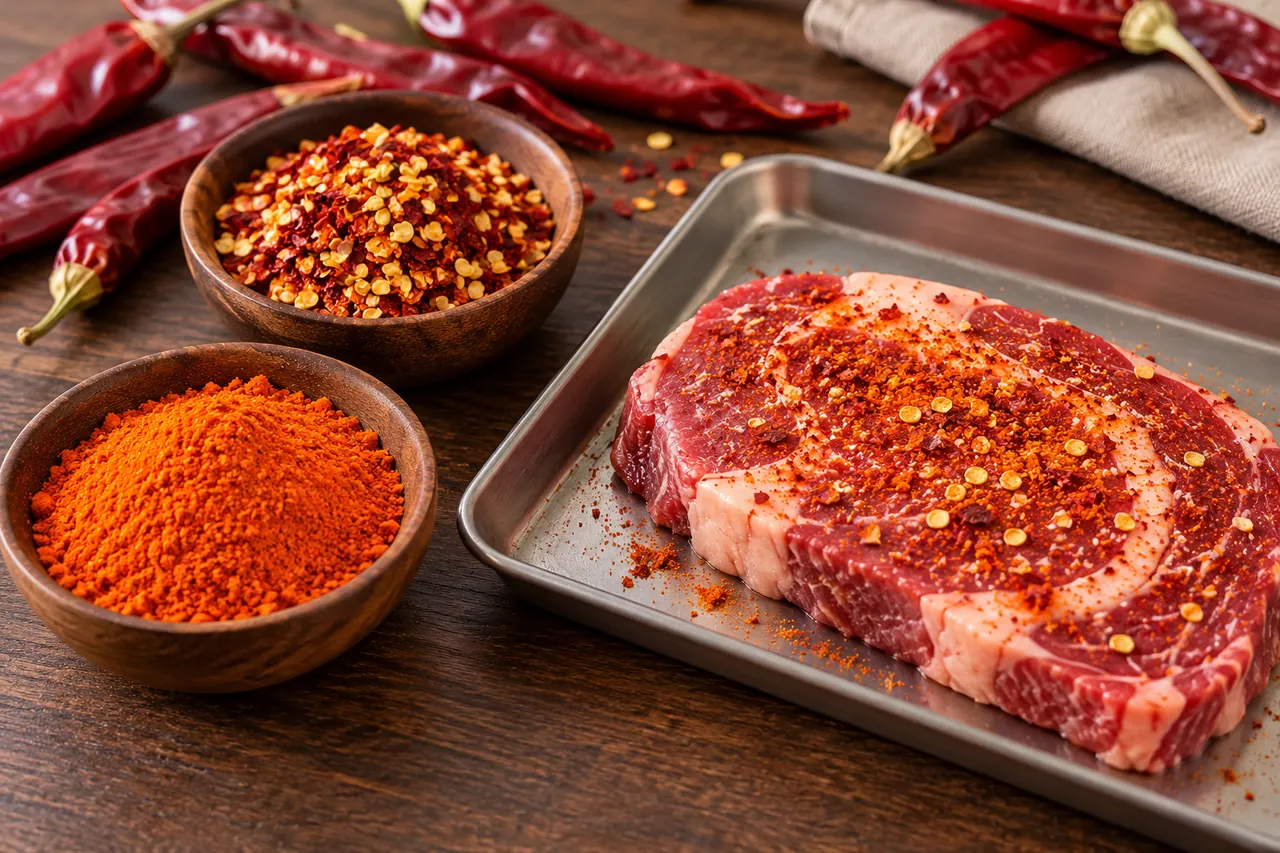
- Even coverage
- Nominal 60-mesh Cayenne is a powder starting point, with the heat profile selected separately.
- Visible pieces
- Sweet paprika flakes list 3–5 mm and mild, slightly sweet character.
- Useful comparison
- Separate changes in the dry blend from losses during meat handling.
Choose the powder background and visible flake separately
Discuss the grind and cut independently before comparing their performance on meat.
- 01Powder background
Begin with Cayenne when the coating needs distributed pepper solids and a selected heat profile.
- 02Visible mild flakes
Begin with sweet paprika flakes when recognisable pieces and mild character are part of the brief.
- 03Alternative crushed input
Establish the raw chili flake fraction before assessing the blend or meat coating.
RELIA SPICES prepares chili from purchased dried peppers through in-house cleaning, foreign-matter removal, destemming, grinding or cutting/crushing, sieving and packaging. For a dry meat rub, the first choice is the job each fraction must do. Cayenne powder lists nominal 60 mesh, a separate 60–70 mesh customization scope and moisture ≤9%. Sweet paprika flakes list 3–5 mm with a customization scope, mild/slightly sweet character and moisture ≤12%.
The raw red chili flakes offer another starting material, with separate 40–80 mesh and 80/100 mesh references whose actual supplied fraction must be agreed. We check moisture and particles internally; ASTA, SHU and microbiology use outside laboratories. In-house steam microbial reduction is selected according to the order. These capabilities support a defined rub ingredient; retention still needs comparison on your meat surface.
Compare candidates by their intended coating role
Use the actual supplied fraction, not a combined interpretation of separate sieve references.
| Candidate | Actual listed starting detail | Decision in your rub |
|---|---|---|
| Cayenne powder | Nominal 60 mesh; moisture ≤9%; qualitative heat choices | Assess background coverage and the selected heat profile. |
| Sweet paprika flakes | 3–5 mm reference; mild/slightly sweet; moisture ≤12% | Assess visible pieces and the intended mild pepper character. |
| Raw red chili flakes | Separate 40–80 mesh and 80/100 mesh references | Agree the supplied fraction before testing distribution and retention. |
A powder and a flake can both be useful without being interchangeable. Start with a powder-only and a visible-flake reference before changing their balance. Keep the same meat surface and allowed recipe dose so you can tell whether the difference comes from the ingredient, the application or a new recipe.
Ingredients to compare for this application
Cayenne powder for background coverage
A starting point when the rub needs distributed pepper solids with a separately selected heat profile.
- Nominal 60 mesh, with a separate 60–70 mesh customization scope.
- Moisture ≤9%; Mild, Medium and Hot are qualitative choices.
Sweet paprika flakes for visible mild pieces
Useful for comparing visible red pieces where mild, slightly sweet character is part of the coating brief.
- 3–5 mm reference with a customization scope.
- Mild/slightly sweet character and moisture ≤12%.
Raw chili flakes for an alternative crushed input
Consider after agreeing the actual fraction when the first candidates leave the wrong visible particle pattern.
- Separate 40–80 mesh and 80/100 mesh references, not a combined range.
- Raw and AD declarations; actual material and process applicability remain part of the offer.
These product specifications are a starting point for selecting a grade. Match the proposed material and sample to your food and order requirements.
Keep the meat surface and application basis constant
Keep meat surface, dose and application method consistent for the first comparison.
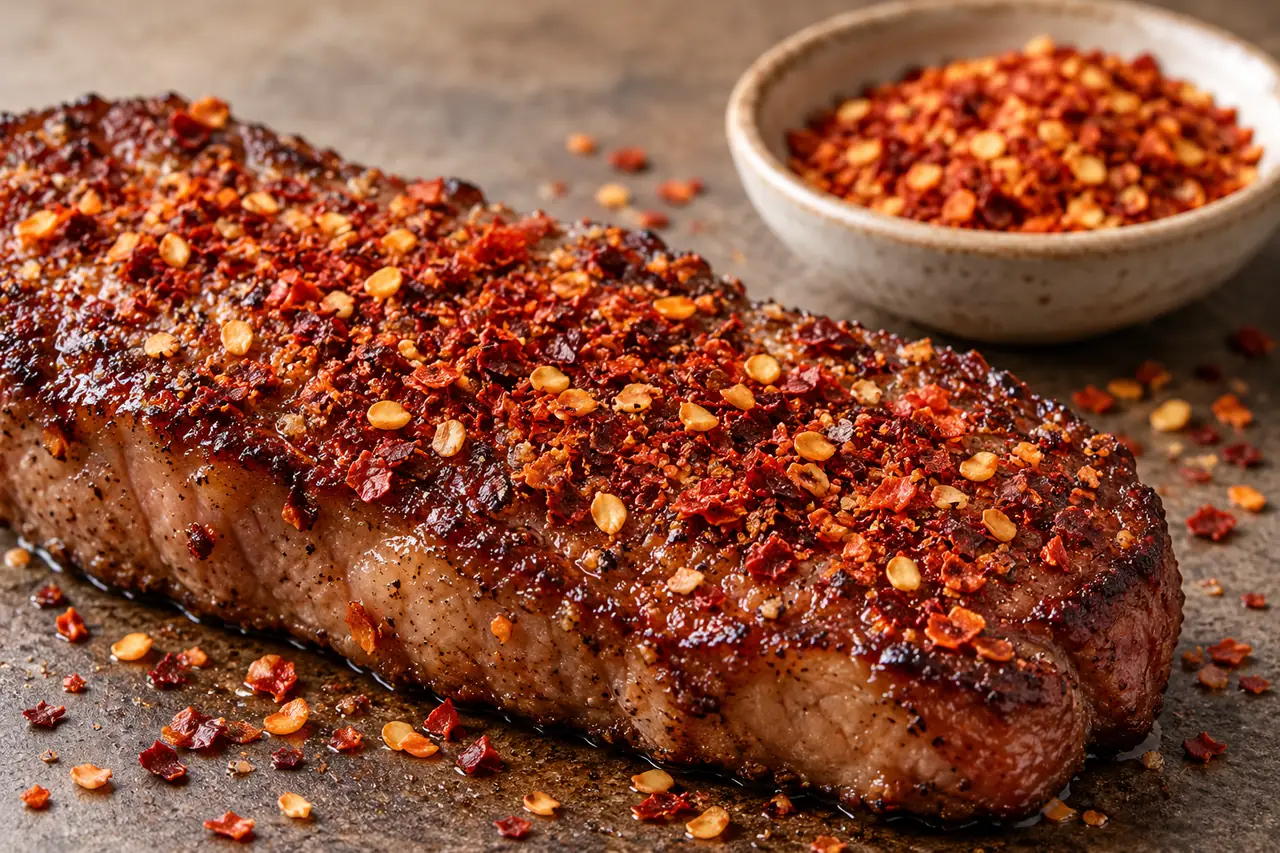
Use comparable meat portions with the same preparation, surface condition and application method. Record rub mass applied on a clear meat or surface-area basis suitable for your operation. Keep the holding interval before handling and cooking consistent. If an oil or other precoat is allowed, compare it as a defined formulation route, not as an unrecorded correction for one powder. The aim is to discover what the available application process can deliver, rather than make every candidate appear successful through different treatment.
Locate the change before adjusting the grind
Changing applicator output and poor surface retention require different corrective actions.
- 01Applicator output
Check whether powder and visible pieces remain consistent through the run.
- 02Handled meat
Compare the coating before and after the actual turning and transfer steps.
- 03Cooked coating
Approve appearance, heat and particle sensation in the finished meat.
Size, shape and density differences can change a blend's composition during handling. Collect applicator output at the beginning, middle and end of an ordinary run, including normal pauses or vibration. Then apply comparable doses to the same meat surface and inspect the coating before and after turning or transfer.
If the output fraction changes, investigate the dry blend and delivery path. If output stays consistent but visible seasoning falls away, investigate the surface and application step. Keep loose seasoning separate from meat liquid when judging losses. Return the observations to RELIA SPICES so a proposed grind or cut addresses the actual problem, then repeat the cooked-food comparison.
Include normal turning and transfer before cooking
Separate loose seasoning from meat liquid before interpreting collected tray material.
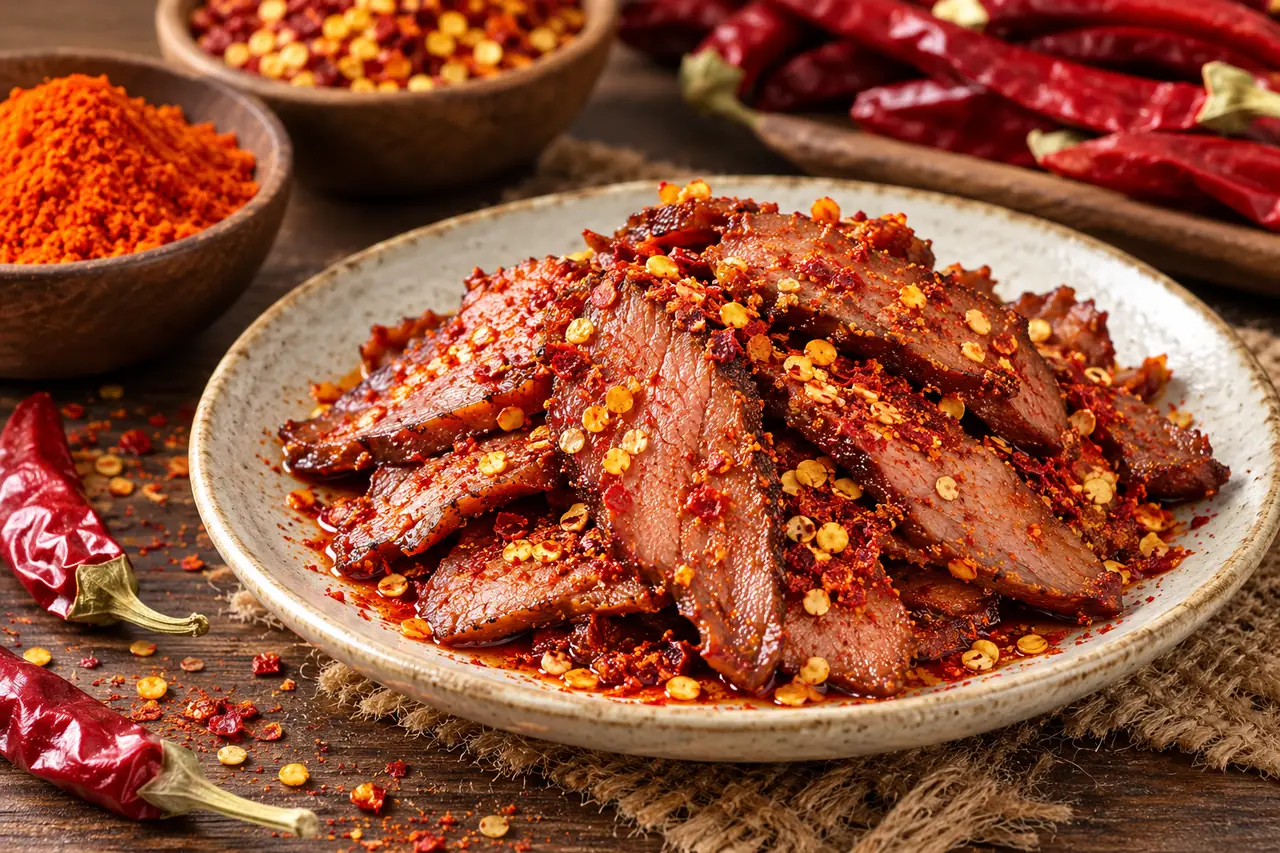
Handle coated portions using the real utensils, trays and movements that matter to your operation. Compare visible pieces and background coverage before and after that handling. If loose material is measured, define what is collected and keep it separate from meat liquid or other losses. Do not call every tray deposit a chili adhesion loss. The practical purchasing endpoint is the coating remaining on the product at cooking, with an acceptable amount of buyer handling and without an unapproved extra binding step.
Judge cooked coverage and flavour separately
Judge the retained coating after the actual cooking route.
- 01Appearance
Retained background, visible pieces and local dark areas.
- 02Eating quality
Particle sensation, pepper character and actual heat.
- 03Route fit
A result achieved through the intended application and cooking process.
Cook through the approved route for the actual meat product and evaluate the served result. Observe retained visible flakes, uneven dark spots, particle sensation and pepper character. Keep cooking exposure and meat portion geometry with the comparison. A darker surface alone does not prove stronger paprika colour or better aroma, and visible pieces alone do not establish acceptable eating texture. If the cooked product misses the target, decide whether the cause is input preparation, application or the cooking route before requesting a different material.
Compare application cost without confusing it with cooking yield
Cost the seasoning and work used by the accepted recipe.
- 01Applied quantity
Record the actual rub used for a defined meat basis.
- 02Measurable loss
Separate collected seasoning where the method permits.
- 03Accepted output
Keep recipe adjustments and buyer work with the final comparison.
Use the accepted product and actual applied rub quantity when comparing ingredient cost. Include measured application loss or extra preparation only where the method can separate it meaningfully. Whole-meat cooking loss includes changes unrelated to chili and must not be presented as the ingredient's retention result. If a candidate needs a higher rub dose or an allowed precoat to reach the reference, cost that distinct recipe. This keeps a cheaper bag price from masking an unacceptable coating or a more expensive application route.
Keep ingredient handling and use controls explicit
Agree ingredient treatment without substituting it for the finished meat process.
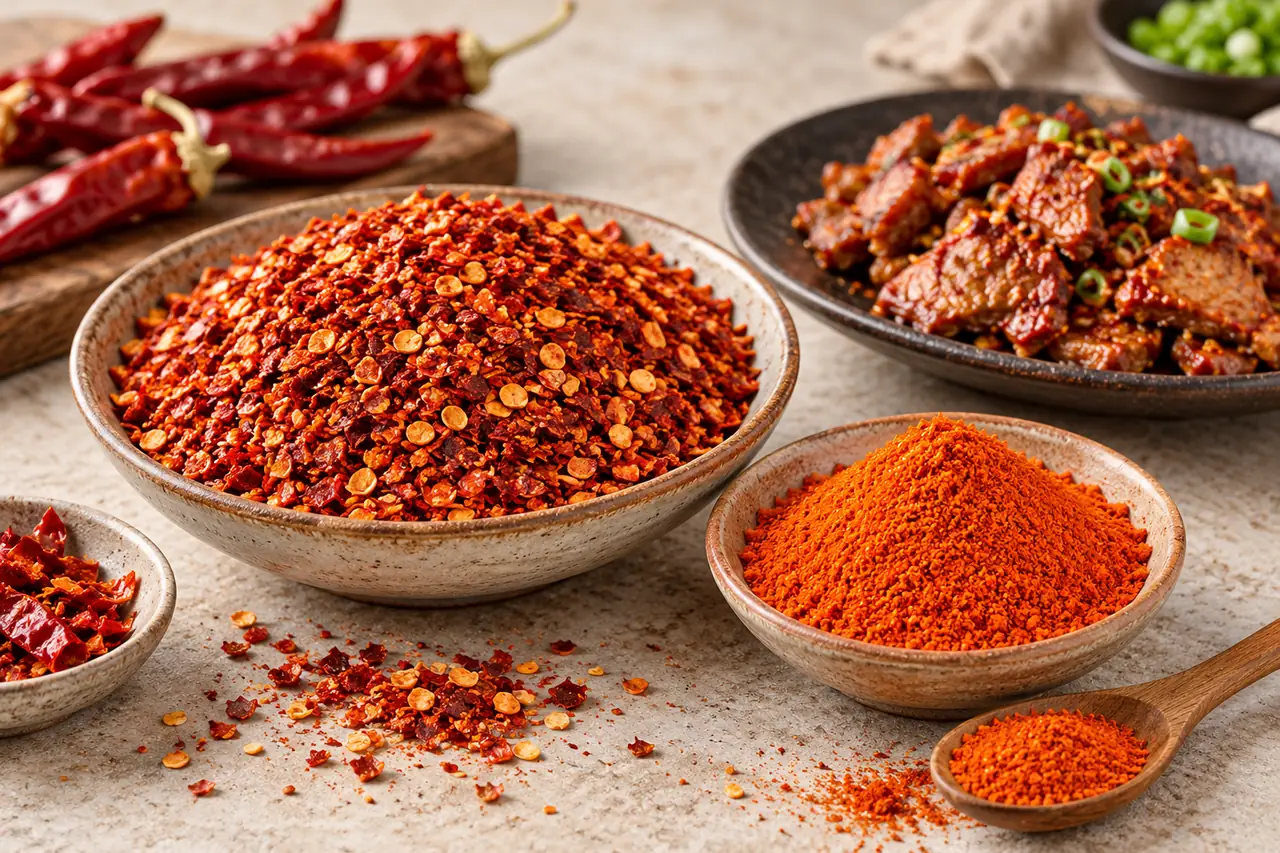
Use the package and storage conditions belonging to the actual selected powder and flakes. The ingredients have different declared scopes, so retain their own receiving instructions rather than extend one period across the blend.
RELIA uses in-house steam microbial reduction according to order requirements and arranges microbiology through outside laboratories. Match the sampled preparation and requested treatment to your ingredient acceptance. The actual meat process and cooked-rub preference remain separate parts of the complete food approval.
Send a surface-coating purchase brief
Send the surface condition, handling route and desired cooked coating together.
- 01Surface target
Show the intended background and visible pieces on the actual meat.
- 02Handling route
Describe application, turning, transfer and cooking.
- 03Purchase basis
Identify the selected preparation and accepted recipe version.
Send the meat surface, desired powder background and flake pattern, application route and accepted cooked reference. We can discuss ground or crushed preparation, sieve and fine-fraction criteria, internal physical checks and requested treatment. Include the permitted dose or precoat adjustments so the quotation relates to the coating your team actually accepted.
- Meat cut and surface condition
- Coverage and visible-particle target
- Application method and use level
- Handling sequence
- Cooking and sensory criteria
- Sample quantity and package
Your next purchasing decision
Discuss the chili preparation for your meat rub
Use a cooked reference to turn the desired coating into an ingredient discussion.
Share the applicator and surface observations, actual handling route and accepted cooked coating.
Include the powder and flake roles, heat profile and ingredient treatment. We can use those details to discuss a defined material rather than an assumed adhesion guarantee.
The enquiry page keeps this guide with your message. Add your quantity and destination so we can discuss the relevant material.