
Chili Flakes for Visible Baked Pizza Toppings
For a mild visible pizza topping, start with sweet paprika flakes; compare the crushed-chili candidate when a different pepper bite is wanted. Choose the cut around its actual position above cheese, beneath cheese or against sauce. Send a served-slice photograph and the bake-and-service route. We can discuss the visible pieces, seeds and fines around darkening, hard bite or local heat rather than promise one universal pizza grade.
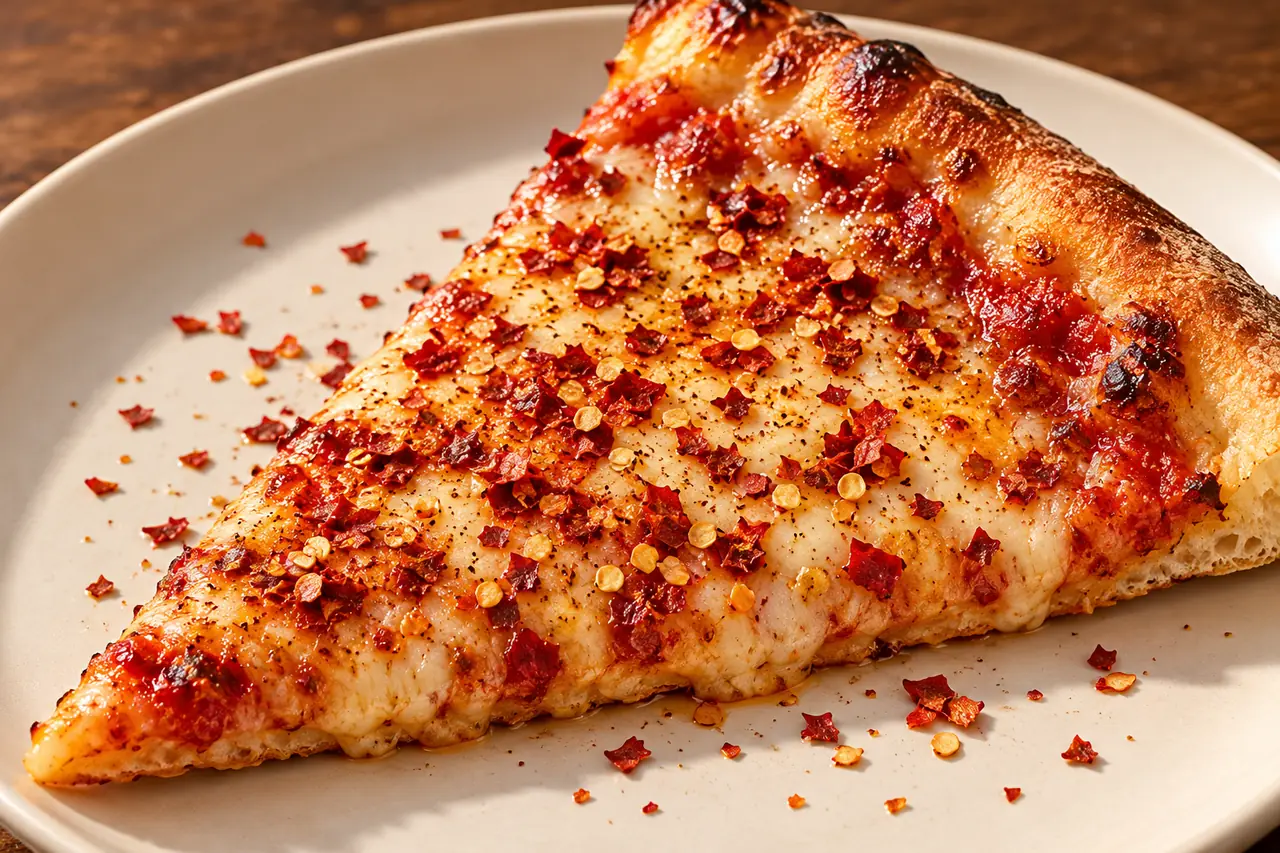
- Mild visible role
- Sweet paprika flakes list mild/slightly sweet flavour, with separate 3–5 mm and 5–25 mesh references.
- Different pepper bite
- The crushed-chili candidate lists 3,000–5,000 SHU; 1.5 mm and 1.8 mm remain independent entries.
- Topping position
- Compare exposed pieces separately from pieces covered by cheese or touching sauce.
Prepare the flake for its topping position
Specify the whole flake mixture, including seeds, fines and hard fragments.
- 01Above cheese
Inspect the exposed pieces under the normal bake route.
- 02Against cheese
Judge the covered piece and its bite in the complete slice.
- 03Against sauce
Retain the real moisture contact and serving route when comparing materials.
RELIA SPICES cleans and destems purchased dried chilies before cutting or crushing, sieving and packing. Define the visible cut separately from seeds, fines and hard fragments. Use an exposed or covered topping reference to make that mixture specific.
We check moisture and particles internally and use external laboratories for ASTA, SHU and microbiology. In-house steam microbial reduction is selected according to order requirements. State whether pepper enters before or after baking so ingredient treatment and your pizza process remain clearly separated.
Compare mild paprika pieces and chili flakes
Select the mild or stronger pepper role before comparing ambiguous size notations.
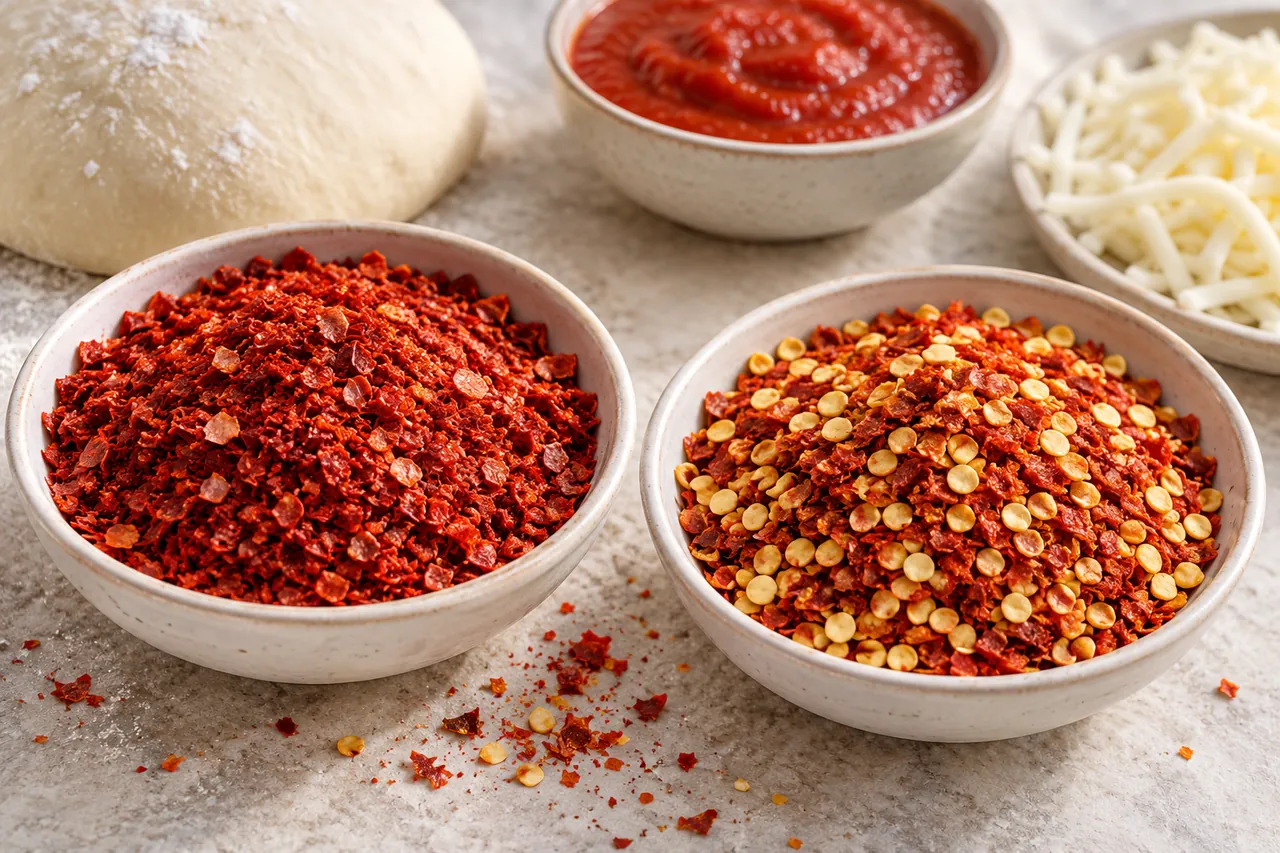
Sweet paprika crushed flakes give a mild, slightly sweet description, a 3–5 mm or customized size reference, 5–25 mesh and moisture ≤12%. The crushed red chili candidate gives 3,000–5,000 SHU and independent 1.5 mm and 1.8 mm references. Those millimetre entries do not select a grade or identify two axes. The raw red-flake listing instead has separate 40–80 mesh and 80/100 mesh entries. Its visible flake fraction still needs definition; those entries are not a combined range or proof of interchangeable pizza cuts.
Ingredients to compare for this application
Sweet paprika flakes for a mild visible topping
A first comparison where red pieces should be visible without selecting a stronger pepper role.
- Mild/nonspicy/slightly sweet descriptions do not guarantee zero heat.
- 3–5 mm/customized and 5–25 mesh are separate references.
- Moisture ≤12%; 24 months dry and sealed.
Crushed chili for a different pepper bite
Compare a separately defined cut when the pizza needs its declared heat role alongside visible pieces.
- 3,000–5,000 SHU ingredient reference.
- 1.5 mm and 1.8 mm are independent entries needing actual axes and selection.
- Raw/AD descriptors; optional steam requires selection.
These product specifications are a starting point for selecting a grade. Match the proposed material and sample to your food and order requirements.
Connect the whole flake mixture to the slice
A coarse-looking sample can still contain fines that collect unevenly on the slice.
| Material criterion | Define the supplied preparation | Compare on the served slice |
|---|---|---|
| Main visible cut | Actual geometry and selected fraction | Above cheese versus covered position |
| Seeds and fines | Whole-sample mixture | Dust, patches and local bite |
| Moisture and heat | Physical checks and relevant SHU evidence | Same recipe, dose and service route |
| Selected treatment | Actual ingredient and addition point | Pre-bake topping versus post-bake seasoning |
Cutting or crushing creates main pieces and fines that can behave differently on pizza. Sieving defines a fraction, but a coarse-looking sample may still contain small material that collects in patches or gives a dusty topping. Inspect the whole mixture.
Our internal particle and moisture checks support that input definition. Sweet paprika's 3–5 mm reference is separate from 5–25 mesh; the other candidate's 1.5 mm and 1.8 mm entries do not select one grade or two axes. Compare the actual cut at a fixed cheese or sauce position after baking and service. If exposed pieces alone darken, investigate placement separately from size. If appearance passes but local burn fails, change the pepper role. External heat evidence identifies the ingredient, not a pizza rating.
Keep cheese and sauce contact in the comparison
Cheese, sauce and exposure belong in the comparison rather than being averaged together.
- 01Cheese
Retain the actual cheese and its contact with the pepper.
- 02Sauce
Keep the sauce placement and composition unchanged during the first cut comparison.
- 03Exposure
Separate exposed and covered pieces instead of averaging different locations.
Compare exposed pieces and pieces in contact with cheese or sauce at a matched dose. Their contact with moisture and fat is part of the actual application, so keep the formulation fixed before concluding that a material is inherently too dark or too tough. Original thermal-drying research in pepper found changes in colour, structure and aroma with process duration. That is not a pizza-baking validation and supplies no oven setting here. It supports assessing the real exposure and actual material rather than treating dry redness as a cooked-colour guarantee.
Inspect the pieces after the actual bake
If only exposed pieces fail, changing every flake to a larger cut may solve the wrong problem.
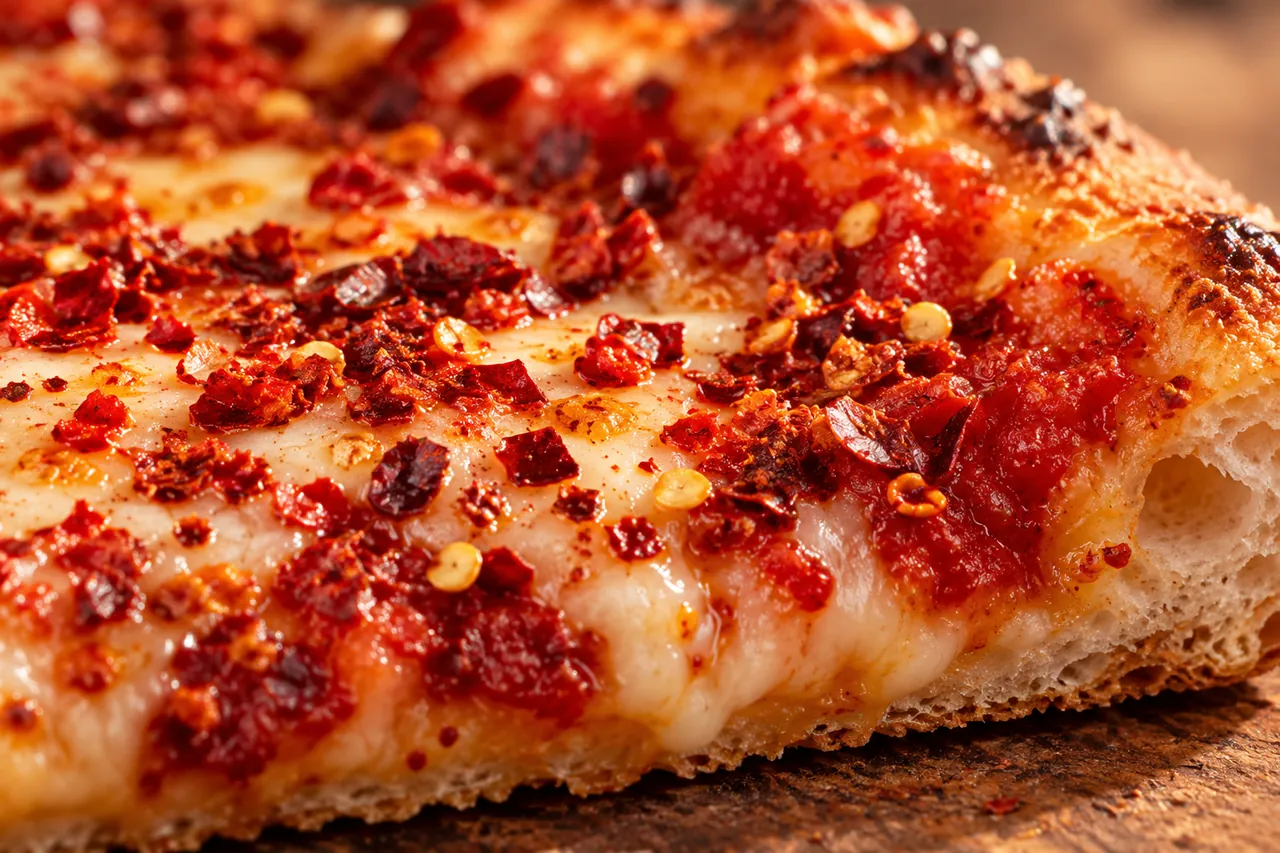
Inspect the pizza immediately after the normal bake and again at the intended service or delivery point. Compare colour, curled or fragmented pieces, and the bite of exposed versus covered flakes. Keep cheese browning and sauce colour separate from the pepper’s appearance. If only the exposed fraction fails, changing all pepper to a larger piece may solve the wrong problem. Trial placement and the selected preparation independently, using the same base and process. We do not prescribe a universal baking time or claim resistance to scorching for any of these listings.
Check distribution and bite across slices
Judge local heat with cheese, sauce and crust at the intended visible amount.
- 01Appearance
Inspect colour, distribution and fragments across more than one slice.
- 02Eating
Assess skin, seeds and local burn with cheese, sauce and crust present.
Inspect more than one slice for clusters, bare areas, loose flakes and local heat. Taste the pepper with cheese, sauce and crust present, rather than ranking dry fragments alone. The crushed-chili candidate’s full 3,000–5,000 SHU range is an ingredient reference, not a finished-pizza rating. The sweet paprika’s mild description does not guarantee zero heat. If a flake provides the desired visible amount but excessive local pungency, compare the lower-heat role or separate background heat from visible topping instead of assuming cut size alone controls flavour.
Select the actual ingredient treatment and package scope
Post-bake pepper needs an appropriate ingredient treatment separate from the oven route.
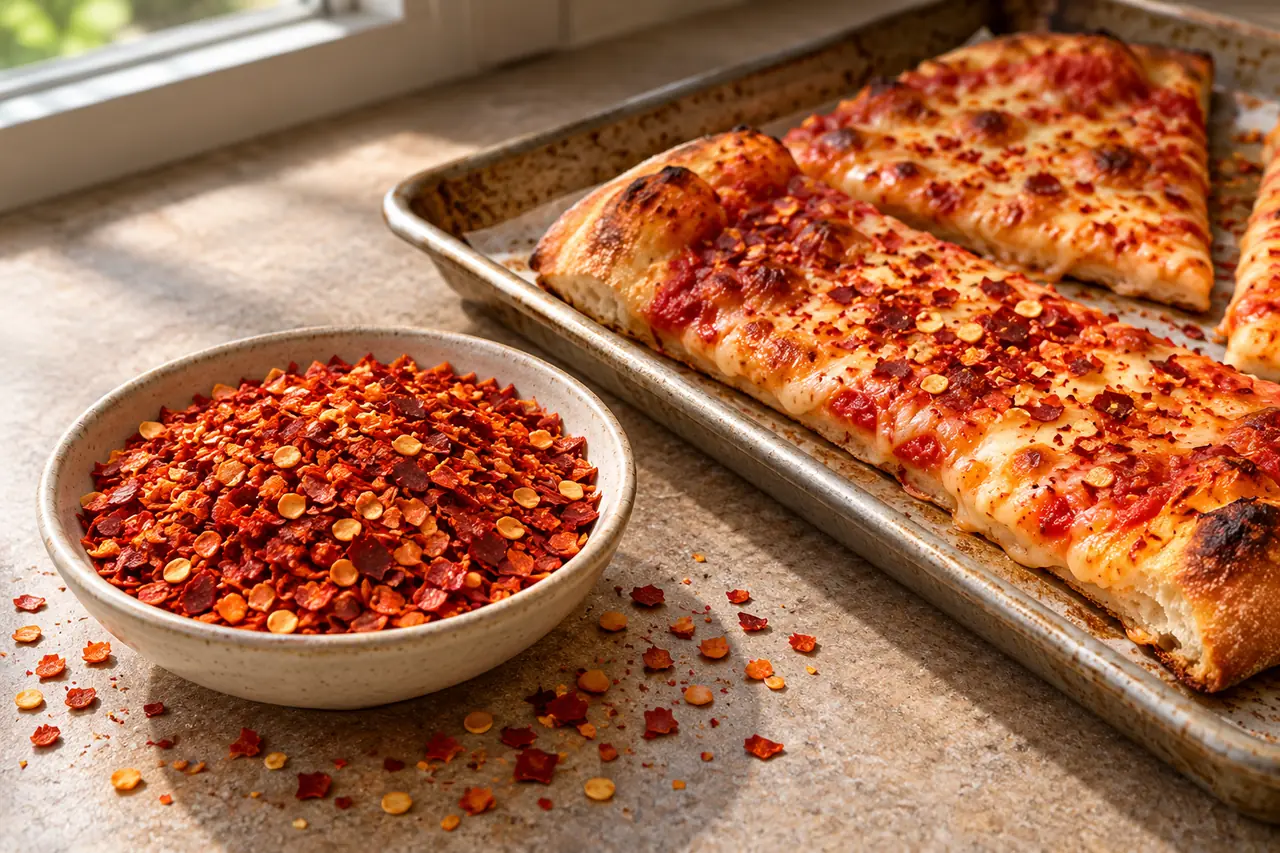
RELIA SPICES can use its in-house steam microbial-reduction equipment according to the order requirement. Identify the selected preparation and applicable external microbiological evidence, especially for pepper added after baking. The crushed-flake listing's optional steam row does not prove execution for every lot. Keep each ingredient's own storage scope: sweet paprika flakes state 24 months dry and sealed, crushed chili two years cool and dry, and raw red flakes 12 months sealed and dry. None establishes baked-pizza shelf life, a universal ready-to-eat grade or a post-bake process validation.
Compare offers at the same topping endpoint
Price the preparation reaching the same served-slice target, including dose and placement.
- ✓Same placement
Compare materials in the same exposed or covered location.
- ✓Same particle scope
Include free seeds and fines rather than choosing only large pieces.
- ✓Same endpoint
Use the actual dose, bake route and served-slice reference.
Compare the preparation that meets the same served-slice target, including dose, placement, actual cut and seeds. A visually larger flake is not automatically better value if it creates hard bites or irregular portions. A cheaper preparation with more fines is not equivalent merely because both offers say crushed chili. Use the accepted whole-sample distribution and food result as the comparison basis. If the supplier proposes a different fraction, repeat the relevant placement and bite checks before treating it as a substitute rather than relying on a similar name.
Send the topping location and defect
Show where the defect occurs and distinguish darkening, hard bite and concentrated heat.
- 01Show the location
Identify whether the defect appears above cheese, against cheese or against sauce.
- 02Describe the result
Separate darkening, hard bite, loose particles and local heat.
- 03Discuss the cut
Request an actual paprika or chili-flake preparation and its applicable material documents.
Share the pizza format, cheese and sauce context, pepper position and normal bake-and-service route. Link the sweet paprika or crushed-chili candidate. Mark exposed dark pieces, hard fragments or concentrated heat in a served-slice photograph. We can discuss the actual cut, seed and fine fraction and selected treatment around that defect, then agree the sample and package scope.
- Pizza format and serving point
- Cheese, sauce and pepper position
- Actual cut, seed and fines criteria
- Heat and visible-piece reference
- Baking and slice sampling route
- Treatment documents, quantity and package
Your next purchasing decision
Choose the pepper around your served pizza slice
Discuss the actual topping role against one served slice.
Send the pizza format, topping position and served-slice reference to Qingdao Relia Spices Co., Ltd. / RELIA SPICES. Distinguish exposed dark pieces, hard fragments and concentrated heat so the material change addresses the actual defect.
The enquiry page keeps this guide with your message. Add your quantity and destination so we can discuss the relevant material.